Resurrection of an Ancient Art:Classic Paper from the Hands of Wang Kuo-Tsai
Elaine Chen / photos Hsueh Chi-kuang / tr. by Robert Taylor
January 2003


Flowing sand, thick weave, cicada wing, Xue Tao, silk cocoon, ceramic blue, sunset. . . . You could be forgiven for thinking that these are the beautiful names of ancient Chinese silken fabrics. But in fact they are handmade papers of unique texture and quality, recreated in the research laboratory of Wang Kuo-tsai.
If soft, feminine silk belongs to Lei Ying, the legendary inventor of sericulture, then paper, hard and masculine, belongs to Cai Lun, the inventor of papermaking-and to Wang Kuo-tsai.
Newsprint, laser-printing paper, manuscript paper, notepaper, recycled paper-for most people, the different kinds of paper we are in contact with every day are simply carriers for the written word, or temporary wrapping materials. But for painters and calligraphers, paper is like cloth in the eyes of fashion designers-it is the basis for their creative inspiration.
"I'm rarely envious of how well someone else paints, but I do get jealous of others having good paper to paint on. Perhaps that's because you can always improve your own painting technique, but for good paper you are entirely dependent on others. What's more, as times progress, paper suitable for traditional Chinese painting is getting harder and harder to find." So says new-generation Taiwanese painter and calligrapher Hou Chi-liang, who studied for five years with Chiang Chiao-shen, one of the leading lights of modern Chinese ink-wash painting. Hou recalls his search for suitable art paper: "As well as hunting for information in historical documents from down the ages, ten years ago I went from Taipei to Puli, and then to Hong Kong, Beijing, Nanjing, Yangzhou, Anhui Province, and Japan, and even half way round the world to Rome and Egypt, just looking for good paper."
After coming back empty-handed from these long journeys, Hou happened to see in the corner of the newspaper a report that someone at the Taiwan Forestry Research Institute (TFRI) was reproducing ancient types of paper. On going there in person, he discovered to his astonishment that the paper he had been looking for was to be found in a drab official building only five minutes drive from his home, and the person making it was not some white-haired, venerable master craftsman, but a 1950s-born TFRI assistant researcher-Wang Kuo-tsai.
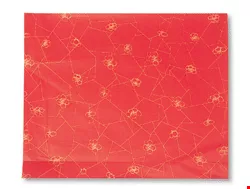
Meihua yuban ("plum flower and jade tablet") paper is a famous paper that was first developed during the Kangxi (1662-1722) and Qianlong (1736-1795) reigns of the Qing dynasty. The version recreated by Wang Kuo-tsai resists exposure to light even better than the original.
Forgotten arts
When we enter Room 612 on the ground floor of the institute, Wang Kuo-tsai is busy at his computer, writing up several academic papers. Two years into a research program on ancient paper, he has many results to report.
He began this research program by investigating liusha ("flowing sand") paper, with its many colors and swirling patterns like scudding clouds and flowing water. Next, he studied ciqing ("ceramic blue") paper, a paper of a blue as deep as the vault of heaven, which in ancient times was used especially for writing sutras. Then, on the basis of what he had learned from making ciqing paper, he recreated yangnao ("sheep's brain") paper, as black as lacquer and as shiny as a mirror, chanyi ("cicada wing") paper, as thin as an insect's wing, and luowen ("thick weave") paper, with its cloth-like texture.
The art of making liusha paper (known in English as marbled paper) still survives in Japan and Europe, where small quantities are produced. But as for the other ancient papers, one can say that only Wang Kuo-tsai is able to reproduce them authentically, or even in better quality than the originals.
Why is he so interested in recreating ancient paper?
After graduating from the forestry department at National Chung Hsing University, Wang Kuo-tsai went to work at the TFRI, while at the same time pursuing postgraduate studies. At first he researched machine-made paper, which is the mainstream of modern paper production. But later a friend remarked to him that in Taiwan one could not find good handmade paper, and that the ancient methods of papermaking had all been lost. Although liusha paper was still being made in Europe, people there thought it had originated in Japan. Hearing this made Wang Kuo-tsai very unhappy.
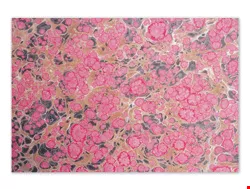
The patterns on liusha paper can be like stars in the sky or mountains and rivers-the design is completely in the hands of the artist.
Classic papers
"Paper is one of ancient China's greatest technological inventions. Yinghuang ["hard yellow"] paper, Xue Tao paper [named after Tang poetess Xue Tao], Cheng Xin Tang ["Clear Heart Hall"] paper, Jinsu Temple sutra paper, ciqing paper, yangnao paper, liusha paper, canjian ["silk cocoon"] paper, fenla ["coated and waxed"] paper, luowen paper, and so on are all famous types of paper used in various periods in Chinese history. But sadly most of them now exist in name only, and the few that are available on the market are of very poor quality," says Wang. He believes that just as students of music ought to be able to play classic works from musical history, as a papermaker he ought to be able to make the classic papers of ancient China.
Not long after Wang's conversation with his friend, the TFRI acquired a set of equipment for making paper by hand, and Wang threw himself into the craft with a passion. That passion has lasted 17 years, and shows no sign of waning.
The principles of hand papermaking are not hard to grasp, and Wang Kuo-tsai had already studied them extensively with his university teacher Chang Fung-chi (who developed a process for making Xuan art paper from pineapple leaves). But in Taiwan he could not find any experts well versed in both theory and practice with whom he could study. First, Wang brought in a craftsman from Puli and watched him working. Later, Wang had the opportunity to go and observe the methods used in traditional papermaking studios in Japan and in Jing County (ancient Xuanzhou-the birthplace of Xuan paper) in mainland China's Anhui Province. He also insisted on doing everything himself, from making pulp out of tree bark and selecting plants to make dyes, to forming the paper sheets and drying them, as well as analyzing and experimenting. He performs every part of the process himself, and through nearly two decades of practice, he has acquired excellent skills and a keen eye.
Wang Kuo-tsai once remarked to a friend: "Once I've seen a type of paper, I can probably make it."
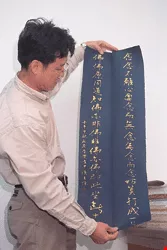
Wang Kuo-tsai successfully recreated the ancient ciqing sutra paper. The sutras written on it in gold paste by artist Hou Chi-liang convey a solemn majesty.
Ancient texts through modern eyes
Thanks to his rigorous research training, Wang Kuo-tsai is adept at interpreting ancient technical terminology from a modern scientific perspective.
For example, the art of making liusha paper was lost in China by the end of the Song dynasty (960-1279). The Song-dynasty writer Su Yijian, in his Wen Fang Si Pu ("Guide to the Four Treasures of the Study"), writes on the making of liusha paper: "Some use a flour paste, and mix in diverse colors, and place paper across, to stain it; it makes attractive patterns. This they call liusha paper. Others boil a paste of honey locust seeds that they spread on the surface of water with croton, so that onto it they can drip ink or colors. When touched with ginger they disperse; and when leopard-cat hairs coated with scurf are drawn across it they run together. This makes varied and attractive patterns, like human figures, or the shapes of clouds, or the flight feathers of raptors. They spread paper on it to receive the colors. It must be done behind nearly closed shutters in a quiet room, with clean containers and pure water, and a soul cleared of all distractions, to achieve the wondrous effect."
The long passage of text in classical Chinese may leave other people scratching their heads, but Wang Kuo-tsai is able to glean many useful pieces of information from it. Among the materials used to make the paper, for example, the flour-and-water paste is used as a substrate to which the color is applied; the flour thickens the water, making it easier to control the spread of the pigments. As for the honey locust seed paste (Gleditsia sinensis), croton oil (Croton tiglium), ginger and scurf, these are all surfactants that help the pigment to disperse on the surface of the substrate.
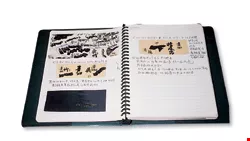
In the course of his scientific research into ancient types of paper, Wang Kuo-tsai subjects the papers that he makes to all kinds of physical and chemical tests, and whenever possible gets artists to try them out too.
The old ways aren't always best
The reason the paper needs to be produced "behind nearly closed shutters in a quiet room" is to prevent the patterns on the surface of the water being disturbed by draughts; as for the "clean containers and pure water," these prevent the spread of the pigments being affected by contaminants.
"Some of the old ways are indeed best," says Wang. For example, since ancient times the makers of Xuan paper in Jing County have bleached the rice straw that they use by putting it out in the sun for several months. "Because the straw is bleached by the sun, of course the paper made from it is immune to sunlight, and will not yellow. But for lack of available space, and in view of the time required, it would be difficult in practice for us to do the same."
However, with his grasp of modern science and technology, Wang Kuo-tsai does not limit himself to mere imitation by slavishly following the ancient methods. When he discovers that the old way is not practicable, and there is a better modern method, he will investigate new pigments and manufacturing methods that can achieve the same results.
His recreation of ciqing sutra paper is a case in point. Ciqing paper is dyed with indigo to the same deep blue as appears on blue-and-white porcelain. In ancient times in China this paper was used for copying Buddhist scriptures with gold paste ink. It expressed the solemn dignity of the religious texts especially well.
Over ten years ago, Wang Kuo-tsai attended a symposium at the National Palace Museum, at which the participants were taken on a special tour of the museum's storerooms. There he saw ciqing paper from the Xuande reign (1426-1435) of the Ming dynasty. He was greatly impressed, and swore to himself that one day he would recreate it.
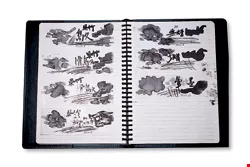
In the course of his scientific research into ancient types of paper, Wang Kuo-tsai subjects the papers that he makes to all kinds of physical and chemical tests, and whenever possible gets artists to try them out too.
Wild woad
The ancient method of making ciqing paper was extremely difficult. It involved extracting dye from the stem and leaves of indigo-bearing plants, and using it to stain the paper. The Ming-dynasty scientist Song Yingxing wrote the following description in Tian Gong Kai Wu (1637), his encyclopedic description of the technologies of his time: "To make indigo dye. . . they steep the leaves and stems in water for seven days, to naturally produce a liquor. To each dan [a modern dan is 100 liters] of liquor they add five sheng [a modern sheng is 1 liter] of lime. They stir it several dozen times, upon which the indigo coagulates. When the water becomes still, the indigo settles on the bottom."
To dye paper, they first had to reconstitute the indigo by dissolving it in an alkaline solution to produce "indigo white." Then they repeatedly soaked the paper in the liquor and rinsed it in water, which gradually imparted an increasingly dark blue color. To achieve the deep blue of ciqing paper, they had to dip the paper in the dye vat nearly ten times. Not only was this time-consuming, but the paper was easily torn or wrinkled.
This is why in ancient times ciqing paper was extremely rare and valuable. In the Ming dynasty, one sheet could be exchanged for ten catties of white flour. When the Qing emperor Qianlong (reigned 1736-1795) had his prime minister Liu Luoguo (familiar to Taiwanese TV audiences from a mainland drama series) transcribe Buddhist scriptures as a birthday present for his empress, Liu wrote them in gold paste on ciqing paper.
To make indigo, Wang Kuo-tsai went to the mountains of Pinglin in Taipei County to pick the Chinese woad plant (Baphicacanthus cusia). He gathered a whole sackful, but it yielded only enough indigo to dye a handkerchief. Wang was well aware that in fact artificial indigo became commercially available as long ago as 1897, having been synthesized by German chemists. Synthetic indigo has exactly the same chemical composition as natural indigo, and it is of high purity, easily available, and convenient to use. So Wang decided to use synthetic indigo for his ciqing paper instead of plant indigo, and to dye the wood pulp in a single operation before making it into paper.
"The sutra paper for sale on the market is generally dyed with the 'direct blue' dye used for ordinary papermaking," says Wang Kuo-tsai. "It doesn't dye to a deep blue, and it tends to have a green cast. If such paper is exposed to ultraviolet light for a length of time, the color strength falls to less than half the original level. But the ciqing paper I make using indigo stays above 97%."
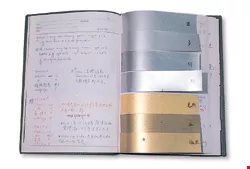
In the course of his scientific research into ancient types of paper, Wang Kuo-tsai subjects the papers that he makes to all kinds of physical and chemical tests, and whenever possible gets artists to try them out too.
Brain over brawn
Making yangnao ("sheep's brain") paper was another instance in which it was not practicable to use the ancient methods. How was yangnao paper made? Qing-dynasty writer Shen Chu (d. 1799) gives a very complete description in his Xi Qing Biji ("West Qing Notes"): "Yangnao paper is made using Xuande ciqing paper. Sheep's brain and flue-top soot are mixed together and stored in a cellar. After a long time the mixture is taken and smeared onto the paper, and rubbed smooth with a stone to make writing paper. It is black as lacquer and as bright as a mirror. It was first made in the Xuande reign of the Ming dynasty and used for writing with gold paste. It lasts for many years without deteriorating, and is not attacked by insects."
From this description, Wang Kuo-tsai learned that yangnao paper was made by applying a coating to ciqing paper, and required the use of sheep's brain and "flue-top soot," which is carbon black taken from the very top of the flue, where the soot particles are the finest.
Flue-top soot would not be hard to get hold of-the difficult part was sheep's brains. Where could he get them? After racking his own, he asked a colleague to go to the market and try to buy some. When his colleague came back he told Wang, "There's no one at the market selling just sheep brains, so I bought you a whole sheep."
Wang was horrified, but on looking closer he realized that his colleague was only joking and had brought back a sheep's head. There was nothing for it but to cut open the head himself right there in the lab to get out the brain, which was the size of a hen's egg.
"Dealing with that sheep's brain put me right off food, and it took ages for the stench to go away," recalls Wang Kuo-tsai with a grimace. "The book didn't say whether they used the sheep's brains raw or cooked, so I decided to cut that one in half, and leave one half raw and boil the other half, to experiment."
This unpleasant and troublesome procedure left Wang Kuo-tsai wondering whether it was really necessary to follow the old ways so faithfully.
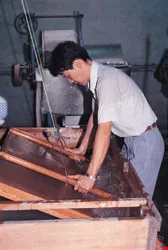
By performing every part of the papermaking process himself during his research into ancient papers, Wang Kuo-tsai has acquired excellent skills and a keen eye. (courtesy of Wang Kuo-tsai)
Looking for modern substitutes
He surmised that the coating for yangnao paper would basically need to comprise a pigment and an adhesive. The black pigment was the flue-top soot, and perhaps the adhesive was animal glue or starch, both of which were often used, but the ancient book did not state this clearly. The sheep's brain presumably acted as a gloss enhancer, not as an adhesive, for on the one hand it does not have adhesive properties, and on the other, a sheep's brain is only the size of a hen's egg, so the quantity would be insufficient. However, sheep's brain is rich in cephalins, which have surfactant properties, and therefore it might also act as a wetting agent for the soot. Egg yolk has a similar effect, but egg yolk would affect the color, so it would not be suitable in this case.
"The effect of the paper being 'as bright as a mirror' would mainly have been produced by lipids from the sheep's brain, and from polishing. As for it not being attacked by insects, that would be because it had a distinctive smell that repelled bookworms, in the same way as the rue and camphor that people placed around books and papers in ancient times to keep away insects," Wang explains. He was sure that there were more economic and convenient products available to use instead of the sheep's brain lipids, and protection from insects could be achieved by environmental control or other methods. He has already identified a number of possible substitutes, and is in the process of testing them to see which produces the best results.
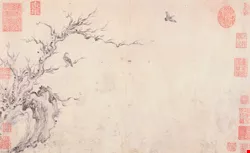
Since ancient times, Chinese scholars and artists have regarded high-quality paper as something to be treasured. Pictured here is Old Tree by a Flowing Stream, by Song-dynasty artist Ma Hezhi (courtesy of the National Palace Museum)
Do-it-yourself
"The way Wang Kuo-tsai uses scientific methods to study paper is the most fascinating thing about him," says Hou Chi-liang, who became good friends with Wang after meeting him in his search for art paper. Wang took his first degree in forestry, and received a full and rigorous scientific training. Furthermore, out of his own interest, for many years he has been collecting all kinds of art paper, exchanging opinions with painters and calligraphers, and exchanging technological knowledge with overseas researchers and with his colleagues at the TFRI. Thus his mastery of the science of paper production is something few can match. "That's why he can easily convert the ancient techniques and correctly translate them into modern materials, and go on to make improvements with regard to all kinds of problems in terms of concepts, techniques and materials that the ancients were unable to resolve, and make new breakthroughs in papermaking techniques," says Hou.
We asked Wang Kuo-tsai himself why he is able to make such paper. Is it because of his specialist background?
"There are plenty of people with a stronger scientific background than I have, but perhaps others are not so willing to get off their high horse, roll up their sleeves, and actually do things themselves," says Wang, who was born on Matsu, where from early childhood his three meals a day, snacks and fruit were all sweet potatoes. For example, to prepare the pulp for papermaking, he has to use a pestle to beat the bark of the paper-mulberry tree (Broussonetia papyrifera) by hand, because the bark fibers are long, and if one uses a machine they get tangled. But this beating with the pestle takes a whole day. In the past, before air-conditioning was installed in the lab, when he heated the pulp with a gas burner, he would be drenched with sweat. He does not have a tough constitution, and after finishing a batch of paper he would be sure to fall ill.
"There are also many variables in the actual procedure, which you have to study and resolve one by one," says Wang. When he was first making ciqing paper, he thought he had ironed out all the problems in the lab, but to his surprise in the papermaking workshop, as soon as the pulp beating machine started up, a big patch of bubbles appeared which were which were pulled down into the pulp with a gurgling noise, and he had to rush to turn the machine off. This happened five or six times in a row. After thinking about it for long time, he realized that the cause of the trouble was that the pulp contained substances with surfactant properties, and the rapidly rotating blades of the beater were carrying a great deal of air into the pulp. He spent two months working on the problem, which he finally resolved by adjusting the order in which ingredients were added.
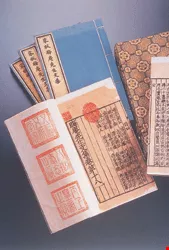
Literature may be passed down forever, but paper can only survive for a limited time. How to extend paper's life is a topic of great interest to modern papermaking experts. (courtesy of the National Palace Museum)
Anything but paper-thin
"Doing things yourself is tiring, but it gives you a flexibility that you don't have if you get other people to do the work for you," says Wang. He often goes to all sorts of places to look at high-quality paper. Once, he heard that seal-cutting artist Wang Pei-yueh had some sutra paper from Jinsu Temple in Zhejiang Province, and through a friend he arranged to go and see it. When he returned to his lab that afternoon, his hands were already itching to try making some himself.
He also once went to the rare books section of the National Central Library, where he asked the curator, Yu Pao-hua, "Have you seen any unusual kinds of paper?" After thinking for a moment, Ms. Yu sought out an ancient tome with pages all of golden-colored paper. This also went onto the list of the types of paper that Wang plans to study and recreate.
"Affection is paper-thin," is a saying that describes human inconstancy. But it could hardly be applied to Wang Kuo-tsai and his making of ancient paper, for through his papermaking he has built deep friendships with numerous artists and paper merchants. One of them, a Japanese paper merchant, is also one of his great benefactors in life.
Ten years ago, while visiting Taiwan, the merchant heard that there was a young man here who made good handmade paper, so he asked a Taiwanese friend to arrange an air ticket to take Wang to Japan, and spent a fortnight taking him to paper studios throughout that country, to give him a deeper understanding of the process of making paper by hand. Several years later, the merchant invited Wang there for another visit.
Recently, the Japanese merchant again told Wang: "If you don't come soon, it will be too late to see many of them."
Is the paper merchant worried about the disappearance of one old Japanese master craftsman after another? Or has he seen hope in the form of Taiwan's young Wang Kuo-tsai?
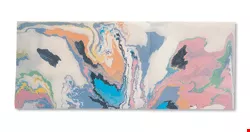
The patterns on liusha paper can be like stars in the sky or mountains and rivers-the design is completely in the hands of the artist.


