Uni-President Group: Food and Lifestyle Experts
Yang Ling-yuan / photos Chuang Kung-ju / tr. by Paul Frank
December 2007


In late October 2007, the Uni-President Group celebrated its 40th anniversary in Kaohsiung's recently built Dream Mall, Taiwan's biggest shopping center. Good things come in pairs: Uni-President has also been ranked sixth in CommonWealth Magazine's "Most Admired Company" survey this year, the first time it has made the list. Taiwan's largest food manufacturing and retail conglomerate, Uni-President posted consolidated group revenues of NT$257.7 billion in 2006. Seven of its subsidiaries posted sales of more than NT$1 billion and more than 40 of them posted sales of more than NT$100 million.
During the celebration, Uni-President's CEO Jason Lin said the theme of the anniversary was "Add Value to your Life," and spoke of the role the group has played in the life of Taiwanese people.
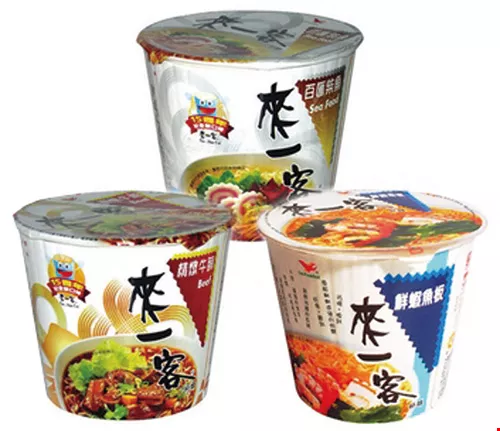
Uni-President can be found in every corner of Taiwan, from the high mountains to the outlying islands. Its ground-pork noodles, which sell 170 million packets a year, have been a favorite among Taiwanese people for 36 years. Its Mine-Shine tea drinks line, which was launched 23 years ago, sells 400 million cans of tea and earns NT$2.5 billion in annual sales revenues. You can hardly walk five steps without coming across one of its 7-Eleven convenience stores, Starbucks Coffee franchise outlets, or Cosmed drug and beauty shops. Long lines in front of Mister Donut shops are a common sight and Muji products are sold in many department stores. From the beginning, Uni-President has continuously reinvented itself and reshaped Taiwan's consumer landscape. It can fairly be said to be the company with the highest level of penetration in Taiwan.
In the ancient city of Tainan almost every extended family has someone who works for Uni-President. Most choose to join the company when they finish their studies. In the factory in Yungkang City, the birthplace of Uni-President, most middle-aged employees have been working for the company for over ten years, and most senior managers for about 20.
Wu Chin-sung, an assistant manager who has worked for Uni-President for 25 years, says, "When we see a senior manager, we call him 'Teacher.'" Wu was once a teacher himself and explains that in the early days most Uni-President managers were recruited from among teachers or from the Taiwan Sugar Corporation, because co-founder and chairman Kao Chin-yen thought that as people of high integrity they would be able to realize the company's ideal of "honesty in business."
Quality, integrity, fair prices
Kao Chin-yen, who was only 13 when he began his first apprenticeship, says, "Professional achievement trumps academic achievement and integrity trumps both." As long as someone has strong integrity, the company can teach him what he needs to know to succeed.
"Uni-President has an unwritten recommendation system," explains Wu Chin-sung. "Before an employee is hired, the person who recommends him-his immediate superior-has already made an initial assessment of his integrity." Influenced by the CEO's philosophy that "integrity is more important than talent," Uni-President recruiters pay particular attention to job applicants' school grades for conduct and integrity.
"As long as every employee remains focused and vigilant, the company will be able to prevent crises." Uni-President was at one point the victim of a malicious product poisoning attack that sowed panic among its customers, but thanks to its long-standing reputation for good quality, trustworthiness, good service, and fair prices, a crisis was quickly averted.
Forty years ago, 38-year-old Kao Chin-yen left Tainan Spinning Corporation, where he had worked for many years, to start a new company. Never one to forget his origins, he offered the job of CEO to Wu Hsiou-chin, the veteran textile entrepreneur who had given him his first job. Forty-four stockholders raised NT$32 million to found Uni-President as a wheat flour and animal feed manufacturer. Only seven years later, Uni-President's annual turnover exceeded that of Wei Chuan Food Corporation, which had been the market leader up to then.
Uni-President started out with just 82 employees and has now grown to more than 60,000. The group is active in China, Southeast Asia, India, New Zealand and Australia, Africa, and Central and South America, and has gradually expanded its core business from food to the service industry. It has also gone a step further and has transformed itself into an investment holding company. Its retail and distribution businesses are performing very well and now account for 47.6% and 19.7% of turnover, respectively, which taken together compares favorably with the 32.7% turnover posted by the food business.
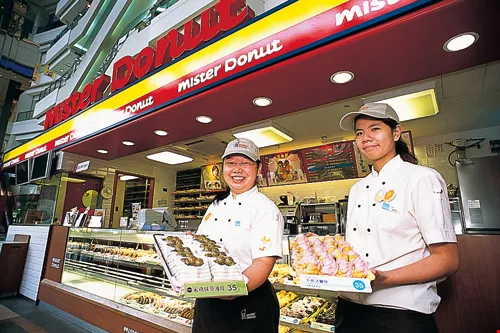
Like many older Taiwanese companies, Uni-President has close ties with Japanese businesses. Uni-President imported Mister Donut from Japan in 2004-with spectacular success.
Controlling distribution channels
Uni-President may be an old brand in a traditional industry, but it never yields to anybody when it comes to innovation.
Looking back to the early 1980s, Wu Chin-sung says that less than a year after he joined the company, the first design he submitted was for a vending machine. "I never thought that the company would set up an independent team to work on the project." At first they had five vending machines on the entire island of Taiwan, including one in the Alishan Scenic Area. They were ridiculed in the industry, and even inside the company eyebrows were raised. But the team kept plugging away and as a result, today Uni-President has more than 14,600 vending machines throughout Taiwan and is the country's biggest operator of them.
During its first decade, Uni-President was a manufacturing-oriented company. Based on Taiwan's demographic trends and market demand, Kao Chin-yen set a goal of "building a new factory every year" and demanded that every product become market leader in its segment. These clear goals galvanized Uni-President employees.
But as Uni-President entered its second decade, Kao Chin-yen discovered that good products did not necessarily sell, so he traveled overseas to learn as much as he could from a wide range of businesses and their experiences. In France, he was told that "whoever controls the distribution channels wins the game." This insight changed Uni-President's subsequent strategy, which actively oriented itself toward becoming a distribution business.
To control distribution channels in various markets, Uni-President opened a series of name-brand stores of its own as well as foreign franchise outlets, including 7-Eleven convenience stores, Semeur de Pain bakeries, 21 Century fast-food restaurants, Cosmed drug and beauty shops, Starbucks coffee shops, Muji lifestyle stores, and Mister Donut stores. From storefront sales it moved into distribution, manufacturing, non-store selling, and logistics, and gradually built up Uni-President's distribution division, which has begun running franchises beyond Taiwan. For example, the group has opened a chain of Starbucks coffee shops in Shanghai and 7-Eleven stores in the Philippines.
7-Eleven was founded in the US and has since been bought by a Japanese holding company. In the 27 years since the first 7-Eleven store was opened in Taiwan in 1979, 4,681 stores have followed and Taiwan now has the world's third largest number of 7-Eleven stores, after the USA and Japan. Having started out as a chain of snack and convenience stores, 7-Eleven has gradually expanded to offer a range of services including utility bill collection, e-commerce, advance purchase, ATM withdrawal, WiFly Internet, iCash, and iBon services. Urban professionals and office workers have come to rely on 7-Eleven as a partner in their daily life. President Chain Store Corporation ranked third in CommonWealth Magazine's 2007 "Most Admired Company" survey, which was higher than its parent company, Uni-President Enterprises Corporation.
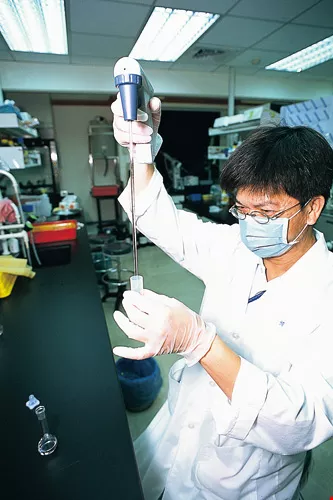
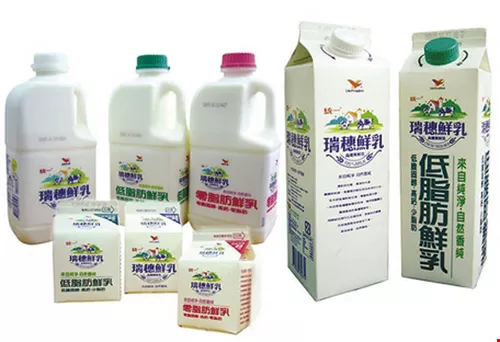
To satisfy the health and environmental demands of today's consumers, Uni-President is constantly modifying and expanding its product line-from fresh milk, non-deep-fried instant noodles, and freshly squeezed fruit juices to organic and biotech foods.
Millennium Love
Over the last decade Uni-President has transformed and upgraded itself even more markedly. Eleven years ago Jason Lin, Kao Chin-yen's successor at the helm of Uni-President, thought, "There is no such thing as a traditional (sunset) industry. There are only traditional management methods that need to be eliminated through competition." To make Uni-President globally competitive, besides forging an alliance between the group's food manufacturing operations and its distribution and retail operations, Lin explored synergies to develop the group's business in new directions and make the best use of its core competencies.
For example, Uni-President's instant noodles began to be made with cooking oil, wheat flour, and soy sauce from the group's own manufacturing units. The online book retailer Books.com.tw uses the group's 153 Takkyubin express delivery service points (a joint venture with Japan's Yamato Transport). By exploiting this synergy, in which "one plus one is more than two," the group is able to develop broader business opportunities.
On the eve of the year 2000, Jason Lin launched a campaign named "Millennium Love" that centered on four themes: "Respect life; care for one another; be optimistic and enterprising; and be close to nature." Several projects were launched as part of this campaign.
The group has adopted a series of measures as part of its Millennium Love campaign: First, to protect the health of consumers, employees must constantly discuss and determine whether they have done "the right thing" for customers. The group has also improved its entire food production line to ensure that it contains no harmful preservatives or colorings. Second, to satisfy customer demands, its convenience stores are now open 24/7 and have their bread delivered twice a day instead of once every three days as was previously the case. Third, employees may not criticize the competition or hit people when they are down-they may only criticize their own performance. And fourth, in an effort to be more environmentally friendly, Uni-President has begun offering a range of organic foods and has reduced packaging materials, weight, and waste.
A health and lifestyle company
Jason Lin is confident that in the several years since Uni-President repositioned itself, it has successfully made the transition from a food company to a group of health companies that guide their customers in the pursuit of wellbeing and a healthier lifestyle. In addition to obtaining health-food certification from the Department of Health for many of its cooking oils, milk products, and tea drinks, Uni-President uses its wide range of retail and food-service outlets to provide health products and healthy living information to customers.
As part of its environmental action plan, Uni-President has begun reducing food miles (the distance food travels from the time of its production until it reaches the consumer) and minimizing the need for low-temperature food storage by using locally produced and in-season food and increasing the percentage of organically grown agricultural products it sells.
In addition, Uni-President has set its companies a series of goals to lower their greenhouse gas emissions, water consumption, generation of waste materials, and office paper use. On the manufacturing side, the group has set packaging reduction, green purchasing and procurement, green product, and green energy use goals. The group hopes thereby to reduce its companies' environmental impact to a minimum and encourage consumers to choose its products not just because they are reasonably priced and convenient, as was already the case, but out of a greater commitment to the environment and society.
For example, in the past Uni-President used to transport individual packages of animal feed by truck to its customers, and the customers would then unload, unpack, and use the feed, which was a serious waste of material. Since the group launched its packaging reduction program, its animal feed factories have been loading the feed directly into bulk feed tanks mounted on the trucks. The feed is then unloaded directly into the customers' storage tanks. Moreover, packaged solid sugar has been replaced by a vacuum-packed sugar syrup, which customers can mix directly into food. Two steps are saved in this way: opening individual sugar packages and dissolving the sugar.
In 2007, the board of directors appointed executive vice president Alex Lo, who happens to be Kao Chin-yen's son-in-law, as president of the Uni-President group, a move that has been widely seen as a sign that he is Kao's heir apparent. Jason Lin was promoted to group CEO, but Kao remains chairman of the board and the group's kingmaker.
On becoming group president, Alex Lo said, "We have to identify needs which our customers are not aware they have." Lo's main task in his new post has been to redefine the group's corporate strategy.
For example, for its dairy products line, Uni-President has developed quality up-market products and innovative manufacturing processes that employ "high-temperature, short-time" (HTST) pasteurization. To meet today's consumers' demand for low-cholesterol foods, the group has also launched a plant-sterol milk. Even instant noodles, a product that has always sold well, raise concerns among consumers who are worried about eating too much deep-fried food. Consequently, Uni-President has invested in state-of-the-art food processing technology to introduce a healthier line of instant noodles that are not deep fried. Although they are more expensive, the group is confident that they will attract new customers.
The Chinese-speaking market
Unlike other Taiwanese manufacturers, which were mainly export-oriented, Uni-President was long focused on the domestic market. Ten years ago, in pursuit of its long-term goal of becoming the world's biggest food company, the group set up shop in the US, Western Europe, and Japan. But after it opened cookie and noodle factories in the US, its products did not appeal to American tastes and the group reluctantly pulled out of that market. Some time later, Uni-President expanded to Central and South America, but because it had not trained its staff to work overseas, it suffered another setback when senior managers due for transfer to Latin America threatened to quit in protest. Unable to reach an agreement with them, Uni-President gave up its plans for faraway markets and retreated to Taiwan.
Chairman Kao Chin-yen thought that because most of the raw materials and ingredients used in the food industry were imported and the Taiwanese market was relatively small, there was no alternative for an ambitious company than to go overseas. For a time, the group tried to establish a foothold in Southeast Asia, but political instability in the region made investment problematic, so in the end it decided to temporarily withdraw from Southeast Asia and focus on China.
Having established a new base in a market of 1.3 billion consumers, Uni-President would be able to conquer the global market, and if need be it could always retreat to defend its base in China. Kao Chin-yen chose to invest in China because it was a huge market rich in resources, Taiwanese businesspeople were of the same language and race as the Chinese, with similar tastes to them-all factors that gave Uni-President a better shot at conquering the Chinese market. But before that could happen, the government's burdensome requirements for investment in China allowed a latecomer, Master Kong, to sweep the Chinese market with instant noodles, one of Uni-President's core competencies. Master Kong has been one of Taiwan's ten biggest international brands for several years running. Although Uni-President had its eyes set on the Chinese market early on, it suffered a series of missed opportunities there. Only once the government's policy on investment in China was relaxed could the group catch up with its competitors.
In 2006 Uni-President's sales revenues in China hit RMB14 billion, which is more than the group made in Taiwan. Its line of fruit juices vaulted to market leadership.
"Our sales revenues in China can grow another 59-fold!" estimates Kao Chin-yen. China's population is 60 times Taiwan's, so plenty more growth can be expected.
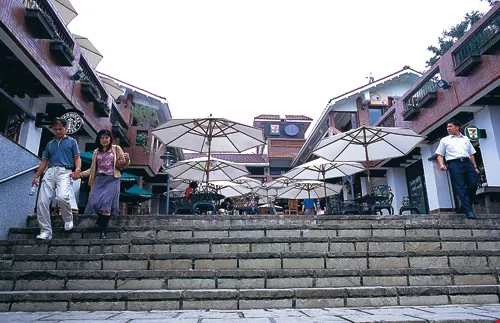
The Chingching Farm rest stop, which is located at an altitude of 1743 meters, used to be a sleepy spot that attracted few visitors. Since Uni-President opened a 7-Eleven store and a Starbucks coffee shop there, it has become a very popular tourist attraction.
Global brand
In March 2007 Uni-President, now the third-largest instant noodle maker in China, announced it was investing RMB1.2 billion in the stock of Nissin Hualong, the second largest instant noodle maker in China. By leveraging the combined strengths of both companies, Uni-President hopes to challenge market leader Master Kong for the number-one position. Jason Lin says, "The Chinese market is so huge that to succeed in it you need to work with a local company."
Although Uni-President leads Taiwan's instant noodle market and sells more than 6 billion packets of noodles worth approximately NT$18 billion a year around the world, the Uni-President brand has not gained added value because of this. To consumers outside the Chinese-speaking world, Uni-President remains an unfamiliar name. Therefore, in addition to its continued drive to conquer the China market, Uni-President plans to set up operations in ten ASEAN countries. In gaining a foothold beyond Taiwan and China, the group plans to lay the foundation for its domination of the future ASEAN free trade area.
In recent years the prices of key raw materials used by the food industry, including soy, corn, wheat flour, and sugar has soared, and food companies have borne the brunt. Both rising and stagnating prices entail risks for the group. Recently, Ttet Union Corporation, a Uni-President subsidiary, was investigated by Taiwan's Fair Trade Commission on suspicion of hoarding edible oil products to drive up their market price. The investigation was an awkward headache for Uni-President. Rising petroleum prices will also be a serious challenge for the group, because it has to be able to continuously transport huge quantities of products.
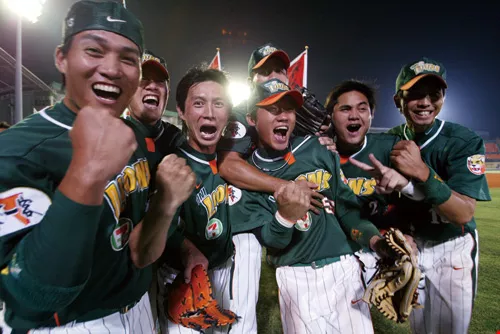
Uni-President has long fostered its image as a corporate citizen and sponsored a variety of sports and cultural activities. In 2007, Uni Lions became the Chinese Professional Baseball League champion for the fifth time. To mark the occasion, 7-Eleven offered its customers specially reduced prices for three days.
A tireless veteran
The history of Uni-President encapsulates the history of Taiwan's economic development: In its early days as a manufacturer of cooking oil, flour, and animal feed it met the basic needs of Taiwan's agriculture-based society. In step with Taiwan's development into an industrial society, the group expanded into the beverage and instant-noodle businesses, offering its customers convenience, speed, and quality.
As Taiwan entered the high-tech age, Taiwanese people began to pay more attention to nuitrition and food safety. Sensitive to these concerns, Uni-President developed a range of frozen and fresh food products. Since the turn of the millennium, the world's baby boomers have begun reaching middle age and are stoking a growing trend toward health and wellbeing. Uni-President has seized the opportunity to roll out a line of natural products that promise to benefit consumers' health and the environment.
In the future, Uni-President plans not only to energetically build international partnerships and to continue to introduce a wide range of lifestyle and everyday products under franchise deals, but also to bring its own brands to the world. Uni-President has been officially named sole supplier of instant noodles to athletes and staff at the 2008 Beijing Olympics. This rare opportunity promises to earn the group international name recognition and to bring it a big step closer to becoming the world's leading food company.
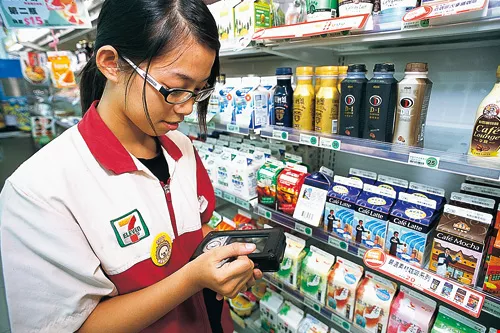
It took 7-Eleven seven years to become profitable in Taiwan, but today its convenience stores sell food and drink, groceries, and magazines on streets and lanes throughout the island. The goods, money, and information flowing through its stores have become a keystone of Uni-President's success.


