Factories Bound for Foreign Lands
Elaine Chen / photos Vincent Chang / tr. by Mark Halperin
May 1986


Setting up a business can be as easy as turning a key. Everything has been prearranged, the factory built, the machinery installed, the raw materials secured, and the assembly line organized with trained workers at their posts, waiting only for the word to begin. Of course, the key comes with a price, upwards from US$100,000 and sometimes higher than US$10 million. But turn key projects, or whole plant exports, are a quick way to boost the economies of industrializing countries, and in the past ten years have become a growing business in Taiwan.
The business of whole plant exports can be a highly profitable one. One factory owner named Huang looked at his payroll and decided that costs were too high to continue his furniture business. He was about to sell the factory equipment for scrap when a foreign buyer expressed a desire to purchase his assets, and Huang ended up with two and a half times the money he would have made had he gone ahead with his original plan.
Those on the receiving end of whole plant exports generally are newcomers to the business, who want to begin production and make a profit immediately. The seller prepares everything, beginning first with a feasibility study. Can the raw materials, technology, and financing be attained? If the answer is yes, then the project moves to plant design, which entails machinery selection and assembly process organization. Once these matters are solved, the factory and machinery are constructed and then shipped to their new home, for installation and a test run before the beginning of production.
Work does not stop once factory is in hand. Workers are recruited and trained, and sales outlets found if need be. The exporter then retreats from the scene, always on call should the products or machinery run into problems. Says one manufacturer, "It's like marrying off a daughter."
Besides equipment, whole plant exports also involve the development and transfer of technological knowhow, which spurs the economy still further.
Twenty years ago, almost all the machinery used in Taiwan was imported. As the economy industrialized, however, domestic makers began to supply spare parts and accessories and maintenance services, gradually developing the ability to make simple goods, until today where the product range extends from machines that make instant noodles to those that manufacture concrete and chemical products. Whole plant exports may be seen as an unexpected fruit of this process.
Last year the biggest exporter of whole plants from Taiwan was the Taiwan Cement Engineering Corporation. Starting as the engineering department of Taiwan Cement, it grew along with the parent company, amassing considerable experience and talent and spinning off as an independent firm in 1973. Outside of Taiwan Cement's plants, the firm has helped build ten factories at home and abroad.
Statistics report that last year 205 firms exported whole plants, with sales totalling US$175 million. Seventy-eight percent of this trade went to Southeast Asia.
"Southeast Asia has many successful overseas Chinese businessmen. With our common ties of language and culture plus geographical proximity, it's natural that the area would be our biggest market and that we would have a large market share," says Chang P'eng of the Overseas Chinese Affairs Commission.
Besides cultural affinity, Taiwan can also offer Southeast Asia compatible technology. "Many American firms are highly automated," notes Chou Kuang-k'ai, Executive Secretary of the Ministry of Economic Affairs Coordination Committee on Package Plants, "and their equipment isn't necessarily appropriate for Southeast Asia. Labor is inexpensive and creating a few more jobs there wouldn't hurt. Furthermore, capital-intensive industries can lead to maintenance and operational difficulties."
Marketing is another factor. American bakeries, for example, are built on a scale to serve consumers in several states. A Thai businessman, however, may want to purchase a much smaller operation, suitable for family-style management, and in this market Taiwan has the competitive edge.
But while whole plant exports mean high profits, the business can produce a boomerang effect. Yesterday's customer can easily become tomorrow's competitor, in Malaysia, Thailand, Indonesia, and even mainland China. Yet makers have little recourse. Should they withdraw from the market, the vacuum would be quickly filled by aggressive Japanese and South Korean firms. Whole plant exports are seen by the South Korean government as one way to reduce foreign debt, and 1984 sales totaled US$1.68 billion. Targets for 1990 are set at an ambitious US$10 billion.
Whole plant exports have also figured in the plans of the ROC government, but proposals for establishing a trading company, an international leasing firm, and a machinery development concern have been considered premature and have been put aside. In 1984, though, the Ministry of Economic Affairs set up the Coordination Committee on Package Plants, which coordinates activities between the relevant government bodies and provides makers with a rich storehouse of information.
The Coordination Committee often finds itself in a more activist role, assisting and linking up market analysts with designers, factory operators with raw material suppliers, and financiers with shippers. Whole plant export is a complex, multifaceted business, one which few companies can handle on their own. Success requires a matchmaker.
Bringing people together and keeping them happy, however, remains a difficult task. Chinese have long been known for their preference for going it alone and the lack of cooperation between parties in Taiwan has been one factor allowing South Korean and Indian companies to pull ahead. The Coordination Committee has tried to establish a core-and-satellite system to stabilize the situation, but few have volunteered to play the supporting roles.
Adequate financial support is critical with whole plant export. Many importing countries, strapped by foreign debt, pay particularly close attention to the terms and amount proposed by bidders. In 1979 the ROC government established the Export-Import Bank to assist local makers, granting long-term repayment schedules at low interest rates. In addition, should a foreign customer fail to make good on his payments, the bank will reimburse the Chinese firm and take legal action overseas to recover the debt. The bank has also set up an insurance fund of NT$1 billion (US$25 million) to protect companies against losses due to defaulted payments, disasters, political instability.
Despite such assistance, makers are not completely satisfied. Only firms whose earnings over three years have averaged US$1 million may apply for support, and the Export-Import Bank takes a dim view of credit in countries with sizable debts. Fixed interest rates also put companies at a disadvantage vis-a-vis the Japanese, for example, who can juggle interest rates freely to find the optimal financial package for their customers.
This quandary has its origins partly in official bureaucracy. In Japan the Export-Import Bank is part of the Ministry of International Trade and Industry (MITI) while the South Korean counterpart be-longs to the Ministry of Economics. Such an alignment enables financing guidelines to be coordinated with overall plans for economic growth, creating an aggressive, even self-sacrificing financial support policy. The Export-Import Bank in Taiwan, by contrast, is under the purview of the Ministry of Finance, whose conservative stance sometimes leaves Chinese companies a day late and a dollar short in international competition.
Other obstacles include insufficient engineering design and production standards and red tape in obtaining foreign entry visas, but some firms for the time being still find a way around these problems, which can mean linking up with a foreign partner. Working with French companies in Africa, for example, gives Chinese makers a dependable source of information and a trustworthy ally to assure banks and secure loans at home. Foreign partners, for their part, can use the cost advantages Chinese companies have in making small and midsize plants, and concentrate on financing and quality control.
Efforts in the ROC continue. The government has announced programs to financially assist public firms to research new machinery products and to purchase whole plants, with the local content ratio being at least 40 percent. Plans are also afoot for three sizable public and four private companies to set up a joint-venture heavy machinery consulting firm, which could help bring makers together and expand the scale of their operations. For while a 50 percent growth rate is an impressive figure, further sustained hard work is necessary for the ROC to progress in this sector.
[Picture Caption]
A cement "forest" takes shape. Such factories are already part of Taiwan's exports.
(Top) Many years of designing and manufacturing factories have given Taiwan Cement Engineering the capability to export whole plants, such as this one, bound for Singapore .
(Bottom) Sometimes whole plant export involves only transfer of skills and technology. Consultants here from Taiwan Cement Engineering assist the Panamanian firm EECB Cement Co.
(Left) Setting: the Kaohsiung plant of Yuen Foong Yu Paper Co. The characters: the figure second from left is Chinese, while the others are Thai. The activity: studying how to operate the paper-making machine at right.
(Top) M.T. Wu, Vice-Minister of Economic Affairs (left) and Chou Kuang-k'ai, Executive Secretary of the Coordination Committee on Package Plants (right) in preparation discussions.
(Bottom) Without a front counter, the China Export-Import Bank looks little like a financial institution.
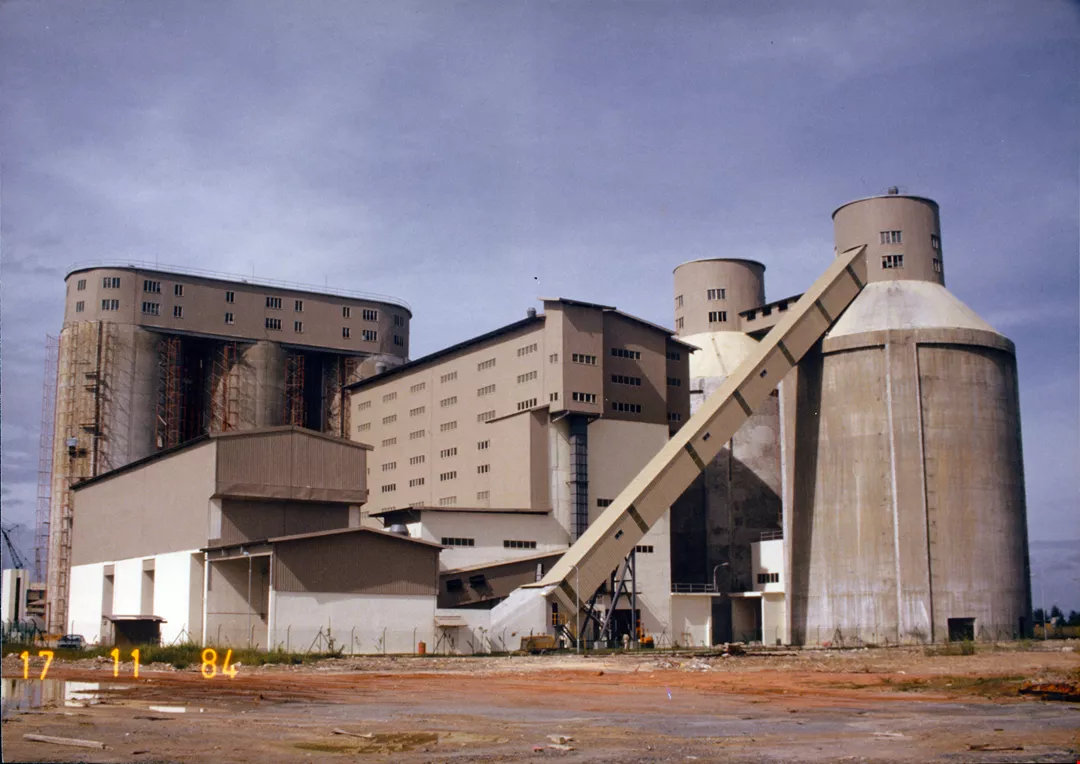
(Top) Many years of designing and manufacturing factories have given Taiwan Cement Engineering the capability to export whole plants, such as this one, bound for Singapore .
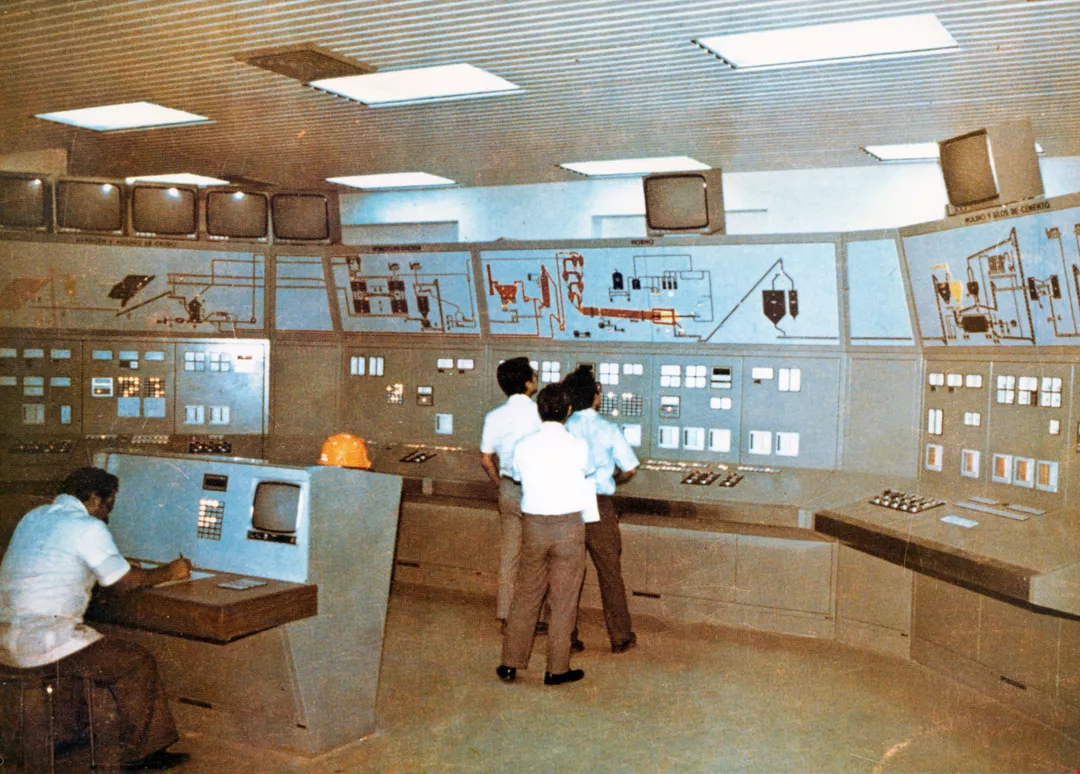
(Bottom) Sometimes whole plant export involves only transfer of skills and technology. Consultants here from Taiwan Cement Engineering assist the Panamanian firm EECB Cement Co.
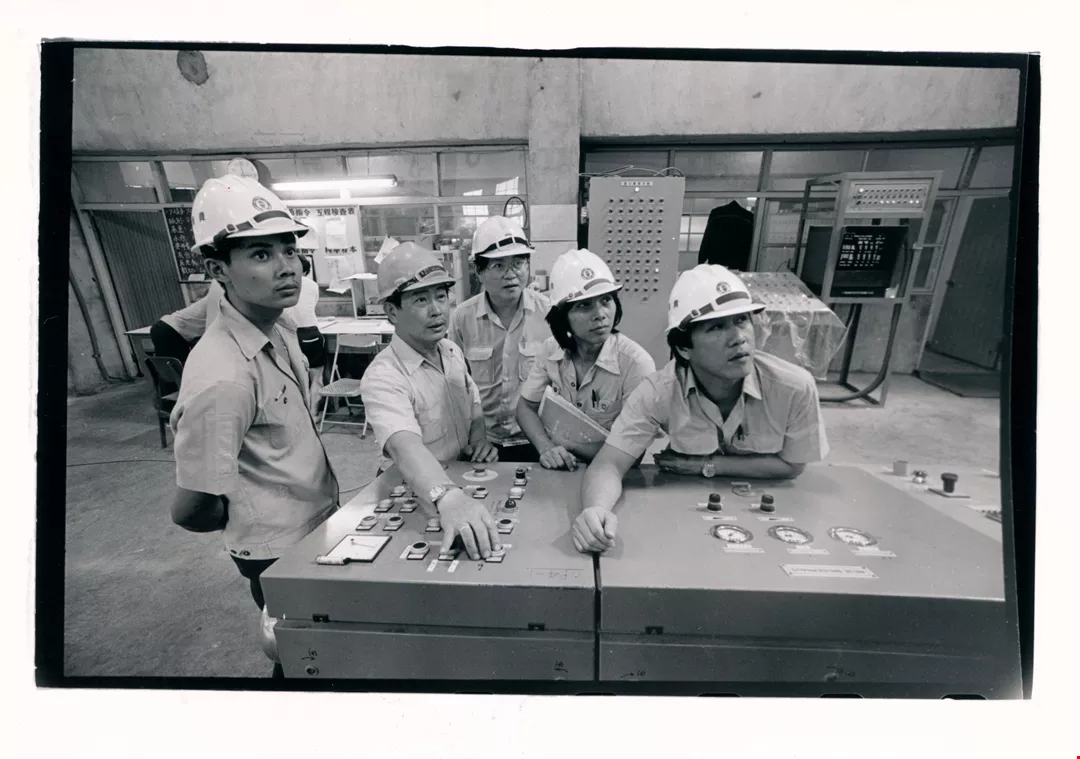
(Left) Setting: the Kaohsiung plant of Yuen Foong Yu Paper Co. The characters: the figure second from left is Chinese, while the others are Thai. The activity: studying how to operate the paper-making machine at right.
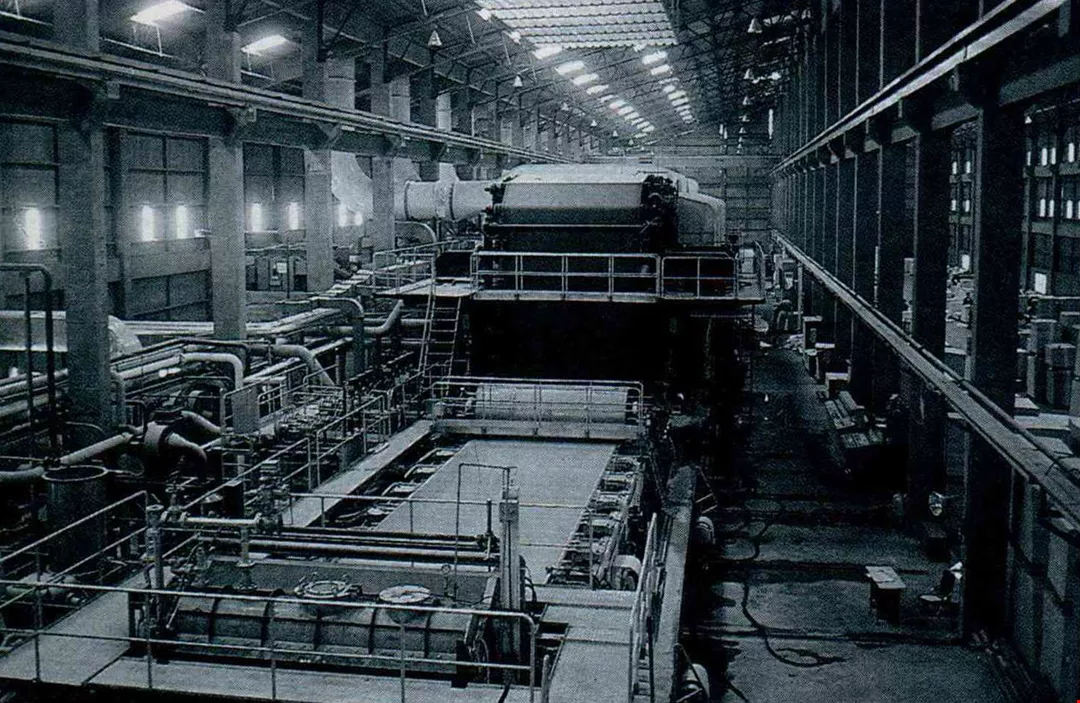
The activity: studying how to operate the paper-making machine at right.
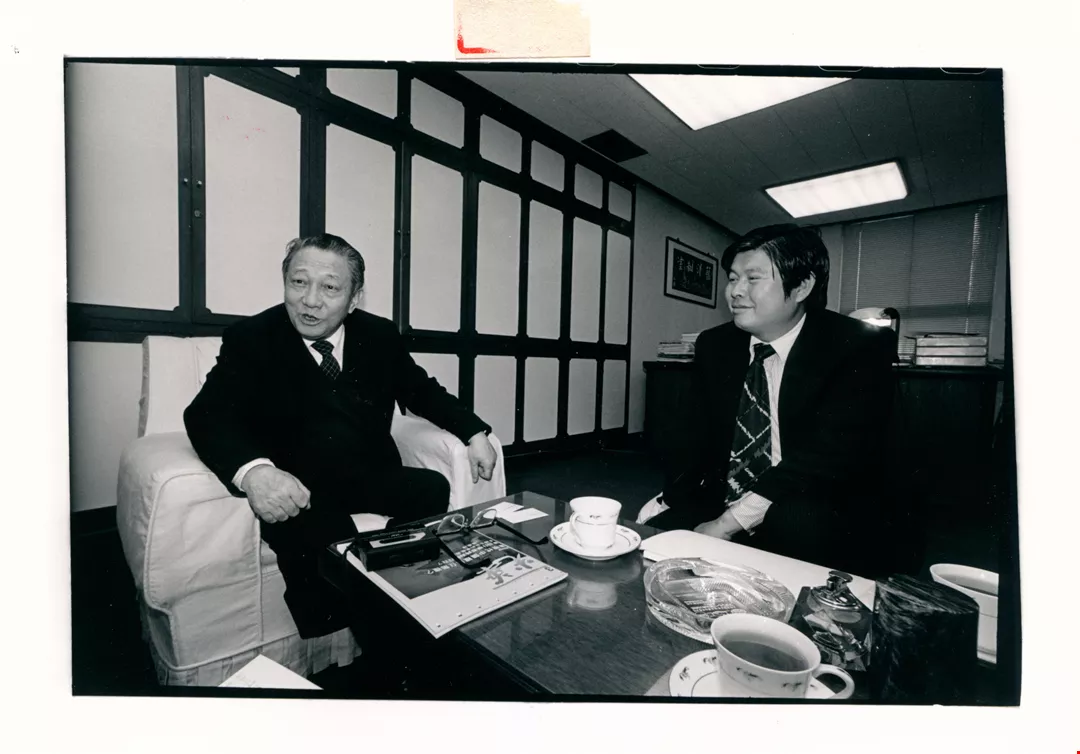
(Top) M.T. Wu, Vice-Minister of Economic Affairs (left) and Chou Kuang-k'ai, Executive Secretary of the Coordination Committee on Package Plants (right) in preparation discussions.
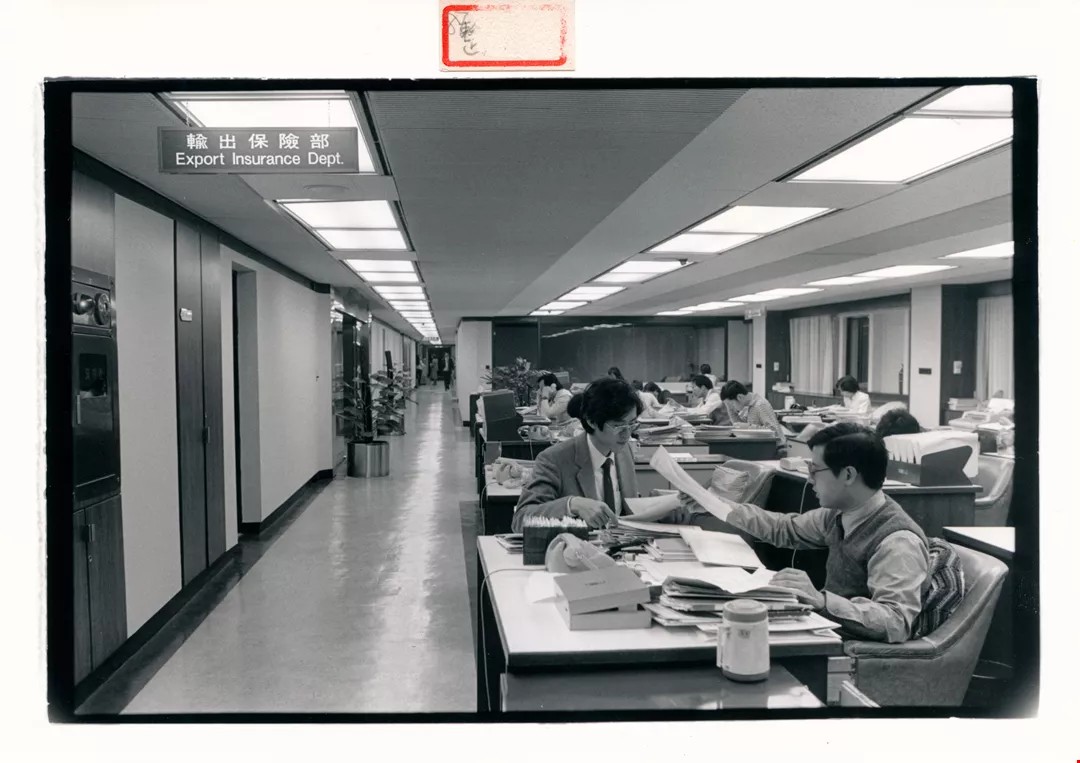
(Bottom) Without a front counter, the China Export-Import Bank looks little like a financial institution.


@List.jpg?w=522&h=410&mode=crop&format=webp&quality=80)


