

There was a funny story about YAOX going around. It was said that when the KMT's honorary chairman Lien Chan went to China to meet with Chinese president Hu Jintao, Hu made a point to mention to him, "The designer of the exhibit in this year's China Pavilion is a Taiwanese.... The creativity of you Taiwanese is really something!" Full of pride, Lien was quick to ask the name of this company that was "really something." But when Hu replied "YAOX Edutainment," Lien could only smile awkwardly-he'd never heard of it.
"There's no way of knowing whether this happened or not, but never mind Mr. Lien-most Taiwanese had never heard of YAOX before the Expo," says YAOX creative director Crayon Yao with a self-deprecating smile.

For the Taiwan Pavilion, YAOX designed a three-level experience, with a glass sky lantern, an LED globe, and an immersive theater. The innovative multimedia show has awed visitors. Spectators watch as the "virtual sky lanterns" begin their skyward ascent.
YAOX Edutainment, which has been in business for more than 20 years, is one of a very few local companies that make 3D films. It was started by Yao and his wife Wu Ju.
Not too tall, a little round around the waist, and over 50, the couple are reminiscent of the landlords in the Stephen Chow movie Kung Fu Hustle-they look quite ordinary but they are actually grand masters of their game. The two were big names in the advertising industry, and the stories of how they rose and how they changed their career paths are legends.
Crayon Yao, a graduate of Fu Jen Catholic University's Department of Mass Communication, entered the advertising world after completing his military service. The 1970s and 80s were not easy for young people in advertising, but he learned to develop concepts, write copy, choose casts and locations, and write and direct scripts, becoming an old hand at all the steps in the process. For example, the Green Time Tea commercial still remembered by 30- and 40-somethings that went, "A big nose, a bushy moustache, and a fishing pole in the hand..." was his concept. At the insistence of a client, he even reluctantly played the role of a detective questioning a suspect!
Yao, who loves to read literature and history, is also a rare expert on the history of Chinese navies and battleships. For three years he wrote a column for the magazine Defence International on Chinese battleships, and he was once invited to the Chinese University of Hong Kong to give a paper at a conference on modern Chinese naval defense. Jumping from out-of-the-box advertising to serious military history, Yao can do it all-it's a testament to his uncanny abilities.
Wu Ju is no less talented than her husband. The daughter of a poor family, at 15 she started working her own way through school before going to work for the then-popular Sisters Pictorial as an illustrator. A gifted visual artist, her price per illustration rose from NT$20 to NT$200, and she was hired as an illustrator for advertisements as well.
The good money coming in from illustrating allowed Wu to attend night-school courses in management at the College of Law and Business of National Chung Hsing University (the college is now National Taipei University) and to study abroad in Japan for one year. When she returned, she began working at Taiwan's then-largest advertising company, Dada Film Production. That's where she met Yao.

YAOX's branch offices in Taipei and Shanghai have 3D theater installations so clients can experience them firsthand. The customized designs are created according to a standardized procedure, which greatly reduces the installation time needed. They have received high praise from industry professionals.
With Yao's wide-ranging knowledge and unbounded creativity and Wu's artistic ability and business savvy, they made for a perfect pair in business as well as in life. The couple have been creating independently since they were 27 or 28 years old, starting the companies Xietong Film and Television, Huige Film and Television, and Digimax, and producing hundreds of acclaimed commercials.
But after several years in the industry, they felt that in making commercials they were always working for someone else's brand as subcontractors. In order to develop the value of their own brand, at nearly 40 the couple bade the advertising world goodbye and started YAOX Edutainment in 1994.
YAOX, which was originally geared toward producing animation, did not get off to a promising start. Wu, a frequent visitor to theme parks around the world such as Disneyland and Universal Studios, suggested to Yao that they try to dominate the market in the sort of 3D films frequently featured in such attractions. After several years of laboring and with assistance from teams from the Industrial Technology Research Institute, the company produced Taiwan's first 3D animated film, Paper Plane, in 2001.
The seven-minute film based on an experience everyone remembers from childhood takes audiences along with a paper airplane as it flies through the sky, and reintroduces them to nature. In the film, the plane meets other cute characters such as a bee and a little bear. It soars through the blue sky over a sea of flowers and a pristine river. Though Taiwan's first 3D film, it was quite advanced technically.
Since then YAOX has made several more educational and entertaining 3D films, such as Dog and Bugs, Dino Circus, and Dr. NaRam. In 2002, their film U-Boat Adventure won Taiwan's Digital Content Product award. That NT$8 million, 13-minute short about a World-War-II air and sea battle brought together Yao's two interests. It is especially particular in its depictions of aircraft and battleships and features a segment involving the travels of Zheng He's fleet. In both its storytelling and its visual effects, it is finely crafted. Not only was it invited for an industry screening at Shin Shin Showtime Theater, it was also the first locally produced 3D film to be shown regularly at Taichung's National Museum of Natural Science.

The 3D animation flicks of YAOX Edutainment are both entertaining and educational, which makes them big favorites at museums in Europe, Japan, Korea, China, and Southeast Asia. They are often described as Taiwanese versions of Avatar.
For all its success in the world of 3D film, YAOX is not satisfied to stop there. The company advanced step by step from simply producing films to designing hardware for 3D experiences in theaters, museums, and theme parks, and finally to creating entire museums and expo pavilions.
Why move into hardware, a completely different area? Yao says bluntly that without properly equipped theaters, there is no way for the market to expand no matter how good the films get. In order to get more customers to buy YAOX's films, the company needs to get the projection facilities to them first.
With the attitude of "If you're going to do it at all, do it best," YAOX succeeded in putting together a team of domestic and foreign manufacturers of projectors, 3D glasses, special-effect theater seats, and immersive projection systems as well as construction and design groups. Together they are a manufacturing chain that can create an entire theater from inside to outside in one go.
The complete integration allows YAOX 3D theaters to be produced quickly in a standardized, "modular" manner. That means construction time and manpower costs are greatly reduced. "For example, the 200-seat 4D theater in the China Science and Technology Museum originally would have taken at least three months to build, but we were able to finish in just one month. The officials in charge were all amazed at the efficiency," Yao says.
The ability to provide both content and hardware, and the lack of similarly skilled competitors, has made YAOX Taiwan's top creator of 3D films, 3D theaters, and museums. Its films have been marketed in Europe, Japan, Korea, China, the Middle East, and Southeast Asia, and its hardware business is taking off as well.
There is, for example, the virtual interactive display in the National Museum of Marine Biology's Ancient Oceans exhibit, a "virtual aquarium" with various kinds of large ancient fish and sea reptiles that hunt, breed, and interact with visitors. There are also 3D theaters and virtual exhibits in the National Science and Technology Museum, the Discovery Center of Taipei, and the Taiwan High Speed Rail Museum, and even a number of 3D theaters in mainland theme parks and museums including the China Maritime Museum and the China Science and Technology Museum-all designed by YAOX.

The 3D animation flicks of YAOX Edutainment are both entertaining and educational, which makes them big favorites at museums in Europe, Japan, Korea, China, and Southeast Asia. They are often described as Taiwanese versions of Avatar.
This year's World Expo is another peak for YAOX. On being given the one-in-a-million chance to act as the creative director for the China Pavilion, Yao says with a laugh, "Actually, we originally just wanted to take part in the construction of the pavilion's multimedia theater!"
YAOX, which has always tried to push its own limits, entered the international bidding process for the China Pavilion in 2008. It was one of 64 firms from around the world that took part in the intense competition.
"In the first round, the China Pavilion's guidelines consisted of only 16 Chinese characters: 'Striving for self-improvement, great virtue encompassing all things, imitating nature, united but distinct,'" Yao recalls. "They wanted teams to take inspiration from this. A lot of foreigners saw it and just froze!"
An assignment that touches upon culture was not too much for Yao, a student of Chinese history. After the rounds of bidding, his proposals "300 Million Farm Workers Enter the City," "The Wisdom of Along the River During the Qingming Festival," and "Dark Ride" were all accepted (see "Crown Jewel: The Chinese Pavilion"). Yao was awarded the title of creative director, and his team was appointed as exhibit design developers and engineering contractors.
The Taiwan Pavilion got off to a later start, with bidding opening in the second half of 2009. The proposal from YAOX and the office of the architect C.Y. Lee, "Mountain, Water, & Lantern of the Heart," was favored by Taiwan External Trade Development Council (TAITRA) because of the high level of creativity shown in the facade and its mode of exhibition. Yao became the creative director for both the China and Taiwan Pavilions.
Behind the impressive title is the pressure of a job where failure is not an option. For example, to get the best results from the Taiwan Pavilion's innovative immersive theater, YAOX created a replica at the company to test it repeatedly. The team even worked over the Lunar New Year holiday.
Though it was a difficult process, the multimedia elements of the China Pavilion and the Taiwan Pavilion have been well received. And as the force behind the scenes, YAOX has grown in stature. Visitors from all over the world are swarming the pavilions, and YAOX is grabbing the chance to establish a 5,000-square-meter 3D theater in Shanghai. It plans to establish itself in the market while China is swept with 3D fever in the wake of the Hollywood blockbuster, Avatar. It is expected to gross NT$800 million in 2011 and become one of the hottest design teams in China and Taiwan.
After years of relative obscurity, this company can truly be said to have become famous overnight.
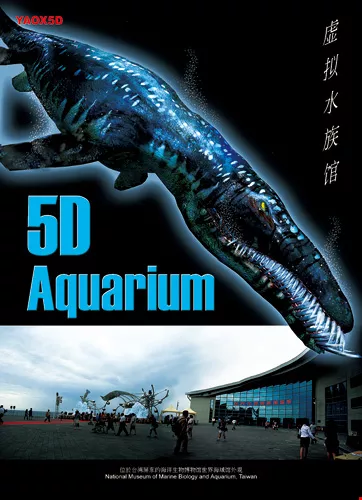
The 3D animation flicks of YAOX Edutainment are both entertaining and educational, which makes them big favorites at museums in Europe, Japan, Korea, China, and Southeast Asia. They are often described as Taiwanese versions of Avatar.
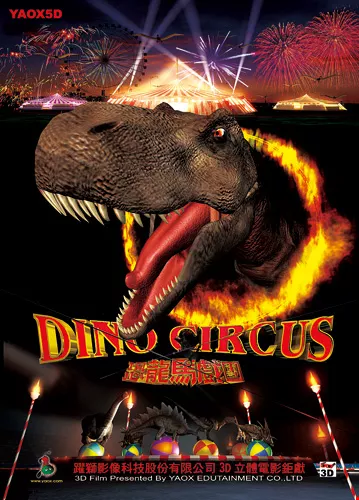
The 3D animation flicks of YAOX Edutainment are both entertaining and educational, which makes them big favorites at museums in Europe, Japan, Korea, China, and Southeast Asia. They are often described as Taiwanese versions of Avatar.


@List.jpg?w=522&h=410&mode=crop&format=webp&quality=80)


