Wu Yuan-li Talks About Taiwan and the Mainland in Change
Sinorama editorial department / photos Arthur Jeng / tr. by Peter Hill
September 1986


Professor Wu Yuan-li, advisor to Stan ford University and to the Center for Economic Research at Harvard University, is an expert on economic affairs of East Asia and the Chinese mainland. During the Nixon administration he was an assistant director in the Defense Department, one of the highest positions ever held in the American government by an overseas Chinese. Sinorama took advantage of a return visit by Professor Wu to talk with him about current economic conditions and problems on the mainland, as well as about how Taiwan should deal with the challenges it faces in the coming ten years.
Sinorama: You have been to Taiwan many times. What has impressed you the most?
Wu: I have been here more than 25 times, and have travelled all over the island. My deepest impression is of a trip I made around the island in 1970s. At that time I saw the "humanity" work team at Tienchung junior high school; this was part of a social service program which I still think very worth promoting. These students were sent to visit poor families on their way to school; they would ask them what they needed, write it down, and hand the information in to their teachers, who would pass it on to social workers. This not only saved the social workers time, but also exposed the children directly to the hardships some people must face. In industrialized societies, relationships become distant; making these people's stories known could only help.
Sinorama: Since you haven't ever lived on Taiwan, why do you care so much about the society here?
Wu: Because I'm against communism. The communists have had control of the mainland for a long time, and we can't influence them. However, we can have an influence on Taiwan by creating an ideal society here.
Sinorama: But some people point out that the communists are opening up the society and instituting economic reforms.
Wu: Of course the situation there is better than before, but I'm not as optimistic as many others are; in fact, after years of studying the situation on the mainland I'm very pessimistic. The prob lem there is not only political and ideological, but also of population--there are just too many people.
Sinorama: Doesn't more people mean more brainpower and more hands to do the work?
Wu: It's not that simple. Mao Tse-tung had this idea, and thus made the problem worse. Of course more people means more cheap labor, but it also means more unemployment. It has also kept the per capita income at its low level--currently it's around US$300 to US$400. The fact that the mainland government spends a large percentage of its GNP on weapons doesn't help the situation.
Sinorama: Is the strict enforcement of birth control working?
Wu: You have to control population, but I don't approve of forced birth control. Only a voluntary system is really ethical.
Sinorama: But will such a system work?
Wu: Having children is, in the end, a personal matter.
Sinorama: Apparently a lot of people have complained about the attempts at population control.
Wu: And complain they should! Looking from the standpoint of the individual, more hands means more income, but from the standpoint of the group it means less for each person. The communists' mistake is in failing to consider both positions.
Sinorama: Economic growth can be a way out of the population problem. What do you consider the most pressing economic problem facing the mainland today?
Wu: Presently the biggest problem is the reform of the price control system. The present relaxation of price controls both is incompatible with their socialist ideology and may cause inflation.
Sinorama: Didn't the mainland recently experience a huge inflation rate?
Wu: There are two sides to the inflation problem there. Inflation is generally considered the result of an excessive money supply. But since on the mainland prices have always been controlled, relaxing the controls will cause a natural fluctuation in prices. The problem is distinguishing whether the rise in price of some items is inflationary, or just part of this temporary fluctuation. The consumers' natural reaction will be that it is inflation, which will result in opposition to the reforms. And this in turn will lead to power struggles within the party. Also, inflation causes price speculation, which causes further inflation. . . the end result can be total chaos.
Sinorama: If Teng Hsiao-ping's re forms are upheld, and economic progress on the mainland continues, what will be the effect on Taiwan?
Wu: The influence on Taiwan will increase, but it won't get too serious. Taiwan's development is following Japan's, and the mainland's development is following Taiwan's. The quality of Taiwan's products is improving, and the number of kinds of products Taiwan exports is in creasing. This is not true of the mainland, which is exporting mostly textiles, natural resources, and ready-made clothes, all of which are also subject to quota controls on the American market.
Sinorama: What about foreign investment in high-tech industries on the main land? For example, both IBM and Wang have opened factories there.
Wu: Let them go! They have their dreams, and they may succeed, but there are a lot of problems. The most widespread problem there is bureaucratic incompetence and inefficiency. If you want to see bureaucratic inefficiency, that is the place to go.
Sinorama: So you feel that even increased foreign investment in the main land doesn't pose a threat to Taiwan?
Wu: By no means. In 15 years the per capita income on Taiwan will be US$7,000 to US$8,000. which is that of a fully developed country. Of course, everything has its price. Export products from the island will no longer enjoy the Generalized System of Preferences; but, then again, this may compel the island to become more independent.
Sinorama: Speaking of independence brings a question to mind. The United States refuses to sell arms to the ROC, but is making arms deals with the main land. Isn't that another impetus to Taiwan's independence?
Wu: I doubt that question just came to mind. It's hard to say, but I'm sure that the ROC's dependence on the United States will decrease. In any case, buying new weapons every five years is not as good as creating the technology to make them here.
Sinorama: What do you consider the most important problem facing Taiwan today?
Wu: Fostering local talent, and increasing the number of projects abroad. There are other roads to development besides the one the U.S. is taking. Cultivating individual talents to achieve this development is a long-term project, so many private companies are unwilling to make the investment. Here the government can help, by subsidizing promising private enterprises.
Sinorama: You have said that Taiwan's greatest achievement in the last ten years has been facing its problems. What is the biggest challenge for the next ten years?
Wu: Naturally it is solving these problems. Next, I think it is paying special attention to two things: rule by law, and ethics. By ethics I don't mean ethical codes, but ethical behavior. This means simply doing the right thing under the circumstances, and doing unto others as you would have them do unto you. This is something that everyone seems to have forgotten. Of course there will always be bad people, so you need law. But if you only have law, then you have a situation like the United States, where, for example, people are always suing each other.
We can't assume such social phenomena are unrelated to economics. Such thing increase social costs, and thus harm the economy. Taiwan can't afford to become that kind of society.
The Americans recently agreed to sell the Chinese Communists US$500 million in weapons. That's good for their army, but it hurts their development in general, since the people don't have any money as it is.
The population problem on the mainland is a serious one. A large population speeds things up, because there's just no way to wait. Consider that the present population growth rate on the mainland is 1.1 percent-- that means 10 million more people every year.
The most important task facing Taiwan today is fostering local talent--in politics, economics, commerce, all fields--and increasing the number of international projects.
Taiwan has to develop internationally. Taiwan's greatest achievement in the last ten years has been facing its problems. The biggest challenge for the next ten years will be solving them.
[Picture Caption]
"The current price increases constitute the most serious economic problem facing the Chinese Communists." (Sinorama files.)
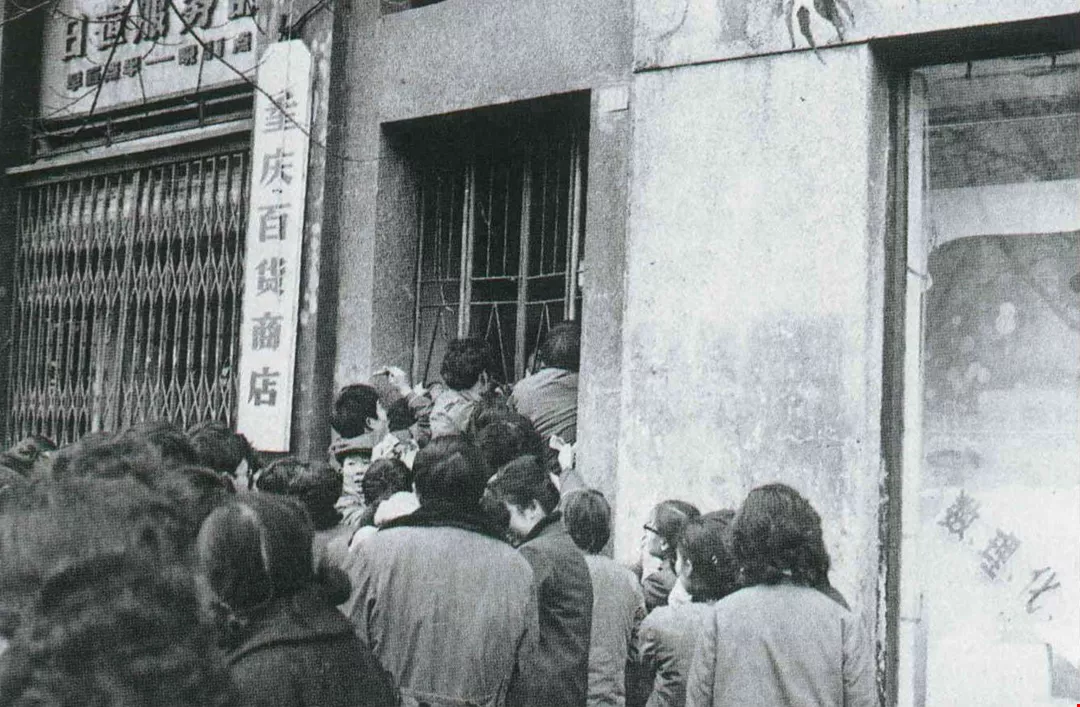
"The current price increases constitute the most serious economic problem facing the Chinese Communists." (Sinorama files.)
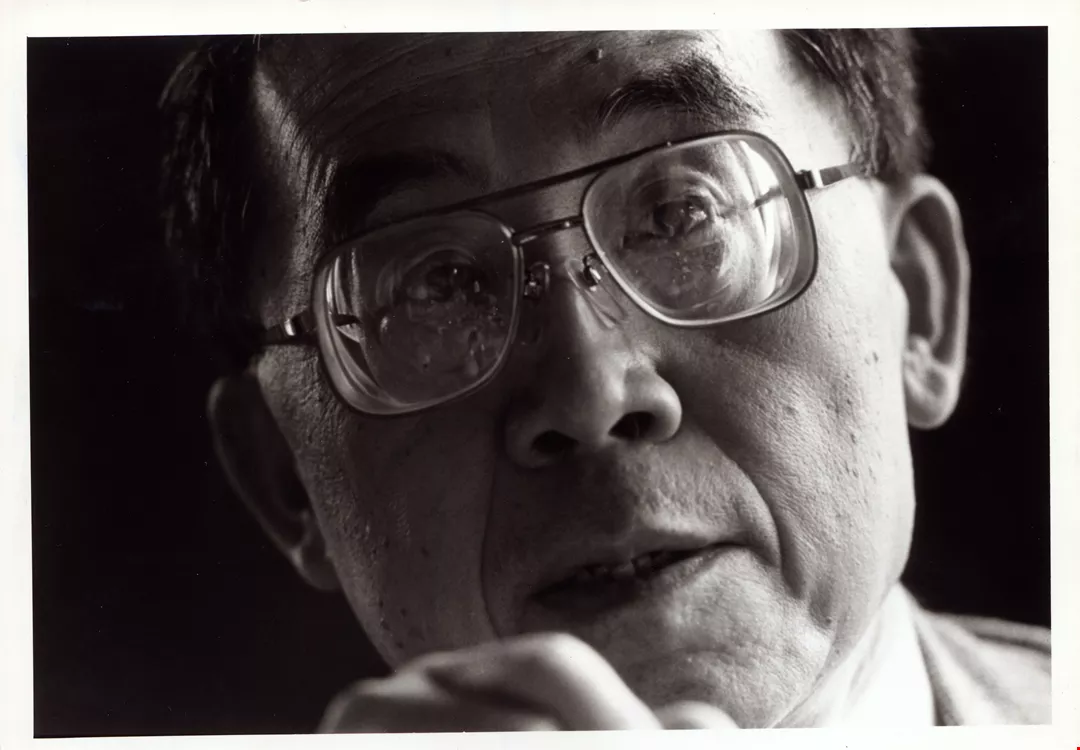
Wu Yuan-li.


