In the modern, industrial society of the Republic of China today, everyone is confronted with the problem of allocating his or her time in the most efficacious manner. In response to this problem, businesses have sprung up in recent years to provide services to busy working people. For example, there are numerous cleaning, moving, childcare, food shopping, ... catering... even form-filling--services!
They have saved people not only thousands of hours but also considerable energy that can be expended on leisure and more personally rewarding activities. Busy working mothers just don't have the time after work to do grocery shopping, take the bus home, and then get supper on the table (even using packaged frozen foods takes time to defrost). Even if she manages to do all this, most likely it will be long after her husband and kids have come home--to their hunger and distress.
In this article, we will take a look at the food catering business in Taiwan. This includes two kinds of businesses: first, those that prepare the ingredients for a meal to be cooked; and second, those that cook and deliver prepared meals.
Despite the many cafeteria-style restaurants in Taiwan, Chinese families prefer to eat at home due to the high value they have traditionally placed on the home--both for its comfort and the relaxed intimacy it provides. Given, then, the time factor and the traditional Chinese value placed on eating together at home, what can housewives do?
Two years ago, there were services that first bought vegetable and meat produce and then prepared the individual ingredients (without cooking them) to be sent to the homes of customers, who were then spared the trouble of shopping, cleaning, slicing, and measuring ingredients. The only thing left to do was to throw the ingredients into a pot and cook them.
Most of the customers were families where the husband and wife both worked and who lived in the vicinity of the food catering business, so advertising was unnecessary.
"Today's Food Catering Service," which was in business for one year serving the southern suburbs of Taipei, was founded by three young people with lots of bright ideas.
One of the most important problems confronting the company was that of buying appropriate quantities of meat, vegetables, and fruit at prices that didn't exceed its weekly allotted budget, while at the same time buying food of reasonable quality.
Although Taiwan produces an abundance of fruits and vegetables all four seasons, in order to provide customers with delicious meals at premium costs, "Today's" strove to buy only those vegetables which were in season.
"Today's" also went to great lengths to ensure that the vegetables chosen for any given meal would be compatible in terms of color, texture, and taste. For instance, carrots and potatoes were selectively used for their distinctive qualities and colors.
Since it was important as well to change menus regularly to avoid repetition of the same dishes, the three young entrepreneurs, who studied during the day as well, consulted a variety of home-style Chinese recipes.
Each meal, besides containing fish, meat, and at least one leafy green vegetable, was nutritionally complete and balanced. They included three, four, or six dishes as well as soup. A household could specify meals for 2-3, 4-5, or 5-6 persons. Prices were calculated on the basis of the number of persons, with a minimum order of around U.S. $3.50.
After the necessary food was bought, it was then cleaned, chopped, and packed into disposable boxes. Butchers and fish sellers could be counted on to do a thorough job of preparing meat and fish. Small delivery trucks took the food to customers' houses. In case both husband and wife worked during the day, the food could be left with a building custodian, neighbor, or nearby merchant.
Although the idea was acknowledged to be an excellent one, "Today's Food" and other similar food services were confronted with problems.
First, as such businesses were never a very common phenomenon, they did not make a lasting impression on people. Secondly, lacking capital, they were unable to do business on a large scale. Many of these young entrepreneurs were unwilling to forego immediate profits in exchange for long-term stability.
In fact, some saw their business only as a stop-gap, a temporary means of making a living. Strict quality control was impossible, so even their customers had lingering doubts. Large-scale, chain-store type enterprises with computerized ordering systems could have succeeded where they failed.
Today in Taiwan, there are as well many supermarkets which stock not only a surprisingly large array of fresh produce, but also many kinds of pre-prepared foods. They have probably replaced food preparation services and have thus helped the housewife with her multitude of trivial cooking chores.
But they still have not done away with the necessity on the part of the housewife to be by the kitchen range and to wash dishes as well. So, they are still a far cry from the convenience of eating out in a restaurant.
Another type of food catering service, perhaps more successful than the food catering service just described, had the same goal in mind but went one step further: the ingredients were combined and cooked together. Their customers were also different. They served factories and companies, a fact which perhaps accounts for some of them still surviving now: their customers are less fastidious outside the home.
Many of the proprietors are ex-servicemen with earlier canteen cooking experience. Not surprisingly, the bulk (60%) of their operational expenses is spent on buying food. The profit margin on both kinds of food catering services is low.
Despite their problems, food catering services can go a long way towards helping society move ahead.
(Denny Chiu)
[Picture Caption]
The customers of Southern Gate Food Catering Service include more than one hundred department-store supermarkets.
Left, Sliced, congealed pig's blood together with salted pickled vegetables and fresh celery are the main ingredients of a delicious soup. Right, Packing ingredients in boxes with plastic wrap to ensure freshness and cleanliness.
Left, One type of food-catering service which actually combines ingredients and cooks them together. In the picture, shrimp is being fried in hot oil. Right, People's Food Catering Service offers bicycle delivery.
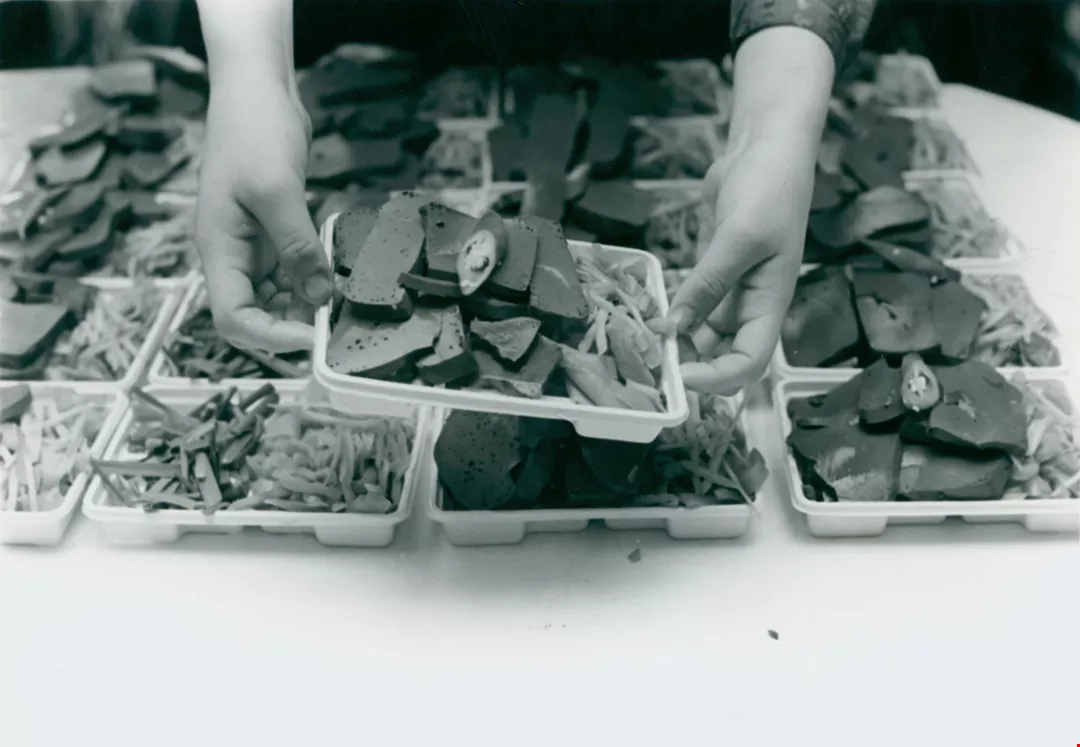
Left, Sliced, congealed pig's blood together with salted pickled vegetables and fresh celery are the main ingredients of a delicious soup.
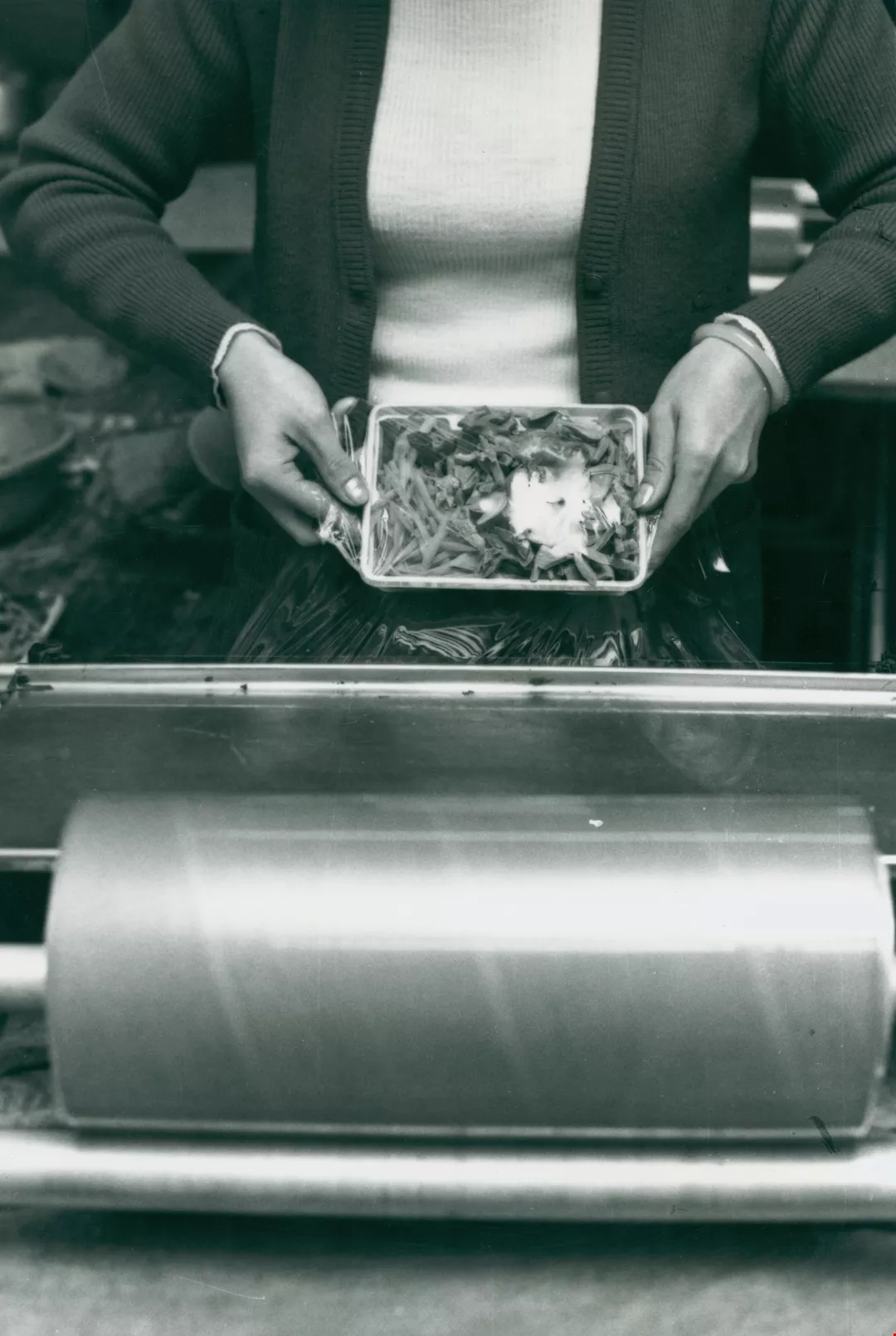
Right, Packing ingredients in boxes with plastic wrap to ensure freshness and cleanliness.
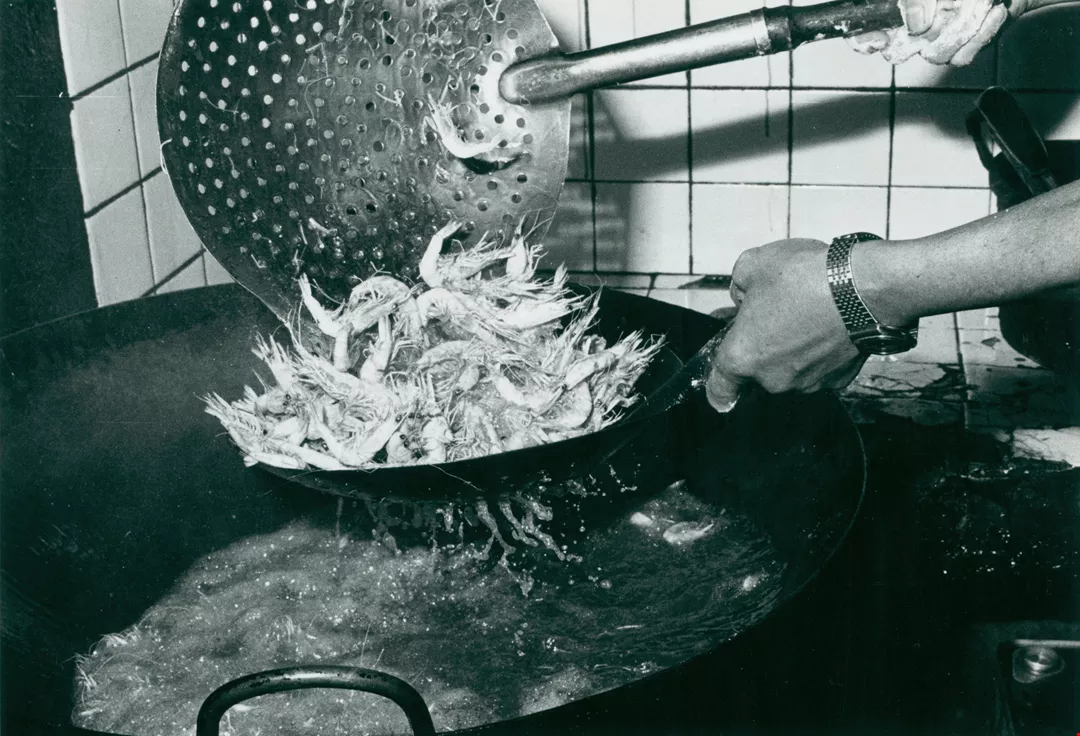
Left, One type of food-catering service which actually combines ingredients and cooks them together. In the picture, shrimp is being fried in hot oil.
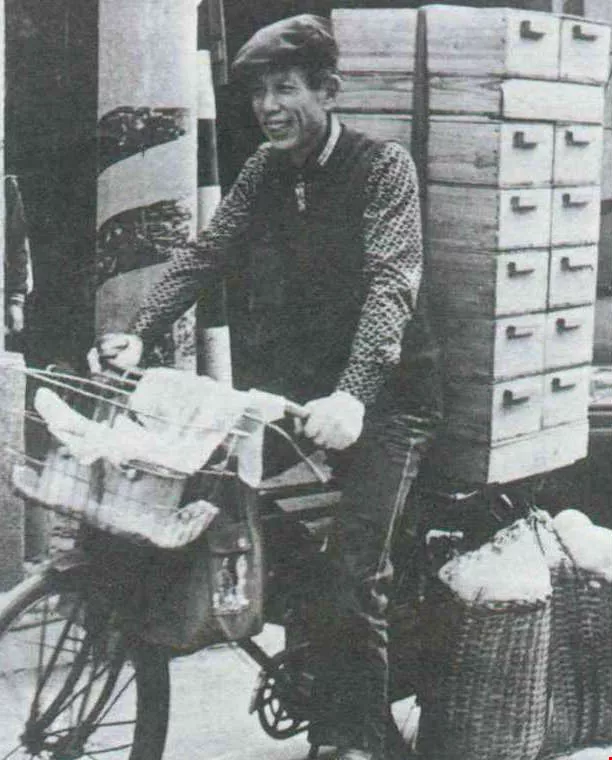
Right, People's Food Catering Service offers bicycle delivery.




