A "Fresh" Start for Pineapple Exports
Teng Sue-feng / photos Jimmy Lin / tr. by Geof Aberhart
June 2005


One of the biggest problems fruitfarmers face in getting their produce to market is freshness. How do you get your goods to the consumer in such a way that the consumer still feels the fruit they're getting is fresh? With such a problem involved in the process, what made Taiwan Pineapple Corporation, after 50 years in the canned pineapple business, decide to break into the fresh fruit market? And how have they managed to do so even in the international market, where standards are higher still?
Riding through a plantation owned by Taiwan Pineapple Corporation (TPC) in a jeep, TPC director of agricultural projects Hosea Ho is obviously concerned about the previous day's heavy rainfall. The road through the plantation is muddy and there's no way to get very far in. The jeep is a bit old, and is covered with mud inside and out, since no-one bothers to clean them anyway. It is a murky, overcast March day, even here in the southern Taiwan area of Pingtung, where the weather is generally beautiful and sunny.
More worrisome to Ho than the rain itself, though, is that once the rain clears, the temperature in the plantation rockets, causing the pineapples to yellow quickly. "Last year a few hundred pineapples yellowed totally overnight. The sight just about brought tears to my eyes," says Ho. "We had expected to be able to ship several batches of pineapples, but in the end all we could get was a single container."
Ho remembers working at this huge pineapple plantation in Neipu Township, Pingtung, six years ago, starting to develop new foreign sales channels. In his first three months he kept losing his bearings while driving through the plantation and had to rely on distant power poles to direct him. The plantation is 750 hectares in area, and is home to 7,000 pineapple plants, 4,000 banana trees, and a few papaya trees.

In earlier times pineapple was primarily canned but in recent years it has begun to move into the fresh fruit market. The boundless pineapple fields of Neipu Township, Pingtung County, are planted with various varieties, each with its own distinctive flavor.
With their rich reserve of land assets, TPC originally focused their business on pineapple sales. Four years ago, after almost half a century focusing on pineapple processing and canning, they decided to move into the fresh pineapple market, setting their sights on the Japanese market.
As Ho says, in the export market one is up against the world, and Taiwan's pineapples share the shelves with ones from Costa Rica, the Philippines, Malaysia, and Hawaii. All vie for attention in terms of price, appearance, and quality. This is the bloody reality TPC faces.
It's not the business side that's difficult-the Japanese are quick to place orders after seeing Taiwan's pineapple farms and packing processes. The problem is more that while Japanese consumers are familiar with and appreciate the flavor of Taiwan's bananas, Taiwanese pineapples are something new. In the past Taiwanese pineapples held only 2% of the Japanese market, with most of their pineapples being from the Philippines.
"Good fruit is high in both sugar and acidity. Pingtung's pineapples are at their best from March through May-by June they're too ripe and the acidity starts to drop. Eating pineapple that's all sweetness without sourness is like eating candy, and all sourness with no sweetness is like sucking on a lemon," explains Ho. "But while the proportion of sweetness to acidity can be measured and tested, there's no real way to tell fiber level and flavor aside from trying the pineapple. So we still really need to promote our pineapples in the Japanese market so they can see what's so good about them."
Additionally, Japanese consumers don't do like the Taiwanese and rap on pineapples to judge their quality by the sound. Instead, because the Japanese prefer to cut down on organic waste in their cities and ordinary consumers prefer not to hack into the pineapples themselves, most pineapples are first sent to harbor-side factories where they're peeled and packed before heading to the supermarkets.
What people in one culture are used to eating can be immensely different to what those in another are used to, so the biggest problem for Taiwanese pineapples is that the big international companies that supply the Japanese market use quality control methods that are more suited to Philippine pineapples than to Taiwanese pineapples.
As Ho says, there are some things that definitely work in Taiwan's favor-it only takes four days for shipments to travel from Taiwan to Japan, as opposed to an average of eight from the Philippines, for example. With this shorter shipping time, Taiwanese farmers can send more fully matured pineapples "fresh to the market." "Another point is that the cores and crowns of Taiwan's pineapples are smaller, which means about 67% of the fruit is edible, whereas once you top and core Philippine ones, there's only about 56% left."
Taiwan excels in production technology, but packaging and shipping are areas that still need to be strengthened, and it is these aspects that are most vital to successfully cracking the foreign market. Harvested pineapples go through a long process to get to market; first they're treated for pests, and those that get into pineapple skin cling pretty tight, so part of this process is giving the fruit a hard scrub and a hose down with pressurized water. Next they're washed again and weighed, inspected for appearance, color, crown length, and physical damage. Any damaged fruit are rejected. Keeping them during their week-long journey from harvesting to landfall in Japan is a huge challenge, especially considering all the steps along the way.
"American Washington apples spend 40 days crossing the ocean, but when they reach the consumer, they're still fresh and crisp," says Ho. Obviously packing, refrigeration, and shipping play a huge part in preserving the freshness of fruit.
In addition to pineapples, proclaims Ho, "this plantation is also home to Taiwan's best winter bananas." TPC's Neipu Plantation sits at the foot of Mt. Tawu, 200 meters above sea level, and experiences a drop of ten degrees or more between day and night. This plantation produces delicious fruit, but there's one catch-all it takes is a typhoon coming up from the Hengchun Peninsula to cause major strife.

In earlier times pineapple was primarily canned but in recent years it has begun to move into the fresh fruit market. The boundless pineapple fields of Neipu Township, Pingtung County, are planted with various varieties, each with its own distinctive flavor.
Though it can be challenging to break into the foreign market, domestic fruit prices can fluctuate from NT$3 to NT$30 per kilo, whereas the foreign market is more stable. Pineapples cost about NT$12 to produce and sell, abroad, for NT$15. It's a pretty safe bet for the growers as far as covering costs goes.
"Japan can be a pretty classy but inscrutable country, so cracking that market can be a tough job. But when you get a foot in the door, it's one heck of a feeling of accomplishment." Soung Kuang-shing, TPC's director of agricultural projects, is simultaneously half pessimistic and half cautiously optimistic about the chances. "We could hit the wall at any moment, so we've got to take each step carefully."
Soung, a senior member of the ROC Agricultural Technical Mission, and TPC have long worked with the Taiwanese government on foreign aid projects, heading to the Ivory Coast in 1972 to plant pineapples, a project that ran for 14 years without a hitch. Then in the 1980s, as the government turned their attention south, TPC's pineapples made their way to Indonesia, but the plantation there suffered after the sudden coup in the 1990s and staff were pulled out. In 1998 preparations were being made to invest in Hainan Island, China, but the company hit some financial bumps and regrettably had to drop those plans. "Hainan, with its deepwater port, would be such a convenient southwestern export base," laments Soung.
"Young people today don't want to relocate to less developed countries, so we have to think carefully about personnel management issues when looking at new foreign investment options," Soung sighs.
"Working in agriculture in Taiwan, you always have to bear in mind that land is almost US$1,000 per hectare, 20 times what it would cost in Southeast Asia. Wages are ten times higher than in Southeast Asia, and our growing season only lasts half the year. With these kinds of costs hounding us in our efforts to crack the Japanese market, we have to be offering much better quality than those others!" says Soung, partly to remind himself, partly to remind everyone else.
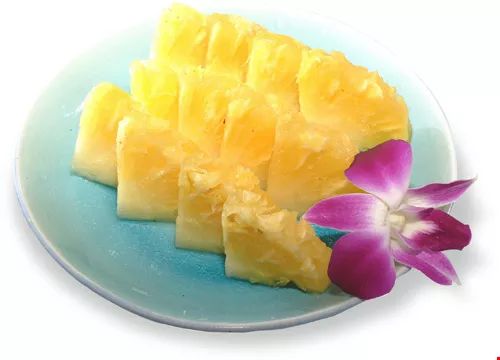
In earlier times pineapple was primarily canned but in recent years it has begun to move into the fresh fruit market. The boundless pineapple fields of Neipu Township, Pingtung County, are planted with various varieties, each with its own distinctive flavor.

@List.jpg?w=522&h=410&mode=crop&format=webp&quality=80)


