Viral Matchmaking Husband-and-Wife Team Tackles BaMV
Chang Chiung-fang / photos courtesy of Lin Na-sheng / tr. by Chris Nelson
December 2009


Of the so-called "four gentlemen,"the prime botanical subjects of Chinese painting, bamboo, with its hollow segments and perennial greenery, is a symbol of upright character to the Chinese. High-fiber, low-calorie bamboo shoots are well loved by the Taiwanese, perfect for simple yet tasty summer feasting.
But it was the chief threat to bamboo-the bamboo mosaic virus (BaMV)-that brought together Professor Hsu Yau-heiu of the Agricultural Biotechnology Research Center at National Chung Hsing University and Lin Na-sheng, interim director of the Academia Sinica Institute of Plant and Microbial Biology, in both research and marriage.
"I can subsist without pork; I cannot live without bamboo. Without pork one becomes thinner; without bamboo one becomes vulgar," wrote the poet Su Dongpo, drawing an association between bamboo and pigs. But in Hsu and Lin's research on the bamboo mosaic virus, there's an unexpected connection between them: the long and winding scientific road they have traveled together in their research of BaMV has brought hope for treating both bamboo and pigs.
With bachelor's and master's degrees in plant pathology from National Chung Hsing University (NCHU) and doctorates in the life sciences at the University of Nebraska, Hsu Yau-heiu and Lin Na-sheng were classmates studying botany and virology together. Their life-long association with viruses means the lab has become their second home.
"Viruses are our common language," says Lin. Hsu returned to Taiwan to teach at their alma mater NCHU after completing his doctorate in 1984, and Lin entered Academia Sinica, which was more open and accepting of women than other institutions at the time. Split between Taichung and Taipei, they only saw each other on weekends and holidays, but otherwise they immersed themselves in research of the same type of virus, Hsu focusing on BaMV vectors and Lin studying the satellite nucleic acid molecules associated with the virus.
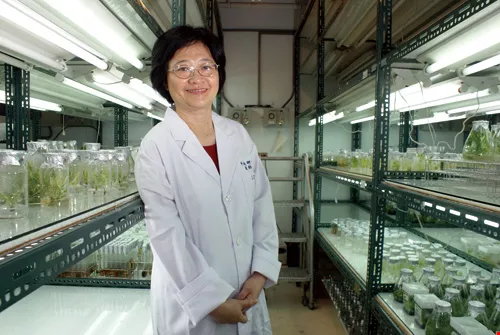
Amid her "backwater" BaMV research, Lin accidentally discovered satellite nucleic acids, opening a new door into the world of viruses.
A viral matchmaker
Lin's decision to study viruses that infect bamboo was influenced by the background and social milieu in which she grew up.
Lin's father, Lin Wei-chih, was a botanist who once headed the Liugui branch of the Taiwan Forestry Research Institute. From an early age, Lin watched her father study the taxonomy of bamboo, and as such she has a special sentiment for the plant. Furthermore, over 20 years ago, the Council of Agriculture made great efforts to promote bamboo shoots as a high-fiber, water-rich and low-maintenance crop, a prime summer vegetable that doesn't need pesticides. So, from among the various major crop disease affecting Taiwanese agriculture, Lin chose bamboo diseases as her life's work.
Yet Taiwan, whose people love bamboo shoots and where more than 90,000 hectares of the crop is grown, is the place where the bamboo mosaic virus poses the greatest threat in the world.
The earliest report of BaMV infection in Taiwan appeared in 1974. After infection, bamboo leaves start showing yellow and brown streaks, and brown or black spots appear on the shoots and stalks. At that time it was called "brown-spotted blight" by locals. The infection causes hardening of fibers within the shoots, and reduces yields by 50%.
Because bamboo plants are grafted asexually, once a parent plant is infected by the virus, it will be passed on to subsequent generations. Moreover, infections can be spread via hoes and other farming equipment during the harvest. As a result, virus infection became more serious, spreading throughout Taiwan. Lin says that around 1990, the Tainan District Agricultural Research and Extension Station (DARES) carried out an island-wide survey of Oldham's bamboo (Bambusa oldhamii) and Taiwan giant bamboo (Dendrocalamus latiflorus) plantations, finding a morbidity rate of over 90%. A decade later, in 2002, Tainan DARES re-investigated the Oldham's bamboo plantations in Tainan County, and found morbidity rates surpassing 98% in a number of townships.
"Once plants are infected with a virus, they are quite troublesome to deal with," says Hsu. Like those that affect mammals, such as the HIV and hepatitis B viruses, plant viruses depend on the host for replication. Since no insects have been found in bamboo forests that serve as a means of transmitting this virus, there is no suitable insecticide that can be applied. Currently it's possible to grow healthy, virus-free bamboo sprouts and mitigate the viral disease by the meristem-tip culture technique, but ultimately this problem has to be solved by developing disease-resistant plants or transgenic crops.
Though the bamboo mosaic virus weakened the quality and yield of bamboo shoot harvests, the importance of the bamboo industry started to decline after Taiwan's entry into the WTO in 2002, opening Taiwan to imports of agricultural products. Now, with the exception of those farmers raising virus-free bamboo through meristem-tip culture under the auspices of the Taoyuan and Tainan DARES, the majority of bamboo farmers are not aggressively planting new bamboo crops, seeing it as a waste of time.
Even though the issue of curing bamboo disease in Taiwan has lost its urgency, Lin and Hsu have not changed their tack, working to blaze new trails in the jungle of science as they continue focusing on BaMV.
The bamboo mosaic virus is a filamentous, single-stranded, positive-sense RNA virus, a potexvirus of the alphavirus superfamily. According to current knowledge, BaMV is the main filterable virus affecting bamboo.
Hsu and Lin teamed up with Chang Ban-yang of the Institute of Biochemistry at NCHU, as well as Meng Meng-hsiao and Tsai Ching-hsiu of the Agricultural Biotechnology Research Center at NCHU, to conduct research on the molecular biology of BaMV. In the past decade or so, the team members have followed a practical course, each working on their parts of the task, conducting basic research on pathogenic mechanisms and disease prevention, and investigating ways to modify the virus through genetic engineering so that it can serve as a vector for producing proteins and manufacturing vaccines. BaMV research in Taiwan has stepped into the international realm.
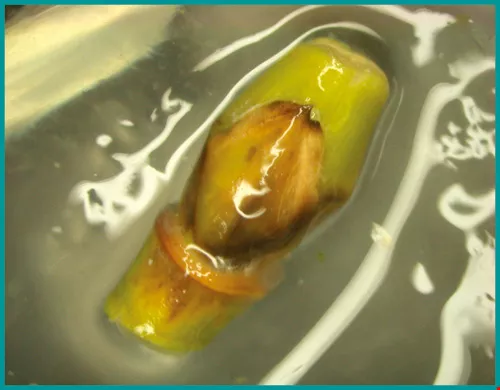
Bamboo plants are grafted asexually, and once a parent plant is infected, the virus will be passed on to subsequent generations. Therefore tissue cultures are utilized to raise healthy, virus-free shoots.
Green biotech
Though microscopic viruses can be harmful to plants and animals, they can also be an invaluable vector to infect plants after inserting foreign genes that produce exogenous proteins.
Hsu tells us that there are many ways to produce exogenous proteins. Some culture microorganisms such as Escherichia coli or yeasts in a bioreaction tank until they produce specific proteins. Some use animal cells or insects (such as moths or silkworms) in lieu of a reaction tank, making a "bio-farm" to produce drugs or industrial proteins. In addition to this, plant bodies themselves are a kind of manufacturing tool. Such a production paradigm has been called "green biotech," and the method that Hsu and Lin's team used-developing exogenous proteins through the BaMV vector, and successfully creating a vaccine for porcine foot and mouth disease-is a classic example of this.
"Cost and efficiency are key," says Hsu. The number of exogenous proteins that can be used for different purposes is multifarious, and the biological vectors for producing proteins are also countless. It's like inserting tens of thousands of keys into tens of thousands of slots: it requires patient, repeated trials before perfect matches can be found. And the proteins produced by different systems exhibit differences in translation, modification and production efficiency.
Likewise, viruses with different properties will show differences in efficiency. For example, the tightly packed rod structure of the tobacco mosaic virus makes for unstable placement of peptides (chains of amino acids shorter than full proteins), whereas the filamentous BaMV has gaps that can contain exogenous proteins, giving it greater room for modification.
Such a plant-and-virus molecular farm is different from a transgenic crop. With transgenic crops, foreign genes are inserted into plant chromosomes, and as they replicate their properties are passed from generation to generation. In the natural environment, this will affect other organisms, causing a multitude of unforeseeable environmental and ecological changes. But with a molecular farm in which plants are infected with a virus, the results can be achieved within a short time, and the traits will not be passed on down the generations.
In other words, if an error occurs, the bamboo mosaic virus will not cause contamination.
According to current knowledge, BaMV infects only bamboo, tobacco, quinoa (a kind of amaranth) and barley. Also, there are no insects in nature that transmit BaMV, so unless it is introduced by humans, it will not affect cash crops in Taiwan like vegetables or rice, nor will it influence Taiwan's local crop system.
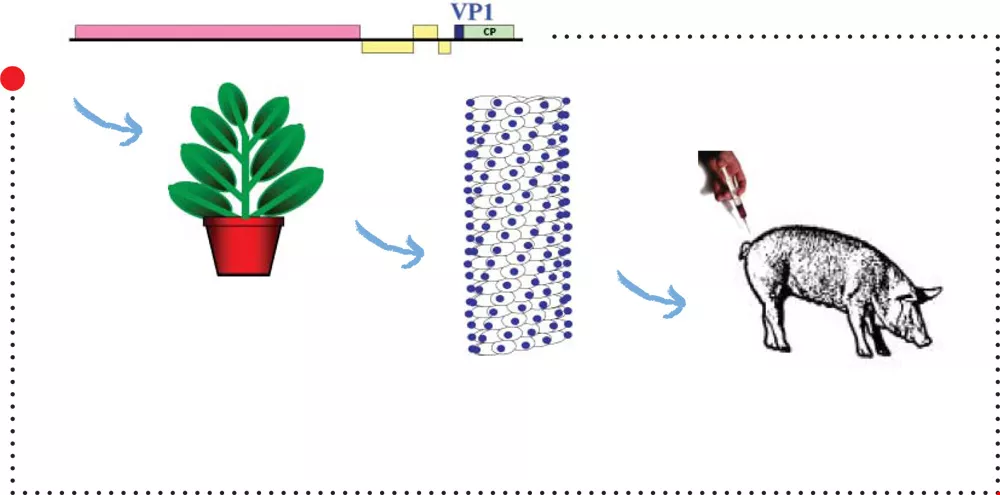
When a plant is infected with BaMV carrying peptides from the foot and mouth disease virus, the virus will replicate within the plant, producing proteins. Once purified, the proteins can be used to make a vaccine for foot and mouth disease.
From bamboo to pigs
Whether treating bamboo or pigs, the motivation is the same: serving Taiwan's agriculture.
Foot and mouth disease is an infection disease designated as one of primary concern by the World Organisation for Animal Health (OIE). Its highly contagious nature makes it a serious threat to farmers raising pigs, cows, sheep, deer and other even-toed ungulates.
According to a 1997 report by the OIE, only 47 countries are unaffected by foot and mouth disease. Of those in Taiwan's vicinity, only Japan and South Korea are free of the disease.
An outbreak of porcine foot and mouth disease in Taiwan in mid-March 1997 was the most widespread since 1929, during the Japanese occupation. The epidemic spread through dozens of hog farms in 10 cities and counties, prompting the Council of Agriculture to order the slaughter of all of Taiwan's 16 million pigs. Consumers blanched at the mention of pork and hog farmers suffered great losses.
Afterwards, Taiwan ordered a one-year moratorium on pig farming and mandated vaccinations. By 2008, the percentage of unvaccinated pigs reached 90%, and in 2009 there was hope that foot and mouth disease had been eradicated. (As per OIE regulations, 100% must be unvaccinated and there must be no evidence of outbreaks, ensuring that no viruses remain in the environment before a country can be re-listed as disease-free.) Unfortunately, in February 2009 there was a small-scale epidemic of the disease, dealing a blow to Taiwan's dream and again limiting exports of pork products.
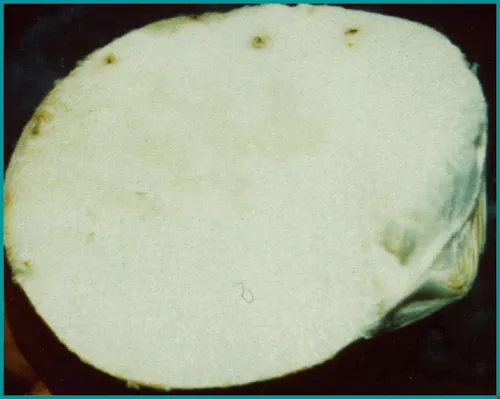
Tasty, high-fiber bamboo shoots are a central item on the dinner table in the summertime. But after infection by BaMV (bottom), the shoots exhibit black spots and hardening of plant tissues, a serious blow to its quality.
Alternatives to slaughter
There are two preventive measures taken after an outbreak of porcine foot and mouth disease: killing and vaccination. The former involves the immediate and total slaughter of all pigs in an affected area, whether the individuals are infected or not. This is done in consideration of exports, the purpose being to quickly become a disease-free zone, which can be accomplished one year after the last report of disease. As for vaccination, though this measure does not require wholesale slaughter, requiring only that farm hogs uninfected by foot and mouth disease be inoculated, this means that the country will be listed as a disease zone for a longer period (two years after the last report of disease).
Indeed, vaccines for porcine foot and mouth disease have been on the market for a long time, but these are mostly attenuated or inactivated vaccines. "Attenuated vaccines have their risks: if the attenuation is incomplete by even a little during the manufacturing process, the worst can come true and it can cause infection," says Hsu.
Another key factor is that despite attenuation, a virus can still replicate even after a vaccine has been introduced into an animal. In other words, virus proteins can still be discovered during screenings of vaccinated pigs in quarantine. Most countries free of foot and mouth disease strictly prohibit the import of meat products tested positively for antigens. In particular, pork that is exported to Japan from Taiwan must not test positive for antigen proteins.
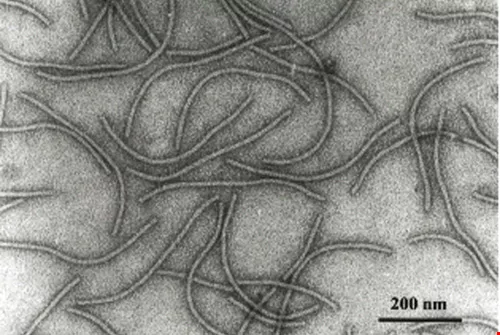
Shown at left is the filament-shaped bamboo mosaic virus under a microscope. Once bamboo is infected by the virus, its leaves show yellow and brown streaks (right).
Second-generation vaccine
Lin and Hsu, together with Liang Shu-mei (Academia Sinica Agricultural Biotechnology Research Center) and Liao Jia-teh (currently working at the National Defense Medical Center) have jointly developed proteins and peptides from the porcine foot and mouth disease virus to create a second-generation sub-molecular vaccine that can produce antibodies. This vaccine only carries certain short characteristic segments of the virus, enough for detection by the immune system, just as police can identify a criminal from a mug shot without the need for directly confronting an armed suspect. This vaccine can stimulate the immune system of pigs without actually infecting them.
What Lin's team did was to first insert a gene for the foot and mouth disease virus protein into the BaMV gene. Then, given BaMV's ability to replicate within the plant body, the virus spreads throughout the plant (usually tobacco or quinoa) after infection. In turn, the structural protein genes of the foot and mouth disease virus will keep replicating along with BaMV, and be "expressed" to create proteins. After these proteins are extracted and purified, they can serve as antigens.
Another way is to produce a peptide vaccine.
A peptide is a short chain of amino acids, and it is a determining unit for immune antigens. According to Hsu, disease control experts manufactured peptide vaccine with chemical synthesis techniques early on, but the small size of the molecules led to insufficient antibody titer, resulting in incomplete protection.
Hsu's method is to bind the peptide to the surface of the virus. The capsid of this virus is made up of 1,440 protein units, so a chimeric virus has 1,440 peptides. A single one-milligram dose of vaccine would contain sufficient peptides to enable a pig to obtain excellent antigen titer, gaining full protection.
In addition, the greatest advantage that peptide vaccines have over traditional vaccines is that they do not contain whole viruses. Thus, after inoculation, the virus cannot replicate within the animal. This conforms to the requirements of the OIE for a foot-and-mouth-disease-free zone.
Lin states that all that's needed to produce the vaccine is to grow plants, then infect them through artificial inoculation. Although at present the team does not yet have experience in large-scale production, it's estimated that planting nine hectares of easy-to-grow quinoa will be sufficient to produce 1 million doses of porcine foot and mouth disease vaccine. The process from germination to inoculation takes about a month, and the leaves can be harvested seven to 10 days after inoculation, after which the virus is purified.
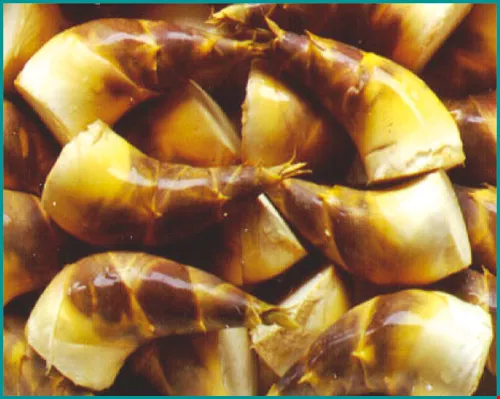
Tasty, high-fiber bamboo shoots are a central item on the dinner table in the summertime. But after infection by BaMV (bottom), the shoots exhibit black spots and hardening of plant tissues, a serious blow to its quality.
Impasse and future development
"Sadly, we're too slow at this," says Hsu. The road from genetic research to application has taken more than 10 years, "This is the basic problem with biotechnology in Taiwan," he says. At a conference at Academia Sinica a few years ago, an academician asked the question, "Why, after over a decade, does enterovirus vaccine research in Taiwan remain unsuccessful?" It turns out that the reason for the drawn-out R&D process is that animal lab testing is slow!
"Taiwan's biotech capabilities are not substandard!" remarks Hsu. Taiwan happens to be one of only 12 countries able to manufacture vaccine for the novel H1N1 flu. The key reason for the slowness of vaccine development is that animal research takes a long time. First of all, there are insufficient facilities for experimentation, and second, the law requires that research into notifiable diseases can only be carried out by the Animal Health Research Institute in Danshui. Hence the "traffic jam" is nothing new.
On top of this, after the virus protein is extracted, the final stages of manufacturing and preserving the vaccine remain a major impasse.
Regarding a vaccine for porcine foot and mouth disease vaccine, the development of an oral vaccine is the ideal goal for avoiding the need to produce and preserve injectable vaccines. Theoretically, all that's needed is to grind virus-protein-containing tobacco or quinoa leaves into powder, then mix it with pig feed. However, the effectiveness of this oral vaccine has yet to undergo evaluation. Issues include, for instance, how to control the quantity of food eaten and the ability of the antigens to remain in the digestive tract.
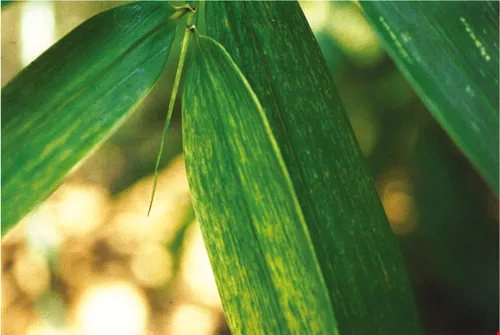
Shown at left is the filament-shaped bamboo mosaic virus under a microscope. Once bamboo is infected by the virus, its leaves show yellow and brown streaks (right).
Bright future for green biotech?
Thanks to the pooled efforts of Lin's team, three years ago they were successful in using the bamboo mosaic virus to produce a porcine foot and mouth disease vaccine in the lab. They received a patent for this process in 2009. But because Taiwan is a meat exporter, the government, not wishing to remain blacklisted, does not encourage vaccination, and therefore this process has not yet been commercialized.
"At present, those interested in buying our patent are mostly overseas companies," says Hsu. A patent transfer remains in deliberation, mainly because the overseas companies must compare it with existing traditional vaccines.
This comparison of different vaccine production methods is Taiwan's weak spot. For example, notes Hsu, when Taiwan experienced an outbreak of porcine foot and mouth disease, the Council of Agriculture made a major outlay of money to help fund numerous foot and mouth vaccine projects, some using E. coli to manufacture structural protein, some developing DNA vaccines, and some doing research with attenuated vaccines. But which is the most economically feasible? Which is the most worthy of further development? There is no single organization that can make an objective assessment.
With the bamboo mosaic virus as a vector, the technological platform using plant/microorganism bioreactors to manufacture a vaccine and growing plants to mass produce exogenous proteins and peptide antigens can also be applied to the preparation of other kinds of vaccine, such as for bovine foot and mouth disease, infectious bursal disease virus (IBDV) which affects the immune systems of chickens and results in immune deficiency, or even novel H1N1 in humans.
Hsu notes that H1 and N1 protein molecules are quite large, and extracting a small segment from them to make a peptide vaccine is feasible. Although the immune effect is not as great as that of an entire protein produced in a fertilized hen's egg, it is less expensive, and there is no concern that protein from the chick embryo will cause allergies.
The BaMV research of Hsu and Lin has brought Taiwan to the forefront internationally in the field of molecular virology. But as to whether there's a bright future for green biotech in Taiwan, they have no answer; they just keep pressing forward with their work.
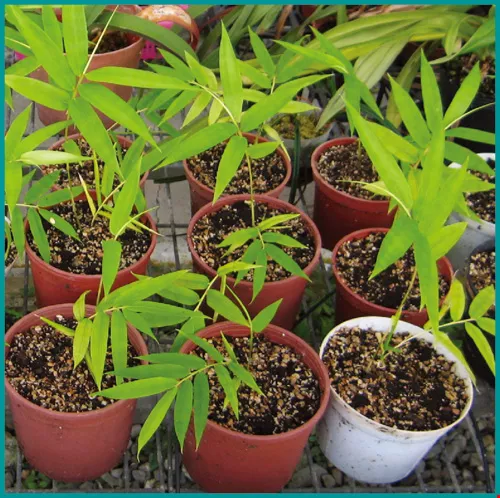
Bamboo plants are grafted asexually, and once a parent plant is infected, the virus will be passed on to subsequent generations. Therefore tissue cultures are utilized to raise healthy, virus-free shoots.

Lin Na-sheng has a special fondness for bamboo, which, among the "four gentlemen," symbolizes upright character. She has dedicated herself to the prevention and treatment of disease caused by the bamboo mosaic virus.
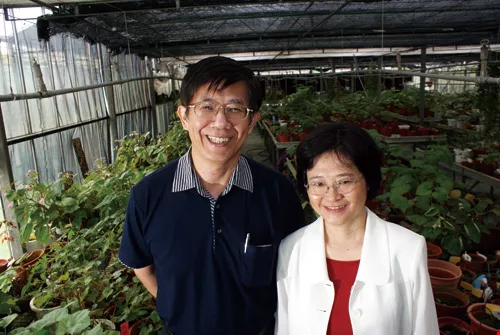
BaMV provides a means for using plants to produce vaccine. It was also the means through which Hsu and Lin met.


