Ningxia Night Market: Striving to Be Eco-Friendly
Teng Sue-feng / photos Hsueh Chi-kuang / tr. by Chris Nelson
November 2010


What's a dragon without its pearl? Well, it's somewhat like Ningxia Night Market without the old traffic circle market popularly known as Yuanhuan: less than dazzling.
In an age when health and the environment are serious business, Taipei's Ning-xia Night Market is working hard to become more eco-friendly, so visitors can eat more healthfully and safely.
Before Yuanhuan (the Jiancheng Circle) in Tai-pei was rebuilt, some described the Ning-xia Night Market as a dragon, whose body was Ning-xia Road, and whose "dragon pearl" was Yuan-huan. The history of the pearl is older than that of the dragon's body.
The location occupied by Yuanhuan is at the intersection of four streets. The Japanese created a traffic circle out of the vacant land there, and people from around Dadaocheng would gather there in the evenings to cool down. Hawkers quickly came to peddle their wares, and though the Japanese police often cracked down on them, the vendors couldn't be shooed away, and soon their existence had to be acknowledged. Business licenses were issued, and they became known as ro-ten (Japanese for street stall).
At that time the north section of Ning-xia Road was home to lumber companies, and the south section was a high-end residential area, where many doctors and businessmen lived. Back then there were no vendors on Ning-xia Road, but after the Japanese left, people who had lost their jobs went to Ning-xia Road to set up stalls to earn a living. The residents, sympathizing with the hawkers, agreed to let them do business at night in their doorways.
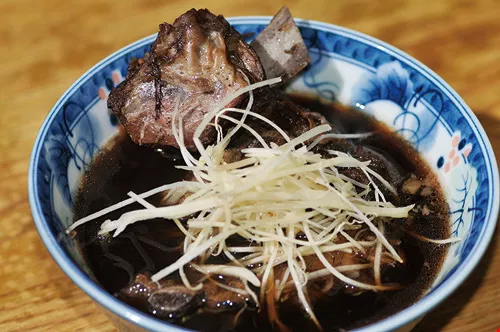
Ningxia Night Market's tasty eats include runbing (left), barbecued sausage, and stewed spareribs.
The 1960s were the heyday of Yuanhuan, with nearby theaters, piano bars and vaudeville houses open all night. People would come to shops nearby to buy fabric or machine parts, or to visit brothels in the area around the Jiangshan Hotel, then make a trip to the night market for a quick bite. The reputation of the market's braised pork rice, oyster noodles and sesame chicken has lasted more than 60 years.
Times changed. As buildings popped up in eastern Taipei, the old western districts grew increasingly shabby. Damaged by fires in 1993 and 1999 and suffering from poor structural integrity, Yuanhuan was home to only a dozen or so remaining stalls, most of the older ones having moved to Chongqing North Road.
Yuanhuan was torn down in 2001. Says Lin Dingguo, who heads the Ning-xia Night Market management association: "Like an umbilical cord being cut, it had a widespread effect. Plus with the messy surroundings, the night market's business went sour, with only a few old folks in the neighborhood patronizing the place." The new Yuanhuan was sealed in a glass enclosure, like a museum; the feeling of browsing in a night market was gone, and visitors reacted negatively.
While Yuanhuan was being rebuilt, the city government was preparing to fix up Ningxia Road. Ningxia Road residents wished to use this opportunity to get the vendors to uproot and move, but after two years of negotiations, they reached a compromise: 163 vendors would be gathered on the east side of Ningxia Road by Penglai Elementary School, with the west side still open to traffic. Vendors could operate from 5:00 p.m. to 1:00 a.m., but by day the street would be quiet, tidy, and fully open to traffic.
As they grew aware of the worsening business situation, the management association drew up plans to revitalize the market in an eco-friendly way.
The biggest problem at the night market was that the grease and kitchen waste were handled poorly. In 2003 the city government decided to help out by placing a grease trap under each stall's sink, and place two underground waste collection systems at either end of the street, banishing that grimy feeling.

Ningxia Night Market's tasty eats include runbing (left), barbecued sausage, and stewed spareribs.
To implement the eco-plan, the management association communicated with vendors for three years. Then Formosa Chang chairman Chang Yung-chang, whose flagship restaurant is located on Ningxia Road, advised the vendors: "Do you want to remain in business over the generations? If so, don't kill the goose that lays the golden eggs. Protecting the environment is a moral duty, and it shows determination for sustainable operations," says Lin Ding-guo, quoting Chang.
"The original plan was to install a grease trap by each stall, but it was soon found that such a device weighed 60 kilograms. Stowing it away every night was a hassle, so they decided to put the system underground," says Lin. The construction cost was around NT$14 million, and work was completed at the end of August 2010.
Two years ago the management association mandated that vendors use eco-friendly stainless steel chopsticks and reusable bowls, and stop using disposable Styrofoam dishes. Also, vendors have to be tested annually for hepatitis A and B to ensure good hygiene.
Since the makeover of Ningxia Night Market, the number of visitors has risen to three times what it was eight years ago. Pleased with these results, the association's goal is to make sure the market wins the title of "most eco-friendly night market" next year. If not Ning-xia Night Market, then who?
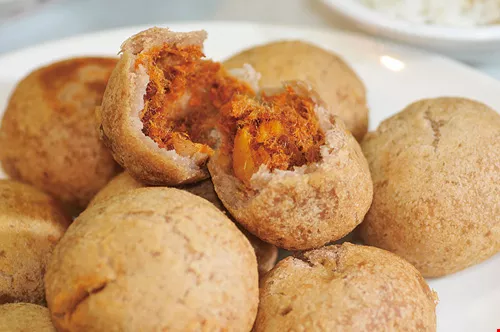
Ningxia Night Market's tasty eats include runbing (left), barbecued sausage, and stewed spareribs.
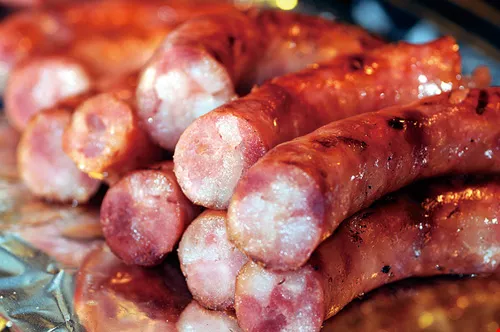
Ningxia Night Market's tasty eats include runbing (left), barbecued sausage, and stewed spareribs.
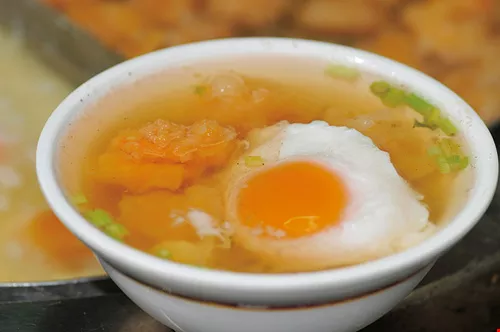
Ningxia Night Market's tasty eats include runbing (left), barbecued sausage, and stewed spareribs.

@List.jpg?w=522&h=410&mode=crop&format=webp&quality=80)


