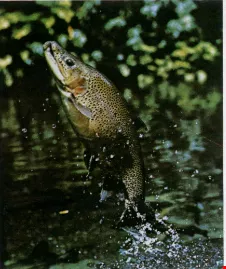
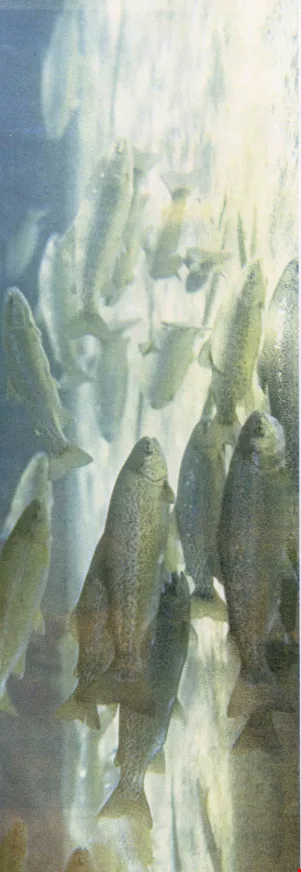
The Republic of China's fisheries have been developed at a fast pace in recent years. Production has been expanded to include several exotic species, such as the abalone and the trout. The trout is a temperate zone fish which is happiest in water at around 15 degrees Centigrade. Although it is not an indigenous fish in the waters of sub-tropical Taiwan, it has been introduced successfully in mountain areas such as Yangmingshan, Kukuan and Mt. Kala.
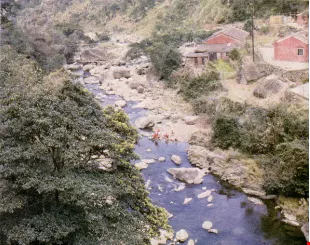
The temperate climate at Mt. Kala, located at about 1,200 ft. above sea level in Fuhsiung district of Taoyuan County in northern Taiwan, is ideal for trout culture. Most of the inhabitants of Mt. Kala are aborigines living in three large settlements--Lower Baling, Middle Baling and Upper Baling.
The improvement in their living standards is shown by their concrete houses equipped with amenities such as television sets and refrigerators; forming a stark contrast with their former thatched huts. Transportation for the most part is by private car or taxi. Their main means of livelihood are fruit growing (apples, pears and peaches) forestry and rice, as well as trout raising.
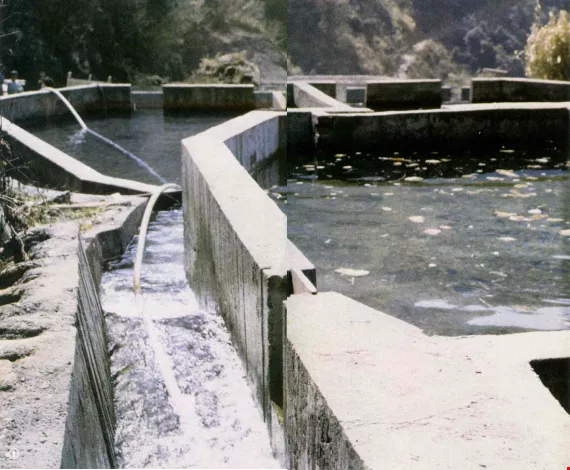
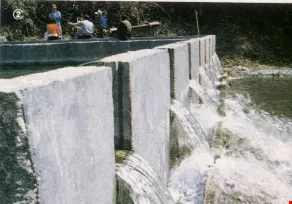
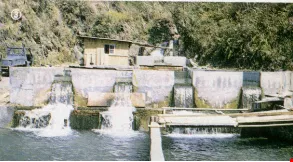
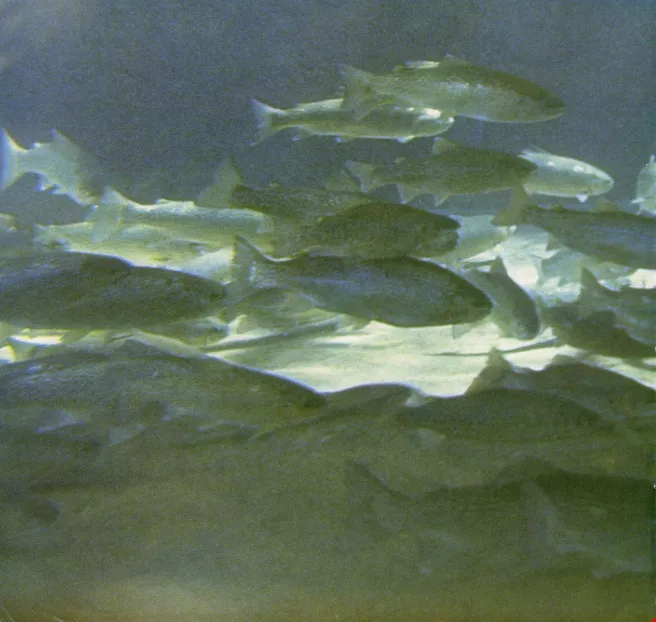
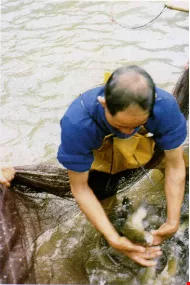
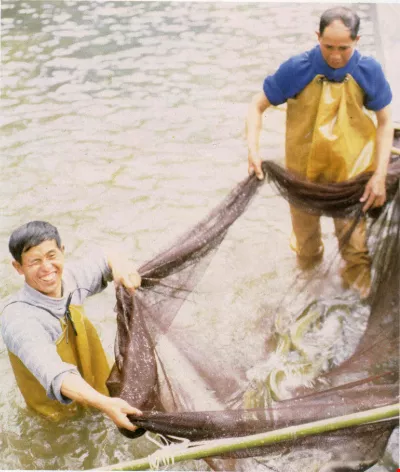
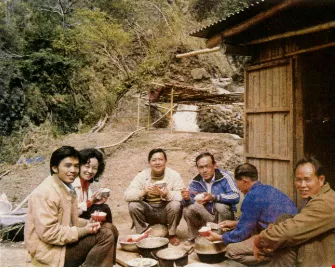
Two of the biggest fishery owners in the area are brothers Hu Cheng-chung and Hu Cheng-lu, aborigines who live near the summit of Mt. Kala at Upper Baling. The village has been equipped with a telephone and post office while several shops and eating places have sprung up to cater for the needs of residents and visitors. The Hu brothers' trout farm, located close to the village, is surrounded by unspoiled mountains and forests, with fresh spring water and streams abounding. The two brothers, with the simple and polite manners of country people, explained in fluent Mandarin that when they discovered the climate at upper Baling was suitable for trout raising, they immediately went to buy trout fingerlings from Kukuan in Taichung County to establish their business. The fish grew rapidly, and the brothers built three large concrete ponds to accommodate them. Terraced like paddy fields, the ponds have water running through them constantly to ensure abundant oxygen supply for the fish. For the benefit of visitors, the ponds have windows on the sides to allow the trout to be seen clearly. The young trout have a rich diet of milk powder mixed with wheat flour, eggs and cow and pig liver. As they grow older, less expensive feed can be used. Although an exotic species, trout is becoming a more popular dietary item for people in Taiwan because of its delicious flesh and soft scales. The average price is US$5.00 per catty. This year, the brothers have raised 20,000 trout, and plan to build more ponds to allow further expansion.
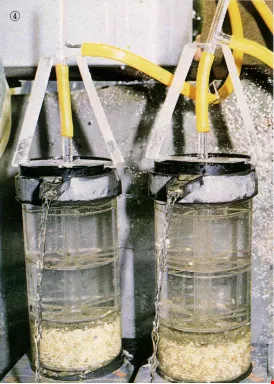
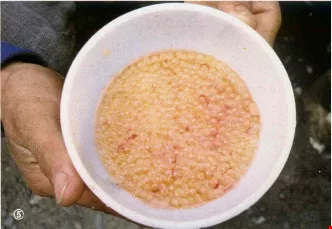
Mr. T. C. Yu, head of the Lukang Fishery Research Center, has given the brothers considerable assistance in trout raising. After receiving a letter asking for help, he immediately went to Mt. Kala and stayed there for several days. The Hu brothers recalled: "Mr. Yu not only answered all the technical questions, but also sent two fishnets, two sets of rubber clothes and an artificial hatcher. He showed us how to prepare fish food, treat and prevent fish diseases and have a greater understanding of the business. Afterwards, he refused any payment, saying: 'Your future success in trout culture is my greatest reward."' Now Mr. Yu and the Hu brothers have become close friends and often exchange letters on trout-raising.