The Business of Love
Boom Time for Social Enterprises
Eric Lin / photos Chin Hung-hao / tr. by Jonathan Barnard
October 2013


This summer Taiwan’s social enterprises truly entered a boom phase.
Many Taiwanese entrepreneurs have been actively reflecting upon the shortcomings of capitalism and globalization, giving the lie to the old notion that entrepreneurs only care about making their businesses grow big so they can earn as much money as possible. By taking social improvement as their duty and by refusing to view profit as the sole goal of an enterprise, they have created various models for doing well by doing good. They are searching for possibilities that create multiple wins for industry, consumers and society.
According to academics, there are currently more than 5000 social enterprises in Taiwan, and nearly 200 are making stable profits and are of a fair size. What ideals do these new entrepreneurs hold? And how has Taiwan become a fertile ground for social enterprises?
Scene No. 1: It is Saturday August 10, and Taiwan’s first Social Enterprise Fair is about to kick off to great fanfare at Taipei’s Sun Yat-sen Memorial Hall. Before opening time, the crowds are already packing the plaza. The fair proves to be like a microcosm of Taiwanese society in the present moment, offering amazing surprises and great opportunities to learn.

The DOIT (Delivering Open Innovations for Tomorrow) website aggregates international information and attracts many social entrepreneurs.
The idea for the Social Enterprise Fair grew out of a small fair put on at Fu Jen Catholic University. This year Fu Jen and DBS Bank are working together to combine the fair with corporate family day activities, increase its scale, and move off campus to engage the general public. The theme for the first year is “Care and Share.”
The bazaar area is abuzz with activity. The stalls mainly fall into the categories of fair trade, products from sheltered employment facilities, organic produce, public interest media, and healthcare technology. These are the most important areas of development for Taiwan’s social enterprises. And the businesses operating these stalls seem to be more interested in explaining their ideals than actually selling their products.
The products at the fair-trade stalls tend toward the exotic, and visitors often find themselves learning lessons about global trade. Apart from imported coffees from fairly well known companies such as Ökogreen and Rainforest Coffee, the fair also features the designer brand Twine Studio (the first Taiwanese firm to obtain certification from the World Fair Trade Organization) as well as Taiwan’s first trading company devoted to importing goods from fair trade brands located overseas: Earth Tree.
“Wow! Look at this beautiful stitching!” exclaims a group of women. It turns out they are looking at cloth sanitary napkins made in Nepal by Lovelady Pads. They begin to discuss whether they should start to use these delightfully designed and newly marketed green products made by Nepalese women villagers.
In the organic produce area numerous farms and co-ops are displaying mounds of fresh fruit and vegetables, as well as gourmet preserves and other products. The love that Taiwan’s small farmers have for the land is strongly apparent. The “sheltered employment” area features cakes, chocolate and handmade soap from workplaces staffed by mentally and physically disabled workers. They are concrete demonstrations of the hard work that public interest groups have put in to help people help themselves. Passersby pose happily for pictures with the people with Down’s syndrome who are passing out free samples of food.
In the public interest media and healthcare technology area, homeless people hawk the magazine The Big Issue, as well as Bao Bon Phuong, which is aimed at immigrants and guest workers from five Southeast Asian nations. Some people generously open their wallets and buy an issue of each to bring home.
Hank Hsu, who handles customer relations on loans to small and medium-sized companies for DBS Bank, leads friends and family around the site a couple of times. With manifest enthusiasm, he says, “The fair has
changed some of my old ways of thinking. It turns out that organizations with a commitment to care and service and without a single-minded focus on profits can also become sustainable businesses!”
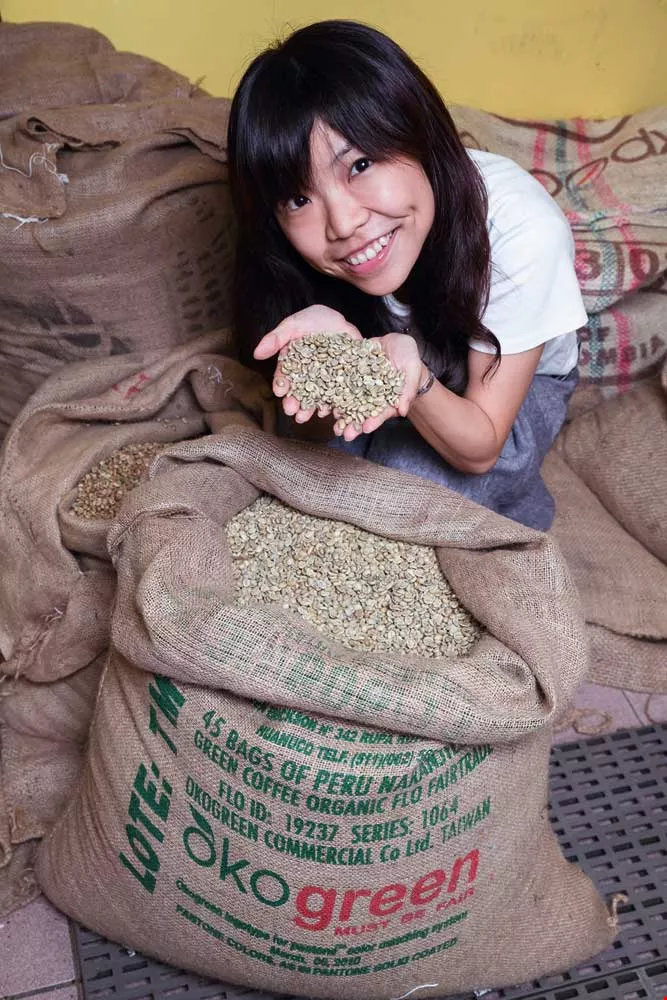
Coffee occupies a position at the leading edge of the fair trade industry. Via their choices of food and drink, consumers can demonstrate their values.
Scene No. 2: A teacher leads a group of ten students from Zhongli to the Ökogreen coffee shop on Taipei’s Tongshan Street on a “Day Trip for Fair Trade.”
The main speaker, Yu Wanru, the founder of Fairtrade Taiwan, argues at the very beginning of the event that much 21st-century poverty has resulted from warped consumer habits, but today, via fair trade goods, a consumer can support reasonable wages for third-world workers and help them emerge from poverty. Consequently, fair trade represents a form of progressive social engineering.
A series of videos with musical soundtracks play. When the students hear newly learned terms such as “industrial agriculture,” “global justice,” and “local practices,” their eyes flash with excitement.
The students then walk along Qidong Street, which used to be the main conduit for transporting rice into the city. Listening to the descriptions of the tour guide, they seem to have entered a tunnel of time, as they view with their own two eyes historical traces of Taipei’s ever-evolving food culture.
Along the meandering street, the group reaches the high rise at No. 9 Jinshan South Road, known as a “bastion of social enterprises.” It holds the offices of various social enterprise organizations, such as TEDxTaipei, the Taiwan Culture and Creative Platform Foundation, and Fairtrade Taiwan. It’s a great place to experience the atmosphere of a group of people working toward common goals.
Annie Huang, the tour guide, happily says, “I hate it when you put on an event, and it seems like it makes no impact. But today quite a few kids have declared that when they go shopping they’re going to be on the lookout for fair-trade certification, thereby making a concrete step as consumers to make the world a better place!”
These “Day Trips for Fair Trade,” organized by Fairtrade Taiwan, are entirely free, both the food and the activities. The fliers and advertising posters are printed in three languages: Chinese, English and Japanese. Foreigners are invited to attend.
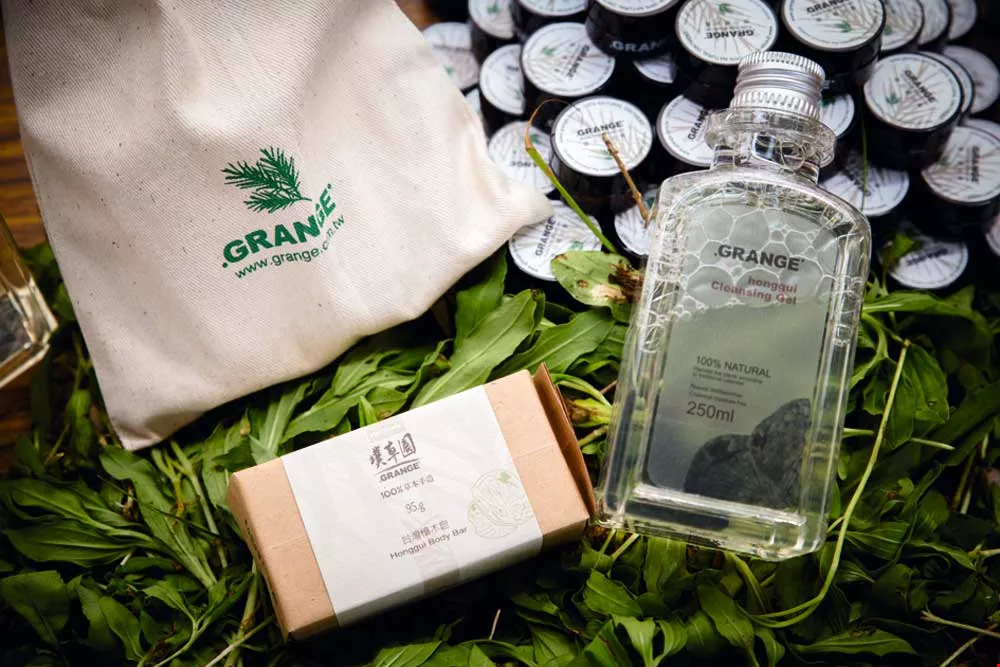
From cloth sanitary napkins and natural essential oils to organic vegetarian pet foods and products from sheltered employment facilities, goods made by social enterprises have already established a foothold on the market and in our lives. They show a lot of potential.
Scene No. 3: At the Institute for Information Industry building, Social Enterprise Insights, Taiwan’s first information platform for social enterprises, is holding a seminar on “Delivering Open Innovations for Tomorrow” (DOIT). The seminar is split into two basic themes—“creating something different” and “the power to deliver”—as well as five topical areas: information technology, employment for the disadvantaged, education and culture, environmental protection, and agricultural development. Entrepreneurial experiences and international trends are explained up close by the editors of Social Enterprise Insights and Taiwanese entrepreneurs.
Almost two years have passed since Social Enterprise Insights went online on February 2012. It has already attracted more than 20 translators and 50 other volunteers. Over 1.2 million people have “liked” it on Facebook. Its founder and editor-in-chief Sunny Lin, 27, worked as an intern for social enterprises when she was a student in the United States. When she returned home to Taiwan, she felt that the island suffered from a large information gap with the rest of the world, so she brought several friends together to build a website to aggregate news about international social enterprises. Much to her surprise, within a short period of time its efforts started to snowball. In early February of this year when the organization put on a fundraising dinner, over 700 people bought tickets.
“Venture capital firms were constantly asking about investing, but I had to stay calm and collected, and reflect upon our next move,” says Lin with obvious excitement. The support that the people show for social enterprises in Taiwan has far exceeded her expectations.
The above three scenes capture the current situation of social enterprises in Taiwan. This new conception of what an enterprise can be is growing strong here.
In the middle of September, Fu Jen Catholic University’s departments of business administration and sociology together opened an interdisciplinary master’s program on social enterprise. About half of the 14 students who enrolled in the program are social entrepreneurs, and about 40% of the curriculum will involve going outside the classroom to get practical experience with social enterprises. Over the next two years that first class will be going throughout Taiwan and abroad to engage in “cross pollination.”

Taiwan’s first Social Enterprise Fair was held this year. It resembled an expo devoted to all the latest trends.
The people of Taiwan are beginning to hear the term “social enterprises” roll off people’s tongues more and more often. Consumers support them, and entrepreneurs are beginning to view social enterprises as a new option. But what exactly are social enterprises? And why have they become so fashionable at this moment of time in Taiwan?
Professor Hu Jer-san, who founded the social enterprise program at Fu Jen, explains that social enterprises upend the notion that organizations should either be devoted purely to maximizing profits or to providing public-interest services. “Enterprises,” he explains, “can look both to benefiting the public interest and to operating successfully as a business. They can create products that show compassion for society and benefit the disadvantaged while also turning a profit and achieving financial sustainability.”
According to academic research, organizations can be entirely profit driven or wholly charitable, or any of four gradations between them (see Table). Today in Taiwan many profit-driven corporations and non-profit organizations are beginning to move toward the “social enterprise” model in the middle.
Consequently, over the past two years there has been a trend in Taiwanese industry toward for-profit businesses taking on public-interest orientations and public-interest organizations becoming more entrepreneurial in nature. Just as businesses look for unmet demand in the market or develop new products to distinguish themselves from competitors, new social enterprises look for market demand in terms of providing care to people and solving social ills.
Public-interest organizations must reduce their dependence on government assistance and charitable donations and develop entrepreneurial functions so as to create job opportunities for the disadvantaged and produce revenue for the organization. Good examples are sheltered-employment carwashes, bakeries, restaurants and cleaning services. They are growing more and more competitive in the marketplace.
These increasingly popular kinds of enterprises have given rise to a trendy new appellation: social entrepreneur.
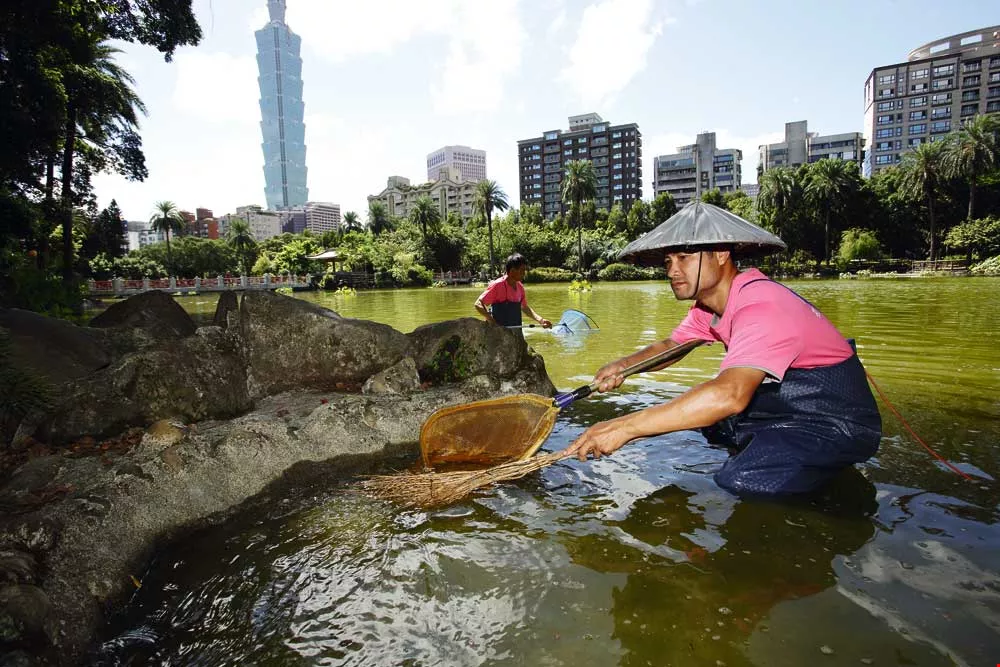
The First Social Welfare Foundation’s cleaning business provides employment opportunities to the disabled. The quality of the work is in no way inferior to cleaning services offered by regular for-profit firms. It’s a good example of how public-interest organizations are transforming themselves into social enterprises.
In fact, the social enterprise concept has been alive for quite some time in Europe and the United States, and even developing countries such as India and Bangladesh have, due to the intense needs of their disadvantaged groups, developed a degree of maturity and innovation in this realm. But because Taiwan is largely a middle-class nation, with a social atmosphere that favors charitable and governmental provision of social welfare, it used to lack the social enterprise model.
In 2007, Trend Micro’s chairman and founder Steve Chang and the author Tom Wang founded Flow, a venture capital firm that has held competitions to find social enterprises to invest in. It caused a big stir, but because it followed the old model of “creating success by throwing money at a project,” it hasn’t been as successful as they had hoped.
“When consumer markets are not yet fertile ground for these projects, how can they take root?” asks Hu Jer-san. Idealism and reflection must come first. You start by cultivating consumer habits; only then will the products created by social enterprises meet with market acceptance.
In 2008 various organizations, including the United Way of Taiwan, 104 Job Bank, and the Small Offices and Home Offices Association, banded together to organize Charity 2.0, which called for people to mobilize to help the poor. Thanks to donations from the public, they were able to provide micro-financing for enterprises founded by members of disadvantaged groups. An emphasis was placed on financial transparency, interaction with the public, and providing enterprises with professional knowledge. Charity 2.0 immediately received a lot of attention from public interest groups, many of which tried to learn from their examples.
In 2010 the Taiwan Social Enterprise Innovation and Entrepreneurship Society was established at Fu Jen University. The organization constructs theories and promotes concepts, and it also identifies successful ventures and analyzes their business models, before spreading the good word about them. Among the successes are Rejoice Bread Workshop, which focuses on finding employment for the disadvantaged and on national food self-sufficiency; the Antique Assam Tea Farm, which promotes organic food production and environmental consciousness; and the newspaper Bao Bon Phuong, which provides a voice for the disadvantaged. All of these examples can help instill confidence in those thinking about establishing a social enterprise.
Wu Chung-shen, chair of the sociology department at Fu Jen and a participant in the Charity 2.0 program who has been researching economic models for many years, notes that Taiwan already has more than 5000 hardworking social enterprises. These include nearly 60 registered companies, more than 100 non-profit public-interest organizations that are making quick progress at becoming economically self-supporting, and over 5000 production and marketing co-ops actively pursuing transformation.
“Consumers are no longer making purchasing decisions simply based on price, functionality and beauty,” says Wu. “They also want to identify with social ideals. This kind of new consumer culture prioritizes buying products from social enterprises over products of large corporations, which have frequent issues with food safety. Consequently, they’ve created a fertile ground in Taiwan for cultivating social enterprises.”
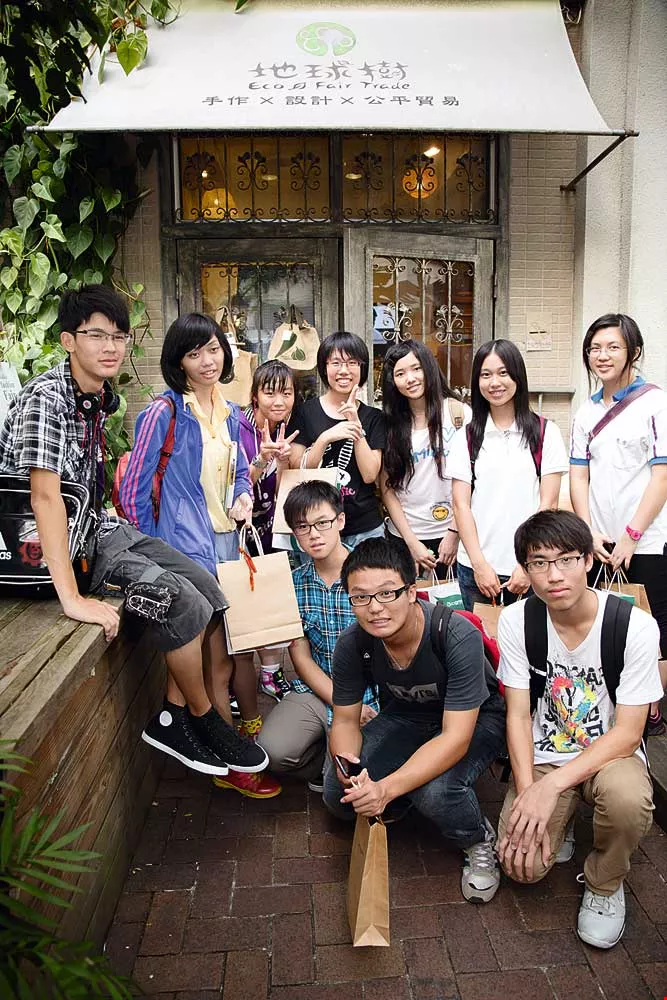
For a field trip, excited high school students from Zhongli take the “Day Trip for Fair Trade” tour.
There is a long-held belief in business administration circles that entrepreneurs must endure a weed-out process during which they struggle for three years to build a regular clientele; that experience will strengthen their fortitude and adaptability, which in turn will foster staying power for their business.
But social enterprises upend this traditional model because social entrepreneurs are so full of enthusiasm that it’s easier for them to survive three years. And since their products are imbued with idealism, they also find it easier to shepherd consumers past the hesitation involved with a first purchase. The challenge is in finding a way for supply to meet demand. If, after three years, production has still not grown fast enough to meet demand, then the brand that they worked so hard to build will never be able to achieve maximum effect.
With regard to the triangular relationship among social enterprises, consumers and entrepreneurs, Hu Jer-san draws attention to one of its unusual characteristics: Instead of traditional investment capital, social enterprises need “consumer investment capital” that arises out of consumer awareness. As soon as consumers purchase a product or service from a social enterprise, they are voting with their consumer power to allow that venture to survive.
And creating a business on the social enterprise model in one’s youth is like voting for an entirely new form of work in an era of high unemployment, and thereby helping to determine which direction our society takes!
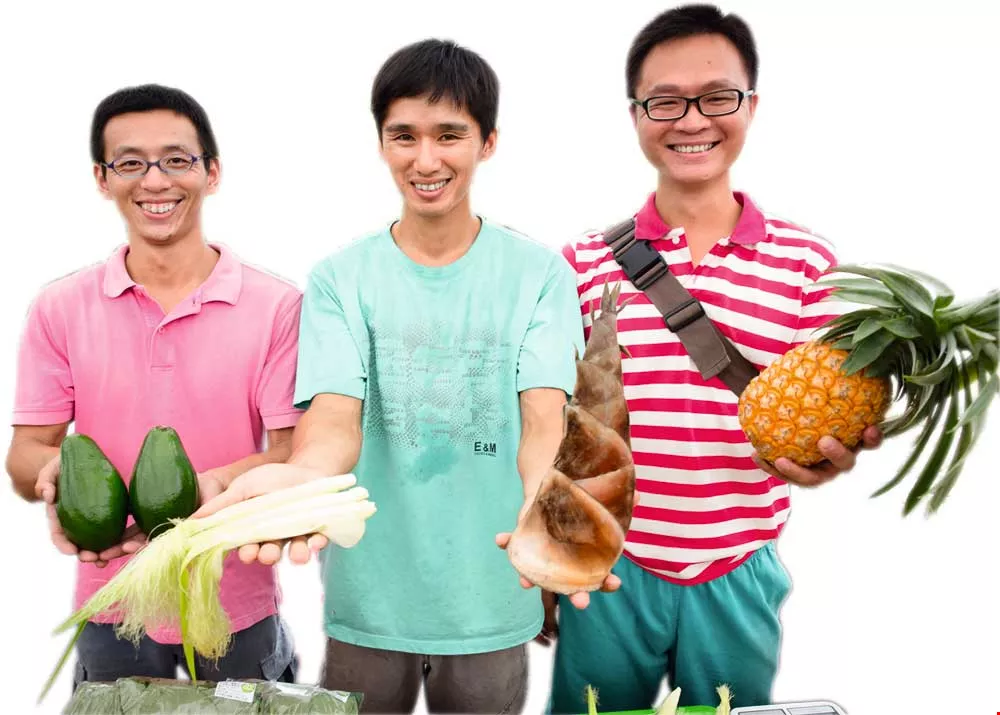
Thanks to the solidarity shown by small farmers, organic produce has gradually broken through production and sales bottlenecks, allowing consumers to eat as healthily as possible.
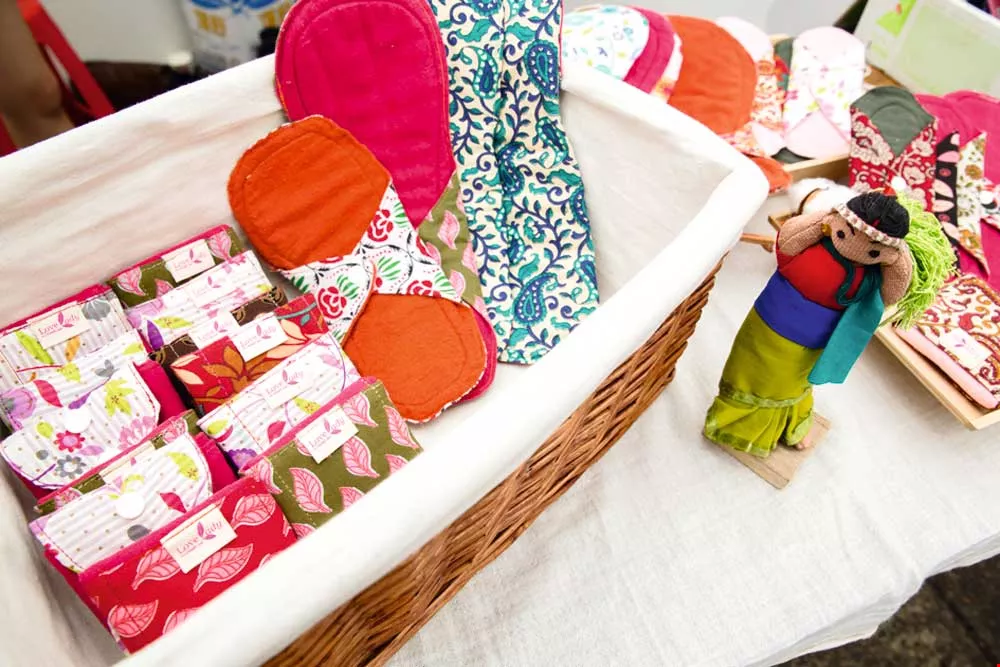
From cloth sanitary napkins and natural essential oils to organic vegetarian pet foods and products from sheltered employment facilities, goods made by social enterprises have already established a foothold on the market and in our lives. They show a lot of potential.

From cloth sanitary napkins and natural essential oils to organic vegetarian pet foods and products from sheltered employment facilities, goods made by social enterprises have already established a foothold on the market and in our lives. They show a lot of potential.


@List.jpg?w=522&h=410&mode=crop&format=webp&quality=80)


