Lite-On Lights Up the New Century
Yang Ling-yuan / photos courtesy of Lite-On Technology / tr. by Chris Nelson
November 2007


In early August, the low-key Lite-On Technology Corporation announced it was buying the Finnish firm Perlos, the world's top cell phone casing manufacturer in terms of market share, for NT$12.5 billion. The sudden news garnered a great deal of interest in the industry. David Lin, CEO of the Lite-On Group, says, "We need cell phone casings. The casings are like a boat: by loading them up with our components, we can drive the growth of the entire industry."
Lite-On Technology already produces LEDs, electronic flash units, cell phone camera modules, screen and keypad backlights, infra-red modules, lenses and GPS navigation systems. With the addition of Perlos' cell phone casings, antennas and electrical modules, Lite-On covers almost the entire supply chain of the world's cell phone components, lacking only liquid crystal display modules.
Having acquired Perlos, which supplies cell phone casings to the top five cell phone manufacturers, Lite-On is no longer merely a boat; after the merger of the two companies, it will become an aircraft carrier in the cell phone supply industry.
Founded over 30 years ago, Lite-On Technology rarely makes headlines, despite being the leader of Taiwan's LED industry and the fifth-largest electronics conglomerate in the country. But each time it makes an announcement, the news rocks the entire industry. For example, when it became Taiwan's first publicly traded electronics firm in 1993 and the first major domestic company to proceed with a merger after the passage of the Business Mergers and Acquisitions Act in 2002, people were invariably surprised.
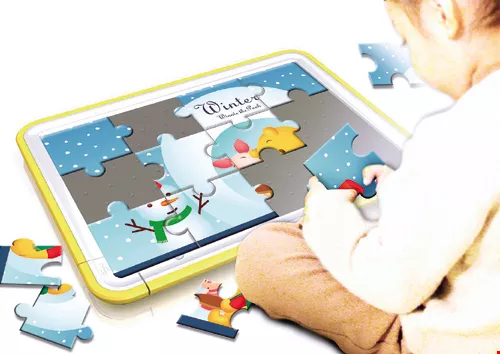
The Digital Collage Frame, which won the IDEA award for design earlier this year, employs e-paper technology so the user can easily upload digital photos through the USB port to design photo collages and make jigsaw puzzles.
The tale of "Scissorhands"
"This is David Lin's 'submarine strategy,'" says Elaine Su, head of Lite-On's public relations division. Lin often cautions his employees, "Don't rush past things. Instead, be like a submarine, hiding underwater and pursuing your quarry with quiet, deliberate motions. When the time is right, that's when the submarine surfaces."
The global cell phone industry boasts annual sales of 1.2 billion units and revenues of US$140 billion, and Lite-On had long planned to expand into cell phone assembly. The firm held fast to its dream: at the end of last year, it invested in the plastics molding firm DragonJet Corporation and the precision manufacturer Coxon Group, giving Lite-On a new opportunity in the cell phone assembly market.
This past May, Lite-On initiated negotiations for the acquisition of 54-year-old Perlos, which enjoys a 16% share of the world market for cell phone casings. Lite-On Group chairman Raymond Soong believes that the purchase of this major cell phone casing manufacturer, which holds a vital position and customer base in global manufacturing, will enable the two companies to complement each other to achieve worldwide reach, and also satisfy customer demand for one-stop shopping through comprehensive services. And as this will bring in NT$30-40 billion for Lite-On, it's a win-win partnership. It also gives Soong, so well known for mergers and acquisitions that his nickname is "Scissorhands," yet another chance to wield his power.
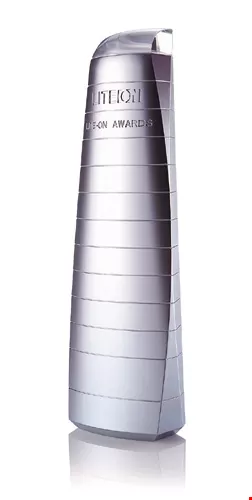
Soong, who founded his company from scratch, created the Lite-On Innovation Awards to give students a platform for showcasing their creativity. Shown here is the award itself.
LEDs make Taiwan shine
In 1972, Texas Instruments set up the first LED assembly line in Taiwan, spearheading Taiwan's LED industry. Two years later, TI suddenly shut down the production line. At that time, Soong and fellow TI employees Paul Lin and Simon Wu were convinced these tiny objects would play a major role in everyday life in the future, and they decided to found an LED assembly company. In 1975, they rented a small apartment on Yuantung Road in Chungho City, and even converted the bathroom into an office. They took turns delivering packages by motorbike as they labored to lay the groundwork of Lite-On.
Taiwan's early LED industry focused mainly on downstream assembly; key mid- and upstream raw materials-epi-wafers and chips-still had to be supplied by major American and Japanese companies. In the 1980s, more than ten other companies were founded in Taiwan, such as Opto Tech and Tyntek, manufacturing epi-wafers for high-brightness LEDs, but at this early stage Taiwan's LED industry remained quite small. By 1993, with the founding of Taiwan's first upstream epi-wafer company, United Epitaxy (later acquired by Epistar), up-, mid- and downstream LED manufacturing was complete, and today Taiwan's total output value for LEDs exceeds 20% of the global figure, second only to Japan as a supplier.
Since becoming Taiwan's first local LED assembly company, Lite-On has amassed numerous subsidiaries in the pursuit of synergy. Its domain has likewise grown step by step into a complex affair, essentially covering the entirety of what's known in Taiwan as "3C" (computers, communications and consumer electronics), including switched-mode power supplies, camera modules, networking products, TV receivers, computer cases, LCDs, LAN switches, wireless access points and PDAs. In the last three years, the company has been getting into the so-called "fourth C"; that is, car electronics.
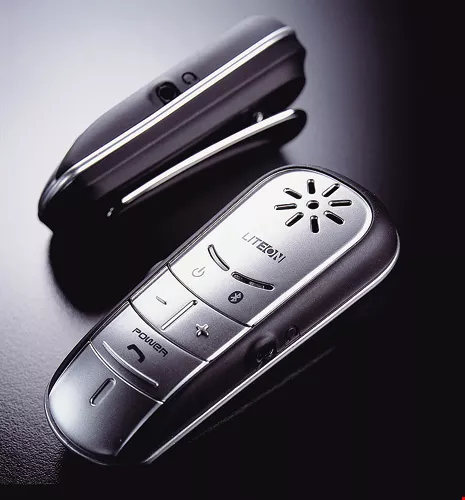
With Lite-On's BSK-100 Bluetooth microphone headset, you can connect to your cell phone and talk while it's still in your pocket. This superbly designed product, using Bluetooth technology, has entered the mass production phase; it is also a winner of this year's iF award.
An electronics superstar
Lite-On became Taiwan's first publicly traded electronics firm with its IPO 14 years ago, and its stock code, 2301, became a proud symbol in Lite-On's history. Five years ago, Soong boldly united the four companies Lite-On Electronics, Lite-On Technology, Silitek and GVC into the Lite-On Technology Group, spanning the whole gamut of 3C products. This merger of four listed firms also set a precedent in business reorganization for Taiwan.
Three years ago, Lite-On acquired 3C peripheral fabrication specialists Lite-On Enclosure Inc. and Lite-On Semiconductor Corporation, expanding its business into five divisions: 3C peripherals and parts, imaging, communications, computers and new business. After this, they united the forces of previously competing entities and restructured both company organization and product lines, greatly boosting the group's R&D capabilities and the integrity of its product chains. The focus was also shifted toward digital products for office and home use, with the aim of making the company a helmsman for a new digital era.
These three major advances turned what had been a three-person, NT$1-million firm called Lite-On Electronics into today's conglomerate of 14 companies with revenues of NT$222.2 billion last year and a workforce numbering more than 60,000 worldwide. The company operates in the US, Mexico, Thailand, Malaysia, the Philippines, the UK and China, with 48 production facilities, 29 branches and 114 just-in-time warehouses, plus distributors in 22 countries.
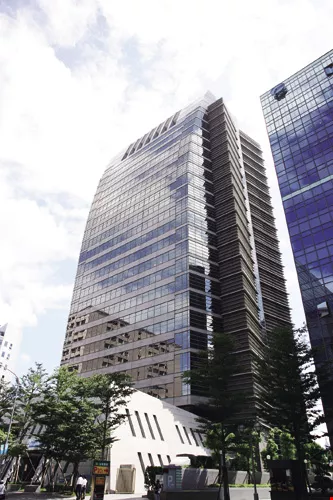
(below) Occupying about 10,000 square meters, Lite-On's 23-story headquarters resembles a pair of clasped hands pointing heavenward, symbolizing Lite-On's humble prayer for sustainable operations.
Customer-centric growth
In the steady process of its horizontal and vertical expansion, Lite-On has never held back on innovation or ambition. Lin says that the company started focusing on new product development eight years ago; a year later revenues grew by 45% and profits grew by 200%. In 2006, in order to concentrate its R&D power, the company proposed a "high-quality growth strategy," focusing its R&D efforts on four profitable lines of core business: imaging products, power supplies, computer cases and LEDs. It's estimated that business from optoelectronics products, desktop computer keyboards, computer cases, camera modules and affiliated products makes up over 85% of the company's total revenues.
This year, Lite-On launched its "customer-centric growth" strategy for comprehensive one-stop shopping services. Lite-On offers customers the most comprehensive services for its digital products via a six-technology platform: digital display, image printing, storage, input, communication and network hub technologies.
Soong's philosophy is, "If you want to do it, just do it!" Soong himself adheres to this maxim, and as one who has practiced meditation for years to calm his mind, he always gets right to the point in order to simplify things when making decisions.
The manifestation of his ambition not only made Lite-On Technology the top company in ODM, but it ranked among BusinessWeek's Info Tech 100 for four years straight. Starting in 2005, it was listed by Forbes magazine for two years in a row as one of Asia's top 50 companies, and last year Finance Asia rated Lite-On ninth in company management in Taiwan. The CD drives, cell phone keys, color image sensors and automotive LEDs produced by the group's subsidiaries are rated among the top three sellers in the world.
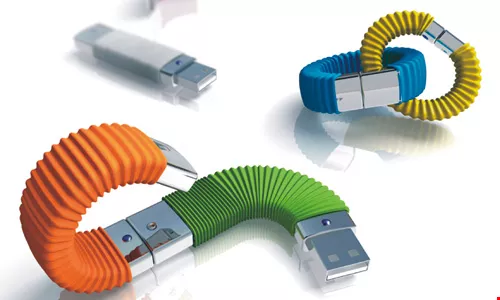
Memory Infinite, a flexible USB flash drive, has USB connectors at both ends. If more storage space is needed, you can daisy-chain them; they can also be carried around separately. The readily expandable design won the iF design award this year.
Don't be a problem causer
Lite-On became a global company early on, opening a factory in Tianjin, China, 18 years ago, followed by others in Malaysia, Thailand and Singapore, and then starting branches in Europe and North America; nevertheless, its nerve center has always stayed in Taiwan. In 2003, Lite-On opened its new world headquarters in Taipei's Neihu Technology Park. The 23-story building, resembling a pair of clasped hands pointing heavenward, is the company's global center for business, R&D, information and finance.
Already there's a clear outline for the future of Lite-On's global structure: manufacturing will take place mainly in China, with Mexico and Thailand as secondary bases. Marketing, after-sales service and data collection will be handled mostly in Europe and the US. The investment in Mexico will be in preparation for entering the North American market, while Thailand will supply the European market. Moreover, Lite-On opened a factory and a branch office in the Czech Republic to get ready to enter the emerging markets of Eastern Europe.
Following the fast pace of reengineering and the rapid expansion of the company's business scope, Lite-On's upper management is faced with daunting tasks. From the placards on their desks- "Are you here with the solution or are you part of the problem?"-you can see the expectations that Lite-On places on them.
Soong recalls that after Lite-On's four-company merger, managers often asked him, "Where shall we set up a new plant?" Soong would always reply, "You're the ones who should be answering this question." After taking on the heavy responsibility of heading the Lite-On Group, he had the placards specially made for his employees. It's his conviction that employees not only create value for the company, but also create value for themselves.
Soong has another expectation for Lite-On: to become the first OIM (original idea manufacturer) company.
"Although Lite-On doesn't have a private brand, the company doesn't fall short when providing customers with good ideas. For example, Lexmark's three-in-one multifunction printer was Lite-On's idea," says Su. Within the company there are two channels for career advancement: one for the professional managers dashing around in the field, and the other for the R&D personnel who quietly immerse themselves in their work. In the industry pyramid, R&D and management are at the top in terms of value, and as such are irreplaceable.
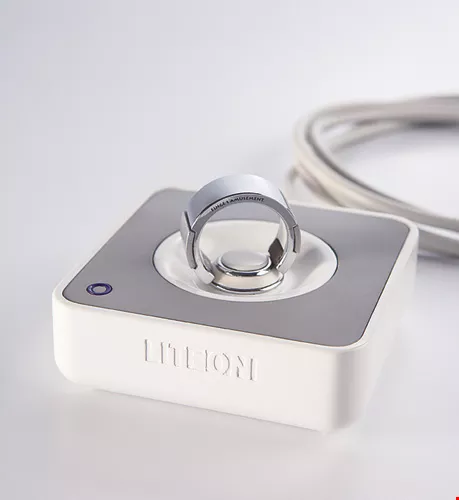
(right) Finger Amusement, winner of the silver prize in the 2007 Lite-On Innovation Awards, changes the method of operating of a computer mouse. The user doesn't need to move the mouse around; instead, the pointer is moved by a finger sensor for greater ease and efficiency.
Lite-On Innovation Awards
Soong also believes that innovation is Lite-On's most precious asset and fostering new talent is his duty.
Six years ago the company introduced the Lite-On Innovation Awards, an industrial design competition, in hopes of nurturing new talent and boosting international competitiveness. At the same time, it is a real expression of repayment to society. Originally a cross-strait intercollegiate effort aimed at encouraging student creativity, it unexpectedly became a cradle for new blood in domestic industrial design. Many prizewinners entered the industry, including joining Lite-On, upon graduation. The Lite-On Innovation Team was inspired by this, and of its own accord began competing in international industrial design championships, and since 2005 has won a total of 17 design awards including the German iF and Red Dot and the American IDEA design awards.
"So far over 7,300 people have competed in the Lite-On Innovation Awards. The participants hail from 23 regions across Asia, Europe and North America." Su, who took charge of the awards two years ago, watched the event grow into an international affair as Lite-On's empire expanded. Consequently he proposed the "brand operating model" idea, expanding the Lite-On Innovation Awards onto the international stage. Perhaps it may even become the Oscars of the design world, rivaling the three major design awards.
"The Lite-On Innovation Awards have become a synonym for Lite-On," says Su. He points out that Taiwan's electronics industry is mostly based on contract manufacturing, lacking private brands, and he worries that there is no way for the end consumer to get to know them. If Lite-On can spread its name throughout the world via a major competition, then "this itself is a form of innovation; a kind of original thinking that's not new to Lite-On."
What about the LED industry? Lite-On, now ranked fifth in the world, gained a cross-licensing contract with Osram in 2004 to make phosphor powder, quietly setting the stage for its next mission. Now Lite-On is in negotiations with the second largest traffic light supplier in the US. Perhaps someday soon Lite-On, Taiwan's LED industry pioneer, will become an important mover in the effort to replace the street lamps, traffic lights, automotive electronics and electronic billboards of the world's major cities with energy-saving, eco-friendly, long-lasting LEDs, helping light up the new century.
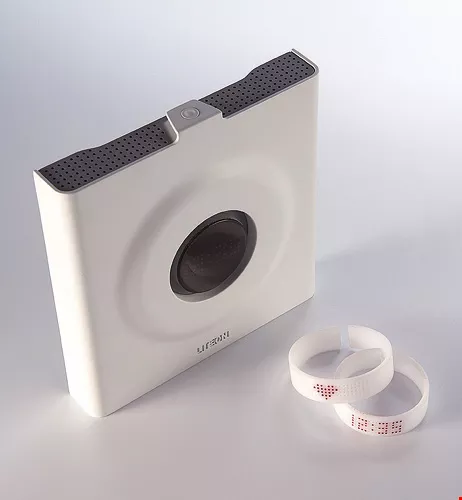
(left) Emotion Alarm, which won the gold prize in the 2007 Lite-On Innovation Awards, includes a pair of wristband alarms that can be set for different wake-up times, solving the problem of couples with different work schedules disturbing each other in the morning.
Capital NT$21.256 billion
Revenue 2006: Consolidated global income NT$163.85 bn; profit: NT$7.72 bn; group revenue NT$ 222.22 bn
Ranking • 2005-2006: Rated by Forbes magazine as one of Asia's top 50 companies; ranked 24th in Taiwan in the Global 2000• 2003-2006: Listed in BusinessWeek's Info Tech 100• 2005-present: won Global Views Monthly's Corporate Social Responsibility Award three years in a row
Patents 2006: 1,400 patents worldwide
Employees Lite-On Technology: 2,500 in Taiwan; Group: about 60,000 wordwide
Affiliates Lite-On IT, Silitech, Lite-On Semiconductor, Lite-On Automotive, Actron Technology, Logah Technology, DragonJet, Diodes Inc., Lite-On Japan, Maxi Switch Inc., etc.

(facing page) Lite-On offers a wide selection of products, often bewildering to outsiders. Yet chairman Raymond Soong, who meditates daily to calm his mind, is low-key and sedate in style, worlds apart from the vast majority of Taiwan's billionaire electronics mavens.
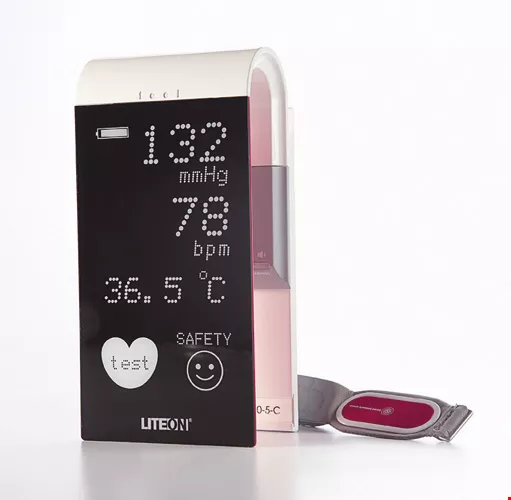
Another 2007 silver prize winner for creativity, called Feel, is a new generation blood pressure gauge, automatically measuring blood pressure and body temperature. It's handy both at home and in nursing stations.
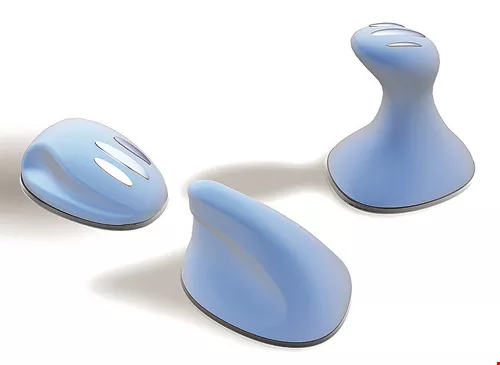
Molded Mice are made with a soft cloth exterior for user comfort, and the moldable material enclosed within can be kneaded into a shape that conforms to the user's palm. This design won the Red Dot award this year.
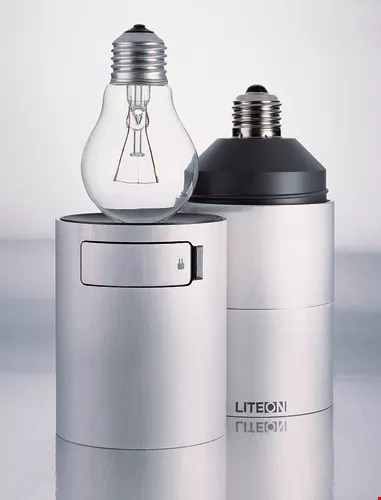
SNUG, a Lite-On wireless projector with no buttons, on/off switch or wires, can be installed onto the ceiling without a fixed mount. This design not only won a Lite-On Innovation Award last year, but it also received an iF award this year.


