

The mouth is the only one of the body's five sense organs that has multiple functions. The eyes see. The ears hear. But the mouth not only chews and tastes food, it also speaks, sings, smiles, and kisses, expressing our feelings and passing on ideas.
With the incidence of oral cancer rising rapidly in Taiwan in recent years and the medical community having identified betel nut as a carcinogen, Taiwan's health departments have been doing their utmost to raise public awareness. Unfortunately, it is largely the non-betel-nut-chewing portion of the public that has heard and digested their message. Recognition that quitting betel nut lowers the risk of oral cancer lags far behind the appreciation of its flavor and its thirst-quenching and energy-boosting properties among the island's nearly 2 million red-lipped betel-nut chewers.
"If I could turn back the clock, I'd certainly quit betel nut," says Wu Feng-yuan in last year's documentary, The Lost Smile. In the film, Wu describes discovering five years ago that he had late-stage oral cancer.
Wu lives in Matou Township, Tainan County, and makes his living dealing in and repairing motors. His wife says he's a good husband who is dedicated to providing for his family. Her only complaint was that he chewed betel nut and smoked. Over the years, she tried every way she could think of to make him quit but never succeeded.
"When work tired him out or he was in a bad mood, he'd chew," says Wu's wife, Pan Hsiang-ling. She says the 100 drupes a day he was consuming cost him NT$5,000 per month and left him unable to fully open his mouth. He finally went to see a doctor when his worsening periodontal disease left him with loose teeth and constantly bleeding gums.
"I didn't know that oral cancer was such a terrible disease," says Pan, still upset by her memories of her husband's diagnosis and treatment. Wu had four surgeries in the year and a half after he was diagnosed with buccal mucosa cancer. And each time he had a tumor removed from the inside of his cheek, it grew right back. The cancer also spread, moving to the floor of his mouth and into his throat. In addition to the pain, Wu was tormented by uncertainty about his future and a sense of helplessness.
"One evening when we were going to pray, my husband looked in the mirror and discovered that a tumor that had measured only a centimeter across that morning had grown doubled in size and was almost blocking his throat," recalls Pan. "He just stood there in shock." Fortunately, the chemotherapy and radiation administered after he transferred to Taipei's Veterans' General Hospital succeeded in bringing the cancer under control. Unfortunately, all his teeth, as well as much of his left cheek and jaw, had to be removed.
Wu got another shot at life, and is in OK shape three years after completing his treatment. Though his speech is slurred and he can only consume liquefied foods, he is very grateful to be back at his wife and daughter's side. "Life really is wonderful," says Wu. He and his family now spend their free time growing organic vegetables that they eat themselves and share with other patients. They are also often invited to speak about their experience. "The whole treatment process was so exhausting," says Pan. "If we can save even one person from it, I'd consider it a victory."
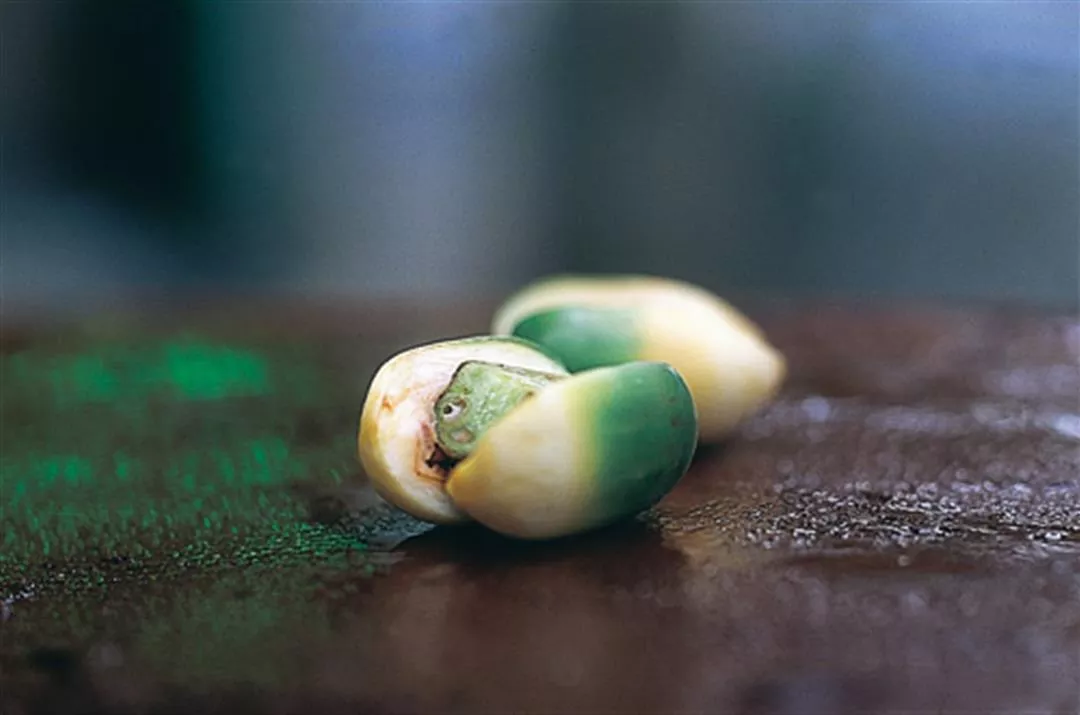
From left to right: Piper betle flowers; red-lime betel nuts (nuts that are split open and smeared with red-lime paste, with a slice of Piper betle flower inserted); Piper betle leaves; a white-lime betel nut (a nut pressed into a folded Piper betle leaf smeared with white lime).
Striking men in their prime
Supported by his wife, Wu is fully engaged with his life. But many are not so fortunate. Dentists say that the majority of people ignore their illness or just avoid seeing the doctor. By the time they do finally seek treatment, their disease is so far advanced that mortality rates are high.
According to the Department of Health, oral cancer became one of the ten most prevalent cancers in Taiwan in 1991 and has been getting more common ever since. It currently ranks fourth among men (behind liver cancer, lung cancer, and colon cancer) in terms of its incidence and its mortality. In 2005, more than 4,310 new cases were reported among men. In 2007, 2,202 died from the disease. It is the number-one cancer among men between the ages of 25 and 44, and the deadliest disease afflicting Taiwanese men in their prime.
"The mechanisms by which betel-nut chewing causes cancer are very clear," says Dr. Hahn Liang-jiunn, the former head of National Taiwan University's School of Dentistry and the so-called "father of betel-nut prevention." Hahn explains that oral mucosa are exceptionally fragile structures, and that chewing betel nut, which is very fibrous and is chewed with a lime (calcium hydroxide) paste, is like "scraping the oral cavity with a loofah." It creates numerous small abrasions that, unfelt at the time, embed betel nut's carcinogens in the tissues of the oral cavity.
The carcinogens in betel nut are primarily polyphenols and alkaloids. In the alkaline environment created by the lime paste, they create cancer-causing free radicals and nitrosamine. As early as 1999, research by Veterans' General Hospital showed that betel nut containing lime paste and wrapped in betel flowers (the flowers of the betel plant Piper betle, not of the betel palm) activated cancer cells. In 2003, the International Agency for Research on Cancer (IARC), part of the World Health Organization, determined from the newest research and experimental evidence that the leaves and flowers of Piper betle, betel nuts themselves, and lime were all Group 1 carcinogens. It's easy to see the carcinogenic potential of such a toxic stew.
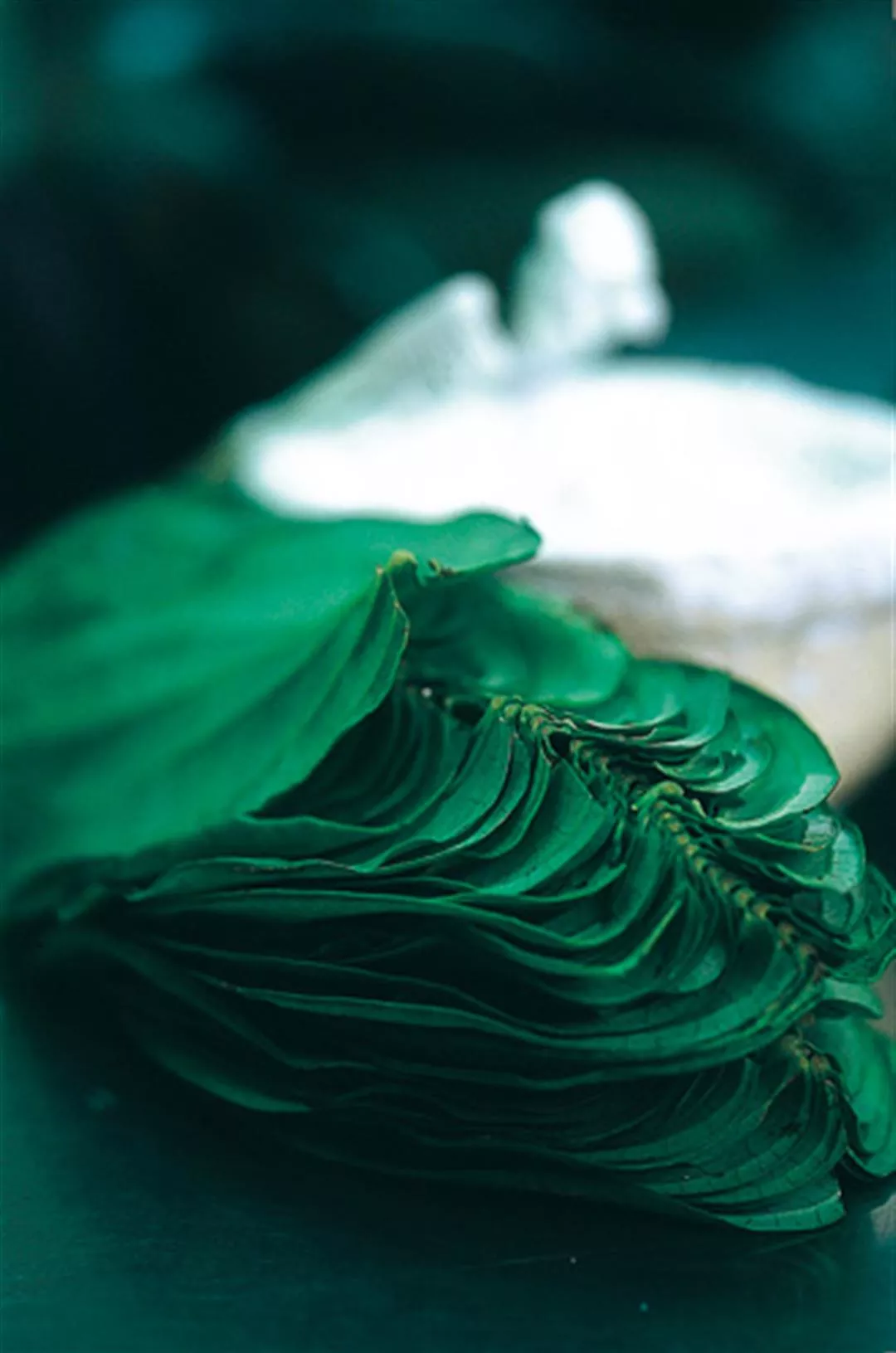
From left to right: Piper betle flowers; red-lime betel nuts (nuts that are split open and smeared with red-lime paste, with a slice of Piper betle flower inserted); Piper betle leaves; a white-lime betel nut (a nut pressed into a folded Piper betle leaf smeared with white lime).
Conclusive evidence
"Betel-nut chewing has direct and indirect cancer-causing mechanisms," says Hahn. "It is a multi-step process involving physical abrasion and chemical stimuli that initiates, promotes, and spreads cancer."
Clinical data has also offered clear confirmation of the cancer link. Hahn estimates that since the 1980s, 80-90% of Taiwan's victims of oral cancer have been betel-nut chewers. Because the betel-nut quid scrapes the inner cheeks and the gums repeatedly, more than half of Taiwan's oral cancer cases have been buccal mucosa cancers or gingival cancers. Hahn contrasts this with oral cancers in areas where betel-nut chewing is not prevalent. In such locales, oral cancers most commonly involve the tongue; buccal mucosa cancers account for only 7-8% of cases.
Epidemiological research indicates that smoking and alcoholism are also risk factors for oral cancer. Research by Ko Ying-chin, a professor with Kaohsiung Medical University, shows that if we take a non-smoking, teetotaling, non-betel-nut-chewing individual's risk of oral cancer as a baseline, betel-nut chewing increases the risk of cancer 28 times; smoking and betel-nut chewing together increase the risk 89 times; and using all three substances together increases the risk 123 times. The fact that Taiwan's betel-nut chewers typically are also smokers and drinkers is therefore a matter of great concern.
Oral cancers are not the only problem. The second most damaging disease afflicting betel-nut chewers is oral submucous fibrosis, or OSF.
"Like cirrhosis of the liver, OSF is an irreversible condition," says Hahn. He explains that the oral mucosa consist of submucosal tissue and more than ten layers of epithelium. These tissues account for the oral cavity's softness and elasticity. Chewing betel nut repeatedly abrades the epithelium, causing the mucosal tissue's gingival fibroblasts to secrete collagen to repair the damage. When too much collagen accumulates, the epithelium becomes hard like fine clothing that has been patched many times, and the now fibrous oral cavity loses its elasticity.
Most people can open their mouths at least 4 centimeters, but victims of OSF can only open theirs 1-3 cm, depending on the severity of their condition. Once this opening is reduced to under 2 cm, it becomes difficult to use a toothbrush, leading to problems with oral hygiene and gingivitis. Worse, dentists cannot get their instruments into such patients' mouths to treat teeth that have become painful and inflamed. When these teeth need to be extracted, dentists must cut through the patients' lips to do so.
"Almost 100% of OSF cases are caused by betel-nut chewing," says Hahn. "OSF is also a cancer precursor. It becomes cancerous in approximately 8% of patients an average of ten years after it appears." Hahn adds that one of the frightening things about the condition is that it has an uncertain relationship to the length of time that the victim has chewed betel nut. In some cases it appears after as little as six months of betel-nut chewing.
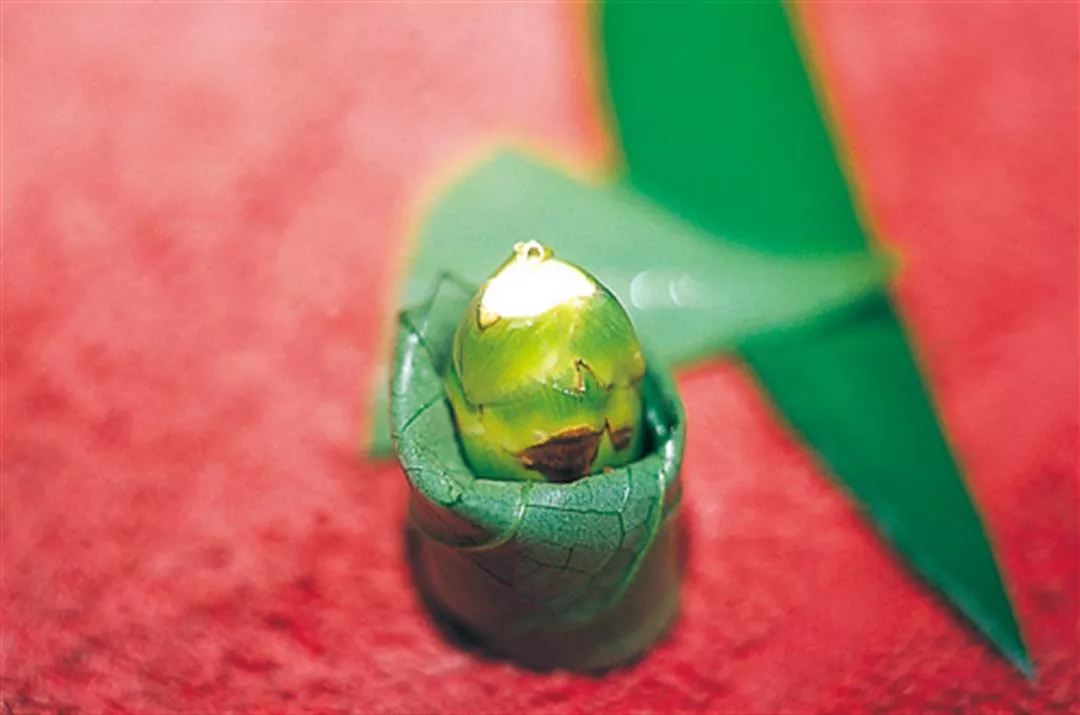
From left to right: Piper betle flowers; red-lime betel nuts (nuts that are split open and smeared with red-lime paste, with a slice of Piper betle flower inserted); Piper betle leaves; a white-lime betel nut (a nut pressed into a folded Piper betle leaf smeared with white lime).
The betel-nut war
In his 30-plus years of clinical practice, Hanh has seen one tragedy after another. "It takes ten to 20 years from the time someone starts chewing betel nut until they develop cancer," he says. "Doctors, family and friends all have plenty of opportunities to intervene." Hahn has therefore been waging his own war on betel nut for more than ten years by encouraging students to conduct relevant research, creating an "Introduction to Betel-Nut Studies" course, giving lectures, and advocating screening for oral cancer. More recently, he's also been pushing for passage of a "Betel-Nut Hazard Control Act," which would govern the production and distribution of betel nut, as well as the fruit's import and export, and even the locations in which it could be chewed. His hope is that the legislation would enable Taiwan to resolve its knotty betel-nut problem.
These days, there is widespread awareness of the damage betel nut does to its users' health. This has reduced the percentage of users from 10% of the population to just 8.5%. But the use of the drupe is disturbingly high among young people. A 2005 survey showed that 11% of high-school and vocational-school students were chewers. Worse, the earlier people pick up the betel-nut habit, the earlier they get cancer and the more profound the disease's impact on the individuals and their families.
Still more frustrating are the myths to which betel-nut chewers cling: that only a small percentage will get oral cancer; that modern lifestyles, not betel nut, cause cancer; that white-lime betel nut is safer than red-lime betel nut; and that users won't get cancer if they chew only the drupe.
The tug of war between the idea that betel nut causes cancer and the notion that there is nothing to fear continues to rage, and its ultimate resolution is still in doubt. But betel-nut users who don't want to find themselves sobbing over their own imminent deaths had better kick the habit. And soon.


@List.jpg?w=522&h=410&mode=crop&format=webp&quality=80)
