

Most of the Taiwanese firms in Palau are in the tourism industry, though a small number are in fishing or the retail trade. Having lived in Palau for many years, the entrepreneurs who founded these firms have experienced both hardship and good times. Why did they invest in Palau? How have they developed their businesses in this foreign land? What difficulties have they encountered? What is it that keeps them going?
Chu Hui-chun, a Taiwanese businesswoman living in Palau, established two "firsts" here: She opened the first Chinese restaurant and also founded the first Taiwanese travel agency. She has lived here for more than a decade, and her two sons have come over as well to work alongside her. They have both married women from the Philippines who are also working in Palau. The family have set down roots and made a success of their enterprises. If you include the young Taiwanese guide hired by the travel agency who also lives with the family, as well as the Filipina nanny, the household is a bustling one of more than 10 persons, constituting the largest Taiwanese clan in Palau.
Chu, who formerly owned a media company in Taiwan, first came to Palau over a decade ago, quite by coincidence, through a trip arranged by the Pacific Cultural Foundation. She fell in love with this country, and she decided to invest here.
Like paradise
"There was no other particular reason than the fact that it's so beautiful here, like a paradise," she says. At that time, her children had already grown up, and could support themselves. So she resolved to move here with her husband.
Chu Hui-chun was by no means the first Taiwanese business person in Palau, but there were very few indeed here before her. Most of those were doing import-export, and split their time between Palau and Taiwan. Because there were so few Taiwanese in Palau at that time, her Chinese restaurant-the family's initial venture-had to make some adjustments to cater specifically to the tastes of Palauans and Japanese tourists.
However, almost all the materials for the restaurant have to be imported. It is not as easy as you might think to run an eatery in Palau. Costs are not low, and there's a shortage of local labor. Even the chef was hired from the Philippines, and Chu had to train the staff from scratch in how to make everything the Chinese way.
After Palau became independent in 1994, Taiwan companies opened a tourism route to Palau. Chu, going with the tide, established the first Taiwanese tourist agency there. She brought her sons over from Taiwan, developed tour packages designed specifically for Taiwanese, and imported snorkeling equipment.
Kevin Liu, Chu's son, recalls that at the peak of Taiwan tourism in 1997, he and his younger brother were taking out groups virtually every day. They were busy from morning till night, meeting airplanes, preparing for snorkeling expeditions and barbecues. . . . and they had no time even to rest. So great was demand that two other Taiwanese tour operators opened up at that time.
Liu has been in Palau for over eight years now. There have never been many Taiwanese residing there at all, much less eligible young women. In addition, the local residents do not mix much with foreign business people. Liu, his younger brother, and another guide therefore mainly socialized with women from the Philippines who worked at a local Korean restaurant.
"We got married sequentially, one in '93, one in '94, and one in '95," Liu says with a laugh. His wife and the wife of his younger brother were originally co-workers, and now they are sisters-in-law. The children are growing up bilingual. The "international" feel of the family is complemented by the fact that most of their neighbors are Palauans.
After the decline in the number of Taiwanese visitors to Palau, their stepfather shifted to mainland China, and the younger brother took over management of the travel agency in Palau. Kevin Liu now operates a Thai-style massage service.
Getting A-Way
Bin-fang Stone, general manager of A-Way Marine Entertainment, is another successful investor. A former employee of the National Security Bureau, he arrived in Palau only in 1996. Unlike others who opened restaurants or travel agencies, he decided to lock on to the as yet untried realm of water recreation.
First he rented land on the beach, and then imported equipment for parasailing, ocean kayaking, jet-skiing, and "seabed strolling." Of these, the most unique is probably "seabed strolling," which you can only find in Palau, Guam, Saipan, Thailand, and Bali. A special mask, invented in Japan, allows one to go down to depths of three to five meters without scuba gear or special training. Although it is not cheap (US$80 a pop) business is still booming.
Stone says that the total capital investment in his firm was more than NT$20 million, but because his is the only such firm, the rate of return has been quite good.
"I'm not saying this because it's my business to say it, but Palau really is a very fun place," he says. However, he adds, it's not a particularly good place for the education of children.
The highest educational institution in Palau is only a two-year junior college. The primary and middle schools use the American system of education. It is no problem for children to continue their studies in the US, says Stone, but he still feels that the level of education in Palau is inadequate. Therefore he sent his eldest son to high school in Guam, while his daughter has stayed in Taiwan to attend primary school.
The foreign investment act of Palau says that the minimum foreign investment there should be at least US$500,000. Moreover, only Palauans are allowed to engage in wholesale and retail trade, provide land transport, and act as tour guides. Yet most Taiwanese have opened retail firms, restaurants, or travel services. How can this be?
In fact, the Taiwanese businesses in these areas are in the nature of "borrowed licensed operations." The company is established under the name of a local person, and the Taiwanese investors secure their rights through a "loan agreement" in which the capital is "loaned" to the nominal Palauan enterprise owner. But this system often ends up in disputes.
Before the two governments established diplomatic relations, Taiwanese business people were mostly left on their own. Given the different laws and language in this foreign land, many just gave up and went back to Taiwan in frustration. "What most Taiwanese business people have learned is that it's better to operate a low-asset business. Even if you go in the tank, you won't lose too much," says Chu Hui-chun.
The first Taiwanese had to do the pioneering groundwork, but now, after many years of effort and growth, a large number of Taiwanese vacation in Palau. The travel businesses run by Taiwanese are reasonably prosperous, and many larger investors have also entered the market. Even Taiwan's First Commercial Bank has established a branch in Palau. Bin-fang Stone, who is also director of the Palau-ROC Friendship Association, declares: "Now that the two countries have established formal diplomatic relations, the future looks more secure."
But along with economic cooperation, Taiwanese businesses might also think about their responsibility to local Palauan society, and build harmonious relations with Palauans.
Make yourself at home
For many years now, the tourist, restaurant, and retail shops run by Taiwanese have mostly employed other Taiwanese or workers from Thailand or the Philippines. There has ordinarily been little contact with local residents.
However, in a small number of industries there is some interaction with Palauans. For example, in the fishing company run by Tai Jung-fei, 10% of the employees are Palauans. Because local residents are familiar with their community, most of them work as security personnel at the company. The company basketball team also actively participates in local competitions.
Tai notes that Palau does not have any particular regulations governing immigration. Most of the Taiwanese there either have work permits or status as foreign investors. There are no real immigrants to speak of. But that is not to say there is no attachment to the place: Most of those who go to Palau are attracted by its pristine environment. "To do something well you have to enjoy doing it. If you treat Palau as your own home, only then will this country treat you as your own person."`
p.37
Chu Hui-chun (left) has been living in Palau for over a decade now. She and her family have built one successful enterprise after another, from a Chinese restaurant to a travel agency to a Thai-style massage service. At right is Chu's eldest son Kevin Liu.
p.38
Bin-fang Stone had a unique vision, and his A-Way Marine Entertainment-Palau's only such venue-is doing booming business.
p.39
The basketball team sponsored by Tai Jung-fei's fishing-base company is an active participant in Palauan society; they have even taken part in the national sports festival and have won many prizes over the years.
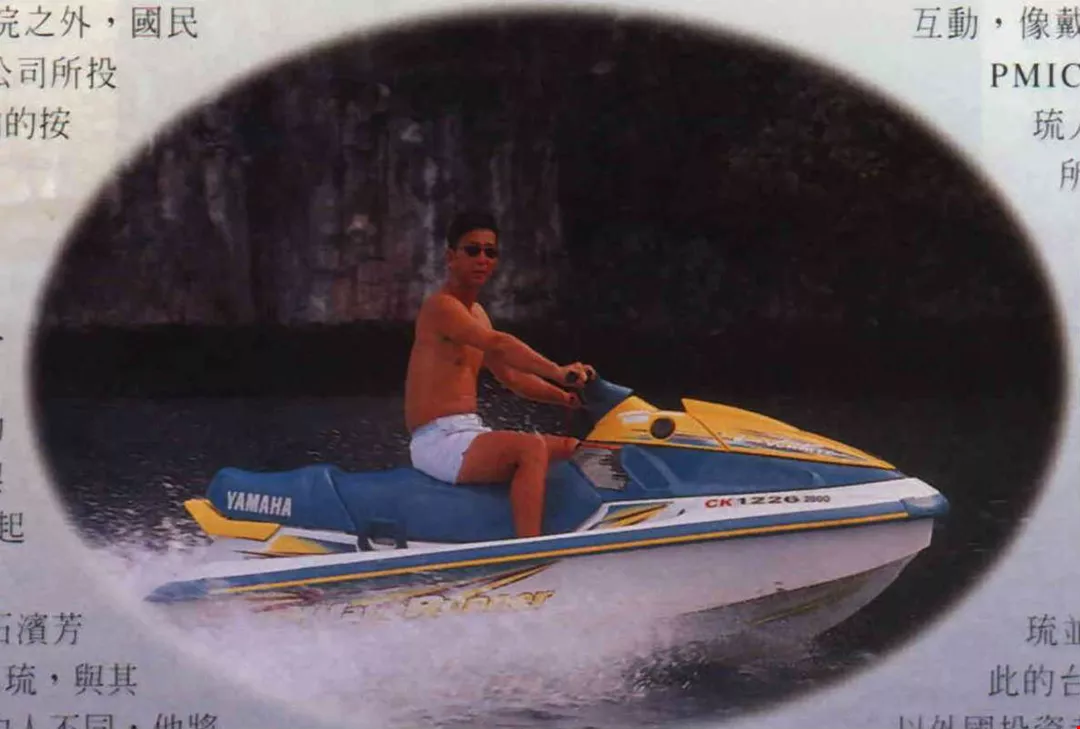
Bin-fang Stone had a unique vision, and his A-Way Marine Entertainment-Palau's only such venue-is doing booming business.
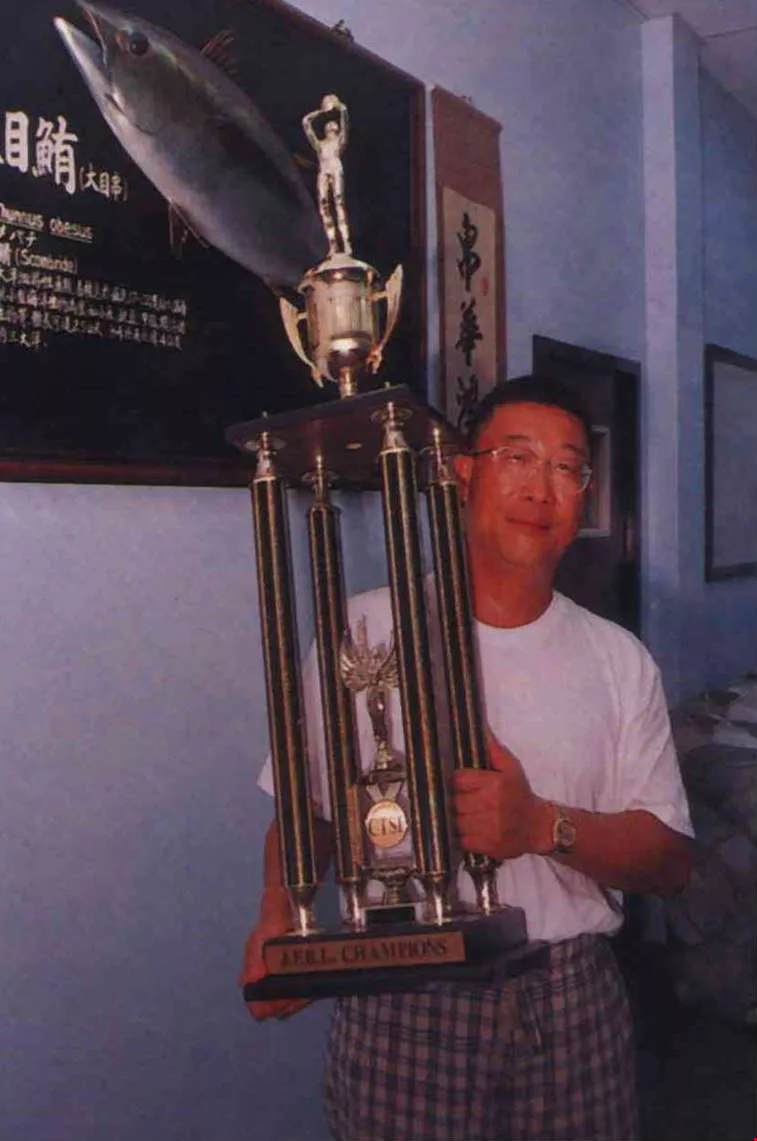
The basketball team sponsored by Tai Jung-fei's fishing-base company is an active participant in Palauan society; they have even taken part in the national sports festival and have won many prizes over the years.


