

Over the last ten years, the finished-clothing industry in the ROC has grown and flourished.
If you stroll down Taipei's streets, you see fine clothing stores everywhere displaying the latest fashions. Most are produced domestically, with domestic designs. Even in the brand-name sections of Taipei's glittering department stores, or in its chic little specialty boutiques, you will see brands produced by local designers among such famous labels as Givenchy and Christian Dior.
In Taoyuan, at a factory producing high-quality women's styles for export, women work on the clothing in an air-conditioned workplace, while listening to portable tape players amid the hum of their sewing machines.
High quality and high productivity are the factory's strong points. On the bulletin board every day, the management posts the names of workers at the top in productivity competitions; the worker in first place has a red dot by her name. In the office, managers discuss whether the adhesiveness of a new fabric sizing agent is up to their standards. A manager says, "If it doesn't stick to the clothes, it will look okay at first. But when the clothes are washed, it'll come off, and damage our company's reputation. We need to take more care."
Taiwan's finished-clothing industry has undergone twenty years of development, passing through its low-cost labor, cheap goods beginning to enter a brand-new stage: shifting to production of very high quality products and implementing plans for advanced technology.
The finished-clothing industry in Taiwan began in 1959. At that time, Japan had already been exporting finished clothes for five years, and Hong Kong for ten. Because wages in those places were rising, they already seldom produced low-grade goods, and were turning to the high quality market. Foreign businessmen began to invest in Taiwan and set up large-scale clothing operations, taking advantage of lower costs here.
The resulting export clothes were mostly low-grade, style and workmanship being less important than a low price. But Taiwan's economy burgeoned and wages rose; Taiwan foresaw that it could not compete into the future in the low-grade market with such low-wage areas as India, mainland China, etc. Consequently, about ten years ago Taiwan began shifting to the high-quality end of the clothing market.
In the same way, the domestic clothing market was also undergoing changes. In the earlier years, people made their own clothes or went to tailors; they rarely bought finished clothes. At the time, Taiwan was not so prosperous as today; people sought practicality, not fashion, in their clothing. As the island's affluence grew, clothing became not just a means of covering the body, but a way to adorn oneself. From the miniskirts of the 1960's, through many fashion changes, to the miniskirts of today, Taiwan's people have followed world fashion trends. Everybody's taste began changing, and also improving; they began to demand quality.
Managers in the Taiwan industry read foreign trade journals. They went abroad to probe style setting trends. They bought new equipment and instituted technical training. From following foreign fashions they went to blazing their own paths. Now the domestic finished-clothing industry is flourishing; the clothes are affordable and beautiful, and many local famous brands have arisen.
Many domestic producers do not have the large amounts of capital necessary to establish exclusive specialty shops. Instead, they set up specialty sections in the department stores, reducing capital expenditure and risk. But since every item of clothing sold by the company at the department store is subject to a 30% commission, profits are reduced. Also, if the department store meets financial difficulties, the clothing factory will also be affected.
The Ta Yang Textile Company is export-oriented and America is its major market. Because tastes in America differ from those in Taiwan, a Chinese designer at Ta Yang must design with the American market in mind. To help assure this is done, Ta Yang has employed a Chinese-speaking American consultant, Ann Seraphine-Han. "The boss always backs me one hundred percent," she smiles.
The chairman of Ta Yang's board of directors, Kuo Shen-hai, is a leading Taiwan businessman, described by others in the industry as a man who never does anything without being sure of the results. Before making a decision, he considers every angle. And afterwards, he doesn't hesitate to spend the necessary money.
Ta Yang has now held three design shows for foreign clients. The shows have made a good impression, says Ann, and some clients have asked Ta Yang to do designs or color coordinations for them. "In this respect, we want to make superior service our strong point, both to keep our current clients and to attract still more," she said.
In order to assist domestic finished-clothing producers to increase their design ability and raise the quality of their products, the Taiwan Textile Promotion Association set up a Textile Design Center in May 1978. The Center's nine designers and seven textile-printing experts provide a number of services: 1) Publishing such trade publications as Print Design, Tomorrow's Design, and Fashion Bulletin, 2) Running an internship program at factories for students of the textile sciences, 3) Responding to individual company requests for information about fashions, new design patterns, and facts about sizes, color coordination, and technology, 4) Arranging idea-sharing conferences for specialists and representatives of the industry, including designers and technicians, 5) Offering advanced technical guidance to help businesses in international design activities, 6) Serving as bridge between businesses and foreign clients, helping to match supply with demand.
For many years the Taiwan clothing export industry was concerned only with production, leaving marketing to foreign firms and minimizing investment risk. But this way profits were smaller, and control lay in the hands of others--the products bore someone else's trademark. Now a number of producers no longer want to be behind-the-scenes heroes and are setting up their own marketing.
Establishing one's own brand name is not easy; design, marketing, and sales talent are all necessary for success. For many, setting up a brand name and entering foreign markets on their own seems to mean much effort and risk: "Being a behind-the-scenes hero isn't so bad. Right now every famous designer has a manufacturer backing him up. The important thing is to never stop seeking progress. Then you not only don't have to worry about losing clients; you can even take the lead in selecting clients," one business executive says.
"Our goals are to keep improving our reputation, to encourage high-quality production, and to work together with talented designers to help establish their own trademarks."
Two notable problems in the industry are a high personnel turnover at all levels and the failure of producers to agree on a proper division of shares in the portion of the export market subject to U.S. import quotas. The first problem is being solved as the industry modernizes, leaving more opportunities for promotion in the same company and improving fringe benefits for all workers. Many in management now aspire to imitate the Japanese system--encouraging a worker to stay at one company for life. The government is working with producers on the second problem, inducing them to cooperate in setting individual production levels.
Today both the export and domestic segments of Taiwan's finished-clothing industry are advancing. One signal indication--a number of "domestic-oriented" fashions are being picked up by foreign buyers for marketing.
[Picture Caption]
1-4. Every kind of leisure wear and casual outdoor wear. 5. High-quality clothing for sale at a big discount--the child likes it so much she can't let go. 6. Young women are the constant customers of clothing stores. 7. A young women's clothing store window, with a lively design.
1.3.4.5. Fashions rich with a Chinese flavor have a special attraction. 2.6. Everyday wear with an aboriginal or tribal-nationality style. 7.8. Two new young women's casual outdoor wear designs from the Textile Design Center.
1-2. The Textile Design Center's designs for men's and women's winter coats, and some brightly-colored women's sweaters. 3.7. To add holes to a garment is this year's fashion, these dresses for girls combine a contemporary and traditional look. 4. A lacy top and a belt are this dress's fashion points. 5. Two examples of evening formal wear. 6. A women's blouse with a frilly lace collar. 8. A black and white layered dress is 100% attention-getting.
1. A men's specialty shop sells every sort of men's clothing. 2. The Design Center routinely makes new designs, and holds style shows, hoping to lead the finished-clothing industry to take more note of design practices. The picture shows experts discussing a problem in color coordination. 3. Design Center-designed men's outdoor wear. 4. The finished-clothing export industry every year provides high export earnings for the ROC. Here we see a worker sewing.
Pressing is the last stage in making export clothing--to make the product fully pleasing to the eye.

1-4. Every kind of leisure wear and casual outdoor wear.

1-4. Every kind of leisure wear and casual outdoor wear.

1-4. Every kind of leisure wear and casual outdoor wear.

1-4. Every kind of leisure wear and casual outdoor wear.

5. High-quality clothing for sale at a big discount--the child likes it so much she can't let go.

6. Young women are the constant customers of clothing stores.
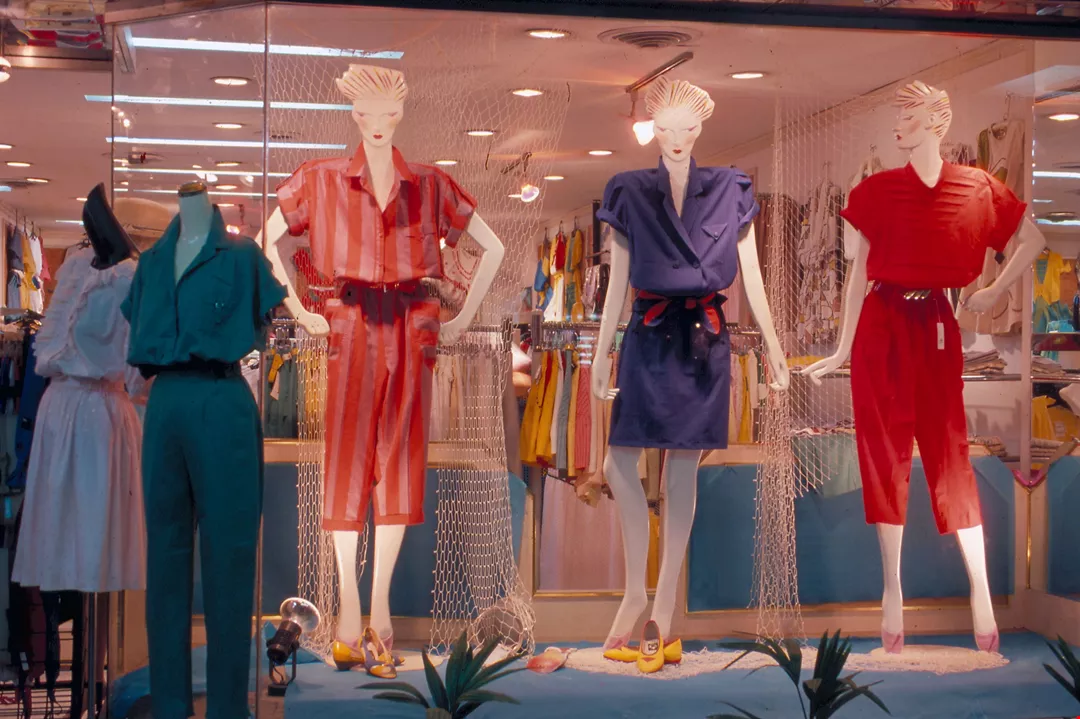
7. A young women's clothing store window, with a lively design.

1.3.4.5. Fashions rich with a Chinese flavor have a special attraction.

2.6. Everyday wear with an aboriginal or tribal-nationality style.
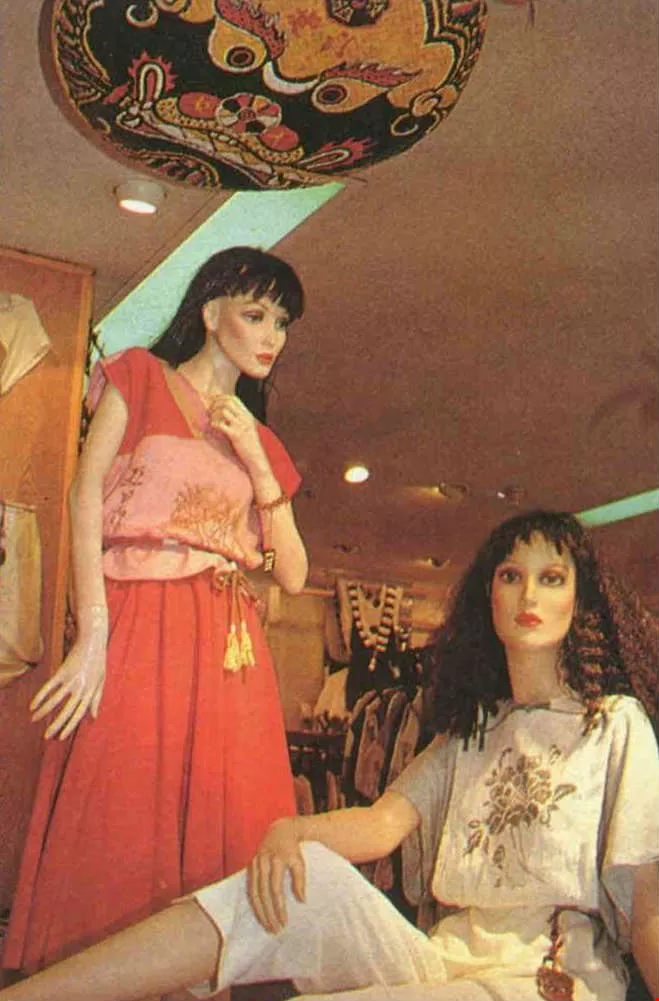
1.3.4.5. Fashions rich with a Chinese flavor have a special attraction.

1.3.4.5. Fashions rich with a Chinese flavor have a special attraction.

1.3.4.5. Fashions rich with a Chinese flavor have a special attraction.

2.6. Everyday wear with an aboriginal or tribal-nationality style.

7.8. Two new young women's casual outdoor wear designs from the Textile Design Center.
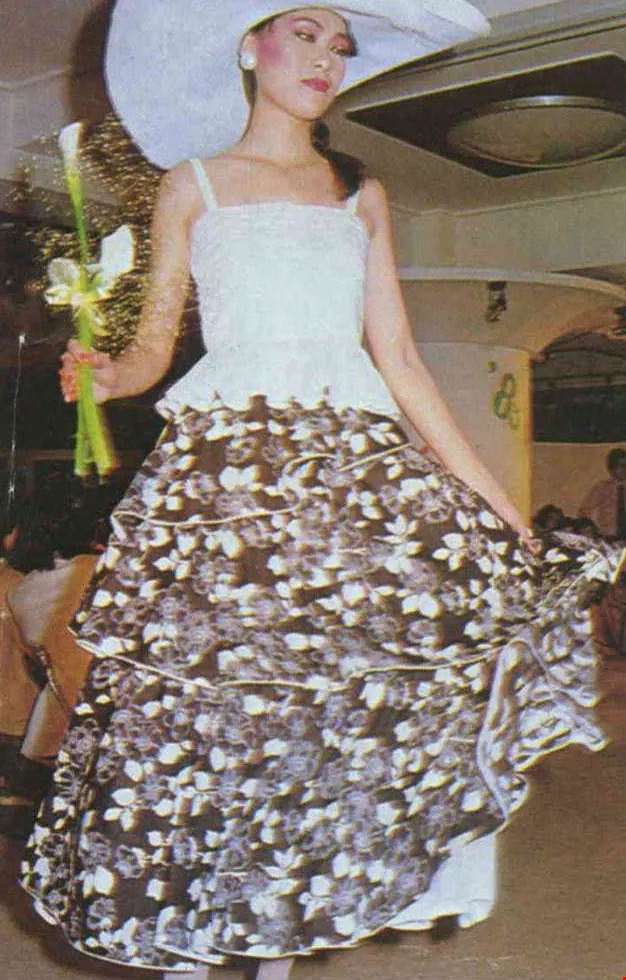
7.8. Two new young women's casual outdoor wear designs from the Textile Design Center.

1-2. The Textile Design Center's designs for men's and women's winter coats, and some brightly-colored women's sweaters.

1-2. The Textile Design Center's designs for men's and women's winter coats, and some brightly-colored women's sweaters.

3.7. To add holes to a garment is this year's fashion, these dresses for girls combine a contemporary and traditional look.

4. A lacy top and a belt are this dress's fashion points.
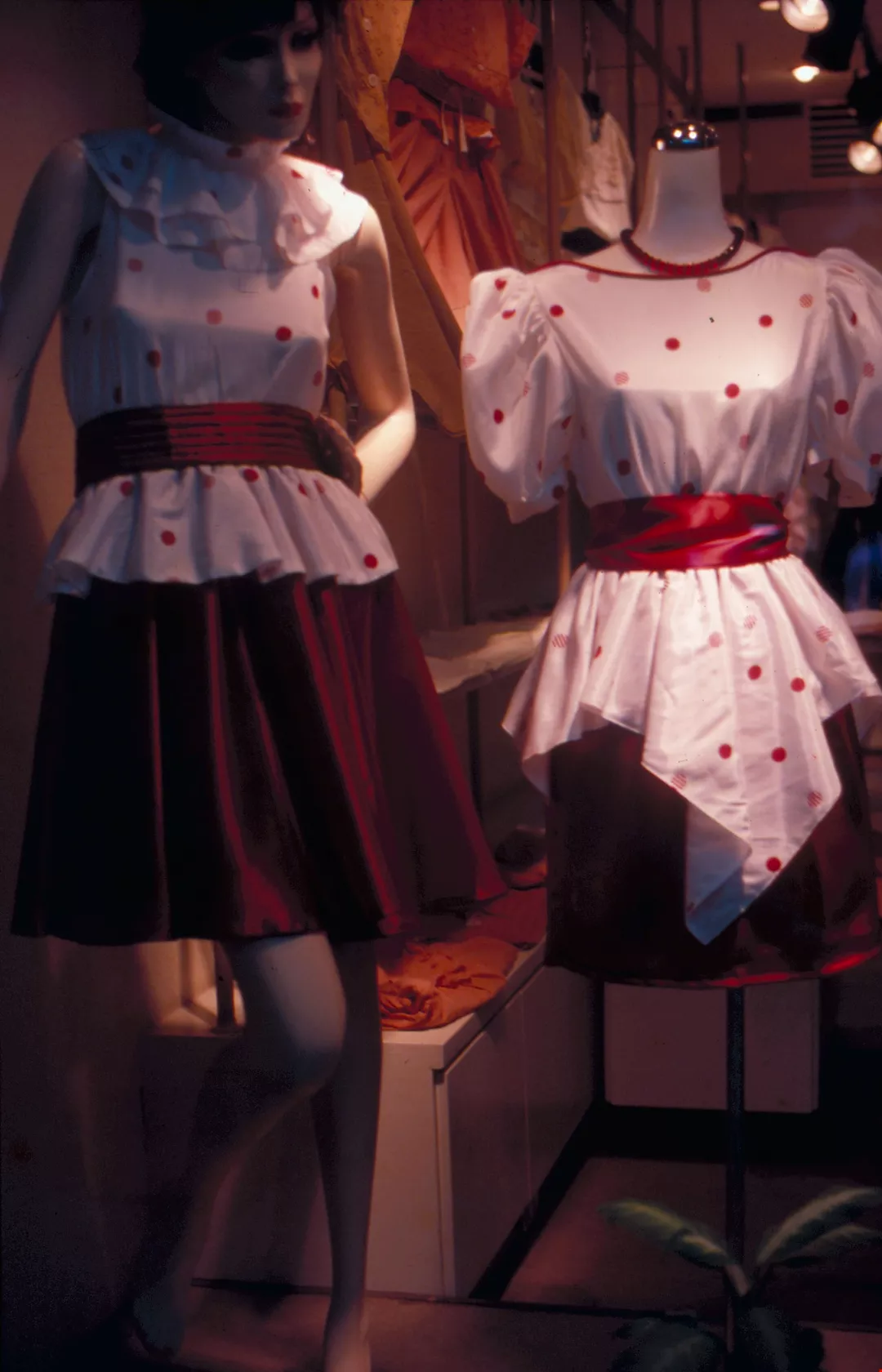
5. Two examples of evening formal wear.

6. A women's blouse with a frilly lace collar.

3.7. To add holes to a garment is this year's fashion, these dresses for girls combine a contemporary and traditional look.

8. A black and white layered dress is 100% attention-getting.

1. A men's specialty shop sells every sort of men's clothing.

2. The Design Center routinely makes new designs, and holds style shows, hoping to lead the finished-clothing industry to take more note of design practices. The picture shows experts discussing a problem in color coordination.

3. Design Center-designed men's outdoor wear.
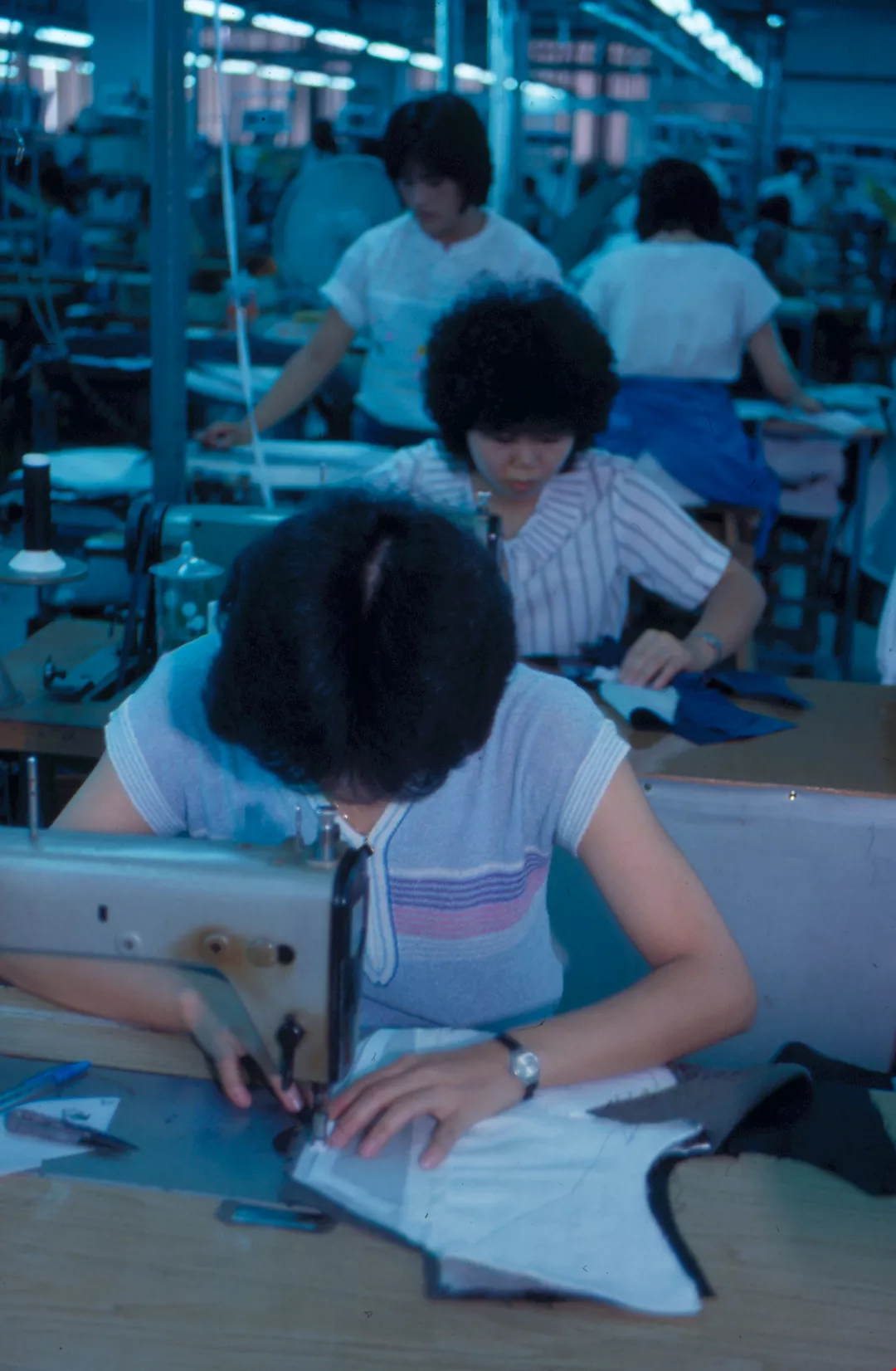
4. The finished-clothing export industry every year provides high export earnings for the ROC. Here we see a worker sewing.

Pressing is the last stage in making export clothing--to make the product fully pleasing to the eye.


