

The orchid is considered a "national flower" in some nations of Southeast Asia. But in the past few years many prize-winning orchids have been coming from Taiwan. Recently, the moth orchid (Phalaenopsis) produced by the Taiwan Sugar Corporation has once again won a prize at an international competition.
How is it that Taiwan Sugar has gone from 100,000 hectares of sugar cane fields to a few hectares of flowers, allowing its verdant fields to be claimed by powdery white moth orchids? Could this be a new opportunity for upmarket agriculture in Taiwan?
December in Taiwan, and winter has come round again. Far from chilly and blustery Taipei, southern Taiwan hardly feels the cold of winter. Relying on the subtropical climate, countless moth orchids flourish under the southern sunshine.
Much of the credit for the fact that moth orchids raised in Taiwan are now the leader in the international market goes to the Taiwan Sugar Corporation.
why would Taiwan Sugar, which made its name planting sugar cane and raising hogs, go into a different "field" altogether and cultivate orchids?
In fact they were more or less pushed in to it. With the economic transformation of Taiwan, labor intensive agriculture was largely replaced by industry. Given the shortage of labor, rising wages, and a prolonged slump in the international price of sugar, TSC saw its tens of thousands of hectares of cane field shrink before its eyes, putting pressure on profits and compelling Taiwan Sugar to restructure itself.
Since there was also little willingness among private farmers to plant sugar cane, the directors of Taiwan Sugar were faced with the problem of what to do with their idle refineries.
The primary consideration affecting TSC's reassessment was that a new product shouldn't require a great deal of new construction. From this came the idea of using the existing hothouses built by the sugar refineries. Tang Pi-ching, a 68-year-old retired refinery manager who was one of the first to promote moth orchid cultivation, recalls that they did a trial run over a small area at the Hsihu Sugar refinery in 1986. Later, Taiwan Sugar dug up Li Nian, a professor in the Department of Horticulture at National Taiwan University and a specialist in flowers, and they were only sorry they had not met earlier.
They opted to plant flowers because these have the highest economic return among hothouse plants. In the Netherlands, for example, flowers account for only one-tenth of the fixed cultivated area, and only five percent of the farming population. But as a result of strenuous efforts by the Dutch to promote exports, they account for 18% of the value of agricultural production.
Taiwan Sugar was hobbled by the fact that it is a state-run enterprise. Thus the decision was in the works for two to three years before getting approval from the Ministry of Economic Affairs. A number of professors from the Department of Agronomics at National Taiwan University who had offered their expertise to TSC gravitated to the position of unpaid consultants.
TSC faced a number of problems in deciding what to plant. "We couldn't grow what is being grown independently, because we are not allowed to compete directly with the private sector," stresses Tang Pi-ching. So first off they were grown on a large scale by private citizens." This was how the moth orchid was chosen to be Taiwan Sugar's new "money tree."
Agricultural technology is a field that had its glory days in Taiwan, and this group of people with backgrounds in agriculture are nostalgic about those times. As industry surpassed agriculture as the main source of income, top former export products like sugar, pineapple, asparagus, and mushrooms have been supplanted. Would agriculture be able to find a new row to hoe?
Taiwan Sugar has had important advantages enabling it to pioneer new areas: it has the land, a group of talented people with experience in agriculture, and other profitable lines of products that will support the start-up costs of a new ven ture. "From the outset, if we had simply calculated the costs of production nobody would have wanted to go through with it," points out Li Nian. The price tag merely for importing greenhouse equipment from Holland was over NT$3000 per square meter; the cost of a complete facility was about NT$100 million.
Moreover, from culturing and transplanting the seedlings to the blooming of the orchids takes 14 to 16 months. Private enterprises without a lot of capital would simply wilt. "The flower industry takes a decade of investments before it begins to pay off," says Li.
Taiwan Sugar followed Li's suggestions, from importing Dutch greenhouse facilities to putting her best students in charge of quality control. Unable to repress a smile, Li exclaims, "This is the best I've felt since becoming a professor."
After choosing the moth orchid as the star of the future, TSC decided that production and research should proceed simultaneously. Upon hearing that Taiwan Sugar was going to go with moth orchids, Chen Wen-hui, a plant biotechnologist who earned his doctorate in England, began to research the lineage of that flower.
Documents published by the Royal Horticultural Society of the UK not only definitively determine the moth orchid appellation, they record in great detail each and every variety in the world. In their records Chen discovered an orchid yearbook from 1901, which was like finding buried treasure.
Flipping through this yellowed parchment, Chen says, "First you have to understand their genetic inheritance before you can begin to look for a match for them."
Now entering his 23rd year of working for TSC, Chen's task had been to improve sugar cane breeds through biotechnology.
Because "the basic principles of breed improvement are transferable," in 1988, the second year after the Department of Horticulture had been established at Taiwan Sugar, Chen became the chairman of the department, continuing to be responsible for basic research.
The "seed bank," which is seen by Horticulture Department researchers as "top secret," is similar to any other greenhouse except that it has two locks on the door. Inside are collected 29 natural varieties of moth orchids (there are a total of 45 natural varieties worldwide, with two native to Taiwan), as well as 837 improved strains.
At first, in the search for varieties, the researchers truly "ran their legs off." No matter whether new strains were purchased, bartered from citizens or flown in from overseas, Chen Wenhui's achievement and glory rose in direct proportion to the number of types in the "seed bank." "That's because you can only start 'cooking' if you have a lot of different ingredients on the shelf," explains Chen.
The vividly colored moth orchid gets its name because its petals are perpendicular to the ground like the wings of a moth at rest. Because each plant has many blossoms, and the flowering season lasts three to four months, it is known as the "queen of orchids" among those in the field.
Taiwan's native moth orchid achieved international fame quite early on. It grows on the Hengchun peninsula by the Central Mountain Range in the far south of the island, and also on Orchid Island (Lanyu) to the east of Taiwan. This pure powdery white flower which blooms in great numbers is sometimes called the Taiwan Amah because of the similarity in sound of its scientific name, Phalaenopsis Amabilis. Its leaves are oval and light green in tint. The long stem runs to 60 centimeters. The beauty of the Taiwan Amah was recognized at least as early as 1952-1953, when it won prizes at international flower shows in the United States. It became the "county flower" of Taitung County in southeastern Taiwan.
Originally the moth orchid bloomed only in spring and summer. But with its initial advantages, many varieties, and technology, Taiwan Sugar, using biotechnology to cross-breed and cultivate, was able to develop a species that blooms all year round. The workers at the "Orchid Propagation Center," located in Washulin near Hsinying in Southern Taiwan, are responsible for the flourishing of the moth orchid.
TSC imported a complete hothouse facility from the Netherlands, but within half a year an intense electrical storm had knocked out the computer that controlled the temperature. They sought help from Holland, but were shocked when their counterpart asked for NT$500,000. This fortified their determination to "develop a greenhouse suited to Taiwan," states Center director Hu Chun-kwang.
The requirements for a hothouse in the subtropics naturally differ from those in cooler Holland. In Taiwan, "it's more important to keep the temperature down than to keep it up," explains Hu. At present, the fifteen greenhouses developed by the Center cover a little over a hectare. All have computers which strictly control temperature and humidity; if the heat and humidity fall out of balance, giant fans at either end kick into gear to create breeze to lower the temperature.
First decide if the conditions are perfect, then look at the cultivation techniques.
Of the 30-plus staff at the Orchid Propagation Center, technician T.Y. Hsu is best at "florid" communication. A graduate of the Institute of Horticulture at National Taiwan University, Hsu makes the case that the problem is not orders from the marketplace, but, first and foremost, "superior quality and a stable supply." He adds, "it's even harder to control quality for products in agriculture than it is for industry because flowers are living things."
There is quite a long history of exports of orchid sprouts from Taiwan. But in the past, operations were all on a small scale. Though farmers were quite happy to get large orders, they had to run all over to find sprouts, so that the exported items were often criticized as being of very uneven quality. This type of sale could only be pulled off once.
In the realm of private sector orchid cultivation, "there are no standards to speak of." Everything depends on the experience and technique of the individual grower. But large-scale cultivation can't get by without standards. There are specifications for everything from watering the plants to specifications for pots to protecting the orchids so that they grow healthy and shapely. T.Y. Hsu and Hu Chun kuang work together so that one Taiwan moth orchid after another gains fame in international competition and export orders follow. The moth orchid model has been transplanted successfully to private collectors and growers as well.
The moth orchids known as "Taiwan Sugar Number 1" and "Taiwan Sugar Number 6" won bronze medals in the Nagoya 1990 International Orchid Exhibition in Japan. And last year, the United States Orchid Association and Japan's Tokyo Dome International Orchid Exhibition awarded Taiwan Sugar Number 8 and Taiwan Sugar Number 20 silver and bronze medals, respectively.
But TSC cannot rely on the moth orchid to turn a profit, because the total value of orchid exports accounts for only a very small percentage of the corporation's total operating revenues. Nevertheless, as far as individual products are concerned, the growth rate in sales over the past few years has allowed Taiwan Sugar to get a glimpse of the future. In the past four years, the domestic market for TSC moth orchids has increased 12 times over, while the export market--mainly to the US and Japan--has expanded forty-fold. The flowering season for the moth orchid can last three months, and they have been very popular lately for flower arranging, wedding bouquets, and as cut flowers. Taiwan Sugar plans to invest NT$100 million over the next year to develop floral and horticulture operations.
The mass production and growing mass appeal of moth orchids is not unconnected to overall trends in Taiwan's flower market.
There are countless varieties of flowers in the world, and there are at least 20,000 lineages of orchids alone. When speaking of who is most well-versed in the plant, Li Nian says, "The people who understand the orchid best are the Chinese!" As Confucius once said, "To live with a good person is like entering a room of orchids; after a while one no longer notices their fragrance, but becomes at one with it." Chinese were growing orchids indoors hundreds, even thousands of years ago.
When you speak today of raising orchids, there are many ordinary folks who love these flowers, and each has his or her own "Orchid Classic."
Generally speaking, among the many varieties of orchids, the moth orchid is relatively easy to grow. You just have to avoid the mistakes many who try to raise orchids frequently make: too much water (whereas one spraying every ten days is sufficient) and too much sunlight (the optimum temperature for an orchid is between 25 and 30°C). If you do that you can see beautiful petals unfolding continually from the winter through the spring.
The difference between commercial and amateur cultivation is not only in the sales price of the orchids, but also in the angle from which the flower is appreciated.
One potted rare orchid can fetch hundreds of thousands of NT dollars in the market, but a pot of moth orchids that one picks up in a trip round the flower market costs only about NT$250.
The extremist trend of treating rare orchids like "living antiques" ripe for speculative investment is depriving the average consumer of the chance to come into contact with these noble, elegant flowers. Most people think that moth orchids are likewise dear, "so when they see that it's an orchid, they don't even bother to ask the price, and this has cost the domestic market a lot of opportunities," attests T.Y. Hsu.
The varied and colorful orchid family tree has attractive petals and delightful leaves, but the whole thing can be a bit confusing to an outsider. Distinguishing different varieties of orchids is no easy task, and it's even harder to decide if the specimen has breeding potential. But isn't the buying and admiring of flowers just a way to enhance the joy of living?
It is a difficult road to go from small scale individual farming to large scale commercial cultivation. The moth orchid is perhaps the most successful example of commercial horticulture.
When people mention the tulip, it's natural to think of the Netherlands. Perhaps one day when people look at a supple and colorful moth orchid they will think: This exquisite flower comes from Taiwan.
[Picture Caption]
p.74
Hu Chun-kwang and T. Y. Hsu of the Orchid Propagation Center gaze over orchid sprouts growing healthy and beautiful; they feel as much pride as they would for their own children.
p.75
This red-lipped moth orchid, nicknamed the "Taiwan Sugar Smile," shined at an international exhibition in Japan. When it was first cross-bred, the development team thought the flower would emerge pure white; only later did the recessive pink gene emerge, making it even more alluring.
p.76
With a Ph.D from Nottingham University in the UK, plant biotechnologist Chen Wen-hui and his work team have devoted themselves to collecting natural varieties. Only when the "seed bank" is complete can the full variety of orchids be bred.
p.77
Exported sprouts have become a major product for Taiwan Sugar. Before the sprouts grow they have to pass through culturing and growth in flasks before being transplanted into the greenhouse and exposed to the sun.
p.78
Large white flowers are favored by Japanese buyers. They are suitable for bridal arrangements or as cut flowers. The photo shows TSC's Puli orchid nursery. (photo by Vincent Chang)
p.79
From pure white to pure red, striped or speckled, the world of flowers is a world of competition for attention.
p.80
Moth orchids are easily accessible to the general public because of their low cost. People in Taiwan tend to be fond of red flowers. They lend an air of warmth to the home.
p.81
This is a still-unchristened flower just bred by the Department of Horticulture at Taiwan Sugar Corporation.
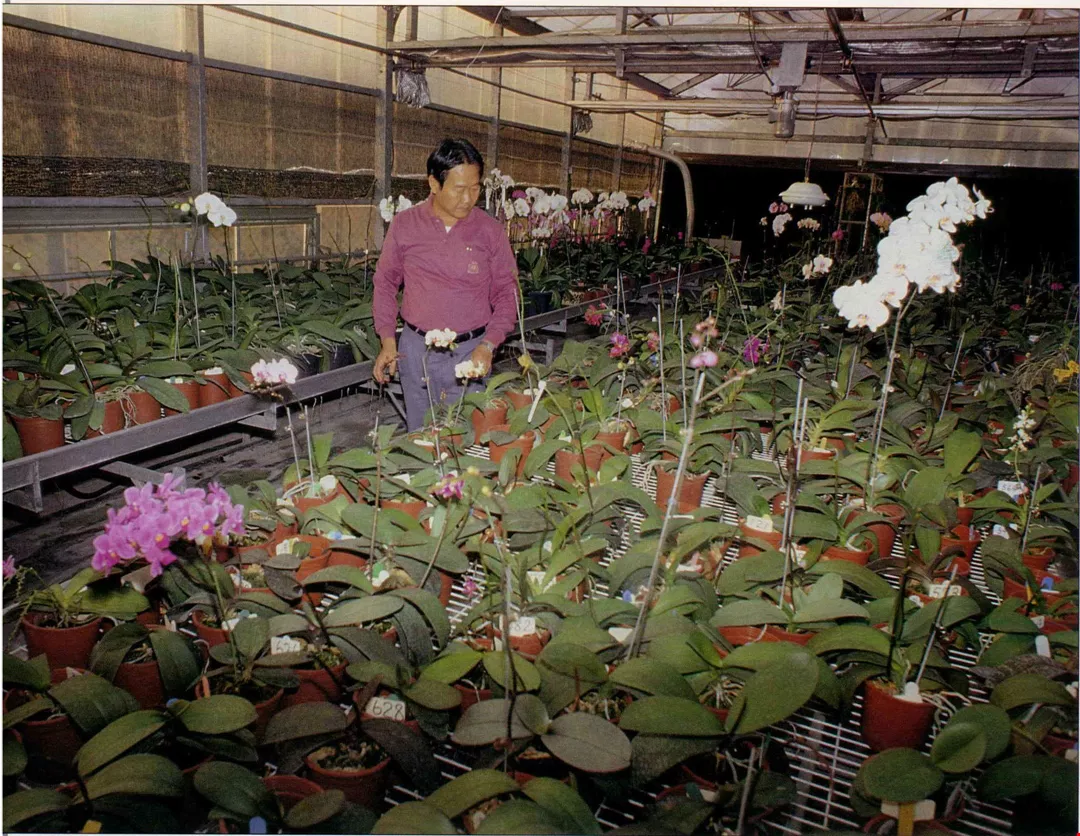
With a Ph.D from Nottingham University in the UK, plant biotechnologist Chen Wen-hui and his work team have devoted themselves to collecting natural varieties. Only when the "seed bank" is complete can the full variety of orchids be bred.
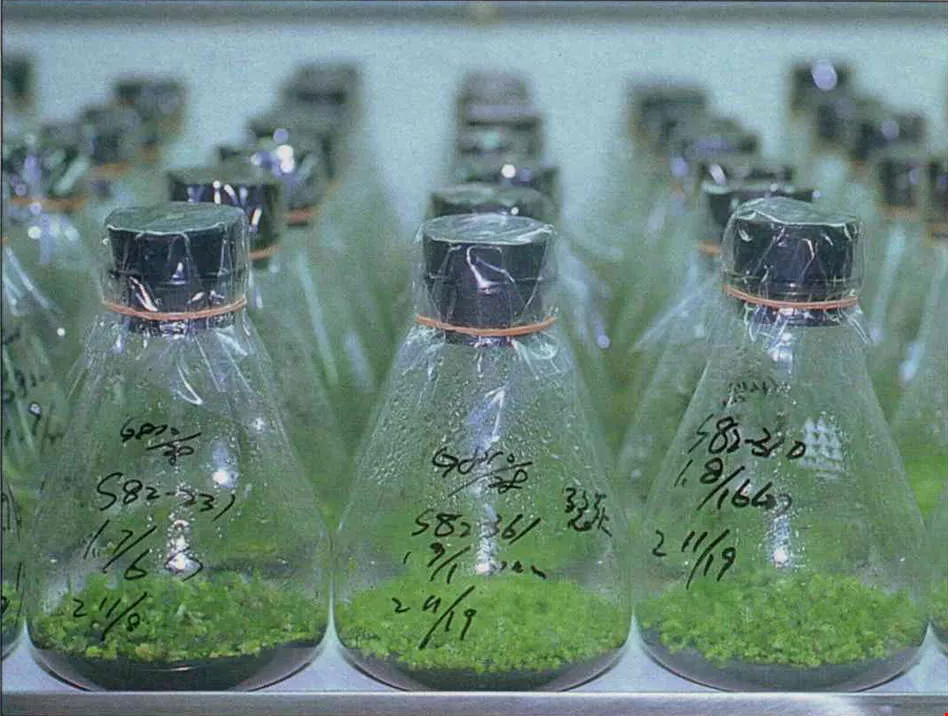
Exported sprouts have become a major product for Taiwan Sugar. Before the sprouts grow they have to pass through culturing and growth in flasks before being transplanted into the greenhouse and exposed to the sun.
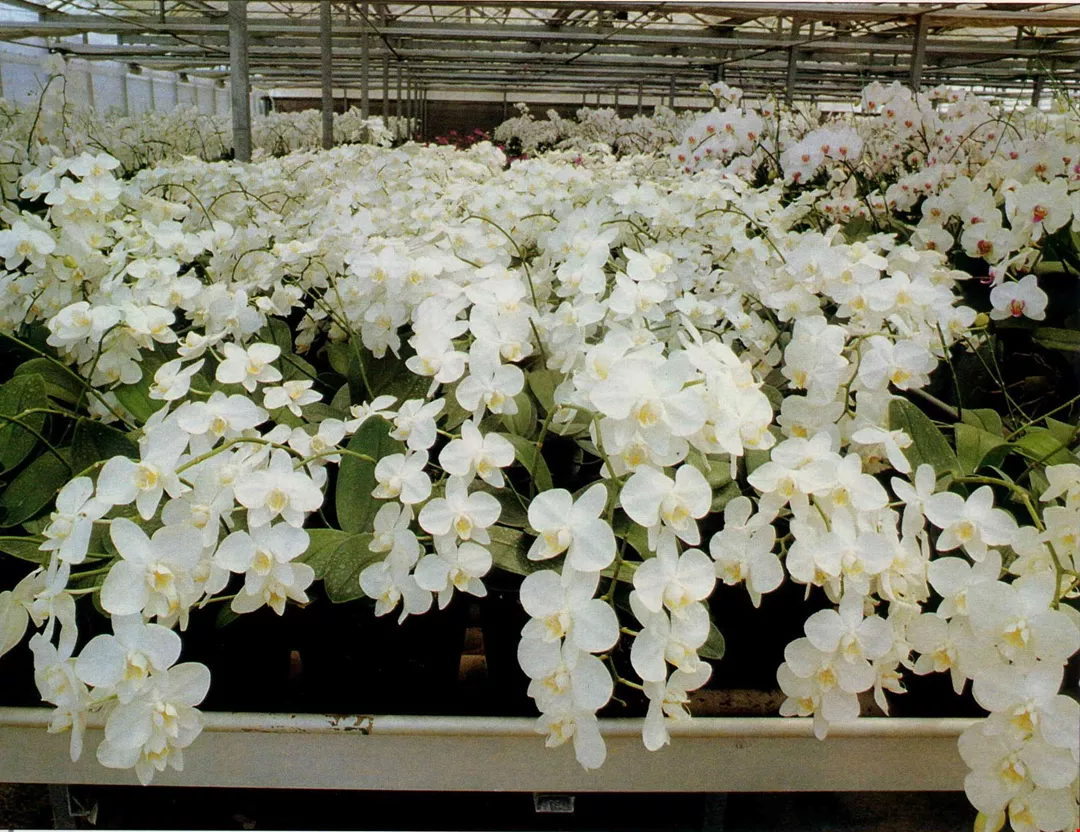
Large white flowers are favored by Japanese buyers. They are suitable for bridal arrangements or as cut flowers. The photo shows TSC's Puli orchid nursery. (photo by Vincent Chang)
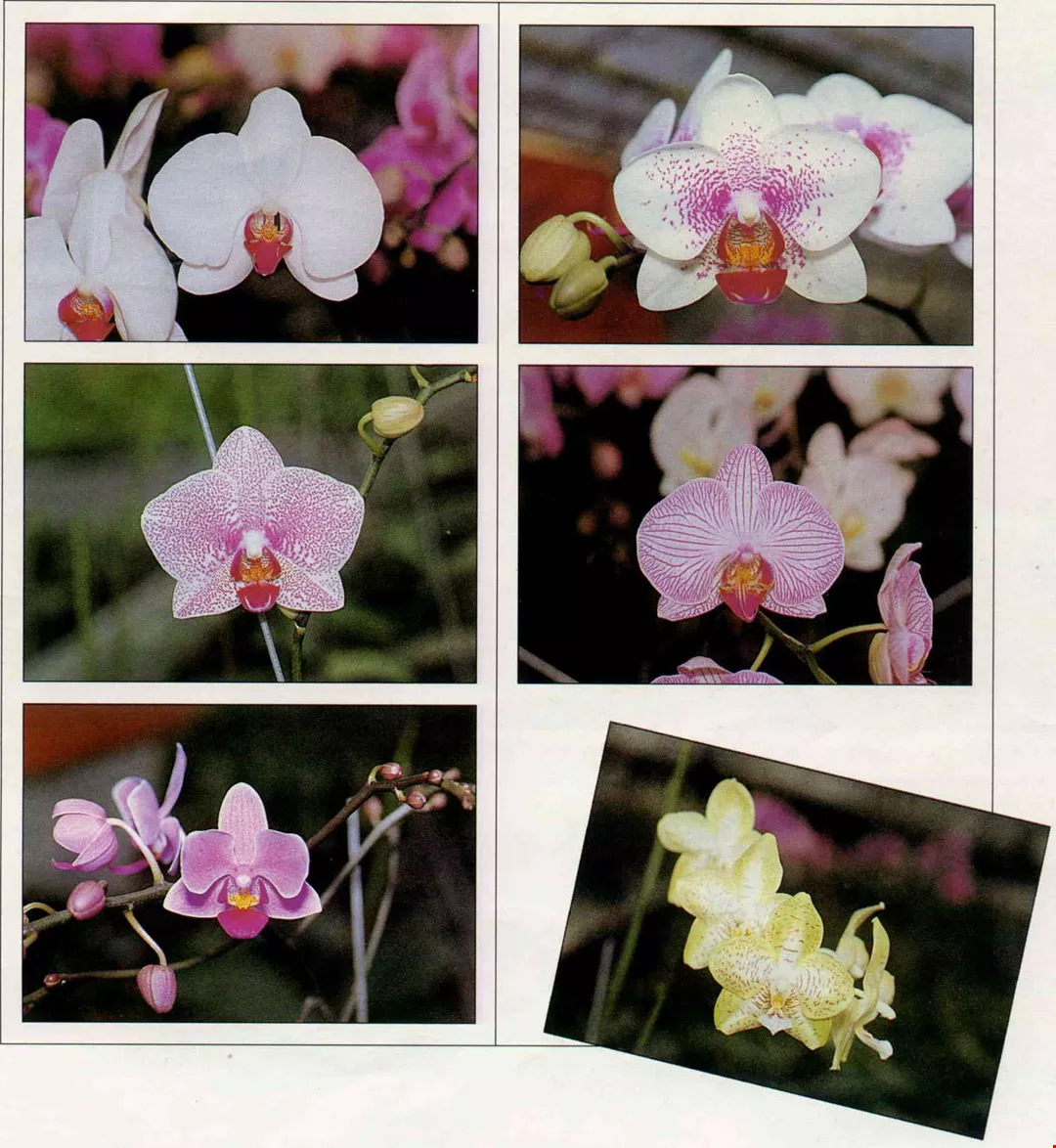
From pure white to pure red, striped or speckled, the world of flowers is a world of competition for attention.
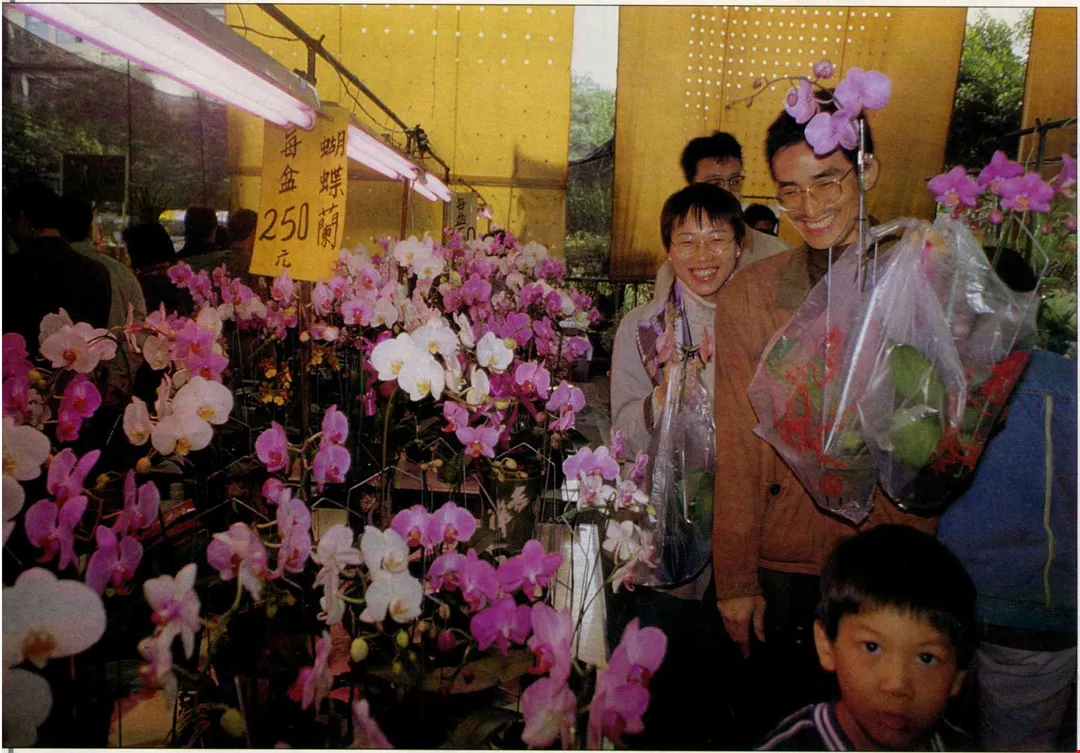
Moth orchids are easily accessible to the general public because of their low cost. People in Taiwan tend to be fond of red flowers. They lend an air of warmth to the home.
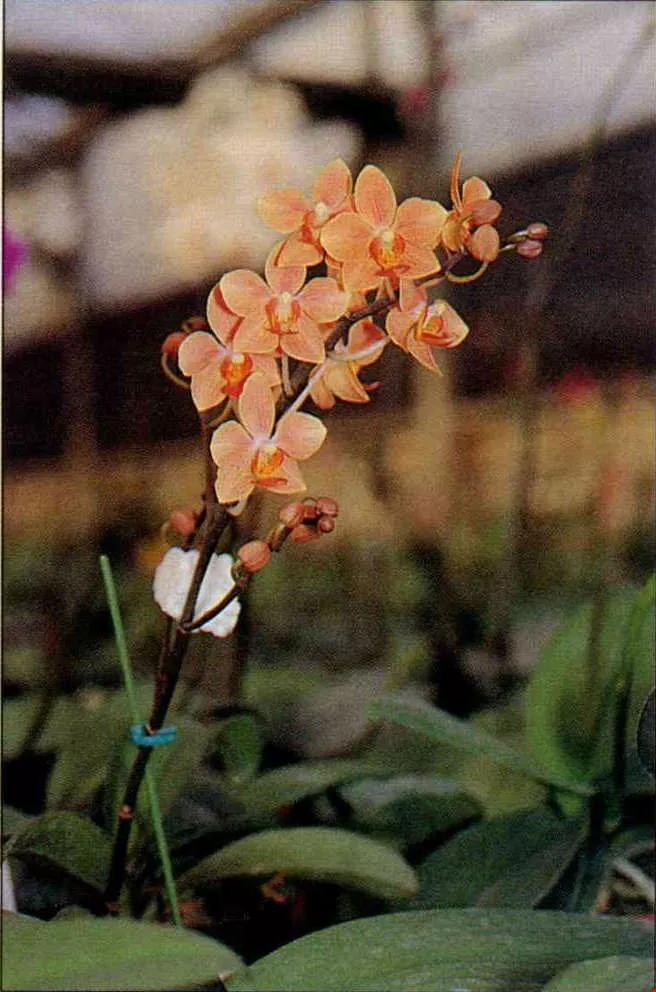
This is a still-unchristened flower just bred by the Department of Horticulture at Taiwan Sugar Corporation.


@List.jpg?w=522&h=410&mode=crop&format=webp&quality=80)


