Take Me Home, Country RoadsThe Government Tries to Rejuvenate Agriculture
Teng Sue-feng / photos Jimmy Lin / tr. by Phil Newell
September 2009


Taiwan's farm population is 3.4 million people, with an average age of 63. There are 0.72 hectares of arable land per household, less even than in neighboring Korea (1.3 hectares) and Japan (1.5). The average annual income of a person in the agricultural sector is just over NT$200,000 per year, only 40% that of salaried employees.
To increase the production of high-grade agricultural goods, and to address the problems of decline and aging of the rural population, the national rural policy-making agencies have been promoting a "return to the farm" among younger people. Part of this effort is the establishment of short-term training sessions for would-be farmers, called the "Piao Niao" and "Zhu Cao" camps. (Piao Niao, literally meaning "stray birds," echoes a German word, Wandervogel-"migratory birds"-which is what early 20th century German back-to-nature youths called themselves. "Zhu Cao," in keeping with the bird metaphor, means "nest-building.") Can these government programs really change rural Taiwan and speed the transformation of agriculture?
In Guzhuang Village, along the North Coast highway in Sanzhi Township in Taipei County, close to the new campus of MacKay Medical College, fourth-generation farmer Ma Wenquan and his parents and sisters tend about 6700 square meters of agricultural land where they plant more than 20 kinds of vegetables. Ma's father, barefoot, slightly stooped, and 62, spends his days going in and out of the 26 small net-covered structures on the terraced hillside, turning the soil, spreading fertilizer, pulling weeds, and handling other physically onerous tasks, all by himself.
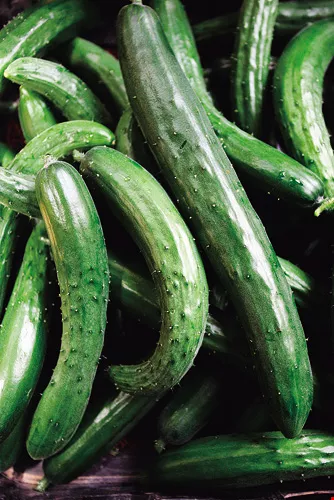
When summer comes, the vegetables grow fast and furious. Every morning Ma's two daughters take fresh-picked cucumbers, sweet-potato leaves, gynura, lettuce, or whatever happens to be ready that day, to sell in the traditional market in Sanzhi town center. On weekends and holidays, tourists who see the Sanzhi Organic Farm sign turn in and shop, and the farm also delivers direct to the homes of a couple of dozen or so customers who order through the Internet. Through these three marketing channels, the year's production is gradually consumed.
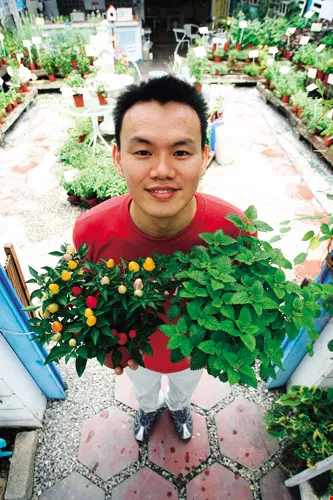
Nicholas Wu, who has an MA in accounting from National Taiwan University, has opened a herb shop on Shezi Island in Taipei. Each day he works surrounded by the songs of birds and the fragrances of herbs and flowers.
Small farms on their own
The Ma family is representative of the many small farms in Taiwan where the owners do all the growing and selling by themselves.
Thirty-five-year-old Ma Wenquan, wearing a dark blue uniform printed with the Chinese characters for "Taipei Rapid Transit Corporation," graduated from the Department of Electrical Engineering at what is now St. John's University in Danshui, after which he worked as a Taipei MRT station maintenance engineer. Working on a rotating three-shift schedule, on days when he had the afternoon shift (3:00-11:00 p.m.) he would spend a good part of the morning helping out on the family farm. Although farming is not his specialty, it was his idea to invest a large sum of money to build the net-covered structures.
"It rains more than 160 days per year in Sanzhi, it is cold in the winter, and the northeast seasonal monsoons are fierce; at least with the greenhouses up Dad can work without wearing raingear. Also, it is easier to control soil moisture inside the greenhouses, they minimize damage from insects, and the soil can be tilled with small-scale machinery." Wenquan says that now that his father has learned to use the machines, he doesn't want to pick up a hoe ever again.
In 2003, Ma Wenquan used his vacation to take a course in "facility cultivation" (also known as "protected cultivation") at the Tainan District Agricultural Research and Extension Station (ARES). After returning he put up simple three-meter high enclosures and began planting vegetables. Unexpectedly, the next year a typhoon completely destroyed the facilities. All he could do was to rebuild them a couple at a time, this time using stronger steel frames, spending about NT$2 million for the whole process from start to finish. He also took courses in organic farming, recreational farming (for city tourists), organic pesticides, and organic fertilizers at other agricultural improvement stations, as well as attending the Council of Agriculture's Piao Niao and Zhu Cao camps.
"You can harvest vegetables an average of 11 times a year, compared to once a year for rice, so naturally you get a much higher production volume. The problem is," says Ma Wenquan, "Who are you going to sell the vegetables to?" He points out that small farms have small production volumes, and when they retail on their own they don't have regular customers, so they can't harvest and sell everything at one go. But if vegetables in the facilities get to the third week and you still don't pull them, it is difficult to prevent small insect pests from getting into the nets, which is a real headache.
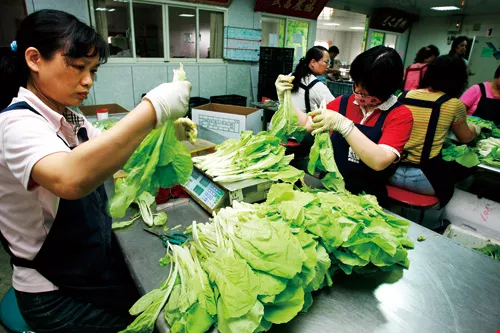
The Bade Vegetable Production and Marketing Group in Taoyuan County spares no expense in machinery and equipment. For example, high speed packaging machines cut the costs and time of human labor.
Here comes the cavalry!
Attracting vigorous young people with new ideas to ride to the rescue of agriculture, thereby allowing older farmers to retire, has been the main objective of the COA in sponsoring its Piao Niao (stray bird) and Zhu Cao (nest-building) camps, which provide "agricultural experience" and "advanced agriculture," respectively.
In the three years since they were launched in 2006, the Piao Niao camps have trained a total of 3,198 persons, while the more advanced Zhu Cao camps have trained 1,115 (you have to have attended the former to be eligible for the latter). The design of the curriculum has basically followed the areas of expertise of the various ARESs. Classes include facility cultivation, organic farming, tropical flowers and tropical fruits, aquaculture, and herbs and medicinal plants. Participants have included some elite young people with very advanced educations.
Nicholas Wu, now 38, got his BA in accounting from Soochow University and an MA in the same subject from National Taiwan University. He was formerly special assistant to the general manager of the GardenMall on Shezi Island in Taipei, responsible for marketing. In 2007 he signed up for the classes in facility cultivation and medicinal plants offered respectively by the Taoyuan and Taitung ARESs. He was then selected by the COA to spend a month on a farm in Germany.
After working for two years in the GardenMall, he invested about NT$500,000 to rent a 180-square-meter shop there (with monthly rent of NT$30,000) to create a blue-and-white Mediterranean-style garden he christened "talk2herb." There he began selling processed farm goods like herbs, herbal teas, drinks and snacks. His revenues are NT$150,000 per month, not to mention that he has been able to unite his life, his work, and his interests.
People often ask Wu, a man with a ready smile and sunny disposition, why he decided to invest in agriculture and go through all the hassles of starting his own business rather than earning big bucks as an accountant. Wu, who has enjoyed raising plants and flowers ever since he was a small child, responds: "When you see green life growing day by day, it makes you happy. As for the hassles, that's my biggest concern-there haven't been any yet! Maybe it's because I don't hold grudges or worry, so even though there are some minor problems, they aren't worth getting upset over."
Survival scale
There are hundreds of types of agriculture, from flowers, seedlings, and improved rice, to fruit groves, animal husbandry, and recreational farms. Which should young farmers choose to support themselves and their families? It's the million-dollar question.
At the Zhu Cao camp which started classes in June at the Taoyuan ARES, there were 13 students. The five-day curriculum included facility-cultivation production analysis, plug-tray seedling techniques, prevention of insect infestation, and construction of enclosures. After that the students were taken on a tour of the established farms near Taoyuan so they could get a first hand look at the day-to-day practice of agricultural production and marketing.
One of the farms to be visited was the Zicheng Farm in Yangmei Township in Taoyuan County. Each year it supplies 1.5 million vegetable-plant seedlings to vegetable farms, making it one of the five biggest seedling producers in northern Taiwan.
Farm director Lin Yingshu, 53, was formerly the manager of a textile plant, but at age 30, when his father was injured in a traffic accident, he resigned and returned to take over the 1.5-hectare family farm. He also went to the Taoyuan ARES for training.
Fourteen years ago, he spent an enormous sum of money (over NT$10 million) to build seedling greenhouses and install complete automation for everything from cleaning the trays to adding and turning the soil to spreading the seeds. Lin relates that a worker can only spread 100 plates of seed in an eight-hour working day, but that number increases to 1000 with automation. In the past watering by hand took three hours, now he only has to press a button!
Besides investing in facilities and equipment, Lin knew that in order to get a high success rate of germination and produce healthy 3-4 centimeter high seedlings after 20 days (which is what is required for them to be saleable), the key was still in the soil used as the growth medium. Lin spent three years to improve the quality of the soil he uses, continually experimenting, until he finally discovered that cow dung mixed with rice husks and coconut husks, after half a year of composting, gave him the most balanced nutrient composition, and his germination rate rose from 50% to 90%.
At a sales price of NT$1 per seedling, the profit margin for a seedling farm would be about 10-20%. That seems like a lot, but this is the result of Lin bringing his two daughters and two sons into the business. A lot of students who visit here leave shaking their heads and sighing in dismay at the extent to which agriculture is a high-investment, low-return industry.
At the Sanzhi Organic Farm in Taipei County, Ma Wenquan (second from left) and his parents and sisters still work the ancestral land, raising more than 20 kinds of vegetables. They are representative of family farms in Taiwan that do all their own cultivation and marketing.
Modern settlers
To attract young people back to the farm is a major policy of agricultural agencies in the government. From activities like the three-to-five-day Piao Niao and Zhu Cao camps, farm internships, and rural village summer camps targeted at college and university students, the COA hopes to move on to sponsoring a variety of "farm experience" camps with the goal of training 30,000 rural "reinforcements" over the next 10 years.
Let's look at the Piao Niao and Zhu Cao camps. These trained a total of 4313 persons in the first three sessions, but only about a tenth of these (448) decided to go into some line of work related to agriculture. And most of those one-tenth were already "quasi farm-kids" like Ma Wenquan whose families had land. The main obstacles causing this low success rate are access to land, capital, and markets.
Liang Shuming, who used to work in an accounting firm, look a long vacation in 2006 and brought his wife and son to the countryside in France and Holland for a month each. He really enjoyed the low-stress country life, and decided to get out of the urban jungle so that his children could grow up in a natural environment.
After returning to Taiwan, his wife Li Chenjun signed up for the Piao Niao Camp at the Taoyuan ARES. She even did a half-year internship in vegetable marketing at the Bade Vegetable Production and Marketing Group while pregnant with her second child.
In January of 2007, Liang and Li decided to go into protected cultivation of vegetables, and they began to look for land. But the two of them were not very familiar with anyone in Bade, and they couldn't tell good land from bad. After half a year, via an introduction from Production and Marketing Group director Li Chuantian, they rented 1.2 hectares of farmland in the Bade area (at NT$120,000 per year). They then invested NT$8 million (of which NT$5 million was borrowed) into building 40 protective structures.
Liang, who looks like the scholarly type, says that he first considered going into the tourism and recreation industry, and even went to Taimali in Taitung to check out the market there. But he found that the recreation industry requires even more capital, with more delayed investment payback, and he did not have the resources to stay deeply in debt for very long. "Vegetables grow fast, and operations are easy to learn. For my family's sake, I had to invest in something that would provide an immediate cash flow."
At the Sanzhi Organic Farm in Taipei County, Ma Wenquan (second from left) and his parents and sisters still work the ancestral land, raising more than 20 kinds of vegetables. They are representative of family farms in Taiwan that do all their own cultivation and marketing.
The land bank
So that those who want to go into farming no longer have to rely on luck to find land, in August of 2007 the COA established a "Land Bank" database in hopes of providing a transparent intermediary platform. This allows farm households who have no interest in farming to make their land available to others, in order to inject some vitality and flexibility into the use of farmland.
In the first phase, because a lot of old farmers feared that if they rented or sold their farmland they could lose their farmer's health insurance or farmer's pensions, there was little willingness to participate. Therefore in November of 2008 the COA persuaded the Ministry of the Interior to amend the regulations governing farmers' insurance so that anyone over 65 with 15 years or more of contributions under the farmers insurance system would have their insurance unaffected even if they rented out or sold their land, and could continue to draw their farmer's pensions.
At the same time, the COA has called on all 302 farmer's associations (FAs) in Taiwan to join the ranks of those providing land rental or sales services. Because in the past many farmers who borrowed money from FA credit departments used their land as collateral, over time FAs have ended up with a lot of farm plots on their hands, which is exactly what the "land bank" needs. The bank can provide transparent, complete information about such things as soil salinity and acidity, access to water, what crops are most suited to the soil in question, and what government low-interest loans or other helpful policies are available. FAs can also earn a commission of up to 5% (though some are doing the service for free), which can help put their operations on a more diverse and sounder footing.
However, so far success has been limited. Although 273 FAs have joined the land bank database, which has a total of 13,195 parcels of land on file, only 1,926 deals have been completed, totaling 607 hectares. Of these, 53% have been foreclosure sales, not the voluntary generational turnover the COA hopes for.
One reason is that many older rural people still cling to the idea that "if you have land, then you have wealth." Perhaps more important is that the COA provides payments of up to NT$90,000 per year for each hectare of land left fallow. After deducting the costs of planting green fertilizers on the fallow land, farmers come away with NT$60-70,000 per hectare. Naturally they will weigh the financial pluses and minuses of keeping land fallow versus renting it out.
In order to expand the land area under cultivation, last year the COA launched its "small landlord, big tenant" program, to which they added new incentives this year: So long as a small landlord is willing to rent out fallow land for a minimum of three years, the COA will provide a subsidy of NT$100,000 per year, 80% of which goes to the landlord and the other 20% toward the tenant's rent. It is hoped that this will lead to more economies of scale.
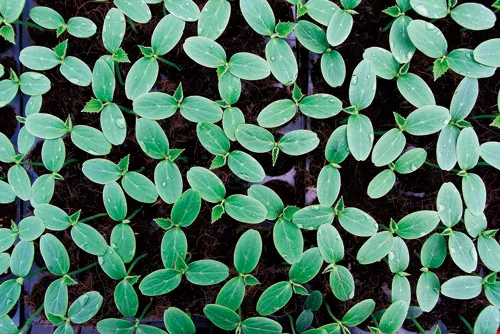
Lin Yingshu, director of the Zicheng Farm in Yangmei, Taoyuan County, invested big-time in a fully automated seedling farm years ago; now he can produce 15 million vegetable seedlings a year.
Romanticizing
It is human nature to want to get close to the land. However, the COA camps last only three to five days and it quite often happens that in a sudden burst of enthusiasm people get a romanticized notion of rural life, and sometimes even make large investments they later come to rue. Thus the COA, beginning this year, plans to offer 30-day internships (with priority given to unemployed persons below the age of 45) so that rookies can work side by side with veteran farmers to see whether they can tolerate a life of exposure to the elements. They will also get a chance to consider what direction they will go in if they decide to stay in agriculture-crop cultivation, recreational farming, or processed agricultural goods-and to take their first steps toward renting land.
Would-be farmers must also become familiar with the realities of the agricultural economy. "Until you have a handle on markets and transport, you shouldn't quit your day job or risk too much money investing, especially in vegetables, which are subject to large fluctuations in prices," warns Cheng Shui-ho, director of the Taoyuan ARES. "Newcomers who want to plant vegetables should start with small and simple facilities." When the market conditions are right, you will make money, and even bundles of money during sudden boom periods, but you will also have to endure unpredictable crashes in market prices.
For example, if you are managing some of the 300 hectares in Taoyuan County devoted to protected cultivation, in typhoon season (late summer and early fall), if southern veggies get drowned, causing a severe shortage in northern markets, your facility-raised vegetables will become highly competitive in northern Taiwan. But when winter comes and southern vegetables come north, prices in the north will fall, sometimes even below the local costs of production. The only solution to this problem is to have regular sales channels and steady clients.
Cheng suggests that newcomers give up any ideas they might have of "going it alone," and join a local Production and Marketing Group (PMG). These have collective power to make purchases and negotiate prices, allowing farmers to acquire seedlings, fertilizer, and equipment more cheaply. However, since newcomers have few personal connections, it is not easy for them to gain admittance to a local PMG.
In 1995, when the Bade traditional market was torn down, Li Chuantian, a farmer for over two decades, rounded up a bunch of people who were complete strangers to farming-street vendors, electricians, whoever-and created the Bade Vegetable PMG #3. Starting with everyone learning together how to cultivate vegetables, they progressed step by step until 10 years later they had become an "extended family" selling their veggies collectively to the Taoyuan area. Currently there are 11 members, managing 31 hectares of land with over 2000 enclosures, and employing more than 200 people in grading, washing, and packaging vegetables. Every summer they produce about 20,000 kilos of vegetables monthly, worth more than NT$80 million.
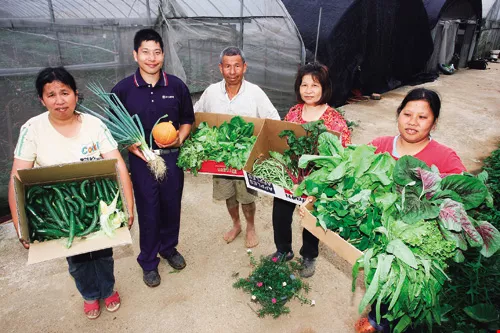
At the Sanzhi Organic Farm in Taipei County, Ma Wenquan (second from left) and his parents and sisters still work the ancestral land, raising more than 20 kinds of vegetables. They are representative of family farms in Taiwan that do all their own cultivation and marketing.
Stray birds to nest-building
Thanks to the high degree of loyalty of the 11 "family members," the PMG has even been able to create a fund into which members contribute 4-7% of operating revenues, to help individuals buy equipment, rent land, or build facilities. The collective, which markets its goods under a single brand name, is able to sell predictable, stable volumes to traditional markets, the auction market, and even hypermarts.
Li Chuantian, winner of the Shennong Prize, whose organization was twice named by the COA (in 2005 and 2006) as one of the 10 most outstanding PMGs in the country, says that each time a new member wants to join, the proposal has to be approved, after discussion, by all the current members, and then approved by the county bureau of agriculture. New farmers, whose skills are not yet up to speed, have to demonstrate very strong practical capabilities to be considered eligible.
"You have to have a never-say-die attitude," explains Liang Shuming, who got into the Bade PMG a year and a half ago despite being a novice farmer, "and the ability to solve problems in a practical manner." He adds that there are countless details to attend to, from production techniques to management to pricing. For example, his first year in the PMG he assumed that he could sell all of his vegetables through the collective, and it was only last April, after harvesting his small crop of tomatoes, that he found out that that the collective only deals in green vegetables. Liang, lacking any marketing experience, ended up just giving the tomatoes away to friends and family. Luckily, thanks to word of mouth, the second year there were paid orders for more.
The "new agriculture movement" is bringing a breath of fresh, youthful air to the countryside. Some "stray birds" are still circling in air, looking for a place to settle, while other have overcome obstacles to start "nest-building" and have started raising their chicks. They are now rediscovering and reassessing the ties between life and land, and coming up with new ideas that will revitalize Taiwanese agriculture for a long time to come.
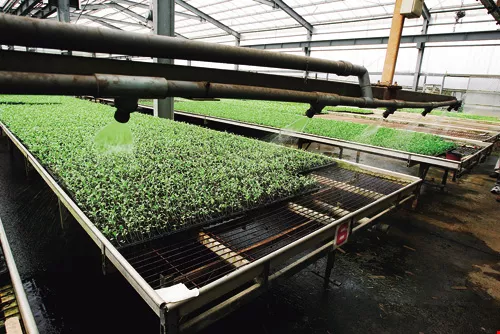
Lin Yingshu, director of the Zicheng Farm in Yangmei, Taoyuan County, invested big-time in a fully automated seedling farm years ago; now he can produce 15 million vegetable seedlings a year.
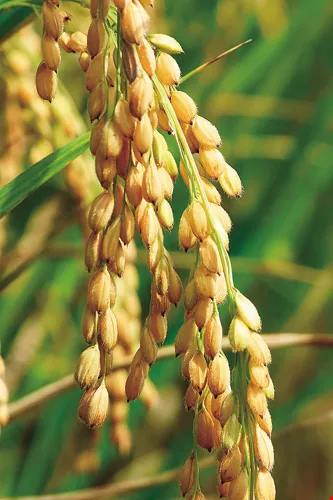
Blue skies, green fields... The land is calling young people back from the cities to reinvigorate Taiwanese agriculture. The photo shows golden rice at harvest time in Yilan County.
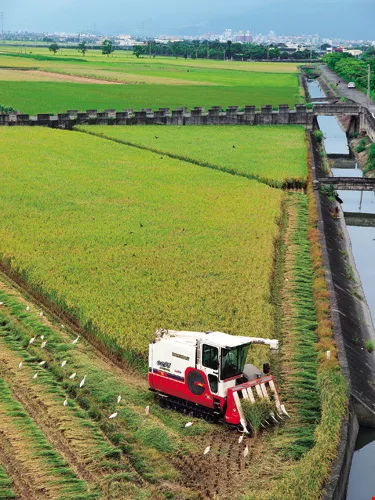
Taiwan's farms are quite small, making them unsuitable for large-scale mechanized farming. Efforts are now under way to attract young people back into agriculture to stimulate commercialized farming and create larger economies of scale.

@List.jpg?w=522&h=410&mode=crop&format=webp&quality=80)


