

"Do you find life uninteresting? Are your days being wasted in a fixed, monotonous, always-play-by-the-rules pattern? In fact, you need a little excitement in your boring 24 hours. But video games, KTV, and even motorcycle drag racing quickly get tiresome. Then starting today, why not try an 'ancient formula'--read a comic book!"
This is a quote from "Thank You God, We Have Ah Tui," written by the critic Weng Chia-ming about the comic strip artist Ah Tui.
The universal broadcast machine blares, "This is Milky Way train number 99X. We are about to arrive at 'Comic Book Paradise.' We have already reduced speed by 18%. We will apply the superpower brakes in ten minutes. Please do not unfasten your seat belts until the vehicle comes to a complete stop. Don't hesitate to ask for help from the guide in the car; she is here to provide guide services for the Taiwan Garden Area of the Earth section of Comic Book Paradise."
Hello everyone. My name is Lander, and I will be your guide. I am very honored to be able to serve you. Comic Book Paradise was specially set up by the Interstellar Federal Government in the Year 77X by the Milky Way Calendar. Its purpose is to allow everyone to maintain links with the past. Now we are about to enter the first station, called the Hall of Nostalgia. We hope you have an enjoyable cartoon journey.
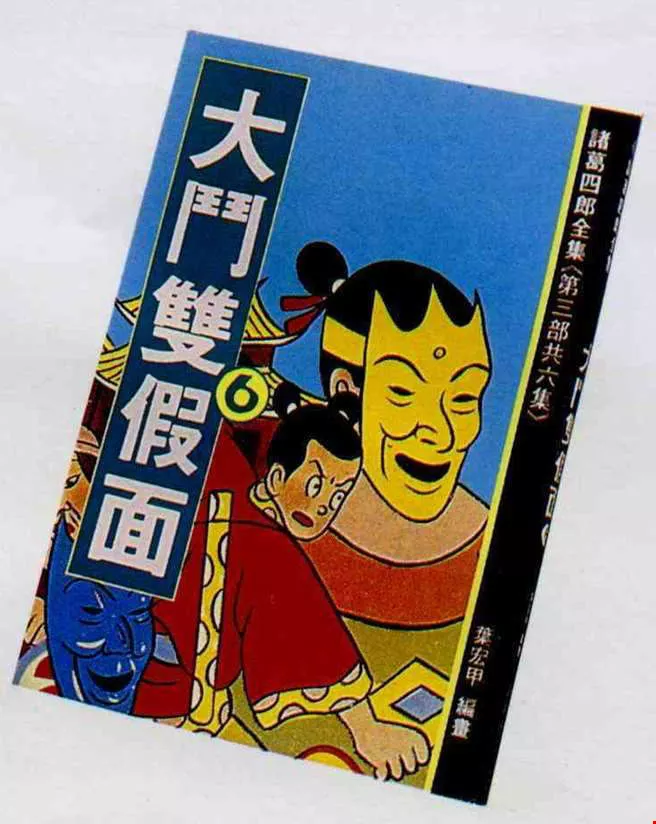
(courtesy of Mrs. Yeh)
The Hall of Nostalgia
(The lights are low. The husky voice of Sylvia Chang, accompanied by acoustic guitar, drifts by, doing a version of Luo Ta-you's "Adolescence.")
The design of the Hall of Nostalgia is based on the styles used in Taiwan from the 1950s to the 1970s. We will introduce them to you one at a time in a few moments. Please first sit down and enjoy a brief animated picture.
It is 3:30 in the afternoon, and the school bell announcing the end of the day is ringing right on time. Primary school student Hu Mei-mei, book pack on her back, skips over the gravel road to the book rental shop. She looks in--holy cow! There are already so many people here, sitting on little plastic stools with their heads buried in books. The boss is nagging a group of boys who have formed a circle waiting for the chance to read Silang and Zhenping. "Only one person can read each volume at a time!"
Zhuge Silang, his hair tied back in traditional Chinese fashion, has just come back from subduing the Black Snake Gang in Shanhaifu. After accepting the appeal of the King of Gui, he and Zhenping form a team, and they ride their horses all the way to far-away Dragon and Phoenix City. There they will do battle with "The False Laughing Face" and "The False Suffering Face." Evil forces plot against them along the way. The Two False Faces aim to seize the treasure, but who are they? Will Zhuge Silang be able to protect the treasure and see that it doesn't fall into the hands of the bad guys? (The lights go up, the short film ends.)
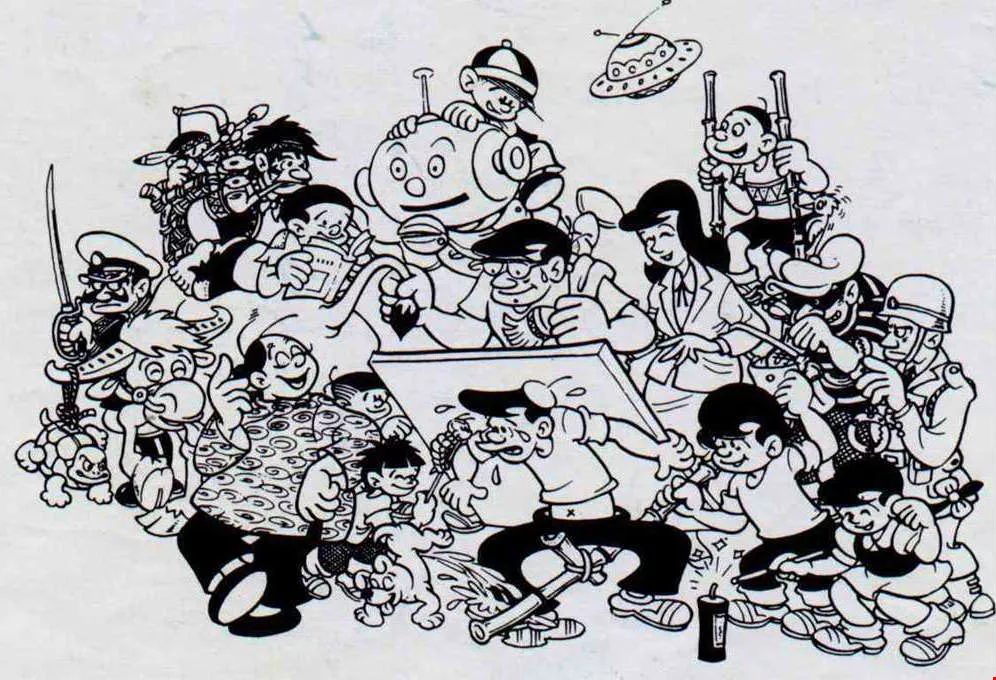
(courtesy of Liu Hsing-chin)
Silang and Zhenping
The thin, yellowing books I am now holding in my right hand are original copies of Comic King and Comic Weekly, which both carried episodes in the story of Silang and Zhenping. Don't look down on them--children used to fight over them back then!
In those days a child with a comic book was a king among his peers. This is because only kids from rich families, or those who could find some way of scraping together some money, could afford to buy comic books. Comic strip artist Hung Teh-lin recalls that he would save his bus money, collect scraps from the garbage to sell to aluminum can companies.... And if none of that worked out, he would sneak up and tap the pockets of his mother's apron hanging on the wall; if there was a jangling sound, he had "hit the jackpot."
Here I have some recorded data of his analysis as to why Silang and Zhenping was so popular.
"Yeh Hung-chia did the drawings for the series of episodes of Silang and Zhenping, including the struggle against the Demon Gang, the subduing of the Black Snake Gang, the Two False Faces, Treasure Island, and so on. The characters were depicted in an entrancing way, and the artists came up with many innovations in disguising their faces. Also, the stories included some mystery and had plots that sucked people in, so that children with a little imagination would be constantly speculating about what would happen next."
One of the competitors to Silang and Zhenping was the martial arts comic strip Little Tornado Heroes in the magazine Model Student, a copy of which I hold in my left hand. The main characters are two brothers who are plagued by wicked villains. After a series of miraculous encounters, they learn profound martial arts secrets and skills, and go on to do good and destroy evil. Probably the thing children of that era found most fascinating in the books was the inexhaustible string of martial arts fighting postures.
In the transparent case behind me are comics drawn by Chen Ting-kuo, including Meng Lijun and Fourth Sister Lu. The female lead characters all have egg-shaped faces and long and graceful eyes; they are beauties just like those described in the songs of Chinese opera. It is said that this was the ideal image for the rare book collector Lin Han-chang, so that the only comic books this lover of classic books found appealing were those of Chen Ting-kuo.
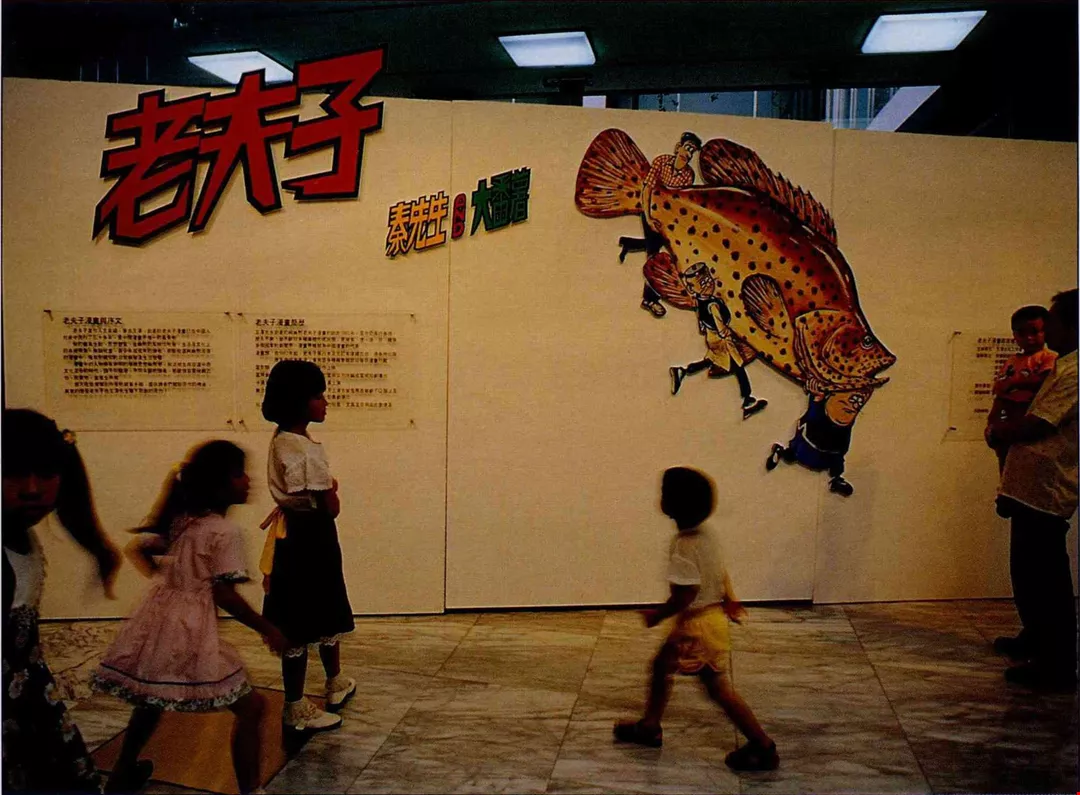
Comic books from the 1960s like Birthday and The Old Confucian are still going strong in Chinese societies today.
Anti-communist heroes
Now we go to the second floor, to examine the relationship between comic books and society. Although you might think comic books were for children, their creators also wanted to reflect political and social conditions. The information in this section was all collected by Hung Teh-lin in personal interviews with comic strip artists.
"In that era of 'no compromise with the Communist traitors,' Yeh Hung-chia created Zhuge Silang to personify the loyalty and filial piety of the historical figures Zhuge Liang and Yang Silang. Chen Hai-hung, who fled to Taiwan from mainland China, used the confrontation between the Little Tornado Heroes and the Demon Sect as a metaphor for the opposition between Taiwan, the 'bastion for recovery of the mainland,' and the 'Communist bandits.' He even named the leader of the Demon Sect 'Mao.'
"Further, the series Brother Ah San and Woman From the Countryside by Liu Hsing-chin reveal much of the clothing and lifestyles of that era. For example, he found humor in the street barbers who circulated from place to place and also the country bumpkins looking for work in the big city."
On the third floor are displays of comic book magazines, each with several different strips per issue, and also of books devoted to a single strip. As everyone can see, there were a great variety of different sizes and styles to fit different market niches. By the end of 1963, there were 26 comic strip magazines on the market. Single-strip books, which first came out about 1961, were an alternative produced to cope with the saturation of the magazine market. You can thus clearly see how comic book creativity flourished in those times.
Those of our visitors who have some understanding of the history of comic books may be wondering about something. In the 1990s, Japanese comic books were dominant, accounting for about 95% of the Taiwanese market. How was Taiwan "conquered"? The real reason is lost in the mists of time, but a film was made based on a rather amusing legend. This short film might be of interest to all of you.
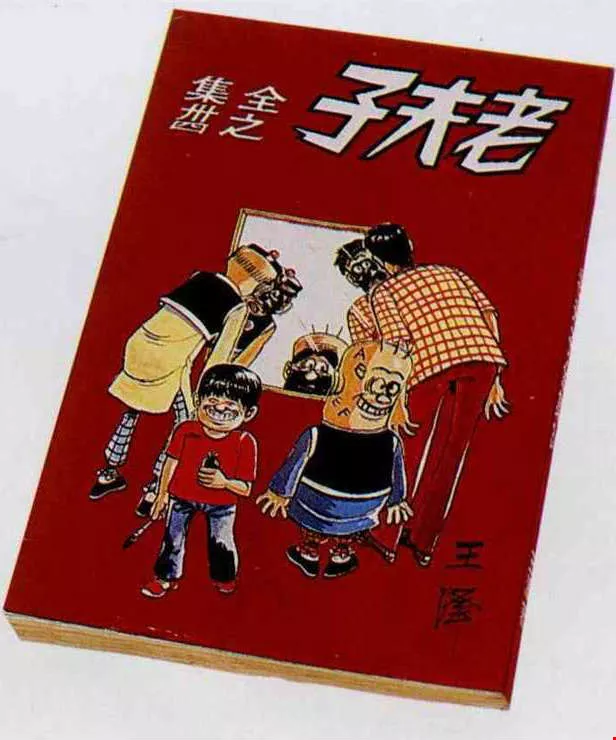
(courtesy of the Wang Tse Taipei Workshop)
Censoring "evil" books
"It was the early 1960s. President Chiang Kai-shek was out on an inspection tour. His route carried him past a darkened little shop crammed with small children reading in the dim light. He was deeply moved by the sight, and he went forward thinking of rewarding this display. But when he got close, he discovered that the children were reading 'evil books' about monsters and deities.
"His anger gave birth to the review system under a law called 'Guidance Methods for the Publication of Illustrated Series.'" (The short film ends.)
Here we have a complete display of the licensing procedure. The law at that time stipulated that all comic books must be reviewed after publication, and be approved, licensed, and numbered. But because the regulations were vague, publishers and comic strip artists faced serious problems figuring out what was legal and what was not. At that time the largest comic book publisher, Wenchang, ceased operation rather than submit its books for review.
It is said that every time Liu Hsing-chin completed an illustration, he would scrutinize every inch left and right, top and bottom, and even examine the picture upside down out of fear that something could be seen as incorrect. For example, it was necessary to avoid drawings with five-pointed stars (like those in the PRC flag) or with any sunflowers (the PRC national flower).
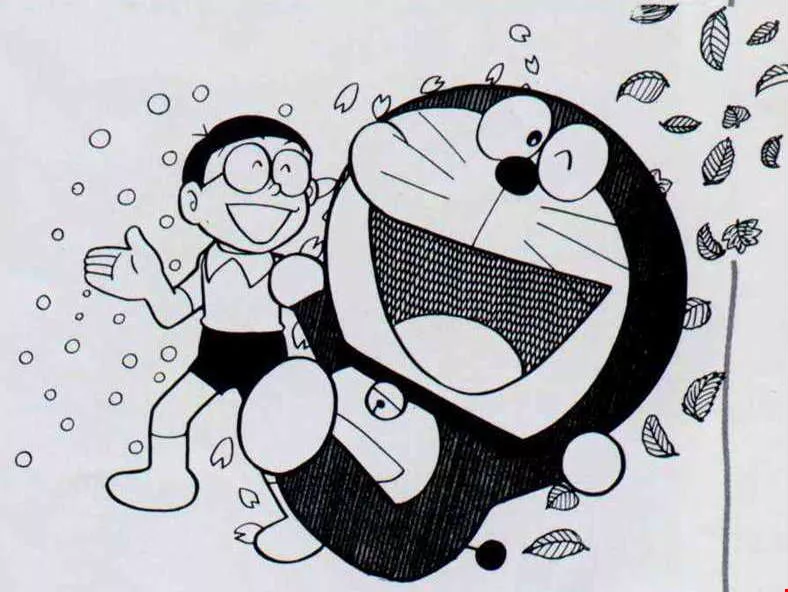
(drawing of Little Din Don copyright by Fujio Fujiko, courtesy of Shogakukan) (copyright by and courtesy of Da Ran Culture Enterprise Company)
fallen to 400.
With no change in demand but a dramatic drop in supply, publishing houses began importing Japanese comics in large numbers. But because the "relevant authorities" banned the import of Japanese comic books, publishing houses had to redo the drawings and republish the books from scratch. Thus did the comic book industry in Taiwan enter the age of piracy.
Before going to the Hall of Japanese Style, however, let us first stop in the Hall of the Old Confucian for a brief rest, to see some humor that resulted from the meeting of Chinese and Western cultures.
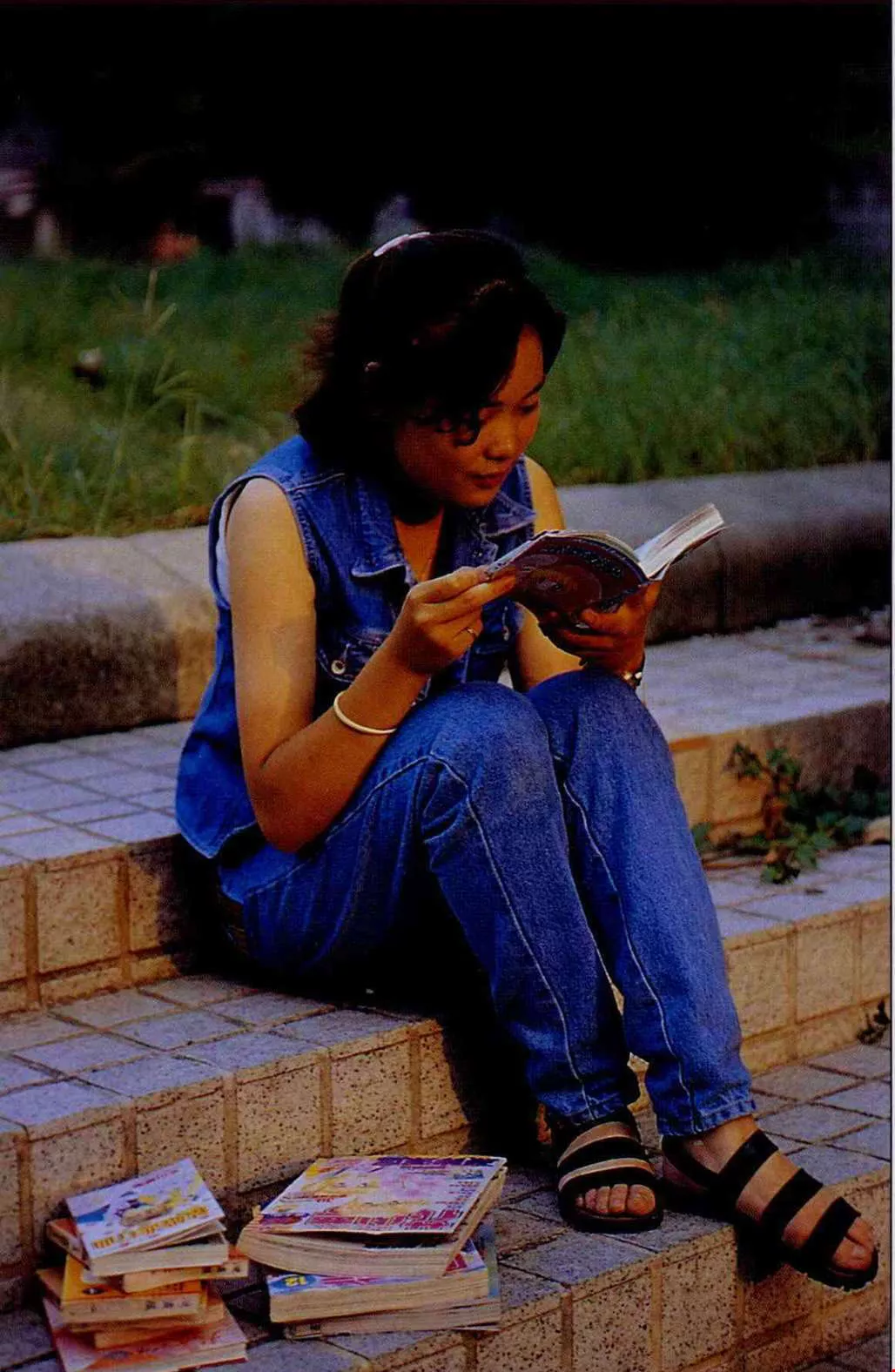
Young people can see their dreams come true in the world of comics.
The Hall of the Old Confucian
The exterior design of the more-than-10-meter-tall Hall of the Old Confucian is shaped just like the character in the strip. Why is there a separate hall just for The Old Confucian? Because he had terrific staying power. He has never ceased to be popular in Chinese-speaking societies since his creation in 1960 by Wang Tse (whose real name was Wang Chia-hsi).
The main hall on the first floor, where we are now, displays the wax images of several principal characters from The Old Confucian. According to the work The Old Confucian and I, now in the museum archives, Wang Tse says that the first character he created was Mr. Qin, who eventually was only a supporting character. He is the young man in the then-fashionable Western-style suit. But later Wang felt the character was too Westernized. He thought back instead to the vest worn by the lead character in the very Chinese strip "Mr. Wang" that he had read as a boy in Shanghai. He created his own character, wearing the same type of vest, and he added a "melon-shell cap," a short scholar's gown, and "lantern" pantaloons, thus producing the Old Confucian himself.
From the second floor to the roof is the "Exhibit of Original Drafts." This one is entitled "Different Treatment." In it the Old Confucian sees a young man strumming a guitar below a window wooing the beautiful young woman inside, who throws down a rose in response to his entreaties, just like a modern Romeo and Juliet. The Old Confucian decides to follow the young man's example, so he begins playing a traditional Chinese stringed gourd below a window. The girl inside also responds by throwing out flowers--still in the flower pot!
Look at a few more. Have you noticed that one often sees the intersection of old and new? The Old Confucian loves his freedom, and has many girlfriends. But author Wang Tse never gives him the chance to get married, because then his romantic dalliances would become extramarital affairs. Traditional Chinese would find this hard to swallow!
Wang Chia-hsi wants to make the Old Confucian an authentic Chinese, but without losing his sense of humor. Wang makes fun of his own character to please his readers. He grew up in Shanghai's foreign concessions, with perhaps a French night club on one side of his house and a German restaurant on the other, and saw many instances of Old China being trampled by foreigners, and he unconsciously reflects this in his comics.
This is what Chao Ning, a famous TV host and intellectual, wrote upon reflecting on reading the strips. I hope everyone will read it. If you are a Chinese, and understand how the West Wind came to defeat the East Wind, perhaps you will feel the same way.
"I saw the scrawny, brittle Old Confucian assume a stance of challenge against a Japanese samurai, and have a fight to the finish with a hairy, brawny Western boxer. He is beaten to a pulp. I saw the shadow of China, and felt a bit like I wanted to cry. Later I saw him, covered in blood and in a daze, struggle to his feet, and again take up a fighting posture. My tears halted, and I started laughing."
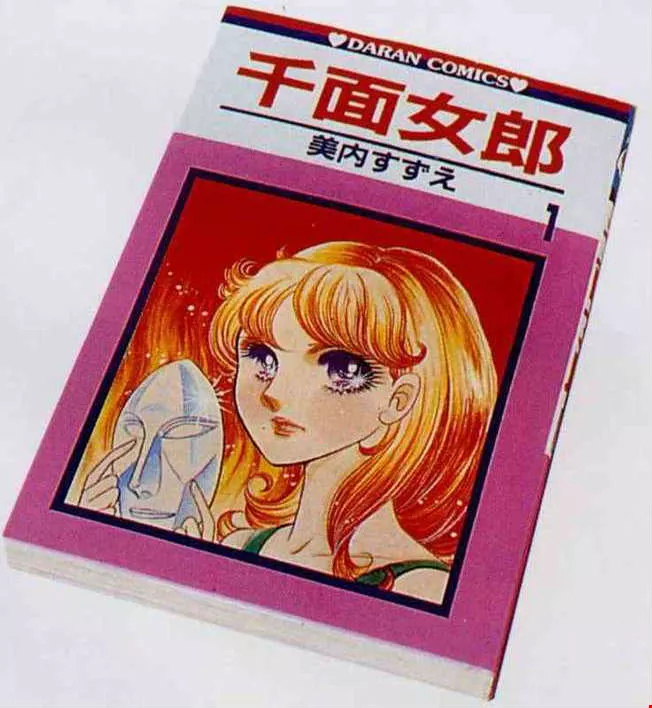
(courtesy of Da Ran Culture Enterprise Com pany)
The Hall of Japanese Style
We are about to enter the Hall of Japanese style. The first floor is the boys' area, the second floor is the girls' section. Displayed here are Japanese comics popular in Taiwan from about 1970 to 1980 or so.
In this period, the most famous comic books were Tetzuko Osuma's Atom Tetsuwan, Fujio Fujiko's Din Don House, Tetsuya Chiba's Good Kids, and Yaguji Takao's Fishing Wiz. They were endlessly reproduced by publishing houses.
How popular were they really? Take Din Don House for example. One publishing house had a whole department dedicated to redrawing the strip, except that they changed the backdrops to Taiwan.
The toy Little Din Don--the robotic cat who is the lead character in Din Don House--on display here was made by the museum in the exact proportions stipulated by the author. The height and the circumference of the head and the waist are all 139 centimeters, and the cat has no ears. When Little Din Don, using a time machine, came from far away and popped up in a drawer, little Ta-hsiung, a child having a hard time adjusting in school, was delighted. This is because the cat has an endless supply of gadgets in his four-dimensional pocket to turn all of Ta-hsiung's wishes into reality. This is the thing that most attracted readers.
These comics have a real after-effect. The book I am holding in my hand was published in 1992, after Taiwan firms began getting the legal copyrights to republish Japanese comic books. This re-release had better printing and packaging than the earlier pirated versions. Most of those who bought such re-issues were trying to recapture their youthful dreams.
You may all be wondering why Superman, Batman, and Spiderman, all "carrying US passports," are here in the Hall of Japanese Style. These popular characters shared much in common with Japanese heroes like Salty-Egg Superman, Peerless Iron Tetsuwan, and Little Tornado Warrior. Though they altered in form from generation to generation to meet the changing times, and their weapons were always transforming, they were always there to protect the earth and crush the forces of evil.
In the minds of children, it was no problem for these superheroes to transcend space and time to fight each other. It is said that when the comic strip artist Ah Tui was small his favorite character was Batman, but that he always lost when fighting against his older brother's favorite, Superman. The reason is that Batman can be knocked unconscious by a blow to the head.
Now we go upstairs to the girls' section. The Hall of Japanese Style has specially made this enormous color picture for our visitors, using computer composite technology to bring together all the popular leading characters of the time in one image. We hope that everyone will look it over carefully.
Lanbao was the victim of a joke by a naughty angel, who gave her both a boy's heart and a girl's heart before she was born. Half her time she spends in the Rear Palace garden practicing swordplay, and half the time she makes garlands of flowers. (Lanbao was in the comic strip Beribboned Knight.) At Lanbao's side is a book, which describes the on-again-off-again relationship in a world of chaos between Carol (a modern woman sent back in time) and the Egyptian pharaoh Manfeis. The story revolves around the intertwining of their love with the realities of the international power politics of that era (from Princess Comics).
Looking into a dark corner of the fortress in our picture, there are a brother and sister, vampires who will never grow up, bemoaning their eternal youth (from Vampire Legends). The sound of their voices singing tragic songs floats past the "Window of Fated Love," which is part of a different comic strip called A Young Girl's Love. In that story, the characters Klaus and Youliushi are in love with each other, but the God of Fate early on determined that they should end up separated. Next, we have the Japanese characters Kai Ryusuke and Amano Moritaro (from Yokohama Story). They were perhaps the only ideal men that young girls could find. Finally, for young girls who were not engrossed in tales of romance, they could learn from Tan Baolian and Bai Shali (Women of a Thousand Faces). They learned about life through acting out roles.
The classic girls' comics depicted on the wall here were first published in about 1975, and they became popular in both Japan and Taiwan at roughly the same time and pace. For girls just at that age when they wistfully long for romance, very few did not see their own pink dream worlds in the attractive, passionate, and naively romantic characters in the stories.
Would everyone please look upward? That cone-shaped meteorite suspended in space is the final stop on our tour: the Hall of Modernity. Please hurry, we'll have to catch today's last universal transporter.
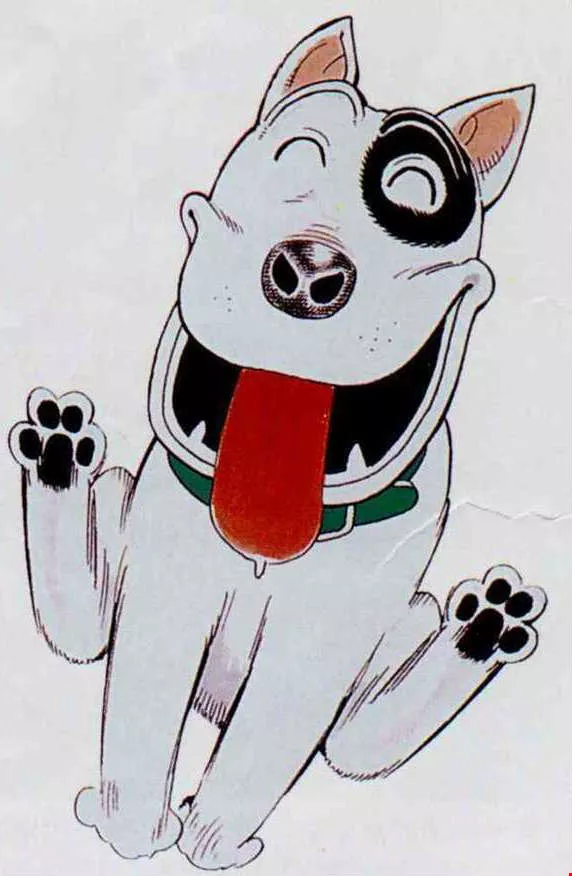
(courtesy of China Times Culture Enterprise)
The Hall of Modernity
Our craft is about to land. The building below-- the irregular honeycomb-shaped one--is the Hall of Modernity. Because it has a very complex interior layout, the Hall has provided a special guide book, so you only need to follow the map.
The period covered by the Hall of Modernity covers the period from roughly 1980 to 1995. In this period, Taiwan's comic book market underwent unprecedented shifts. Nothing and no one--contents, publishers, distributors, readership--was exempted.
First we go to the model room. Here we have a recreation of the "Rotary," where comic book wholesalers and retailers were concentrated. Their "smooth cooperation" with publishers created a brief golden age of comic books.
At that time comic books were produced at an astonishing pace. Publishers would get books in Japan that hadn't even appeared yet in the Japanese market. Everything including translation, typesetting, printing and distribution could be completed in about three days. Thus you really could say that they appeared "simultaneously" with those in Japan. In those days at least 20-plus new volumes appeared each day.
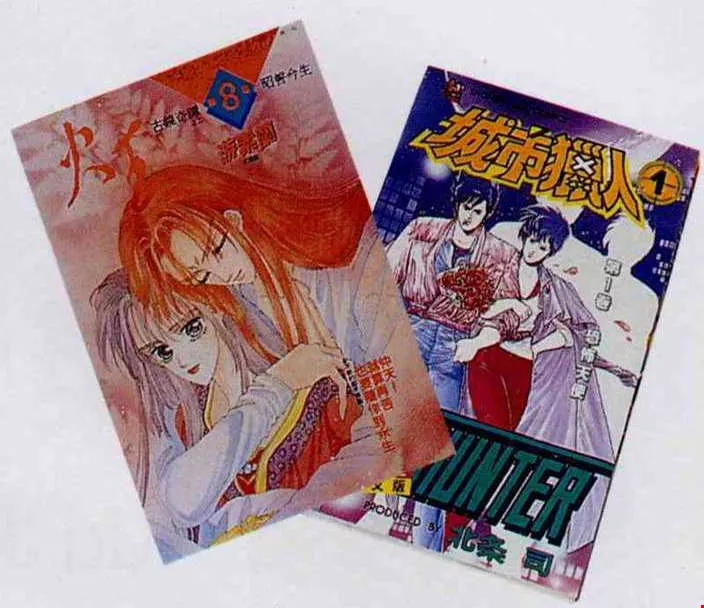
The huge influx of volumes was a shock to readers. Everyone who visits this exhibition hall in our museum is dazzled by the huge variety of beautiful covers. Although it is still possible to identify the. best-selling comic books, like Dr. Strange and Robot Girl, Dragon Ball, and City Hunter (all favored by boys) as well as White Waltz, Child of the Moon, and Wilderness Angel (preferred by girls), there were even more comic books that we have never even heard of or seen.
Two critical factors underlay the beginning of the "Warring States Period" in the comic book market. Let's listen to a tape recording of an interview with a certain Johnny Chin, who was a planning director for a chain store called "Comics."
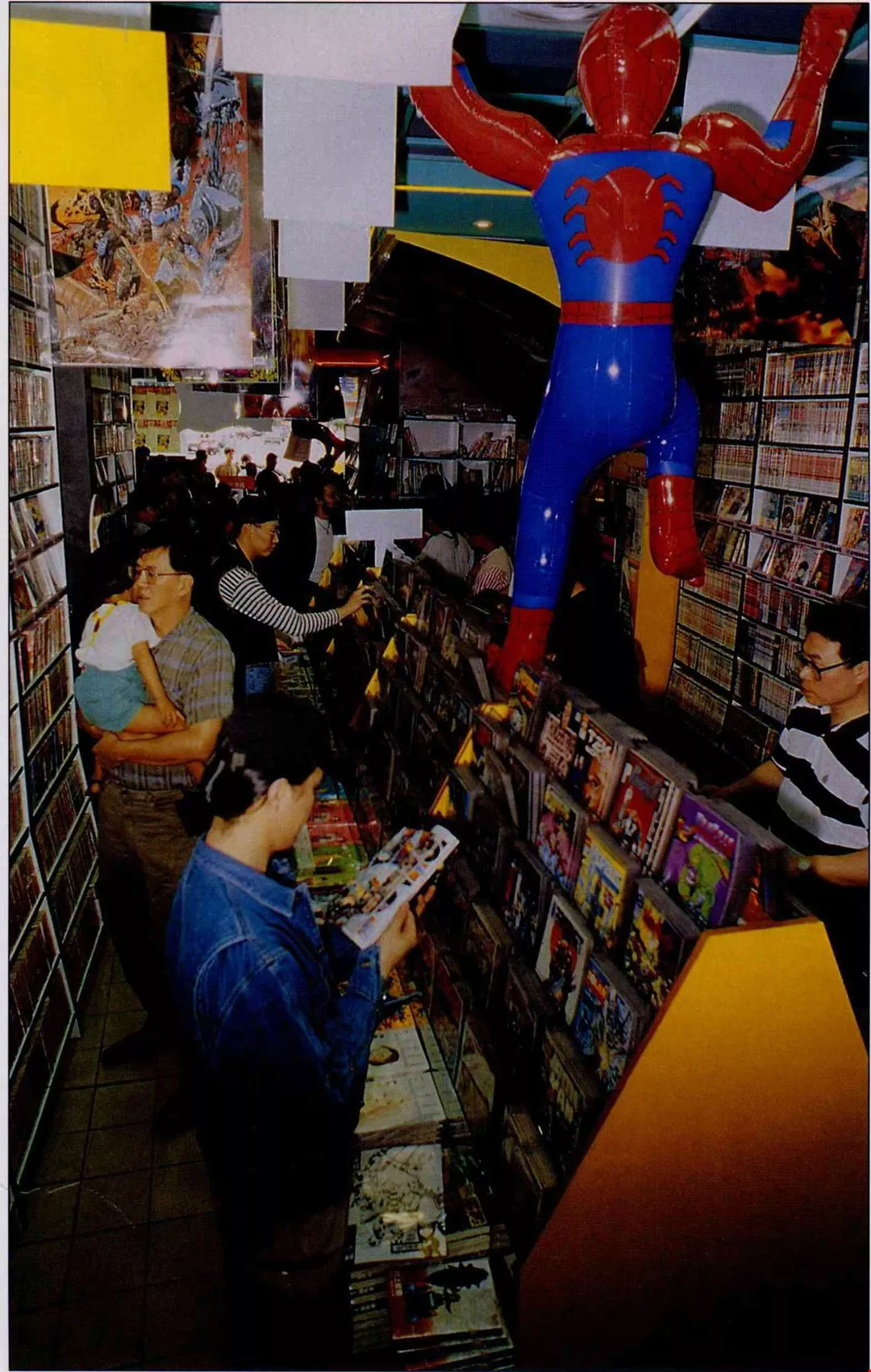
Comic book specialty shops often put on exhibits to attract buyers.
The Warring States Period
(The tape begins.) "The qualitative and quantitative change in Taiwan's comic book market began with the publication of the first Youth Report in 1990. It was about one-third the price of most other comics, and carried episodes from several different popular ongoing series at the same time. Moreover, the stories moved at a faster pace than in single-story comic books. It set off the second wave of comic book fever.
"In 1992, after the implementation of the Copyright Law, Youth Report, which at its peak was selling 230,000 copies, came to a halt. Publishers began to compete in droves for the legal rights to Japanese strips."
The comic books on display here were all published with fully legal copyrights. You can flip through them if you like. They are somewhat different than their predecessors. Of course the quality of the printing, the paper, and the illustrations is far superior, and there are story summaries or author's introductions printed on the backs of some of the books. Sometimes it is hard to tell from the covers that these are comic books!
Take for example this one that I am holding in my hand, White Paper on Love. It is aimed at adults, so the jacket design looks like that of a novel. It has been said that many women openly brought these to read at the office!
Our more attentive visitors will have discovered that the contents have reached a "depth" that one might find inappropriate for a comic book. The fact is that from 1992 to 1995, despite the continuing existence of a widely acceptable mainstream in the industry, there was considerable pluralization in terms of content and drawing style.
First let' s everyone go to the "Spin-Off Products Room" to admire the products based on the popular mainstream comic books, after which you can freely go to the adult comic book gallery. Look at the life-sized poster on the wall. It's the basketball star Sakura, who is nicknamed "the redheaded monk." As everyone looks on startled and amazed, he skies to the basket to display his slammer-jammer techniques (Slamdunk). And there on that T-shirt you can see a potato-headed little Shinchan displaying his wee-wee painted to look like an elephant (Crayon Shinchan). And that toy dog on the shelf there is the main character in the strip Bow Wow.
You should not jump to any judgments just because of the term "adult comics." In the hall you can see Houseplant People. The leading character is a justice in a court for family-related disputes. It is said to have been quite popular in legal circles in Taiwan. And the depictions of plants in the books are so expert that the comic books could double as horticulture textbooks.
As for Sanctuary, although it includes scenes of female nudity and lovemaking, the point of the stories is to reflect social and political reality, including the whitewashing of organized crime, the dominance of a single political party, and political tactics. According to press clippings from the museum archives, the Democratic Progressive Party even used these books in party member development classes.
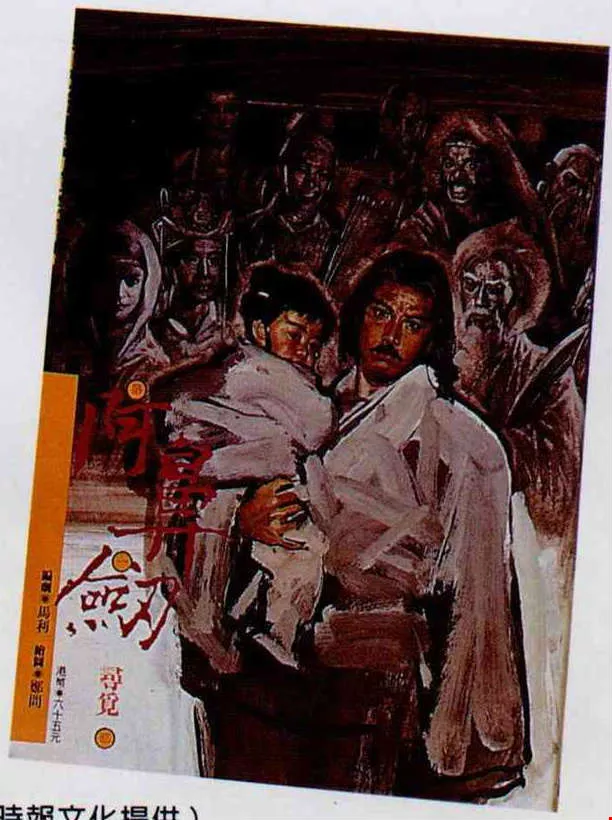
(courtesy of China Times Culture Enterprise)
Oolong Temple
Also, after nearly 20 years of silence, locally-produced and locally-oriented comic books emphasizing things Taiwanese began appearing in 1983. In the vanguard was Oolong Temple, with a group of masters and novices from the Shaolin Temple whose main specialty was playing jokes. Its popularity stimulated a fad for works by local painters focusing on scenes of daily Taiwanese life.
In addition, the comic book review system was abolished. Cartoonists quickly brought a spirit of experimentation into play to try new themes and illustrating methods.
Currently on display are works by Tsai Chih-chung, whose illustrated books, such as Laozi Says, and Chuangzi Says, were based on traditional Chinese thought and philosophy. There is also Short-Circuited Fairy Tales by Hsiao Yen-chung, which satirized traditional children's fables. Chu Teh-yung used humor to poke fun at love and marriage in the modern age with the strips Exchange of Fire and The Sarcastics. Also present are Cheng Wen's Legendary Heroes of the Eastern Chou Dynasty and Profoundly Beautiful Asia.
From these displays everyone can probably tell were no longer just for kids. Also in this era "comic book fans" were not limited to just reading. People could make up their own stories and illustrate them using characters created by their favorite cartoonists, and collect these into a "gazetteer of like-minded people." Take for example the gazetteer Faces That Launched 1000 Ships that you are all looking at right now. The original was created by You Su-lan, and her fans produced this gazetteer.
There are many indications that comic books were fast becoming, or already were, a key part of the mass culture: More and more cartoonists had their own supporters and fan clubs and countless comic book research associations were set up on college campuses. Comic books became part of the reading materials available in teahouses, coffee shops, and doctors' waiting rooms. The common description of comics as "kid's books" was fast becoming a thing of the past.
Thank you all for taking Milky Way train number 99X. Our comic book journey is at an end for now. We hope that we have been able to stimulate your interest in, and concern for, Taiwan comics, and we look forward to serving you again.
[Picture Caption]
(courtesy of Mrs. Yeh)
(courtesy of Liu Hsing-chin)
Comic books from the 1960s like Birthday and The Old Confucian are still going strong in Chinese societies today.
(courtesy of the Wang Tse Taipei Workshop)
(drawing of Little Din Don copyright by Fujio Fujiko, courtesy of Shogakukan)
(copyright by and courtesy of Da Ran Culture Enterprise Company)
Young people can see their dreams come true in the world of comics.
(courtesy of Da Ran Culture Enterprise Com pany)
(courtesy of China Times Culture Enterprise)
Comic book specialty shops often put on exhibits to attract buyers.
(courtesy of China Times Culture Enterprise)
(drawn by Ah Tui, courtesy of China Times Culture Enterprise)
Comic strips may be relaxing for readers, but the process of making them is complex and requires great precision.
(copyright by and courtesy of Da Ran Culture Enterprise Company)
(courtesy of China Times Culture Enterprise)
Ah Tui and his home. (drawing by Ah Tui)
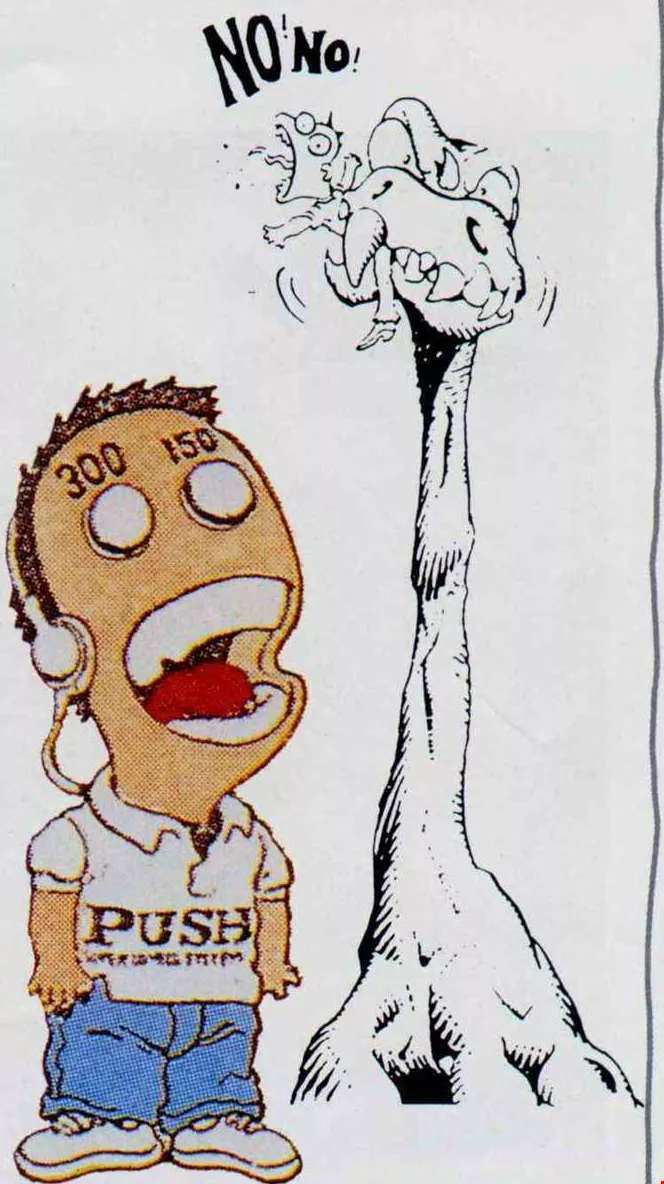
(drawn by Ah Tui, courtesy of China Times Culture Enterprise)
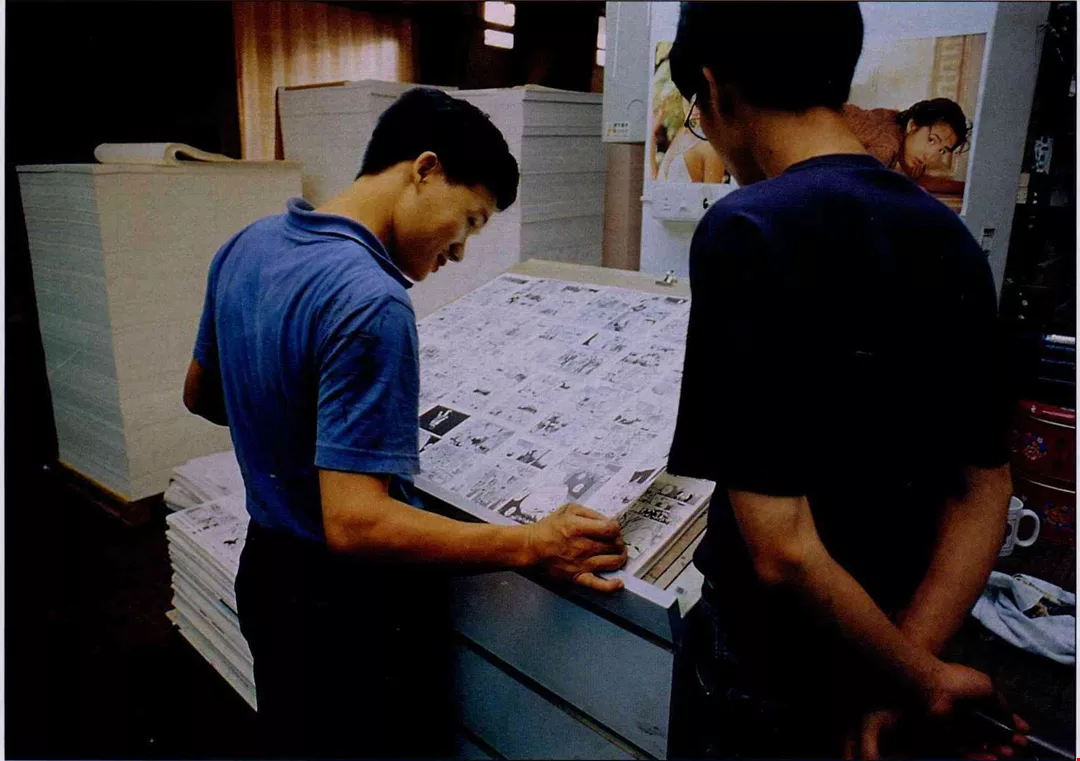
Comic strips may be relaxing for readers, but the process of making them is complex and requires great precision.
(copyright by and courtesy of Da Ran Culture Enterprise Company) (courtesy of China Times Culture Enterprise)
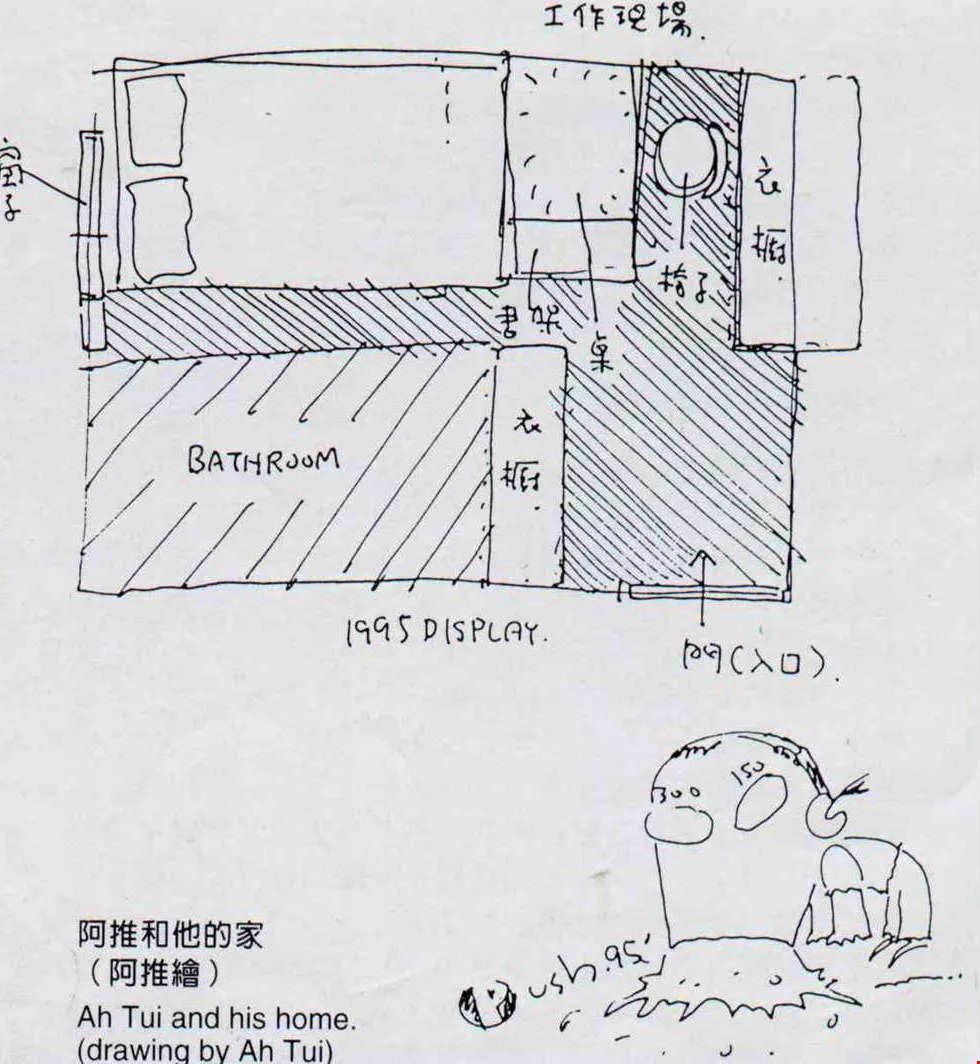
Ah Tui and his home. (drawing by Ah Tui)


@List.jpg?w=522&h=410&mode=crop&format=webp&quality=80)


