A New Spirit in Paper Arts: Todo Sense Design Studio
Lee Hsiang-ting / photos Chuang Kung-ju / tr. by Scott Williams
July 2016
The paper industry may be in decline, but the spirit of paper arts lives on.
Janny Lin and Adar Huang earned their master’s degrees from the National Yunlin University of Science and Technology’s Graduate School of Visual Communication Design with research on pop-up book design. Their integration of traditional Taiwanese culture with the paper arts brought them into contact with paper-art structures, design, and production, and inspired them to venture into the creative and cultural industries. They are hoping to make a success of their design brand, which focuses on paper arts, within the next ten years.
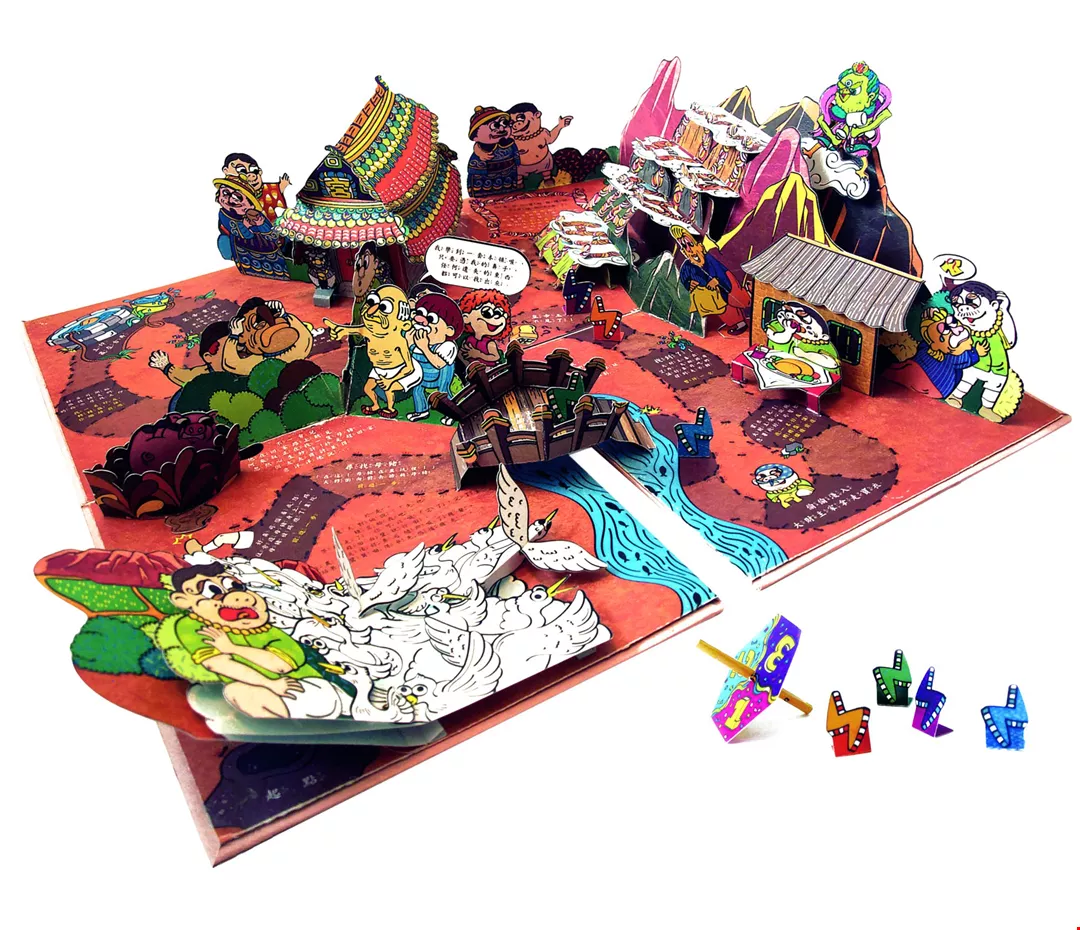
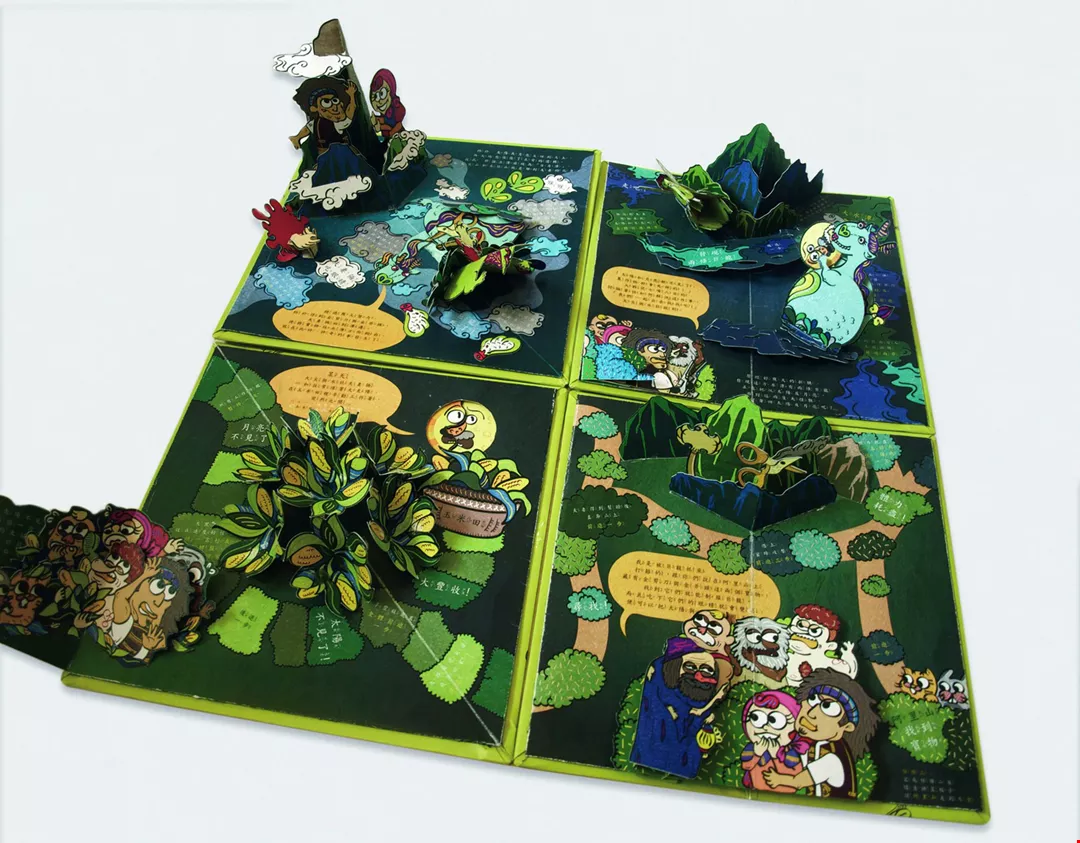
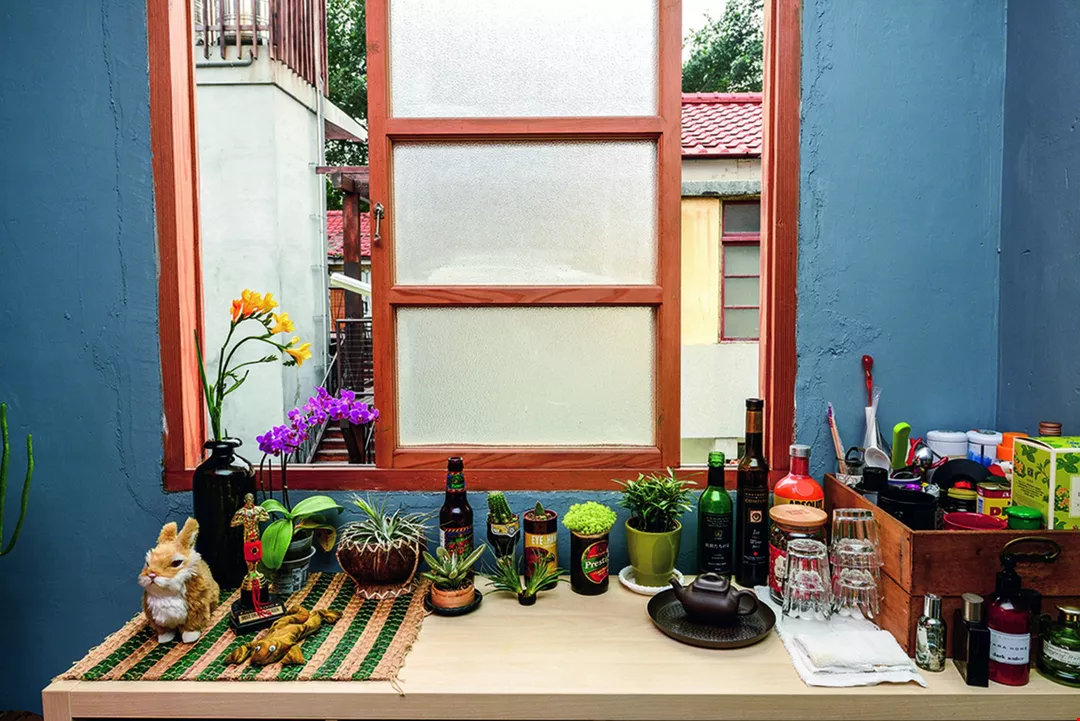
Visitors to the tiny workspace of the Todo Sense Design Studio, located in Taichung City’s Audit Village, find their eyes immediately drawn to the brightly colored and intricately structured pop-up books displayed on the bookshelves.
Hasn’t the digital tsunami long since swept away paper books? Why do these products still exist? You can’t help but wonder even as you appreciate the artistry.

Huang and Lin began exploring pop-up books while in graduate school, became fascinated by Taiwan’s traditional folk culture, and decided to start their own business. (courtesy of Todo Sense Design Studio)
A push from the government
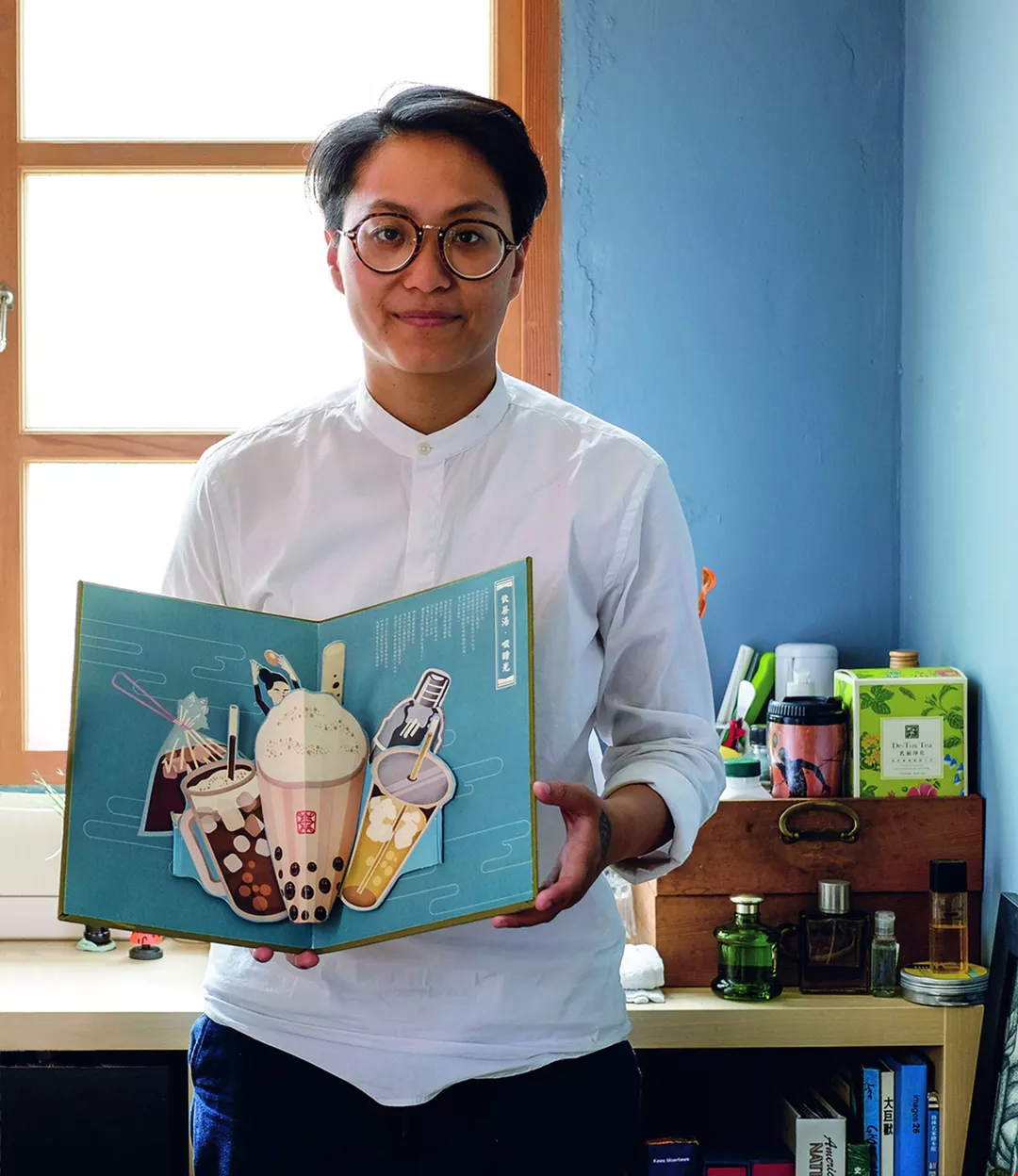
Janny Lin, one of the studio’s founders, picks up a book. “This is a creative-and-cultural design project that introduces Taichung’s afternoon tea culture. We chose to cast the story of Taichung’s traditional cakes in a 3D medium, and designed and produced the whole thing ourselves—the writing, the aesthetic design, and the construction of the pop-ups.”
Her introduction to the little volume stirs the imagination, making you want to explore and handle the book for yourself.
The little workspace is actually Todo Sense Design’s second base of operations. The women’s reasons for going into business date back to their first base.
Lin and Huang shared similar interests in graduate school, including love of both design and Taiwanese culture. Both also worked for mainstream design studios after completing their degrees. There they learned that the job required following the studio’s design insructions, and left little room for creativity. Frustrated with the work, they began to think about striking out on their own.
“We thought we’d give it a try. We sent a proposal to the Taichung Cultural and Creative Industries Park, not really thinking that they would choose ours. When we found out that ours was one of only five that had been accepted, it felt like God had stepped in to help us start our business.” Adar Huang, Lin’s partner in the studio, says that their initial investment came from a grant they received through the young entrepreneurs’ program.
Todo Sense also earned a young entrepreneurs’ grant from Taichung’s Reach for the Stars program in 2015. The grant enabled them to lease a space in Audit Village at very low cost and provided them with a monthly stipend of NT$33,000, meaning that they had a new office and support from the government to keep them afloat through their second year in business.

while in graduate school, became fascinated by Taiwan’s traditional folk culture, and decided to start their own business.
The limitless potential of paper
Lin, who studied advertising as an undergraduate and once worked for a print shop, is imaginative and passionate about the artistic possibilities of paper. She learned much of what she knows about selling paper, printing, and the design of paper structures through first-hand experience.
Huang, on the other hand, spent her entire academic career studying the arts, and is more focused on brand packaging and design. She even took a short break from graduate school to work for an integrated marketing firm, where she pitched and executed design project ideas, and voiced strong opinions about how to address clients’ needs.
Between them, the two women had experience with the entire print media production chain, from design to production and marketing. Although both found work after completing their master’s degrees, they soon realized that Taiwan had very few paper-arts design studios and decided to establish their own. They founded the Todo Sense Design Studio on the idea that they would handle everything from design to production in-house.
“We’ve added it up. Taiwanese design companies usually need at least ten years to grow to a given size. If I’d waited until five years after I graduated to start my own company, and it took another ten years for the business to mature, I’d be old by the time the company became successful and my ideas wouldn’t be as vibrant or creative as those of a younger person.” Huang says that was another of their reasons for starting Todo, where she focuses on pitching proposals to clients.
Todo got its first project—developing a pop-up book for a foreign company—when a traditional printer was unable to do the design work and recommended the studio. “It wasn’t until after we took the job that we realized how few people in Taiwan were capable of making a pop-up book. The thing is, you have to be able to glue things by hand. We spent two days at the printer’s setting up a production line for the handmade, glued-together portion of the project.” Lin handled planning on the project, and recalls that they produced nearly 100 defective volumes on their initial trial run. It was a huge failure rate for a project that required only 200-some finished books.

while in graduate school, became fascinated by Taiwan’s traditional folk culture, and decided to start their own business.
Finding a new business model
“Although the print industry may appear moribund, viewers tend to spend more time absorbing print media than they do digital media. When you add aesthetic design and 3D effects to print, it creates a different kind of attention economics and gives you a business model,” argues Lin.
The two women realized that if 3D paper art were enlarged by ten or 20 times and displayed in a space, viewers could walk inside. Such a structure would function as a different kind of art venue, one that could be integrated with augmented or virtual reality technology to create a virtual environment.
“We are actively seeking to develop paper design into our brand,” says Huang. “We currently have two directions we want to go in. The first involves integrating paper arts into commercial design. The second involves cooperating with Taiwan’s traditional paper makers.” Huang adds that they exhibited at Creative Expo Taiwan this year, and were inspired by the strides other nations have been making in this area. They hope to develop paper structures into a variety of products, including decorative lamp shades, vases, and fashion accessories. But they have an even bigger ambition: they want to create a mobile arts platform that wraps paper arts into local culture, and plan to begin in Taichung to enable the city’s residents to get better acquainted with their own local culture.
In addition to taking on commercial projects, Todo has also been involved with several public art projects. In one case last year, the studio took part in the creative shop sign project curated by the National Taiwan Craft Research and Development Institute, which attracted a great deal of attention during its exhibition at the Huashan 1914 Creative Park in Taipei.
Starting a business is hard work. Huang and Lin founded their company with only NT$100,000 in capital, took salaries of only NT$10,000 per month, ran into numerous cash flow problems, and had projects popping up at awkward times. Nowadays, they often find themselves working into the wee hours, so busy that they sometimes sleep in the office. But no matter how late they work they always make themselves begin again at ten the following day.
They joke, “The more our business grows, the less we argue. We used to argue every other day. Now it’s only once a week or so. We keep telling ourselves that we have to keep up the pace because we’ve only got a ten-year window to succeed.”
When they have a difference of opinion, one of them has to talk the other one around to her view.
In spite of all of the challenges they continue to face, they remain committed to the belief that paper will remain viable as a medium, and that it will not only put forth new shoots, but will also be rejuvenated.
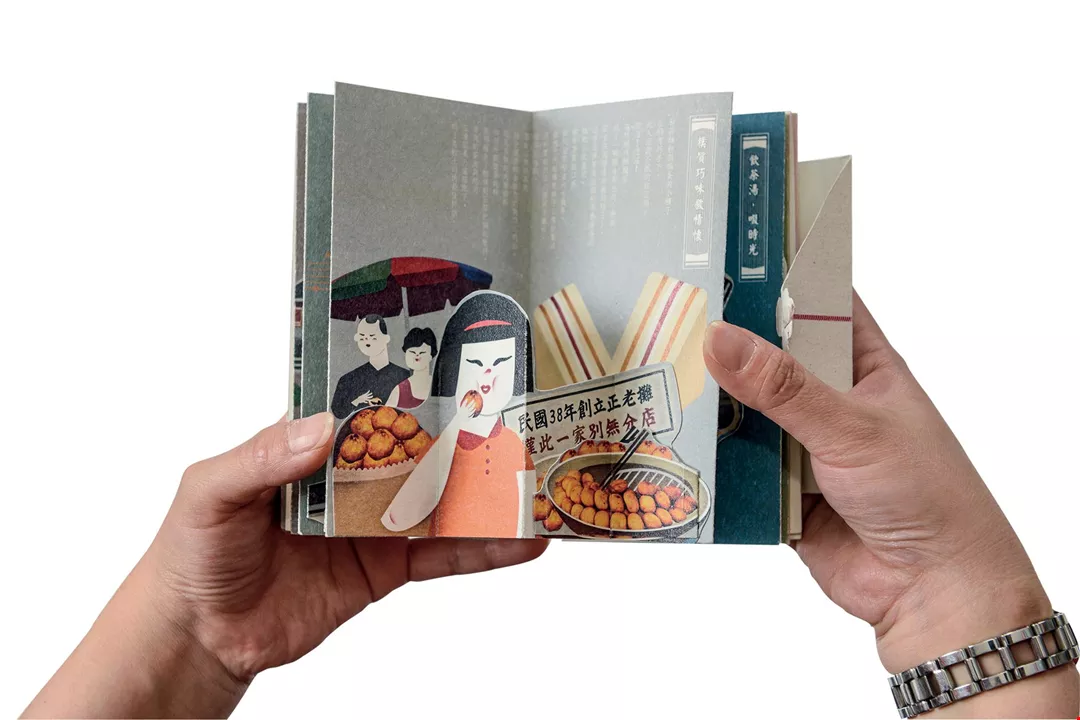
With their creative and cultural venture, Huang and Lin have found new ways to use paper as a medium, incorporating pop-ups of traditional pastries into a book and applying the paper arts to packaging.
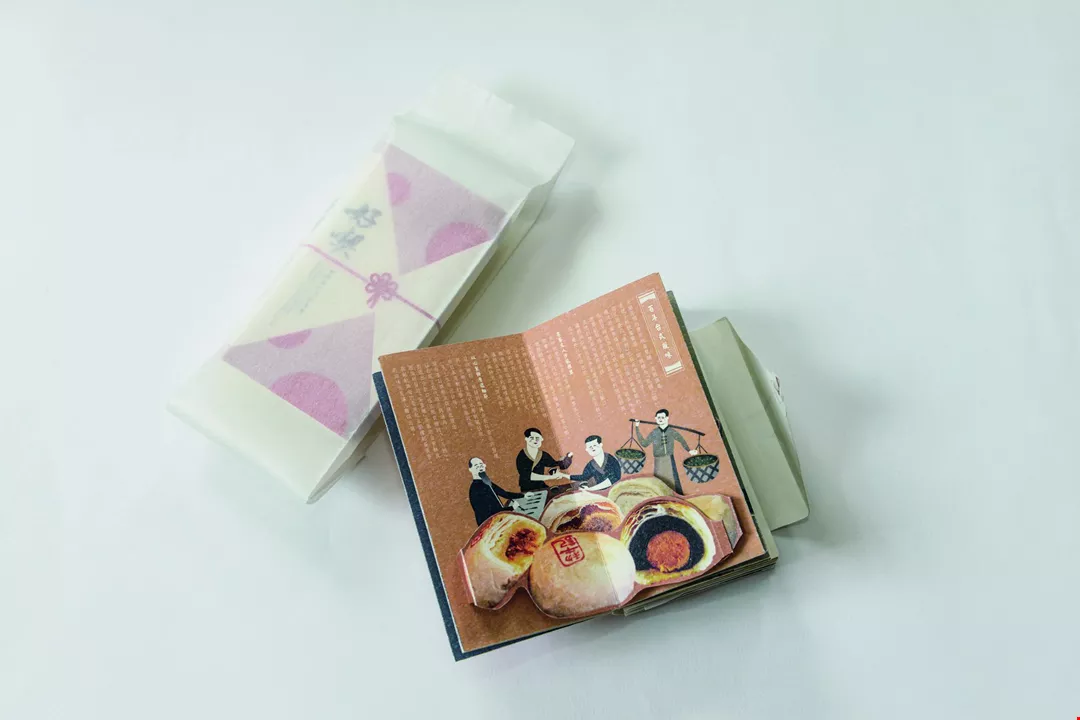
With their creative and cultural venture, Huang and Lin have found new ways to use paper as a medium, incorporating pop-ups of traditional pastries into a book and applying the paper arts to packaging.
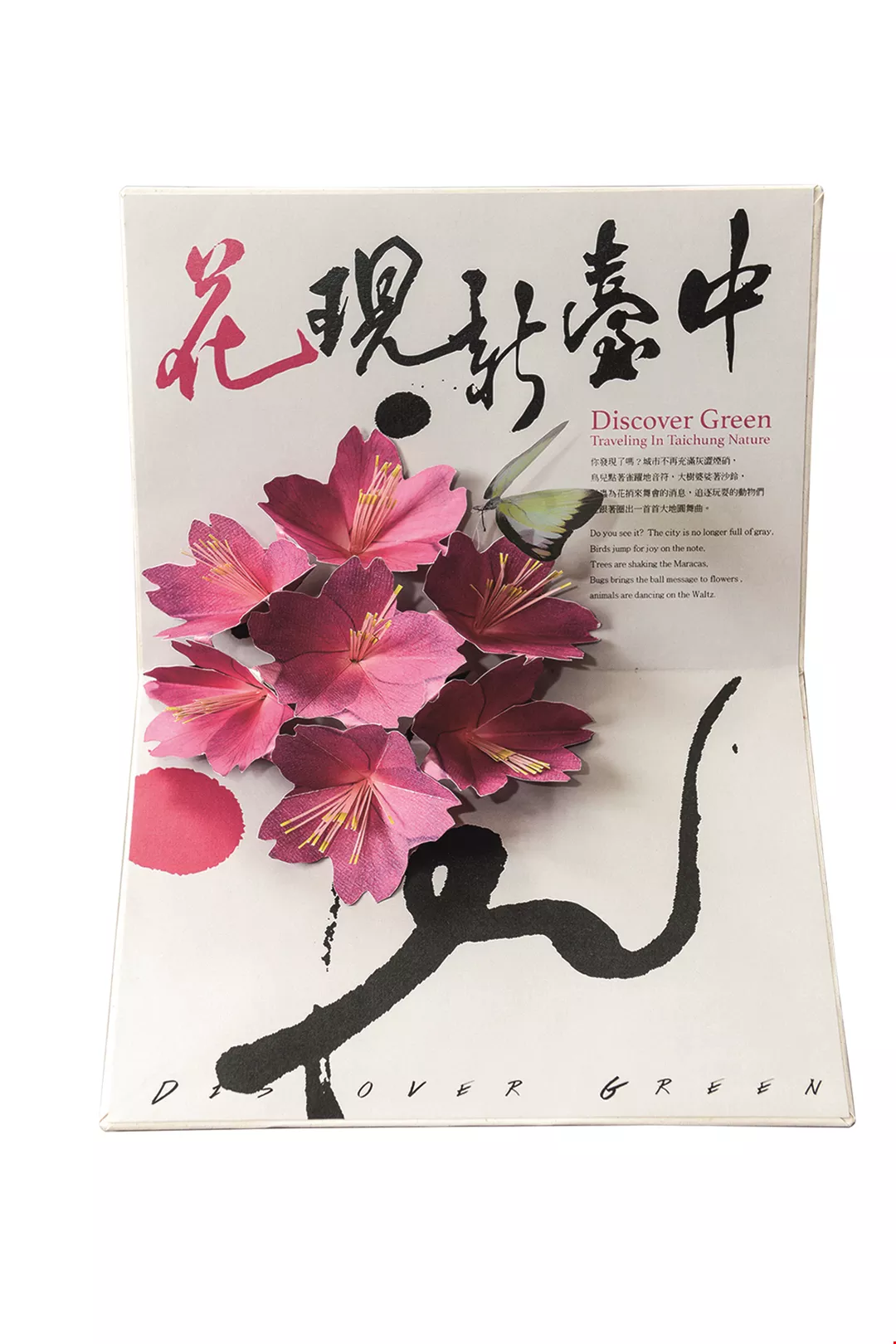
Lin and Huang’s pop-up books require a great deal of precision to produce. They first draft the complete design, then cut out the pieces of the pop-up structures, and finally glue the parts together.
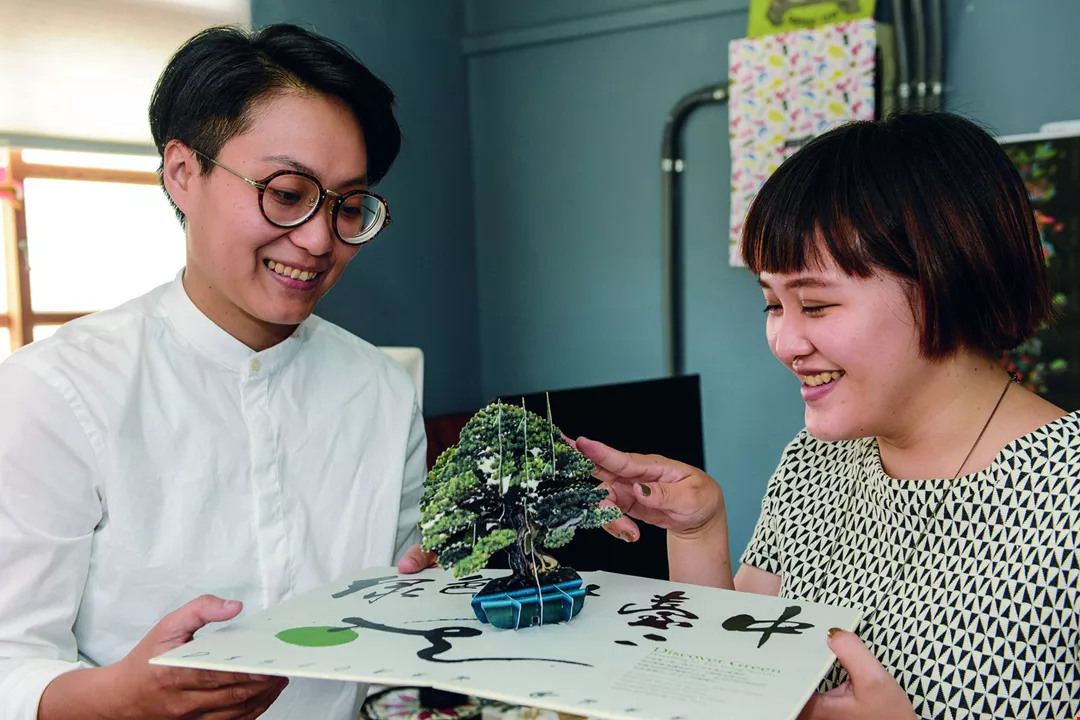
Paper structures have business potential in a variety of areas. Huang (left) and Lin are hoping to create a unique brand and believe that printed books will live on in the digital era.