Explaining the Information Age
Angela Lee / photos Chung Yung-ho / tr. by Mark Halperin
February 1986


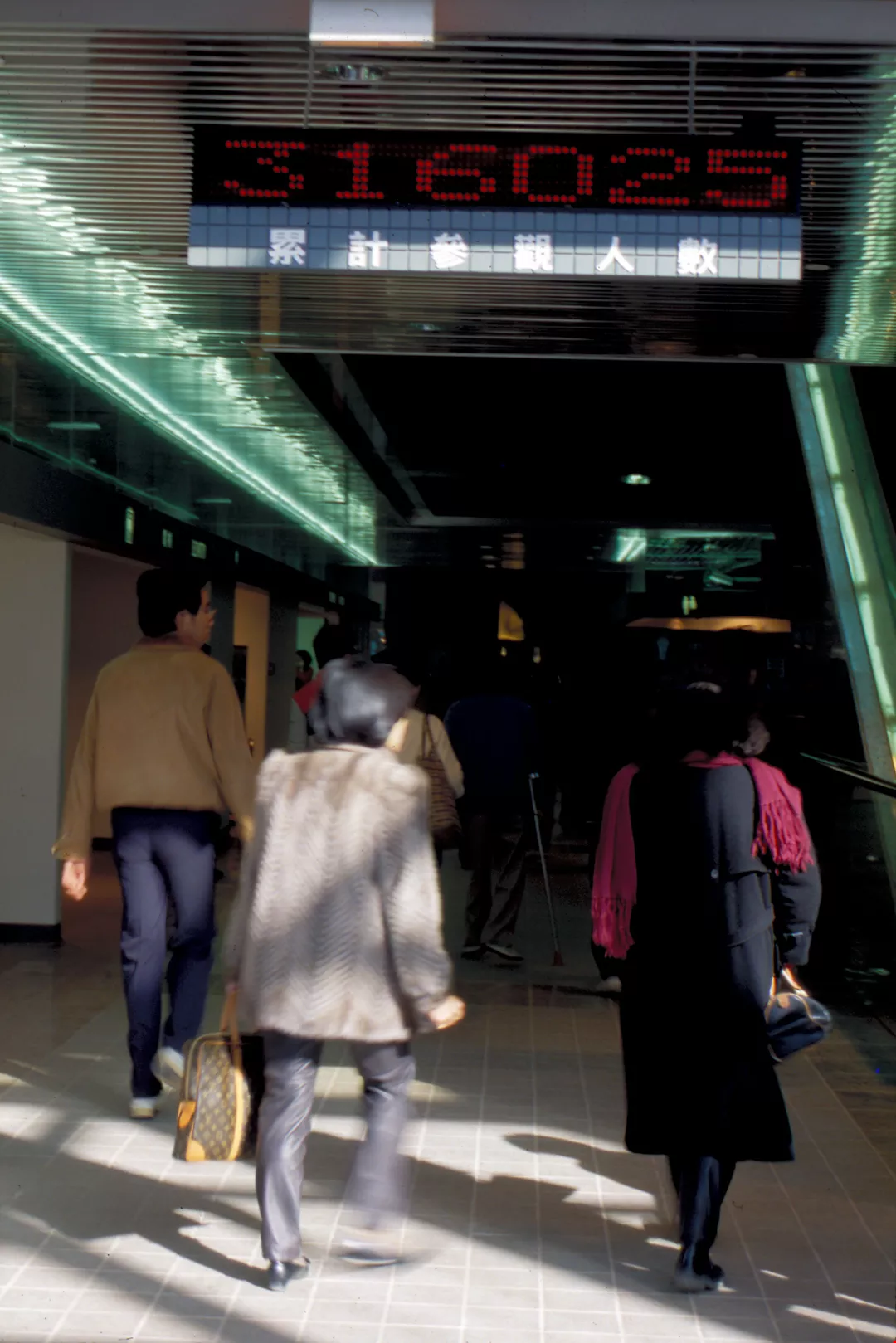
Information Month this winter found a new home. As the premiere show at Taipei's new World Trade Center, the exhibition drew over 360,000 spectators in five days. Skeptics called the proceedings "a big party," but anyone who has helped with such an event knows there is more present that what meets the eye. A subject encompassing a broad range of topics, Information Month produced more than its share of headaches.
Experts will tell you that the Information Age is well upon us, and the day when a considerable portion of our daily lives is automated or regulated by computers is not far off. Simply pushing buttons will give us our morning coffee, let us hold meetings with the Tokyo branch office without leaving our desk, and find us a suitable spouse. With these changes touching so many facets of life, selecting one over another to present in an exhibition poses difficulties.
Another problem involves appearances. Put simply, computers and software programs are not much to look at, and keeping spectators interested is something of a challenge.
The responsibility of solving these and other problems fell on the shoulders of Li Chia-an, section head of the Information Month activities subcommittee. Since the first Information Week, held in 1980, Li has been the man behind the scenes, handling the activities plan, the exhibit layout, inviting the participants, and most important, bringing everyone together. In graduate school abroad, he studied statistics and computer science and has worked in the computer and information industry since returning to Taiwan.
Li will readily admit that shows in other countries helped him in his planning. Japan's information industry display heads his list of influences. Each show is held at different sites, and they each have a separate theme, such as "Information and Life," with exhibits featuring both computer equipment and its applications.
The Information Week had its difficulties. Finding proper sites proved to be a headache, and many exhibits were held at the computer centers of various public companies, such as Taipower and China Petroleum. This approach left spectators tired and interfered with the work routines of the affected firms.
Says Li of that exhibition, "Before people had a fuzzy notion about the whole idea. 'What is Information?' So our slogan was 'Welcome to the Information Age.'" The themes of Information Month since have become more specific, such as "Information and Industry," "Information and Management," and "Information and Productivity," as the concept has become clearer in the public mind.
This winter the theme was "Information and Automation," a subject which was selected from a number of topics, such as "Information and Modernization," "Information and Economics," and "Information and Education." The theme covered those of previous shows, and set Li at once to work making dry, stiff computer equipment come to life for the public.
Planning the video pavilion show was entrusted to Cheng Yi-fen. Cheng feared watching videotapes for forty straight minutes might prove too much for an audience, and so elected to stage a concert to maintain spectator interest. The performance featured laser disks of the highest caliber, a computer-controlled laser light show, and even dry ice. Needless to say, it proved to be a highlight of the show.
As befitting an exhibition focusing on automation, Li turned over the theme pavilion design to the China Productivity Center. Plans were discussed and rejected, before a videotape explaining the state of automation in Taiwan was decided upon. Show designers figured on a total attendance of 300,000, which meant that a five-minute film would be seen by 480 people, and placed 483 20-inch television monitors at either side of the hall. If all went according to plan, viewers leisurely strolling the 100-meter distance from end to end could see the film in its entirety.
The engineers from the Industrial Technology Research Institute also lent a hand. As designers of robots, it was felt they could display some of their more interesting applications. The first idea, showing robots welding, was dropped for lack of interest. What finally carried the day was the robot as artist, with him drawing Cousin Lee, a cartoon created by Ranan R. Lurie.
A foreign guest this year played a prominent role. Matsushita Electric's Taiwan subsidiary invited the home company's exhibit design specialist to help with the show, and he brought with him an exhibit showing an automated home. A push of the button cooked dinner, turned on the air conditioning, and ran the bath water, in a display that left spectators in awe.
Other firms took similar pains with their exhibits, employing professional designers. Creation of a booth required close consultation between company technicians and designers, for without complete mutual understanding, the results would come off less than desired. For the most part, both sides got along quite amicably.
What did upset plans were the spectators. The show paralyzed traffic outside the World Trade Center, and once inside, matters improved little for those trying to see the show. Despite the careful schemes of Li and his assistants, apparently people have not mastered the art of looking as they go. When faced with a wall of monitors, they would stop and gaze, making it difficult for those behind to them to make their way into the exhibition. Many only saw the backs of people's heads, leading to calls for exhibits to be placed on raised platforms and decentralizing Information Month among a variety of sites.
Li Chia-an has an opinion on solving the crowd problem, which would be to scrap the whole idea of Information Month and replace it with one year-round exhibit. Japan has several long-term small-scale exhibits, which allow the public to drop in casually and play with the newest products the information industry has to offer. Plans are already being made in this direction, with the Electronics and Information Building, scheduled for completion in April 1987, to hold several exhibitions explaining to the public the fundamentals of the information industry. This might ease some of the problems at Information Month, and allow that exhibition to concentrate on introducing new products.
But before that day comes, many feel the designers of Information Month could still learn a thing or two from abroad. The Tsukuba Exhibition in Japan, for example, features shows with clear, definite themes, such as "Dwellings and Surroundings-Science and Technology for Man at Home," with each exhibit dovetailing with the others to present a message the public can readily understand. Particular attention is paid to turning every booth into a work of art as much as possible to reinforce the show's theme.
"Information and Automation," by contrast, had two themes, being "Automation via Information" and "The Automation of Information," which left the meaning of the show unclear. Many exhibits also lacked liveliness and seemed to have only a tangential relationship with the subject of the show.
Despite many criticisms, it must be admitted that the situation has changed considerably from the first Information Month five years ago, when only 120,000 people attended the show. The question no longer is "What is Information?" and that in itself may be reason enough to throw a big party.
[Picture Caption]
Li Chia-an has been organizing Information Month since the beginning.
Television monitors, lined up end-to-end for 100 meters, showed the introductory videotape.
Information Month attracted more visitors than any other exhibition in the country. This head-counting device is the latest product from the Industrial Technology Research Institute.
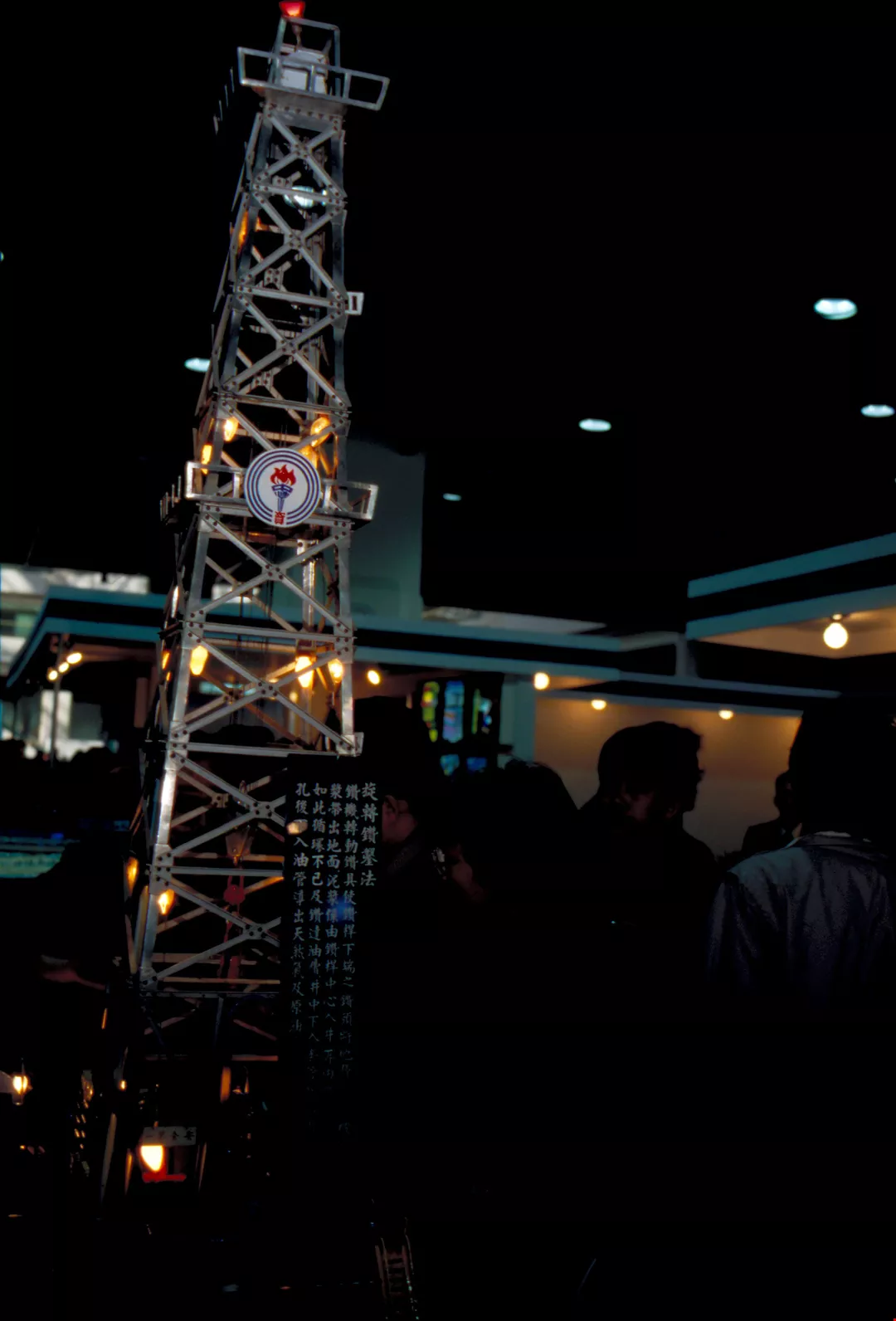
China Petroleum's exhibit included an oil derrick mock-up.
This year's video show featured a computer-controlled laser and light display. (Photo supplied by Li Yu-yen.)
Vacation days found scenes like this at the Taipei World Trade Center.
Having talked yourself hoarse, you still must wear a smile.
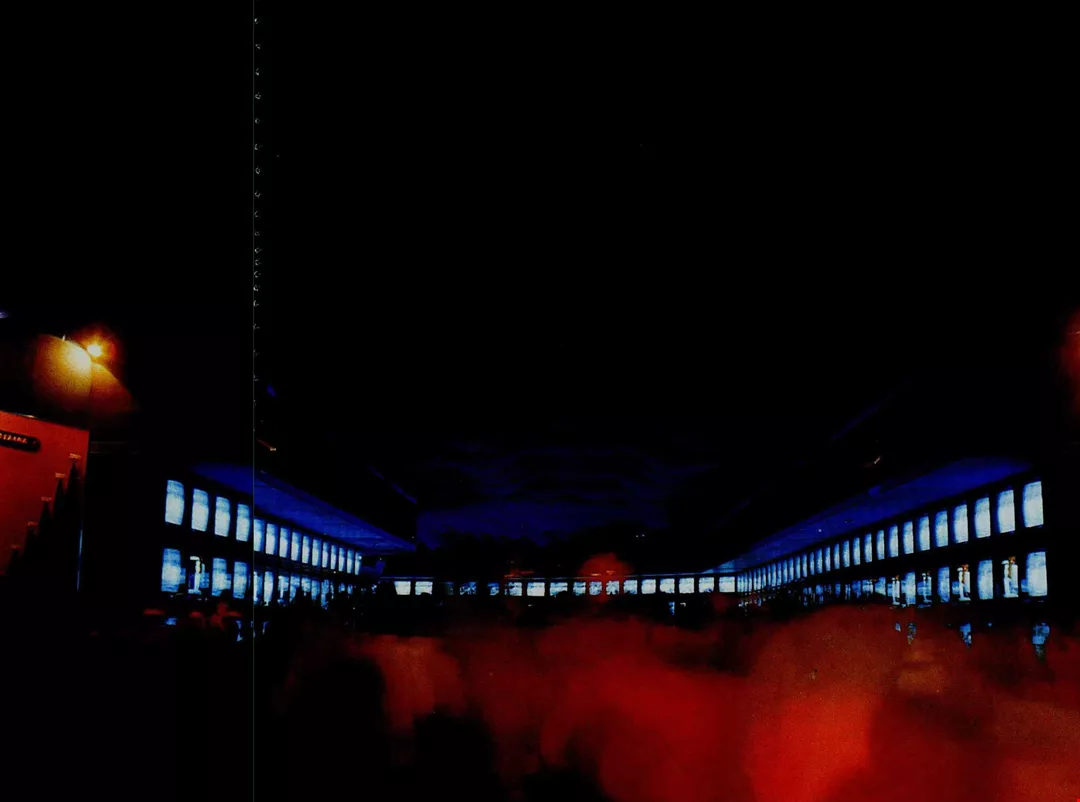
Television monitors, lined up end-to-end for 100 meters, showed the introductory videotape.
China Petroleum's exhibit included an oil derrick mock-up.
Information Month attracted more visitors than any other exhibition in the country. This head-counting device is the latest product from the Industrial Technology Research Institute.


@List.jpg?w=522&h=410&mode=crop&format=webp&quality=80)


