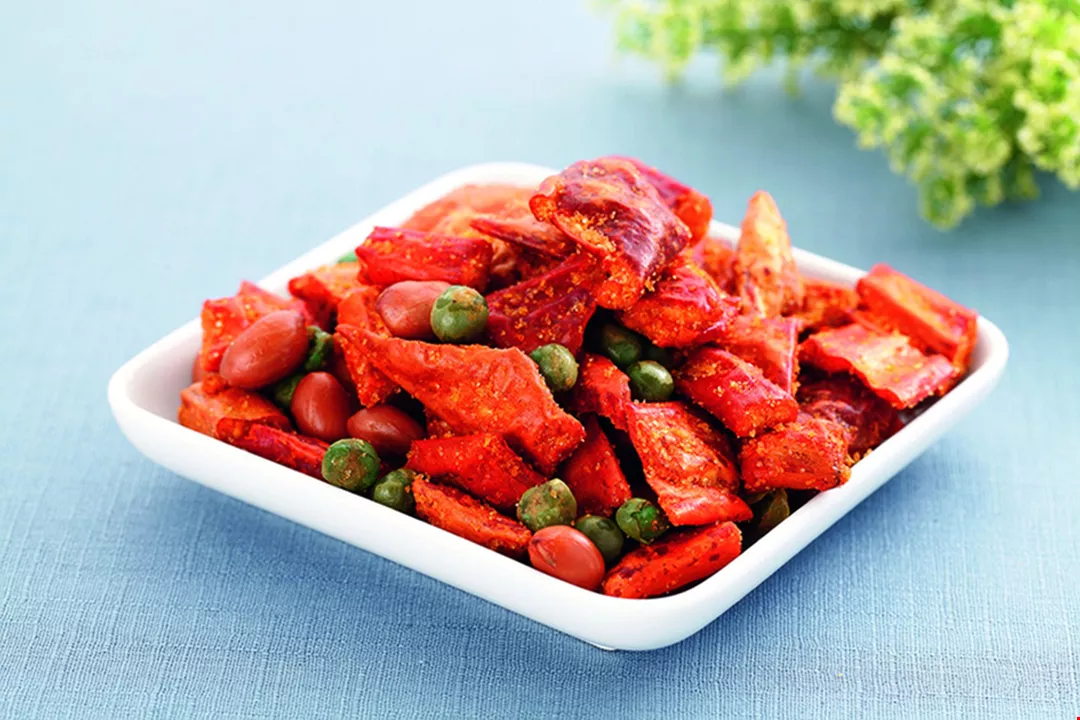
A Hot Business Venture: Lee Wei-chen’s Chili Crisps
Chang Chiung-fang / photos Chin Hung-hao / tr. by Scott Williams
July 2016
Chili peppers as snacks? Most people would never dream of such a thing. But Lee Wei-chen started a business making and selling exactly that.
Her DoGa Xiang Crisp Chilies earned top marks in the “novel snack” category at the first Rakuten Food New Talent competition. The crisps also spent more than 30 consecutive weeks on Rakuten Taiwan’s bestseller list, and have appeared on BusinessNext magazine’s Top 100 Online Sellers list several times. In 2016, they received a three-star Superior Taste Award from Belgium’s International Taste & Quality Institute (iTQi).
This is a story about chilies moving out of the wings and onto center stage, and about Lee finally achieving business success.
Chilies have long played a supporting role in culinary endeavors, making Lee Wei-chen’s decision to thrust them into the limelight a bit surprising.
Her DoGa Xiang Crisp Chilies have nonetheless completely rewritten people’s ideas about chilies. Fragrant and not unbearably hot, they have a crispy, crunchy mouthfeel. Lee sees them as more than a snack and suggests a variety of unusual ways to eat them, including sprinkled over ramen, rice balls, blanched greens, and even ice cream.

Lee Wei-chen’s path from business failure to creator of DoGa Xiang Crisp Chilies was a long one, and she still sheds a tear at the memory of the hard times along the way.
Unexpected success
What made Lee start a chili business?
“It happened pretty organically.” Lee says that she started off making and selling paocai, the spicy pickled cabbage sometimes known as Taiwanese kimchi for which chili oil is a key ingredient. Since good oils are expensive and inexpensive ones have chemical additives, she decided to make her own chili oil from fresh chilies. “Chili peppers are rich in vitamins B and C, carotene, calcium, and iron. It seemed a shame to waste them after making the oil.”
Lee began crisping the chilies left over after making the oil, and giving them to friends and people who bought her paocai. Customers responded with a variety of feedback. When some said the crisps were too oily, she bought a de-oiling machine. When others said the crisps needed added seasonings to stay interesting, she began flavoring them, even stuffing them with white sesame seeds to enhance their aroma.
Her crisps got better and better as she adjusted her recipes, and word began to spread. She soon began taking orders, and was selling more crisps than paocai within a year.
Taking her customers’ suggestions to heart, Lee developed and introduced ten new flavors, including lemon and spicy salt, Xinjiang cumin, Japanese curry, and Thai lemongrass.
She introduced her crisps online in 2010 and received a very warm reception from consumers. But her success attracted imitators. Seeking to establish the authenticity of her brand, she opened a flagship store in Tainan City’s Anping District in 2013.

In 2016, DoGa’s Crispy Plum chili crisps (right) won a three-star Superior Taste Award from Belgium’s International Taste & Quality Institute (iTQi), while their Wasabi (far right) and Jalapeño varieties each won a one-star award. (courtesy of Zhen He Food Company)
No longer a “failure expert”
Lee says that she had very little capital when she started her chili crisp business. “I built it from an initial investment of just NT$20,000.” She put NT$5,000 into ingredients, and then another NT$15,000 into a sealing machine, and that was it. “Consumers wouldn’t have understood how much time and effort I put into developing the chili crisps if I’d just packaged them in plastic bags.”
The boyish-looking Lee is only in her 30s, but has already had four businesses go bust, with her previous efforts to sell bubble tea, curry rice, apparel, and mini-motorcycles all failing. “My friends used to joke that I was a master of running shops into the ground,” laughs Lee.
Lee gained the courage to keep trying after repeated failures from something her grandmother, who raised her, used to say: “Spend your youth striving!”
In honor of her grandmother’s loving care, Lee named her chili crisps company after the Taiwanese pronunciation of her grandmother’s name.
DoGa is already widely known throughout Taiwan, but few people know how much Lee struggled to build the business. For all Lee’s strength and determination, the memories still bring tears to her eyes.
She explains that because chilies are an agricultural product, both the weather and the environment can cause their quality to vary. As a result, initial quality control is both expensive and time consuming.
“Whenever I get a shipment, I have to test the chilies’ spiciness by eating some raw,” says Lee. Producing the hand-made crisps presents its own particular challenge: washing and seeding the chilies leaves the workers’ hands feeling as if they’ve been smeared with chili ointment.
“I once had more than 30 employees quit in a single month,” recalls Lee. As a result, she is constantly looking for ways to improve the production process and create a better environment for her employees.
Lee has presented her chili crisps at food exhibitions in Macao, mainland China, and Japan, and has received positive responses everywhere she’s been. But that’s not enough for Lee. Back at home, she’s completed a new factory in Tainan’s Shanshang District, and would like to open it to tourists.
Lee is devoted to her friends but admits: “My greatest hope is that the whole world tries my chili crisps.” Here’s hoping the entrepreneurial “chili lady’s” dream comes true.
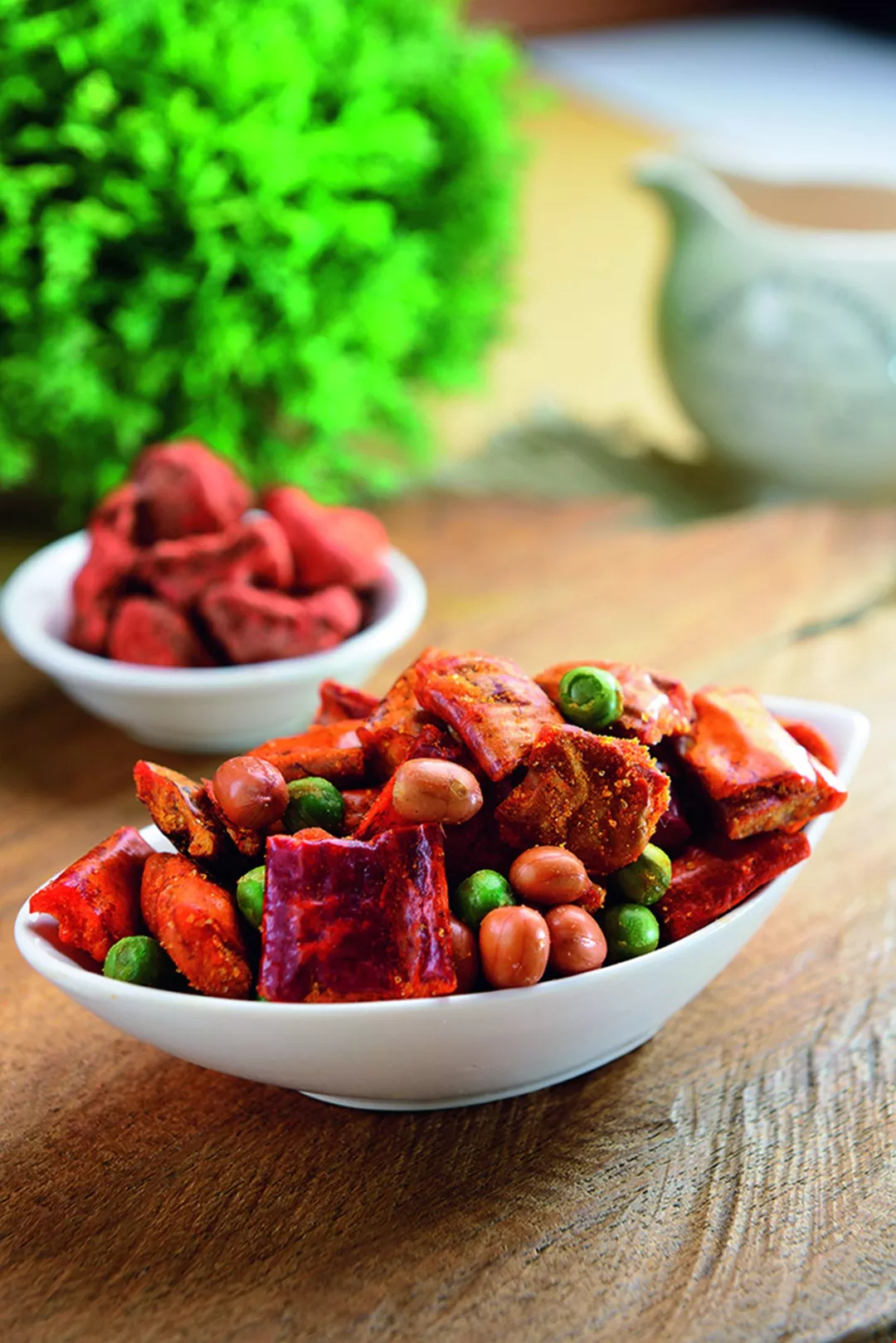
In 2016, DoGa’s Crispy Plum chili crisps (right) won a three-star Superior Taste Award from Belgium’s International Taste & Quality Institute (iTQi), while their Wasabi (far right) and Jalapeño varieties each won a one-star award. (courtesy of Zhen He Food Company)

Lee Wei-chen’s humility and warmth have contributed to DoGa’s growing popularity.
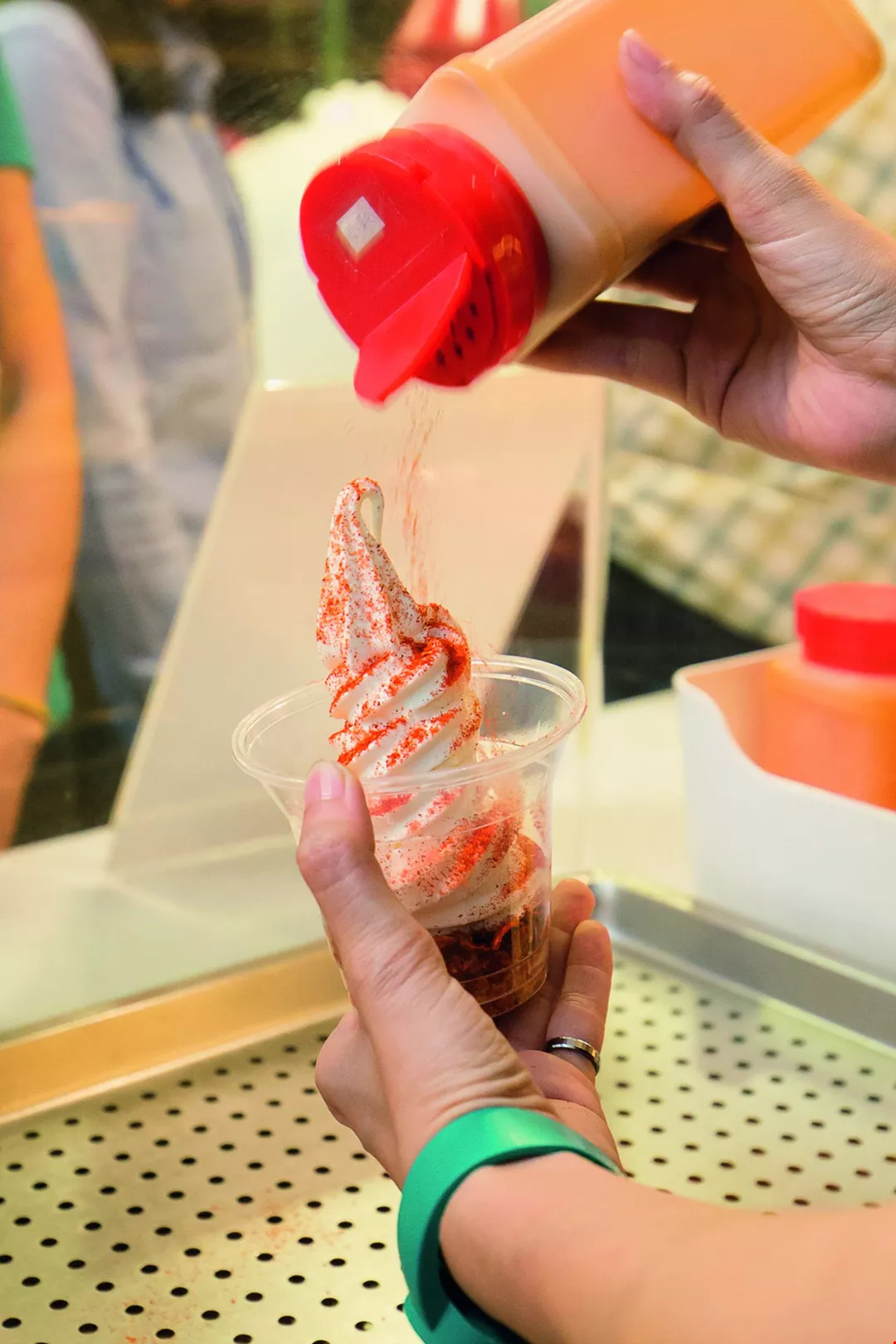
Many customers are interested in giving soft-serve ice cream with chili a try.

Lee Wei-chen has created an innovative sales model for her chili crisps by integrating cartoon-like “DoGa Transformers” into the interior design of her flagship store.