Taking the Cure: Medical Tourism
Teng Sue-feng / photos Chuang Kung-ju / tr. by Chris Nelson
March 2007


Vacation time! Off to Nagoya for an anti-aging injection of placental extract, then to "Plastic Surgery Street" in Seoul for a face-lift and a nose job. More time off? Thailand offers traveler healthcare centers in Bangkok, Phuket and Chiang Mai, where throngs of foreigners can have fun as well as a full medical exam. It's estimated that the global "medical tourism" business amounts to about US$7.7 billion. With such a huge market, it's no wonder that countries throughout Asia are vying to rope in customers.
Now Taiwan's late-blooming tourism and medical industries are poised to take a piece of the pie. What advantages does Taiwan have in this late start?
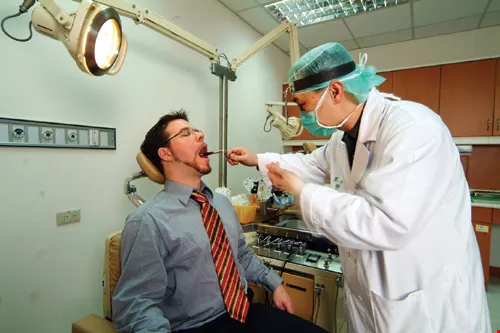
National Taiwan University Hospital has an excellent capacity for international healthcare drawing in overseas patients and sending doctors abroad. It is particularly celebrated for its prowess in infertility treatment and organ transplants.
Scene I: Tunghsin Clinic at Shin Kong Wu Ho-su Memorial Hospital (SKH)
Mr. Hsu has taken a 25-hour flight from Florida to Taipei. The 52-year-old, a restaurateur for over 20 years in the US, is making a special trip to Taiwan to see the doctor.
Though his American cardiologist believes Hsu's chest tightness and arrhythmia aren't serious, Hsu feels lethargic when driving, sometimes even nodding off. On top of this, his family has a history of heart disease. So he decided it would be best to go to Taiwan for a full checkup to solve his daytime drowsiness problems.
In June 2006, Hsu visited the sleep center at SKH, paying more than NT$10,000 out of pocket to spend a night sleeping in a comfortable single room with sensors fitted to his scalp, chest and nasal cavity, recording whether there is any unusual twitching or restlessness during his sleep. Eight hours later, the computer spat out a report of several hundred pages, detailing data on his breathing, brainwaves, electrocardiogram readings, esophageal pressure and oxygen concentration. The doctor explained that people who snore often have high blood pressure, and insufficient oxygen intake will affect heart function during sleep. He recommended that Hsu wear a respirator while sleeping so he can breathe more easily. But if he doesn't want to wear it, he should lose some weight.
In late November he returned for a follow-up visit. The doctor saw that his weight had dropped from 90 to 80 kilograms, and said happily, "Next we just have to fix your allergy problems, and then your sleep quality will improve."
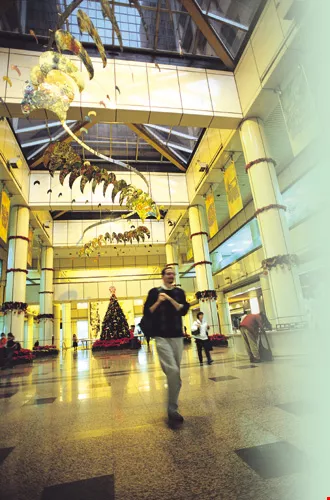
National Taiwan University Hospital opened the International Medical Service Center in late 2005, mainly serving foreign residents in Taiwan. According to news reports, heads of state of diplomatic allies like Palau and the Solomon Islands often take the opportunity to undergo physicals at NTU, Veterans General or Shin Kong Hospitals during visits.
Scene II: Chingfu Clinic at National Taiwan University Hospital
Steve, 45, walks into NTUH's Chingfu Clinic. The door opens, revealing a spacious, sofa-strewn room. He's barely seated when an English-speaking nurse leads him into the examination room.
Having lived and worked in Taiwan for many years, Steve, whose wife is Taiwanese, was feeling lumbar pain from rachioscoliosis (lateral curvature of the spine), and came to get it looked at. He didn't like the crowded, time-consuming waits in Taiwan's hospitals, so in August 2006, after learning that NTUH was opening its International Medical Service Center, he immediately booked an appointment. He wanted to come at the scheduled time and see the doctor without delay.
"In the US, seeing the doctor is about money, money, money; in Taiwan it's about connections, connections, connections," says Steve. In the US, seeing a specialist averages about US$200 a visit, but at NTU's International Medical Service Center the registration fee is NT$500 and the consultation is NT$1500. Even with the extra fees for the exam and prescription, it's still only a third of the cost in the US.
But low medical fees were not Steve's main criterion; he cares more about quality of service. For US$35,000 in annual premiums, his insurance company will bear full medical expenses, even paying return airfare to Taiwan should he fall ill on an overseas business trip. He believes NTUH doctors care, referring him to Wanfang Hospital for Pilates training for his back muscles. Few US doctors would do such a thing, and it's evident that NTUH's doctors genuinely work in the interests of the patients.
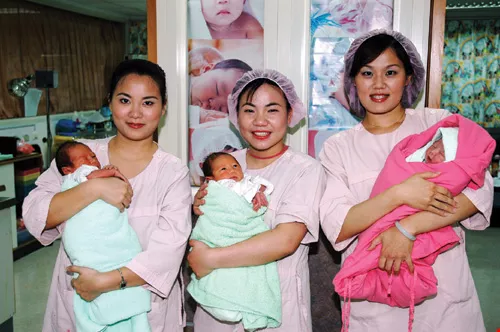
National Taiwan University Hospital has an excellent capacity for international healthcare drawing in overseas patients and sending doctors abroad. It is particularly celebrated for its prowess in infertility treatment and organ transplants.
After the "healthcare miracle"
After Taiwan's National Health Insurance came into effect in 1995, the quality yet affordable healthcare system was deemed a "healthcare economic miracle." But in the last few years, the NHI's finances have been overburdened, leading to incremental decreases in coverage and restrictions on healthcare providers.
The medical industry admits that if they were doing well, they would not develop medical products not covered by NHI. But by uniting the healthcare and tourism industries, travelers in Taiwan for business or pleasure could go for a check-up, skincare treatment, or dental exam while they're here. This is a badly needed remedy for boosting the competitiveness of medical institutions. And the Chinese diaspora and foreign white-collar workers living in or visiting Taiwan are two major groups they would love to solicit.
In May 2006, Time magazine's article "Outsourcing Your Heart" pointed out that due to high US medical costs, more and more underinsured American patients are choosing to undergo medical treatment in India, Thailand, Singapore, Malaysia and other inexpensive Asian countries. Taking Bangkok's Bumrungrad International Hospital as an example, in 2005 some 55,000 foreign patients poured in, up by 30% from the previous year, and three fourths of them came from the US.
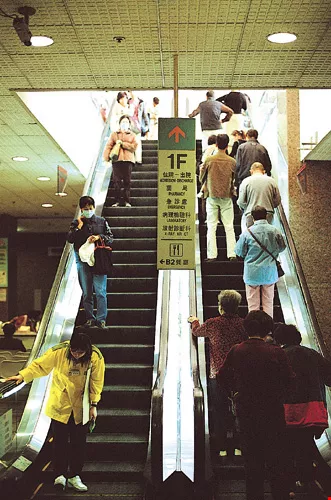
Taiwan's National Health Insurance system was deemed a "healthcare economic miracle." But in the last few years, decreased coverage has affected healthcare providers, who have had to demand out-of-pocket payment for cosmetic surgery, dental implants and physicals. Shin Kong Hospital (left) and NTUH have both set up comfortable, uncrowded self-pay outpatient services.
Medical tourism strategies
In 2003, the Executive Yuan's Science and Technology Advisory Group drafted the THIS Program for the Strategic Service Industry, covering telecare, health tourism, and integrated medical systems, with health tourism seen as presenting the greatest business opportunity. Private hospitals, with a keen nose for the market, began active deployment early on, and the first step was to solicit the people of Taiwan.
According to Alex Hung, vice president of the Shin Kong Medical Club, five years ago SKH purchased NT$100 million of equipment to build their PET Center. At that time hospitals in Taichung and southward didn't yet have such costly equipment. The hospital, focusing on preventive medicine and early cancer screening, attracted clientele from central and southern Taiwan who would come up north for the day for a physical, relaxing in the nearby Peitou hot springs while they were at it.
But because of the lack of mature cross-industry cooperation between the medical and travel industries, in four years SKH didn't attract much more than 100 people, a disappointing result.
"We're testing the waters, learning by doing. We need practical implementation before we can learn where the problems lie; for example, how hospitals and tour operators can split the profits and share the management and marketing expenses," says Hung. "We must first operate in the domestic market before we can expand outward and attract foreign clientele."
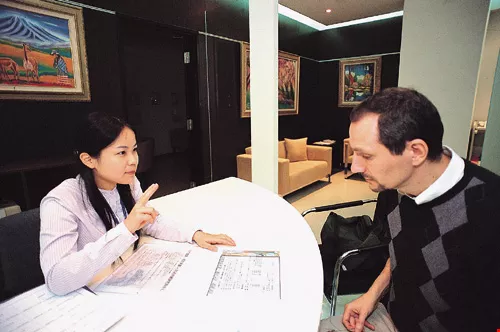
Taiwan's National Health Insurance system was deemed a "healthcare economic miracle." But in the last few years, decreased coverage has affected healthcare providers, who have had to demand out-of-pocket payment for cosmetic surgery, dental implants and physicals. Shin Kong Hospital (left) and NTUH have both set up comfortable, uncrowded self-pay outpatient services.
The first model: health tourism
In late 2005, the Department of Health granted more than NT$3 million to subsidize the Hengchun Branch of Pingtung Hospital, with the help of Kaohsiung Medical University and Victory Biotech, in setting up the Hengchun Medical Clinic (HMC), a model medical tourism station, at the Howard Beach Resort Kenting. Physicians, nurses and cosmetologists were stationed in the hotel, promoting services like intense pulsed light therapy, diamond microdermabrasion and aromatherapy. The Resort then offered VIP discounts on lodging, and in one year more than 1,000 domestic tourists have visited.
Howard Beach Resort president Chang Chi-kuang says he was excited when he first heard about this cross-sector project, which also gained the strong support of the board of directors. Although the profit is not great from the 660-square-meter space leased to the HMC for a nominal monthly rent of NT$20,000, the Howard's lodging rate went up by 10%, a minor win-win.
Chang figures that the reason for the limited growth of the clinic's model so far is that domestic tourism is mostly of the two-days-one-night or three-days-two-nights model, which is too short. This is quite different from overseas travelers going to Phuket for a week to 15 days of R&R, so there isn't ample time for arranging beauty and skincare itineraries.
Also, if the doctors and nurses stationed at the hotel only served customers who irregularly stop in, then revenues would be insufficient to cover costs. A better solution would be close cooperation with travel agents, arranging courses of treatment in advance for tour groups. But because laser beauty treatment is classified as an invasive procedure, tour operators worry about professional liability in the event of medical disputes. The involved parties have yet to define the boundaries.
Medical tourism unites the two industries of tourism and medicine. The question remains of which industry should dominate in health tourism, in view of their different operating models.
Hung states that although health tourism is targeted at the healthy, it's those consumers who value healthcare over fun who would participate in a health tourism package. Because health exams are a major, serious procedure in life, consumers would not necessarily book a healthcare package even with low prices or freebies.
Hsueh Jui-yuan, director of the Department of Health's Bureau of Medical Affairs, maintains otherwise. He believes that the HMC follows the "tourism first, health second" model, which can draw in retirees with time and money, providing them with drug consultation, checkups and dietary advice for chronic illness while they have fun in Kenting.
At any rate, the experience of the HMC is just a start. Hsueh notes that Peitou, Wulai, Chihpen, Ilan and Hualien are well suited for following the Austrian model, promoting tourist and folk remedies such as hot springs, hydrotherapy and massage tacked onto their itineraries. Currently most hot springs areas offer similar services. This is health tourism that doesn't involve invasive medical procedures.
The second model: medical tourism
When compared to health tourism, the second model focuses more on medical treatment. The international healthcare model, which draws overseas patients to Taiwan for treatment, has a greater following. But this is a market that Southeast Asian countries have long been vying for, so how can the latecomer Taiwan catch up?
Hsueh stresses that though Thailand and Korea's cosmetic surgery, Singapore's physicals and India's ophthalmology have a head start, "the market threshold for such theme treatments is not great. Taiwan's medical technology is on a par with those countries, and there is considerable potential even for us to export our talent."
NTUH's International Medical Service Center, opened in late 2005, serves foreign businesspeople, envoys, and overseas Chinese residing in Taiwan. Foreign patients, who come in on word of mouth, average more than 20 a month.
Service center CEO Lin Ho-hsiung points out that international healthcare is divided into domestic and offshore categories. World-renowned hospital Johns Hopkins Medicine (JHM), attracting patients from over 90 countries for treatment each year, can serve as a model for Taiwan's international healthcare. In the past several years, Hong Kong, Singapore and Malaysia have been vigorously developing international healthcare, drawing in wealthy businesspeople from the Middle East, China and Indonesia, as well as Americans and Europeans who can't afford high medical costs, for medical treatment. And especially after the 911 attacks, many Middle-Eastern businesspeople worry about discrimination in the US, turning instead to Asian countries.
Lin stresses that NTUH is known throughout Asia for its expertise in hepatitis, organ transplants and cancer treatment, having created its own niche. But due to difficulties sourcing organs for transplants, international healthcare would be better suited to specific treatments such as liver disease, infertility and cardiovascular disease treatment, open-heart surgery, and in vitro fertilization. As for services such as Lasik, cosmetic surgery and dental implants, there are numerous choices offered by other domestic healthcare providers, often at very competitive prices.
Doctors crossing borders
Besides bringing customers in, international healthcare also sends doctors out.
For example, JHM collaborates with the National University Hospital in Singapore, renting a floor of NUH specially for cancer treatment and sending its own medical and nursing staff to provide services there, effectively turning it into an offshore branch of JHM. Likewise, Taiwan's Chang Gung Memorial Hospital and Li Shin Hospital have set up branches in Xiamen and Shanghai. These are prime examples of exported medical care.
In 2004, the Taiwan Businessman Association in Vietnam invited representatives from NTUH to set up hospitals in Vietnam. There are an estimated 30,000 Taiwan businesspeople in Vietnam, a considerable number. Taiwan is also Vietnam's biggest investor nation, and NTUH has conducted two investigations there with very promising prospects.
Lin notes that NTUH plans to cooperate with private-sector enterprise. Besides building hospitals in Vietnam, it will provide high-quality healthcare to Taiwanese businesspeople there, and intends to bring in Taiwan's efficient, quality medical technology. In the future, it will further promote the concept of the healthcare industry with the hospital as the center, forming a medical park for manufacturers of pharmaceuticals, medical equipment, testing and diagnostic technologies and rehabilitation equipment as a platform for cooperation between the medical industries of Taiwan and Vietnam. It's even possible to move lower-tech medical business (such as manufacture of gloves, surgical masks and suture thread) to Vietnam, not only advancing the development of Vietnam's healthcare, but also heralding the internationalization of Taiwan's healthcare.
"Vietnam is on friendlier terms with Taiwan than are other Southeast Asian countries, and recognizes Taiwan's physician's licenses. Early on, the US and Japan welcomed Taiwanese doctors with open arms to practice locally, but after they had enough medical staff, they set the bar higher. Currently Taiwan-Vietnam relations are great, and now is the ideal time to pioneer international healthcare," says Lin.
Moreover, for NTUH, cooperation with local healthcare providers in foreign lands is the best method with which to reach prospective clients.
"This is like having a forward command post in that area. In the future we can transfer patients we are unable to treat," Hsueh stresses. "More importantly, different strategies are needed for different countries. Because Taiwan's healthcare providers have little contact with European and American hospitals, the chance to reach out to Western patients is not great, so we can first set our sights on the more than 50 million Chinese living in the US and Canada, and refer patients back to Taiwan through local overseas Chinese doctors. It will be more effective than marketing ourselves."
Ads for healthcare?!
Taiwan's medical technology is competitive, with seemingly excellent prospects. But after several years the pace of promotion has slowed. What's going on?
Lin notes that supporting measures for domestic medical tourism are inadequate. For instance, the English skills and level of internationalization in Taiwan's hospitals are inferior to those of Thailand and Singapore. Furthermore, visa acquisition is inconvenient; for example, each week the Thai government sends specialists to hospitals to process visas for international patients, and Singapore's government strongly promotes international healthcare in the international media. None of this is feasible through individual hospitals.
Promoting Taiwan's superb healthcare to the world for prospective customers to see requires heavy advertising. The problem at this stage is that the Medical Care Act (MCA) prohibits healthcare institutions from soliciting patients by inappropriate means; or they may be fined NT$50-100,000, with successive fines for multiple violations. The MCA strictly restricts advertising, tying the hands of those in the tourism and medical industries.
Bureau of Medical Affairs director Hsueh notes that the main purpose of the MCA is to prevent misleading or malicious healthcare advertising. Medical tourism is actually creating a dilemma when it comes to sparking demand. This type of advertising most often arises for things like physicals, PET scans and cosmetic surgery. The Department of Health is still mulling over what to do, and may first loosen restrictions on ads for out-of-pocket, non-invasive medical treatment.
Hsueh agrees: price competition alone is not enough. Taiwan's healthcare providers also lack medical personnel fluent in English and Japanese. Each year more than 3 million international tourists visit Taiwan, with Japanese (41%) and North Americans (16%) at the fore.
"This is a chicken-and-egg problem. Since many healthcare providers haven't seen the business opportunity yet, they're unwilling to train their staff in foreign languages. But without such staff, if foreign patients see an ad and make a phone call, the staff can't even reply in English," Hsueh says. The government will make advance preparation in the short term to promote language training for medical staff.
According to the Taipei World Trade Center, around 70,000 international business travelers come to Taiwan each year. It is estimated that their average expenditure per person is ten times that of foreign tourists. If business travelers can be enticed to spend on physicals or other healthcare services while in Taiwan, it would definitely be a boon to Taiwan's medical tourism.
The Taiwan External Trade Development Council (TAITRA) has plans: once medical advertising restrictions are loosened, they will consult international medical tourism specialists through TAITRA's 44 overseas locations, inviting them to Taiwan to discuss ways to cooperate.
A 1.3-billion-person market
But training medical staff in foreign languages can't be done in a day. Many in the medical field have wondered, with China's market of 1.3 billion people who speak the same language as in Taiwan and share the same culture, why must we feel so powerless? Why can't we open up to them?
"The policy has been liberalized in theory. The Department of Health has already said to the Mainland Affairs Council that no national security problems are involved with mainland Chinese coming to Taiwan for treatment. Also, there is no language barrier and the market is large. Now it depends on the progress of the MAC: perhaps it will be launched at the same time as mainland Chinese tourism," Hsueh says.
Chen Kai-chih, president of the Taiwan branch of International SOS, brings up the recent tragic accident in Nantou involving a Chinese tour group. The strongest impression the injured had of Taiwan was of the hospital's meticulous care. Many patients who recuperated in hospital for three weeks wanted to stay behind, because the service quality of hospitals in China lagged at least five years behind that of Taiwan.
Chen, who specializes in transferring foreign patients back to their homelands, says they transferred Americans living in Thailand to Taiwan for treatment. Taiwan is safer than Thailand; at least there would be no coups with tanks in the streets.
Medical professionals acknowledge that if Southeast Asian countries, which are behind in basic infrastructure and political stability, dare to promote their services so vigorously, then Taiwan's healthcare providers have even more reason to show off their advantages and specialties.
As for India, a Financial Times article points out that the majority of foreigners do not identify India as a safe country for healthcare. Foreigners feel ill at ease at India's dense population, garbage-strewn streets, urchins in rags and general filth and disorder. This is not to mention their problems with medical ethics--the Indian government doesn't even take good care of its general population, instead diverting scarce medical resources to treat rich foreigners. This is unfair to the Indian people.
But India's international ambitions cannot be taken lightly. If Taiwan's medical tourism industry wishes to ascend the world stage, it must also jump on the global bandwagon of hospital accreditation, because this affects whether foreigners coming to Taiwan for medical care can be covered by insurance companies.
In 1999 the Joint Commission on Accreditation of Healthcare Organizations (JCAHO) began offering evaluations of healthcare providers outside the US through its international arm, Joint Commission International. JCI accreditation is recognized by the World Health Organization, and Singapore even ordered that all its hospitals acquire such recognition. Currently in Taiwan, only Wanfang Hospital in Taipei and Min-Sheng General Hospital in Taoyuan are accredited. Healthcare providers interested in getting into the medical tourism market must make the effort to obtain international accreditation.
Technology advances by the minute, with its high efficiency and speed of product internationalization. At a computer exhibition, if a consumer sees a newly designed laptop computer, he may buy it on the spot if he likes it. But the internationalization of medical services is different: the pace is slower because it involves personal safety. Healthcare providers and patients must be cautious shoppers, and time is required for patients to build enough confidence to make recommendations after experiencing competent care.
Three great trends of the 21st century are aging population, globalization and the rise of the knowledge economy. These changes are all closely linked to the healthcare industry. The internationalization of Taiwan's healthcare inevitably needs to catch up with the tide of globalization. In addition to bringing Taiwan's healthcare standards to international levels, it is necessary to promote Taiwan's medical prowess to the world.
SWOT Analysis for Internationalizing Taiwan's Healthcare
trengths
Taiwan's healthcare standards are high, but fees are lower than in Europe, the US and Japan, offering high quality at low costs
Taiwan is well developed in liver disease treatment, open-heart surgery, infertility treatment, cosmetic surgery, physicals, and laser surgery
Healthcare quality is higher than in India, Malaysia and Thailand, and prices are reasonable
Treatment is convenient and efficient
eaknesses
Insufficient English skills among medical staff
Lack of packaging and marketing; the cooperation of the medical and tourism industries remains poorly developed
Regulations need relaxing, such as allowing mainland Chinese people to receive treatment in Taiwan; this is an important issue for early development of medical tourism
pportunities
An international-standard treatment environment already exists; the market scale is vast
Chinese people, who have the same culture and language, can be attracted from around the globe, including white-collar workers from China
hreats
Southeast Asian countries have the advantage of earlier market entry


@List.jpg?w=522&h=410&mode=crop&format=webp&quality=80)


定稿-1@List.jpg?w=522&h=410&mode=crop&format=webp&quality=80)
