Taiwan’s unique semiconductor ecosystem
Yen also stresses the company’s goal of building “the nervous system of the digital world.” Amid surging demand for AI servers, Realtek has entered the SSD controller chip market. It also has a major presence in fiber-optic network access systems, network switches, Ethernet, USB hubs and other high-speed connectivity technologies. The firm continues to work with Taiwan Semiconductor Manufacturing Company (TSMC) and other foundry partners with advanced manufacturing process technologies to develop smaller, energy-saving lower-power chips with greater computing capacity.
Asked about Taiwan, Yen responds without hesitation that its integrated semiconductor supply chain is an unmatched advantage. IC design houses, foundries, and packaging and testing companies are all located on the same island and share a common language. Their representatives may even discover that they are former schoolmates, further lowering barriers to communication and collaboration.
“We have dedicated teams that discuss with TSMC and UMC [United Microelectronics Corporation] how to reduce power consumption. Other teams know packaging inside out. By revising our designs and working closely with packaging companies, we can develop low-cost and competitive packaging solutions that are easy to produce.” This symbiotic relationship—built on constant face-to-face communication and an intuitive understanding between upstream and downstream partners—has turned Taiwan into “Silicon Island” with an industrial cluster that other countries find hard to match. The citation accompanying Realtek’s 2026 Presidential Innovation Award likewise praised the company for “improving the semiconductor ecosystem and strengthening Taiwan’s Silicon Island cluster.”
A Historic Turning Point: A 1997 Realtek Chip Paves the Way for Google’s Rise
In 1997, network chips were dominated by giants such as Intel. Realtek created the world’s first “three-in-one” Ethernet chip, integrating an analog IC, a baseband processor, and a network protocol chip into a single IC. This turned once-complex, expensive networking technology into an everyday product that ordinary consumers could afford.
Realtek not only demonstrated that Taiwanese IC design firms could compete with international giants in networking, it also helped catalyze the rise of Taiwan’s networking equipment industrial chain, including firms like Accton and D-Link. By making networking more affordable, Yen argues, Realtek helped fuel accessibility to higher internet speeds and the rapid growth of the global online population, clearing the way for the later rise of Google.
Embracing and Shaping International Standards: Realtek’s Global Strategy
Without standards, the semiconductor industry cannot expand in scale. Realtek Vice President Huang Yee-wei adds that a key reason the company can move quickly to fill supply gaps when competitors face shortages is its wholehearted embrace of international standards.
Many industry peers use proprietary protocols to lock in customers, but Realtek actively participates in standards organizations including the Institute of Electrical and Electronics Engineers (IEEE) and the Wi-Fi Alliance and contributes to specification development. One example is the standard for Energy Efficient Ethernet (EEE): Realtek engineers unselfishly contributed technical proposals to the IEEE 802.3az task force which established the global standard for EEE. This strategy of helping turn technology into international standards not only prevents Realtek from being locked out by rivals, but also elevates it from “adapting” to standards to taking a global leadership role in “shaping” them.
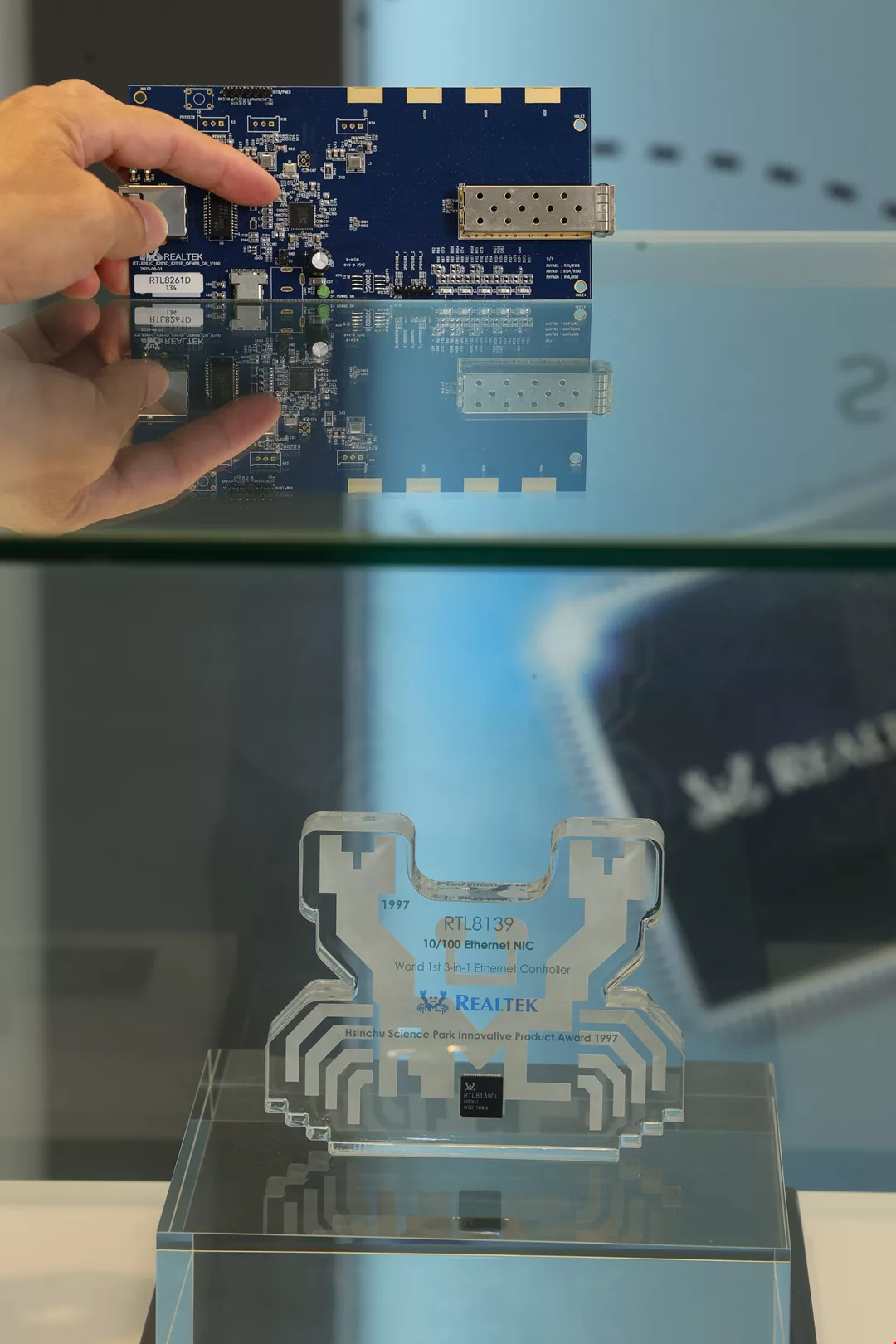
A display at Realtek pairs the world’s first “three-in-one” Ethernet chip, introduced in 1997 with a speed of 10 Mbps, with a current 10 Gbps chip. In less than 30 years, the chip has shrunk to one-quarter of its original size while data transfer rates have increased 1,000-fold.
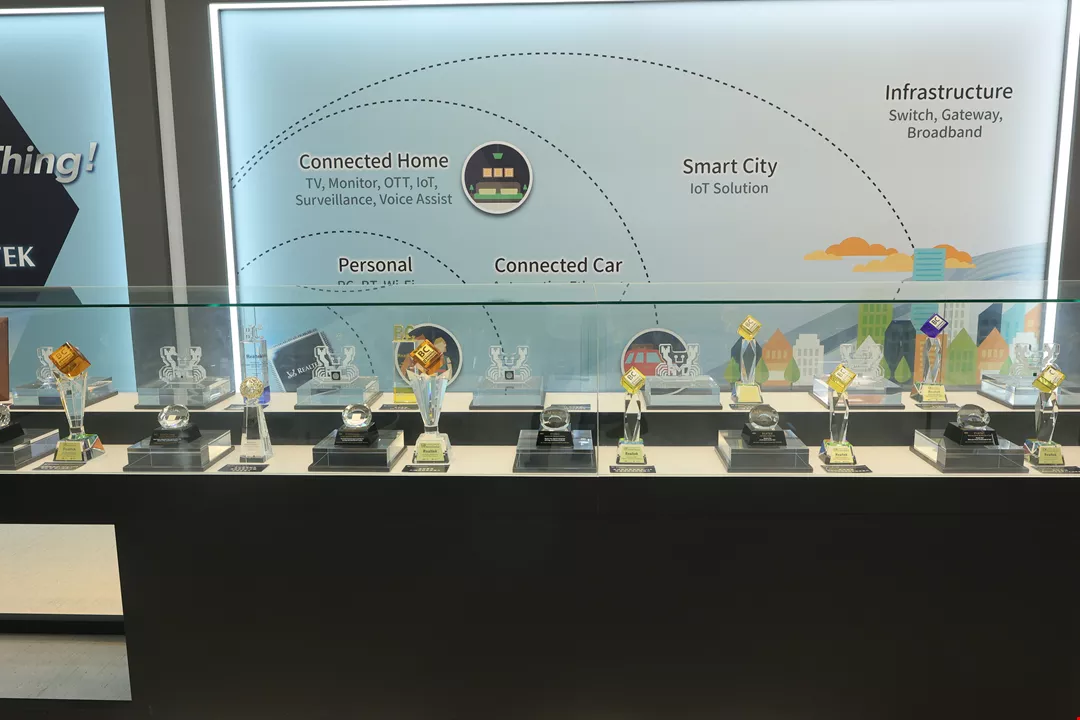
Reflecting its emphasis on R&D, Realtek won COMPUTEX Best Choice Golden Awards in 2023 and 2025 for its Edge AI USB Camera Controller and Ultra-Low-Power Multimodal AI SoC, respectively.
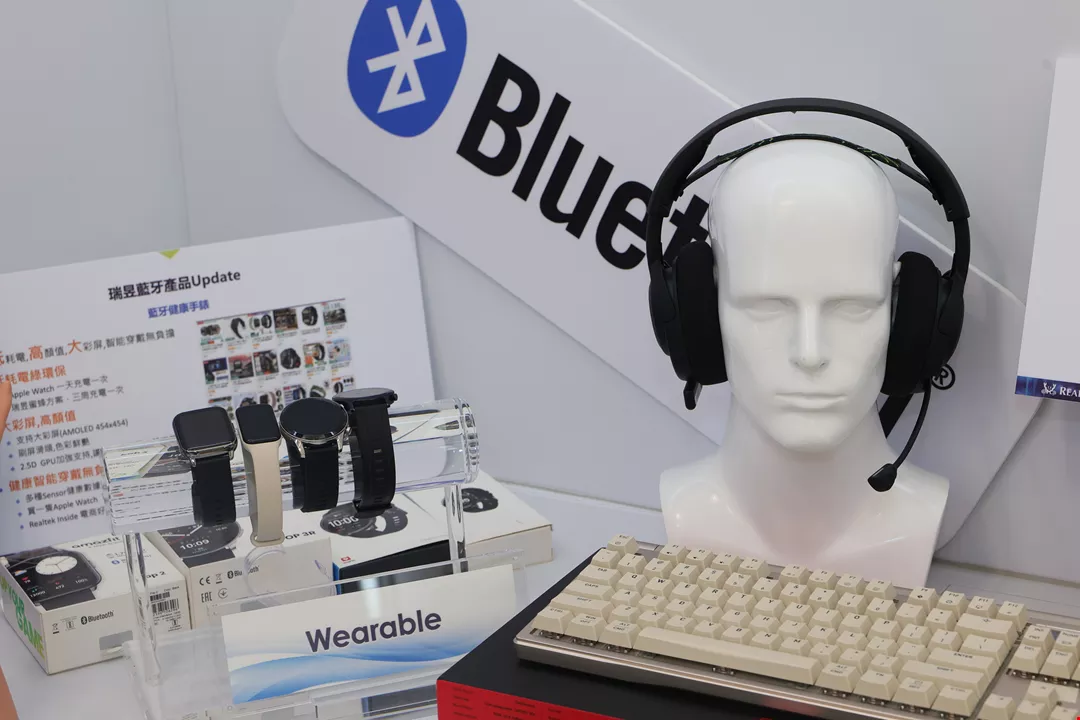
Realtek has extended its technology into high-barrier sectors such as gaming headsets, where “zero latency” is critical, creating blue-ocean opportunities through high-tech value-added.



@List.jpg?w=522&h=410&mode=crop&format=webp&quality=80)


