TV News- Fighting for Survival
Teng Sue-feng / photos Hsueh Chi-kuang / tr. by Scott Williams
April 1999


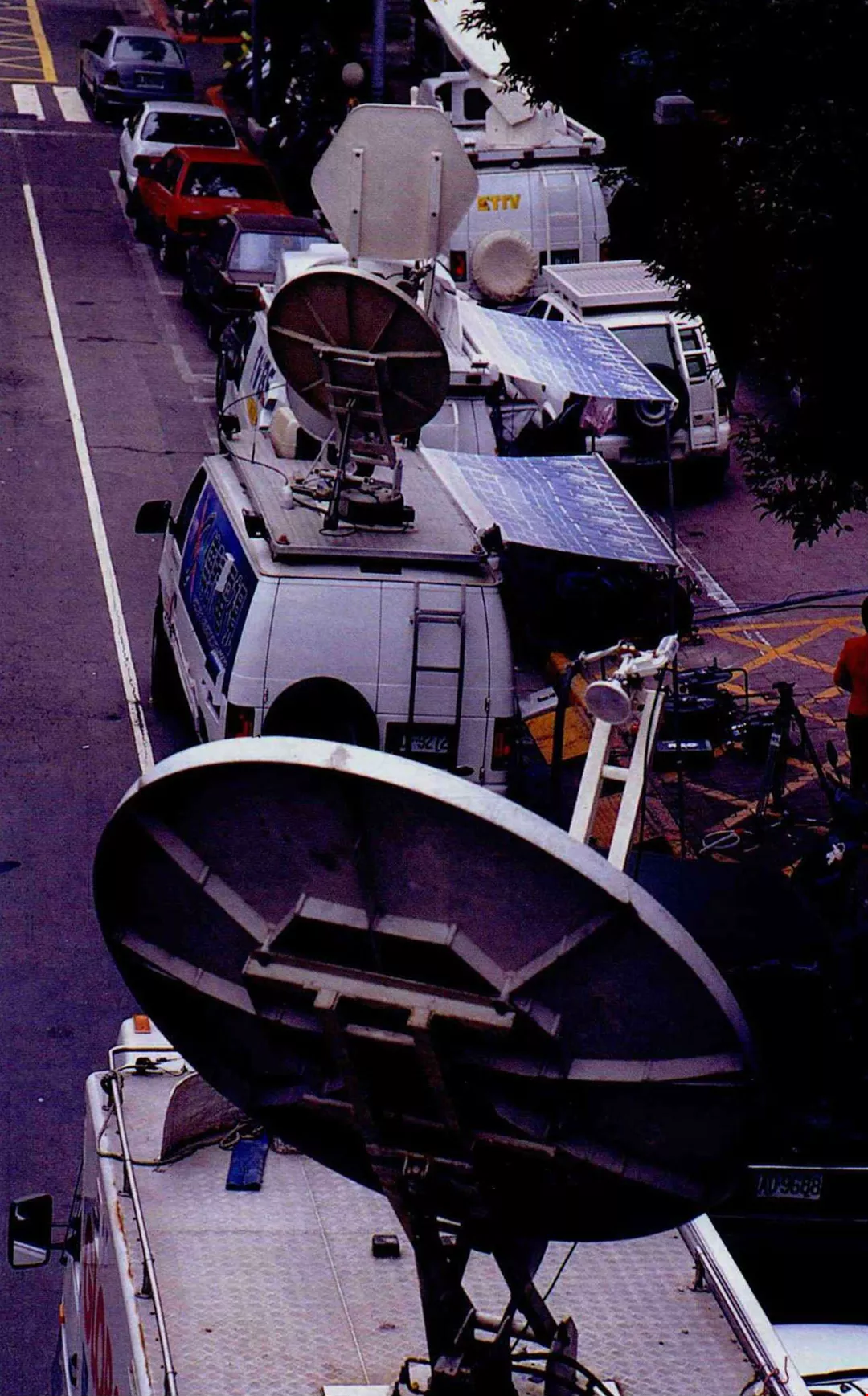
The use of mobile units (SNGs) provides viewers with the most up-to-date news. But the allocation of more time to news programs has resulted in all kinds of SN G "situations": lines of SNGs on Taipei's streets, SNGs filming any news from start to finish, an d uncut "junk" news that runs on and on.
The 10 years since the lifting of martial law on Taiwan have been a period of phenomenal expansion for the media. Although there are no precise figures, with more than 70 television stations serving a population of 21 million, the ratio of stations to viewers must be high enough to rate "Taiwan Miracle" status. And at one time, as many as eight of these stations were devoted wholly to news.
However, Po-hsin Information and Chinese Satellite Television (CSTV) have already vanished from our screens; Taiwan News Network (TNN), the first all-news cable TV station in Taiwan, has axed its news department; and Chinese Television Network (CTN), Super TV and Global TV all have changed hands a number of times as they have searched for a niche. Is the once hot Taiwanese television market freezing over?
Many figures in the industry agree that Taiwan's airwaves are overcrowded with news. That being the case, why are people still trying to make a go of news? Does Taiwan really have such an appetite for news? Why is it that seemingly all stations owners have the news bug? What changes in the quality of news have been brought about by the intense competition between news stations?
Some have said that Taiwan's television stations resemble the Portuguese egg tart shops-they just keep popping up everywhere. A few years ago, everyone wanted to open their own station. Now, however, perhaps due to the economic downturn and weak profits, all we see are stations cutting back on staff or closing down entirely. And with overheated competition, the first department to suffer cutbacks or be dumped altogether is the news department.
Super TV used to employ more than 130 people in its news department, but two-thirds of these have now been cut. CTN, which focuses on news about Chinese from all over the world, used to have news offices in seven cities in Europe and North America. Now it has three-one each in New York, Washington and Paris. Last month, the station even moved its Hong Kong bureau to Taiwan, axing more than 100 Hong Kong employees.
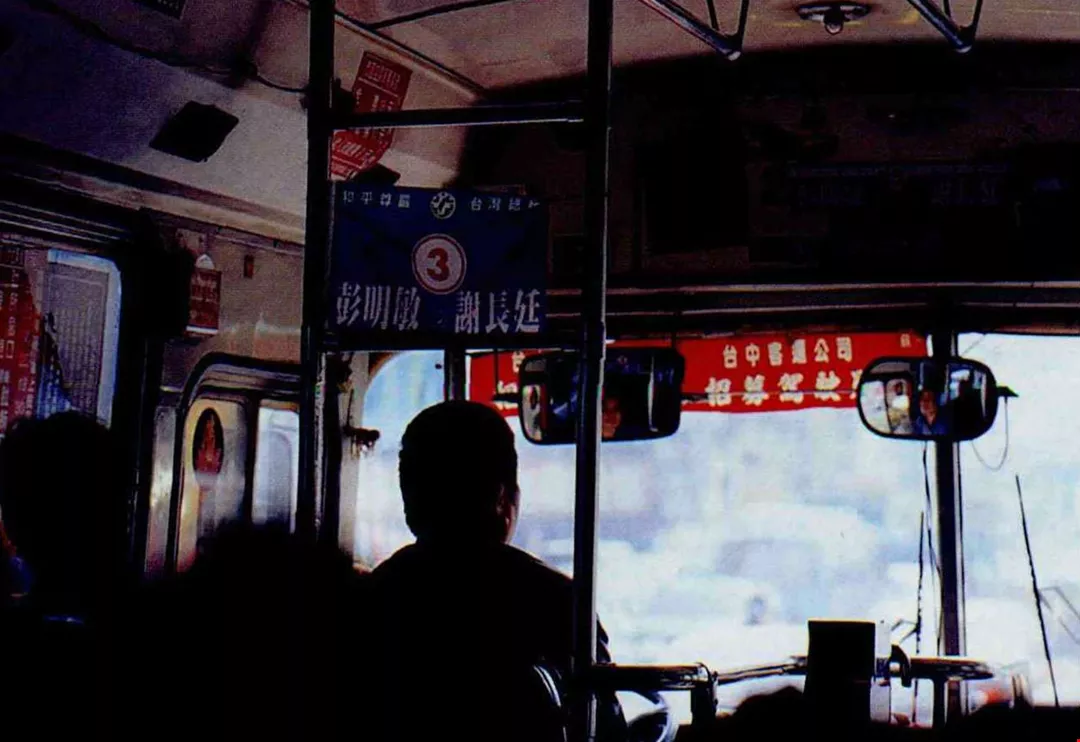
Taiwan's election seasons are long and frequent, and Taiwanese are enthusiastic about their politics. The large amount of political reporting and call-in talk shows only make a "hot" season still hotter.
The economy is in a rut, affecting the working lives of those in the news business, and making operating a TV station a difficult proposition. Over a five-year period, there were five chairmen and three presidents at Po-hsin; Eastern Television has changed its name three times since it opened and changed presidents three times in three years; and Super TV has had five owners in four years. Fighting over turf
Five years ago, the late Chang Chi-kao, one of the most respected men in the broadcast industry, addressed the question of why Taiwanese are so fascinated by the idea of running a television station.
In Chang's analysis there are a couple of factors which give Taiwanese people the mistaken idea that they can make money from a TV station: First, the "Big Three" conventional broadcast stations (CTV, CTS and TTV) all made big money in their heyday. Second, a lot of owners of cable TV stations have gotten rich enough to wear Rolex watches and drive Mercedes Benz automobiles.
But special times produced the profits at the Big Three, and Chang felt that the television advertising market was already saturated. Where were new stations going to get the kind of programming necessary to take advertising away from the Big Three? And, according to Chang, the reason the cable station operators were able to rake in profits was that they ignored copyrights, thereby avoiding most costs. If they had had to operate legally, they wouldn't have made anything.
Tenray Chou, who was vice president at Global and head of the news department at Super TV before taking up his current position at the Independence Evening Post, says, "Taiwan's electronic media was held down for too long. Once it was liberalized, a lot of people got excited, thinking that they now had the opportunity to establish their own station."
Since the passage of the cable TV law in 1993, more than 100 satellite channels have filled Taiwan's airwaves. These stations not only provide a daily smorgasbord of movies and variety shows to viewers, but also compete for the news audience.
Whether a TV station is established for monetary or idealistic reasons, it takes a lot of capital to get started. For example, Formosa Television, the island's fourth conventional broadcast TV station, spent NT$1.7 billion getting established, while cable stations Super TV and Global TV spent NT$700 million and NT$300 million, respectively. But these amounts are just the start. Formosa Television spends another NT$100 million per month (NT$3 million per day) getting itself on the air every day.
How do you cover costs as high as that?
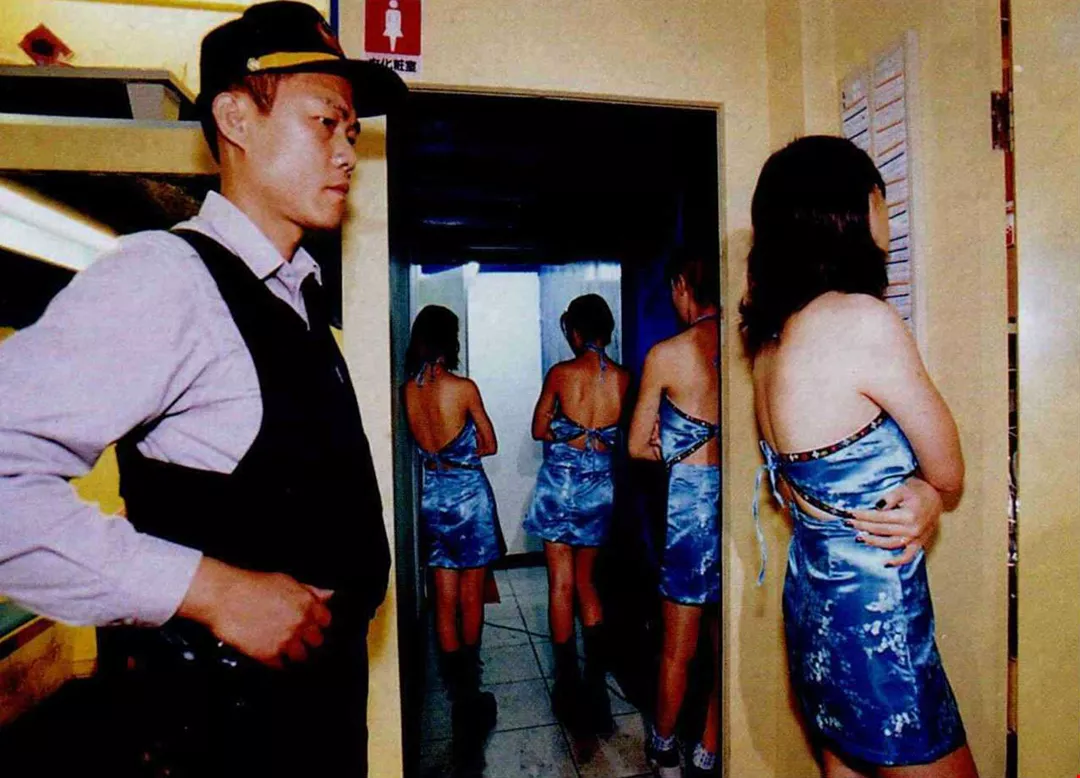
In addition to political news, "community news" has become a new "cash cow" for TV stations. The photo shows Taichung police cracking down on illegal bars. (photo by Tsai Ming-te)
TVBS got there firstfounding Global TV. Chao originally estimated that, based on his
Chao Yi worked at the China Times, CTS and Chinese Television Network before station's NT$1 million per day operating costs, it would only need NT$20 million in advertising per month to stay afloat.
"A news station owns the copyrights to the materials it broadcasts. It needn't pay performers or writers, and it doesn't have to build sets. It is much less costly to run a news station than one that offers mixed programming," says Chao. And Taiwan is unusual in that, "There's 'news' happening every minute. You've got city and county council speakers turning into criminals on the lam. There's a lot of news, and everyone's interested in politics." Chao says that if regulations allowing the free flow of news between the two sides of the Taiwan Strait are passed and the international market opens up, Chinese in mainland China and Southeast Asia will be able to watch his programs. His station will be able to resell the same product several times, and the Big Three will become only minor players.
Thinking that satellites could bring Chinese-language TV to Chinese around the globe, in 1996 Chao Yi sought out 10 partners and raised NT$600 million in capital to establish a TV station. But his group spent too much time arranging funding and missed their window of opportunity. It seemed that everyone had had the same thought; when the TV industry was liberalized, it quickly became saturated with more than 70 new stations.
With so many stations fighting for a piece of the advertising pie, bringing a new station into the market was a difficult business, indeed. TVBS's news channel hit the airwaves before Chao's group, and even got some free advertising from President Lee, who publicly mused, "How is it that the Big Three show so little news, and TVBS so much?"
"There's only one CNN in the whole world. How did Taiwan get so many all-news channels of its own? How much advertising is available?" asks Tenray Chou. He says that although he left The Journalist to work for Global TV as a means of realizing his dream of working in TV, he wasn't blindly optimistic. In order to create name recognition for his station, he sought out support from well known public figures including Ma Ying-jeou, Chen Lu-an, Li Hung-hsi and Jaw Shau-kong, inviting them to host their own shows.
"Global began broadcasting after TVBS, so its only hope was to spend a lot of money to increase its name recognition." Unfortunately, it didn't have the financial resources to do so, and Chou can only lament that it just wasn't the right time for him.
Later, there was the battle between Taiwan's two major cable systems-Eastern Multimedia and Hohsin. As they fought for turf, each stopped carrying channels that belonged to the other system. Global TV thus lost royalties it would otherwise have been earning, and had to go to individual cable operators throughout the island, begging them to carry it on their systems for nothing. Faced with unsustainable losses, Global TV's owners began to wonder about Chao Yi's ability to run the company. They also brought in new capital from the Democratic Progressive Party-oriented Chuan-min Communications. Chao Yi and Tenray Chou didn't concur with their new partner's ideology, but were in no position to object, so they had to leave.
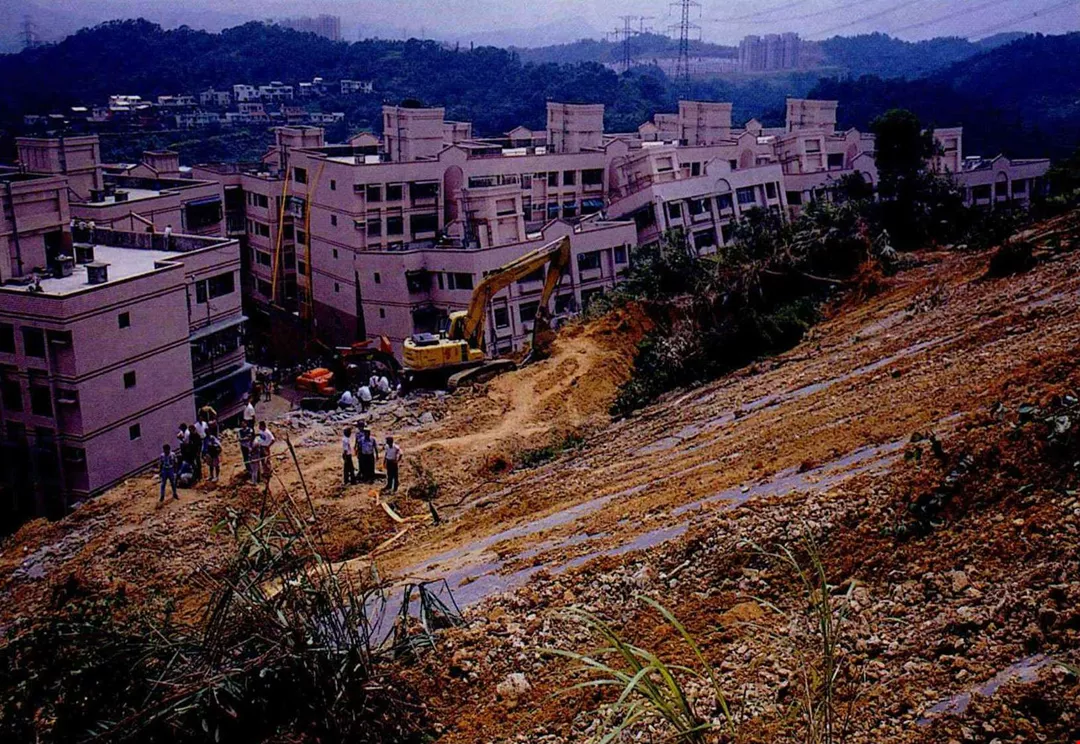
TV reporters monitor the social environment and report what they see to viewers. The photo shows the collapsed Lincoln Mansions in Taipei County. (photo by Lu En-tzu)
"Five star" station
Stations without sufficient financial resources are unable to get a share of the advertising pie, and can only shut down. But what about stations with deep pockets?
"One of the particular characteristics of the media is that viewing habits are built slowly. But owners tend to hope they can begin turning a profit quickly," says Chang Shu-hua, who was seconded to Eastern Television by Tamkang University. Chang, who served as Eastern's president for eight months, says that the first thing he did after being named president was move Eastern's news department from the gritty suburb of Sanchung to Taipei in order to build a more news-like image. He also recruited Li Ao, the sharp-tongued social critic, to host a program. At the outset, the station's owner respected Chang's opinion, but later he decided that the media business was simply "too much fun," and he began "providing guidance." This left the president without any real power, and Chang, whose ideas differed from the owner's, left the station.
The television industry has now entered a phase in which "costs are high, and profits are low." But shutting down is like "selling your station off as scrap metal." Eastern's current president, Chu Tzong-ko, says that those who have already put money into a station will keep it running. Investors are not necessarily looking for short-term profits. Over the long term, if a cable station can link up with the Internet or some sort of telecommunications venture, profits could grow geometrically. Besides, station ownership provides intangible benefits. A station "provides prestige or social status. That's a kind of profit that can't be calculated," says Chu.
Chao Yi agrees. "At election time, you can spend NT$500-600 million, and there's no guarantee you'll be elected. But a television station owner has no less influence than a legislator."

Fashion-show footage running in the background during the weather report allows viewers to feast their eyes on "delectable dishes" while listening to the weather. (photo by Diago Chiu)
One newsman, citing an example of this influence, notes that when the Presidential Office or the Executive Yuan holds a press conference or a banquet for the media, it's not the people from all-entertainment stations that get to meet the big officials. This is why so many TV-station owners hold to the credo that a station without a news department is not a "five star" station. News departments have symbolic value. A sharp nose for the market
Deep pockets are only one of the factors affecting a station's survival. Even more critical is a firm grasp of the market.
The American all-news station Cable News Network (CNN) began broadcasting in 1980, and was once ridiculed as the "Chicken Noodle Network." Those in the US television industry wondered where the station would find enough news to fill up its 24-hour programming day. They believed that it would have to use a lot of fluff to fill in the gaps. But Ted Turner, the station's founder, was convinced that television is the source of most of the public's information and that technological advances would allow the faster dissemination of news via satellite. Moreover, the three major American networks were the only source of TV news at that time, and local stations had long complained about the arbitrary pricing policy of the networks. Turner thus felt that there was a market for an all-news station.
Perhaps Mr. Turner also had God on his side. There was a continuous succession of major news stories from the time CNN began broadcasting. From the Mount St. Helens eruption and the US presidential election to the fall of the Berlin Wall, the Tiananmen Incident and the war in the Persian Gulf, event after event gave CNN the opportunity to make a name for itself.
TV news in Taiwan is not global in scale, nor does it have a global market, but the rise of CNN has made it clear that the fastest way for a station to create public trust and a brand name is through news reporting-lucky scoops and large numbers of reports from the scene. Over the last few years the Taiwan media has not lacked for stories as the island has experienced political struggle, economic trauma and social disorder. And at election time, reporting becomes feverish and TV takes on a higher profile.
The development of TVBS, the first local station to secure itself a piece of the cable market, followed a route similar to that of CNN. Chiu Fu-sheng, the station's founder started off filming TV ads. From there, he went on to create Taiwan's first videotape "kingdom" as a local agent for Hong Kong soap operas before entering international film circles as a producer. Then in 1993, Chiu, who flits between Taiwan, Hong Kong and mainland China, entered the cable and satellite TV market by forming TVBS. The venture combined capital from Hong Kong's TVB, a conventional broadcast TV station, with his videotape company's distribution channels and variety-show production resources. Taiwan's CNN?
The media has attributed TVBS's rise to the intelligence and responsiveness of Chiu's marketing strategy. For example, he decided to work with a conventional broadcast station from Hong Kong because, having sold its serials in Taiwan for 12 years, it had already established a foundation here. In addition, it produced 5,000 hours of dramatic programming per year in Hong Kong, enough to compete with Star TV, which had gotten off to an earlier start. Chiu chose to establish the station in 1993 to take advantage of the July 1994 launch of the APSTAR-1 satellite. Finally, he chose to start broadcasting in September because that is when advertising agencies plan their next year's advertising sales.
TVBS's flexible programming strategy and constant readiness for battle have shown it to be a force to be reckoned with. At election time, TVBS puts more resources into reporting election news. For example, it broadcast the DPP's debates on the nomination of the party's presidential candidate, and the KMT's 14th party congress. When Taiwan's professional baseball league began its sixth season, TVBS's lead stories were about the games. This was a far cry from the Big Three's long-standing custom of always running items on the president or other major political figures as their headline stories.
"Attributing TVBS's rise to just one factor is probably over-simplifying," says Chen Hao, manager of TVBS' news department. He feels a number of points illustrate TVBS management's sharp nose for the interests of its audience and the market. Examples include "The Voice of the Nation," a news program covering social issues hosted by Lee Tao that has been around since the station's early days; TVBS being the first station on the island to employ mobile units (SNG) to broadcast live from the scene of breaking news; and the station's development of entertainment news over the last two years.
Still another example comes from the 1995 presidential election. When Presidential Advisor Lin Yang-kang announced that he and Hau Pei-tsun were throwing their hats into the ring, "The Voice of the Nation" had a crew at Lin Yang-kang's house on Yangmingshan immediately. For the first time ever, its ratings exceeded those of Big Three programs airing in the same time slot, making the show a TVBS trademark. Worthless mobile units?
The rise and fall of local TV stations demonstrates just how difficult the TV industry is. In the past, the viewing public's dissatisfaction with the Big Three's news reporting opened a window of opportunity, spurring cable TV stations to offer more news. Now they provide far more news than the Big Three. But how many Taiwanese are watching and how much time do they have to watch?
Many in the industry feel that having so much news on TV is a waste of resources. A few years ago when the economy was booming, costs weren't an issue. Now, however, costs are a key factor in adjustments to news programming.
Huang Yu-chen, assistant director of the news department at Sanlih Entertainment Television, cites an example of these changes: Before the Lunar New Year last year, the Presidential Office held a dinner banquet for reporters. At that dinner, an executive from one local station came out and said that his station had estimated that it would cost them NT$500,000 to send a reporter to cover Premier Vincent Siew's four-day visit to Haiti. It had therefore decided not to send anyone, and hoped that in the future the government would provide it with news footage from such trips.
But in addition to cutting spending, stations need to find ways to generate new revenues. To win the attention of advertisers, stations must go to war every day they are on the air. With stations unable to extricate themselves from the "free competition" of the marketplace, viewers must begin to question the changes that news reporting is undergoing.
One frequently criticized aspect of modern TV news is its use of mobile units, known as SNGs, to report from the scene.
From news as trivial as a fire department going out to deal with a wasp problem to the minutiae of the legislative elections-including each party's nomination of candidates, the arguments, the voting and the counting of the votes-everything is reported from the scene. "You can see that it's being done to fill up time," says Hsiao Lung-chi, a reporter at CTN.
When a couple who had established an investment consulting firm on Taipei's Sungchiang Road were murdered by one of their partners, one cable station's SNG was there filming all morning while the police were just in their first phase of evidence gathering. "Are these reports warning people to stay away, or inviting them to come watch the commotion?" asks one reporter.
One characteristic of television is that it shows things as they are. You can deliver the scene, as well as people's actual words and the emotions on their faces right to viewers' living rooms. But little of today's on-the-scene reporting undergoes any cutting, editing or selection. As Tenray Chou says, "It's just that little corner of the world where the reporter is." Chou says that this kind of news is only differentiated by ratings, not by quality, and he criticizes Taiwan's SNGs, calling them "Super-No-Good."
According to Huang Yu-chen, the abuse of on-the-scene reporting stems from having "hardware competition." He says that two years ago the economy was still doing pretty well, and stations all rushed to buy new reporting equipment. One station bought 12 SNGs, and another which was more recently established bought ten, all in one go. You don't hear of any stations buying SNGs now, but at a cost of NT$10 million each, those that have already been bought can't very well sit in the parking lot every day. As a result, you often see these SNGs all lined up in a row on Taipei's streets. The myth of knowledge
Competition can not only be seen on the technological front, but also in stations' efforts to assault the senses.
Lin Kuo-ching, president of CTN, says that it used to be that fires were not covered unless there were serious injuries or deaths. Now, however, there is a report about a fire almost every day, and where it happened doesn't seem to be much of a concern. Simply put, it makes good footage.
Not long ago, TTV reported on a case of wife swapping, but because there was no way to film the act, the reporter had no footage. In the rush to get the story out, the station used a scene from an illegal pornographic CD the police had seized, with the word "simulation" on the screen. But viewers were outraged, calling the station to complain, and also criticizing the censors for laxity. And when Taichung police cracked down on illegal drinking establishments, one station focused entirely on the response of the bars' "public relations girls," running a six-minute report in which the camera spent most of its time aimed at the girls' thighs and skimpy tops.
Many stations hold to the idea that "if there's no 'blood offering,' ratings will drop." But does this way of thinking derive from viewers' preferences, or is it just an excuse created by people in the TV industry?
A newspaper reported that in a town meeting held last month in Erlun Village, a one-horse town in Yunlin County, residents complained vociferously about the sex and blood shown on TV news and variety shows. They demanded that their local government convey their feelings to the Government Information Office (GIO), and hoped that the GIO would improve its monitoring of TV. But this is difficult. If the government steps in, it could be construed as infringing on freedom of the press.
As a result, the China Times Express invited the management of a number of TV stations to discussions on journalistic standards and the content of news reports. Liao Tsang-sung, the president of Chinese Public Television and a former head of news at TTV, says that viewer response varies. He mentions an experiment conducted by the Big Three as an example: Several years ago, fist fights were a common sight in the Legislative Yuan, and the Big Three reached an agreement by which they would cut such scenes from their reports. However, after a two-week trial run, the plan was abandoned because of viewer dissatisfaction. Viewers complained that the stations were infringing on their right to know; they wanted to see the brawling.
Liao says that the Big Three used to be very conservative. They reported little "community news" (a euphemism for what are usually reports on crime or tawdry events), or at the very least, didn't spend the first 20 minutes of their program on it. But when cable stations began to employ SNGs in large numbers-reporting from the scene and transmitting sensational images-their ratings rose, forcing the Big Three to follow their lead. SNGs certainly have their weaknesses and Taiwan's viewers may curse them, but they tune in nonetheless. And the more that viewers curse, the higher the ratings rise.
Kuang Hsiang-hsia, vice president of CTV, feels that the volume of "community news" is due not only to competition, but also to the many changes that have taken place in Taiwanese society in recent years. There are a lot of bizarre things happening now, and reporters can't ignore them.
"We are not ostriches. We can't hide ourselves from reality. The question is whether we need to deliberately make such a big deal out of these stories," says Stella Yeh, anchor at Zhong Tian Channel. Yeh notes that in the past, when people protested, they simply wore a white headband. She asks why it is that now they throw eggs or tomatoes or paint, and why legislators come to blows and rip out microphones as part of the legislative process.
Yeh says that in the past, this kind of footage would be broadcast for a minute and a half at the most. Now, such footage often runs for three minutes. "This is using footage to make news, not support it. They're putting the cart before the horse." Nowadays, people go about getting themselves on TV in any number of ways. But what kind of impact is this having on our society? Most people don't dare to think what kind of example such behavior is setting for the younger generation. A fight to the finish
Research needs to be done to determine if viewers change the channel if the headline stories are not "community news." Currently, ratings are the standard by which TV news is judged, and ratings are the greatest pressure faced by station management.
"You can't not care about them. Every percentage point is money. It represents advertising revenues." Kuang Hsiang-hsia says that in the past, with only three stations, having the top rating meant not only money but status. Now with so many stations, ratings have become a life-or-death issue. "As a manager, ignoring ratings isn't practical. But looking at them isn't all that reassuring. You are on the edge of your seat with anxiety 24 hours a day. Even if today's ratings are high, with tomorrow's different program content, they might change. This is an unrelenting pressure," says Kuang, whose background is in academia.
Advertisers spend a total of about NT$1.2 billion per month on TV advertising in Taiwan. In the past, this was pretty evenly divided among the Big Three. Now, however, this advertising pie is being divided among far more stations, with the 70-plus new stations each eating up a share.
Hu Yuan-hui, manager of the news department at Formosa TV, says that ratings are an issue for everyone in the TV business. But he patiently explains to his newspeople that to create a win-win situation, ratings and quality are both important. A report on aboriginal hunters that recently aired on their evening news program demonstrates that you can have it both ways. "Of course it's difficult, but 'difficulty' is no reason not to do something."
Catering to the viewer is an unavoidable trend in news today. But what ideals are stations sacrificing by devoting themselves only to profits and ratings?
Shui Ping-ho, a cultural critic, takes the US media's relentless pursuit of possible extra-marital affairs by Bill Clinton as an example, stating that nearly every day for the past year, three to five stations have aired programs devoted to the discussion of this issue.
TV stations have been competing to interview the women involved in these alleged affairs. One foreign news organization reported that when NBC, a US network, interviewed Monica Lewinsky, the program's ratings were second only to the Super Bowl, which was watched by more than 120 million Americans. Commercial considerations
But in their race for profits and ratings, the media isn't spending enough time on the hard news they should be covering-stories such as the global financial crisis, the conflicts in Kosovo and Africa, and other policy issues which affect people's lives. "The media has slowly lost its independence and its sense of mission as the people's voice," says Shui Ping-ho.
Before the airwaves were opened up, many critics felt that the only way to guarantee that TV programming be fair and professional was to get the government, the military and political parties out of the TV business. But Fung Chien-san, a professor of journalism at National Chengchi University, doesn't agree. He says that in Western Europe, where most stations are government-run, TV's monitoring of government and business is no worse than in the US, where almost all stations are commercial. A number of examples from overseas demonstrate that commercial television, with its need to stimulate ratings and attract advertisers, often does not hesitate to "serve" the business community.
At the end of 1997, Chen Chin-hsing, one of the men involved in the kidnapping and murder of Pai Hsiao-yan, took a South African military attache and his family hostage. Local TV stations got high ratings broadcasting from the scene for hours on end. But afterwards, Taiwanese society began to discuss whether the efforts by reporters to interview Chen were a good thing or not, raising points which included freedom of the press, social responsibility and professional standards. The media should improve, but Fung Chien-san believes that if you compare the Taiwan news industry to its counterparts in the US, the problem doesn't seem to be with the quality of the reporters themselves. Instead, he feels that the difference is that the US and Europe have already had the opportunity to learn from their mistakes because their commercial structures came into being one hundred years earlier than those in Taiwan.
"But is there a way to moderate commercial competition within the media in capitalist society? Is there a way to turn media competition against the forces of government and business?" Fung says that if the media isn't willing to exert itself in this direction, we can at least ask if its reporting, analysis and discussion of crime is complete and accurate.
Scholars and newspeople may be standing on opposite sides of the gulf separating ideals from reality, but is there really no consensus that can bridge this gulf? Or perhaps what people in the TV industry say is true-over the last 10 years, both the print and electronic media have been liberalized in Taiwan. The battle within the newspaper industry has already been decided, and now it is TV's turn to slug it out.


@List.jpg?w=522&h=410&mode=crop&format=webp&quality=80)


