Chips off a New Block-Biochip Breakthroughs on Silicon Island
Teng Sue-feng / tr. by Robert Taylor
November 2001


At the end of the 20th century, humans completed the first map of our own genome, marking a great step forward for the life sciences. Genetic engineering is on its way out of the research laboratories and into our lives, and its most representative product is the biochip. Why are biochips seen as potentially the biotech industry's star product? What advantages does Taiwan have for developing biochips? And how will biochips change medicine, and our lives?
Cancer is the leading cause of death in Taiwan today. In early October, Veterans General Hospital Taipei (VGHT) announced that it had identified 50 cancer-related genes, which it would use to produce gene chips to diagnose some eight types of cancer, including lung, liver, stomach and breast cancers. This should increase the chances of survival for future cancer patients by allowing earlier detection.
Chang Tai-jay, a researcher in VGHT's Department of Medical Research and Education, says that the hospital's research team first screened out genes unrelated to cancer by comparing cancer cell lines with normal cells, then further clarified the effects of various genes at different stages of cells' cancerous development, and on this basis selected the 50 diagnostic genes. Having achieved this success, VGHT is collaborating with local biotech company Medigen Biotechnology Corporation to develop an "oncogene research platform," in the hope of using this technology platform as a basis for patenting cancer-causing genes, and developing a range of products for the early testing, diagnosis and prognosis of cancer.
Recently there have been quite a number of other pieces of encouraging news in the field of biotechnology in Taiwan, such as the birth of the world's first DNA-based anti-counterfeiting biochip, the development of the "GalaxyChip," whose innovative design obviates the need to use certain patented technologies, the world's first "multifunctional protein chip reader," and the 16 biochip-related patents obtained by the Industrial Technology Research Institute (ITRI). Perhaps most people don't fully understand the significance of these high-tech R&D achievements.
The world sat up and noticed last year when researchers in the US and Britain announced that they had completed a preliminary map of the human genome. This achievement has been compared to a Martian acquiring a copy of the complete works of Shakespeare-we are only now starting to decipher the text letter by letter, and are still far away from recognizing the words, paragraphs and story lines, and further still from understanding the meaning of the entire book.

Scanner
Another kind of miracle
Happily, scientists are sparing no efforts to develop more effective tools, and gene chips are powerful keys to unlock the secrets of the three billion letters of our genetic code.
When we speak of chips, most people will think of computer microchips. Microchips-the integrated circuits used in electronic equipment-are made from semiconducting materials such as silicon and germanium. Computer chips have become ever more miniaturized, and this gave biologists the idea of making biological chips, using chip technology to manufacture microscopic instruments for use in biological research and medical diagnosis.
"Biochips" are made by depositing spots of biological macromolecules-such as nucleic acids, proteins or antibodies-in a high-density, high-precision array on a tiny area of a solid substrate such as glass or a nylon membrane, to create a chip about the size of a postage stamp.
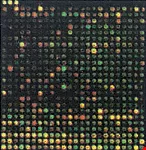
The DNA or other molecules anchored to the chip surface are called probes. The procedure for testing with the chips is to first tag DNA segments in the sample with a fluorescent or other specific material, and then initiate a "hybridization" reaction between the sample and the DNA probes on the chip. Sample DNA that successfully hybridizes with the probes will remain on the chip, and the degree of expression of different genes in the sample can then be determined by reading the colors of the probes on the chip.
To use a fishing analogy, the chip is the bait and the reactive molecules in the sample are the fish. Different baits are used to attract different fish, and when a fish takes the bait (when reactive DNA segments bind to the probes) it pulls on the line, alerting the angler.
The DNA that makes up the genes in every cell of our bodies is virtually identical, but some people get ill while others don't. A big difference between them is whether specific genes have been activated or not. Testing for the substances produced after genes are activated is the mainstream of biochip assay methods.
Biochips have many uses. The DNA anti-counterfeiting chip developed by Biowell Technology Inc. combines natural genetic codes with small, thin chips to create a new generation of lightweight anti-counterfeiting products, which in future may be used on credit cards, computers and luxury goods. (photo by Jimmy Lin)
A rising star
According to ITRI estimates, the current total global market for biochips is around US$300 million, and is growing very rapidly. It is expected to exceed US$3 billion by 2005.
Attracted by the future potential of biochips, many people in Taiwan have started up related businesses.
According to figures from the Ministry of Economic Affairs' Biotechnology and Pharmaceutical Industries Program Office, total investment in the biotechnology industry in Taiwan over the last five years has exceeded NT$56.2 billion. 1998 was a key year in the ascendancy of the local biotech industry, with the number of companies expanding from 16 to 26. The majority of them are focusing on biochips, biotech pharmaceuticals, diagnostic test reagents, Chinese herbal medicines, and health foods.
A number of Taiwanese companies, including Taiwan Genome Sciences, DR. Chip Biotechnology, U-Vision Biotech and GeneMaster Lifesciences, are involved in biochip research and development. Currently, their development efforts are mainly directed toward tests for infectious diseases. DR. Chip's enterovirus test chip has already completed clinical trials. Using this chip it takes less than six hours to detect whether a patient is infected with an enterovirus, and to determine whether the virus is the deadly Enterovirus 71 or Coxsackievirus A16. The chip-based test kit is 1000 times more sensitive than virus culture or serum immunoassay methods. The product was licensed for sale by the Department of Health in July 2001, and will soon go into volume production.
Meanwhile GeneMaster Lifesciences, which was set up in 2000, has developed a meningitis chip. The company's researchers selected 30 common pathogenic bacteria to use for probes, such as meningococcus, Streptococcus aureus and Escherichia. The chip, which can identify suspicious pathogens within 24 hours, is in the final stages of clinical trials.
The ITRI's fever chip applies similar principles. Oligonucleotides from 25 of the most common fever-causing pathogens are arranged on the chip, and infection with any of them can be detected from a single drop of a patient's blood, urine or cerebrospinal fluid. The fever chip too is currently in clinical trials at National Taiwan University Hospital.
"Everyone has high expectations for biochips, but the hoped-for results have not materialized as yet," says ITRI vice-president Johnsee Lee, who is also general director of ITRI's Biomedical Engineering Center. He predicts that it will take several years at least for biochips to come out of the laboratories and clinical trials into ordinary clinics. Not one of the world's leading biochip companies has yet broken even, and most are still at the R&D stage. In the US, where biochip development has been going on for nearly a decade, most biochips are still sold to major pharmaceutical companies.
Analysis
Printing money with DNA
Most biotechnology companies have their sights set on medical testing, but in fact biochips have many other remarkable potential uses. Of particular interest today, when counterfeiting is rife, is the DNA anti-counterfeiting chip recently launched by Biowell Technology. This product has attracted much market attention.
The principle behind DNA anti-counterfeiting technology is to take DNA and mix it into, or apply it to, certain media (such as pigments, emulsions or paints), to endow them with distinctive and hard-to-imitate characteristics that can be used to protect products from counterfeiting.
"The R&D budget of just one American company can be many times that of the whole of Taiwan's biotech industry. If Taiwan wants to leverage its abilities, we have to find our own ways forward," says Biowell's chairman, Sheu Jun-jei.
Biotechnology is a young industry, and its entrepreneurs mostly have highly specialized academic backgrounds. Sheu, who was born in 1966, got his first degree in biology from Fu Jen Catholic University. After gaining a PhD from the graduate institute of life sciences at the National Defense Medical Center, he became a research fellow at the Academia Sinica's Institute of Biomedical Sciences. After six years in research there, frustrated by the academy's lack of flexibility as a government organization, he finally decided to go into business for himself.
"At first we pursued five or six different avenues such as test reagents, TB tests, and sperm health tests, but later we discovered more and more opportunities opening up for the use of biotechnology in anti-counterfeiting products," says Sheu.
Biowell's corporate spokesman, George Hsu, says that there are many counterfeit banknotes in circulation today, because the forgers are getting more and more sophisticated. But if DNA is used as a code to protect against theft and counterfeiting, it is extremely difficult to decipher, because the counterfeiters do not know which organisms' genes will be used. They may be plant, animal or human genes, or a combination of these.
"Now that the technology is mature, the next hurdle to face is our commercial model and bringing the product to market. We hope that in three months we will have achieved some sales turnover," says George Hsu. He states that the technology has already been licensed to a printing ink manufacturer, to be used in the printing of securities and share certificates. The company has also been contacted by banks to discuss details of using the technology on credit cards.
(Fig. 3) Hybridization successful
Technological breakthroughs
DNA anti-counterfeiting chips are one of the few products that are likely to bring in profits in the shorter term. As for those research results that are not yet ready for market, the strategy adopted by the majority of R&D teams is to "accumulate as many patents as possible."
The current situation in the emerging biochip industry is that many patents are in the hands of the major US biotech companies. For instance, the leading biochip firm-Affymetrix of the US-has acquired around 100 patents since it was established in 1992, so that almost all biochip companies worldwide find themselves hampered at every turn.
The biochip market is now at an intensely competitive stage of development, with many players involved. Over the last three years, there has been a constant succession of patent infringement suits internationally. Reportedly, quite a number have involved Affymetrix.
One of the patents held by Affymetrix covers all chip designs in which probes are placed on a solid chip at densities greater than 400 per square centimeter. This means that if other firms want to make biochips that can test many DNA sequences at once, they have no choice but to increase the distance between the probes on their chips, and so increase the chips' size.
Faced with this situation, companies and research teams in Taiwan were eager to find other designs to get around this restriction.
In late August, GeneMaster launched its "GalaxyChip" product, which is said to overcome the need to use Affymetrix's patented technology.
GeneMaster CEO Abraham Chao explains that traditionally, biochips are made by depositing spots of DNA or proteins on glass in a matrix array. Some chips may bear as many as 10,000 or more DNA probes. But this approach of depositing spots of probe material directly on a flat substrate has many disadvantages. Apart from the patent protection on high probe densities, there is also a risk of adjacent probes contaminating each other, so that defect rates are high, and the process cannot easily be scaled up for high-volume production.
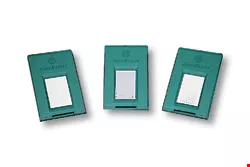
The GalaxyChip design involves cutting up a traditional polymer chip, around one square centimeter in size, into tens of thousands of much smaller chips only 100 microns across-a tenth of the thickness of a human hair. These tiny chips are "as numerous as stars in the sky"-hence the name GalaxyChip.
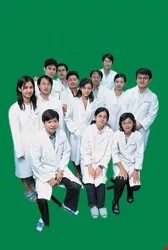
Biotechnology is a young industry, and many of its entrepreneurs have specialist backgrounds. Pictured is the technical team at GeneMaster Lifesciences Co., Ltd., which was founded last year and this year successfully developed a meningitis chip and the "GalaxyChip." (photo by Jimmy Lin)
Racing for patents
On 5 September, the ITRI announced a total of 16 biochip-related patents gained through research and development supported by Ministry of Economic Affairs technology grants over the last three years. The patented technologies include the "Phalanx" rapid probe deposition process, a fever chip, and a "microfluidics" chip.
"Our aim is to fill key technology gaps in the market," says ITRI vice-president Johnsee Lee. Lee states that the manufacture of gene chips involves over 200 individual steps, from probe design, probe synthesis, making the chip substrate, probe deposition, and probe fixing, to packaging and preservation. Seven years have gone by since the US media first began reporting on the development of biochips in 1995, but there are still many problems in the chip manufacturing process. However, these problems give Taiwan opportunities to enter the market.
On 9 September, National Taiwan University's "biological micro-electromechanical systems" (BioMEMS) research group announced research achievements including a protein chip that can screen for four types of cancer-lung cancer, breast cancer, colon cancer and oral cancer-and a multifunctional chip reading instrument.
Associate Professor Lin Chii-wann of NTU's Institute of Biomedical Engineering says that the fluorescence microscopes currently used to read gene or protein chips use patented technology that is controlled by US companies. The instruments are bulky and expensive, costing NT$3 million apiece. NTU's innovative multifunctional protein chip reader uses mature optical and semiconductor technology in which Taiwanese industry is well versed, and does not require the use of a fluorescence microscope. By shining infrared light onto a biochip at wavelengths of 800 to 2000 nanometers, the reader illuminates the biological molecules of all the probes on the chip and interprets them by detecting the reflected signals. The reader, which can be used to screen for various kinds of cancer, costs only NT$1 million and stands only 30 centimeters tall, making it highly suitable for use in small medical laboratories, clinics and public health stations.
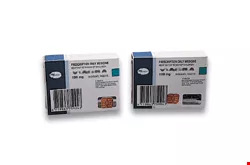
Humans have long hoped to use nanotechnology to observe the inner processes of life. Biochips are a tool to begin a voyage of discovery within the human body. (art by Lee Su-ling)
The community effect
Many people agree that Taiwan's strengths for developing biochips lie in the fact that it has a precision semiconductor industry and a wealth of well-qualified, creative personnel. But its weakness lies in the fact that its R&D communities are too small. With science-based industrial parks distributed around the island and research personnel scattered between the Academia Sinica, the National Health Research Institutes, institutes of higher education, and industry, it is very doubtful whether a community effect, by which academia can move industry forward, can take place.
"If we analyze the reasons for the success of the leading US biotechnology companies, it lies in systems integration. In Taiwan, our problem at present is that everyone is soldiering on alone, and we have not yet integrated our resources," says Lin Chii-wann.
"At present, those of our companies that are in the lead technically have unique patented technologies, but because each of them only holds one piece of the technological puzzle, they are still unable to develop useful products," says the ITRI's Johnsee Lee, further highlighting the importance of integration.
Gene chips do not involve a single technology, but rather an entire system ranging from gene selection and chip manufacture to signal detection, data analysis and applications research. "If you want to produce chips in volume, you have to bring together many technical teams. The industry will not be able to begin volume production of products until it goes through a process of consolidation and IPR litigation leading to cooperation and alliances, so that mainstream technologies emerge and products can be standardized," says Johnsee Lee. He states that as well as continuing to develop technology platforms, the ITRI has also begun to seek strategic partners and promote R&D alliances. By combining everybody's efforts, it hopes that by March 2003 it can set up a large company to which it can then gradually transfer technologies.
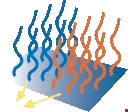
(Fig. 1) Probes
Dream industry
Many people agree that the biochip industry is one "built on dreams and vision."
Twenty years ago, the Hollywood science fiction film Inner Space portrayed how American scientists daringly shrank physicians to the size of microbes and injected them into a patient's bloodstream in a shrunken submarine, to find and destroy the cause of a life-threatening disease. Today, biochips are opening the doors to this kind of "inner space."
Electronic microchips have been termed one of the greatest inventions of the 20th century. Their ability to make millions of calculations every second has propelled humanity into the information age. At the beginning of the 21st century, the mating of microchips with biotechnology is giving birth to some remarkable offspring. Biochips are carrying humanity's unceasing dreams on a voyage into the future.

Biochips have many uses. The DNA anti-counterfeiting chip developed by Biowell Technology Inc. combines natural genetic codes with small, thin chips to create a new generation of lightweight anti-counterfeiting products, which in future may be used on credit cards, computers and luxury goods. (photo by Jimmy Lin)
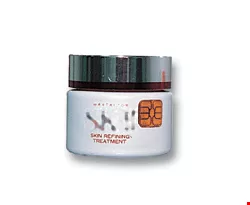
Biochips have many uses. The DNA anti-counterfeiting chip developed by Biowell Technology Inc. combines natural genetic codes with small, thin chips to create a new generation of lightweight anti-counterfeiting products, which in future may be used on credit cards, computers and luxury goods. (photo by Jimmy Lin)
Biotechnology is a young industry, and many of its entrepreneurs have specialist backgrounds. Pictured is the technical team at GeneMaster Lifesciences Co., Ltd., which was founded last year and this year successfully developed a meningitis chip and the "GalaxyChip." (photo by Jimmy Lin)

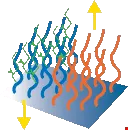
Biochip Operating PrinciplesMaterials such as disease-related DNA segments or proteins are fixed to a substrate in a matrix array. The points of material in the matrix are called "probes" (Fig.1). Before testing, DNA segments extracted from a sample of the patient's blood are tagged with fluorescent material (Fig. 2). A hybridization reaction is initiated between the tagged DNA and probes. Successfully hybridized DNA remains on the chip (Fig. 3), and makes the relevant probes fluorescent (Fig. 4). A chip reader is then used to detect the fluorescent probes and so determine which genes are expressed. This allows the cause of the disease to be identified, so that treatment can be targeted correctly./Source: GeneMaster Lifesciences Co., Ltd.

(Fig. 2) Tagged sample material Hybridization failed
(Fig. 4) Fluorescence


@List.jpg?w=522&h=410&mode=crop&format=webp&quality=80)


