

The terrifying outbreak of severe acute respiratory syndrome (SARS) a decade ago left its mark on the psyche of people in Taiwan. Ever since, the mere mention of a virus spurs a flood of media reports, rumors, and the rapid spread of misinformation. These only add to people’s fear and anxiety.
To successfully battle the silent killers that are viruses, we need scientific facts and conclusions grounded in sound epidemiology.
To gain a clearer understanding about the new enemy—H7N9—and to clear up people’s concerns, Taiwan Panorama has interviewed Michael Lai, an academician of the Academia Sinica who is known as the “father of the coronavirus”; Ho Mei-shang, a research fellow at the Academia Sinica’s Institute of Biomedical Sciences who is an expert in disease control and epidemiology; and Lee Ping-ing, president of the Asian Society for Pediatric Infectious Diseases and an associate professor of pediatrics at National Taiwan University, who has fought on the front lines against enterovirus, SARS and H1N1 influenza.
Michael Lai explains that throughout course of human history there have been epidemics, but they used to be much more serious. Take the Black Death of the Middle Ages, which cost Europe two-thirds of its population, or the Spanish flu of 1918, which killed 50 million worldwide.
“When I was in medical school, a polio vaccine had been developed, and bacteria could be controlled with antibiotics. Everyone was very optimistic that we would find a solution for viruses, but it hasn’t turned out that way. Take the flu virus: It’s been coming around every year for centuries, and we’ve never been able to stamp it out.” Lai points out that every year there are outbreaks of flu, but these are mostly localized. Global epidemics only occurred three times in the 20th century: H1N1 in 1918, H2N2 in 1958, and H3N2 in 1968. The pandemic of a new form of H1N1 in 2009 represents only the fourth time in 100 years.
Even if it is impossible to completely prevent the spread of viruses, Ho Mei-shang believes that virology and biotechnology have taken major strides. In the 1980s people were still guessing about whether particular viruses came from pigs or birds. In the years since, the origins have been determined one after another, and the H5 and H7 bird flu viruses were discovered early on.
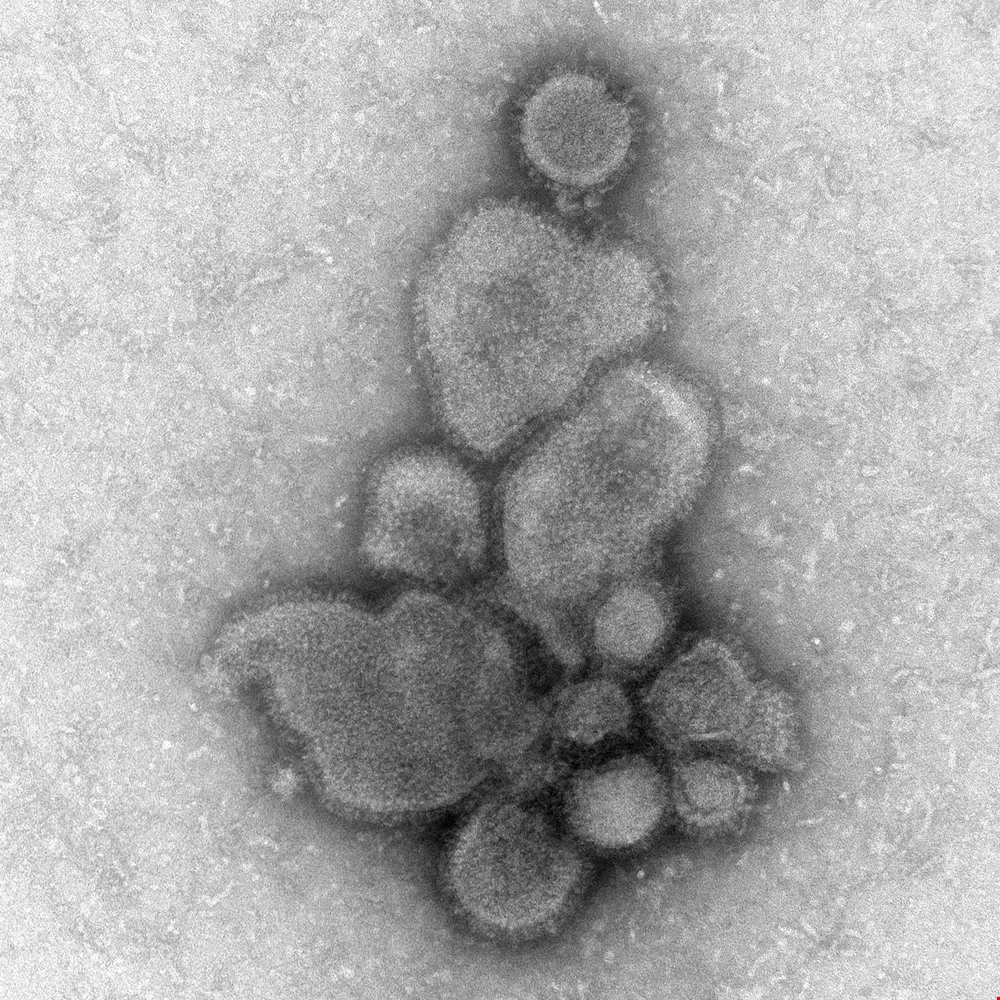
H7N9 is still an avian virus that thus far hasn’t adapted optimally for transmission between people.
Lai explains that the natural world has numerous viruses, but most of these can’t infect humans. To infect a person or animal, a virus must have a surface protein that is able to bind with a receptor on a cell membrane of the potential host. The influenza genome comprises eight segments. Whether it can infect a person mainly depends upon segments H and N. There are 16 H subtypes and nine N subtypes, but only H1, H2, H3, N1 and N2 can infect humans. The others can only infect birds.
Ho explains that a virus doesn’t just suddenly change; it mutates as a result of copying errors when it divides. What’s more, a virus can’t propagate on its own; it must invade a host cell.
From the standpoint of virology, H7N9 is a recombinant virus that comes from birds, but also has some ability to infect humans—even if from an epidemiological perspective, it has currently infected very few.
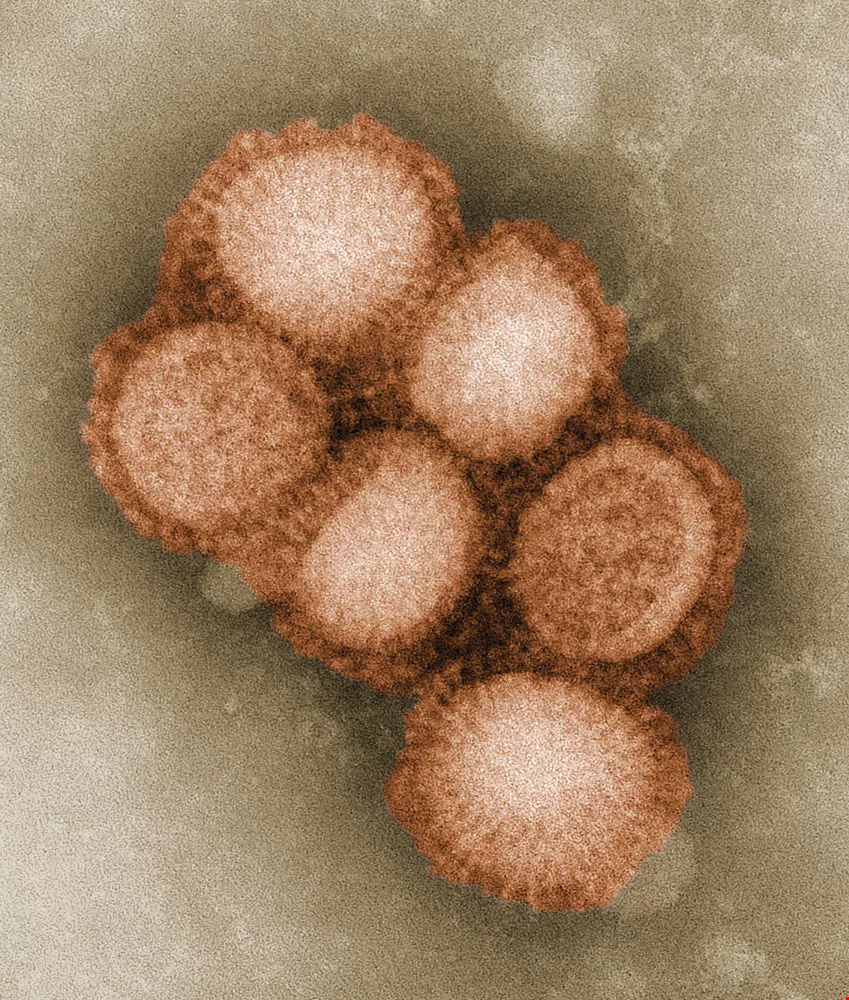
The H1N1 influenza virus under the microscope.
Lai points out that H7N9 and H5N1 are originally bird flus. The reason that they could suddenly become able to also infect humans involves the mechanism by which the virus binds to and enters an uninfected cell, which is similar to the relationship between a key and lock: If a viral key that is initially unable to open the lock on a human cell undergoes a few small mutations, it may happen to transform into a key that can open the lock.
Apart from genetic mutation, there is also the process of “genetic recombination,” which can enable a viral strain that previously couldn’t infect humans to become infectious.
For instance, if a human or a pig host has both a human and an avian strain of flu present in the cells of their body at the same time, the virus strains could swap genes between each other, and this may result in a new viral strain that could then be passed from person to person. And most influenza virus strains can infect pigs. Consequently, pigs are like a “living cauldron” for the recombination of viral genetic material.
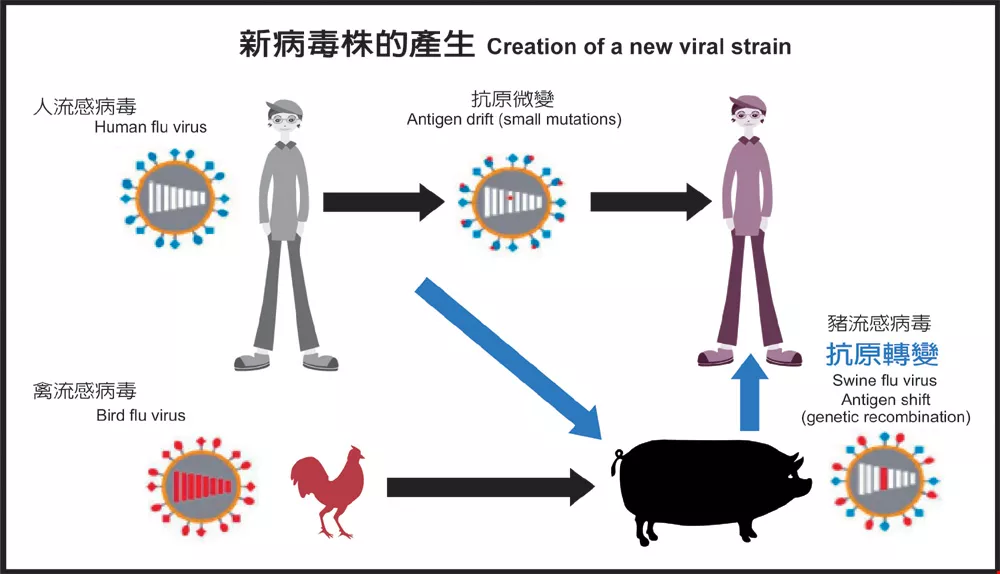
People and birds can both infect pigs, in which viruses may recombine to form new strains.
The medical and academic communities both believe that this is not something to worry about right now.
Lee Ping-ing points out that for a major global viral epidemic to occur, there are various conditions that must be met: For instance, most people must lack immunity and the virus must be highly contagious in a human population. H1N1 was always a virus that could be passed from person to person, so it spread easily. And except for a few people over 60, no one was carrying antibodies to H1N1. Fortunately, it wasn’t particularly virulent, so even though it spread quickly, few people who contracted it fell seriously ill. Currently it appears that H7N9 isn’t highly contagious, so there is no threat that it will spread quickly to reach epidemic proportions.
Ho Mei-shang explains that H7N9 hasn’t recombined with human viruses; rather, small random mutations are what have allowed transmission from bird to person. So far there has been no evidence of person-to-person transmission.
5. Since both are avian flus, are H7N9 and H5N1 equally dangerous?H5N1 can make both birds and people very sick. Lai explains that scientists don’t yet understand what is special about the genome of H7N9 so that it produces no sickness in birds, but makes humans extremely ill.
Ho believes that H7N9 more easily infects people than does H5N1. That’s because people have only contracted the H5N1 virus after high concentrations of it have infected chickens, causing whole populations of them to die. H7N9 is different: Before any trace of the virus has been discovered among birds, it has already infected people. In other words, there doesn’t seem to be a need for high concentrations of the virus in the environment. Just so long as the right people come in contact with it, they will become infected. It’s a disturbing feature of H7N9 that demands further attention.
6. Will a H7N9 epidemic occur in the fall and winter?“It’s not impossible, but the chances are low,” says Lee. The chance of migrating birds transmitting the virus is minimal. For instance, back in 2004 when an H5N1 epidemic was raging in mainland China, academic experts were predicting that a wave of cases might hit Taiwan that fall, but so far—nine years and counting—no outbreak has occurred.
Ho believes that the fact that eight mainland provinces and two cities have reported cases of H7N9 points to a broad geographic exposure. Still, despite carrying out tens of thousands of tests, the mainland health authorities have discovered very few positives. That demonstrates that the virus is not now at a high level of concentration. As the weather warms, the virus should weaken. She predicts that the virus’s next chance will be from fall through winter and into spring—“not earlier!”
If an outbreak does occur in Beijing and Shanghai this winter, the medical authorities across the strait will at least have already gained some experience with the virus and the outbreak shouldn’t be too bad. A concern would be if migrating birds have already brought the virus to Taiwan. In the winter the amount of the virus will increase. If it is not immediately detected at that point, so that it is unknown where it is appearing and how it is being transmitted to people, the virus will have an opportunity to spread.
7. How can H7N9 infection be prevented?“When a new virus appears, the first wave is impossible to predict.” Ho points out that if the virus is discovered only after it infects people, the speed at which it is discovered may determine whether or not the outbreak turns into an epidemic.
Depending on the type of virus, different control methods are adopted. For instance, although the SARS virus has adapted far enough to humans to allow for person-to-person transmission and it makes people very ill indeed, it still isn’t especially compatible with the human body, so it takes four or five days after an infected person has become ill before enough of the virus is released from their body to infect someone else.
In the current stage of efforts to control the spread of H7N9, the ban on the slaughter of live fowl in traditional markets is an important step. Keeping fowl and people separated will keep the virus from having the opportunity to adapt to allow for human transmission. These steps may not stop that from happening forever, but at least they may delay it somewhat, so that we have some time to prepare.
8. How effective are drugs and vaccines against H7N9?Michael Lai explains that since there is no way to block the virus from mutating and no way of keeping the virus from infecting people, all the medical community can hope to do is to develop drugs and vaccines. As of right now, there are only a few effective antiviral drugs. Tamiflu is one of them.
The human body has its own immune system to fight infections, but viruses can outsmart it by using various methods to overcome the body’s defenses. Vaccines are employed to strengthen the immune system.
Lee points out that the effectiveness of vaccines is clear to see. Take the major outbreak of H1N1 in 2009. That year Taiwan vaccinated 5.7 million citizens for a rate of 26%. Although the media and public raised concerns about side effects, thereby bringing down vaccination numbers, there were only 30-some flu deaths in the first wave of the virus. With relaxed vigilance and a reduction in the number of people vaccinated the following year, the second wave brought a death toll of over 100. The respective totals demonstrate that vaccinations were an effective preventive measure.
9. How do you view the struggle between man and virus?“Viruses are smarter than virologists,” says Lai, explaining that just when researchers think they understand a virus and can control it, it mutates into something they’ve never seen before, and so can evade drugs and other control measures.
The special quality of viruses is that they can only reproduce in animal or human cells. So in theory a virus that kills its host will itself die unless it is able to infect another host first. Consequently, the smartest viruses peacefully coexist with their hosts.
The “most successful” viruses are those that become a part of the host body. For instance, when hepatitis B or HIV invade a host they find their way into the genome and embed themselves there, so that they are impossible to get rid of. Kill such a virus, and the cell dies too. The host has to live with it forever.
The only virus that humanity has so far managed to wipe out is the variola (smallpox) virus. Perhaps people need to be more humble—neither too weak nor too aggressive—and learn to live in a “balance of terror” with viruses.
10. What is the status of Taiwan’s first case of H7N9?The first confirmed case of H7N9 in Taiwan was someone who returned home from work in Suzhou. He felt ill after he came back and was brought to a doctor’s clinic on April 16 with a high fever before being transferred to a hospital, where he was put on a regimen of Tamiflu. But an early sample from his throat didn’t test positive for H7N9. When his condition deteriorated and he was transferred to National Taiwan University Hospital, suspicions were raised and he had a second test, which also came out negative. It wasn’t until April 24 that a test of his sputum finally determined conclusively that he had H7N9.
NTUH put him in a negative pressure isolation ward and used extracorporeal membrane oxygenation (ECMO), as well as continuing his antiviral drug regimen. His condition improved and he no longer tested positive for H7N9. He was released from hospital on May 24. What’s more, although he was in contact with 139 people since he returned to Taiwan, none of them has shown any signs of having contracted the virus.


@List.jpg?w=522&h=410&mode=crop&format=webp&quality=80)


