

To paraphrase French poet Baude- laire, the concept of aesthetics is something men create for themselves.
Satana, however, says "I create for you; you have your own style." This is the aesthetic statement Satana's bags scream out.
"Starting from Taiwan, our bags will slowly but surely go global," says Satana vice president Phyllis Cheng, adding that the company is set to prove that Taiwan's bag industry can, like its tech industry, make a splash globally.
Satana was formed in 2004, and this self-styled "made in hell, sold in heaven" brand became the first bag brand to vociferously tout its local origins and creative spirit, emphasizing that every aspect of their bags-from materials and design to production and marketing-is Taiwanese.
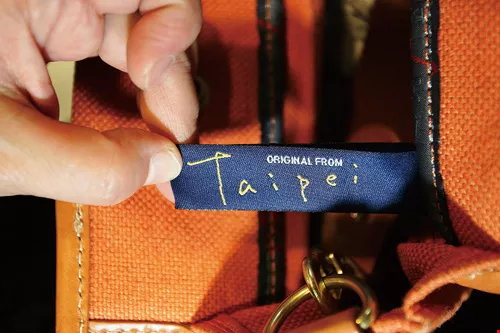
Satana's flagship store is in the Eslite building on Taipei's Dunhua South Road. The name and styling of the brand gives a first impression of being a European import, until you get to the "Original from Taipei" label. The shock this creates leads to polarized responses: Cheng explains that some consumers have no confidence in the "Made in Taiwan" label and thus underestimate and abandon Satana, while others in fact give the brand more support for being Taiwan-made. "In the past couple of years, the latter have been on the rise," says Cheng.

European experience
Phyllis Cheng and her husband, company president Yue Minglei, already had 20 years experience as agents for European and American bag brands. When the boss of the Taichung bag factory where she was a secretary ran off, Cheng had to grit her teeth and take on the orders that were waiting to be filled. Thanks to connections developed through a Belgian firm she had worked with, Cheng became one of the three founders of Belgian-based bag brand Kipling, handling product development and purchasing. Along with this, she worked with one of her partners from Kipling on her own brand, Hedgren, working on product development, purchasing, production, and other front-end business. From taking the orders in Taiwan to moving production to mainland China, Cheng could handle it all.
In 2000, when business was booming for Kipling, management took up an excellent offer, selling the company to UBS, the Swiss bank holding company. With the company changing hands several times thereafter, handling personnel issues became increasingly difficult, and Cheng increasingly had the feeling that she was toiling purely for others' benefit. So in 2004, at age 50, she decided to head out on her own.
As Cheng notes, Taiwan's bag industry has tremendous manufacturing capacity, and if it could combine that with marketing and design talent, there is massive potential there. Cheng decided to dive in. "I'd had this experience helping Kipling; why not take that experience and put it to use building a fashionable, high-quality brand?"
Attitude and life
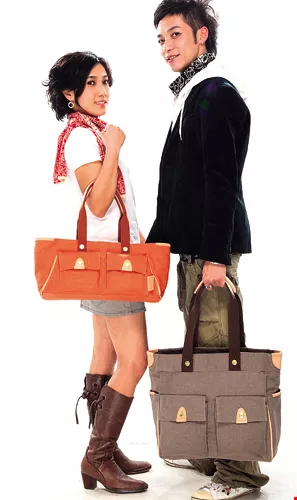
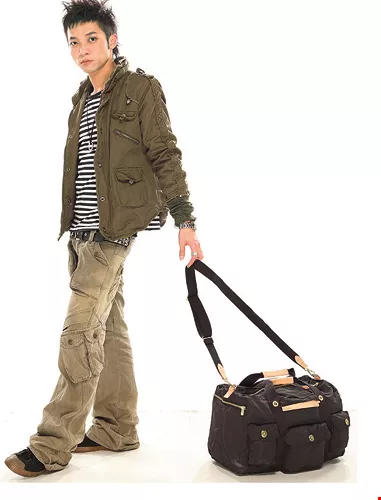
"Big isn't necessarily beautiful," says Yue Minglei of their decision to forego mass production in favor of "refined production." In the past four years, Satana has sold almost 1,000 bag models, including nylon, leather, and cloth bags, each with its own distinctive combination of function and aesthetics. "At Satana we're very picky about every aspect of the bags, from the lines of the design to size to quality of materials," says Cheng, pointing to the company's 929 Series as an example of their approach-aimed at office workers, this range of bags is designed for a wide variety of uses and to be with you from nine in the morning 'til nine at night. While the exterior of the bags is low key, the interior has a lush peony lining, with even the petals of the peonies on the lining carefully planned out.
Another series, "Tribute to the Masters," boasts bags themed around the works of French poet Baudelaire and godfather of pop art Andy Warhol, with elements of each master's works incorporated into the bags' designs.
"Once we get a bit bigger, we'll also work to support more Taiwanese designers," says Cheng. Ideally, Satana hopes to become Taiwan's answer to agnes b, a well-known French brand founded by an artist that provides funding support to arts groups. This is both dream and goal for Satana.
The final piece
Cheng's plan since the beginning for Satana has been to get the company up to a certain level, and then complete the picture, adding a little angel to complement the devil of their name.
"We're still in our 'devil' stage," says Cheng, noting that growth in the company's first few years has been gradual and there have been a few missteps along the way. On top of that, maybe due to scaling issues, maybe due to the poor locations of some of their seven stores islandwide, and maybe due to the current weak economy, despite their good reputation in the industry Satana is still running at a loss.
"Good things take time, and I'm in no rush," says Cheng. The company has recently been through a big shakeup and hired a new creative director, and Satana is hoping to achieve stable growth in 2009. In Cheng's words, "As long as we can keep the brand going, I'd call that a win."
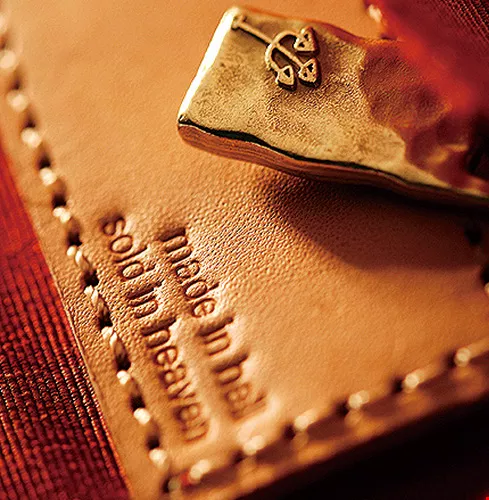
"Made in hell, sold in heaven." Satana adds a bit of naughty charm to today's hectic lifestyles.
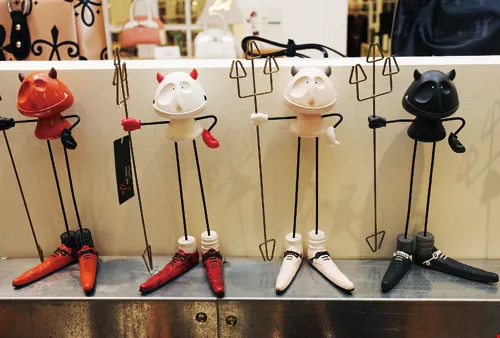
"Made in hell, sold in heaven." Satana adds a bit of naughty charm to today's hectic lifestyles.
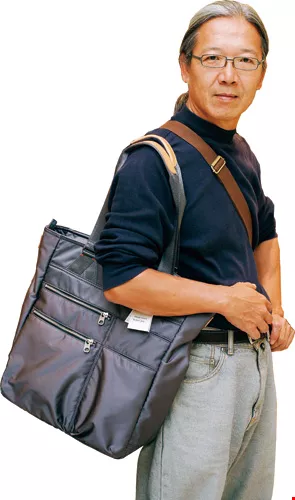
General manager and creator of Satana Yue Minglei sees the brand as the final piece of the puzzle that is his life-it may be difficult, but it makes his life complete.
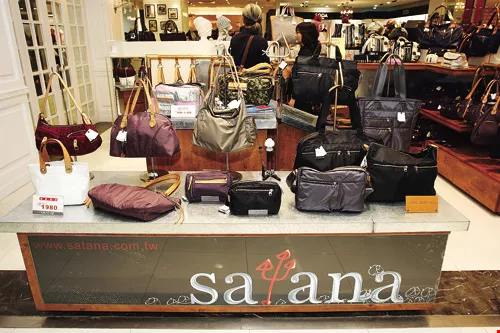
From design, through manufacturing, to marketing, everything about Satana is "made in Taiwan," a point that always catches the attention of shoppers in department stores.

@List.jpg?w=522&h=410&mode=crop&format=webp&quality=80)


