In an old joke from Szechuan, two officials from another province go to dinner in a Szechuan restaurant. They order their food, and then ask the waiter, "Don't put in any red, okay?" The waiter smiles and asks, "In that case, sir, what did you come here for?"
The "red" of course refers to red peppers, found seemingly in almost every part of Szechuan cuisine, as well as in the dishes of Yunnan, Hunan, Kueichow, and Kiangsi. Visitors to Nepal can find red peppers drying on the village rooftops, and those who enjoy Korean, Indian, Thai, or Vietnamese food often taste its spicy tang on their palates.
Even animals are not immune to its flavor. Scientists found that mixing the spice in with rat poison lured rodents large and small. Fighting cocks became lovers after a few bites, and one experiment showed that red peppers could help farm fowl grow faster.
What gives the red pepper its kick? According to Ts'ai P'ing-li, horticulturist at National Taiwan University, the seeds of the spice excite the tongue's taste buds and the mucous membrane of the mouth. Once in the stomach, they speed up the blood circulation and stimulate the stomach walls. These traits make red peppers a favorite spice of inhabitants of cold weather regions looking to keep warm and those in tropical areas seeking something to whet their appetite.
Red peppers have several other uses. They can reduce swelling and help the body fight off disease. They can serve as an anti-oxidation and anti-spoilant agent, a sudorific, and a stimulant. Even your hair can benefit from red peppers, and popular wisdom claims that Kueichow women have thick hair due to their red pepper-seasoned diet. Rubbing a bit on your heel and inside the shoes can warm the feet, but it should be done in moderation, or otherwise headaches can result.
But spices are usually found in food. One account of the culinary habits of Szechuan reports that families commonly have up to 100 jars of cabbage pickled with red peppers. In some of the remoter areas where the lack of roads means goods must be borne on the backs of porters, the men, when arriving in a small village, will order a big bowl of rice, add red peppers and salt, and sit down to enjoy their meal.
Almost any food can be seasoned with red peppers. Chinese cooks will use it with chicken, fish, beef, tofu, eggplant, noodles, soup, and more. The spice itself comes in dried, pickled, paste, and powdered forms.
To properly grow this wonderful food, fresh seeds should be used with each new planting. Some farmers use the seeds from the last crop, but Ts'ai P'ing-li believes this method lowers the quality. Red peppers grow best in hot, dry areas, and those connoisseurs accustomed to the variety grown in mainland China and Japan often feel that Taiwan peppers taste "adulterated," being products of the island's humid climate.
Some farmers grow their peppers to be large and red by the time they get to market, but experts feel that by that time the plants are already past their prime. "Spiciness," says Ts'ai, "depends on the seeds' capacity, and the best time is when the peppers are turning from green to red, when seed capacity is at its peak."
Other diners are particular about the shape of their peppers, preferring the long, slender type, but recent years have seen greater tolerance on this point.
Peppers themselves, part of the solanceae family, come in many different colors. Interestingly enough, the red variety, so favored by the Chinese, came from overseas, originating in Latin America and passing through Europe before coming to China, where it gradually made its way into the spice elite of Chinese cuisine.
[Picture Caption]
The bright red pepper starts from a small white bud.
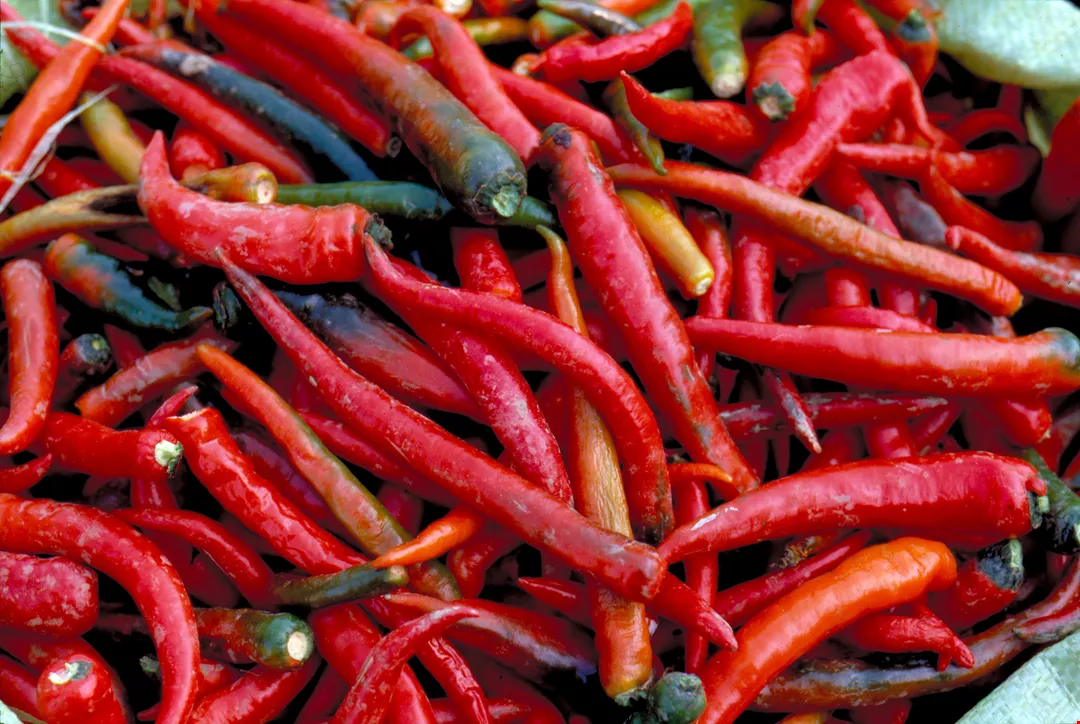
"You love the flavor and I love the color!"
Peppers after processing are pretty, too.
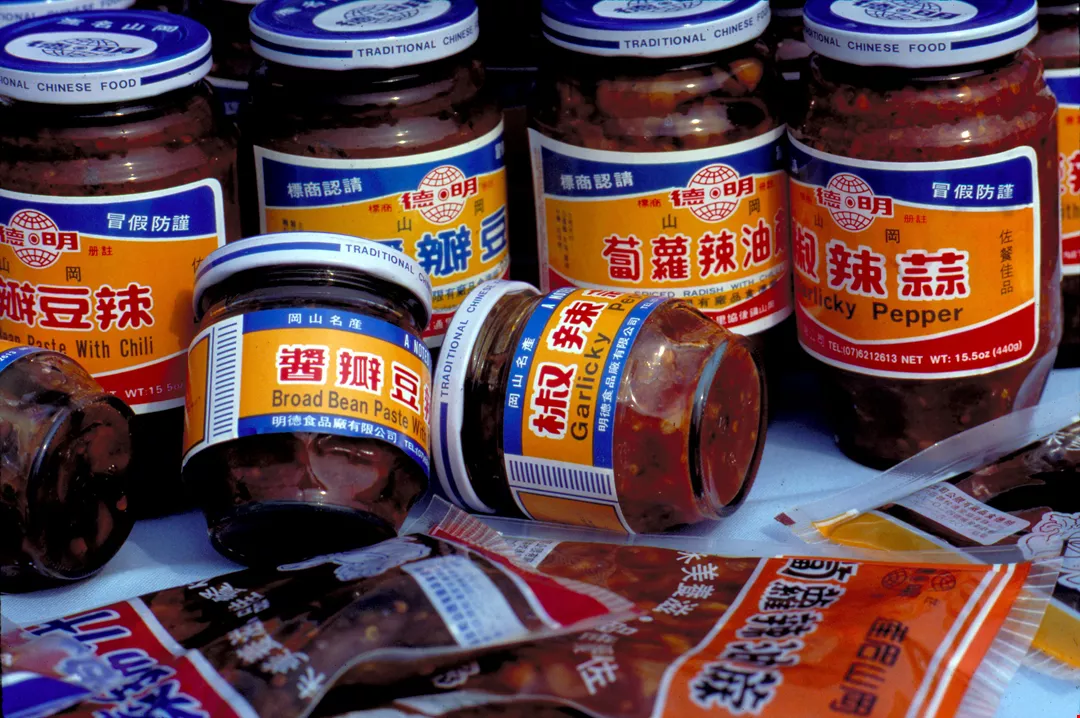
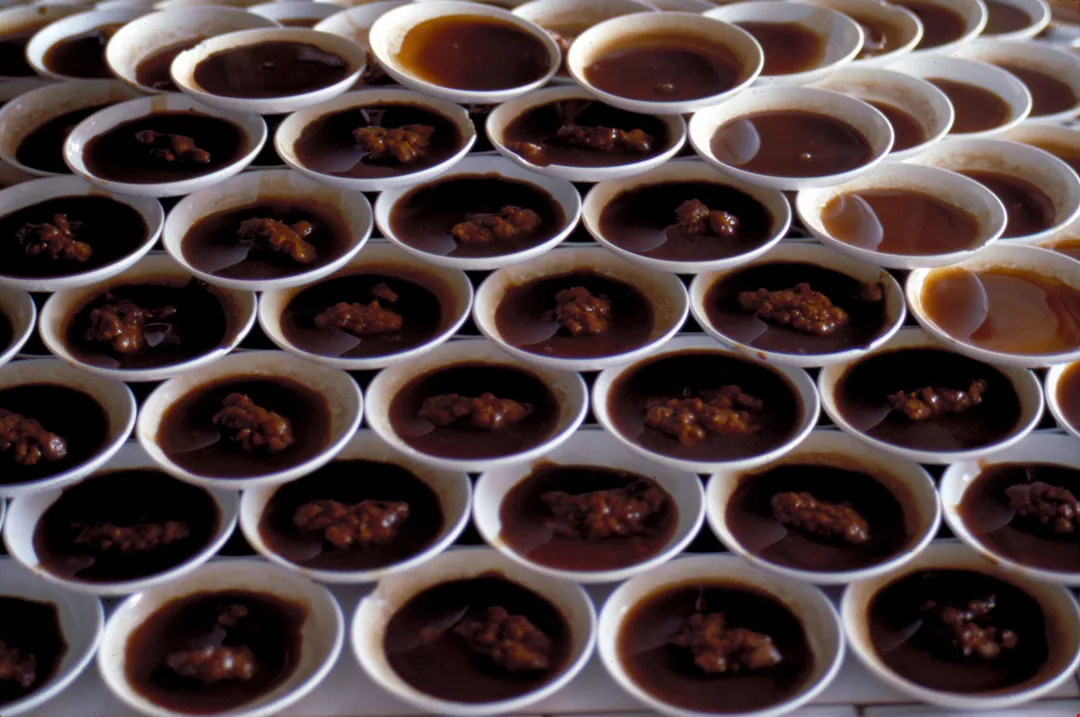
The many kinds of pepper sauce are staples of countless family diets.
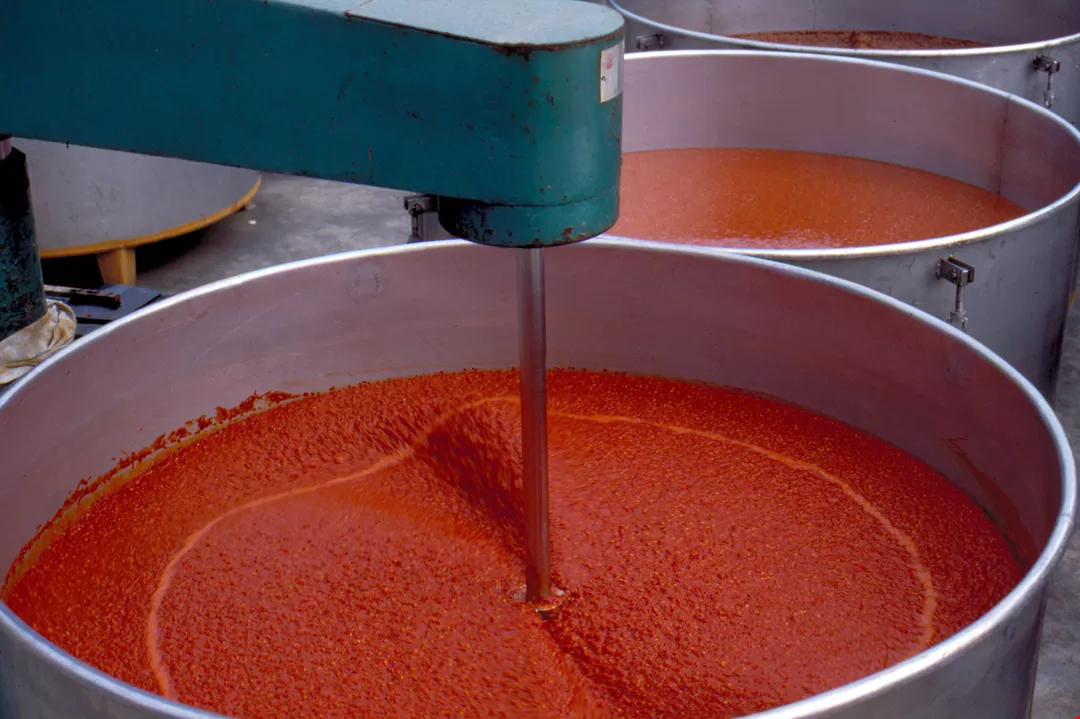
Stirring barrels of red pepper paste is a spicy business.
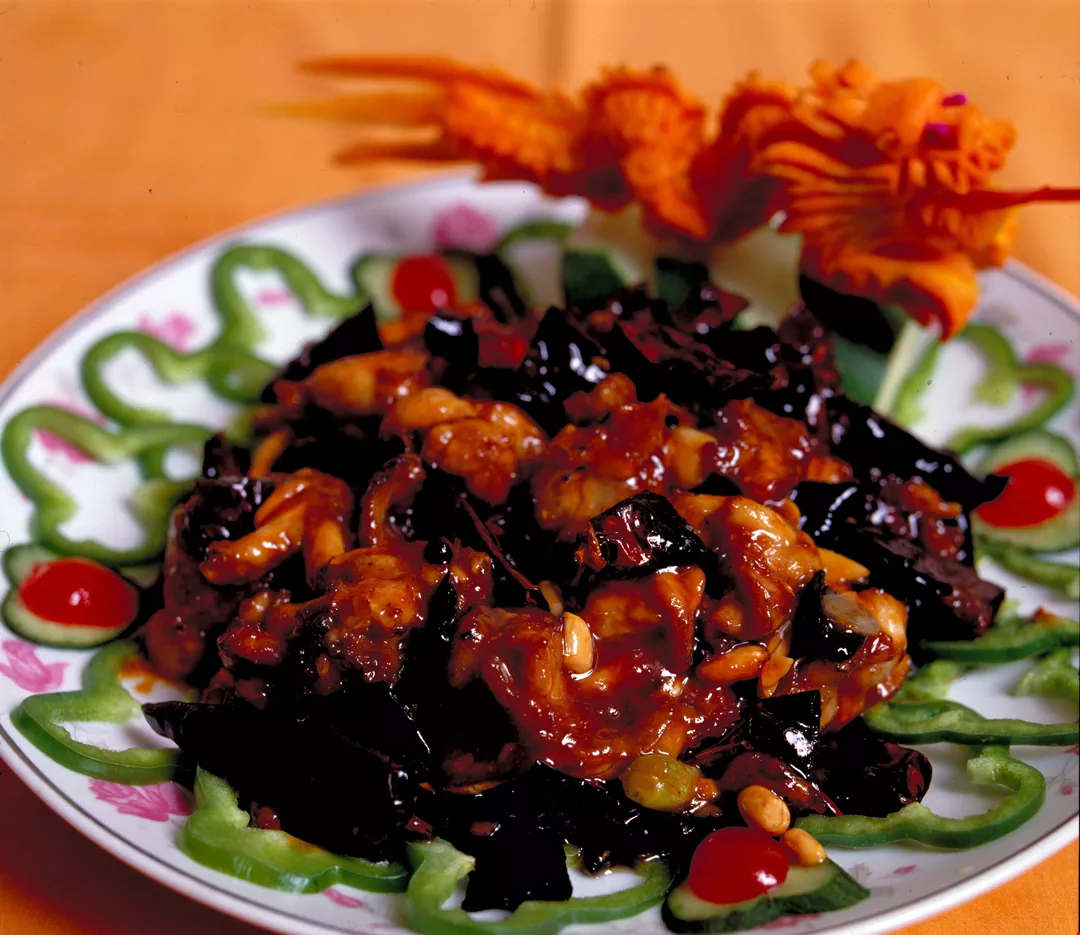
Diced chicken with chili peppers. Need we say more?
Restaurants prepare dishes of red pepper for the lovers of "hot."
The bright red pepper starts from a small white bud.
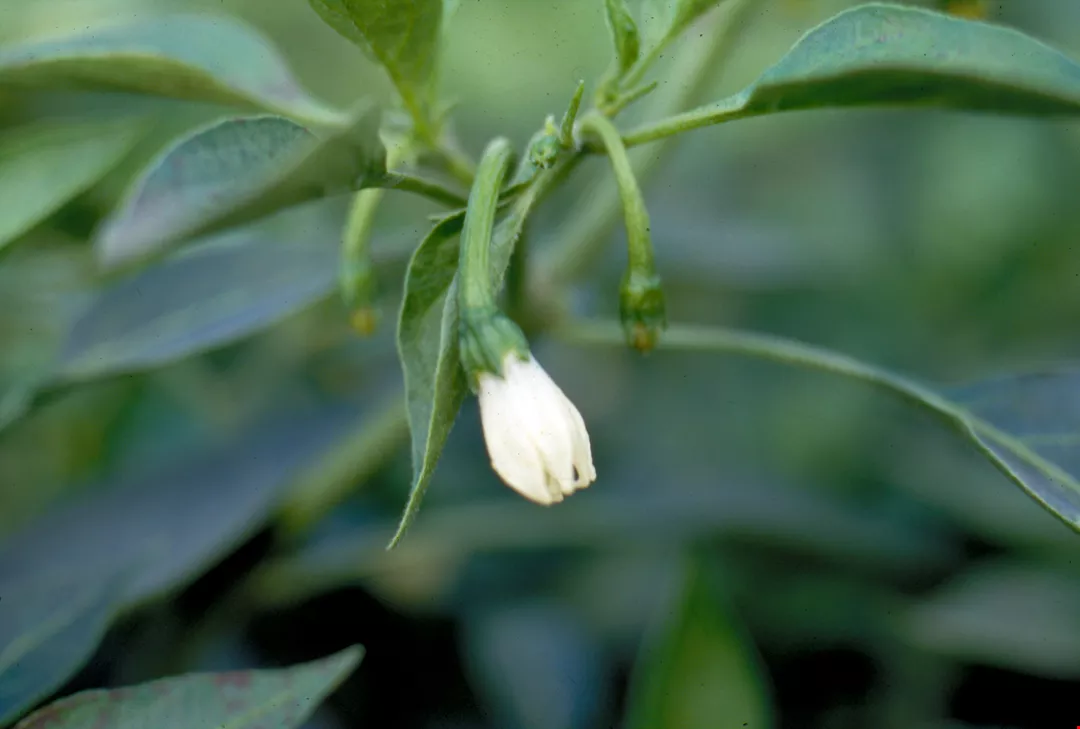
The bright red pepper starts from a small white bud.
The many kinds of pepper sauce are staples of countless family diets.
Peppers after processing are pretty, too.
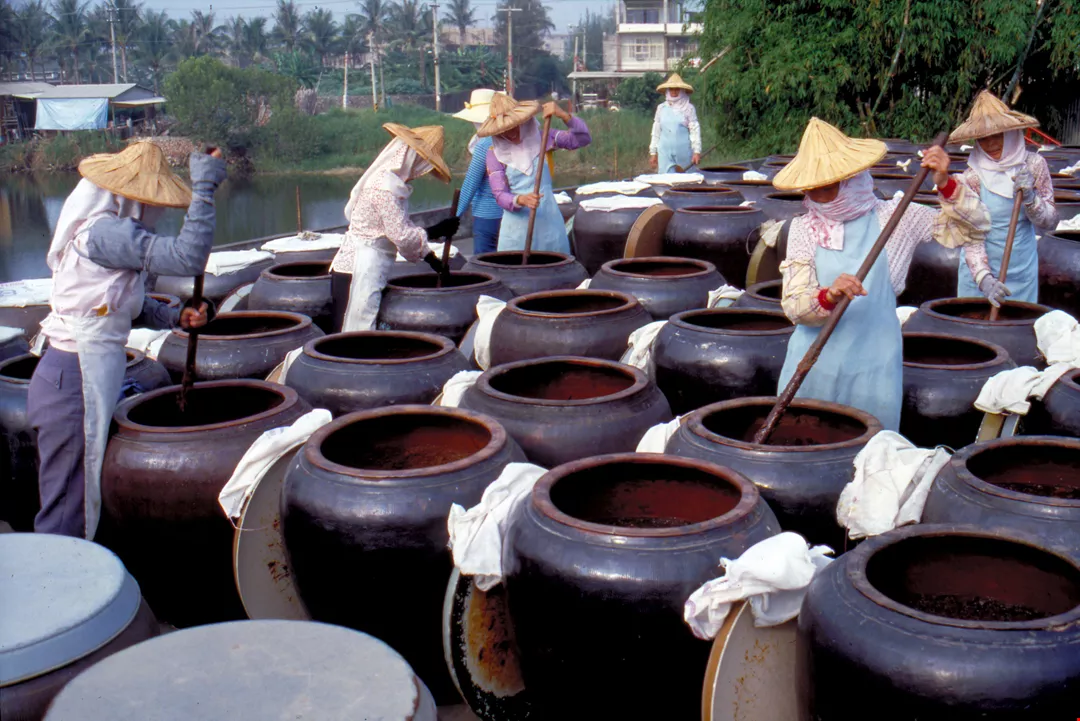
Stirring barrels of red pepper paste is a spicy business.
Diced chicken with chili peppers. Need we say more?
Restaurants prepare dishes of red pepper for the lovers of "hot.".




