Love in the Time of Cyberspace at i-Partment
Lin Hsin-ching / photos Chuang Kung-ju / tr. by Geof Aberhart
June 2008


"Find love at i-Partment!" In the five short years since its inception, female-oriented social networking site i-Partment has attracted the attention of venture capitalists from around the world and successfully gained a foothold in the Chinese market, where it is already the second-biggest social networking site.
This "shared living online" concept which has already been well received across the Greater China region was the brainchild of four 20-somethings. It hasn't been all beer and skittles for the four, as their site has already confronted strong challenges from others in the social networking space, but through ingenuity and perseverance, they've managed to secure their own piece of the Internet.
Ms Chuang, known by the handle "naivone" online, is a veteran netizen, and she and her husband-who goes by the Chinese handle "Gui Huli" ("Ghost Fox")-met and began their relationship at i-Partment. Eventually they chose to take their romance out of cyberspace and down the aisle in the real world.
Ms Chuang says that while initially she "lived together" with another netizen in her i-partment, when he learned of her marriage he chose to "move out." Now her "housemate" is her husband, and sharing both their online and offline lives has only enriched their relationship.
She explains that while in real life her husband is a man of few words, online he feels free to open up. Sometimes, after the two have had a fight, he will go online and, in avatar form, send her flowers and gifts as an apology. The two also use their common online diary to share their feelings.
For Ms Chuang, her i-partment has gone from being a place to share her innermost thoughts and feelings to a second dream home for her and her husband.

The four founders of i-Partment-(clockwise from top left) Lin Tung-ching, Chang Chia-ming, Lin Chih-ming, and Shu Yu-fan-were all classmates at high school, and together they have come up with a website that is taking China, Hong Kong, and Taiwan by storm.
Taiwan's golden goose
Ms. Chuang is just one of legions in the Greater China region that have made i-Partment a big part of their everyday lives.
In the five years the site has been up, it has attracted 1.4 million members in Taiwan alone, threatening Yahoo! Taiwan's dominance of the online dating space. Peak time on the site is between 10 p.m. and midnight, with as many as 30,000 users online at any given time. Since i-Partment broke into the Chinese market in 2005, its membership there has surpassed 10 million, making it second only to local dating website 51.com in China, and the site continues to grow. i-Partment's advertising revenues in the first quarter of 2008 were up 1500% on the same period in 2007, and the site's Chinese and Taiwanese operations combined are expected to make as much as NT$400 million this year, making it the golden goose of Taiwan's online sector.
i-Partment's moneymaking potential soon attracted attention from significant potential investors, not least of whom was Google. This past February Singaporean securities firm DBS Vickers, which in the past has invested in Chinese search-engine giant Baidu, slipped in before Google, successfully signing a letter of intent with i-Partment agreeing to inject US$8 million (approx. NT$240 million) into the site.
All of this raises the question, how did four 20-something men manage to so successfully create a social networking site aimed at women and win the adoration of their target audience to such a degree?

Starting from scratch
The four founders of i-Partment-Chang Chia-ming, Lin Chih-ming, Lin Tung-ching, and Shu Yu-fan-are old friends who've known each other since all being in Class 844 at the Affiliated Senior High School of National Taiwan Normal University.
Eight years ago Chang Chia-ming, then a student of economics at National Chengchi University (NCCU), and Lin Chih-ming, a junior in information management at Tamkang University, decided to take part in a mock entrepreneurship competition held by NCCU's Department of Management Information Systems. While they didn't win, the exercise did spark the two's interest in starting their own company. Every Friday night throughout their senior year, the two would meet at the cafe on the second floor of the Eslite bookstore on Taipei's Tunhua South Road to drink coffee and brainstorm business ideas. When they hit on an idea, they would head into the bookstore proper and look for information. Generally, though, they ended up just sitting around and ogling the pretty girls in the store.
After sitting around like this for almost a year, the two were struck by a bolt of inspiration. They'd already considered opening an Internet cafe, a tutoring website, and an online advertising network. They'd even thought about opening a high-class teahouse to compete with Starbucks and promote tea culture. After laying out all the plans for the teahouse idea, they soon realized that Ten Ren Tea had beaten them to the punch with their "Cha for Tea" chain, and that they would just be a small fish in a big pond.
The teahouse idea done with, the two decided to try their hand at creating a dating website. At the time, this was a relatively untapped market in Taiwan, with only a recently started attempt by PChome, so Lin and Chang saw great potential in their latest idea. At a high-school reunion, the two sought out old friends Lin Tung-ching, then a student of pharmacy at Taipei Medical University, and Shu Yu-fan, an advertising major at NCCU. Together, the four gathered funds of NT$1 million and started their own company, marking their entry to the world of the Internet.

Loved by women
The four young men began working out of an extra room in Chang Chia-ming's apartment that had been converted into an office. Taking inspiration from famous US dating site Match.com, they set to designing their own platform. The end result finally went into closed beta around October 25th 2002, the same time Yahoo! Taiwan's own dating site went live, and the specter of the Cha for Tea incident once again reared its head.
The four knew that if they took on the massively resourced Yahoo! head-on in this sphere, they were sure to lose. Having already burned through half of their initial funds, if they failed the best they could hope to do with what was left was open a fried chicken stand. They initially considered just cutting their losses and bailing out, but soon realized they'd regret giving up so easily.
"Instead of splitting up what we had left, we decided to go all-in. If we lost, we lost, but if we won, we'd hit the jackpot," recalls Lin Chih-ming, who today serves as i-Partment's deputy executive director.
To distinguish themselves from Yahoo!'s offering, they decided to take the opposite route-where most dating sites are aimed primarily at men, their site would instead become "Taiwan's number-one dating site for women." The four spent hours and hours consulting with their female friends, and even handed out surveys on the streets in an effort to better understand what women wanted.
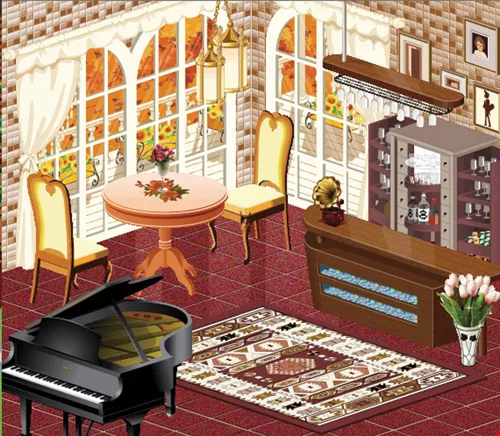
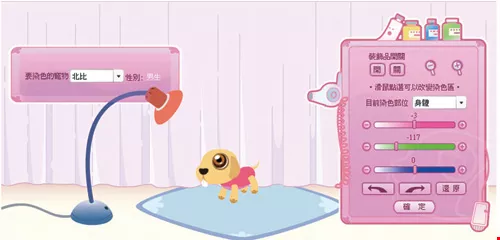
In August 2003, i-Partment officially went live, foregoing the usual focus on photographs and measurements for a more cutesy, feminine-style site. Users could play designer on the site, which offered eight different kinds of "apartment," and could even build their own garden and grow virtual flowers. This created a distinctly different experience, and was the foundation upon which i-Partment's success was built.

Living together in a virtual world
The moment the site went live, its unique style instantly attracted attention and went viral, with user numbers soon growing exponentially. They began advertising using the slogan "Cohabitation Online" and quickly drew huge numbers of devoted supporters.
Lin says that with their focus on female members, they decided to only offer "apartments" to women, to which the women could invite men who took their fancy. In real life, women are understandably hesitant about inviting strangers into their homes, but online it's much more feasible.
These apartments quickly became the main selling point for i-Partment, and spawned a number of tales of romance, including that of one woman who went from singleton to happily married after just 18 days on the site.
Lin notes that the site is a particular favorite of long-distance lovers. To them, phone calls and instant messaging are too immediate and lack feeling, while email is too staid and slow, but sharing an online apartment is something different-with a shared diary and "residence", the two can create a warmer, more intimate environment and make themselves feel closer together, overcoming the psychological effects of living far apart.
Interestingly, while originally only women were allowed to apply for apartments, soon the male membership began to speak up, saying they would like apartments too, and so the process was opened up to all users. Cohabitation arrangements were also opened up, so that no longer were things limited to heterosexual couples-same-sex couples or friends were allowed to live together, giving all users a space to share their deepest feelings in a private setting.

Breaking into China and Japan
With hype sufficiently high, in 2004 the site began operating a pay service, with VIP membership costing NT$79 a month. By April that year i-Partment broke even, and then began to expand once more. In early 2005, plans were made to make a move into the China market, but since the four entrepreneurs running the site had insufficient funds to make that move, they sought out investors in Taiwan. They even offered 1% shareholdings for only NT$500,000, but still they received no interest.
Ultimately convinced that if they wanted to do this, they'd have to do it themselves, the four pulled together and, in May 2005 and with NT$3 million, established a branch office in Shanghai. The plan was to test the waters for six months, and if things weren't looking good, they'd pull out and return to Taiwan.
In July 2005, one month before i-Partment's China service was to go live, Korea's largest dating site Cyworld suddenly announced a Chinese division, buying up ad space on major websites. Once again the memories of their competition with Yahoo! just two years prior were brought to the surface.
How could they win this battle when they were clearly outgunned? Once again, their entrepreneurial spirit shone through. That Chinese New Year, they offered users the chance to write new year's couplets to decorate their apartments, and later that year China faced problems with flowers rendered toxic by pesticides, so i-Partment offered their own online flowers which were, naturally, non-toxic. This offering caught the eyes of journalists and soon became the topic of news pieces.
They were also able to make use of Taiwan's entertainment media, and working in cooperation with HIM Inc. they were able to get Taiwanese all-girl pop group S.H.E., then enjoying a boom in popularity in China, to take up online residence in the Chinese version of i-Partment and share their thoughts with their fans. This step-by-step approach saw i-Partment soon relegate Cyworld to little more than an afterthought, and soon they became the number-two dating site in China, second only to 51.com.
Japan is the next target for i-Partment. Talks are expected to be completed by the end of the year, after which the Japanese version of the site will go live.
Protecting against fraud
While things are looking up for i-Partment, as the business grows they, like every other dating site, face the threat of fraudsters trying to scam users out of money and dignity. Internet user Lin Ting-wu has already been a victim, inadvertently shacking up with a scammer from China on the site.
"She said her boss was about to open up a gaming site in Taiwan, and asked me to provide my ID number, bank account, and other such details. This all seemed strange to me, and so I made the diaries and her supposed identity public. Eventually I found out there were others who'd been similarly approached and scammed."
Lin says that with such huge numbers of people on the site, they need to further strengthen their anti-fraud measures and user authentication procedures in order to prevent the site becoming a hotbed of fraudulent activity.
In response to such criticisms from users, i-Partment PR coordinator Cheng Ya-ting admits that verifying identities online can be difficult, and says that as part of their efforts to make users aware of the need for safety, two years ago they held an "anti-fraud" writing competition, and they currently have a detailed list of guidelines on the front page.
"We're also working on a system by which users can, when they meet, detail who, when, and where they meet. After obtaining the agreement of the other party, details of the meeting will be sent to the first party's other online friends. If anything untoward should happen, this system and the records it creates will also prove a valuable source of information," says Cheng.

Back to reality
Bringing their users out from the Internet and into the real world is the next step for i-Partment. They are already working with TV stations CTV and Star TV Chinese on the program Supermatch, and the site itself has become one of the main online matchmaking services in the Greater China region. In late March and mid-May this year, i-Partment has organized two events for users at Yamay Recreation World in Taichung County, with each attracting about 80 signups and earning rave reviews.
Lin Chih-ming says that many people still have their doubts about online dating, and so such sites should take more responsibility to protect their users. "Events held by the website are a safer way for users to meet face to face and help their interactions flow more naturally, which in turn improves the odds of finding love."
In just a few short years, i-Partment has carved out its own space in the online dating world, and even successfully moved into the overseas market. In the process, it has become a major star in Taiwan's online world. While there is no shortage of fly-by-nighters and copycats online, i-Partment has stuck it out and continues to grow.
Lin says that it would be hard to copy their site's success, since even if someone could copy the site's structure, replicating the entrepreneurial spirit, business philosophy, customer service, and basic know-how that underpin it would be nigh impossible. "And that's probably why we're not too worried about getting ripped off."





At present i-Partment has around 30 staff in Taiwan and around 60 in China. The average age of their staff is 27, and their youthful vigor has helped give the site the constant stream of innovative ideas that is keeping it riding high.






(facing page) i-Partment has begun stepping out of the virtual world and into the real world by organizing get-togethers for its users. Each one so far has drawn in over 80 attendees and got rave reviews. This photo shows the mid-May event held at Yamay Resort in Taichung County.