Berg Wu: World Champion Barista
Lee Hsiang-ting / photos Berg Wu / tr. by Jonathan Barnard
October 2016


If you really like doing something, you’ll want to do it the best you can!
Since 2013, for three years straight, Berg Wu has reigned as king of Taiwan’s baristas. And at the 2016 World Barista Championship in Dublin, he was crowned world champion, a first for a barista from Taiwan.
To realize this dream, Wu left a high-paying job to open a coffee shop. Drawing from his engineering background, he applied data analysis to the brewing process in order to best the champions of 60 other nations.
The World Barista Championship has long been regarded as the most important coffee competition in the world. Its competitors must first win their national competitions to earn the right to compete against the best from around the globe.
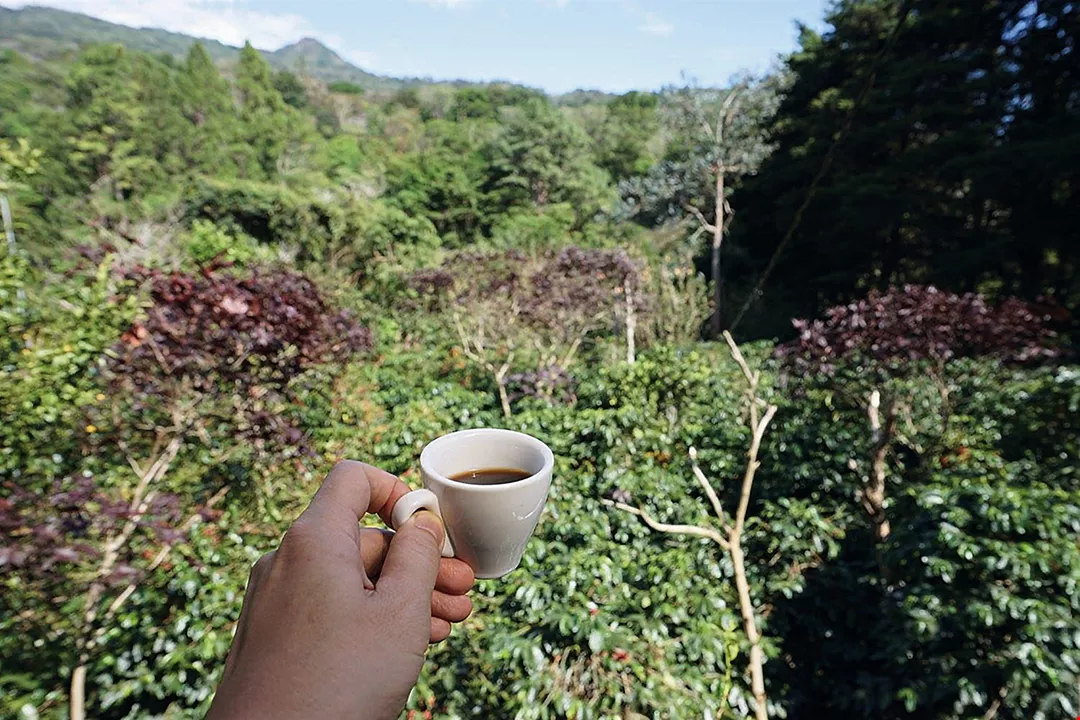
Leaving a high-paying job to open a coffee shop, Wu drew from his engineering background to quantify the coffee-making process in marching toward his dreams. He expects to remain focused on coffee in the years ahead.
Losing—the best motivator
Back a year ago, at the 2015 WBC in Seattle, Berg Wu’s second, competition staffers had changed the settings on his grinder while moving it. In the audience Wu’s wife Chee Lu could tell that its speed was clearly off. On stage, Wu knew it too. But he remained calm and completed all the steps in the process, smiling as he passed the cups to the judges.
While they were waiting for the scores to be announced, Wu walked backstage and calmly told his wife: “Honey, next year we’ll come to compete again.”
When the word came that Wu would not be competing in the final round that year, Lu was very upset, bursting into tears. Wu, on the other hand, calmly told her that he had performed fine, and that it was only the coffee grinder that was at issue. He’d have a chance again the next year.
In truth, Wu had been preparing for this summer’s competition for eight years.
When he first watched the 2008 WBC in Denmark, Wu was excited at seeing the superb performance of champions from around the world. “Everyone on stage was a world-class barista,” he recalls. “I was thinking how awesome it would be if one day I could be up on that stage.”
Since 2009, he has competed for a chance on that stage every year. He fell short the first two years, but since 2013 he has been crowned Taiwan champion three years in a row. In 2014, he competed for Taiwan at the WBC for the first time and earned seventh place, and the mistake in 2015 did not discourage him. Finally, in 2016, his innovative use of chilled portafilters and his technique of infusing essential oils into an expresso drink with nitrogen helped him earn the highest marks from the judges.
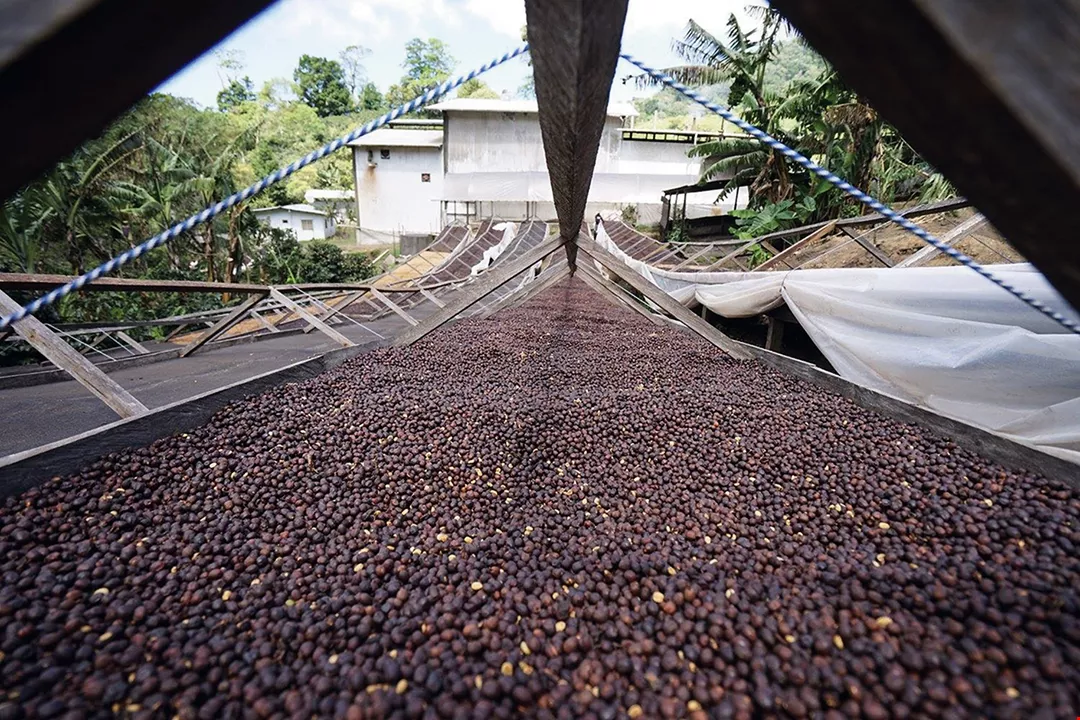
Wu personally visited many coffee plantations before selecting the Geisha coffee produced at the Finca Deborah farm in Panama for the competition.
Unique techniques earn kudos
Wu says he discovered the difference that a chilled portafilter makes one time when he brewed some coffee for a customer and tried what was left over: “I discovered that by cooling the portafilter before returning it to the machine, it was possible to preserve the coffee’s sweet and fragrant aromas. It also added to the smoothness of its mouthfeel.”
After the competition, a judge went backstage and told Wu that his first sip of Wu’s coffee offered an incomparable surprise with its aromas and flavors. It was only out of professional obligation that the judge could exercise patience and contain himself. Another judge wrote “WOW!” on his scorecard. Wu is visibly moved when he recalls these words of encouragement.
Then there was his method of using nitrogen to infuse essential oils into an espresso drink. In the extraction and concentration stage Wu pulled out a serving of espresso, and used the shaker to combine it with some cold-brewed earl gray and a honey-and-mandarin essential oil reduction, using nitrogen to allow mandarin and jasmine essential oils to infuse the whole concoction. During the competition judges said that it was the best creative coffee drink they had ever tasted, and he earned a record-breaking 70.5 out of 71 points for technique. His combined score, moreover, surpassed by more than 30 points the record set by the previous year’s champion.

Berg Wu says there is no perfect coffee in the world. It is only by constant trial and error that one can find the most distinctive coffee flavors.
Quantifying variables
For the coffee beans to use at the competition, Wu flew to Panama for Geisha coffee beans grown at the Finca Deborah coffee farm at an altitude of nearly 2000 meters. The coffee carried aromas of flowers and honey. Wu decided to use this coffee for the competition because he identified with the farm’s production and management ethos. In truth, because of Wu’s previous achievements, many top coffee growers came to Wu, hoping he would use their beans at the competition, but he was determined to maintain creative freedom and didn’t like to be hemmed in. This trait of Wu’s was exemplified by his use of ceramics from Yingge in New Taipei City. He made the choice after personally shopping for many cups in Taiwan and trying them out.
Preparing for the competition was a constantly evolving process, involving eight years of training. Wu’s secret is found in the word “efficiency.” He looks for problems, solves them, and then innovates. A single cup of good joe has countless variables that determine its qualities, “from bean selection, roasting technique, brewing equipment, and procedure, to choice of cup, and finally way of serving.” This comment bears witness to how captivated Wu is by coffee.
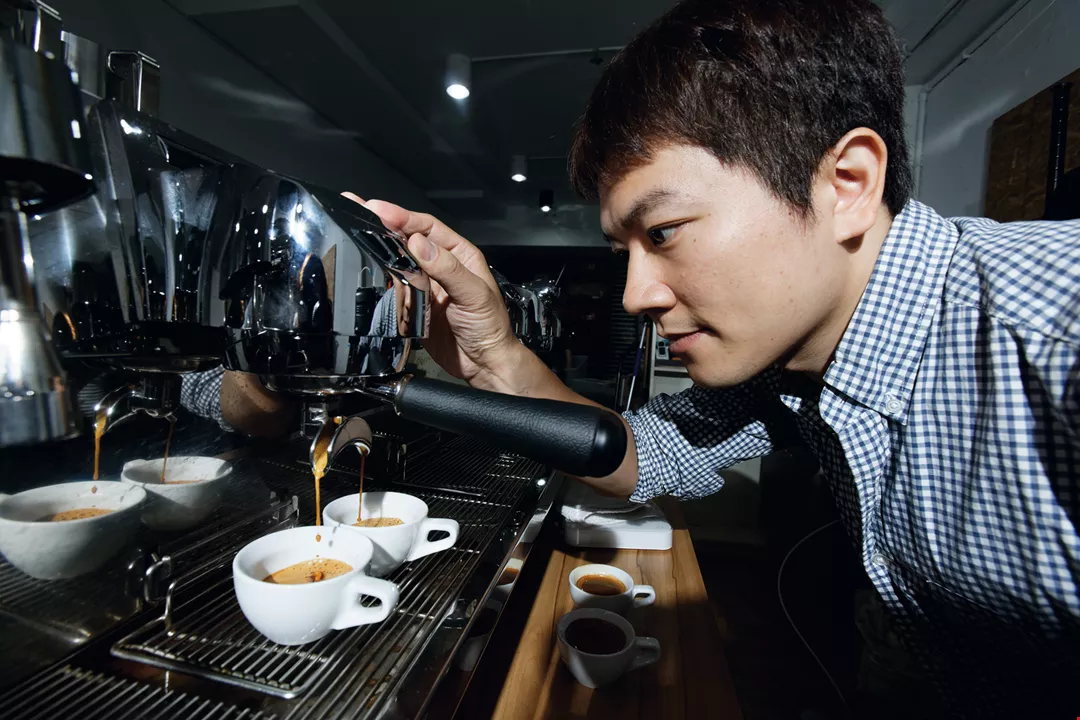
Wu’s superb brewing technique is backed up by his determination and perseverance. (photo by Lin Min-hsuan)
From tricycle to shop
In college he began to come in contact with coffee when he’d go to coffee shops with Chee, who was then his girlfriend. The two got interested in the subject, and would frequently go online to leave posts on coffee forums. Wu took great pleasure in brewing coffee for others’ enjoyment. “From a young age, I loved cooking and making desserts. I’d give a go at cooking whatever I wanted to eat, and I particularly enjoyed cooking for family and friends. It’s my personality. For the same reasons, I like making coffee for people.”
Starting by brewing with a French press, Wu was immediately captivated by brewing and even considered opening a streetside coffee stall. And so, despite having a prestigious degree in electrical engineering from National Taiwan University, on weekends and holidays he’d ride a tricycle stand of his own design around the Jingmei and Gongguan areas of Taipei to sell coffee. Fascinated by the feedback he got from his customers, he eventually made plans to open his own coffee shop.
After graduating, he worked as a patent engineer up until 2011 when he decided to quit his high-paying job and open a coffee shop. “I made the decision thinking that even if the shop didn’t have a large clientele I could use it for my personal training.” Wu recalls that process of starting a business and participating in competitions: Even when business was slow, he would still stand at the bar and practice his brewing techniques quite happily.
“He could spend all day alone quietly making coffee with great concentration and patience, keeping an even keel and avoiding getting too high or too low,” recalls his wife about his focus on the world of coffee. “Even when he lost a competition he’d only get down for a moment. He’s a psychologically sound competitor.”
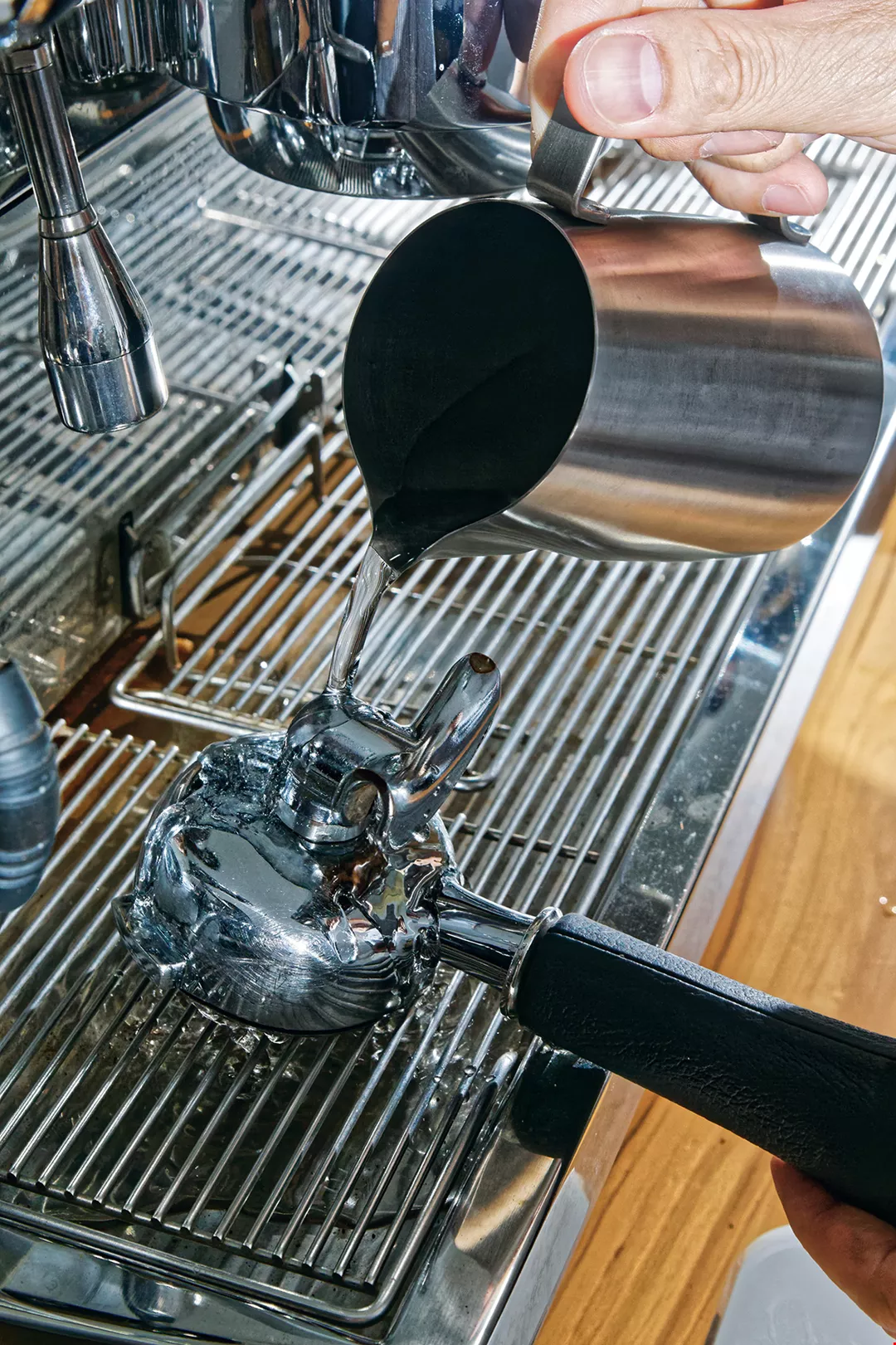
One of the keys to his championship success: chilled portafilters. Wu cooled the portafilters with iced water to preserve the coffee’s floral notes and smooth mouthfeel. (photo by Lin Min-hsuan)
If you like it, do it
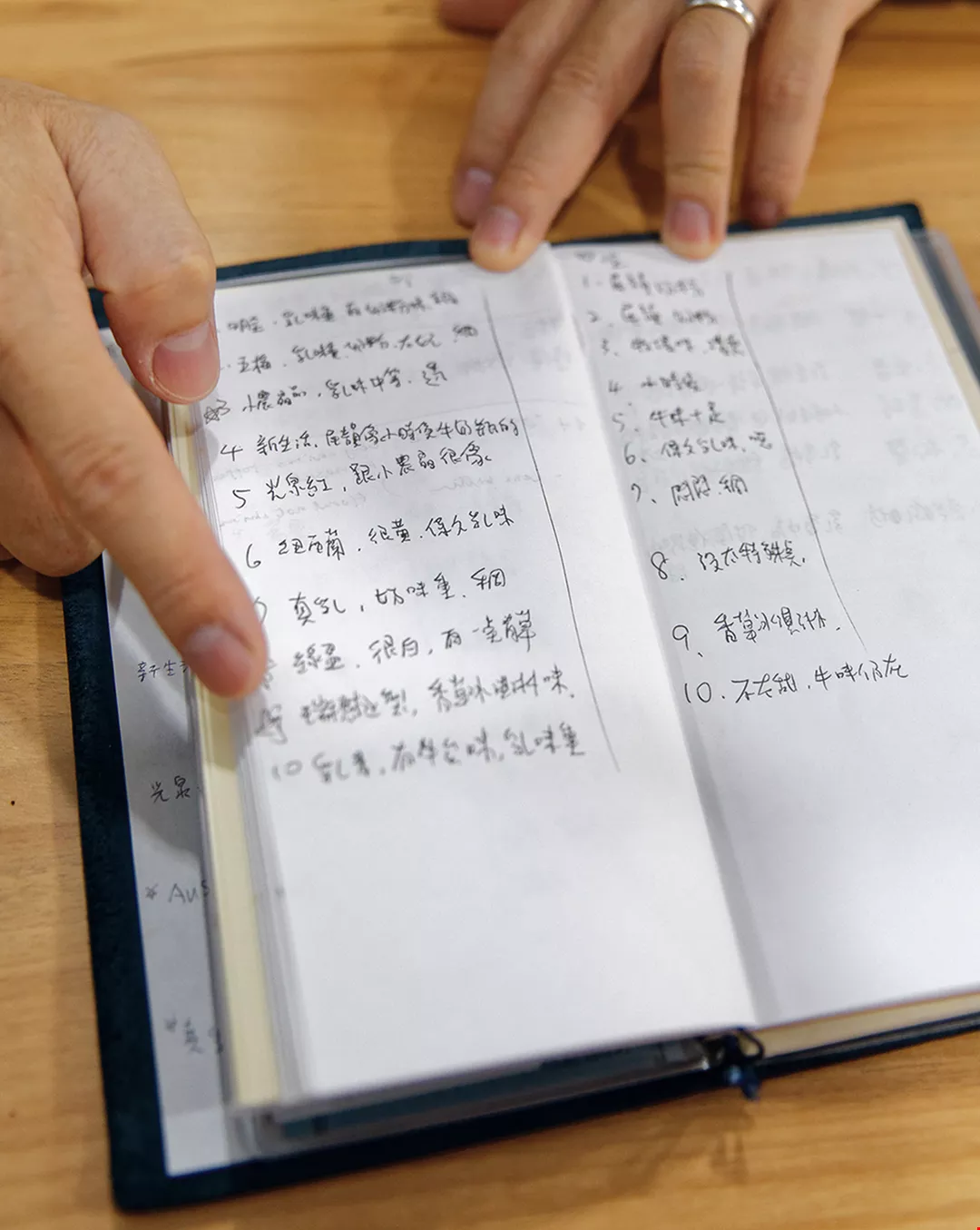
To find the best flavor, as soon as Wu received new beans he would tirelessly and without complaint begin recording the nuances of the coffee’s taste and mouthfeel every hour as he degassed the beans. And during competitions he would often get up in the middle of the night to take notes about the beans as they were degassing.
In order to lessen the impact of the differences in water and milk when he went abroad, while he was in training in Taiwan he would make notes about flavor and mouthfeel differences and commit them to memory. In his notebook he would also record the impacts of temperature variations on milk.
Chee says that Wu had to keep his senses of taste and smell in a state of high sensitivity for long periods. He even took notes about the sensations coming from the taste buds on different parts of his tongue. Although he would often eat spicy food, he couldn’t eat food that was too hot temperature-wise. And during the month before a competition, he would intentionally confine himself to light and mild fare.
Currently planning on expanding his roasting business, Wu is very concerned about the local production of coffee beans. “If I get back into the world of competitions,” he says, “the reason would definitely be because of Taiwan-grown beans.” Wu is very happy to share his experience with the Taiwan coffee world. He hopes that Taiwan will be able to produce high-quality, distinctive beans, so that he can ascend the world stage once again with a distinctly Taiwanese cup of joe.
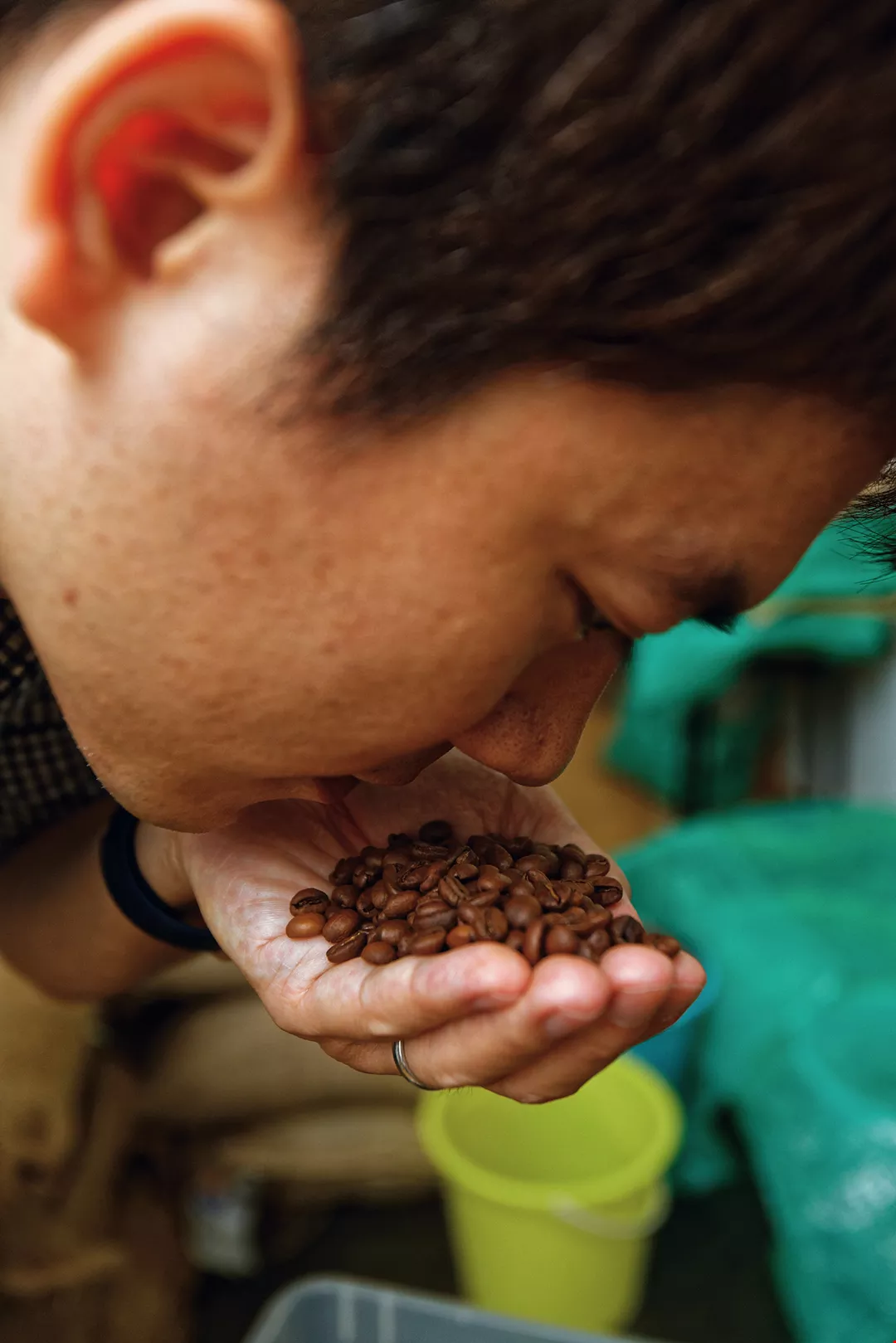
Wu personally visited many coffee plantations before selecting the Geisha coffee produced at the Finca Deborah farm in Panama for the competition.
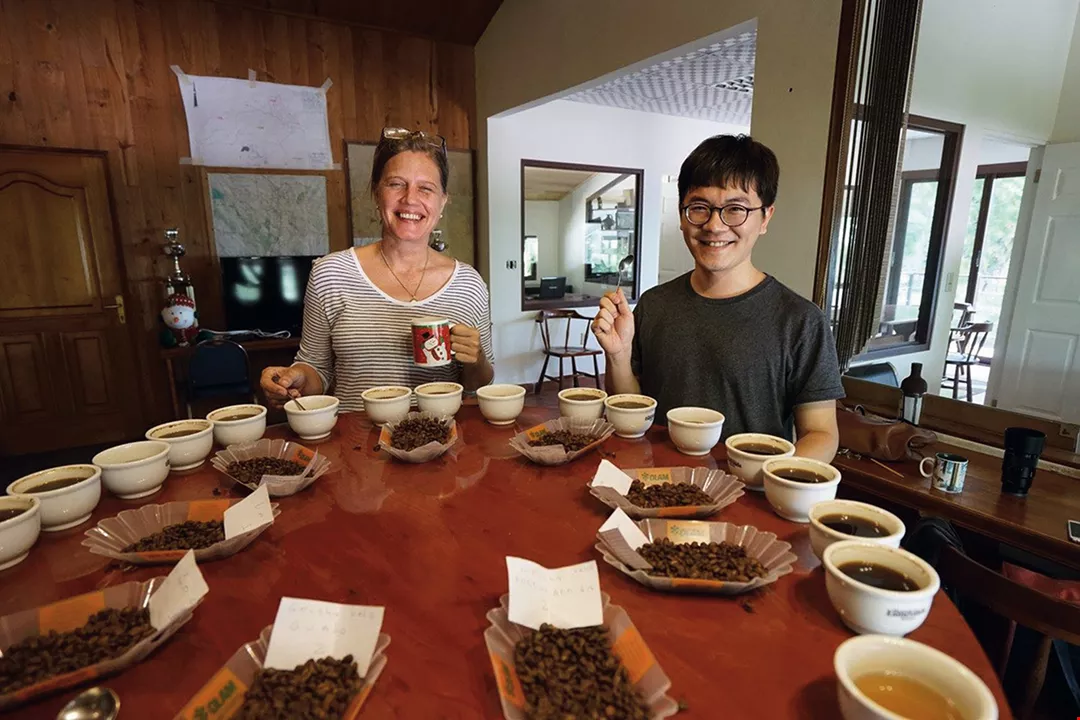
From choice of beans, roasting technique, and brewing method, to selection of equipment and method of presentation, there are countless variables affecting the experience of drinking a cup of coffee. The need for wide-ranging attention to detail is what most captivates Wu as a barista.
@List.jpg?w=522&h=410&mode=crop&format=webp&quality=80)


