Bicycles from Taiwan,Land of the GIANT!
Yang Ling-yuan / photos courtesy of Giant / tr. by Phil Newell
September 2009


Virtually every industry has suffered damage from the global financial tsunami of 2008. The only ones able to buck the trend have been those related to the increasingly important area of reducing carbon emissions. One of the biggest winners in this sea change has been an industry with both a long history and a strong future, one which combines simplicity with fashionability: bicycles.
In 2008, Taiwan's bicycle industry exported an impressive 5.4 million units, 650,000 more than in the previous year, worth a total of US$1.388 billion. Moreover, the price per unit rose from NT$221 two years ago to US$256 last year, indicating that bicycles from Taiwan have already penetrated the high-end, high-unit-price market.
The largest firm in the industry, Giant, last year produced 5.2 million cycles at its various plants worldwide, and had total operating revenues of NT$41.4 billion. The firm's growth was highest in the Asian market, especially in Taiwan's domestic market, where sales doubled, and the strong sales have continued unabated this year.
In late March, the 2009 Taipei International Cycle Show opened at the Taiwan World Trade Center Nangang Exhibition Hall. A total of 577 makers from Taiwan and 185 companies from 32 countries attended, making this year's event the largest in the 22 years of its existence. In fact, it is now the largest fair for this industry in all of Asia, and is considered one of the top three worldwide along with sister events in the US and Germany.
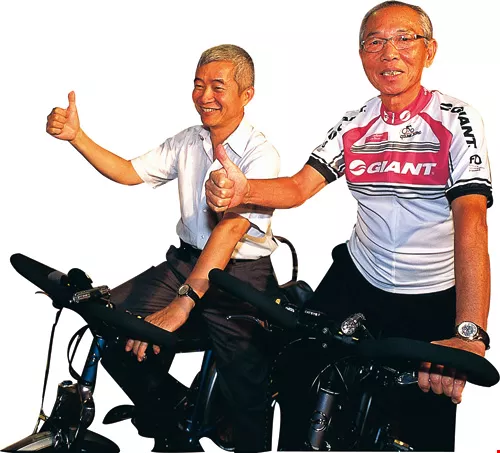
King Liu, the 75-year-old chairman of Giant (right), has over the last few years ridden solo around Taiwan and twice cycled the "Long March" from Beijing to Shanghai, in hopes of inspiring even more people to buy bikes and enjoy the fun and health benefits of cycling.
High-end, Made in Taiwan
At the center of the hall, one of the display areas has a huge flow of people constantly passing through; they are attracted by the sign declaring "Giant." In the space, a TCR Advanced SL LTD airlifted in from the European factory is like a magnet for public attention. It is a top road bike made for professional racing teams, priced at a cool NT$450,000.
Equipped with the latest Shimano Dura Ace Di2 electronic gearchange system, the TCR Advanced SL LTD not only replaces the traditional gear levers with pushbuttons, the server motor can provide faster and more accurate gear changes, which is what racing bikes need. Taiwan has been able to get only a limited quota (30) of these bikes.
Another bike getting lots of media attention was the Defy Advanced LTD. This is a road bike designed personally by Giant chairman King Liu for his 1,668-kilometer journey from Beijing to Shanghai. Based on his own physical condition at age 75, he chose a lightweight 3K carbon fiber frame and front fork, and ordered tailor-made parts from Japan's Shimano company. Though it costs a hefty NT$158,000, the whole bike weighs only 7.5 kilos; only 75 are available worldwide.
"Right now the main emphasis in R&D in the global bicycle market is on upgrading the performance of specific types of bikes, but the emphasis in the newest products from Giant is on creating bikes that are less specialized, that combine the best points of road bikes and mountain bikes," notes senior engineer Nixon Huang, who is in charge of product R&D.
Modern urban residents looking for a simpler, higher quality of life want to ride their bikes to the mountains and the sea. To deal with steep slopes they need bikes that are shock-resistant and comfortable, and that have very sound brakes and solid, durable components. But such bikes are unnecessarily laborious for flat roads. Some people deal with this problem by switching over to more streamlined bike frames, or even by buying a second bike for the road. But Giant also wants to satisfy those consumers who desire a single bike that fits all journeys, so at the Nangang exhibition Giant featured its new "Adventure" model. Three years in the making and unveiled in October of last year, this "crossover" bike combines the functions of mountain, road, and folding bikes: it has a low stepover height and good stability, is lightweight, is easily transported because of a special new folding design, and has a very modern and clean, sleek appearance. Trial sales (at NT$48,000) have already begun in Taiwan, after which it is expected to be exported to Japan and then to enter the international market.

Giant's store exclusively for women, the first of its kind in the world, had sales of NT$2.5 million and NT$4 million respectively in its first two months, and within half a year, sales had doubled, showing that the potential of the women's market is not to be overlooked.
Trail-blazing
At the booth, another "glitter" item was the Avail Diamond, whose body is encrusted with Swarovski crystal. Designed especially for women, it is rather pricey at NT$60-70,000, but at its debutante event it immediately became the object of an extraordinary number of inquiries from visitors.
In fact, beginning last year, with an eye to breaking into the women's market, Giant established Liv/giant, the first ever store in the world specializing in women's bikes, boasting vehicles that can meet the unique needs of women and are designed specifically for female body types. Not only that, Giant also came up with new bikes made specially for women of various social groups, which have successfully attracted the attention of people in categories like office workers, dating couples, and mothers.
"Create demand, meet demand." This is the underlying theme of the "Blue Ocean 2" strategy that Giant has been following in recent years, a strategy that places special emphasis on making the whole environment more cycling-friendly. Indeed, as early as 20 years ago King Liu sparked a company initiative to set up the Cycling Life-Style Foundation to promote bike riding in Taiwan, and the foundation has worked with governments at all levels to improve the overall domestic cycling environment. However, it has only been in the last few years that all the effort has finally begun to show visible results.
Specific programs have included the declaration of "Taiwan Cycling Month" (May), and "Bicycle Day" (May 5); the building of cycling paths and trails in many cities and counties, including coastal paths on the north, west, south, and east coasts, and many trails in mountain areas; and the creation of a "rent at point A, return at point B" service network. Unceasing effort, drop by drop, has finally resulted in an explosion of enthusiasm for recreational cycling in Taiwan.

(left) This intelligent motorized bike can automatically sense a decline in the pressure the rider puts on the pedals, and will give you a boost when you need it. (right) Starting this year, in addition to coming out with newly designed frames, Giant has also commissioned fashion designers to create a line of biking attire and accessories so that cyclists can also try on the feeling of being trendy.
"Bicycle Island"
Two years ago, King Liu cycled solo around Taiwan, and this year took the Beijing-to-Shanghai challenge, as part of his efforts to draw attention to the fun and health benefits of bike riding. This April, moreover, Giant entered into a cross-industry alliance with Mandarin Airlines to develop the market for domestic and overseas bicycle travel. One aspect of the alliance is that Mandarin recognizes mileage from cycling around Taiwan, which can be used to discount flight miles. Moreover, the two parties have organized cycling enterprises worldwide to create a wide variety of package itineraries so that riders from Taiwan can enjoy hassle-free international cycling.
Giant has also announced an investment of NT$10 million to create the Giant Adventure travel agency. The firm is initially targeting visitors to Taiwan, mainland China, and Japan, but in the future, through Giant's 2000 storefronts in Europe, the company will mount a publicity campaign portraying Taiwan as "Bicycle Island," hoping to create a win-win situation for the company and the domestic travel industry.
It is hard to imagine that this company, founded 37 years ago by nine investors who pooled NT$4 million, nearly went bankrupt in its first four years, partly because it lacked specialized technology and had no brand identity, and partly because it happened to open just in time to hit the global recession brought about by the energy crisis!
In those days, the never-say-die King Liu put to use his industrial-high-school education to upgrade the company's technology on his own, and, with long-term financial support from his sister and the addition to the team of CEO Antony Lo, they eventually landed a subcontract order to manufacture bikes for Schwinn, the biggest brand in the US. This finally provided Giant with a steady income from OEM.
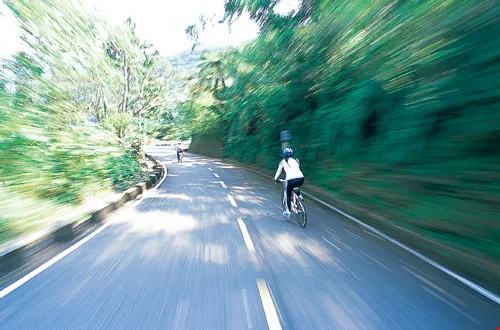
With Giant and the government working hand in hand, Taiwan has not only become a bicycle production kingdom, it has also become a place where cycle recreation is enthusiastically embraced.
OEM, the basis for ODM
Eight years later, Taiwan's bicycle exports surpassed 3 million units, and the island overtook Japan as the leading supplier of cycles to the world. By then Giant was already Taiwan's biggest bike assembly plant, second in Asia only to Bridgestone of Japan (then known as Ishibashi).
Taking "quality" as its core value, Giant held special events to reward outstanding suppliers and affiliated plants, and even to select a "Mr. and Miss Quality." At the daily level, the company instituted quality control circles, standard operating procedures, and a system for employees to suggest improvements in production processes. Giant also commissioned a Japanese management consulting company to dispatch advisors right to the factory, and adopted a Toyota-style floor management system (now christened the GPS, or Giant Production System). As a result, the process of assembling a bike, which formerly took 20 hours per unit, was cut to eight hours, and warehouse stockpiles were cut from 15 days to seven days. After 10 years of such efforts, annual production of bicycles at Giant reached 1.62 million units, setting a new Taiwan record for a single factory.
In the mid-1980s, Schwinn, Giant's most important client for many years (accounting for 75% of Giant's OEM production), began to look for new partners in mainland China. But this biggest crisis since the company's founding turned out to also be the turning point in the creation of Giant's own brand name. King Liu decided to separate out two markets, with Giant taking the path of high-quality items with high unit prices, and the company constructed a global distribution network.
In fact, even before that, Giant had already begun testing the waters for development of its own brand name. It adopted a policy of "Europe first, the US later," to avoid offending Schwinn and other US clients. When Schwinn moved its orders to mainland China, this was equivalent to loosening the shackles that had bound Giant. Thereafter, King Liu adopted an all-out international strategy of "global branding, local roots," and set up regional headquarters in the Netherlands and the US.
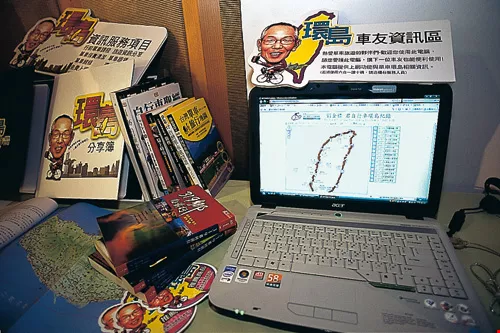
In 2007, Giant and Chunghwa Telecom got together to provide "CISS" round-Taiwan cycling services. Using mobile phones and positioning technology, the service makes a complete record of the itinerary of round-the-island journeys, which can then be turned into a map.
Global network
Currently, Giant's operating strategy calls for brand-name sales to account for 70% of revenues, with OEM accounting for the remaining 30%. Because of the extra cushion of profit margin provided by having one's own brand, the company has been able to thrive through the large appreciation of the NT dollar in the 1990s and the reform and opening-up of the mainland Chinese economy.
Discussing overall direction, King Liu stresses that even today Giant attaches as much importance to OEM as to its own brand name. He relates that the two core principles for company strategy are "top quality" and "differentiation." Each year the company invests 2% of revenues in R&D, and moreover is working congruently with the domestic bicycle industry's "3N" (3New) program-new materials, new functions, new uses. Giant aims to strengthen its own technical capabilities, to "create new value," and to continue with ever more innovative design, in order to consolidate the name recognition and reputation of the brand.
"Although the big companies in the US and Europe have brand names and distribution channels, most of them lack manufacturing and R&D capacity. Taiwan and mainland Chinese companies, on the other hand, have strong manufacturing abilities, but need to take it to the next level, especially in terms of management of operations on a global scale," explains King Liu.
To this end, Giant works to ensure that the different parts of its planet-wide manufacturing, distribution, and service network are integrated and mutually supportive. For example, the headquarters takes information collected at the three main R&D centers (in Europe, the US, and Taiwan) and, based on the comparative advantages of different locations in terms of wages, human resources, parts, and so on, assigns manufacturing to one of four different production bases. Moreover, the six regional marketing centers under the Giant flag, besides being responsible for sales and promotion, also immediately report the latest market intelligence, so that the production lines can quickly make adjustments.
Moreover, the company annually spends 8% of revenues on global marketing to promote the Giant brand name, and also sponsors world-class cycling teams and public service or cultural activities. Perhaps most importantly, Giant has generated great word-of-mouth advertising with programs like "buy in one place, get service anywhere in the world," a five-year guarantee on the bike frame, and product liability insurance (US$5 million for ordinary bikes, US$3 million on electric bikes).
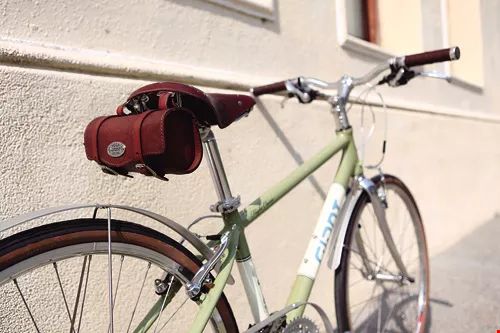
(left) This intelligent motorized bike can automatically sense a decline in the pressure the rider puts on the pedals, and will give you a boost when you need it. (right) Starting this year, in addition to coming out with newly designed frames, Giant has also commissioned fashion designers to create a line of biking attire and accessories so that cyclists can also try on the feeling of being trendy.
Top of the heap
With the consolidation of China's status as "factory to the world," firms from around the globe have turned their eyes to the mainland, and the bike manufacturing industry there has made great leaps forward. Volume and value of bicycle exports from mainland China have exceeded Taiwan's since 2001, as the mainland has become the largest cycle manufacturing base on the planet. Giant has been a part of this process, and holds, along with Acer, President, and WantWant, one of the four Taiwanese-owned trademarks that get "priority protection" in the mainland.
King Liu relates that cost considerations made going to the mainland inevitable. In 1992, acting through their Singapore holding company, Giant set up a factory in Kunshan, Jiangsu Province, to mainly make aluminum-alloy and high-carbon-steel mid- to low-priced mountain and urban bikes. Today Giant's annual production there is 2.5 million units, with half being exported and half sold in the domestic market.
In 1993, using its technology as its capital contribution, Giant entered into a joint venture with Shanghai's largest bike maker, Phoenix. They established the Giant & Phoenix Bicycle Co., which, producing bikes exclusively for children, has annual production volume of 1.3 million units. Last April a new factory in Tianjin came on line, giving Giant production centers in mainland China's northeast (Tianjin), east (Kunshan), and southwest (Chengdu), as the company has become China's single largest manufacturer of bicycles.
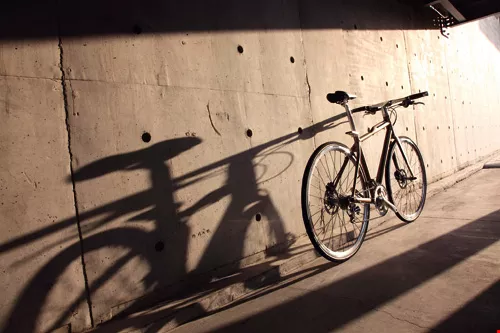
The "City Speed" won the gold medal for design in the category of urban bikes at the 2008 IF EUROBIKE trade fair. The fin-shaped upper tube symbolizes the speed and aggressiveness of a shark.
The A-Team
But Giant has not neglected its home base. In order to ensure that the roots of the bike industry would not also eventually leave Taiwan, in 2003 Giant got together with its competitor Merida and organized 11 firms, including other bicycle makers and cooperating firms in the up- and downstream sectors, to form the "A-Team." Companies that make parts can use a collective Internet platform to get advance figures on orders for the next two-month period, so they can prepare materials ahead of time, after which Giant and Merida issue daily orders with suppliers delivering finished products every day. This novel cooperative method has linked together the whole bike-making process in Taiwan from R&D to manufacturing, making Taiwan into a global supply center for high-end bikes.
Over the past five years, through cooperation within the A-Team and with help from the Industrial Technology Research Institute, Taiwan's entire bicycle industry has been able to utilize Giant's open Product Data Management platform to share advanced technology and the fruits of R&D. There are now more than 20 member firms in the A-Team, and major foreign makers like Shimano and Colnago have even become sponsoring members.
In Giant's global deployments, the main factory in Taiwan focuses on high-end bikes using carbon fiber, aluminum alloy, and shock-absorbing frames. Annual production is 800,000 units, of which more than 90% are sold abroad, with a share in the domestic market in Taiwan of over 25%. Giant is the number-one bicycle brand in Taiwan, and the third-largest brand in the US in terms of dedicated sales outlets. Giant is also the number-one source of bicycle imports into Australia, Japan, and Canada.
From manufacturing and marketing bicycles, selling peripheral goods, and establishing dedicated sales outlets, to providing rental services and establishing a travel agency, "Giant steps" have ensured that Taiwan's fame as the "bicycle kingdom" is still as deserved today as it has been for the last 20 years.
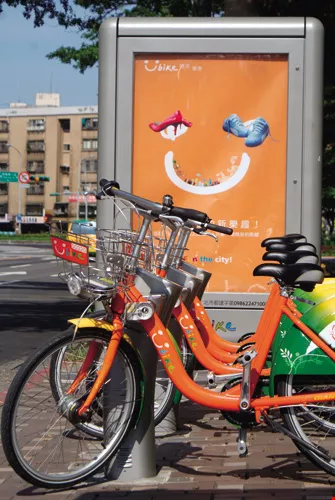
You can see bright orange, low-stepover bikes at 10 rental stations in the Xinyi District of Taipei; 500 of them have been provided in a cooperative venture between Giant and the Taipei City Government to create a public bike rental network.


@List.jpg?w=522&h=410&mode=crop&format=webp&quality=80)


