

Taiwan, the island province of the Republic of China, with a high population density is dependent on trade for economic progress. This progress since the end of World War Ⅱ has been phenomenal. Now people have high expectations for future economic growth. But the world is ever more competitive, and hard-won achievements of the past will call for greater effort to repeat. One of the leading forces in Taiwan's progress has been the China External Trade Development Council, which has helped to make the ROC a leading trading nation. What challenges does CETDC have to face to fulfill the people's high expectations?
The Minister of Economic Affairs directed Wu Kuan-hsiung, director of the Ministry's commerce department, to visit Japan, Korea, and other countries (in the 1960s) to study their external trade organizations. In 1970, then Minister of Economic Affairs (now Premier) Sun Yun-suan officially established the China External Trade Development Council (CETDC), to give assistance to business firms to develop overseas markets and promote export. Wu Kuan-hsiung became secretary-General.
CETDC, occupying the ninth and tenth floors of a large office building at 201 Tun Hwa North Road, Taipei, is a maze of desks--no office partitions. Amid the sounds of talking, telephones, typing, and writing, personnel are busy with the phones, consulting records, answering official letters, and responding to questions from businesses.
After thirteen years of steady expansion, it has more than 400 employees, annual expenditures of NT$500 million (US$12.5 million), and 42 overseas offices.
However, recently CETDC has met with criticisms and suggestions of improvement. Criticisms of the agency fall roughly into three areas: finances, personnel, and the nature of its activities.
Since CETDC is a corporation, a juristic person, and its funding comes from export corporations, every company involved in the Taiwan export trade must pay an export promotion fee of 0.0625 percent of export earnings to finance the organization. This is a "fee", not an official tax; it has never been legislated, and many legislators thus regard its imposition as a practice of dubious legality.
Since not every company directly benefits from CETDC activities, some have objected to being assessed. One company recently demanded that its annual fees be returned.
However, Secretary-General Wu feels a fee system is more appropriate than a tax stipulated by the legislature, which might limit CETDC's flexibility to respond to rapidly changing world market conditions. Thus "legalization" of the fee is a subject of controversy.
Another justification for non-governmental financing is that the ROC currently relies on unofficial trade relations with many countries, overcoming diplomatic barriers. The private trade organization must be able to demonstrate its non-official nature.
All CETDC personnel must pass a tough pre-employment examination, so their potential ability is high. Nonetheless, the organization's lack of concrete descriptions of job positions means that its personnel managers really have no firm basis for choosing special skills from the pool of applicants who pass the test. Specific information on CETDC manpower needs for an ideal service would allow a matching of applicants to openings, and the standard of personnel would rise still higher.
But the greatest amount of criticism continues to revolve around CETDC's function, the nature of its work.
Still, others are quick with praise for the organization. The Yu T'ai Trading company's director, Yang Shao-ling, for one: "CETDC is the best organization in the country, if you ask me. I participated in one of their trade shows and got all kinds of orders as a result; any time I have had a problem and gone to CETDC for help, I've never been disappointed."
It is obvious that CETDC cannot serve everyone equally, and that this will continue to be a source of complaints. The ROC counts over 40,000 companies engaged in the export trade; each one expects CETDC's attention. CETDC can't please all of these companies all of the time.
But what is CETDC doing for the majority? Its extensive services include:
1) Providing information on overseas business conditions: It has established trade data libraries at Taipei, Taichung, Tainan, and Kaohsiung; publishes a Wednesday "Export Opportunity" newsletter; and recently established a computer information system.
2) Assisting in expanding exports: For example, when foreign buyers or foreign exporters contact CETDC, it announces the contact via its Trade Opportunity Announcement Center. It organizes export promotion missions to countries overseas and helps ROC companies participate in international trade fairs, as well as organizing its own shows.
3) Helping companies with the design and improvement of their products: CETDC's industrial design and packaging department is actually concerned with both industrial and commercial packaging, looking first to safety, and afterwards to beauty. It takes into account varying conditions of temperature and humidity to design safe packages.
4) Answering questions from industry: This service includes both responding to oral inquiries and publishing informative newsletters.
5) Operating, in 51 overseas locations, branch offices or offices led by honorary representatives. These offices collect business information, promote ROC products, and compete for business opportunities, etc.
The Executive Yuan, or Cabinet, has indicated that since the ROC has a trade-dependent economy and must stress expansion of exports, the continued existence of CETDC is a necessity.
The Ministry of Economic Affairs, having entrusted to the Chinese Management Association an investigation and review of the service corporation, is looking into the effectiveness of its operations. The end of September is the association's deadline for a report on suggested changes in CETDC functions.
The Association, besides looking into suggestions from large companies and industrial associations, will canvass those most dependent on CETDC services--the small and medium industries--via questionnaires aimed at bringing out both satisfaction and complaints. The process should provide a new look for the future of CETDC.
[Picture Caption]
1. CETDC has established an exhibition hall by Taipei's domestic airport. It often hosts every sort of product fair; the picture shows the outside of the exhibition hall. 2. CETDC is located at 201 Tun Hwa North Road, on the ninth and tenth floors. The picture shows the exterior of the building. 3-7. The interior of the exhibition hall.
1.2. Chinese and Western ornamental lanterns of every kind at the exhibition hall. 3. A trademark and catalog designed by CETDC's Industrial Design and Packaging Department for Cincoa Co. 4. China Computer Corporation's computer was designed, from the machine itself to the package, by CETDC. 5. CETDC chose an office without partitions; you can see all their varied activities at a glance. 6. CETDC's computer database, 7. CETDC's trade data libraries routinely announce every kind of trade opportunity; businessmen often come to jot down the information.
The Taipei trade data library on an average work day has 500 people come to read materials.
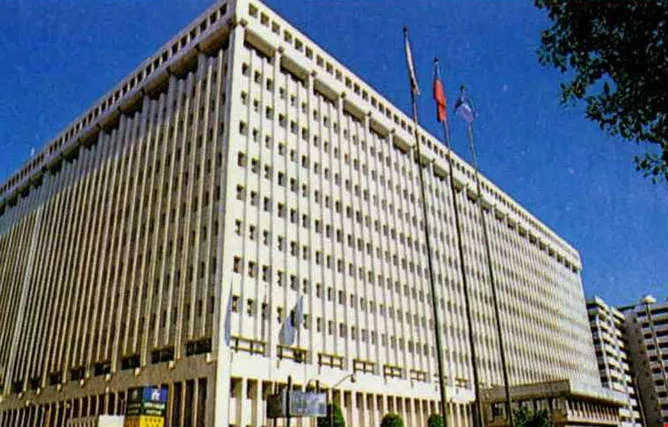
2. CETDC is located at 201 Tun Hwa North Road, on the ninth and tenth floors. The picture shows the exterior of the building.
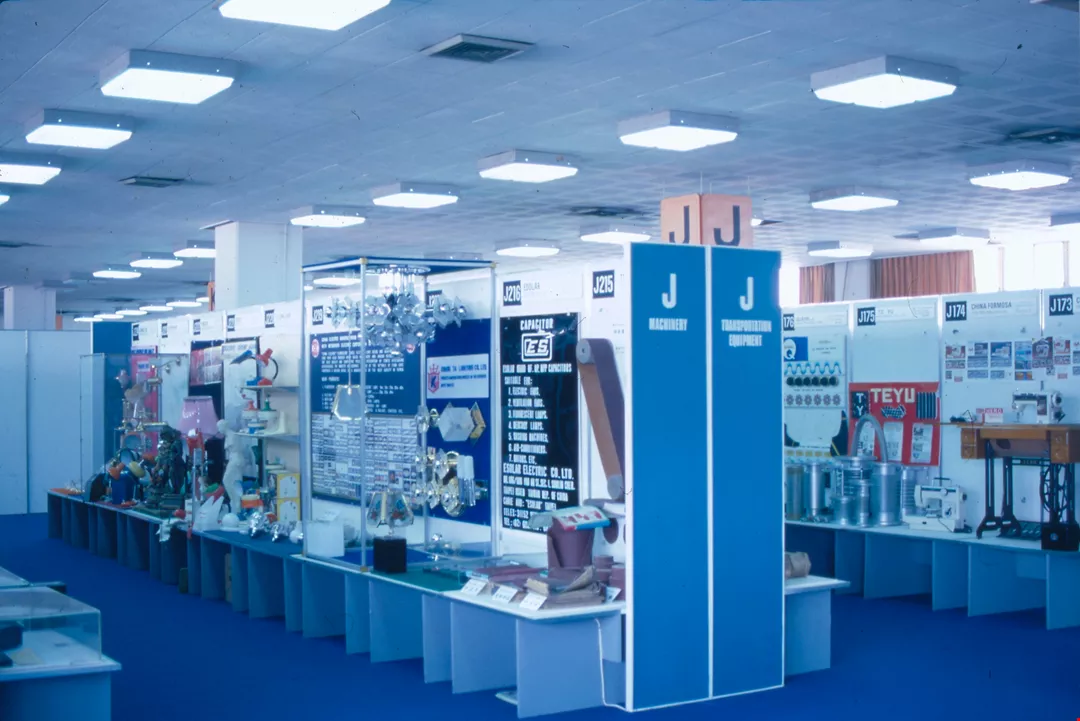
3-7. The interior of the exhibition hall.

3-7. The interior of the exhibition hall.
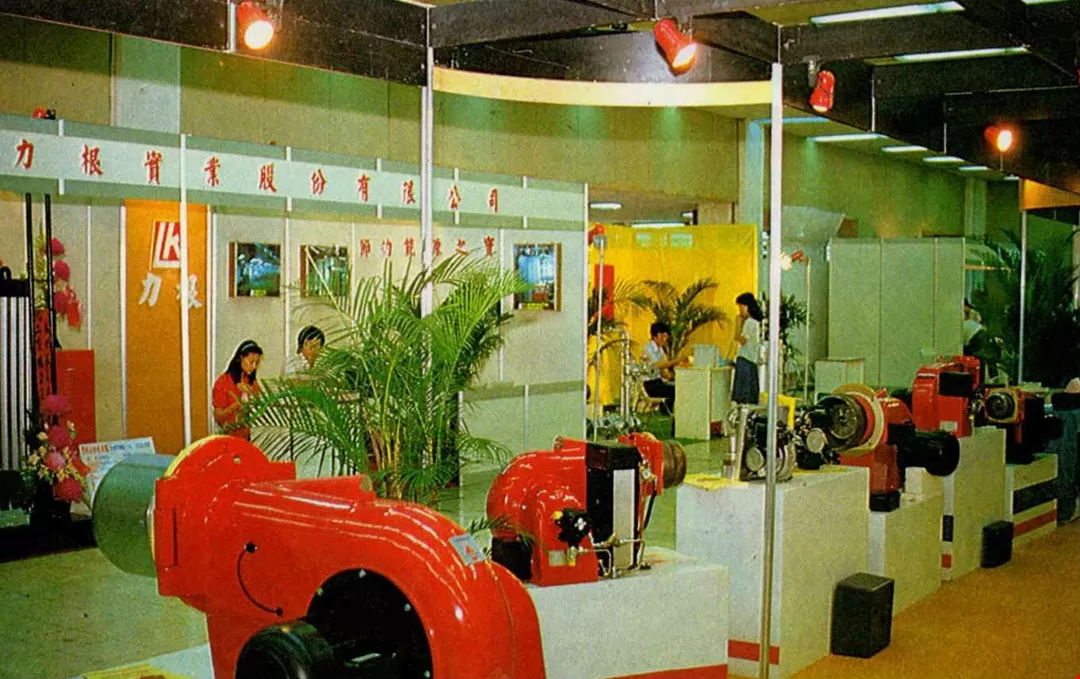
3-7. The interior of the exhibition hall.
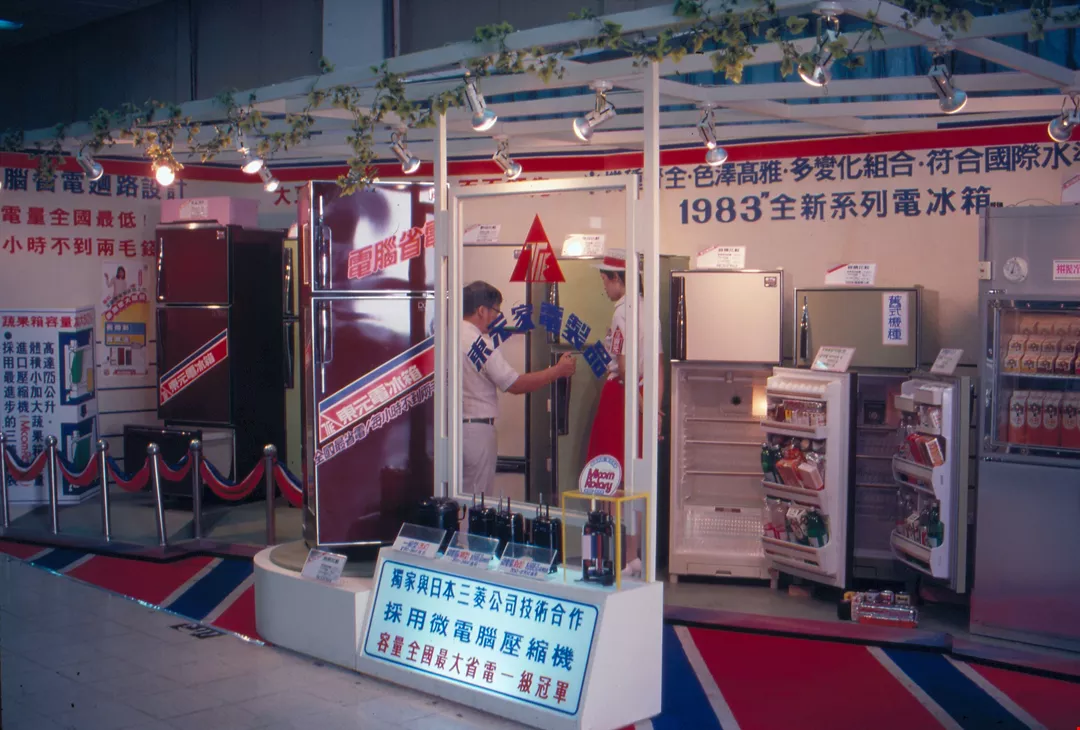
3-7. The interior of the exhibition hall.
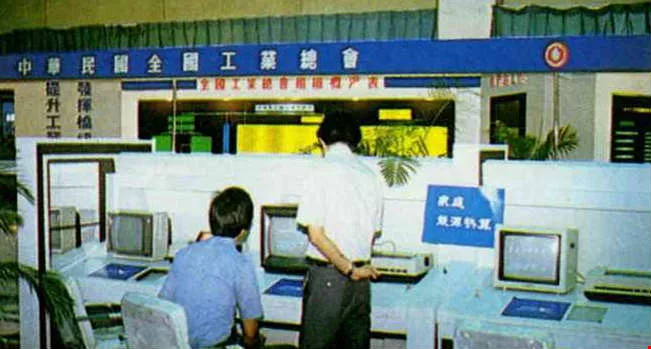
3-7. The interior of the exhibition hall.

1.2. Chinese and Western ornamental lanterns of every kind at the exhibition hall.

1.2. Chinese and Western ornamental lanterns of every kind at the exhibition hall.

3. A trademark and catalog designed by CETDC's Industrial Design and Packaging Department for Cincoa Co.

4. China Computer Corporation's computer was designed, from the machine itself to the package, by CETDC.
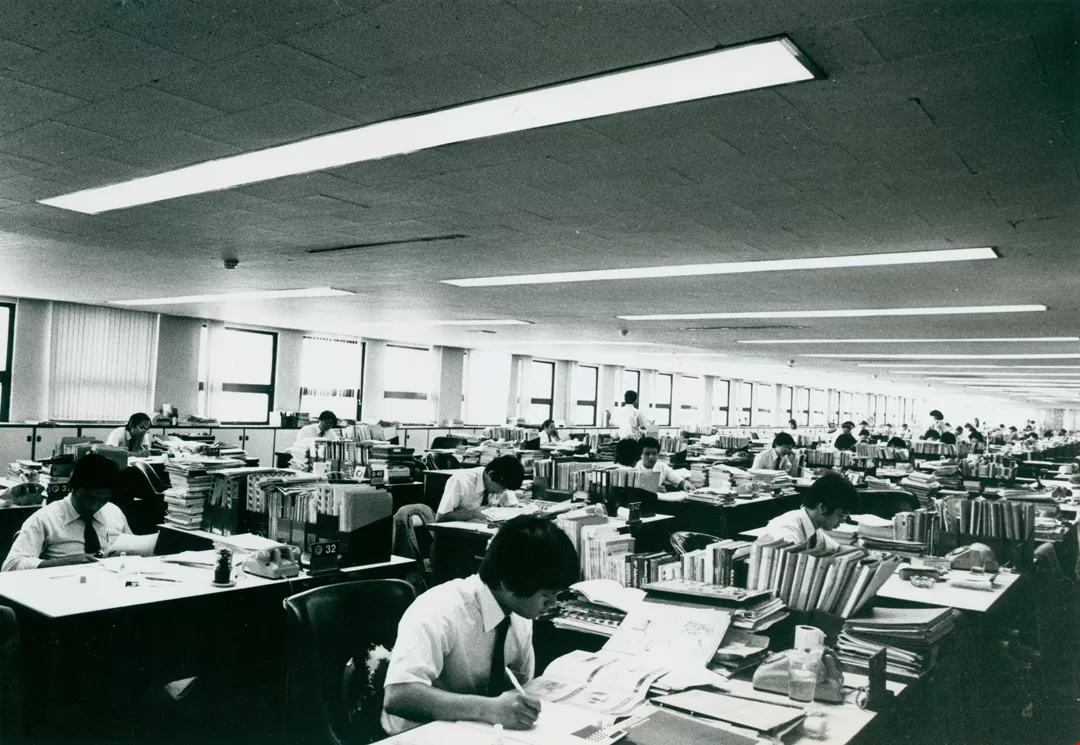
5. CETDC chose an office without partitions; you can see all their varied activities at a glance.
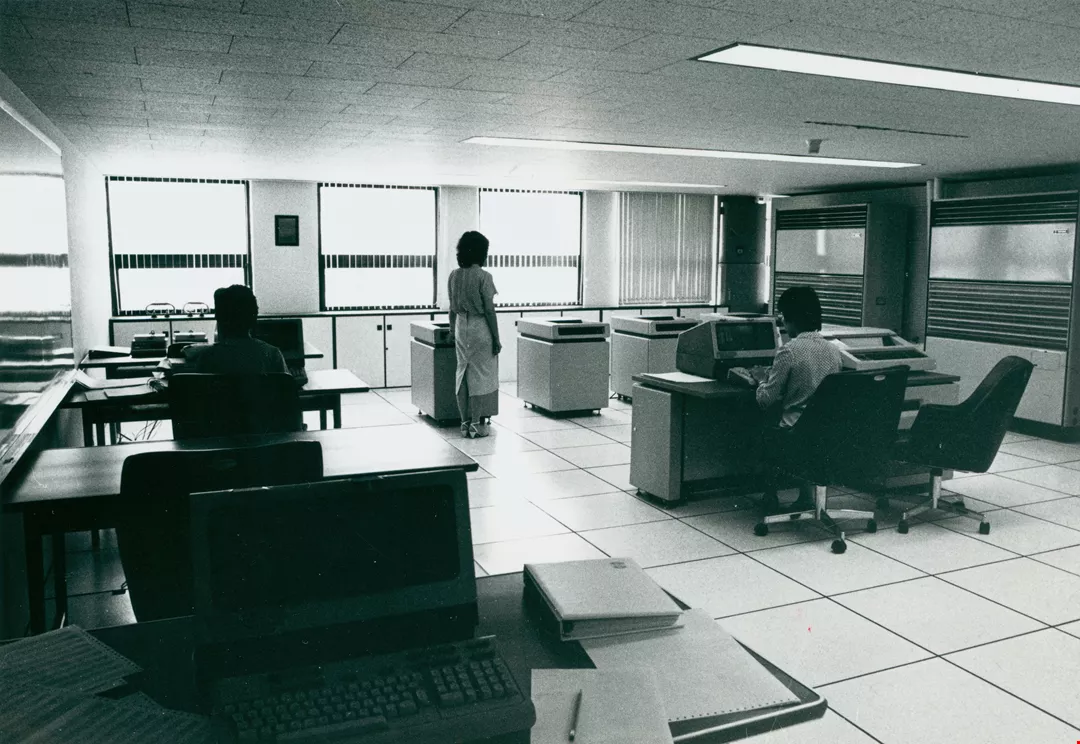
6. CETDC's computer database,.
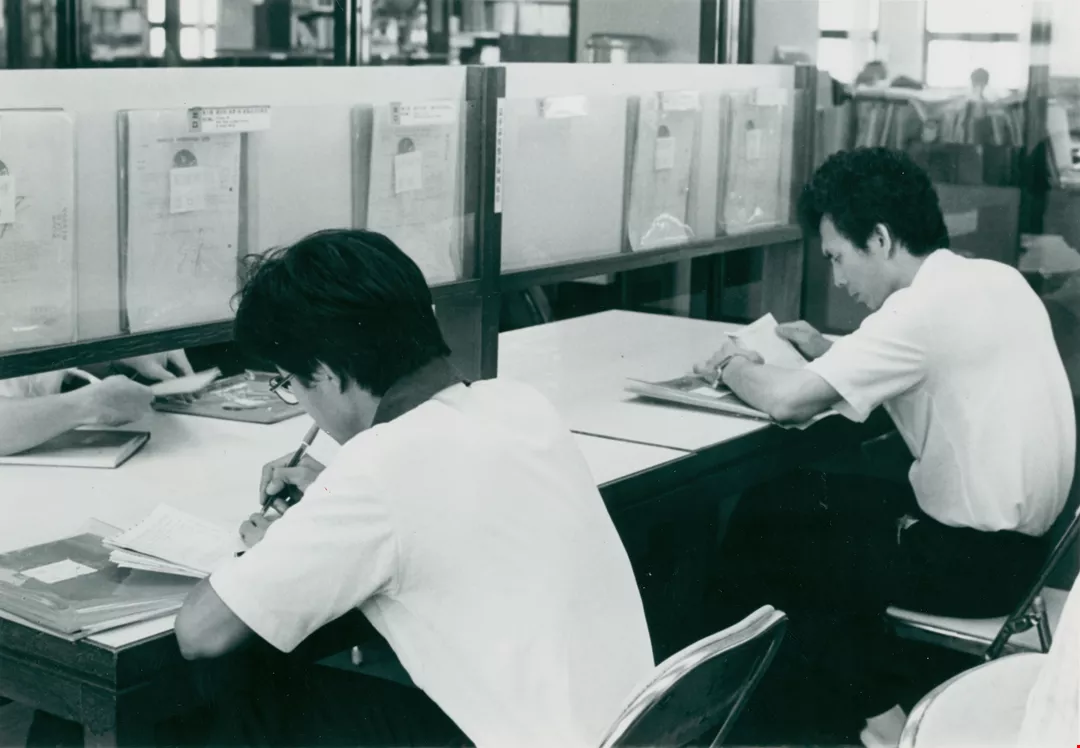
7. CETDC's trade data libraries routinely announce every kind of trade opportunity; businessmen often come to jot down the information.


