Casper Shih--Sowing the Seeds of Automation
Elaine Chen / photos Chang Liang-kang / tr. by Peter Eberly
January 1986


Casper Shih is not a figure who often appears in the news, but his reputation in ROC business circles is resounding. "Dr. Shih brought us back to life," Hsieh Chen-teh, general manager of the Datong Rattan Furniture Company, testifies. Two years ago, Datong was losing NT$3 million (US$75,000) a month. Now it nets NT$10 million and has become the country's largest export furniture manufacturer. And Datong is not the only company with a similar story.
Dr. Shih returned from Canada to head the Factory Automation Task Force in 1983. Since then, the task force has guided over 1000 businesses and handled some 4200 improvement projects. Lately, the colossal savings achieved by Lucky Concrete Company has led an overseas businessman to consider importing an entire factory of theirs lock, stock, and barrel to acquire their advanced automation equipment.
With results like these, the price Dr. Shih has paid in being separated from his wife and children has not been in vain. "Coming back was a painful decision. But it was something I had to do," Dr. Shih recalls.
Casper Shih graduated from the National Taipei Institute of Technology 23 years ago. After performing his military service, he obtained a doctorate in materials science from Tokyo University and then moved with his family to Canada, where he went to work for General Electric. But all the time he was overseas, his heart remained at home.
Dr. Shih noticed as early as 1978 that although the ROC's export market was flourishing, its industrial structure was still stalled at the labor-intensive stage. If wages ever went up, less developed countries would be pressing on her heels, while advanced countries would soon be able to substitute machines for human labor and no longer have to look overseas. The only recourse for the ROC was to change its industrial structure--to automate.
In a 1981 meeting with Minister Without Portfolio K. T. Li, Dr. Shih earnestly put forward his ideas on automation and expressed his willingness to help spread the word.
Over the next two years, Dr. Shih returned to Taiwan several times to lecture and drum up support. He convinced the Executive Yuan to pass an 8-year automation plan and proposed that the Ministry of Economic Affairs set up a task force to advise firms on automation. Chao Yao-tung, head of the ministry at the time, agreed wholeheartedly with Dr. Shih's suggestions, but the problem remained as to who would head up the task force.
The best choice obviously was Casper Shih himself, but he was going back to Canada. So Minister Chao launched a relentless campaign of persuasion. Treating Dr. Shih to breakfast, lunch, and dinner, he kept up his barrage: "You've done well overseas, but that's just a job, not a real cause." And, "If you take this on, it will change industry around the country. It will be of historic significance."
But Dr. Shih had a problem. The reason he had moved with his family to Canada in the first place was to find an ideal environment for his children to grow up in. Japan, Taiwan, and the U.S. were all too tense, he felt. And his wife agreed, preferring the simpler Canadian lifestyle.
Dr. Shih thought that Minister Chao would call it quits, but the minister kept at it the same way the second day. That night, with the ashtray full of cigarette butts and both men worn out, Chao Yao-tung played his trump card. "You're not coming back?" he said. "You were born and raised here. Me, I'm an old guy from the mainland, but I still give a hoot. You can't give up!" That did the trick. Dr. Shih went back to Canada and got his wife to give him two years. Then he came back to Taiwan and set right to work.
Public opinion toward automation was not optimistic. Most people thought that it was not suitable for Chinese industries. which are mostly small-scale with a large variety of products manufactured in limited quantities. One newspaper even predicted, "There's no possibility of success."
But Casper Shih was undaunted. He and his task force swept over the island in whirlwind fashion. To meet the growing workload, his staff grew from five to 100.
What does he do to have made the task force his guidance so successful? "He never encouraged us to spend money for equipment. He starts rather with concepts," says Wu Tsong Chi, chairman of the board of Tsuang Hine Corporation.
When he visits a factory, Dr. Shih looks for the areas that are "unreasonable" and then works away until he finds a way to solve them. For example, most factories in the past put all their machines of one kind together in one place. Simply repositioning the machines along a production line can achieve advances in productivity. And by standardizing mold and die sizes, the die changes required for product diversification can be speeded up. Tsuang Hine cut the time it takes them to change dies from 194 minutes to just three and recovered their investment in three months.
Measures like these look simple, so why did no one think of them before? "It's like Newton seeing an apple fall and discovering gravity. While we would just pick it up and eat it!" Tsuang Hine's managing director, Tony Wu, exclaims.
Besides seeing what others do not, Dr. Shih has the fervor of a missionary. After touring a factory for several hours, he will immediately hold a discussion and present his ideas. If it is noontime, everyone orders boxed lunches; evening, and discussions continue back at the hotel.
But no matter how well the Factory Automation Task Force performs, it is still just a temporary organization and Dr. Shih will go back to Canada, while automation has a long, slow road to go. A constant concern of Dr. Shih's, therefore, has been how to train future talent and pass on the baton. So when the new Minister of Economic Affairs, Hsu Li-teh, asked him last year to take over as president of the China Productivity Center, he agreed.
Unlike the task force, the Productivity Center had a 29-year history behind it and was showing symptoms of ossification. To revitalize it, the first thing Dr. Shih did was to ask six top managers to retire early. And once a month, he held a full staff meeting to discuss mistakes. "He did it to give people practical examples of what's right and what's wrong," Ben Wan, a director at the center, says. "Our center meets with all kinds of problems. We need a simple, universal principle to deal with them to be effective."
That principle is sincerity. As long as an employee's attitude is sincere, even if he makes a mistake, Dr. Shih is willing to stick up for him. But he will not abide excuses or office politics.
The reason he works so hard to establish a good work attitude at the center is so that when he leaves that spirit will remain. So his emphasis on developing subordinates is not on techniques but rather on concepts and enthusiasm.
And his greatest disappointment is the few who do not develop. He went through a painful period once, according to his secretary, Helen Hu, when "he couldn't accept this. He even wondered what he was doing here. He shut the door and didn't see anybody. But then he saw the light."
What happened was he read a passage in a book that compared developing talent to farming. Some of the seeds a farmer sows will grow and some will not. All the farmer can do is weed carefully, add fertilizer, and provide a good environment for growth. Dr. Shih saw things more broadly after reading this.
The Productivity Center, designed to raise productivity around the country, must set an example. Dr. Shih demands both speed and quality from his employees. "He is very quick himself and he asks the same of us," Ben Wan says. "If you can't keep up, you've got to work overtime." Staff has developed rapidly, but the demands have taken their toll--on both leisure time and marriage. Single people have no time for their girlfriends and husbands none for their wives. They call themselves the "eliminees," because their wives and girlfriends, unhappy with their devotion to their jobs, are all about to drop them.
Dr. Shih is scarcely better himself. His children call him a part-time father, and his wife could say the same of him as a husband. He promised his wife to stay in Taiwan just two years when he came. But with his work unfinished, he feels he cannot just run off, so this year is his fourth.
Special efforts are needed to keep his wife's affection. One year he told her he would bring her a surprise--it was tofu and twisted fritters, something she had not tasted in years.
His children are in high school--just the time when a father is needed the most. And he is in Taiwan training other people's children. Every time he thinks about calling home, his feelings well up into tears.
Ever since he came back to Taiwan, Dr. Shih has been living in the government's Rainbow Hostel and taking his meals outside. So when news of roadside vendors using recycled cooking oil caused a sensation a little while ago, Dr. Shih thought about complaining to the head of the China Consumer Federation that he was the greatest victim.
Dr. Shih has given his all. His greatest desire now is, like the Monkey King in Journey to the West who could turn a handful of hair into thousands of duplicate monkeys, to produce countless "eliminees" like himself and let the seeds of automation take root and germinate in every corner of the country. And Dr. Shih would then be the happiest farmer of all.
[Picture Caption]
That night, Chao Yao-tung played his trump card. "You're not coming back? You were born and raised here. Me, I'm an old guy from the mainland, but I still give a hoot. You can't give up!"
"Chinese are reserved. If you make a mistake, they won't talk about it directly because of face," Ben Wan explains, contrasting this with Dr. Shih's straightforward approach.
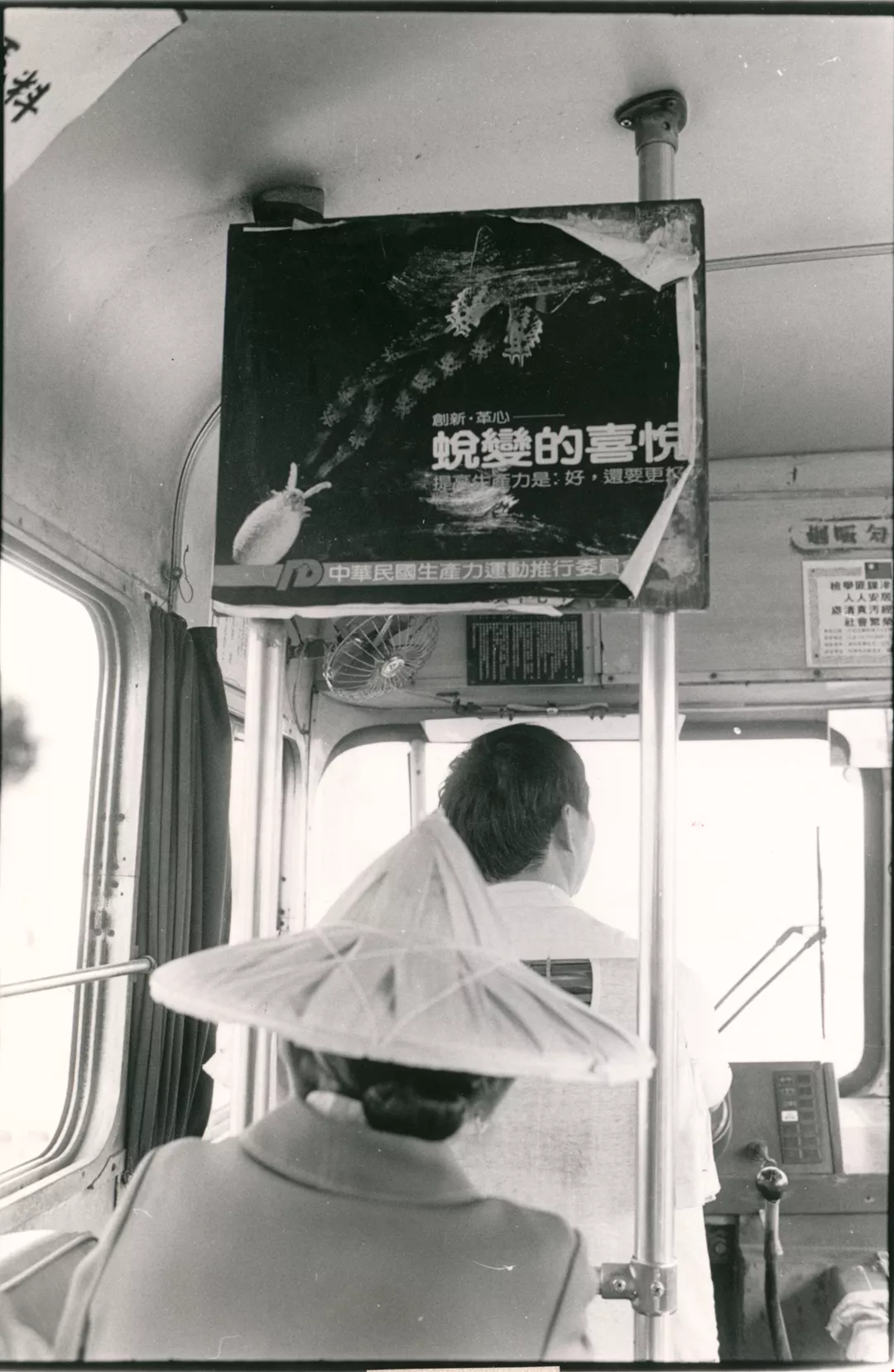
Even passengers on a Kaohsiung bus can see a poster from one of the China Productivity Center's campaigns encouraging productivity.
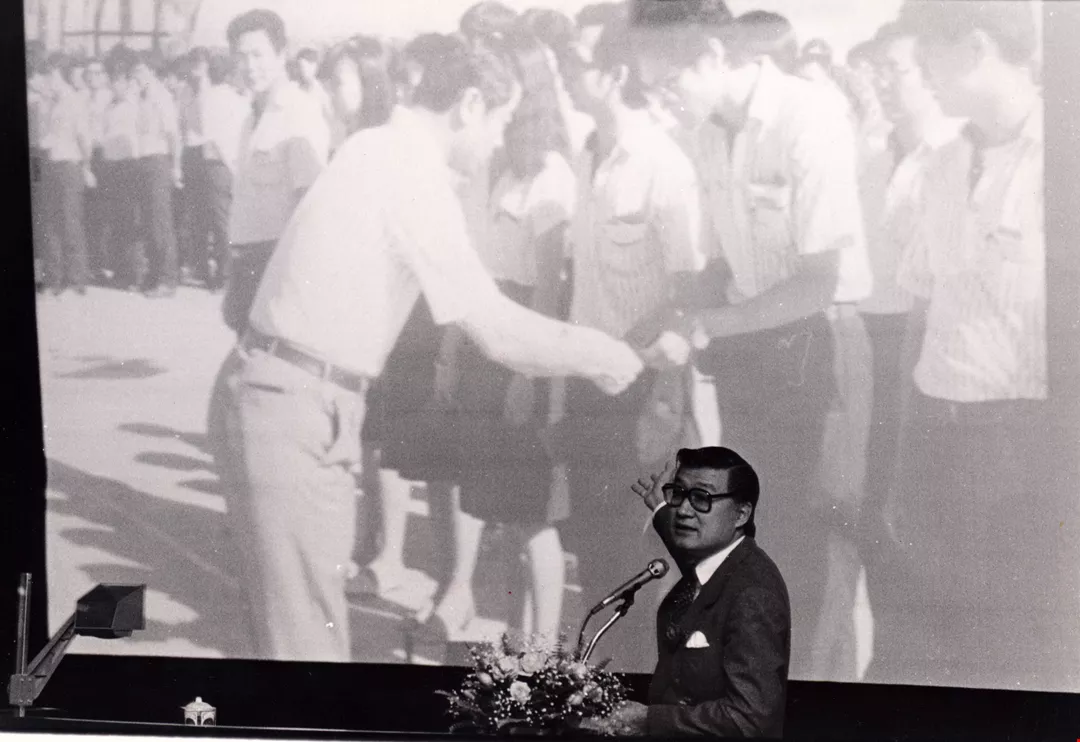
With the fervor of a missionary, Casper Shih goes everywhere to lecture and "spread the Gospel."
If he finds someone playing office politics, Dr. Shih will say, "Isn't it a waste applying your intelligence to this? It would be better to direct your energy toward your work and perform better."
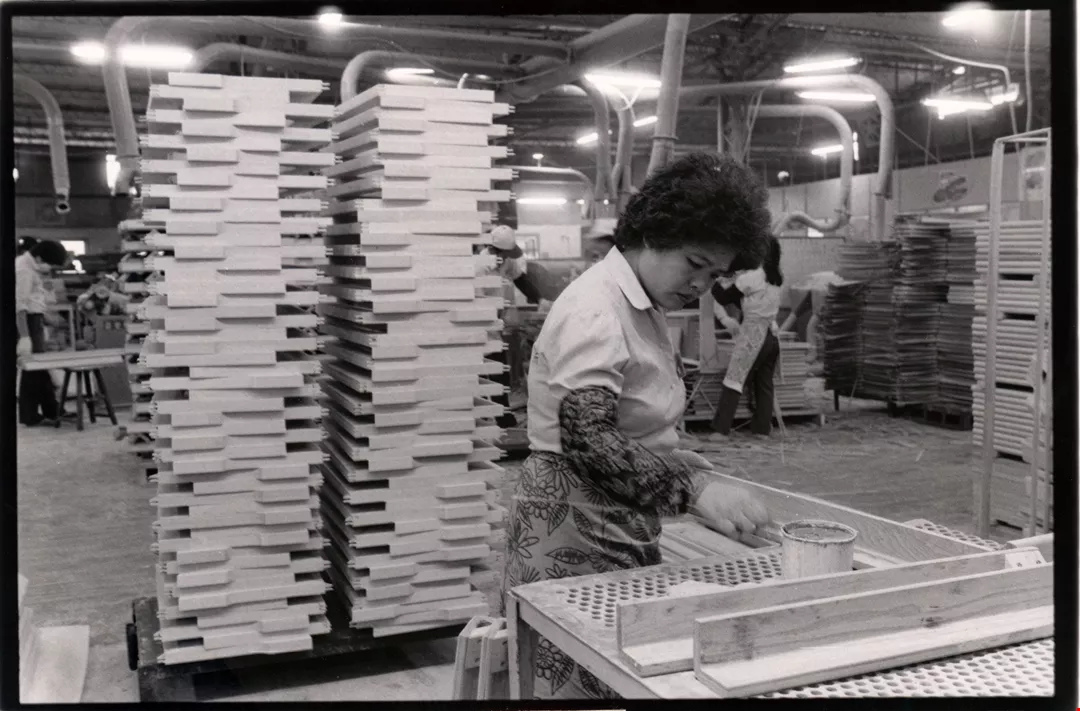
Illogically arranged production lines can lead to semi-finished products piling up and a waste of time and manpower in moving them.
Another secret of success is to enjoy your work, without looking for others' applause. Otherwise, you may regret what you've put out and lose your st amina.
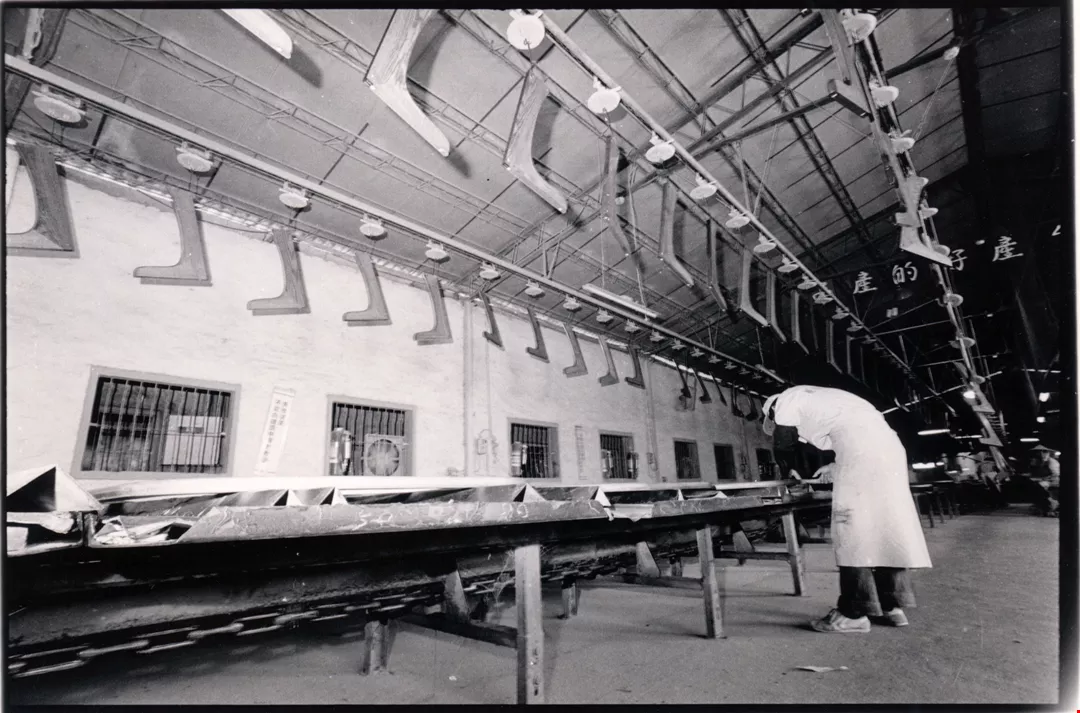
A conveyor belt increases productivity and clears up space. This is Dato ng Rattan Furniture Company's factory after improvements.
He often says that winners always have an answer and losers always have an excuse. So it's best not to overemphasize difficulties.
Developing talent is not like industry, in which each product is the same. It's like agriculture. Some of the seeds a farmer sows will grow and some will not.
His wife and children are Dr. Shih's greatest spiritual support. His 17-year-old son already has something of his father's air, would you not say? (photo by Ken Shin)
All alone in Taiwan, Dr. Shih must handle household chores himself.
That night, Chao Yao-tung played his trump card. "You're not coming back? You were born and raised here. Me, I'm an old guy from the mainland, but I still give a hoot. You can't give up!" "Chinese are reserved. If you make a mistake, they won't talk about it directly because of face," Ben Wan explains, contrasting this with Dr. Shih's straightforward approach. Even passengers on a Kaohsiung bus can see a poster from one of the China Productivity Center's campaigns encouraging productivity.
With the fervor of a missionary, Casper Shih goes everywhere to lecture and "spread the Gospel.".
If he finds someone playing office politics, Dr. Shih will say, "Isn't it a waste applying your intelligence to this? It would be better to direct your energy toward your work and perform better.".
Another secret of success is to enjoy your work, without looking for others' applause. Otherwise, you may regret what you've put out and lose your st amina.
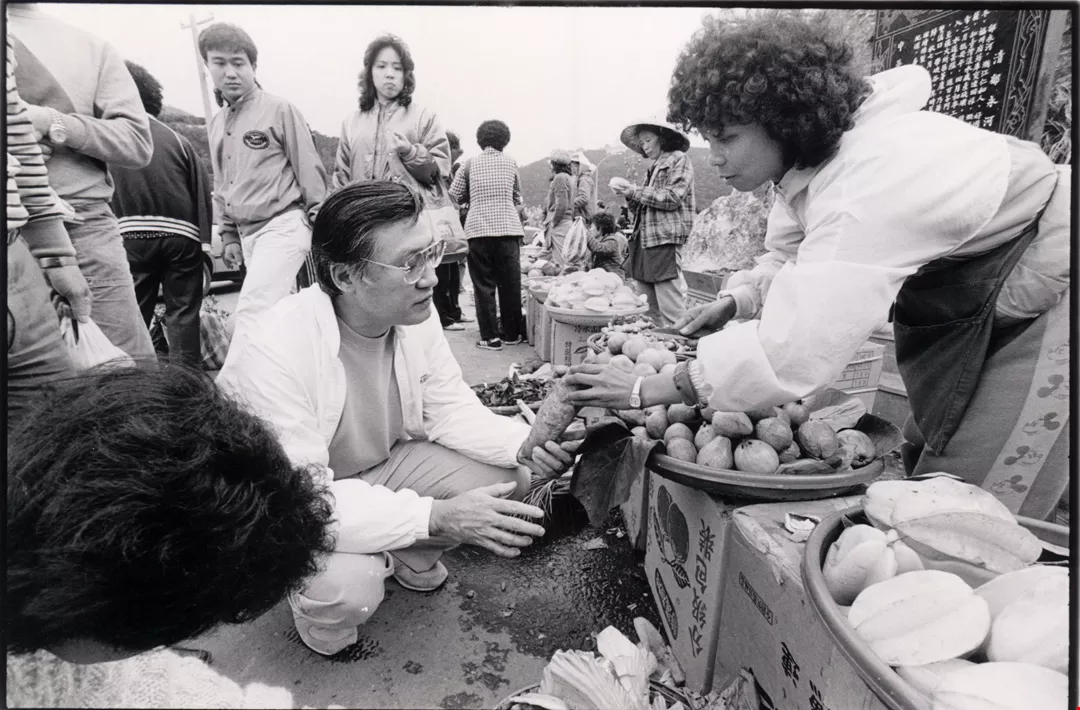
He often says that winners always have an answer and losers always have an excuse. So it's best not to overemphasize difficulties.
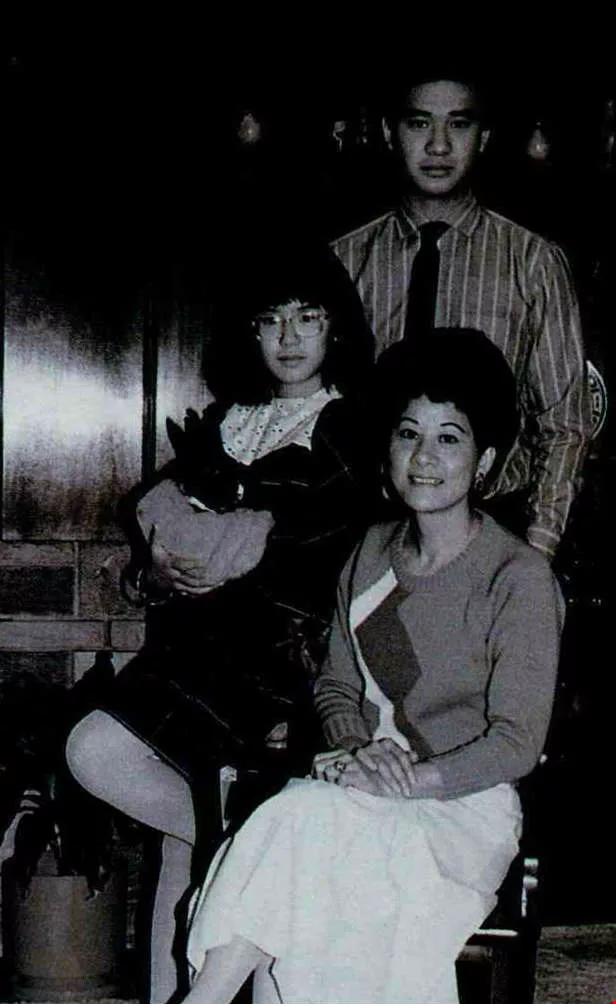
Developing talent is not like industry, in which each product is the same. It's like agriculture. Some of the seeds a farmer sows will grow and some will not.


@List.jpg?w=522&h=410&mode=crop&format=webp&quality=80)


