The Road Out For the ROC Auto Industry
Elaine Chen / photos Chung Yung-ho / tr. by Peter Hill
December 1986


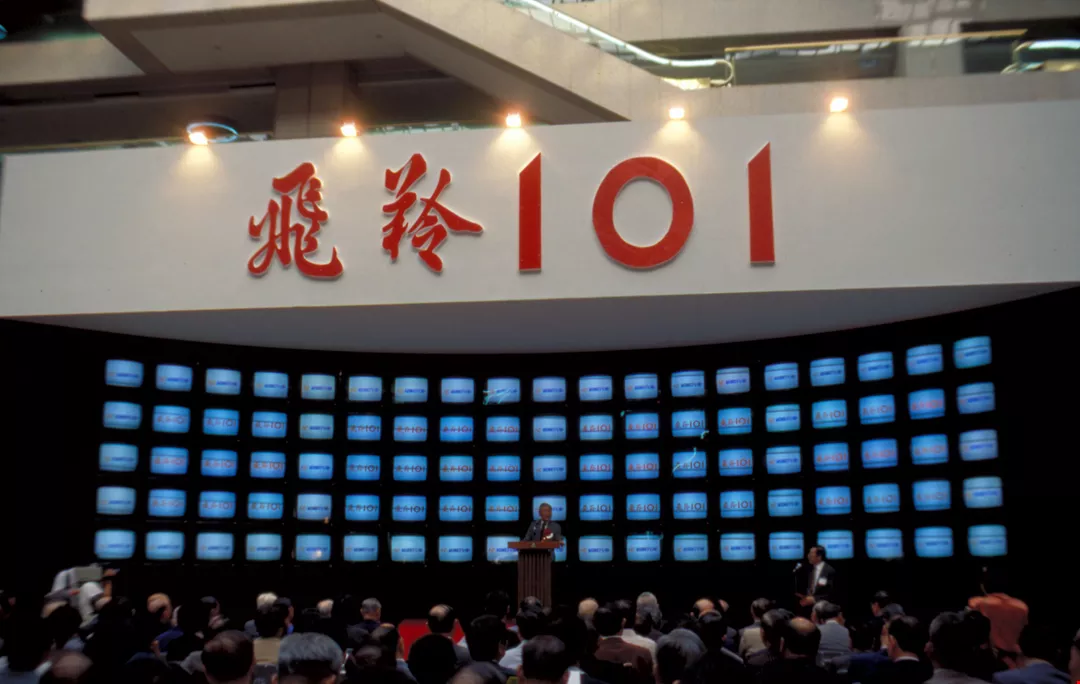
At the publicity conference held for the Feeling, Chao Yao-tung, director of the Council for Economic Planning and Development, made a statement of encouragement to Yue Loong: "We hope that someday the Feeling will be soaring not only along the highways of Taiwan, but through the cities of the world as well."
Due to its record of producing automobiles of high price but middling quality, the ROC automotive industry has received a lot of blame over the last few years. Now there's even competition. The Pony, manufactured in Korea, is doing very well in the North American market, adding to the disappointment and anger of ROC citizens. No wonder that during the National Development Seminar held in July 1986, Fei Ching-han, a participating scholar, said publicly "If an earthquake wiped out the auto industry, it would be no great loss."
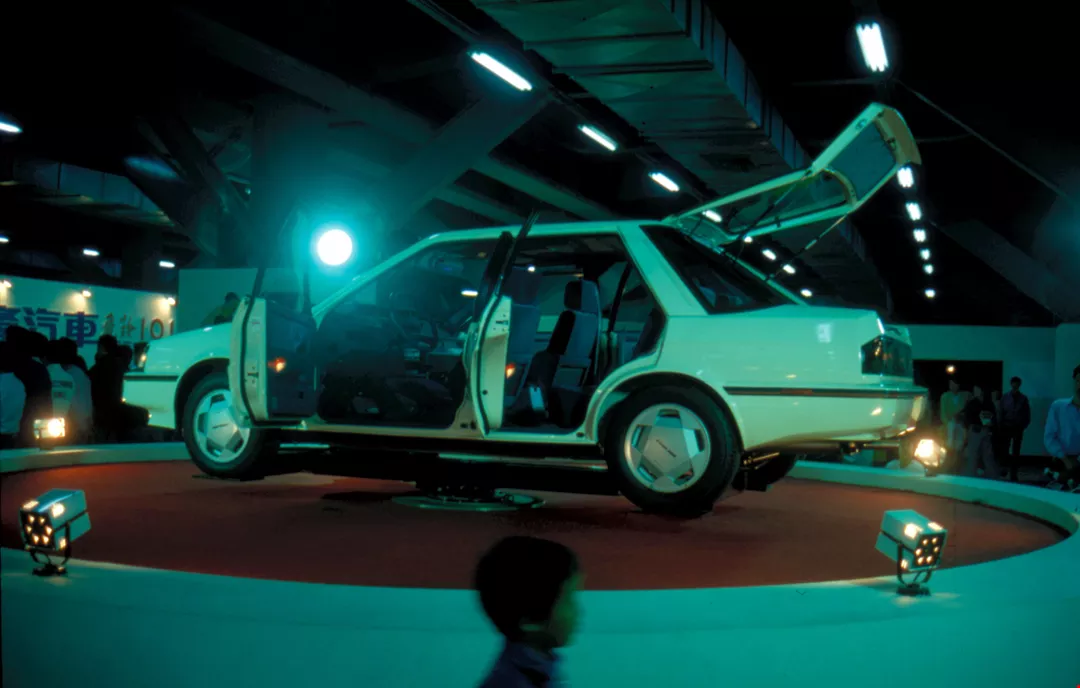
The Feeling, five years in the making at a cost of NT$2 billion (US$56 million), has been the focus of a lot of media attention after its extraordinary performance in tests in the United States and Europe. As a result, a certain "Feeling fever" has risen in the ROC Even before it was put on the market, l,000 models had been ordered. It seems that Yue Loong has proven that the ROC can design a fine automotile itself.
In its cooperative work with Ford, Taiwan's Ford Lio Ho Motor Company earned first place among Ford's worldwide joint venture operations, winning thereby the chance to build a car for export to Canada. Even though Ford's cars are priced at the upper end of the market, the consumers' response has been excellent. A few Canadian and American newspapers have forecasted that Taiwan will become the world's "car assembly king" and will replace Korea and Japan as the major supplier of automobiles to the U.S.
This is good news for the domestic automobile industry. Nevertheless, Yue Loong has laid aside plans for exporting the Feeling (see "Chu Sing Talks About the Feeling."), and it appears that the success achieved with Ford cannot be followed up on at the moment. When the Ford Lin Ho Motor Co. built its TX3, it imported 90 percent of the parts from Japan to ensure high quality and high sales. When the yen appreciated by 37 percent, however, the company was forced to absorb the extra costs because it could not raise the price on the already expensive model, and ended up losing money.
In addition, the liberalization of Taiwan's economy means that, as the duty on imported cars falls to 30 percent by 1991, the domestic market is going to become more competitive. Says Chu Sing, vice president of Yue Loong and director of its Engineering Center, "Taiwan will then be part of the international market. If local manufacturers can't compete in price and quality, then they'll simply go under." Adds Yen Po-lin of San Yang Industry Co., "It used to be easy to make money. But now, if you pass the rising costs onto the consumer, there will be an uproar."
With pressure from consumers on the one hand, and from foreign competition on the other, ROC auto manufacturers are discovering that they have to fight for their territory. The chairman of one local carmaker, which due to its joint venture with the Japanese has been hit by the appreciating yen, ordered that costs be cut by 30 percent within one year. To the flurry of protests that met his order he replied simply: either we do it, or we're finished. So they did it, cutting costs by 90 percent of the projected amount.
According to disclosures from within the industry, the cost of making dies for a single auto part is about NT$100,000 (US$28,000); and on an average car there are about 30,000 parts. Add to that design costs, and it's obvious that the higher the production volume the better. But the domestic market is small, with average annual sales amounting to only about 150,000 cars, and the number of auto manufacturers--eight--preventing any one of them from expanding its operations. Hence local automobiles have no way of being competitively priced.
Chu Sing feels that these firms will have to work together to stay alive. "The company heads have t minute whether they want to do business for a few more years and then close shop, or work together and compete against the imports." There is a Chinese saying that it is better to be the head of a chicken than the tail of an ox. But such an attitude, it seems, will not help the auto industry.
"Actually," says Casper Shih, president of the China Productivity Center, "the carmakers would be willing to work together. The problem is that on Taiwan everyone wants to be different, so you have to offer a large variety of models to the public.'"
A number of foreign auto firms, among them General Motors and Toyota, are considering investing in Taiwan. GM presently has relations with Japan's Isuzu, which every year supplies them with 90,000 cars for the American market. However, due to import quotas on Japanese cars, Isuzu cannot increase its supply. Therefore GM has decided to work with Taiwan's Sanfu Motor Co. as well. Hsu Kuo-an of the Ministry of Economic Affairs points out that it is necessary to undertake joint ventures in the current international auto industry. "Automakers here are welcoming the investment of foreign auto firms in Taiwan in the hopes that they can occupy an important position in their global network," Yue Loong is planning to work with Nissan and Chrysler with this view in mind.
Another path for development is in the parts industry. "Last year automobile parts exported from Taiwan totaled US$500 million in sales, equivalent to the sale of 100,000 Ponys," says Hsu. Moreover, there are no quota restrictions on parts. The appreciation of the yen has given a boost to parts exports from Taiwan. Nevertheless, parts manufacturers on the island are a step behind the Japanese in terms of quality. Nissan and Toyota are going to begin assisting local parts manufacturers with improving their products. The Industrial Development Bureau Ministry of Economic Affairs is helping local parts factories improve the quality of their parts as well. Since last year, San Yang has been sending specialists to the parts factories to lend guidance. Yue Loong has gone one step further, investing in the parts factories to make them part of the company's production network. As a result, quality control costs have been reduced, a savings which can be passed onto consumers.
The production of materials for parts, however, is causing difficulties. The materials industry on Taiwan is rather weak, so that some materials have to be imported. High import duties, however, raise the price of the finished product, and therefore affect the price of the car. To increase economic efficiency, the Bureau of Industrial Development has assembled a group of experts to determine which parts should be manufactured locally and which are best imported. The duty on materials for those parts which local factories are capable of manufacturing will then be reduced.
Although it is acceptable for local automobile firms to rely on foreign firms for their development, at the same time they must try to stand on their own two feet. This means that local manufacturers must recognize their strong points and develop accordingly. Says Chu Sing: "We can't expect to export one million cars a year like the Japanese do. We have to choose the game the we play best and play that. If you box with Mohammmed Ali, you're going to lose." He feels that the Koreans' attempt to imitate Japan and become a major exporter may well fail. Unlike Japan, Korea does not have a large domestic market; and there is no way they can export all of their cars. Instead, the ROC should imitate such countries as Sweden. Sweden has a population of only eight million, and therefore a small domestic market, but it has two very successful car companies--Volvo and Saab.
The defense industry is another path for development. In Korea, for example, the auto industry can immediately begin manufacturing vehicles for the military in a national emergency.
Another path is in the parts industry. Especially since the computer industry on Taiwan is fairly advanced, manufacturing electronic automobile parts is likely to be a successful enterprise.
Whatever path the automobile and parts industries on Taiwan decide to take, as long as they capitalize on their assets they are sure to meet with success.
[Picture Caption]
A flotilla of Fords waiting at Taichung harbor to be exported. (photo courtesy of Ford Liu Ho Motor Co.)
The Feeling's elegant looks have already won consumers' hearts. (photo by Chung Yung-ho)
A bevy of big wheels attended the publicity conference for the Feeling at the Taipei World Trade Center. (photo by Vincent Chang)
The ROC's precision technology is making it the new automobile assembly king of the world. (photo by Chung Yung-ho)
This new Feeling now has to pass a rigorous series of road tests. (photo courtesy of the Yue Loong Co.)
In the environment testing laboratory, the car must undergo tests for heat, moisture, wind, and heat-radiation resistance. (photo by Chung Yung-ho)
The present level of computer technology makes developing electronic car parts a likely path to take. (photo courtesy of the Yue Loong Co.)
The Feeling's elegant looks have already won consumers' hearts. (photo by Chung Yung-ho)
A bevy of big wheels attended the publicity conference for the Feeling at the Taipei World Trade Center. (photo by Vincent Chang)


