What do online video site YouTube, Internet telephony pro-gram Skype, and web-based photo album Flickr have in common? They have all been honored at the Silicon Valley conference, launch venue, and competition DEMO.
The first of two DEMO conferences for 2008, DEMO 08, was held in January of this year and boasted over 700 participants from around the world, including Taiwanese companies Atlaspost and Citiport, who attended with assistance from the Institute for Information Industry (III). These two were the only Asian participants to make it to the final 77. Atlaspost went on to win the People's Choice Award, marking the opening salvo in Taiwan's assault on the global software innovation market.
In 2000, after the US dot-com bubble burst, prospects for Internet businesses looked dim. As infrastructural aspects like broadband and wireless Internet took off, though, Internet and multimedia technologies found a second wind, this time emphasizing user-friendliness and interactivity, which became the hallmarks of Web 2.0. As more and more such businesses and websites blossomed, the online business space saw an explosion of diversity and development.
Iconic Web 2.0 sites like YouTube, Wikipedia, MySpace, and craigslist began to draw massive numbers of visitors, inspiring a new generation of entrepreneurs to focus on the unlimited possibilities the Internet could offer.

New online entrepreneurs
Under the III's "Nurturing a New Generation of Online Innovation" project, which was commissioned by the Ministry of Economic Affairs and officially launched in early 2007, the rising stars of Taiwan's IT industry are making their mark.
This project has already earned the support of the Taiwan Internet Association, Yahoo! Taiwan, Seednet, and webs-tv, among others. Participants were selected from just under 200 eligible entrepreneurial teams on the basis of their innovation and global aspirations, and those who meet the ideals of Web 2.0 are provided data center space, bandwidth, and other resources free of charge. The project also involves experts in marketing, business, and IT from Taiwan and abroad being available to offer their opinions and provide advice. To date, 34 groups have taken up the offer of mentoring.
The DEMO conference has been held twice annually in Silicon Valley, California for 18 years. DEMO is considered the leading launch opportunity for software entrepreneurs from around the world, attracting interest from over 500 venture capitalists and over 100 media outlets. In recent years, Internet applications have become increasingly popular, and DEMO's importance has only grown in light of this. As such, it has become the first destination for firms being touted by the III.
A new sensation
This January, the III made their inaugural selection of 12 rising stars to participate in DEMO, initially intending it to be a scouting mission. What they hadn't expected was that two of their selections, Atlaspost and Citiport, would receive such a warm welcome and become the belles of the ball.
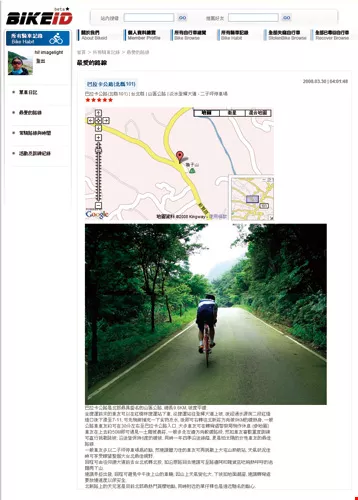
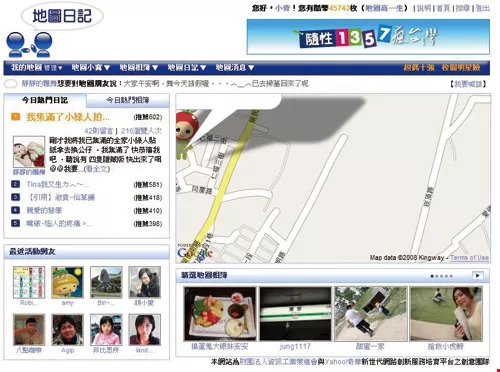
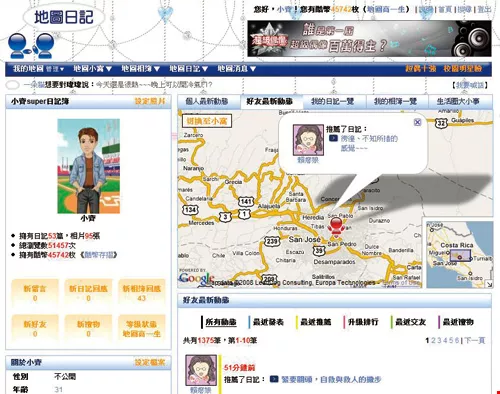
Atlaspost, which brings together the worlds of blogging and online maps to give a new spin on social networking, was actually so well received that the participating media and investors selected it for the People's Choice Award.
Citiport diverges from the traditional focus on backpackers and tourists of most travel websites and instead takes a more local approach, with results such as residents of Taipei City selecting destinations like NTU Ecology Pool and Chi-Shan Garden as top destinations there, whereas in traditional travel books or websites, these places are generally overlooked. This idea of having "local guides" is a tremendously innovative take on travel guide creation.
But Citiport and Atlaspost were not the only Taiwanese participants to draw attention at DEMO. Webi, a multimedia blogging site entirely created in Adobe Flash, gives users drag-and-drop functionality akin to the Windows desktop, letting them organize image, audio, and video files they have collected. This gives a new user experience unlike the rigid categorization of most blog platforms and sees Webi doing its part to realize the concept of Web-as-desktop.
Vooeasy, a social networking site aimed at the 35-plus demographic, offers such tools as a business card creator in place of the usual profile photo, giving older Internet users who may not be comfortable with revealing their faces online a different means of meeting people on the Internet. Others, including Globme, a "behavior database" that can record items about yourself and others, have been invited to participate in DEMOfall later this year, and anticipate a warm reception.
Reflecting new online trends
Through this participation in DEMO, the Institute for Information Industry was able to also collect information on the latest trends and developments in online services.
Eric Hu, a researcher at the III's Innovation DigiTech-Enabled Application and Services Institute (IDEAS), says that in order to succeed in the fiercely competitive online world, an idea or technology must be highly innovative. As an example, he offers another of the III's DEMO selections, Delver, which leverages social networking to create a "second-generation" search engine.
As Hu explains, most people use Google when searching for information, but quite often one is bombarded with tens of thousands of results, which can be a headache to filter through. Delver, though, first compares results with those obtained by the user's friends and family that also use the site, offering a higher degree of accuracy in their search results. "People in the same social group tend to share interests, and so by using this method, Delver is better able to provide the results its users are really looking for."
Another example is British website Hubdub, which aggregates major news stories from each day, then asks questions like "Who will win the US presidential election?" or "Who will successfully purchase Yahoo?" and gives its users the opportunity to places bets on the outcome with "Hubdub Dollars."
Hu also notes that with major sites like YouTube, Facebook, and Google releasing APIs (application programming interfaces), more and more online ventures will be built on these foundations in the future, the way Atlaspost makes use of the Google Maps API.
"If new and unique applications and services can make use of platforms that already have large user bases, they'll enjoy increased visibility and a higher attach rate. Taiwanese entrepreneurs are being encouraged to develop such services in the future," says Hu.
Strengths and weaknesses
In addition to all this, as mobile devices like cellphones, PDAs, and GPS units increasingly include online functionality, the industry is looking to these as another opportunity for growth. Su Wei-jen, a section manager at IDEAS, believes that Taiwan has tremendous capability in the hardware realm, and that if Taiwanese companies can successfully integrate hardware and software, they could be in a position of strength in the global market.
Su points to the current hot trend toward increased usage of map-based technologies and the massive potential they have. Maps are an indispensable online tool, and combined with cellphones with GPS capability and wireless Internet access becoming more commonplace, Internet users are able to log on and pinpoint their positions. And with Taiwan's booming IT industry, there is a tremendous business opportunity waiting for any local company that can combine mobile technologies and online map services.
But while they do have their strengths, Taiwanese companies still need to boost their marketing capabilities in order to compete on the global stage. IDEAS researcher Shan Luo, who is also responsible for providing guidance to these rising stars of IT, says that while local companies have no problems with innovation, they generally lack the ability to draft a comprehensive marketing blueprint.
Luo explains that Taiwanese teams are usually extremely enthusiastic and into telling others how much fun their products are, but not nearly as good at convincing them that they will be big money makers. On top of this, they're usually not all that clear on markets outside of Taiwan, and don't really know how to figure out how many similar sites are available locally, how competitive they are, and how much of the market they can hope to secure. But if they want to succeed in the international arena and attract investment, they need to address these issues.
Business opportunities abound in the constantly evolving online world. Taiwanese companies have been slow off the mark, and so they need to work harder if they want a piece of the pie. No matter how innovative their products are or how well they meet users' needs, they still have to find their place in the market. Innovation, no matter how inspiring, is only the first step. Finding a niche and developing solid management are the keys to ultimate success.