The New Silk Road
Taiwan Gets Behind Central Asian Development
Teng Sue-feng / tr. by David Smith
April 2013


Travelers and merchants of centuries past—driving camels laden with silks, silver, and spices—made their way between Xi’an, China and points far to the west by following the Silk Road through the vast deserts of Central Asia.
Today, the European Bank for Reconstruction and Development (EBRD) is investing in a “New Silk Road” that retraces the Silk Road of old. Starting in Xinjiang, the new highway passes through Kazakhstan and hits Moscow on the way to its final destination in St. Petersburg. Completion of the New Silk Road is expected to cut travel time between Zhengzhou in Henan Province and St. Petersburg from 45 days to 14 days. Moreover, the New Silk Road could open up Central Asian markets for Taiwan, and vice-versa.
The New Silk Road is a 2,800-kilometer construction project that got underway in 2009 and is slated for completion in 2014 at a cost of US$7.5 billion (NT$225 billion). The EBRD has lent US$5.7 billion for the project.
Impressed by Taiwan’s world-class engineering prowess, EBRD president Sir Suma Chakrabarti and a delegation from Kazakhstan came separately to Taiwan in early March to take part in a roadshow organized by the ROC Ministry of Foreign Affairs to familiarize Taiwan construction firms with the New Silk Road project.
“Taiwan’s tremendous engineering capabilities are quite well known,” said Deputy Minister of Transportation and Communications Chen Chwen-jing. “Taipei 101 was once the tallest building in the world, and is an outstanding example of green architecture. And the Xueshan Tunnel between Taipei and Yilan is the fifth-longest road tunnel in the world.” In his view, Taiwan’s construction firms are more than capable of taking on big overseas projects.
While meeting with the Kazakhstan delegation, Minister of Public Construction Chern Jenn-Chuan noted that both Kazakhstan and Taiwan are located in earthquake zones, so structures in both these countries must be quake-resistant. He further noted that Taiwan is especially good at minimizing pollution, and at developing new technologies, materials, and building techniques to improve construction quality and efficiency. For these reasons, he stated, Taiwan is an excellent choice for both the EBRD and for Kazakhstan.
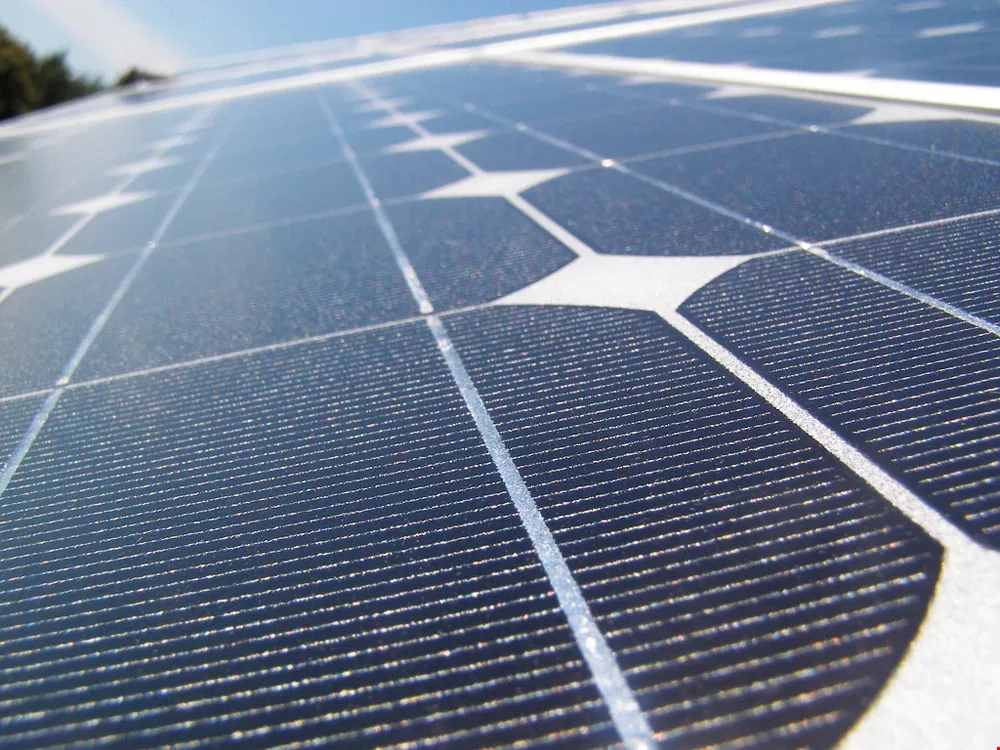
In its countries of operation in Central Asia, a high percentage of EBRD loans in recent years have gone to green energy projects, such as installation of solar panels. This is a high-tech industry where Taiwan is quite strong.
The EBRD has very deep ties to Taiwan, and plays an important role as a medium for hooking up Taiwan with business opportunities in Central Asia.
Headquartered in London, the EBRD was founded in 1991, about a year and a half after the collapse of the Berlin Wall. It serves as a regional development entity for emerging economies in post-Cold-War Europe, and works to support economic development in 34 countries in Eastern Europe and Central Asia. Some would describe it as a sort of miniature World Bank or Asian Development Bank.
The EBRD’s members (or “shareholders” in EBRD parlance) comprise 64 nations (including the United States, Japan, the United Kingdom, and Germany) plus the European Union and the European Development Bank. The US is the largest single shareholder, followed by Japan and the EU. To date, the EBRD’s authorized capital has increased from €10 billion to €30 billion, and the bank has provided assistance in over 30 countries of operation ranging from Eastern Europe to Central Asia.
EBRD president Chakrabarti hopes to strengthen cooperative ties between Taiwan and the EBRD, and Central Asia is a region where Taiwan could do more to take advantage of its technical strengths. In particular, Taiwan’s knowledge value chain is very competitive internationally, and can help Central Asian nations come up with their own solutions. And Taiwan, by tapping into the strength of the EBRD, could raise its international visibility and exposure. Both sides stand to benefit.
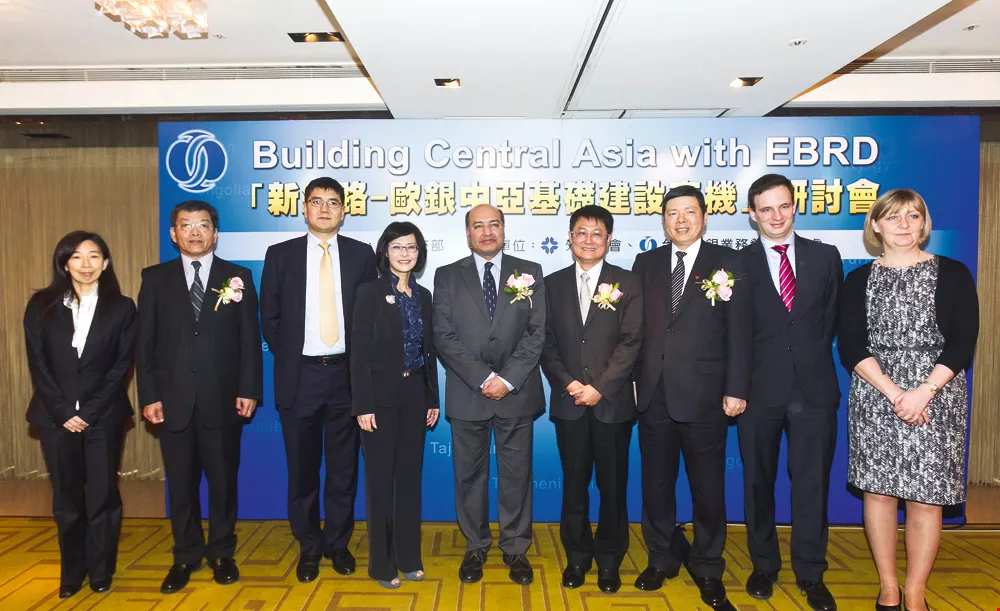
At a roadshow organized by the ROC Ministry of Foreign Affairs to familiarize Taiwanese construction firms with business opportunities in Central Asia, EBRD president Sir Suma Chakrabarti (center) thanked the ROC government for assistance provided over the past 20-plus years. Vice Minister of Foreign Affairs Vanessa Yea-Ping Shih (fourth from left) stated that the government will continue to strongly support the efforts of local firms to develop markets in Central Asia.
In 2011, the EBRD expanded its operations to include the Mediterranean nations of Egypt, Morocco, Tunisia, and Jordan.
Says Chakrabarti: “When you partner with the EBRD, you can always find good investment opportunities. It’s a lot less risky than going it alone.” He adds that, while Central Asia may be unfamiliar to Taiwanese firms, the region is expected to post economic growth of 9% this year. Taiwan could invest there with less risk by working together with the EBRD.
And in fact, Taiwan has very close ties with the EBRD. Taiwan and the EBRD jointly set up a Technical Cooperation (TC) Fund when the bank was first established 21 years ago, and Taiwan has provided help through this vehicle all this time.
To date, Taiwan has provided over €21 million to fund the implementation of 238 technical cooperation (TC) projects, mainly in the sectors of information and communications technology (ICT) and energy efficiency, particularly in urban transport, and projects to support women’s enterpreneurship and enterprise transition, managed by the bank’s Small Business Support (SBS) team.
In addition to the TC Fund, Taiwan has also made direct investments in EBRD-funded projects. Adding in further investment from other countries and sources, the total cumulative value of projects with Taiwanese-EBRD involvement now stands at €3.89 billion. The results have thus been outstanding.
Sustainable green energyIn the past three years, the EBRD has spent over €9 billion (NT$35.1 billion) each year on construction and materials purchases, much of which has involved sustainable energy.
In most of the EBRD countries of operation, buildings account for a high percentage of total energy consumption and lack modern energy-saving measures. A very promising solution to this problem is through the use of rooftop-mounted or building-integrated photovoltaic (BIPV) technology, which transforms solar energy into electricity. This technology allows energy produced to be used not only in the building itself but also to provide an energy surplus which can be sold back into the grid for external distribution.
In 2011, using funding provided by Taiwan, the EBRD hired a team of experts from the Green Energy and Environment Research Laboratories (part of Taiwan’s Industrial Technology Research Institute) to assess the commercial feasibility of BIPV systems. This work could lead to future investment projects.
In May 2011, the Taiwan International Cooperation and Development Fund (TaiwanICD) and the EBRD signed a contract to establish the Green Energy Special Fund (GESF) with an US$80 million loan from TaiwanICD. This fund will be used to support the adoption of advanced, energy-efficient technology by cities in the EBRD’s countries of operation, while concessionary loans will be used to support green infrastructure projects.
Looking to the future, Taiwan and the EBRD will build on their 20 years of shared experience to continue working together on joint investments, which will spur economic development in the EBRD’s countries of operation even as it provides Taiwanese firms with a foothold in Central Asian markets where they have heretofore been largely absent.


