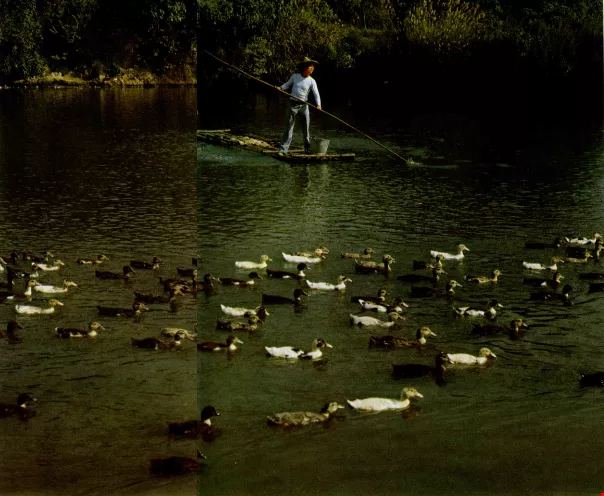
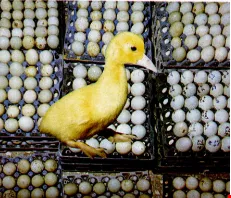
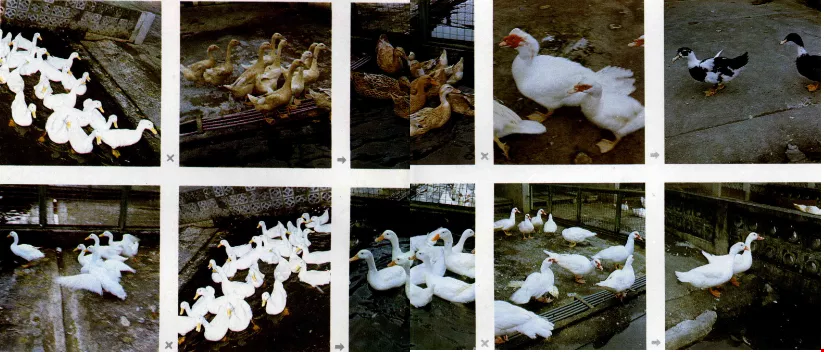
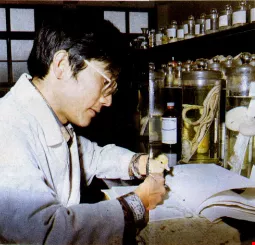
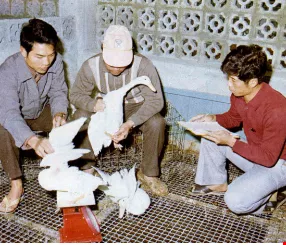
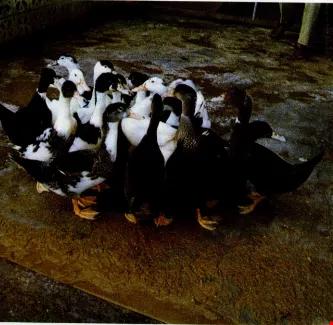
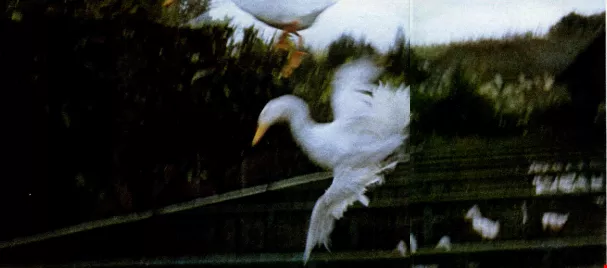
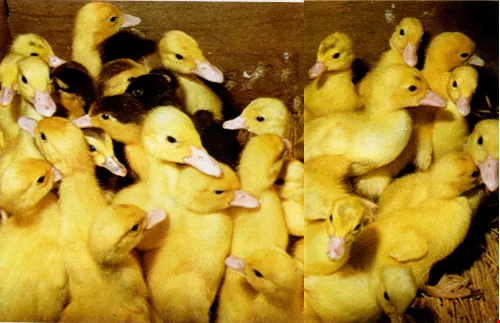
Duck has always been a traditional dish in Chinese cuisine, and Chinese farmers have raised ducks for centuries. Since they were introduced to Taiwan from the mainland during the Ching (Manchu) dynasty, annual production has reached 50 million birds, but even so duck-raising is overshadowed by chicken production in Taiwan. Today, Taiwan has numerous chicken farms, some of them raising more than 100,000 birds. In comparison, duck-raising has remained at an undeveloped stage. Recently, however, chicken consumption has become so universal that people in Taiwan have developed a craving for variety. Inevitably, they have turned to duck, and this has had the effect of driving up prices. Formerly, chicken was more expensive than duck, but nowadays, the reverse is true. These rising prices and the increasing demand for duck down for export purpose have prompted the government of the Republic of China to improve raising techniques. In 1972 a duck research center was set up, only the second one in the world, the other being at Cornell University in the U.S. The main purpose of the center is to conduct research and experiments into duck breeding and genetics in an effort to cut costs and at the same time improve quality. In exporting ducks and their down, the most intractable problems are associated with color and quarantine regulations in foreign countries. Taiwan's indigenous ducks are usually black or brown, and the feathers leave black roots after the bird is plucked, which are unattractive to customers. More than 10 years ago, Taiwan's duck raisers therefore decided to import a breed of Pekin duck from the U.S. to improve stock. Although these birds are far from ideal because they have enormous appetites and their flesh is too fatty, their sparkling white down gave local farmers an idea. At first, they merely crossed the Pekin ducks with the local tsaiya variety, but the offspring were not pure white and their down had little commercial value. The center's next step involved genetic experiments with Pekin ducks, the local tsaiya and an Australian breed, until another hybrid, this time pure white, emerged. The three-way cross possesses all the advantages of the parent stock-combining fast growth with hardiness, good flavor and pure white down which has sales appeal both at home and abroad. Duck raisers in Taiwan overcame the second problem, quarantine regulations in foreign countries, by exporting fertile eggs rather than the birds. The eggs are incubated for 20 days and air-freighted to export markets about seven days before they hatch. This process by-passes any overseas quarantine regulations. Taiwan currently exports more than seven million eggs and three million kilograms of down a year. The main credit for this success must go to a young couple, Mr. Tai Chien and his wife, Liu Jui-chen, working at the center. Both of them are graduates of National Taiwan University, most prestigious on the island, and Mr. Tai holds a master's degree there. Their contribution has been recognized by the government when Tai was selected as one of the outstanding scientists and technicians of 1977. The young couple carefully monitors each duck and egg, separates the ducks from the drakes and uses only artificial insemination inbreeding. Each duck is weighed every day to determine its feed-conversion efficiency, and feed is prepared according to scientific formula. If a defective duckling is found, its parents are always carefully traced.