3
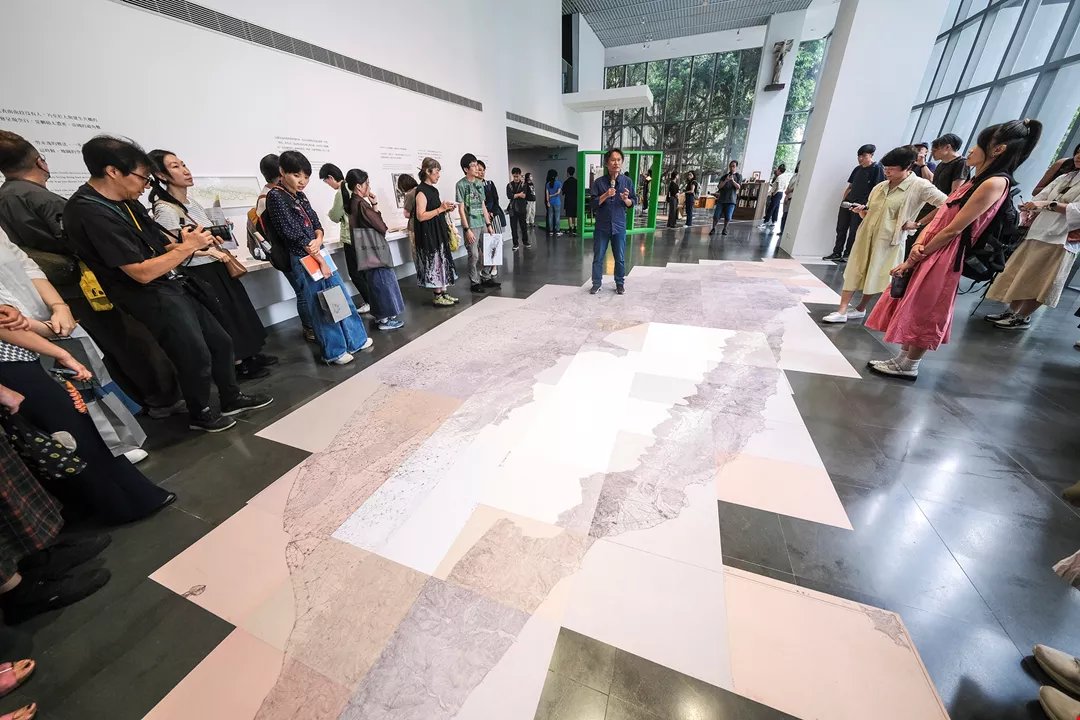
At the center of the gallery lies a seven-meter-long, 1:50,000 “Topographic Map of Taiwan,” completed in 1924 by the Imperial Japanese Army’s Land Survey Department. Geographer Hung Kuang-chi notes that the southernmost part of the Central Mountain Range—from Mt. Beinan to Mt. Beidawu—appeared as a blank on maps of the time, a terra incognita beyond the empire’s reach. But the area was not uninhabited, but rather contained a dense web of relationships among Indigenous communities and the living world. Over time, roads and logging sites filled the map’s blank space; state power entered, the forest changed, and the clouded leopard disappeared. Yet the blank land has never been truly empty. Although logging and infrastructure development left their traces behind, ecological evolution since the logging ban has gradually reclaimed and enveloped many of those trucks and roads. “At this point, people are slowly returning, and nature is slowly returning. Perhaps one day the clouded leopard will return too,” Hung says.
From a literary and ecological-historical foundation to the cross-disciplinary translation of immersive VR, The Clouds Are Two Thousand Meters Up exhibition invites visitors to a place where mist and memory meet at 2,000 meters—to hear the mountains echo again and touch the uplands embedded within all our hearts and minds.

Exhibition Highlights of The Clouds Are Two Thousand Meters Up
Inside Wu Ming-yi’s Creative Back Room Wu has moved part of his bookcase and creative “back room” into the exhibition space, including slides he photographed, books, illustrations, and handmade insect specimens. A computer also reveals rarely seen correspondence with experts whom he consulted while writing. These reveal the rarely exposed background to creative work.

A Double Study and a Look Behind the VR The exhibition overlaps the fictional study/library of the wife of the story’s protagonist “Guan” with Wu’s actual workspace, creating an intertextual “double space.” In a green-screen area, visitors can put on a headset and see objects appear on the desk that are not physically there and enjoy the shock caused by the intersection of the virtual and the real. At the rear of the exhibition space, the gallery becomes a VR production studio, sharing the work process of director Singing Chen and her team, including different maze designs, handwritten story-adaptation notes, audiovisual documentation, and a forest scene from the VR experience.

Traces from the Blank Land Historical documents and photographs gathered by geographer Hung Kuang-chi and his team include an insulator from the electrified fence along the Liugui Security Path, household objects from yesteryear, and original photo albums belonging to mountaineers and forestry workers—artifacts of how the blank space on the 1924 map of Taiwan was filled.

Forest Cross-Sections in Metal by innie+outie Metal artists Wang Yu-lin and Chou Chi-en handcrafted species from the Mt. Dawu region in brass, including purple crow butterflies, pinecones, and beetles. Designed with micro-actuator structures, their works translate the emotions the creators felt in the mountain forests into 3D metal relief art and capture the subtle tremors of the forests.

“Someone Said It Had Been Here”: An Audio Interview Sound artist Wang Yujun interviewed Chiang Po-jen, then re-edited the conversation with forest soundscapes and music. Through headphones, visitors can hear Chiang recount the years he spent searching and waiting for the clouded leopard.
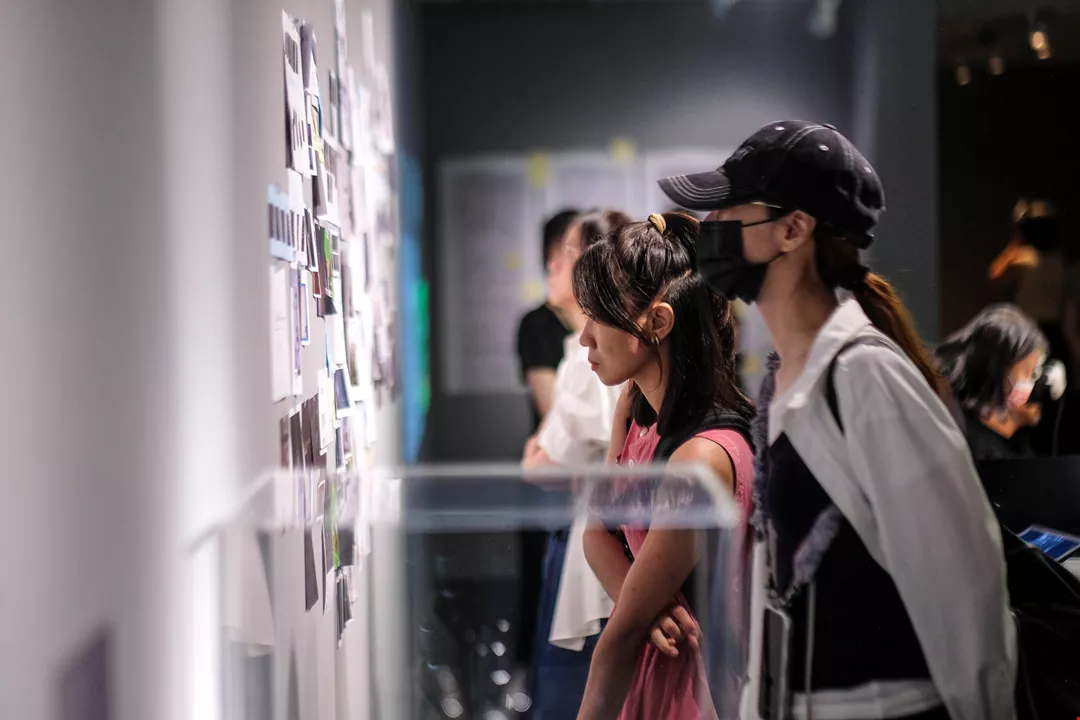
Director Singing Chen and her creative team have openly shared the process of adapting literature into VR.
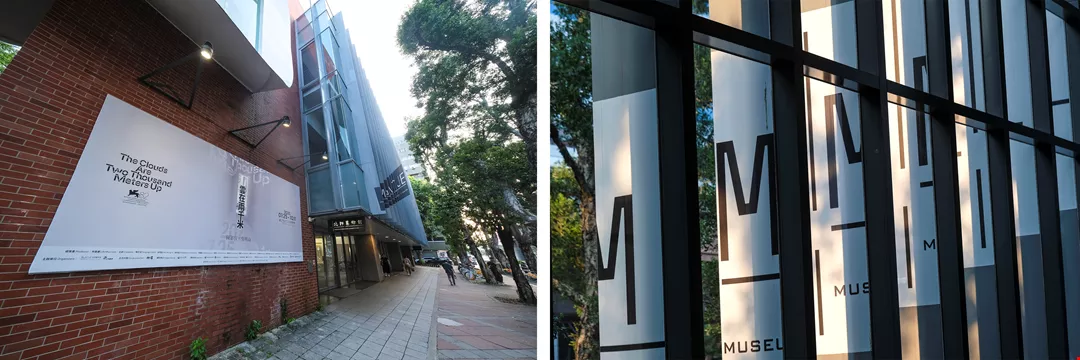
MoNTUE’s The Clouds Are Two Thousand Meters Up exhibition invites visitors to a place where mist and memory meet at 2,000 meters—to hear the mountains echo again and touch the uplands embedded within all our hearts and minds.





@List.jpg?w=522&h=410&mode=crop&format=webp&quality=80)

