Tending Music's Forest:Chung Shefong and Trees Music and Art
Chang Shih-lun / photos and album covers courtesy of Trees Music and Art / tr. by Julius Tsai
September 2005


The 2005 Formoz Festival was a three-day rock festival that was characteristically filled with raucous, youthful bellowing. Sitting quietly on a stage at dusk, however, was Hakka singer Lin Sheng Xiang. Without screaming or shouting, he steadily sang a succession of protest songs to his own rhythm. His music, with its socially conscious lyrics, proved more stirring than the booming of the rock bands performing at the festival.
Just as Lin seemed a bit out of place at this rock festival, his label, Trees Music and Art, also stands apart from other labels, with its focus on international music and the fostering of greater cultural awareness. How did this tiny, independent label become a force to be reckoned with in the music world? What is it about Trees Music's core values and management style that makes it unique compared to other record labels?
The 2005 Golden Melody Awards ceremony was a star-studded spectacle. While the media's attention was focused on pop stars, the biggest winner was not anything put out by a mainstream label, but Sheng Xiang and Water 3's album Getting Dark, put out by Trees. What is more, this was not the first time Trees had walked away from the Golden Melody Awards a winner.
Founded in 1993, Trees Music and Art promotes global folk music that falls outside the Euro-American mainstream. Coordinator Chung Shefong deemphasizes the awards, focusing instead on making Trees' music and ideals more well known.
Just what are those ideals? How did Chung's fascination with global folk music begin, and what led her to the creation of the only record label in Taiwan to focus on this musical genre?

Trees Music and Art coordinator Chung Shefong has spent much of her time in various places around the world. The logo for Trees Music and Art, shown to the right of the article title below, illustrates how music is only strong when it stems from and takes root in local places.
Maori inspirations
Chung has been a music lover since childhood, and says, "As long as I had any allowance at all, it almost always went into records." However, unlike other youth who were fascinated by rock and roll or acoustic pop, Chung's early experiences with music were already leading her away from the mainstream.
Chung's initial moment of inspiration came while she was watching television with her older sister one day. They chanced upon a program on Maori music, rare footage indeed given how sealed off Taiwan was from the outside world in those days. Knowing that the program would continue a week later, the two sisters came back to it having set up a tape recorder, a rare device in those days, to tape the whole show. They would listen to the tape repeatedly, and Chung still has that tape today.
After graduating with a degree in English from National Chengchi University, Chung went to Britain, where she received a master's in analytic psychology. Upon her return to Taiwan, she wondered where life would take her next. Filled with idealism and a love of music, she decided to go into the record industry because she felt that "the Taiwanese people's musical experiences were too narrow and one-sided." Thus in 1993, Chung founded Trees Music and Art with a mission of bringing out folk music from all parts of the world.
Land and ideas behind the music
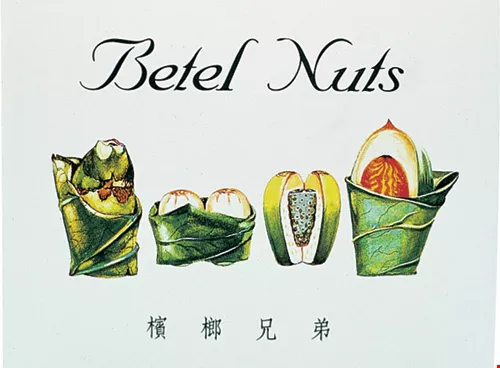
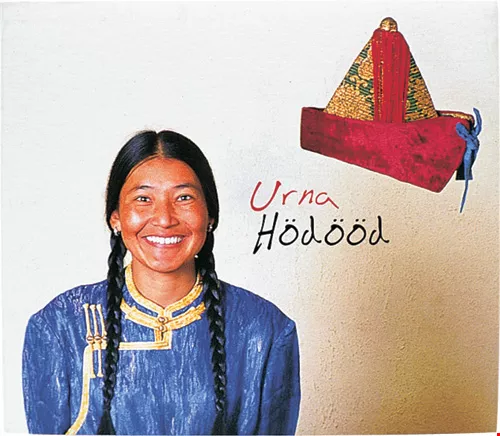
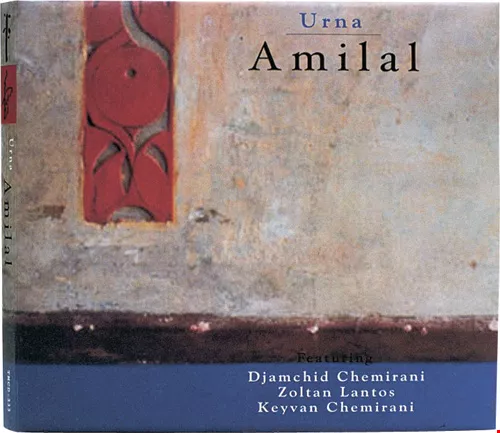
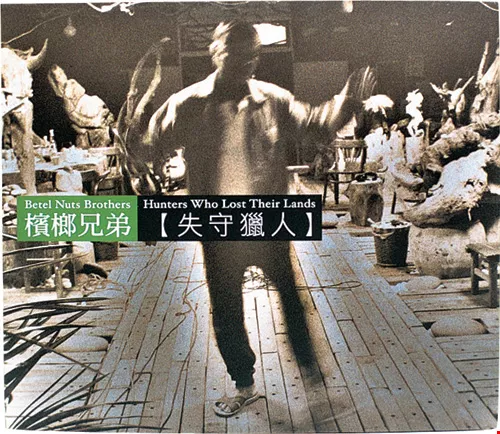
Aside from acting as agent and distributor for albums from Europe, Asia, Africa and beyond, Trees is also very involved on the production end. Aside from working with Lin Sheng Xiang and the Betel Nuts Brothers, who are of the Amis tribe, the label's clients also include Urna Chahar-Tugchi, who was born in Mongolia and is pursuing her musical career in Europe.
Chung does not limit herself to producing Taiwanese music. To her, where the music is from is not important but, rather, "What's important is the maturity of the music. There has to be a feel for the land and the ideas behind the music!"
This kind of determination has garnered Trees much critical acclaim. After Hakka folk ensemble Labor Exchange disbanded, Lin Sheng Xiang used the moniker "Sheng Xiang and Water 3" to put out the album Getting Dark. The album, which minutely narrates stories of suffering urban laborers, was widely considered the best Chinese-language album of 2004. The Betel Nut Brothers use the traditional songs of the Amis people combined with contemporary compositional methods to sing of daily life in an Aboriginal village. The Mongolian-born Urna Chahar-Tugchi not only adopts the musical style of her native grasslands but also works with musicians from all over the world to make sparks.
In terms of her outlook on producing music, Chung says, "For these musicians, music already exists with wholeness in their lives. A producer's responsibility is to simply help them express their music. As to their particular musical backgrounds, the producer cannot and should not ever try to meddle with that."
Chung's insistence on the integrity of musical roots causes her to vehemently reject the sampling of folk melodies, musical styles, or a culture's ethos. Such methods should come as no surprise to Taiwanese listeners, given the way the British group Enigma sampled Taiwanese aboriginal singer Difang's music to produce an exo-ticized product devoid of depth or roots. Such music, according to Chung, "does not represent a musical dialogue among equals and, more seriously, shows a lack of respect for other cultures. I'm firmly opposed to this way of making music."
Chung does feel that music benefits from fusion and that there is a place for bold innovation drawing from traditional music and for collaboration across borders. However, she feels that music has to proceed from a foundation of a rich cultural background and deep respect for one's partners. Only in this way can collaborative work achieve depth and avoid being emptied or vulgarized.
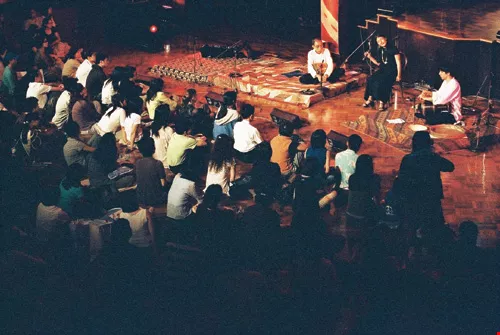
The Women's Voices Festival brings to the table both female artists and audience for an intimate, spontaneous performance style.
Arguing over "world music"
A "world music" trend has been sweeping the industry since the 1990s. While many consider Trees the only label focusing on this type of music in Taiwan, following the success of its release of Buena Vista Social Club, Chung has major reservations about this categorization, which is all too often applied indiscriminately.
In the late 1980s, Western record companies were having difficulty categorizing non-Western music such as Latin American and African music. The phrase "world music" was coined as industry leaders met to find a marketing category for such types of music. However, "world music" fails to identify any actual musical style. It lumps together all non-Western music, traditional or modern, commercial or not.
Even though the music that Trees focuses on would fall into what many would call world music, those at the record company try to avoid such empty labels. As Chung sees it, each artist's work has it's own unique cultural and historical background. "These works cannot and should not be defined by a Western marketing category. This is why we try so hard to tell the stories and explain the background behind the works we produce." Trees hopes that by doing so it can make known the unique cultural milieu that each artist represents.
Beyond exotica
One of the challenges in promoting international folk music in Taiwan is the lack of a mature audience for that music. Chung finds that the typical Taiwanese listener buys such recordings only as audiophile oddities suitable for judging stereo sound quality, or for a superficial and fleeting connection with something "exotic."
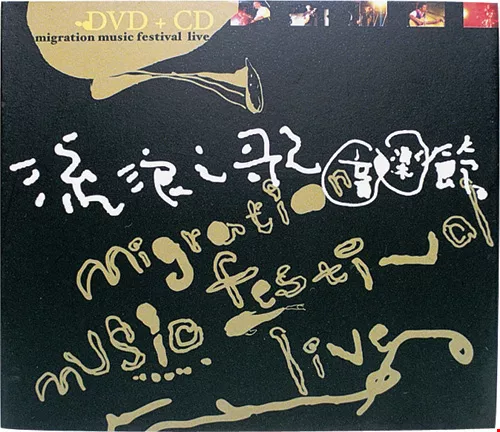
With this in mind, Trees actively organizes musical events in the hopes of presenting a diversity of musical values and sounds from all over the world and putting them into dialogue with Taiwanese listeners. Two events, the Migration Music Festival and the Women's Voices Festival, have been highly visible in recent years.
While most other festivals have a carnival feel to them, those that Trees puts on are aimed at dialogue, often deepened by accompanying film festivals and in-depth forums. With their rigor and depth, they challenge the impressions of romanticism and primitivism that Taiwanese listeners often have about international music.
The Migration Music Festival originated out of the ideal of "migration," the intercultural collisions and dialogues that have resulted from the transformations of history, and that can lead to the fusion and evolution of musical styles. Wandering or migrating is not just a surface romanticism or nostalgia, but represents the potential for social and political transformation.
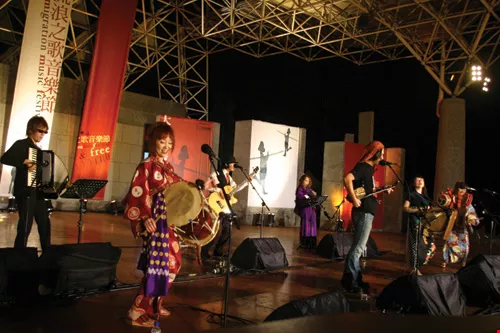
The 2004 Migration Music Festival took as its theme "Loud and Free," gathering together socially and politically involved musicians from all over the world such as the Japanese band Soul Flower Mononoke Summit. Originally a punk band, the group began using traditional instruments when they started to visit and play for victims of the Kobe earthquake living in areas that were without power. Their folk songs and social criticism, became an important force in the period following the disaster.
The Women's Voices Festival focuses on women musicians with different cultural backgrounds and personal stories from all over the world. Through face-to-face collaborative performances and conversations, these musicians weave their own personal histories with the social histories that they inhabit, seamlessly and vividly. Though their voices may be gentle, their lives are full of strength and courage.
One of the performers at the 2004 festival was Dona Rosa, a Portuguese singer who is blind. Born into a poor family, Dona Rosa lost her sight when her family was unable to procure treatment for her meningitis. With her excellent voice and a triangle, she sang on the streets of Lisbon for an audience she could not see. A serendipitous discovery of her talents led to her amazing performing career.
Chung says, "I hope these festivals do not just allow people to hear new music but also contain a progressive social meaning." This is why Trees has put so much into its music festivals, cultivating for many years now a loyal following that contrasts with the youthful throngs of rock fans.

Urna Chahar-Tugchi, born on the steppes of Inner Mongolia, not only utilizes traditional folk melodies but also actively collaborates with musicians from all over the world, engaging in musical conversations and collisions that generate new musical sparks.
Dialogue and cooperation
Aside from introducing good music from all over the world, Trees also tries to bring musicians to the international stage. On the one hand, this gives these musicians experience playing before international audiences. On the other hand, it provides a forum for cultural exchange. While there was some initial skepticism about whether music from Taiwan would resonate with audiences in other countries, such doubts were subsequently put to rest.
When Labor Exchange toured Europe, Chung says, they played in regions where people lived and labored communally. Even more so than Taiwanese audiences, these listeners were able to understand the meaning of "labor exchange," with its connotations of the mutual support and exchange that goes on among agricultural workers. Lin Sheng Xiang sang "Worker's Lullaby" in Europe to even more deafening applause than he would have received in Taiwan, since people there, despite coming from different counties, were all steeped in deep traditions of labor protest.
Looking back on the history of Trees Music and Art, Chung says that their most difficult days are behind them. With not even five employees and limited resources, Trees continues its steady growth even in a contracting industry.
In discussing her future plans, Chung's thoughts turn to the upcoming Migration Music Festival this fall, in which the accordion will be spotlighted, challenging Taiwanese listeners' stereotypes of the instrument. Towards the end of the year, Trees will bring together Lin Sheng Xiang and Okinawan musician Takashi Hirayusu in an arrangement that will have each of them visit the other's home village. Chung says, "After building mutual understanding in regards to each artist's cultural roots and dialogue, these two trips will serve as material for recording a work that crosses borders." In addition, Trees plans to reissue one of renowned folk singer Yang Tsu-chun's classic albums, a work that has been unavailable for many years now.
Each of these creative ideas is like a vibrant musical seed carefully planted in Taiwan's musical fields. Tree's quiet, low-key revolution has gone on now for 12 years. Chung's amazing and courageous musical vision lies behind her gentle appearance and serene words. This vision is what makes it possible for audiences in Taiwan's sometimes parochial environment to witness the blooming of a whole array of unique musical flowers.
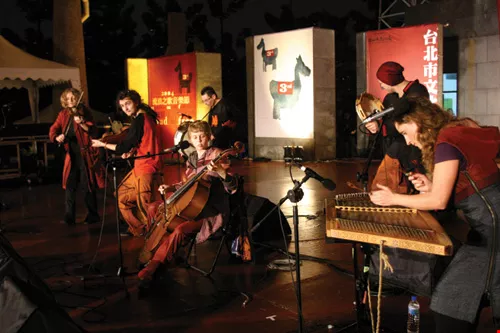
The Migration Music Festival, which takes place in early fall of each year, takes a designated theme and brings together a diversity of musicians from around the globe. Pictured at left is Soul Flower Mononoke Summit, who perform "The Internationale" on traditional Japanese instruments. To the right is the Warsaw Village Band, who create fresh reinterpretations of traditional music.
The Migration Music Festival, which takes place in early fall of each year, takes a designated theme and brings together a diversity of musicians from around the globe. Pictured at left is Soul Flower Mononoke Summit, who perform "The Internationale" on traditional Japanese instruments. To the right is the Warsaw Village Band, who create fresh reinterpretations of traditional music.

The Migration Music Festival, which takes place in early fall of each year, takes a designated theme and brings together a diversity of musicians from around the globe. Pictured at left is Soul Flower Mononoke Summit, who perform "The Internationale" on traditional Japanese instruments. To the right is the Warsaw Village Band, who create fresh reinterpretations of traditional music.

The Hakka singer Lin Sheng Xiang has been critically acclaimed as one of the most significant artists in Taiwan. His album Getting Dark takes the perspective of a young person coming from the country to make a living in the city, chronicling the bitterness and helplessness of the laboring classes.

@List.jpg?w=522&h=410&mode=crop&format=webp&quality=80)

@List.jpg?w=522&h=410&mode=crop&format=webp&quality=80)


