

Joseph Needham, the famed English chronicler of the history of science and technology in China, felt that Shen Gua's Dream Pool Essays was a milestone in the history of Chinese science. In his Science and Civilization in China, Needham uses it as the standard by which other works are measured. Today, this amazing 1000-year-old scientific work can be read in a number of different languages, including English, French, German and Japanese.
While in his thirties, Shen Gua began to dream frequently of a place. In his dream, he ascended a hill, the summit of which was covered with brightly colored flowers and trees. Clear waters flowed at the base of the hill, banked on either side by dense woods. More than ten years later, a Daoist master told him of a piece of land for sale, which Shen Gua bought sight unseen. A few more years passed before the now-retired Shen happened to pass by this piece of land. He decided to stop and take a look, and was shocked to find that it was the place of which he had dreamed. There he settled, and there he wrote of the discoveries he had made in his lifetime. This extraordinary story is the origin of Shen's famed scientific work, Dream Pool Essays.
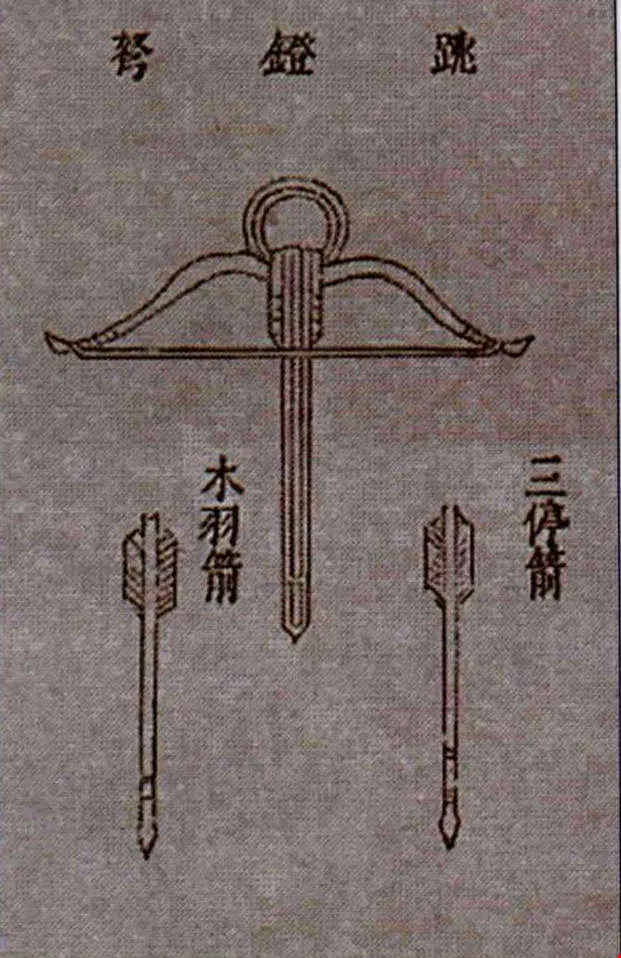
The 11th-century scientist Shen Gua not only researched military technology, astronomy, calendars, geology, meteorology and maths, but even made milestone contributions to art and literature. Pictured is the most powerful cannon of the Song era. (courtesy of Yi Hsin Publishing Co. Ltd.)
Shen Gua (1031-1095) held a number of official posts during his life. He served as an envoy to the Liao Kingdom and led troops in battle. At one time he served as the highest financial official in the empire, and was even director of the imperial observatory.
Shen Gua was hundreds of years ahead of Western science in the fields of astronomy, meteorology, geography, mineralogy, mathematics and the calendar. He was the first to discover that compasses do not point directly north, but to the magnetic north pole. In the field of mathematics, he developed techniques which laid the foundations for spherical trigonometry and high-order arithmetic progressions. When visiting the Taihang mountains in Shanxi Province, he found fossilized sea shells and noted the presence of ovoid stones like those often found on the seashore, leading him to conclude that at some time in the distant past, Shanxi had been located by the sea. On seeing hundreds of fossilized bamboo on the slopes of Zhejiang's Yandang Mountains, where the climate was too cold for bamboo, he hypothesized that the climate in that area had once been warmer. Shen Gua was also fascinated by the tools used by craftsmen, and it is to him that we owe our knowledge of Bi Sheng's invention of moveable type.
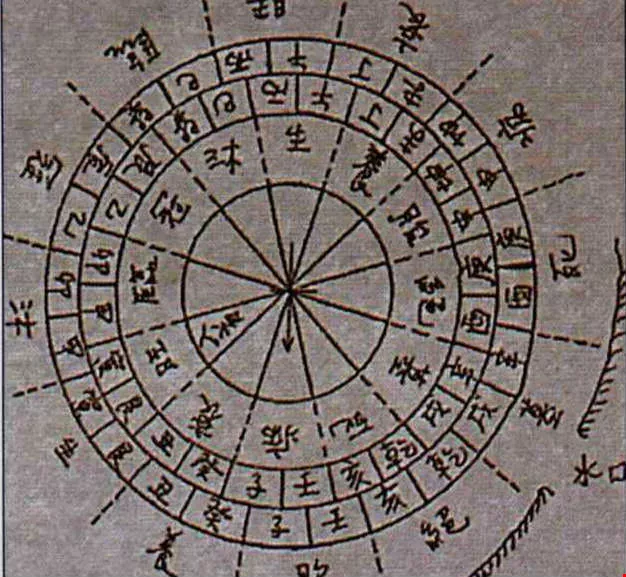
In Dream Pool Essays, Shen Gua objectively describes the use of bows and arrows. But his study of astrology combines "scientific" astronomy and calendar theory with "superstitious" metaphysics and numerology. (from National Tsing Hua University website)
Scholars of the past have always focused on Shen Gua's scientific successes exclusively, ignoring or criticizing his interest in the mystical. But Shen Gua made no distinction between science and superstition. His mathematical and astronomical researches included mystical topics rejected by modern science. To Fu Ta-wei, a professor of history at National Tsing Hua University, "Shen Gua was not by any means a strict advocate of the scientific method. His 'science' was reasoned, but it was also steeped in mysticism."
Dream Pool Essays includes an essay entitled "Mystic Portal" which mentions the tooth of the Buddha that has stirred up so much debate in Taiwan. Here at the end of the millennium, a thousand years removed from Shen Gua's era, some people in Taiwan believe that regardless of whether the Buddha's tooth is genuine or not, simply having faith in it is enough to bring blessings on them. Others, however, feel this is merely superstition. But both believers and skeptics miss the historical significance of the tooth.
The "scientist" Shen Gua consigned the tooth to the realm of superstition when he viewed it rationally, but when he viewed the tooth after fasting and ablutions he wrote: "Glistening beads suddenly appeared upon it like sweat on the body. They flowed out in countless numbers, flying through the air or dropping to the ground. But when I put out my hand to catch them, they went right through. . . ."
In attempting to view that which is mystical in the workaday world, most people cannot put aside their rationality, and thus feel doubt. But Fu Ta-wei, who has thoroughly examined the entire book, affirms that Dream Pool Essays is not a chronicle of the weird and supernatural, and that Shen was not given to exaggeration.
As the year 2000 approaches, we know that science cannot answer all of our questions; it cannot respond to all the myriad possibilities of the natural and supernatural world. But Shen Gua's open-minded approach, which allowed knowledge and mystery to come together and interact, presents a new realm for the science of the coming millennium to explore.

@List.jpg?w=522&h=410&mode=crop&format=webp&quality=80)


