That Voodoo That You Do: Voodoo Dolls Come to Taiwan
Vito Lee / photos Chuang Kung-ju / tr. by Scott Williams
May 2006

-1.jpg?w=1080&mode=crop&format=webp&quality=80)
Generally speaking, it's been young women aged 18-30 who have been imbuing these little bundled dolls with life. Whether at school or working, some troubles are hard to avoid. Many of these young women--single or otherwise--are lonely or feel a little empty inside.
That being so, maybe the restaurant business isn't, after all, the best choice for entrepreneurs with little capital. In contrast to the crowded restaurant industry, the market for psychological products catering to the needs of lonely moderns is an untapped gold mine. And three sharp children of the 70s with business in their blood are digging in, promoting their own brand of Taiwanese-style Voodoo.
Voodoo, which is of West African origin, uses dolls made of straw and animal bones to cast spells. It spread around the world during the colonial age, when many Africans were forced to emigrate. In Haiti and the Dominican Republic, where Voodoo is still widespread, small, decorative Voodoo dolls for masks and necklaces are a common local handicraft.
Taiwanese have long thought of Voodoo dolls, with their associations with mysterious curses, as evil. But things began to change last year when three 30-something businesspeople founded Ethnic Co., Ltd. The company, which makes Voodoo dolls from a single bundled length of string, re-imagined Voodoo dolls as guardian angels that protect the safety, romantic life and health of their owners. With help from the media, and a Taipei-based campaign to "deify" Voodoo in 2005, Ethnic's dolls became the hottest accessories in town.
Consumption creates culture, and culture spurs consumption. Psychological needs undergirded the reinvention of Voodoo, and a series of individual desires--to be luckier in love, to keep bad people at bay, to curse rivals, to heal wounded hearts--came together to spur collective demand. In the process, Voodoo was "deified." But the god created in this process was a god of consumption.
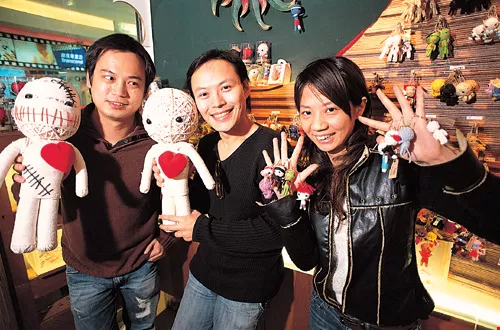
The 31-year-old Jacky Tsai, Ivan Chen, and Elaine Chen have used their creativity and their nose for what's hot to turn their business into an overnight sensation.
Psychological market
All three of Ethnic's owners knew from an early age that they wanted to go into business. When Jacky Tsai and Ivan Chen were doing product planning together at Core Pacific City, they used to bounce business ideas off one another. "We didn't have much capital," recalls Chen, "so we were always thinking small. We even considered selling tacos back when they were hot."
Chen and Tsai are both MBAs and both had a strong desire to start their own business. So, when they left Core Pacific City, they stayed in touch. Ultimately, these two meticulous planners decided to go into gifts and accessories. "We both felt like we understood women pretty well," laughs Tsai. "And the market for gifts and accessories for women has always been big." When Chen got his girlfriend, Elaine Chen, involved as well, they became a three-person team. They rented a storefront in Taipei's busy East District, and traveled monthly to Southeast Asia to look for products to import. Focusing on earrings and necklaces with a strong ethnic flavor, they gained experience and began to seek opportunities to grow their business.
On a purchasing trip to Chiang Mai, Thailand early in 2005, Ivan Chen discovered three local young people selling hand-made string dolls at a roadside craft market.
Making dolls from string wasn't a new idea; the young vendors made them themselves at a rate of about two per hour. The dolls came in several shapes, but all were made of a rough local string, were about eight centimeters tall, and were fashioned almost entirely from a single length of string. These cute, oddly shaped string dolls, these unique and finely made handicrafts, were just lying there on a mat under a plastic awning without any packaging.
"The dolls sold for only 50 baht each, or about NT$40," says Chen, who decided then and there to import them and sell them in Ethnic's shop. But he had no idea how strongly consumers would take to them.
"It was only when the Thai dolls began to sell very well," says Elaine Chen, "that we realized we could use our cooperation with their makers to realize our goals. The question was how." They decided they needed to take an "old school" approach and do some research into similar products.
The first thing was to look back at the hot products of recent years, including the Japanese "healing dolls" that were so popular in Taiwan for a time. Who bought them? How much did they sell for? How big was the market? According to Tsai, they discovered that modern people have a strong need to express their feelings and release pent-up stress, perhaps because they feel alienated.
They then recalled a scene in a movie in which a Voodoo doctor used a grass doll to work his magic.
The word "Voodoo" originally meant "god" or "spirit." Voodoo has some 50 million followers worldwide. Voodoo practice is similar to that of the Mt. Mao sect of Daoism in that both use a doll to represent the spirit of a person upon whom a spell is cast. The spell causes the person to act in accord with the spellcaster's will. Though Voodoo ranges from Africa to New Orleans and Latin America, and Voodoo knick-knacks are a common sight, they tend to be associated with curses and black magic.
Looking at the simple, hand-crafted dolls, Ethnic's owners thought about Voodoo dolls and the elements that gave them their character, and sketched out a plan. They decided that a round, pink doll holding a big red heart would become their "passion doll."
"After talking it over," says Tsai, "we decided to stick a pin in the heart to represent Cupid's arrow. We then changed the eyes, which were originally round and black, into two little hearts." After some more thought, they sent their new design back to the three young Thais to manufacture.
That's how a few young people who had never been to Africa ended up transforming a Thai handicraft into "Voodoo dolls," and marketing them to Taiwan's young women.
These days, Ethnic sells five lines of dolls--Angel/Devil, Voodoo Curse, Healing, Love, and Protection--comprising over 80 models in total. The "passion doll" mentioned above is part of their Love series, and is now also available in black and sky blue as well as the original pink.
Ethnic has made their dolls more valuable by marketing them with a story, and the company makes a point of ensuring that their sales clerks accurately convey each one's individual "charm."
Naturally, the Love series dolls, which symbolize good fortune in love, are the company's best sellers. The Protection series, which you can purchase for yourself or as a gift, is also popular. Their "Little Prince" model, which wears a crown and carries a sword and shield, was inspired by the French children's story of the same name. Ethnic's online description of it reads, "The sweet and kind Little Prince has come from the land of fairytales to care for you and support you...." Just like that, this half-Chinese, half-Western doll, no more than ten centimeters tall, that appears almost to have been made by combining elements at random, has become a hit. The Little Prince's backstory gives the doll so much appeal that he often sells out. Those shoppers who do get their hands on one often end up talking to it for a half hour every day.
Some customers seem to have been almost hypnotized by their dolls, even calling the company or going online looking for "tech support." As one person, the owner of a "Thief of Hearts" doll that is supposed to make you more charming and bring more love your way, wrote: "I talk to it every day, but is there any spell I can use to make my wishes come true more quickly?" Those who find love after buying one of the Love series dolls are even more likely to talk about their "mysterious" experience online or with friends.
-2.jpg?w=1080&mode=crop&format=webp&quality=80)
Ethnic's dolls have blended Thai handicrafts, African stories and whatever pop-fashion elements come to hand to claim a place for themselves in Taiwan's fashion accessories market.
Media coverage
The story of how these products came to be quickly attracted the attention of local media. Even Tianya Gong Ci Shi, an educational TV program broadcast both in Taiwan and China, reported on the current allure of Voodoo.
"The media coverage resulted in people snapping up a lot of roughly made counterfeits in the mainland," says Ivan Chen. And where Taiwanese consumers were most interested in gentler love- or good-fortune-themed dolls, mainland interest was more focused on curses and revenge; for these consumers, the dolls were simply an updated version of ancient vengeance dolls. The dolls' popularity in the mainland eventually attracted the attention of Communist officials. They deemed their use for cursing people an unhealthy trend and a hindrance to social development, and subsequently cracked down on sales.
Meanwhile, the three Thai street vendors who were the source of Ethnic's products were doing very well from the company's steady orders. When sales of the dolls took off in Taiwan in mid-2005, they formed their own company, Saan_ha, and signed a contract cementing their partnership with Ethnic in the Taiwan, Hong Kong, and, in the future, Japanese markets.
"Now that they are working with us," says Tsai, "their production capacity and the quality of their goods have to improve in tandem." He explains that in March of this year, Ethnic expanded its orders to 50,000 dolls per month in preparation for the start of overseas sales. To meet Taiwan's increasing demand, Saan_ha has rapidly expanded its staff to 100.
Ethnic's team has chosen to build a brand rather than go for quick profits on low-cost items. But the company's booming sales of dolls that start at NT$200 each has drawn a great many cheap counterfeits into the market. These days, you find Voodoo dolls almost everywhere, from night markets to the Internet. Their popularity recalls the Portuguese egg tart shops that popped up everywhere, then quickly closed once the egg tart fad had passed. You can't help but wonder if the counterfeits will hasten the cooling of consumers' current ardor for Voodoo dolls.
Ethnic, meanwhile, has had its fill of counterfeiters, and has decided it has no choice but to bring legal actions against them.
"We are in the business of cultural innovations," says Elaine Chen. "And a lot of the issues this industry faces are similar. Protecting intellectual property rights is crucial. Right now, we are reregistering our trademark, product designs, even the texts and images we've developed, extending intellectual property rights protection to the stuff that we didn't register early on."
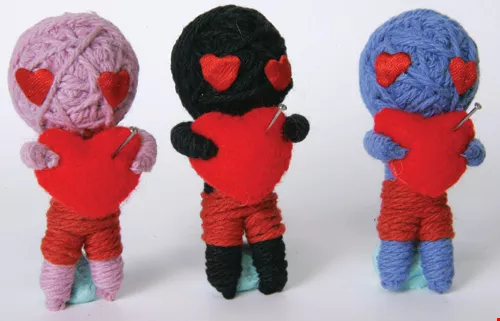
Ethnic's dolls have blended Thai handicrafts, African stories and whatever pop-fashion elements come to hand to claim a place for themselves in Taiwan's fashion accessories market.
A mutant "purple cow"
This issue led the three young owners to file the first lawsuit of their lives, and had everyone at the already busy company burning the candle at both ends in April. The trips to court and to their law firm, as well as to Hong Kong for prep work there, left them so little time for sleep that they suffered vicious outbreaks of acne.
From their humble beginnings in a little shop in the East District of Taipei, to creating the most talked-about accessories of 2005, to opening their first overseas store in Hong Kong, they've come a long way in a very short time. "It's all happened so much faster than we expected," says a breathless Ivan Chen, who's slept only 12 hours over the past several days. And now inquiries from Japanese distributors such as Tokyu Hand have them aiming for a Japanese debut at the end of this year.
Can this transformed Voodoo excite the people of Hong Kong and Japan? Will the little dolls that young Taiwanese women have been using to temporarily relieve their feelings of alienation catch on with consumers abroad? Are the complex spiritual needs of a society or culture universal? Ethnic's effort to expand into foreign markets may soon provide it with an answer.
-1.jpg?w=1080&mode=crop&format=webp&quality=80)
Ethnic's dolls have blended Thai handicrafts, African stories and whatever pop-fashion elements come to hand to claim a place for themselves in Taiwan's fashion accessories market.
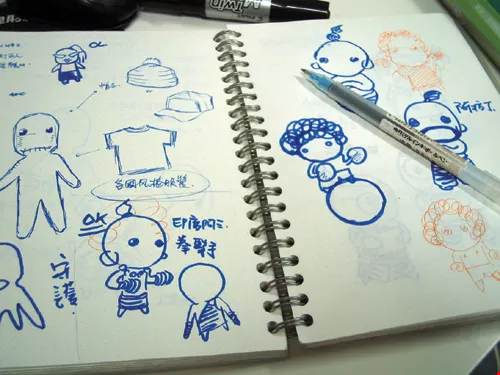
Jacky Tsai, a comic book fan, shows off his own work. These simple designs were the origin of all five series of Ethnic's string dolls.
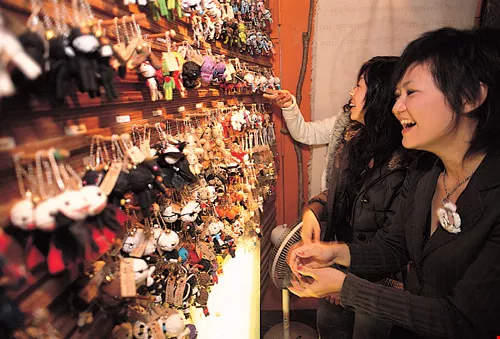
Cuddly sells! Young working women are buying more than 30,000 dolls a month.
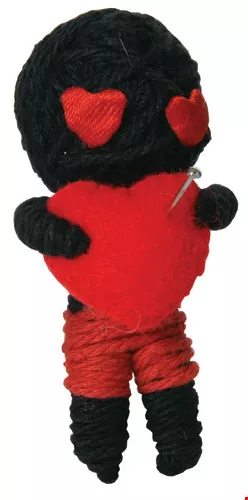
Far cuter than the fierce-looking dolls of the Voodoo Curse series, the "Thief of Hearts" from the Love series has caught the eye of many a young woman looking for love.
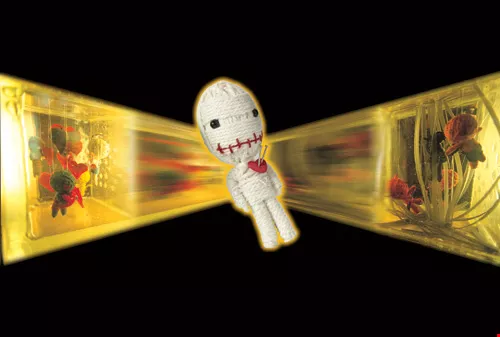
The white Voodoo doll hanging in the twilit aquarium creates an eerie effect, but doesn't scare off the customers.
.jpg?w=1080&mode=crop&format=webp&quality=80)
"The Man with the Pierced Heart" from the Voodoo Curse series has his mouth sewn shut and nails through his heart. The doll is said to protect its owner from the machinations of evil people.
-2.jpg?w=1080&mode=crop&format=webp&quality=80)
Ethnic's dolls have blended Thai handicrafts, African stories and whatever pop-fashion elements come to hand to claim a place for themselves in Taiwan's fashion accessories market.


