Bringing It All Back Home: An Interview with Chen Ku-ying
interview by Teng Sue-feng / photos Diago Chiu / tr. by Jonathan Barnard
June 1994


In December of 1972, a student society at National Taiwan University sponsored two seminars on nationalism. The controversy they led to resulted in the dismissal of more than 10 philosophy department lecturers, assistant professors and professors in what was known as the "philosophy department incident." Twenty years later, the waves stirred up by the incident have yet to subside. Today, with those involved still disagreeing about what took place, various parties have requested that the university quickly form an investigatory committee to clear up this matter and reveal its findings publicly.
Chen Ku-ying, formerly an associate professor of philosophy at National Taiwan University and a key player in the "philosophy department incident," applied for visas to return to Taiwan 16 times over the course of 14 years before finally being granted entry at the end of April.
As someone "eternally in opposition," Chen Ku-ying is seemingly forever a controversial figure on both sides of the Taiwan Strait.
In Taiwan Chen Ku-ying was forced from his job three times. The first was in 1966 when he was at Chinese Culture College (now Chinese Culture University). He was dismissed for responding to a student's question about the February 28 incident. Later he went to National Taiwan University, where his services were discontinued when military police discovered a book by Marx in his student's house. Then he was sent to the Institute of International Relations at National Chengchi University, where for five years he was forbidden from lecturing and publishing articles. In 1978, prohibited from teaching and with seemingly no future in academia, he and his partner, now legislator Chen Wan-chen, ran for National Assembly and Legislative Yuan elections, and he lost his job for the third time. The elections were suspended when it was announced that the R.O.C and the United States were breaking off diplomatic relations.
In 1985 in order to collect information about Chen Tu-hsiou, a figure in the May 4 Movement, Chen Ku-ying went to mainland China and later served as visiting professor at the philosophy department of Beijing University. When the Tiananmen incident occurred on June 4, 1989, Chen Ku-ying publicly supported the students' movement, and once again his services were no longer needed.
When he first came back, he could not help but carry with him some of the attitudes of the Martial Law Period, and there was much he didn't dare say. In answering reporters' questions at press conferences, he would frequently ask those accompanying him, "Is there any harm by my speaking this way?" But there was no way to conceal his joy at having returned. Passing through Hongkong on the way, he specially had a new suit made for himself.
"History's twists of fate are often not those that human wisdom can predict." When Yin Hai-kuang, the late professor of philosophy at NTU, said this line, he was gripped by the thought and concepts of the May Fourth Movement, which had spread like a storm. But fate would not let him share in the glory of the May Fourth activists, and the movement had long since died out before he came of age.
Chen has always been regarded as "a dissident" and as far as Chen Ku-ying is concerned he lost his job at National Taiwan University because what he said was off-limits. He was left to wander the world. Today, when he sees with his own eyes open discussion in the R.O.C., when he sees how some people's fortunes have risen as others' have fallen, he sees how the twists of history have been proved in his life experiences. It makes him feel even less in the driver's seat.
In his eyes, what are the differences between Taiwan then and now? How has he changed himself?
Q: You were born in the mainland, raised in Taiwan, and then you went to America for graduate school and back to the mainland to teach. In your heart, where is home?
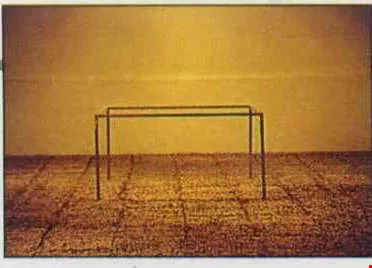
"BC 1953-AD 1953" /Huang Wen-hao /1993/ (1) Soil covered the entire floor of the gallery.
Coming back with a visitor's attitude
A: When I was 14, I came with my parents to Taiwan. Before I left, I had lived in Taiwan for 30 years, and all of these were spent in the academy. I remember those days fondly, with longing.
What's most important is still a person's feelings. I lived in America for eight years, but as soon as I went to Europe, I felt that I liked it better. But I hadn't any friends there. Even if I liked it, it still felt very unfamiliar.
When I first went to America, all I thought about were my feelings about Taiwan, but after I was there for a while, I began to be stirred up by a different culture. I had some deep thoughts about being a dissident and about participating in some dissident activities. I began to feel that in Taiwan I had been overcome by feelings of oppression. I was more anxious about what I was saying and less tolerant of different opinions. After I got out, I was more tolerant of different opinions.
On coming back this time, although some people first warned me that the political situation in Taiwan was very complicated, I nevertheless thought perhaps that we too strongly stress differences while in fact there are still points in common. Everyone can work hard together.
When I first came, I had a visitor's attitude. Yet when I saw old friends, I felt that the feelings between us were still very warm, and I quickly began to feel that I was a part of this.
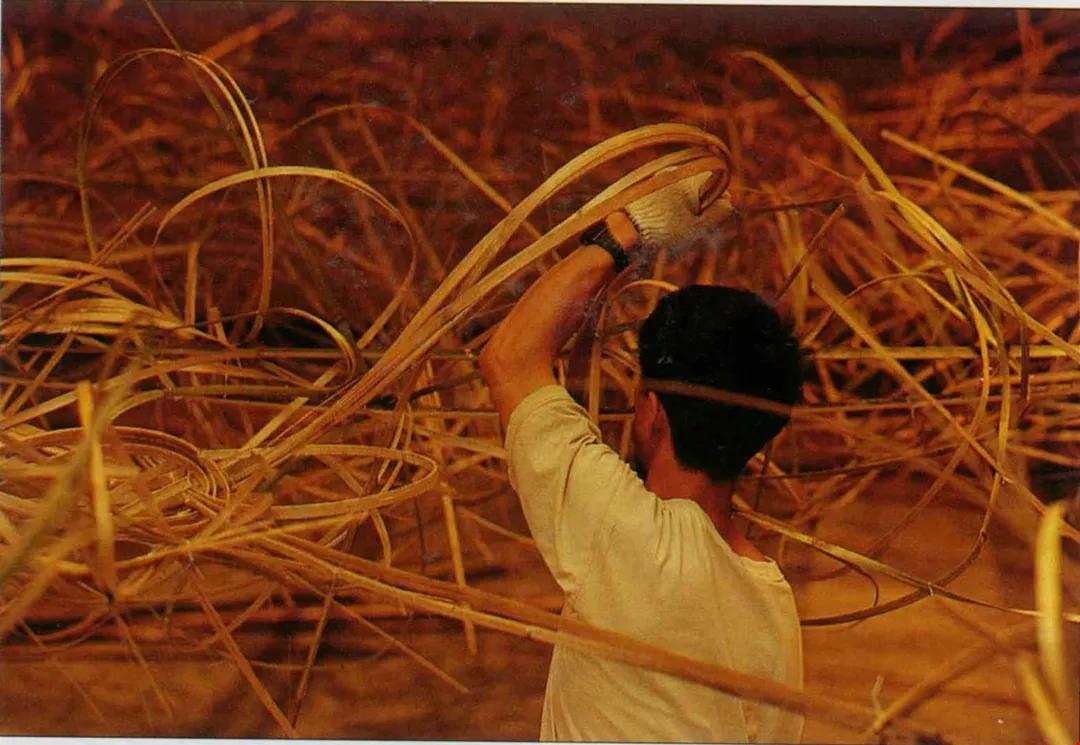
"Daily Log"/Huang Wen-ching/1994/From April 9 to May 8 in the basement of the Taipei Fine Arts Museum, Huang connected strips of cassia and bamboo, which filled the entire space, and then took them apart.
A dissident on both sides of the strait
Q: You once said, "My life has developed completely not according to my plans." If you could do it all over again, how would you arrange your life? And what was your original plan?
A: In fact my academic direction was always very clear. In the last few years I have been doing research on Chuang Tze. Now from an aesthetic, artistic perspective, I want to write a few papers. In addition, I edit a Taoist periodical. I am ever clearer about my future scholarly goals.
As for real life, speaking from the standpoint of an intellectual, sometimes the controversy and the waves I make by voicing my views change my life. These are not what I had originally intended and are beyond my control. Going to China was also not in the plan, but I went because at that time--in looking at things objectively--I thought I wouldn't be able to come back to Taiwan even though I wanted to.
Q: You have been dubbed a "fighter for democracy" in the early period of the development of democracy in Taiwan. Many of your friends who fought with you in those days now have a position in the political sphere, whereas you wander about everywhere. Do you believe that this is caused by what you have experienced or by what you have chosen? What thoughts do you have about the vicissitudes of the human world?
(2) The germinated seeds of wheat sprouted.
Life is beyond one's control
A: The objective and subjective factors of a person's era and environment all influence the road he takes. I can't say that we were pioneers at that time because there were many people earlier than us, such as Yin Hai-kuang and Lei Chen. They also put out a lot for democracy in Taiwan.
Comparatively speaking, we were lucky. Many people have simply disappeared with their families broken up. There were many people in the past who have been completely forgotten by society.
We should be considered to have been inspired and sparked to action by our predecessors. Because National Taiwan University inherited the style of Beijing University, we were also deeply infected with the spirit of the May Fourth movement. At that moment we were just speaking what was on our minds.
I don't know why things have turned out the way they have. You can't control these things yourself. Leaving was an experience and a lesson for me. If I had stayed in Taiwan, I would have been too concerned with my ego. Going outside to look at a different world gave me new bearings and reestablished a sense of myself. Coming into contact with different cultures expanded my field of vision.
Q: Back then you were dismissed from your post because what you were saying was "against the rules." Since you've come back, you've sat in on meetings of the Legislative Yuan. What observations and impressions do you have about the current state of speech in Taiwan?
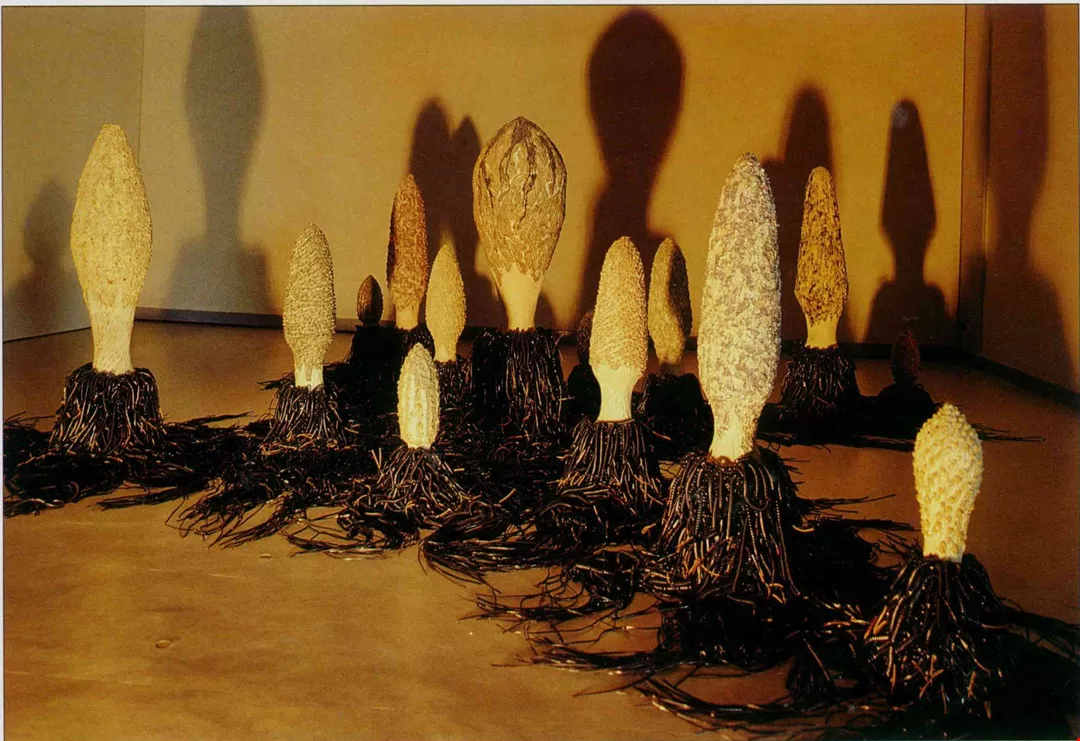
"Planting Trees Plan B: Landscape"/Huang Chih-yang/1994/Ceramics and electric cable.
Through the fog of an era
A: The difference between now and then is vast. Twenty years ago, what I said went only as far as calling for a democratic plaza, for opening up a Democracy Wall. This time back I have listened in at the Legislative Yuan--it is like a democratic plaza. Of course, there is considerable difference from the ideas of that time. We advocated a "Club of Reasonable Speech."
Back then, why did we make these suggestions? Because we hoped to end the so-called "age of indifference and being mute" of the seventies. This was the first time that young people born after the war wanted to participate. In fact it was just a conceptual kind of participation.
In 1966 I was teaching at Chinese Culture College, and after class, a student privately asked me about the February 28 incident. I said I didn't know much about it and that though a lot of people were killed, there was no public discussion of it. And for saying this, a report was written about me.
Later when I went to NTU, I spent most of my time studying and doing research and only occasionally making a speech. My first speech was "Free Speech at NTU." For twenty years young people in Taiwan had no opportunities to talk about things. How rare was a chance like this. I still didn't dare just say "free speech" but instead tacked on "at NTU" in order to narrow the scope to the campus.
I was gradually being pushed back. At the beginning they said I wouldn't be able to teach for five years, but after five years I still couldn't teach. All of the channels for advancement were blocked up. Participating in the election was putting all my eggs in one basket. It could be described as inevitable and also as accidental. It was inevitable because it was moving from conceptual participation to active participation; it was accidental because my personality is not suited to politics.
Having come back for a few days, I feel as if all of the newspapers have become bulletins of the Legislative Yuan. When I see the term "plaza," it really stirs up lots of feelings. Other people were early birds that got the worm; I was an early worm that got eaten by a bird.
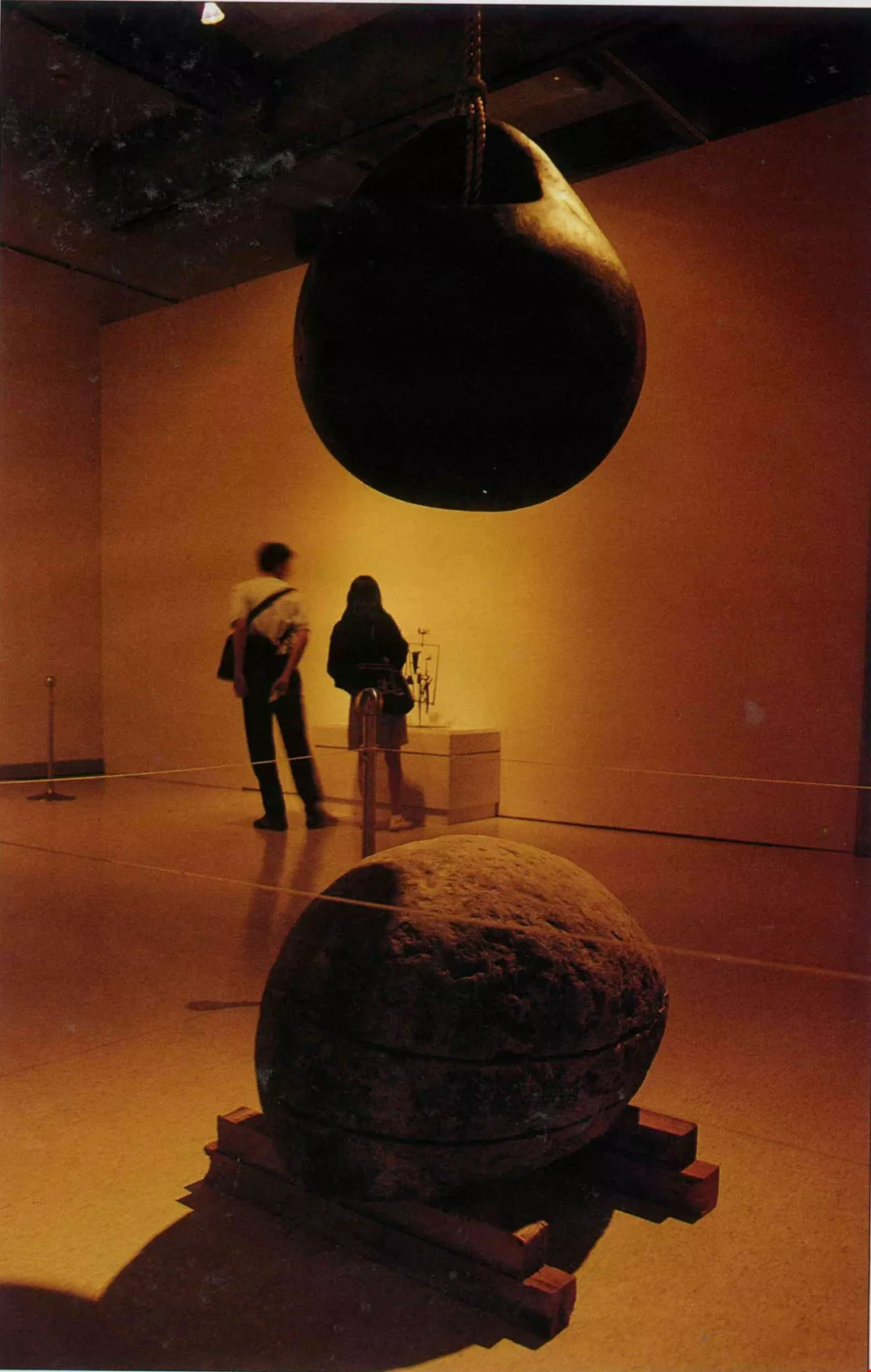
"People/Positioning"/Jun Lai/1992/Wood, stone, hemp rope, wax.
The tragic fate of an intellectual
Q: Before you, your teacher Yin Hai-kuang was also described as a dissident and was prohibited from teaching philosophy at NTU. People say that what you and your teacher went through symbolizes the tragic fate of modern Chinese intellectuals. What's your view about this? You've studied existentialism and the thought of Lao Tze and Chuang Tze. Are the emptiness of existentialism and the thoughts of Lao Tze and Chuang Tze about rebelling against society pessimistic reactions to humanity?
A: Yin described himself as coming after May Fourth. He didn't share in the splendor of the May Fourth movement, but he was deeply infected with its spirit, and this was shown in his concern for society. Philosophy tries to seek after the truth and speak the truth. And when one speaks the truth, one has to pay for it. Finally, Yin said, " as a university professor, I have already been given a thorough beating." This indeed represents the tragic fate of intellectuals.
The tragedy was not just Yin's. Previously, it was the same for Chen Tu-hsiou. Chen was someone who was very conscious about the crisis of nationalism. He insisted on democratic principles. This consciousness about a crisis in nationalism extended from the Revolution of 1911 to the May Fourth Movement. The environment of that era was really that way.
Nietzsche and Chuang Tze have had the biggest impact on my way of thinking. I think that tragedies shouldn't make one a pessimist. From being born to finally getting old and having some disease, people can't prevent death. Philosophers as a result believe that in the course of your life you've got to bring into full play your potential and leave something behind of beauty--this is a tragic consciousness.
The similarity of Chuang Tze and Nietzsche is that both elevated the spiritual life. Dissidents have cultural values that are opposed to unyielding tradition and against the seeking of power and wealth in life. In an age where power and success were considered paramount, under that kind of a ruling value system, Chuang Tze took the attitude that one shouldn't cooperate with the ruling class. He maintained the wisdom of distance.
From Chuang Tze and Chen Tu-hsiou to Yin Hai-kuang, you can all see the tragic mission of intellectuals. They clearly knew that all of the ideals they were striving for would perhaps be smashed by reality, but they still were firm in their beliefs.
[Picture Caption]
p.86
Chen (center) and Democratic Progressive Party Chairman Hsu Hsin-liang (right) are old acquaintances. This photograph was taken in 1979 (photo courtesy of Wang Hsiao-po)
p.86
In 1978 Chen participated in National Assembly elections. Here he is out on the election trail. (photo courtesy of Wang Hsiao-po)
p.81
Chen (center front) happily swimming with friends when a student at Second Boy's High School of Taichung. (photo courtesy Chen Ku-ying)
p.87
(above) Returning this time only for a brief visit, his greatest hope is to one day teach again at National Taiwan University.
p.88
In 1972 Chen suggested establishing a democracy wall, which wasn't seen at NTU until 1978. (photo courtesy of Wang Hsiao-po)
p.89
(above) Though life isn't easy, Chen is very clear about the future direction of his research.
p.90
Twenty years after the "philosophy department incident," various parties involved are asking National Taiwan University to investigate the incident and release its findings publicly as soon as possible.
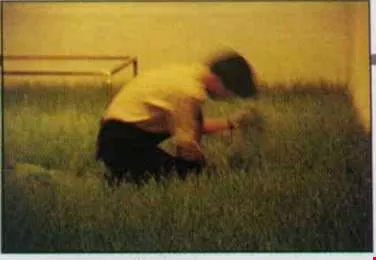
(3) The wheat was cut.
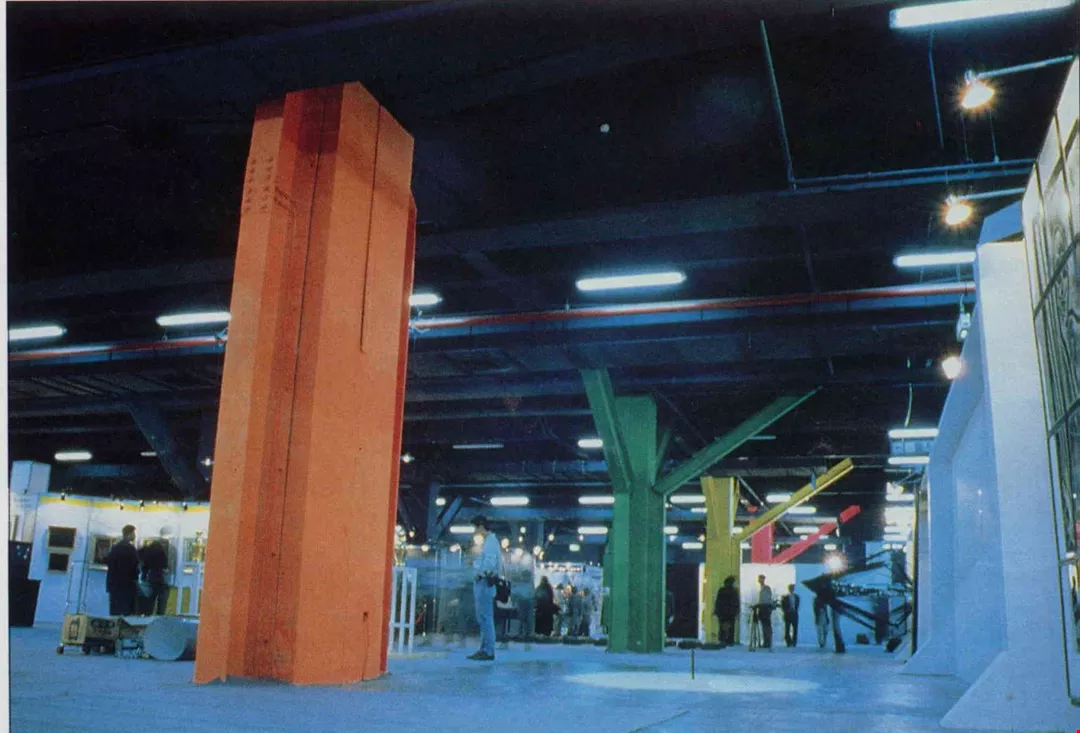
"Pillars at the Taipei Art Fair"/Chu Chia-hua/1992/Pillars, fluorescent paint, exhibit space (photo provided by Chu Chia-hua)
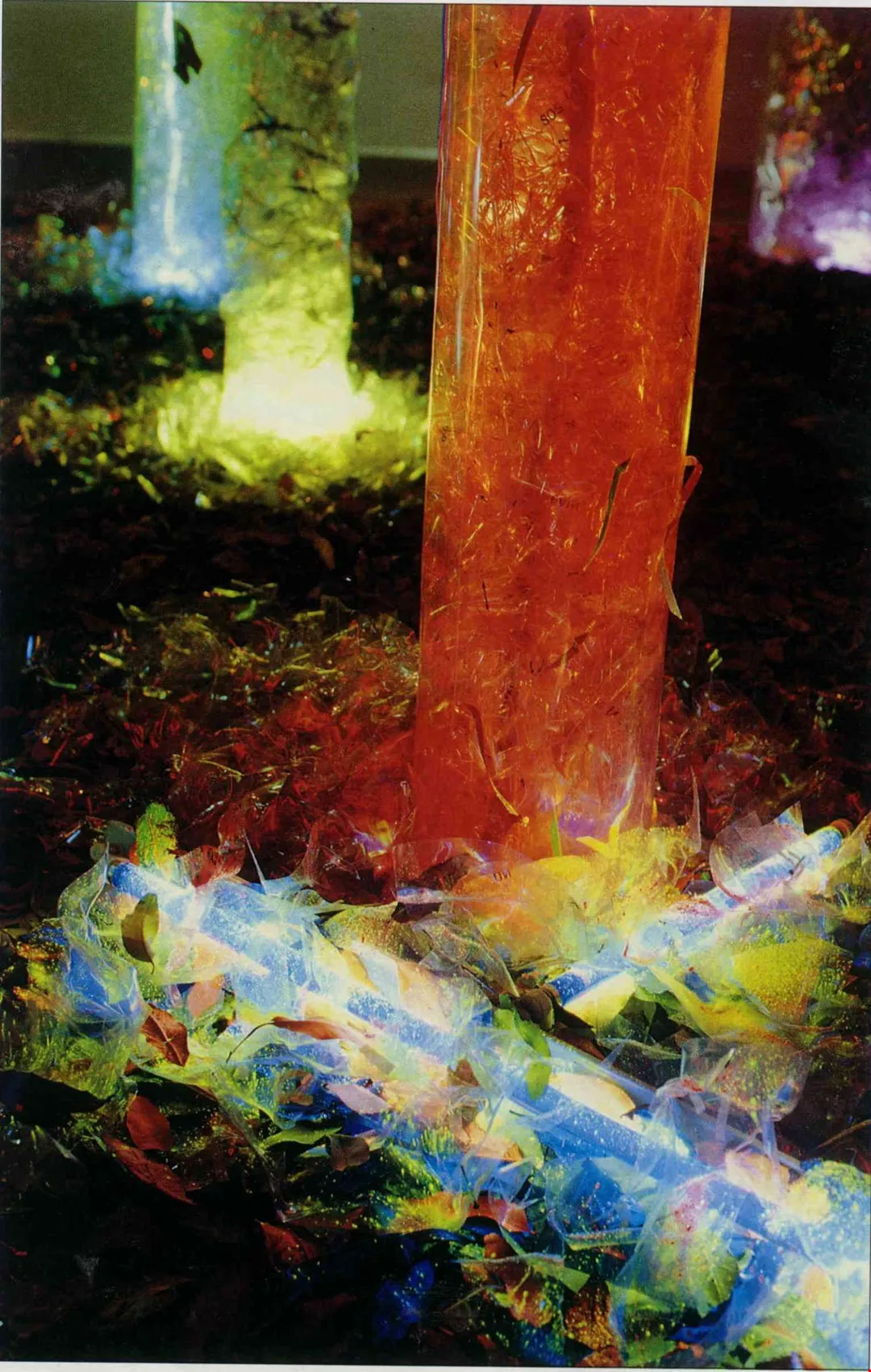
"Myth, Ruins"/Yao Jui-chung/1993/Cellophane strips and neon lights (photo provided by Yao Juichung)
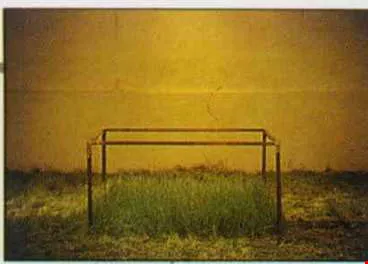
(4)Because of the wheat's roots, the soil hardened into blocks.
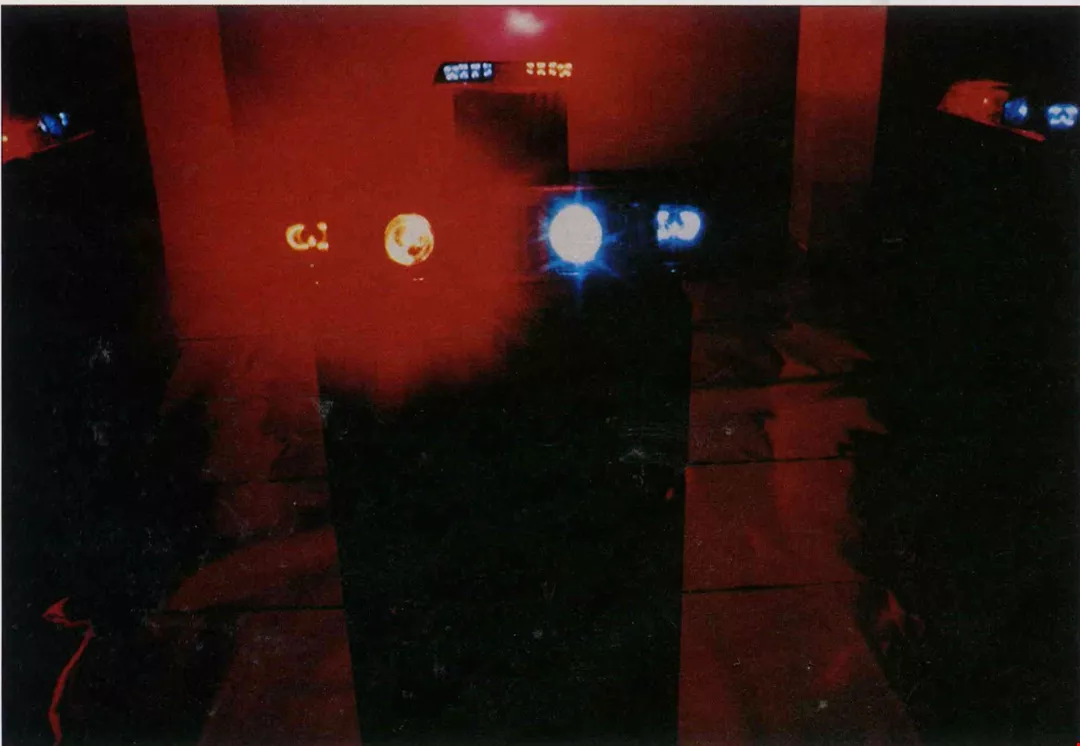
"Eagle-style Art"/ Wu Ma-li / 1992 / Policecar lights were positioned on four platforms resembling memorial tablets, filling the space with changing patterns of red and blue flashing lights. To this was added the sound of Buddhist chants. (photo courtesy of Wu Ma-li)
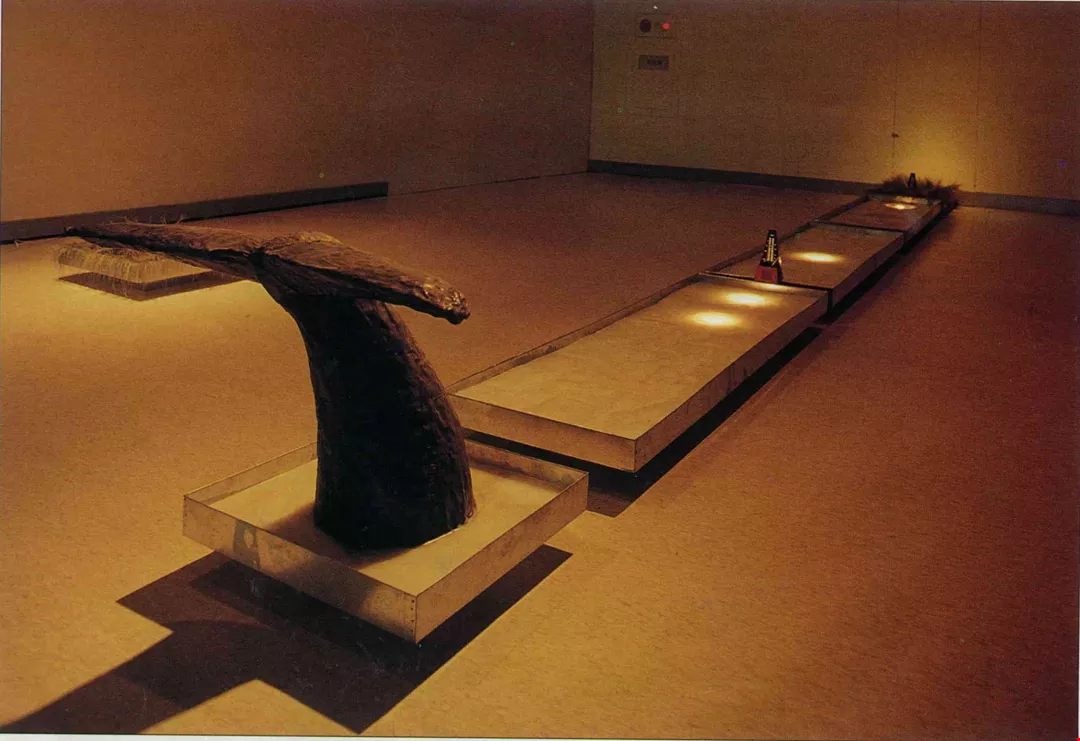
"Floating Island" / Huang Wen-hao / 1994 / Neither solid nor liquid, transparent when heated but turning opaque after cooling down, this "wax" made for an elusive form. The "wheat stalks" were planted, grew and died to the regular beat Of a metronome.
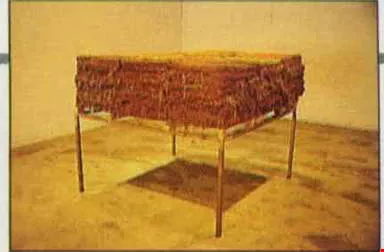
(5) The block made up of soil were placed on the brass table. (photos courtesy of Huang Wen-hao)
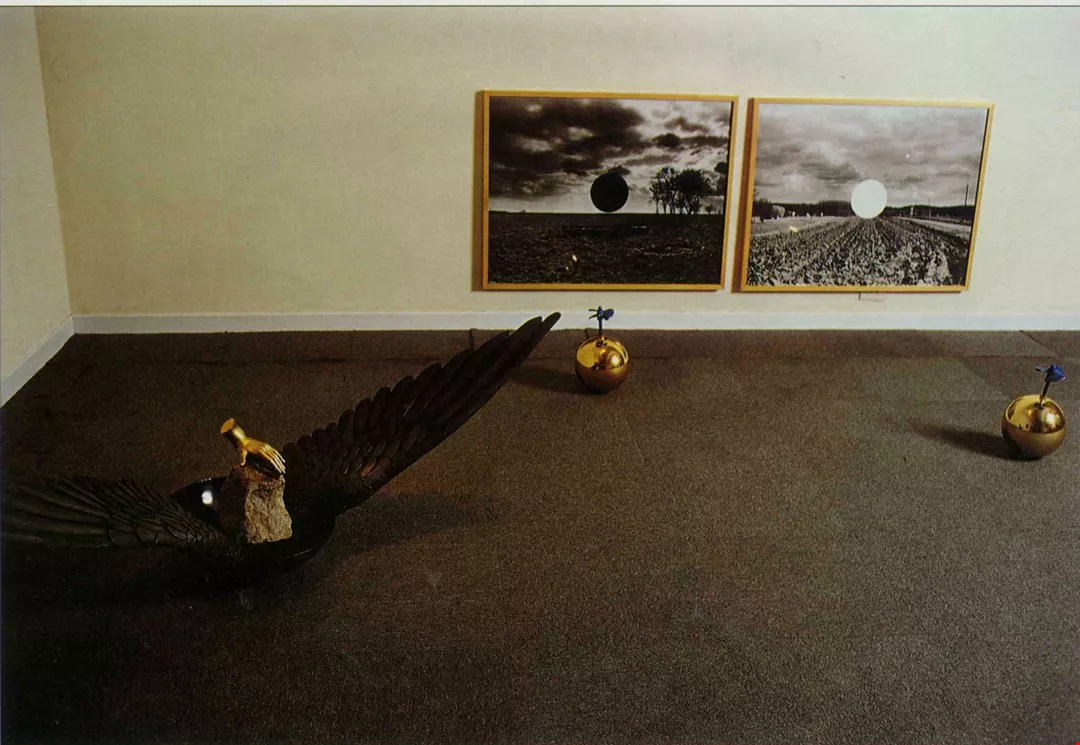
"Fluttering--Night and Day" and "Flying Wind and Water" / Ku Shih-yung / 1993 / Gold balls, propellers, and photographs.

@List.jpg?w=522&h=410&mode=crop&format=webp&quality=80)

@List.jpg?w=522&h=410&mode=crop&format=webp&quality=80)


