Huang Chun-ming: Reordering Priorities
Polly Peng / photos Chuang Kung-ju / tr. by Phil Newell
June 2015


“Once I’m better, the first thing I want to do is go back to writing fiction.” Author Huang Chun-ming, who recently completed six rounds of chemotherapy, says, “For someone like me, if I’m not writing, then what’s the point of being alive?” Asked what subject he plans to write about first, Huang—in contrast to his past modus operandi—refuses to give an answer: “I’m simply not going to say. If I tell you, then you’re going to constantly pester me, ‘Have you finished yet? Is it done yet?’ I don’t want that. I just don’t. It’s too much pressure.”
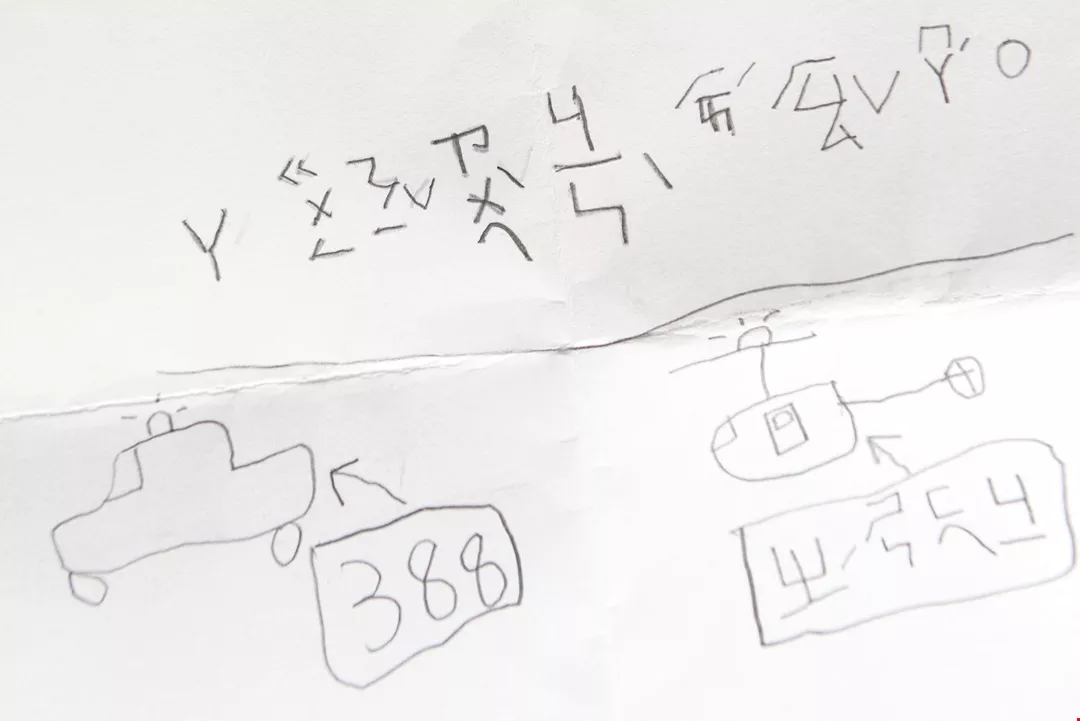
Huang’s five-year-old grandson has not seen him for a long time, but has written many letters asking after his health.
Paper thin
On September 24, 2014, on the evening before Huang Chun-ming and his children’s theater troupe “Big Fish” were to depart to the island of Kinmen for a performance, he suddenly felt a sharp pain in his chest and was rushed to the hospital. His wife Lin Mei-yin implored him, since he was going to the hospital anyway, to not simply get some pills to suppress the pain but rather to get a complete and thorough check up. “In the past, whenever he was sick he would insist on continuing to work. This time I told him to forget about the trip to Kinmen, and to my surprise he went along with me without protest,” says Lin. “I had an intuition right then that the problem was serious, because he’s very stubborn and he would never fail to do something he had promised unless he felt there was something seriously wrong.”
Diagnosis at the hospital revealed that Huang had lymphoma, with the tumor, about five centimeters across, in the diaphragm. Because the location made surgery tricky, the doctor suggested targeted chemotherapy. “He had to have six rounds of chemo, staying in the hospital for a week each time, then returning home to rest for three to four weeks between sessions. It made him very weak.” Lin says that on two occasions Huang vomited up large amounts of blood and his temperature dropped sharply, so that he had to be put in the intensive care unit. He lost at least ten kilograms during his treatment. “He got paper thin, and I was really worried…. Very, very worried, in fact, because this was the first time in his life that anything like this has ever happened to him.”
Huang credits a love for high-energy sports in his youth—including rugby, basketball, and volleyball—with enabling him to build up “health capital.” “Luckily for me I had this ‘capital’ stored away from the past; that’s the only way I was able to survive six rounds of chemotherapy. Otherwise—you know how it is—chemo is very painful and debilitating, and you can only get through it if you’ve got enough in the way of ‘reserves.’”
Still, he also has had to “borrow” from his wife. For example, Huang’s home in Taipei is a fifth-floor apartment with no elevator. You have to wonder how he was able to clamber up five flights of stairs to get home after each round of chemotherapy. “I propped him up,” says Lin, “and we took baby steps. It was very slow.” In fact, Huang has been heavily dependent on Lin to take care of every detail of life.
He says that several times while he was in the hospital undergoing treatment, he thought about death. He mused to himself, “So, this is what it feels like to be on your deathbed.” He also admits that during this time his thoughts went back to his youngest son, Huang Kuo-chun, who committed suicide by hanging himself at home back in 2003. “But the fact is that I simply thought about it; I didn’t really take it any farther or dwell on it. It’s not like the more I thought about it the more depressed I got.”
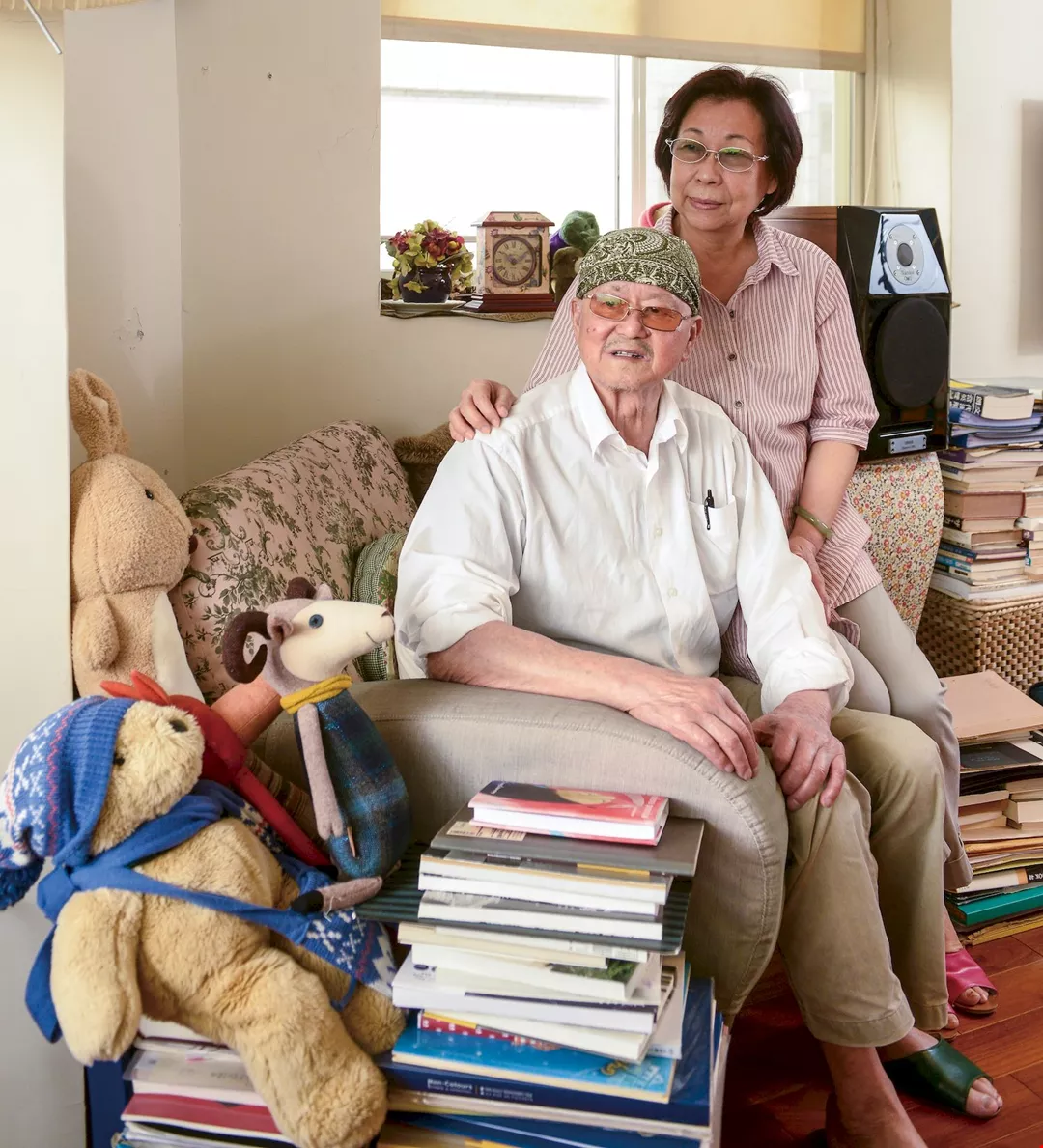
Huang and his wife Lin Mei-yin have been married for half a century, getting through each of life’s tests side by side. Their house is filled with stuffed animals and other toys, because Huang has been heavily involved in children’s theater for many years.
Creative outlet
Huang Chun-ming says that when he first began chemo, he was unable to sleep well, and as he lay in bed his thoughts would run helter skelter. “I thought of all kinds of different things. Ideas would just run through my mind randomly and in disorder.” Creative work became his way of bringing some order to this chaos.
Although the chemotherapy made him very frail and weak, during his treatment Huang still found the energy to make 30-some torn-paper collages (an art form he has been working with for many years) with text written into them. These works, many of which comment on current events like the controversy over the Taipei Dome, are sometimes acerbic, sometimes touching, but always rich with humor and interest.
Huang says that although the drugs made him feel very sick, “I saw a lot of things and naturally I had feelings about them, and when you’ve got feelings you get the urge to create.” Writing fiction, which requires structured thinking and exposition, would have been too exhausting. On the other hand, making the collages with brief written remarks served as an excellent outlet for his moods and emotions.
“In my opinion, my personality of always wanting to be doing something is probably helpful to my physical recovery, or at least it is a positive force.” Lin Mei-yin says that Huang is the type that finds it hard to just kick back and relax, at which Huang pipes in, “I feel miserable if I’m not busy.” However, six rounds of chemo have taken their toll: “Now it’s a bit difficult for me even to do the collages, because my hands shake.” Fortunately, his characteristic optimism remains unshaken: “I expect things will improve after a while.”
Now that he is recuperating, Huang is as cheerful and humorous as ever. He says with a laugh: “Before I got sick, my favorite thing was to tell people I was 80, because they would always say, ‘Oh, really? You don’t look it!’ In fact, I knew that I didn’t look it! In the past, I was very proud of my physical condition. I’m like a native Taiwanese dog, very tough, and I rarely got sick.” Changing his tone, he adds, “With the chemo, I’ve become much more weak and frail, and what I look like is exactly what I am—an 80-year-old ‘fogey’!”
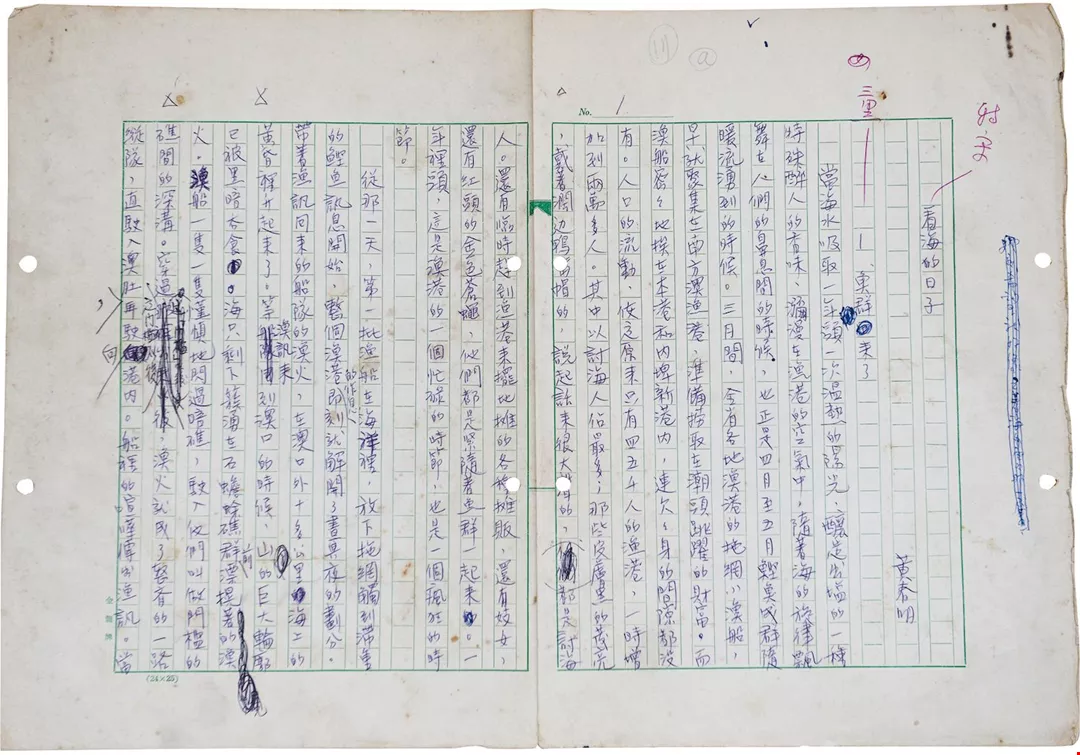
This is the manuscript for A Flower in the Raining Night, dating back nearly 40 years. Even today Huang does all his writing by hand.
Vain Miss Hippopotamus
Lin Mei-yin says that Huang has always worked too hard, but she was resigned to this fact because, she says, he wants to do everything. Besides writing fiction, he has long been involved with his children’s theater group, running a magazine, adapting Taiwanese Opera, and doing torn-paper collages. And everything he has done, he has done with panache and commitment.
In our interview, Huang animatedly declares that now that his chemotherapy is over, he plans to direct a new script for the children’s theater troupe in August. In the play, to be called Vain Miss Hippopotamus, Miss Hippopotamus feels that she is overweight, that her waist is too fat, that her legs are too thick, that her eyes are puffy and unattractive. Feeling ugly, she decides to go for cosmetic surgery. But in the end she turns into a freakish creature with a snake-like narrow waist, ostrich-like legs, and the long-lashed eyes of a camel. “Miss Hippopotamus doesn’t recognize herself at all!” What has happened to her? This is the topic that Huang wants his audience of kids to think about.
Talking about the theater seems to fill him with energy. He continues, “I want to use shadow puppetry for the cosmetic surgery parts, so it won’t be so gory.” But suddenly he makes a mental U-turn. No, he says, he’ll have to turn over the theater and the magazine to younger people to manage. Whereas in the past he even made the theater props himself, Huang now says: “These days I can’t be so overambitious. I just don’t have the stamina. Except for writing fiction, which naturally I have to do myself, for the other stuff I’ll simply have to learn to ‘let go.’ Anyway, the children’s theater is well established and running smoothly, so I might as well turn it over to someone else and concentrate exclusively on writing.”
Forty-some years ago, Huang Chun-ming told everyone that he planned to write a long novel, to be called Longan Season. The book has never come out, and it has become kind of a running joke called Waiting for Longan Season. But Huang insists that he still intends to write that story. The problem is that it is a difficult one to set down in words, because it is about his own life.
Longan season is the time of the year when Huang’s mother died. He was only eight, still a small child, so he doesn’t remember the precise date, but he remembers very clearly that it was the season when longan fruit is ripe for eating. On the day his mother died, he and his younger brother were out on the street scooping up longan pits that people had spat out, because in those days, longan pits were washed up and used to play marbles. But just as the two brothers were enjoying their little scheme, someone came to the street and told them to hurry home: “Your mother’s dying.”
Writing Longan Season would mean a return to the things he felt as a child when his mother passed away. That’s emotionally wrenching, so it’s no wonder that Huang just stored the idea away in his mind, and now, 40 years later, it’s still on the shelf. His mother’s death of course was a tremendously painful blow to Huang. But one of his relatives told him that after his mother passed away, there would be an extra star in the sky, and if he looked up into the night sky, the star into which his mother had been transformed would shine especially brightly for him. Now that Huang himself has been through a near-fatal illness, he has a different understanding of life, and perhaps the time has come when he can take up his pen and write this, the most painful novel of his life.
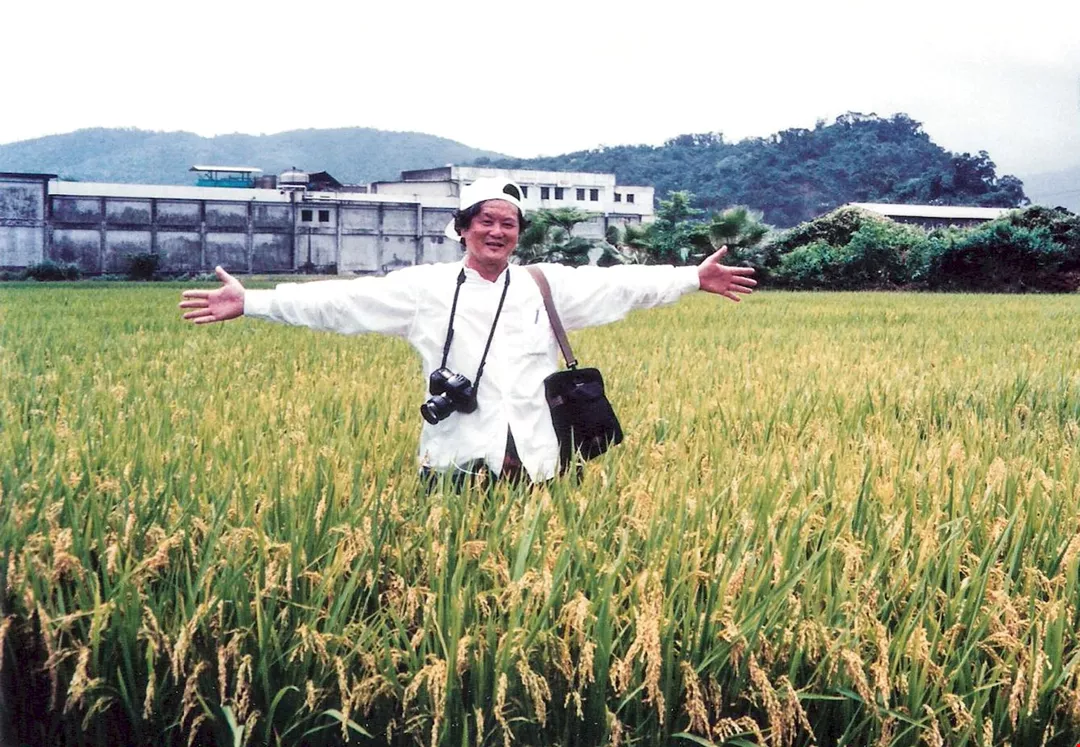
Huang originally hails from Yilan County, a place that he loves dearly and which has been the source of inspiration for much of his creative work. (courtesy of Big Fish Children’s Theater Troupe)
A ploughman returns to his fields
Huang has even more unfinished works. A couple of decades ago, he had already written 40 or 50 pages of a novel called The Setting Sun Is Stuck in the Mountains, but he has made no further progress. His friends often ask him, “So how long is the darn thing going to be stuck there?” Also, he has started an animal novel, called The Three-Legged Pig, something in the genre of Moby Dick or Call of the Wild, and many people ask him about that as well. Listening to Huang talk about the stories, people invariably get excited and feel a great sense of expectation, but though we may wait and wait, the denouement never comes.
The fact is that there are lots of novels floating around inside Huang’s brain, and some of them even have quite complete structures and content. It’s just that he has not been able to find the time to concentrate on writing. But now, having come through this illness, Huang aims to reorder his priorities. Since fiction is the one thing that no one else can do for him, it has naturally become his primary duty. With one caveat: Fearing that people will continue to interrogate him about how his writing is going, this time around Huang refuses to talk about his work ahead of time. To those who want to know what he is writing, he says, “When it’s written, then you’ll know.”
Looking back over his life as a writer, Huang says: “I feel like a farmer. I grow rice, and then people eat it. I don’t know who eats it; maybe it’s somebody who hasn’t had food for three days, and suddenly they get a bowl of rice and it keeps them alive.” We look forward to a complete and early return to health for this ploughman of literary fields. There are so many people hungrily awaiting their next serving!
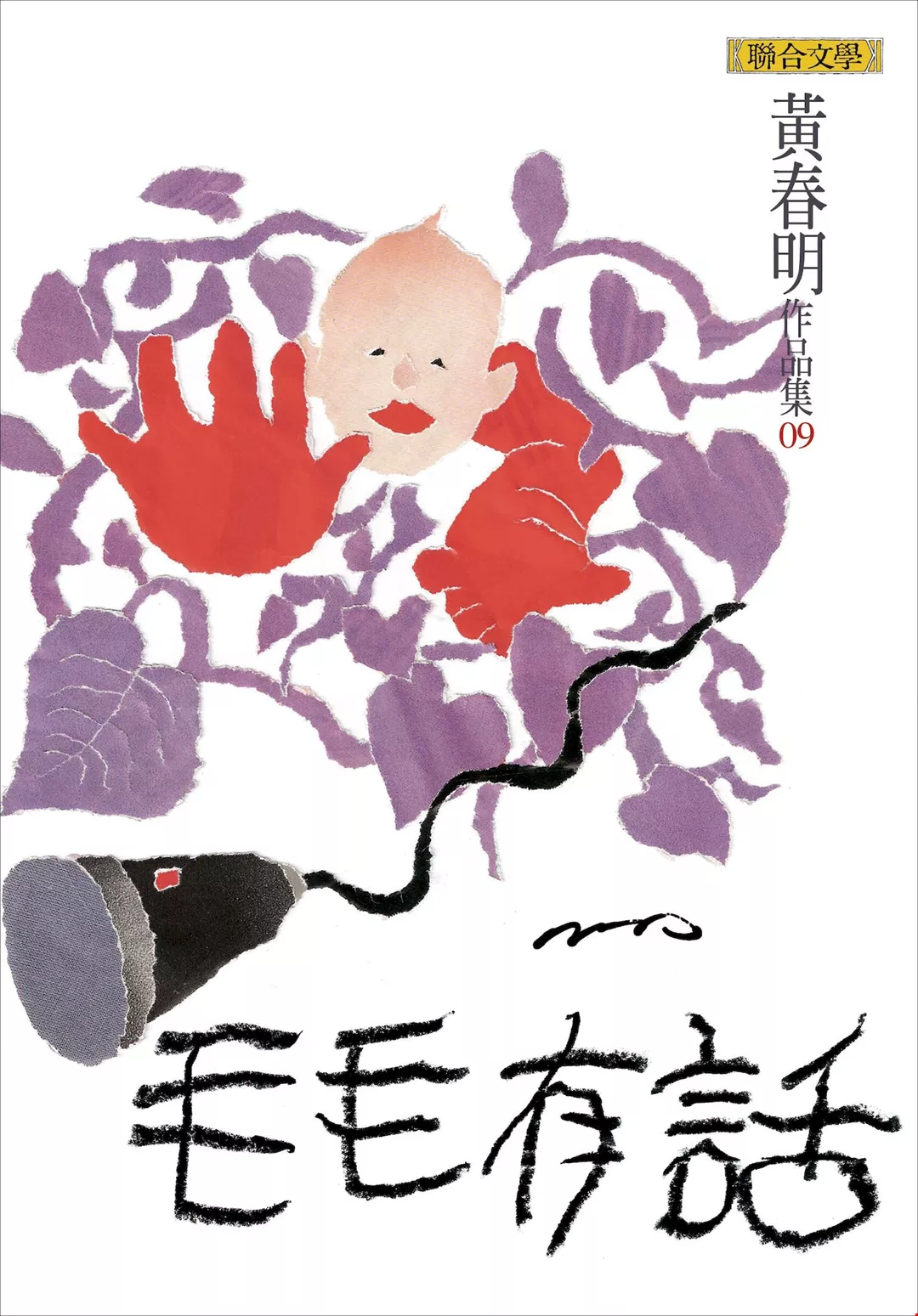
In Mao Mao You Hua, we see the adult world through the eyes of an infant less than a year old. (courtesy of Unitas Publishing)
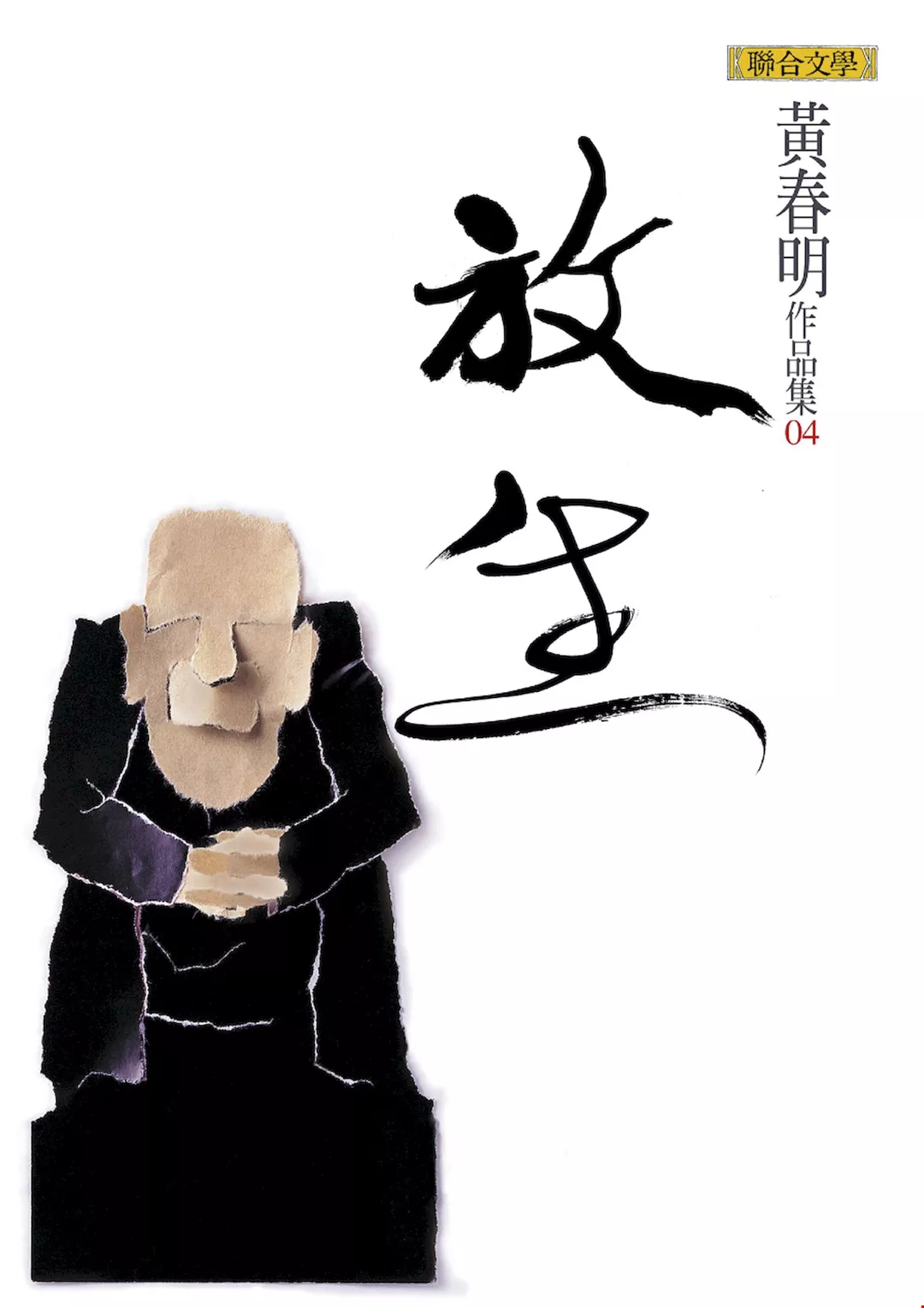
Fang Sheng is a collection of short stories that Huang describes as his “elderly people series.” Through the stories Huang expresses his concern for Taiwan’s senior citizens. (courtesy of Unitas Publishing)
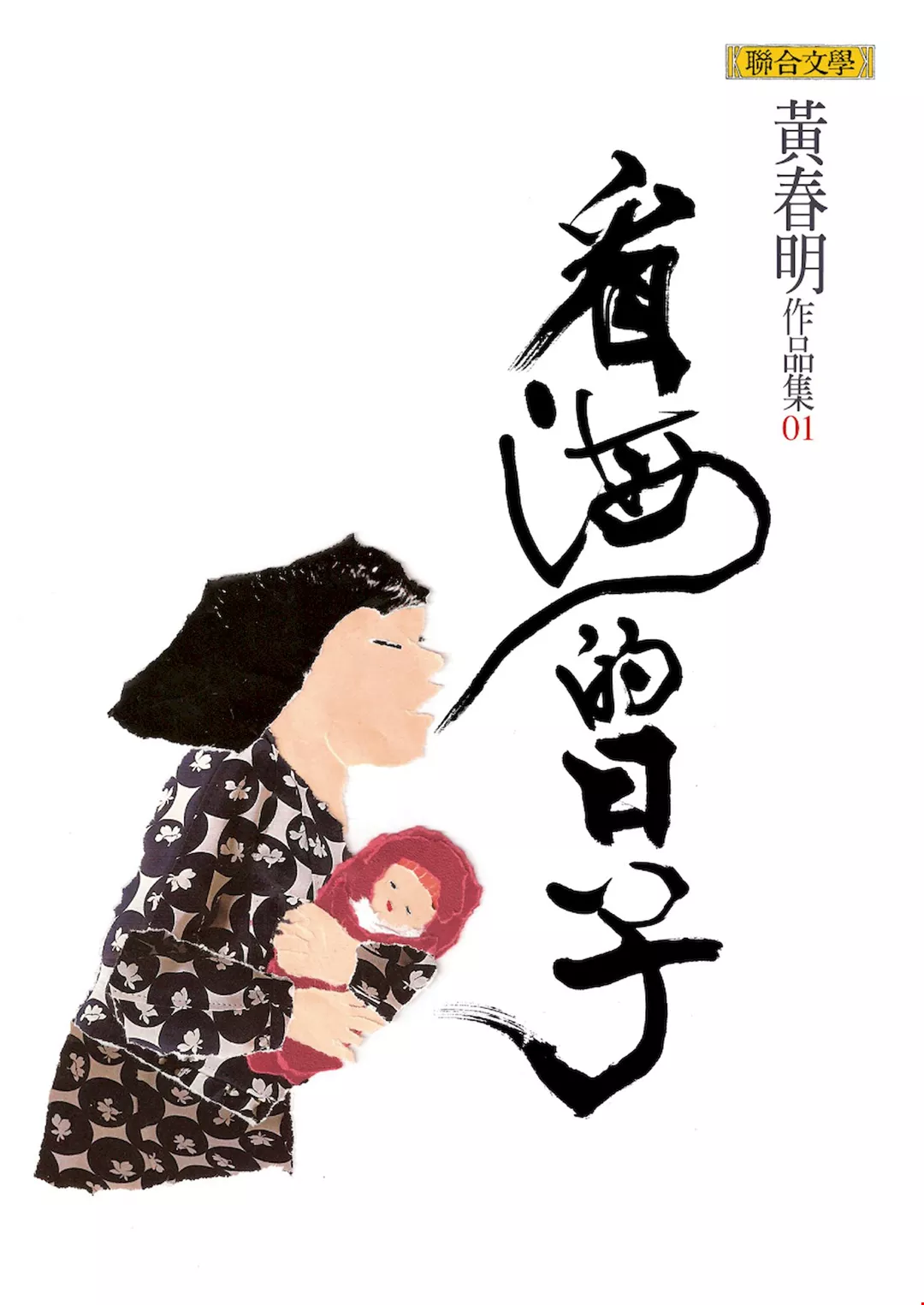
A Flower in the Raining Night, telling the story of a prostitute named Pai-mei, is one of Huang’s best known works. Huang relates that he used to be an appliance repairman, a job which took him often to a brothel where Pai-mei worked. That’s how he got to hear her life story, which he later turned into the novel. (courtesy of Unitas Publishing)
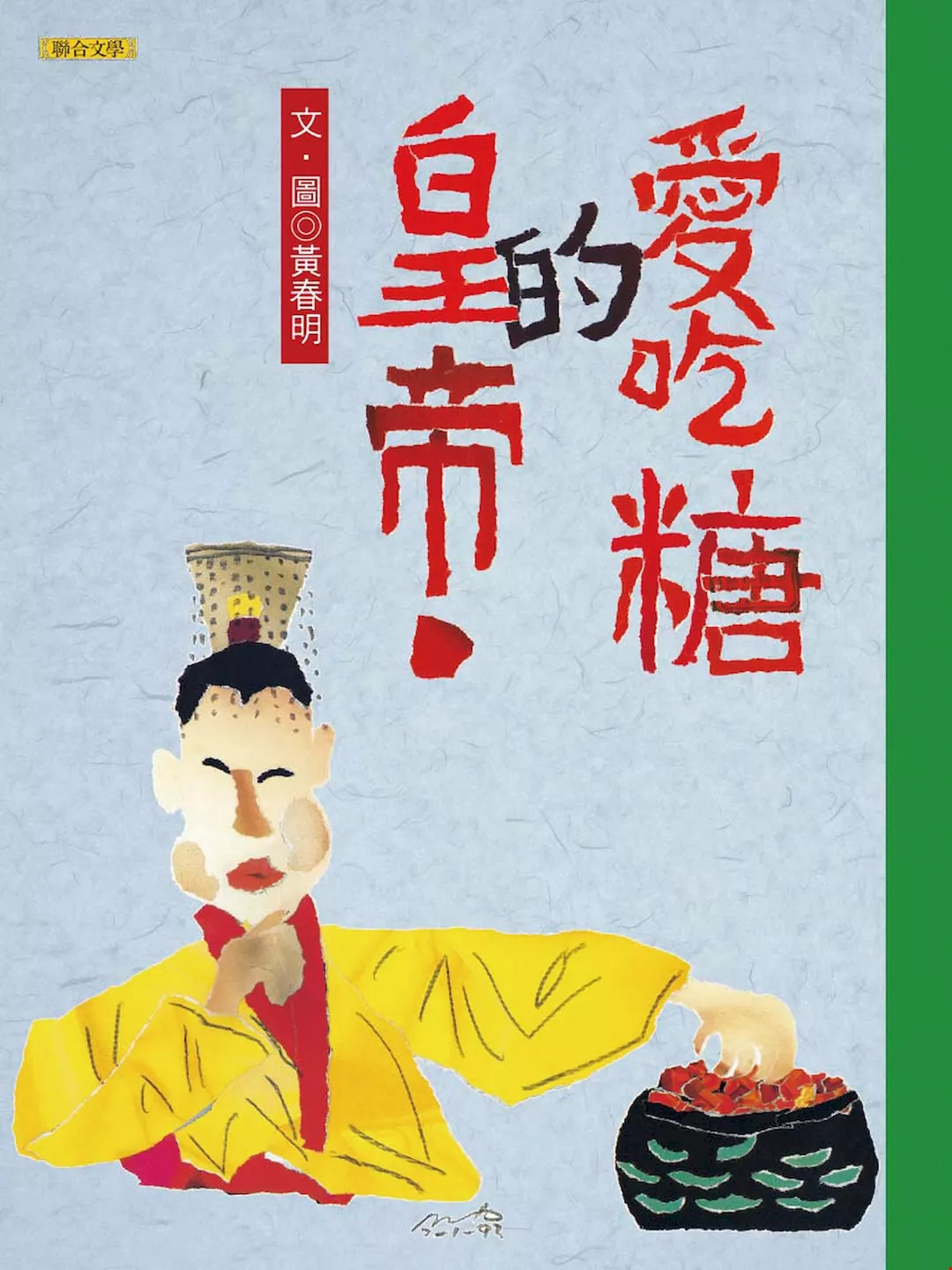
The Emperor Who Loved Sugar is a picture book with torn-paper collage illustrations. Huang based it on a story from China’s Warring States period (722–221 BCE) involving statesman–poet Qu Yuan and the King of Chu. Cleverly using salt and sugar as metaphors for admonition and slander, Huang relates how the “sugar” loving emperor ultimately lost his kingdom as well as a genuinely patriotic and loyal subject. (courtesy of Unitas Publishing)
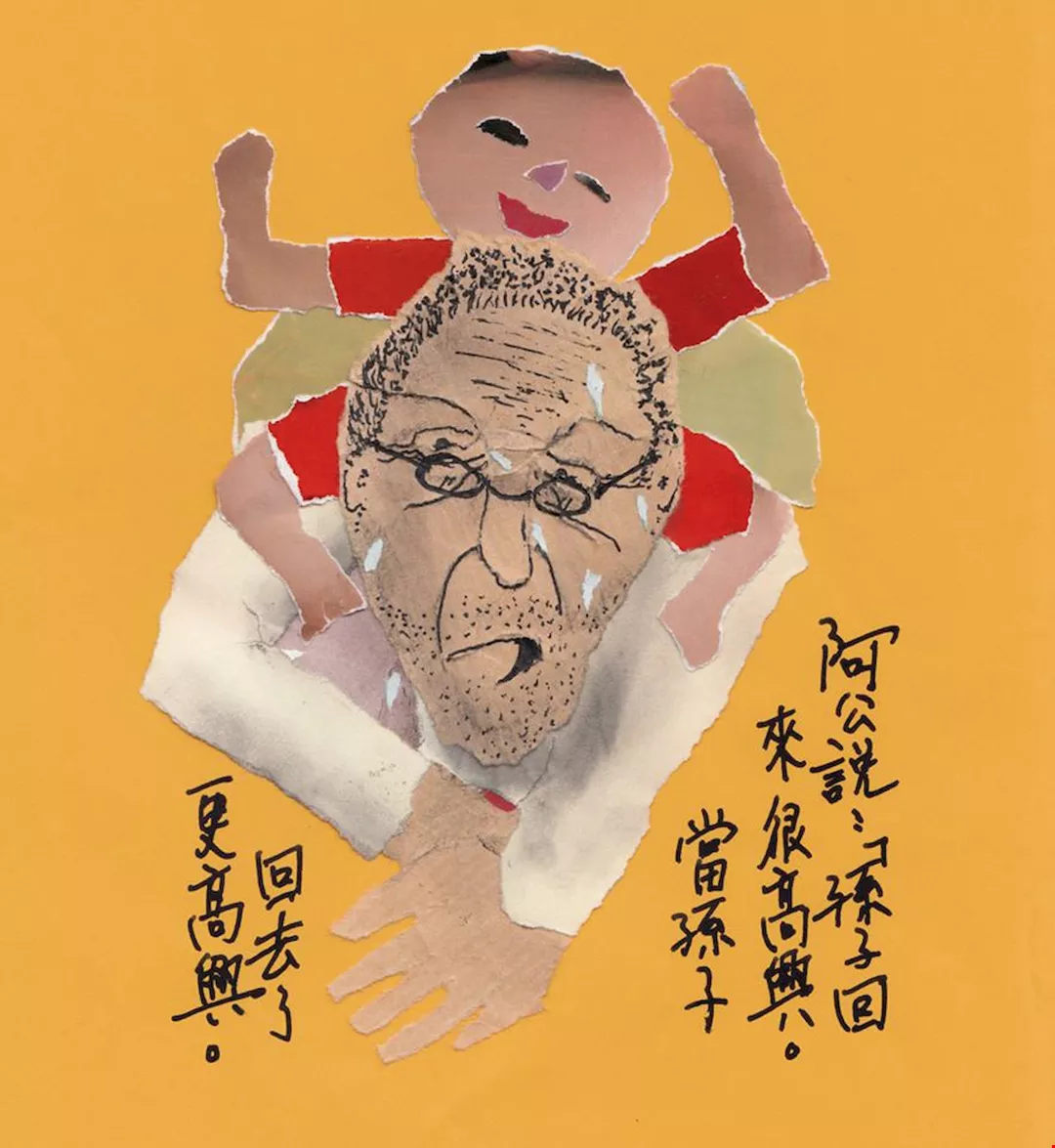
Huang is also a skilled artist. The covers of his books are his own creative work, sometimes watercolors, sometimes oil paintings, sometimes torn-paper collages. His images with accompanying text are always filled with humor, but the subtext is often admonitory. Huang produced the works pictured on this page during his chemotherapy. (courtesy of Huang Chun-ming)
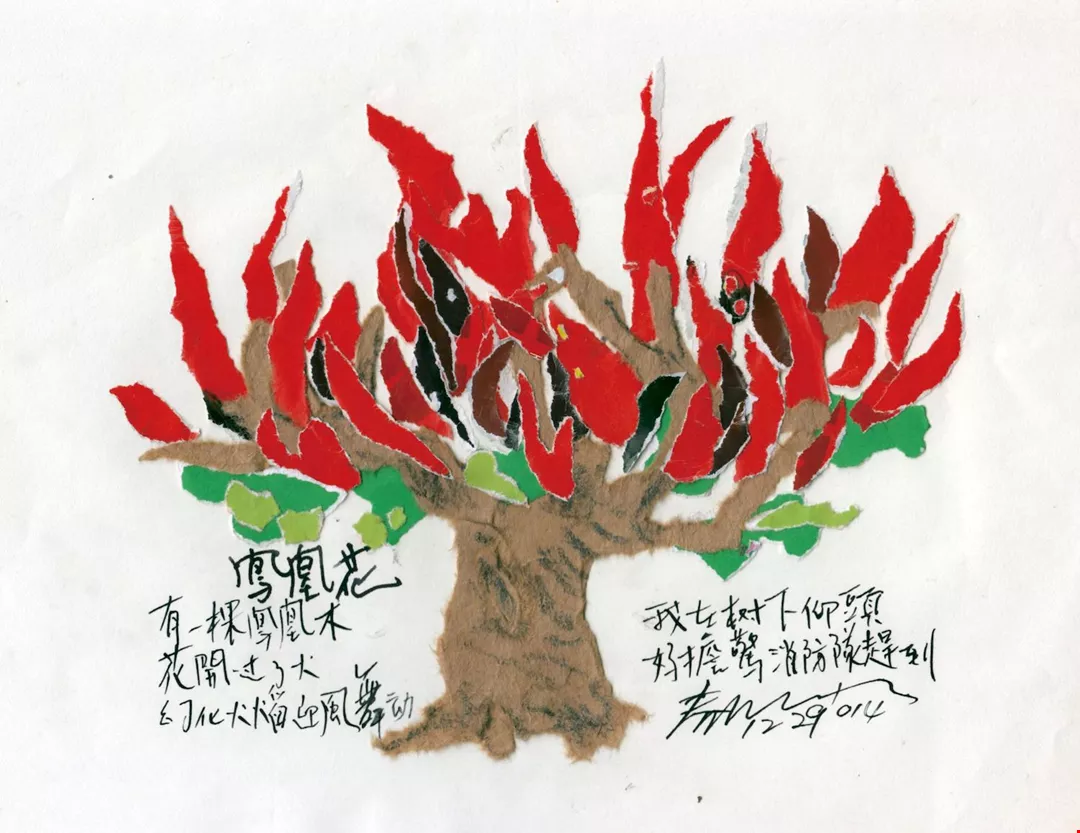
Huang is also a skilled artist. The covers of his books are his own creative work, sometimes watercolors, sometimes oil paintings, sometimes torn-paper collages. His images with accompanying text are always filled with humor, but the subtext is often admonitory. Huang produced the works pictured on this page during his chemotherapy. (courtesy of Huang Chun-ming)
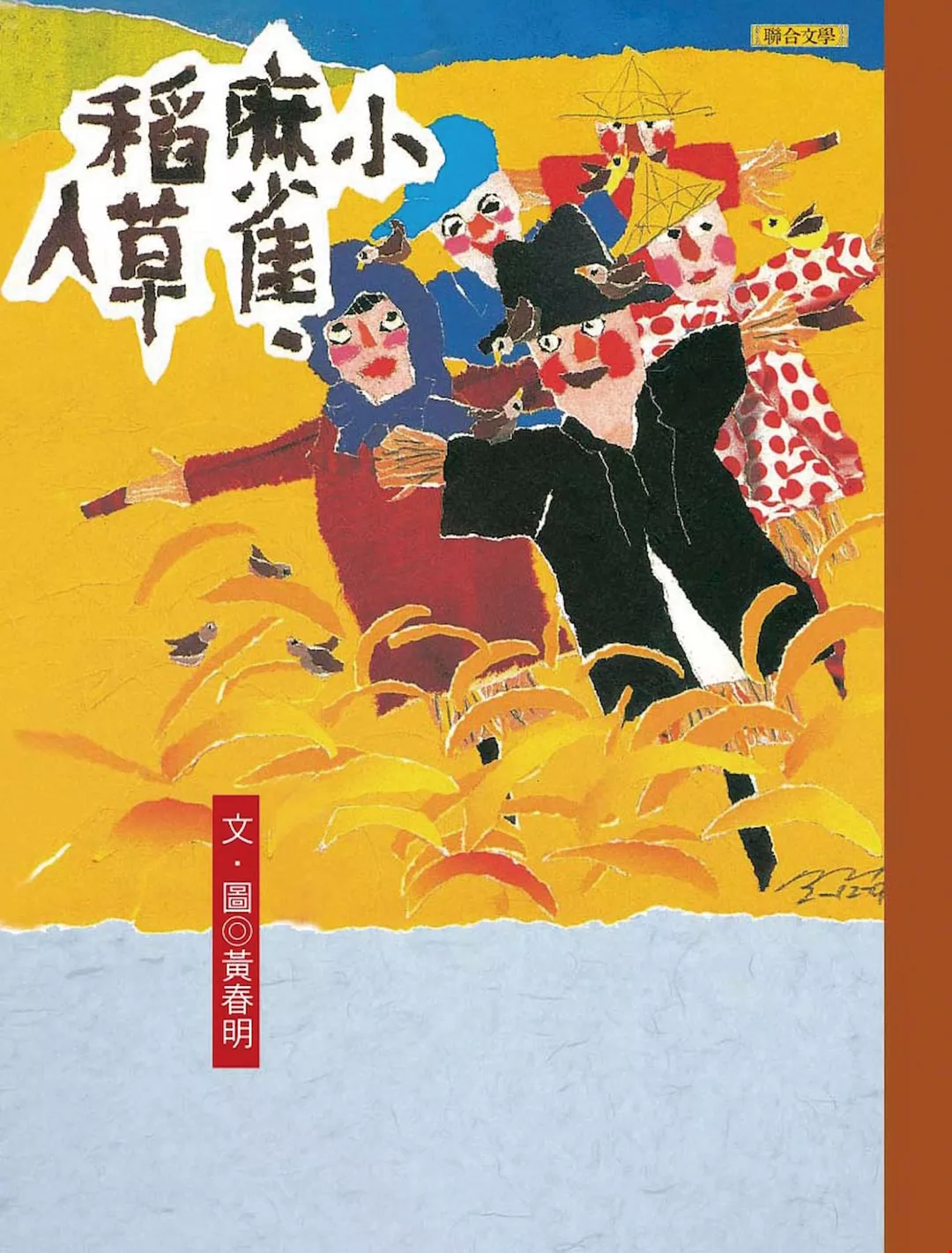
The Sparrow and the Scarecrow is another picture book with torn-paper collages as illustrations. In it, Huang uses anthropomorphization to depict the interactions between a sparrow and a scarecrow. Turning traditional viewpoints upside down, it’s a very entertaining work of children’s literature. (courtesy of Unitas Publishing)
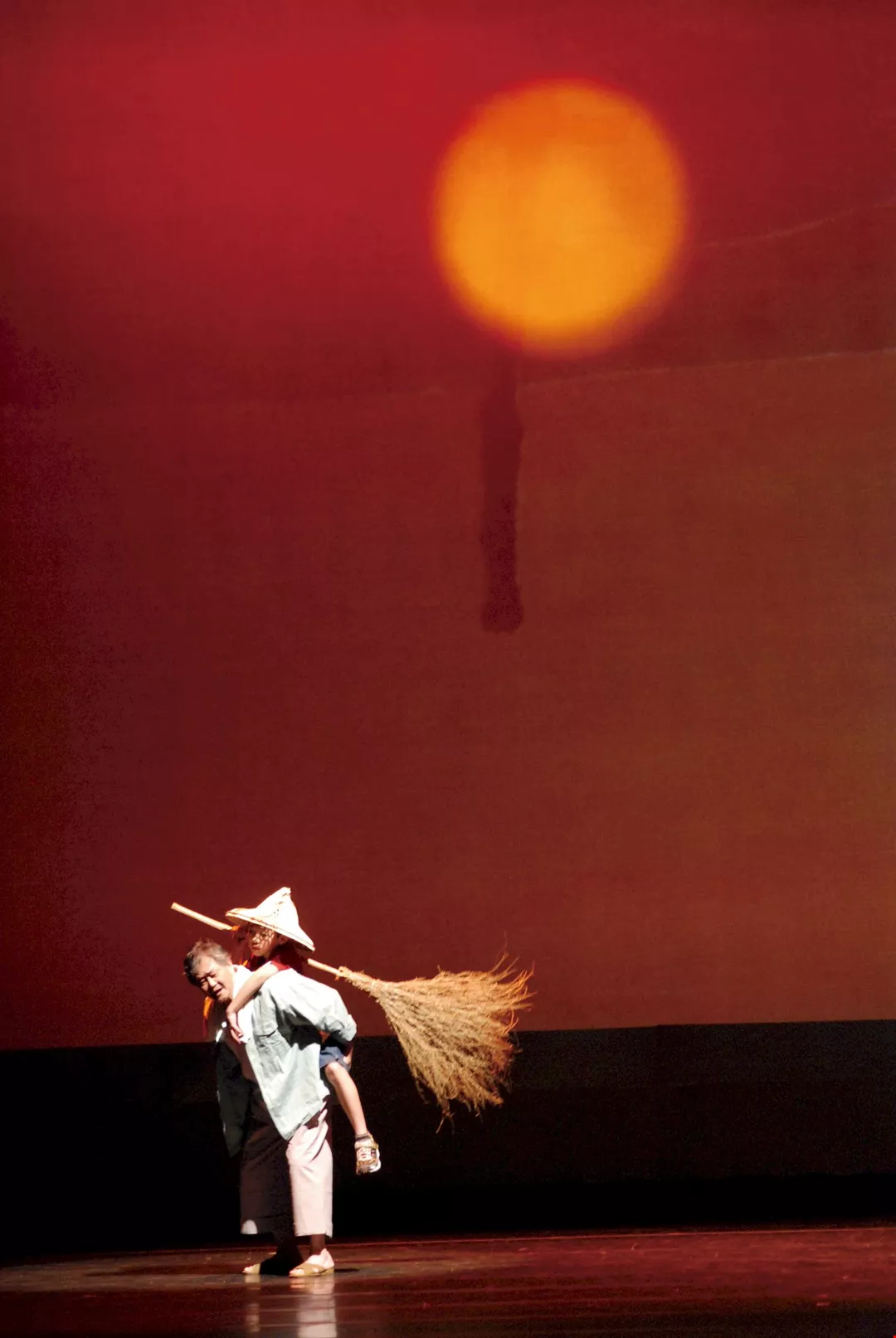
Huang has also turned The Sparrow and the Scarecrow into a children’s play which has been staged many times by Big Fish, with Huang himself performing. (courtesy of Big Fish Children’s Theater Troupe)


