Chiang Le-ching: Compared to Mountains, Buildings are Humble
Andre Huang / photos Wang Meng-hsiao / tr. by Phil Newell
February 2008


In contrast with her elder brethren of the previous generation, whose work tends to be on a grand scale, the 45-year-old Chiang Le-ching has combined a woman's attention to detail with a heart that retains a child-like outlook to become the genteel gem among the legends of Tunghai architecture.
Chiang Le-ching, who grew up in Taichung, started her university career at Feng Chia University. At that time her department used the large lecture format for classes, with an atmosphere not much different from high school. It wasn't easy to find people with interests in film or art to talk with, and students were engaged in cutthroat competition for grades. It got to the point that once Chiang had one of her models stolen and destroyed the night before the evaluation. "I felt like everybody was trying to do each other down."
When she later transferred to the Department of Architecture at Tunghai, she took to the broad-minded and free atmosphere there like a fish to water. Under the American-style system of education, each student was treated as a distinct individual, and the school wanted everybody to develop their own ideas, complete their own designs, and fully explain their creative concepts in presentations before large audiences, while student-professor relations were based on dialogue and discussion. "Doing design at Tunghai, everybody was first in the class!" says Chiang, smiling at the memory.
Outside the classroom, Tunghai established the nation's first education-through-work program. Doing outdoor chores, students learned appreciation of surroundings and sensitivity to atmosphere. Chiang's work area was the College of Literature, and each day she would go there to sweep up. "The College of Literature is really beautiful, as were the fallen leaves, and in fact it would have probably been better not to sweep them away at all," she says. It would perhaps be more accurate to say that she "eavesdropped" on literature and art classes even more than she swept up. "I felt really lucky and happy!"
Tunghai's emphasis on pushing buildings into the background while putting people at the center, and its spirit of designing buildings to be at one with the environment, are fully manifested in Chiang's most representative works: the Tannan Primary School and Tannan Catholic Church in mountainous Hsinyi Township, Nantou County. Both were part of the reconstruction projects that followed the devastating September 21 earthquake in 1999. Chiang says, "Set against the mountains, any human structure is humble, so the design should fit comfortably into the environment, so that the structure maintains as low a profile as possible."
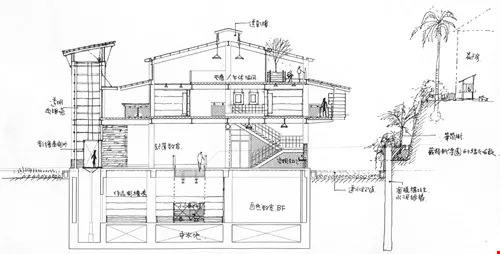
The Tannan Primary School in Hsinyi Township of Nantou County incorporates elements of traditional Bunun homes, and the running track that wraps around the classrooms is especially creative. This is the most impressive of the new school buildings produced during reconstruction after the 1999 earthquake.
At the same time, Chiang is also an heir to Tunghai's orientation toward social concern. As she recognizes, "The school and the church are both focal points of community life for the Bunun people who make up the community in Tannan. Rebuilding these structures provided a good opportunity for repair of the tribal traditions and a revitalization of the elements of Indigenous culture." This does not mean that she just casually employed a few token Bunun symbols, but rather that she created dynamism and meaning that placed people at the center. She deftly employed the spatial memories of traditional Bunun homes and structures for tribal gatherings, using modern methods and materials to express these memories.
Moreover, Chiang made frequent trips to the building site and gained an understanding of tribal life, meaning that the process of design was for her also an educational journey into Indigenous culture. As a result, besides the buildings, she also worked with a cross-disciplinary team to produce the "Four Classics of Tannan," lending a hand to the survival and passing along of traditional local culture.
Having been awarded the special prize for post-earthquake reconstruction architecture as part of the 2001 Far East Architecture Award, Chiang has more recently followed in the footsteps of her classmates Huang Sheng-yuan and Kung Shu-chang in winning the Outstanding Architect Award given by the Ministry of the Interior. Thinking back to her six years as an undergrad and graduate student at Tunghai, Chiang happily recalls: "I didn't go abroad to study, so other people say I was 'Made in Taiwan.' In fact, I was even more 'Made in Tunghai'!"
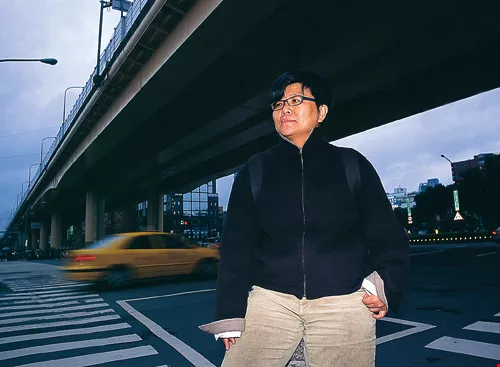
The Tannan Primary School in Hsinyi Township of Nantou County incorporates elements of traditional Bunun homes, and the running track that wraps around the classrooms is especially creative. This is the most impressive of the new school buildings produced during reconstruction after the 1999 earthquake.
Chiang Le-ching
Graduated from Tunghai's Department of Architecture in 1988, and its Graduate Institute of Architecture in 2002. Representative works include Number 20 Warehouse of the Taichung Train Station and the Tannan Primary School in Nantou County. Prizes include Far East Architecture special award for schools, the Green Building Prize, and the Outstanding Architect Award.
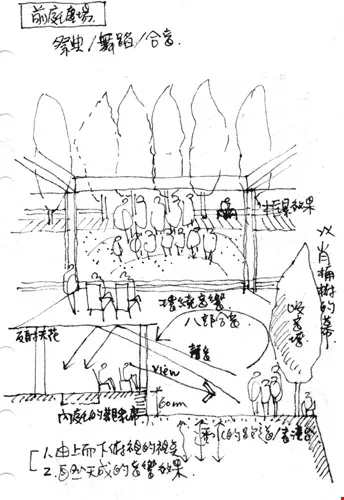
The Tannan Primary School in Hsinyi Township of Nantou County incorporates elements of traditional Bunun homes, and the running track that wraps around the classrooms is especially creative. This is the most impressive of the new school buildings produced during reconstruction after the 1999 earthquake.
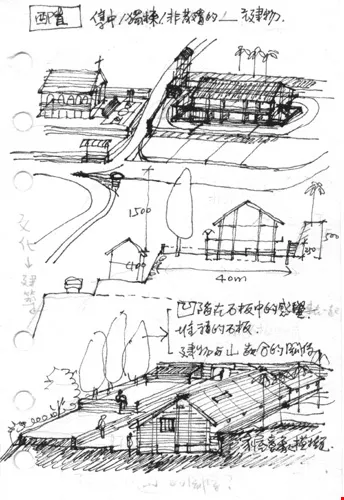
The Tannan Primary School in Hsinyi Township of Nantou County incorporates elements of traditional Bunun homes, and the running track that wraps around the classrooms is especially creative. This is the most impressive of the new school buildings produced during reconstruction after the 1999 earthquake.

@List.jpg?w=522&h=410&mode=crop&format=webp&quality=80)


