Occupying the Literary "Heartland"
Chen Ya-lin / photos Pu Hua-chih / tr. by Scott Williams
July 1998


They are an ever-victorious army sweep-ing across the literary plains, the medals representing the countless triumphs of their pens glinting in the sunlight.
Their words are captivating; their works teem with imagery. Wielding the language of poetry, they are claiming a place on Taiwan's literary stage. This Chinese literature from foreign lands has struck like a bolt from the blue.
How can we describe them? For the time being, let's just call them Taiwan's "pen-wielding ethnic-Chinese Malaysians."
Do you remember Wen Jui-an? He was that "sword-wielding young man" from National Taiwan University who believed in the idea of "Greater China." His poetry and kungfu novels were "must-reads" for every university student in the 70s.
Ever heard of Li Yung-ping? He was the professor of comparative literature who wrote the 500,000 word novel, Hai Dong Qing. Even Professor Liu Shao-ming, the noted literary critic, had to keep a dictionary at hand when reading that work.
What about Chang Kuei-shing? When his Herd of Elephants was entered in the China Times newspaper's million-dollar novel contest two years ago, all the female writers on the judging panel voted for it. Li Ang even picked up her backpack and headed off to visit the tropical rain forests he described in the book.
Are you familiar with Choong Yee Voon? Last year, she won the top prize in the essay competitions of two major local newspapers and was named Taiwan's brightest star in the essay genre.
Then there's Ng Kim Chew, who writes literary works with his left hand and critical works with his right, and the poet Chan Tah Wei, who interprets Chinese history in his narrative poems. . . . They may be of different generations and write in different genres, but they have one thing in common-they all come from Malaysia.
Their words are captivating; their works teem with imagery.
Outstanding Chinese writers from abroad
Reading their work, as exemplified by the excerpt from Chang Kuei-shing's Herd of Elephants below, one can't help but be awed.
"They worried that grandmother would be eaten, like a hen by a big lizard; dug up, like an abandoned tomb by a wild dog; impaled, like a pumpkin on the tusk of a wild boar. By the time grandmother had worked herself into a berserker frenzy, the invaders had long since scattered. When she lit out across the fields after the Borneo apes, the men and boys often couldn't tell which was her and which were our million-year-old ancestors."
As critics have noted, Chang Kuei-shing's "delicate and artistic language reveals to the reader a completely new aesthetic, one which has an air of eastern Malaysia about it."
A passage from Choong Yee Voon's essay "Fishing for Sleep" runs: "The thin and distant cry of a cat is raised by my ears to a fighting pitch. The sound of a motorcycle engine gets under my skin, winding me up to the point that I become angry at the wind-wafted curtains which have startled the first faint hints of drowsiness, sending them skittering away. The ugly humming of a mosquito's beating wings opens the floodgates of my accumulated anger. I rise to hunt it down and kill it. . . ." Chen Wan-yi, a professor in the graduate institute of Chinese literature at Tsinghua University, says of this work, "She uses the metaphors and symbols of poetry to capture that impalpable feeling of sleep."
Although Chinese language education exists in Malaysia, these writers are nonetheless overseas Chinese. It seems that this really is an instance of "culture having been lost in the 'heartland' but living on in the 'provinces.'"
Li Jui-teng is a professor in the graduate institute of Chinese literature at National Central University and one of the few people in Taiwan whose research is focused exclusively on the literature of Southeast Asian overseas Chinese. Li says that Malaysia is one of the foci of studies of overseas Chinese literature.
"In Singapore, the city-state's completely urban nature and its English-language educational system means that though many people can speak Chinese, few can write it. Therefore, it is producing few writers of the new generation. But," he continues, "Malaysia is special. The Chinese language educational system there has always been strong. And there's a lot of enthusiasm [for literature]; a great many of the nation's high school and college students participate in all kinds of international literary conferences."

Wielding the language of poetry, they are claiming a place on Taiwan's literary stage.
Identification with China
In addition to the stimulus provided by campuses, there are literary periodicals and media-sponsored awards which keep people excited about creating new Chinese literature.
Chang Kuei-shing, who teaches at Taipei's Chungyuan Middle School, cites his own birthplace as an example: "Even in a backwater like Borneo, there were more than 10 literary societies made up of middle-school students. The local Chinese-language newspaper turned over its entire supplements section to the students to write and edit. The paper didn't pay them anything, but it did give them an opportunity to express themselves."
In the book Sinicity and the Literature of Ethnic-Chinese Malaysians, Ng Kim Chew points out that there is no other overseas group whose literature compares to that of the ethnic-Chinese Malaysians (ECM) in either quantity or quality. "Their enthusiasm for literature is no passing fad. It has a historical continuity."
But most of the Chinese who emigrated to Southeast Asia did so as economic refugees. How is it that culture has become so indispensable to them?
Chen Peng-hsiang, currently the director of the English department at Shih Hsin University and himself an ECM, says that in order to drum up financial support for themselves during the reforms of the late Ching dynasty, the Nationalist revolution and the later Republican crisis, revolutionaries extended the bounds of the battlefield to Southeast Asia.
These revolutionaries established Chinese-language newspapers and schools in the region for overseas Chinese as part of efforts to raise Chinese consciousness in the overseas Chinese communities. This fostered identification with China among Malaysian Chinese. With the War of Resistance Against Japan, this identification grew still stronger.
Ng Kim Chew writes in A Selection of Modern Malaysian Ethnic Chinese Short Stories that Chinese living in Malaysia are an ethnic minority and have thus seen the preservation of their culture and literature as a kind of "ethnic moral imperative." In this light, studying in Taiwan becomes a means of "re-sinicizing" these overseas Chinese communities.
This Chinese literature from foreign lands has struck like a bolt from the blue.
Comforting an ethnic sensibility
When young ECM writers come to Taiwan to study at university, they quickly absorb the local post-modern literary atmosphere. While local university students are goofing off for four years, the ECMs, who are so poor that "they can't afford to buy a stamp for a letter home," spend their time (and save their money) reading in the library, struggling through the works of all the great writers. This poverty also pushes them to dedicate themselves to writing works of their own to submit to literary contests in the hope of collecting a bit of prize money.
Chang Kuei-shing, who studied at a British school in Malaysia, says that as a child he was forced to keep his Chinese bottled up inside himself. When he came to Taiwan, he felt a need to compensate for that and became extremely conscientious about his use of Chinese language. "It was a little bit of a release," he says, smiling shyly.
This feeling is especially apparent in Li Yung-ping's Hai Dong Qing. Opening to a page at random, you find a passage which runs: "The cochineal clouds, in clusters and clumps, spattered and drifting across the sunset. The evening light, sifted through the latticed roof of a cement gazebo, speckling the whole of the road. Liquid-golden, lonely and still, it soaks the concrete stools on which Granny Bai and Mama Yu sit, bulbous in their winter clothes."
Literary critic Wang Teh-wei believes that Li Yung-ping is committed to the idea of reviving China by reanimating written Chinese. He says, "His [Li's] love for finding just the exact word in his Chinese writings is something rarely seen."
"He has melded cultural affirmation and ethnic self-respect with literary practice to create a purely Chinese literary form," says Ng Kim Chew. "This provides solace to his personal sensibilities, both literary and ethnic."
There are few who can compare to ECM writers living in Taiwan in terms of how hard they work, either.
Li Yung-ping was once an assistant professor in the department of foreign languages and literatures at National Sun Yat-sen University. But in order to devote himself more completely to his writing, he gave up his teaching career and moved to Taipei's Hsimenting area, where he lived "next door to bar girls and dancing girls." Chang Kuei-shing, who still teaches at a middle school, sits down to write as soon as he gets home every day at seven. He writes until nine before finally allowing himself to eat dinner. During summer vacations, in the steam-room that is the Taipei Basin, he spends all day at his desk, cranking out 60,000 words a month.
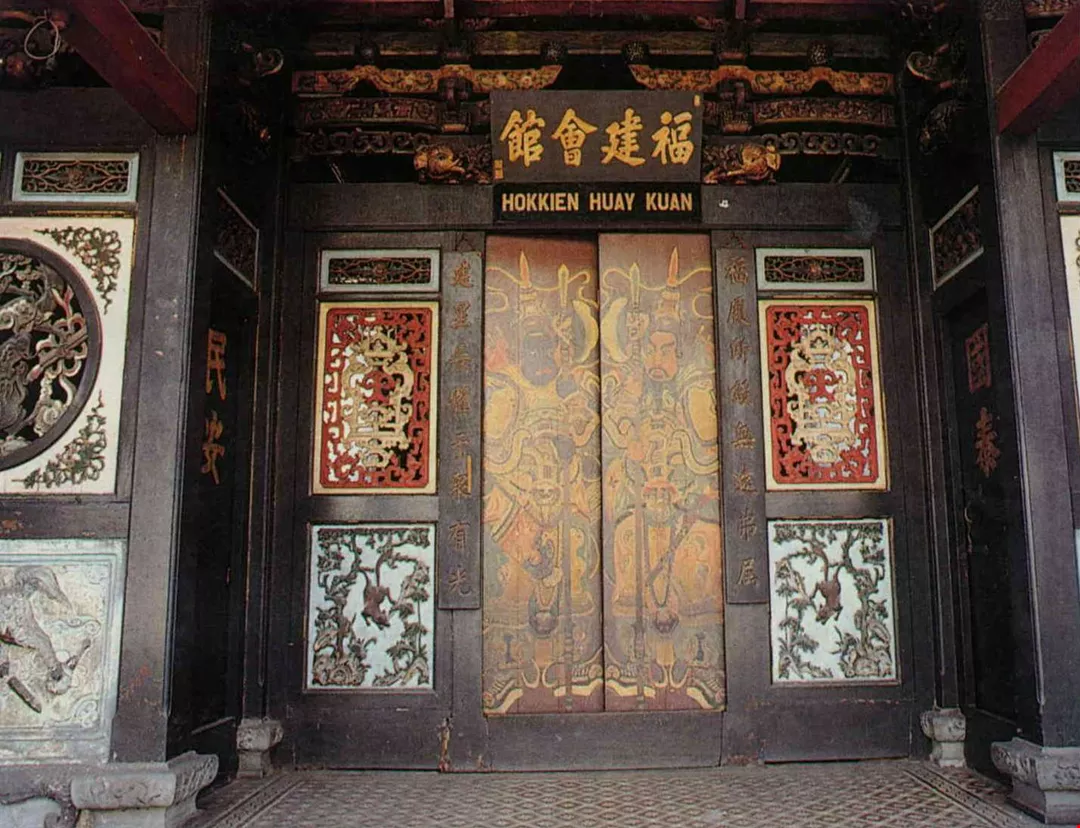
Chinese immigrants from the same ancestral hometowns gather together in Chinese associations. These groups often provide scholarships and prizes to students, h elping future generations get ahead. (photo by Diago Chiu)
Appraising the new kids on the block
Those ECMs such as Lin Lu and Chen Peng-hsiang, who came to Taiwan early on to study, established poetry societies as a means of interacting with Taiwan's literary scene. Later arrivals, including Wen Jui-an and Fang E-chen, established the Shenchou Poetry Society, put together their own publication and promoted themselves.
The new generation of ECM writers, however, are all trying to put themselves on the local map by way of literary contests.
The reason for this approach "involves the literary environment in Taiwan. All the literary publications have folded. Now, too, it's difficult to get published in the newspapers because such writing takes up too much space. New writers don't have a chance," says Ng Kim Chew, currently a lecturer in the Chinese literature department of mainland China's Jinan University. "So Taiwan uses literary prizes to appraise new writers."
Ng feels that the situation in creative writing isn't all that bad when compared to research. "In research, people look at what resources you have at your disposal. In writing, they look at your work. And in Taiwan the writing contests are pretty open."
According to Chang Kuei-shing, "The only way to find a publisher and get readers interested in something on a less popular topic is this [a writing contest]. When a work wins a literary prize, there is publicity and there are promotions. It's only in this kind of situation that people will pay attention to the things you want to emphasize."
It seems that winning an award carries a lot of "added-value."
Choong Yee Voon, who snatched first prize in both the China Times' and the United Daily News' writing contests last year, says that the awards and the fame she has won led a new Taipei university to talk to her about a job even before she had finished her PhD in Chinese literature at National Taiwan Normal University.
"After winning the awards, the media was always asking me to submit works to them to publish. If I gave one to the United Daily News this month, then I'd have to give one to the China Times next month. Otherwise the supplements editors would complain," says Choong. The not-yet-30-year-old Choong and her other half, Chan Tah Wei, won a number of awards while they were still at school, providing them with plenty of money. Recently they spent some of that prize money to buy themselves a toy for grown-ups-a car. It is a purchase which has outraged some of their "starving" classmates, including Ng Kim Chew.
Searching for a foreign flavor
However, it certainly isn't every ECM writer who has that kind of marketability. This is especially true of works for which Malaysia and the overseas Chinese immigrant experience serve as a background.
Take Chang's Herd of Elephants as an example. The background to the story involves an overseas Chinese family in the Borneo rain forest and the rise and fall of the Malaysian Communists. Although the publisher printed "A 'Judges Selection' from the Second China Times Million-Dollar Novel Contest" on the cover and discounted the book to NT$199, so far, even the first printing has yet to sell out. Chang has a laugh at his own expense, saying, "Not more than a couple of people in Taiwan have read the book."
In her article "Where's My Homeland?-The Evolution of Ethnic-Chinese Malaysian Writers in Taiwan," Hsu Shu-chin, who writes for the books page of the China Times, states, "The works of ECM writers living in Taiwan have been overlooked or misunderstood by Taiwan's readers; local readers have nothing to say about them."
Ng Kim Chew says, "Taiwanese readers are not interested in Southeast-Asian literature. They are more receptive to translations of English- and Japanese-language works." He thinks that the local educational system has left Taiwan's readers unable to form a broader view of place and history. "It's often assumed that the Malaysian background gives the works a foreign feeling. Those who read them are people who are looking for something different."
Does this prompt writers to change their style?
In Kosan's Daughter, Chang was trying to produce something about Taiwan, but he feels, "No matter how I try to write something like that [about Taiwan], my understanding of Taiwan is not as deep as that of the place where I was born and raised. So it seems better to me to write what I know."
"I feel that you can't cater to readers," says Ng Kim Chew. "Writing unpopular books isn't necessarily a bad thing. Literary fame is easily lost. Unpopular books have the virtue of not being easily commercialized. If you hope your works will stand the test of time, not being popular might be a help."
Li Jui-teng, who is much concerned with these ECM writers, believes, "Of course, in literature, you must be concerned with where you are, but when you are writing, you also cannot escape where you came from." Regardless of whether what the ECM writers produce is familiar to Taiwan's readers, ultimately, the point is whether or not it is well written.
A cultural embellishment
While a writer can wait 20 years for readers to discover his work, he hopes for immediate critical acclaim.
Ng Kim Chew says that even though the quality of the works by ECM writers has been tested and affirmed after literary battles large and small, these works have not managed to interest Taiwan's critics.
"The fact that no one is interested in doing criticism indicates that the literary criticism market thinks that these works don't mean much to modern Taiwan," Ng says pessimistically.
So, what meaning does he find in them?
"ECM literature can provide Taiwan's writers with another alternative to consider." Ng says that today's Taiwanese literature is a relic of the May 4 Movement and a Western transplant. Everybody's work is the same in this respect. Chinese literature from Malaysia lets people see the possibilities Chinese takes on when placed in a different locale.
"Taiwan is too small. Works produced here too easily take on the same character. Most of it is urban literature. There isn't much difference between its various rural areas. Putting it bluntly, it's a pretty barren place."
Choong Yee Voon, who describes her own character as being like that of a wild ape, grew up in an oil palm grove. It was the kind of place where the hills were filled with squirrels, lizards and free-range chickens and people raised snakes to eat mice. Having had such animals as her playmates when she was a child, she unconsciously personifies all of nature. In her writing, this personification comes out very naturally. "A few thousand years ago, the heart of the bamboo turned soft for a moment and he made a promise. Even to today, the kind-hearted trees must sacrifice their lives to bear the never-ending stream of human language."
Li Ang, in criticizing Herd of Elephants, says of the book's imagery, "Startled by crocodiles, lizards, elephants and floods, dumbfounded by great rivers, incessant rains and guerrilla warfare, we, the worn-out readers of the end of the 20th century have again found a space for fantasy. We hear the call from the deepest wells of life and are baptized in its waters."
A trans-cultural structure
Chen Peng-hsiang also feels that ECM literature is significant to Taiwan's literary scene. "Chang Kuei-shing pulled together the setting in Borneo, a Western literary form and the Chinese written language into a huge literary work. There's no one in Taiwan who can compare to him."
Instead, he compares Chang's work to that of last year's winner of the Nobel Prize for literature, which combined Western and African culture into a work which possessed great cultural depth.
Li Yung-ping spent eight years writing Jiling Chunqiu (A Tale of Jiling Village), which he wrote as an effort to forge a "purely Chinese work." Though he didn't set the book, which deals with a distant, mythical country, in his eastern Malaysian hometown, the richness of his hometown is in no way inferior to that of Latin America. Nonetheless, Ng Kim Chew says, "[You] can't deny that [his change of setting] is disappointing."
Chen Peng-hsiang feels that Li Yung-ping has "used the cleansing of his Chinese to cleanse himself. He's leaped from being an illegitimate son to being the heir-apparent." However, in clearing the "evil" westernisms out of his language, he has also cleansed his language of his hometown, eliminating its rural character and its "impurities."
Choong Yee Voon doesn't think that she need write about Malaysia to produce something that is meaningful to Taiwan's literary scene. "Perhaps this is related to genre. Essays are more closely tied to the writer's own life."
In Choong's recently published collection of essays, Fishing for Sleep, her style moves from description to up-close examination. She writes of sleep, conversation, long hair, itching. . . . But she says that "It'll probably be a while before I write about Malaysia." She emphasizes that this is to let the sediments of the past "settle for a little bit."
Neither do you find anything of Malaysia in Chan Tah Wei's poems: Scattering seeds which become soldiers, the pen moves like a god/ Lighting the candle, heating the wine, making them live:/ Fan Kuai becomes Fan Kuai, Fan Zeng is Fan Zeng/ The skeleton of history recast in flesh and blood-at Hongmen.
A war of words
Perhaps Wen Jui-an, who is also a poet, didn't write about Malaysia in the early years because of his sentiments about Greater China. In Chan Tah Wei's case, however, it seems to be that his choice of topic just hasn't happened to include Malaysia. And unlike the ECM who came to Taiwan to study years ago, the new generation is not giving up their Malaysian citizenship in favor of ROC citizenship. They have a strongly Malaysian consciousness. And although they actively compete for literary prizes in Taiwan, they also continue to participate in the literary life of their hometowns.
Basking in the glory of winning several of Taiwan's literary prizes, three or four years ago these writers gathered together some money and used it to put together a collection of modern ECM poetry and essays. The collection revealed that their literary ideology is quite different from the local tradition.
Chan Tah Wei, who was instrumental in this effort, was openly critical in an article: "Conservatively speaking, ECM poetry has a history of 70 years, but I have no interest in what came before 1970. Most of it is simply bellowing. . . . Poor poems and non-poems account for 90% of it."
"The [ECM] writers in Taiwan are too flashy. They go home firing cannons. Their work is a major blow to the local [Malaysian] literary scene, which is still involved with traditional realism," says Li Jui-teng. He feels that the awards they have won have helped to raise the level of writing in Malaysia, but have also caused them to become the rivals of the writers "back home."
"The younger generation, most of whom reside in Taiwan, seem to take the idea of 'not resting until each word startles the reader' to heart," said an article on ECM writers which appeared in Yazhou Zhoukan magazine at the end of 1997. The writer noted that the younger generation's criticisms of ECM literature "have a Taiwanese flavor," which made writers of the older generation defensive. The two sides have thus become embroiled in a "war of words."
ECM writer Li Tse-shu, who won first prize in the United Daily News' short story contest two years ago, has never been to Taiwan. She admits that originally, she decided to "enter a Taiwanese literary contest with some thought of vengeance in mind."
From her outsider's point of view, "These writers who live in Taiwan are exceptionally conceited and arrogant. They dare to resist tradition and have brought about changes, but their works have a Taiwanese flavor. It's almost as if they are exploiting the South Pacific and ethnic conflict in the same way that Zhang Yimo has sold old China to the nations of the West."
In search of a literary "Garden of Eden"
If they write about Taiwan, they are "eliminating the 'impurities' of their hometowns." If they write about Malaysia, on the other hand, they are "exploiting the South Pacific and ethnic conflicts." So where is the Eden of these ECM writers?
Many are searching for an answer to this question. If they one day choose to make Taiwan their home, they must think about how to deal with the problems of settling in Taiwan. But after choosing to make Taiwan their "new heartland," how long must it be before they can cast off the "ECM" label and enter the ranks of "Taiwanese writers"?
Ng Kim Chew feels that Chang Kuei-shing is "attempting to use the language of poetry to overcome everything." In his writing, he is seeking a pure aesthetic. He is taking the people and events of history, and by passing them through an aesthetic filter, turning them into a kind of poetic myth.
In Li Yung-ping's case, the rise of a Taiwan consciousness has made his deeply Chinese identity into a heavy burden. It has forced him to move beyond the Hakka language of his ancestors, and compelled him to learn the Taiwanese dialect, which appears frequently in his two later novels.
"Shut out by ethnocentrism and drowning in their Chineseness, these writers have to find their own means of survival." Ng Kim Chew says that the future is unknown, but believes that it will be open to all who wield a pen.
p.101
Ethnic-Chinese Malaysians view the preservation of Chinese culture as a "moral imperative," and their literature has always held a special place in the Chinese-speaking world. The picture shows a cultural event put on at the Chinese center by the overseas Chinese of Kuala Lumpur. (photo by Diago Chiu)
p.103
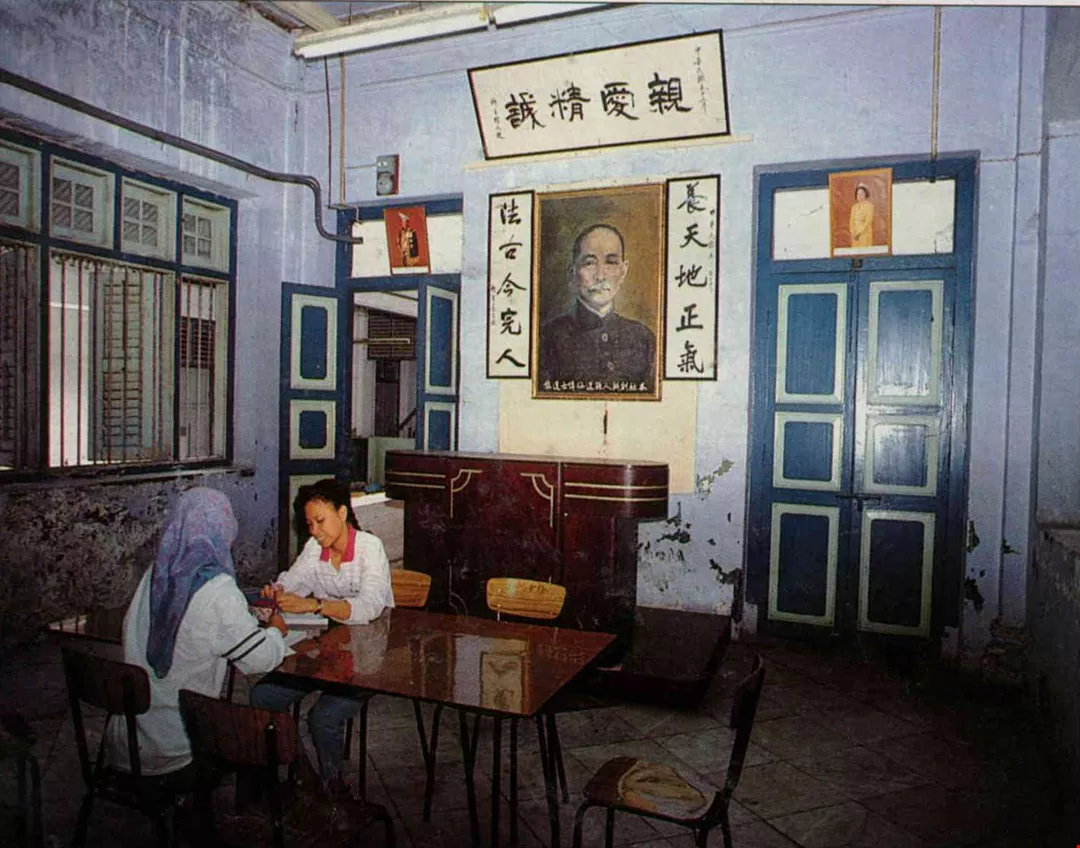
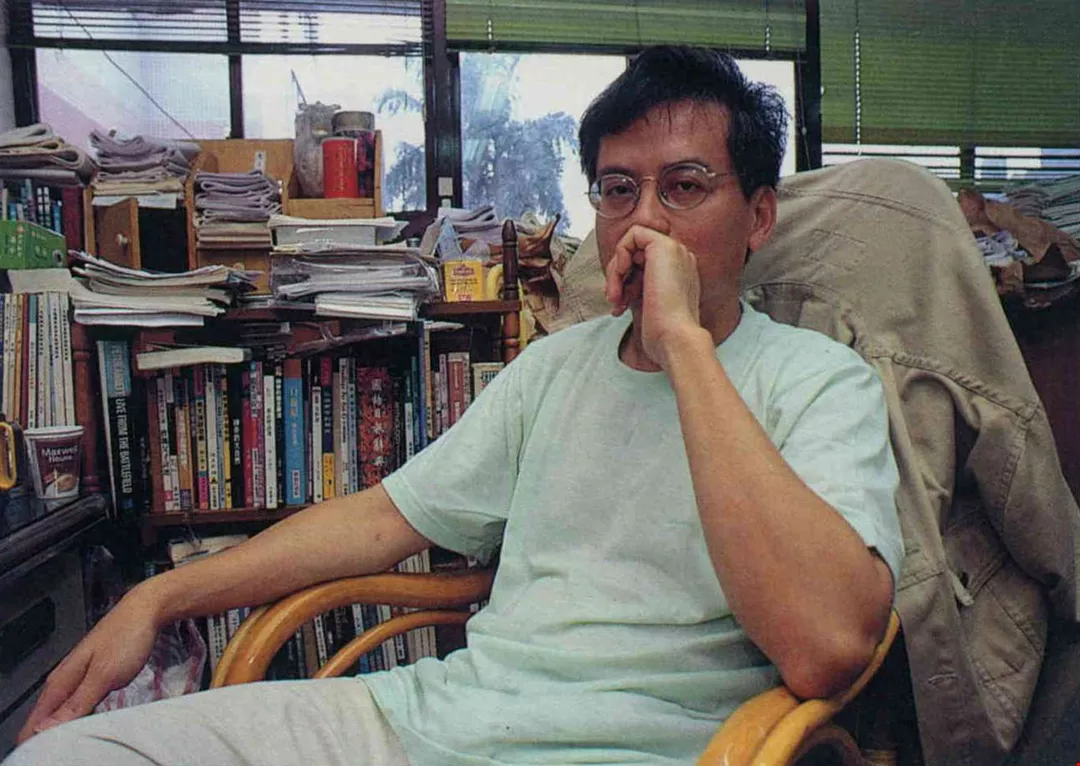
(above left) The Chinese Nationalists brought their revolution to the Southeast Asia, where they built schools for overseas Chinese. Their activities influenced the themes and style of the early writings of ethnic-Chinese Malaysians. (photo by Diago Chiu) But the works of Choong Yee Voon (top) and Chang Kuei-shing (above), much-acclaimed writers of the new generation, have abandoned this focus on "Greater China."
p.105
Chinese immigrants from the same ancestral hometowns gather together in Chinese associations. These groups often provide scholarships and prizes to students, helping future generations get ahead. (photo by Diago Chiu)
p.106
Is Taipei really an international publishing center for Chinese literature, the "new heartland" to all authors of works in Chinese?

@List.jpg?w=522&h=410&mode=crop&format=webp&quality=80)

@List.jpg?w=522&h=410&mode=crop&format=webp&quality=80)


