

From City of Sadness, Raise the Red Lantern, The Story of Qiuju to this year's The Wedding Banquet and The Women from the Lake of Scented Soul, which both won honors at the Berlin film Festival, Chinese movies have taken the world by storm in recent years, winning award after award at international film festivals.
At certain intervals of time, you can hear that "the movie industry has fallen to the pits," that "there are financial difficulties," that "Hong Kong totally dominates". Last year films made in Hong Kong accounted for 85 percent of Chinese ticket sales in Taiwan. Last year, less than 40 Taiwan films were shot, and the top-ten grossers at the box office were all Hong Kong films. Quite a few exceptionally skilled directors and technicians have changed careers.

R.O.C. directors are no strangers to success at the Tokyo Film Festival: Edward Yang and Stan Lai have both won awards here. (photo by Huang Li-li)
A time to be heroes:
Just when things seemed worst, Jason Hu, the director general of the Government Information Office, suggested holding a "film year" to encourage the making of Taiwan films, but no one would have thought that Aug Lee's The Wedding Banquet would win the Golden Bear for best film at the Berlin Film Festival, giving a shot in the arm to Taiwan's film industry. The Wedding Banquet describes a Chinese homosexual who arranges an absurd fake wedding ceremony to relieve the pressure he is getting about marrying and producing an heir. As the plot unfolds, the film touches upon the themes of conflict between Eastern and Western culture and sexual confrontation, all the while keeping the atmosphere boisterous. When it was first shown in Berlin, all 2000 seats of the hall were occupied and when it was over, Aug Lee and the actors had to come out for curtain calls five times.
A line in The Wedding Banquet, "5000 years of Chinese sexual repression" was played up by the British Critic Tony Rayns, attracting the attention of people in and outside the film industry. In the festival program, he described the movie as "a scintillating comedy with a serious undertow and a masterly grasp of emotional highs and lows."
While the domestic movie industry does not always make everybody happy at home, on the international stage it really seems that "Chinese movies are hot." Over the last couple of years, Chinese movies from both sides of the strait have become a focus of world attention.
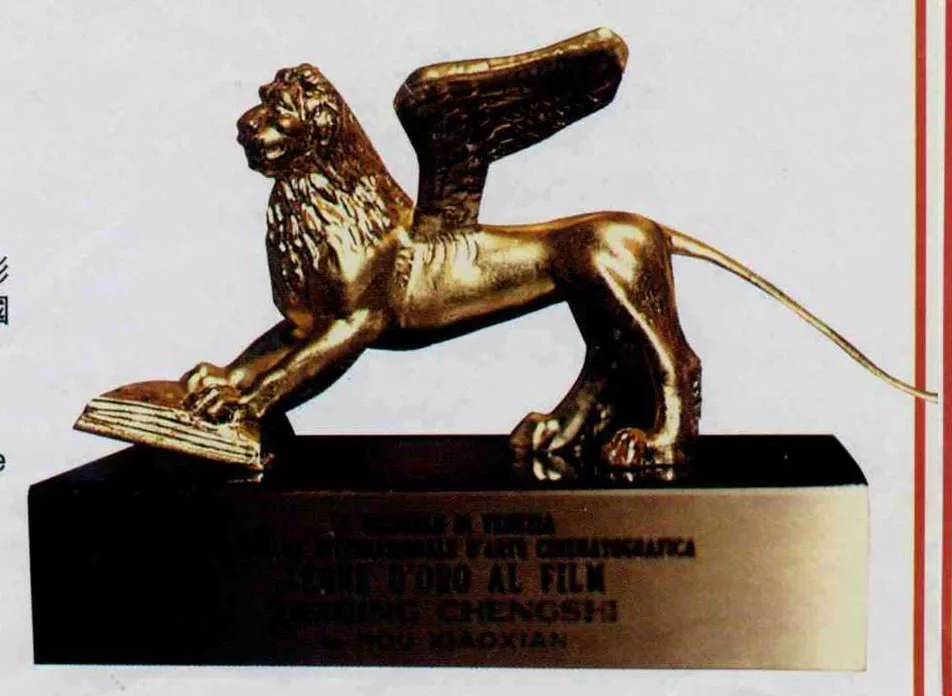
City of Sadness won the Golden Lion at the Venice Film Festival, launching work by R.O.C. directors into the front ranks of international film. (Sinorama file photo)
Chinese film rides high:
As early as seven or eight years ago, Hollywood films started growing excessively commercial and the avant garde ideas presented in European films began to lose their novelty. Chu Ming-jen, who went abroad many times to report on film festivals, believes that in recent years the art film market has been dull. Some films leave viewers with the question: "Is the director trying to abuse us?"
As a result, people had been predicting for a long time that the eighties would be the age of Third World movies, which of course must include many films by Chinese, who are the most populous group of all.
At the beginning of the eighties Taiwan stopped rehashing mushy love, violence and ghosts and started to make fresh films. The new wave of Taiwanese films included Hou Hsiao-hsien's A Time to Live and a Time to Die, Chen Kun-hou's Graw Up, and Edward Yang's The Terrorists, which grabbed hold of the pulse of current life in Taiwan. Whether showing the complicated and twisted love relations between urban men and women or experiences of growing up with the soil, they all gave viewers new movie-going experiences.
Across the strait in Mainland China, a bunch of experience-toughened young directors like Chen Kai-ge and Zhang Yi-mo were working hard in a harsh environment. They used movies to capture the peculiarities of the Chinese landscape and the character of the Chinese people. Pushing open the "bamboo curtain," they let people have a peek at mysterious mainland China.
Just what is it about Chinese movies that has attracted international attention?
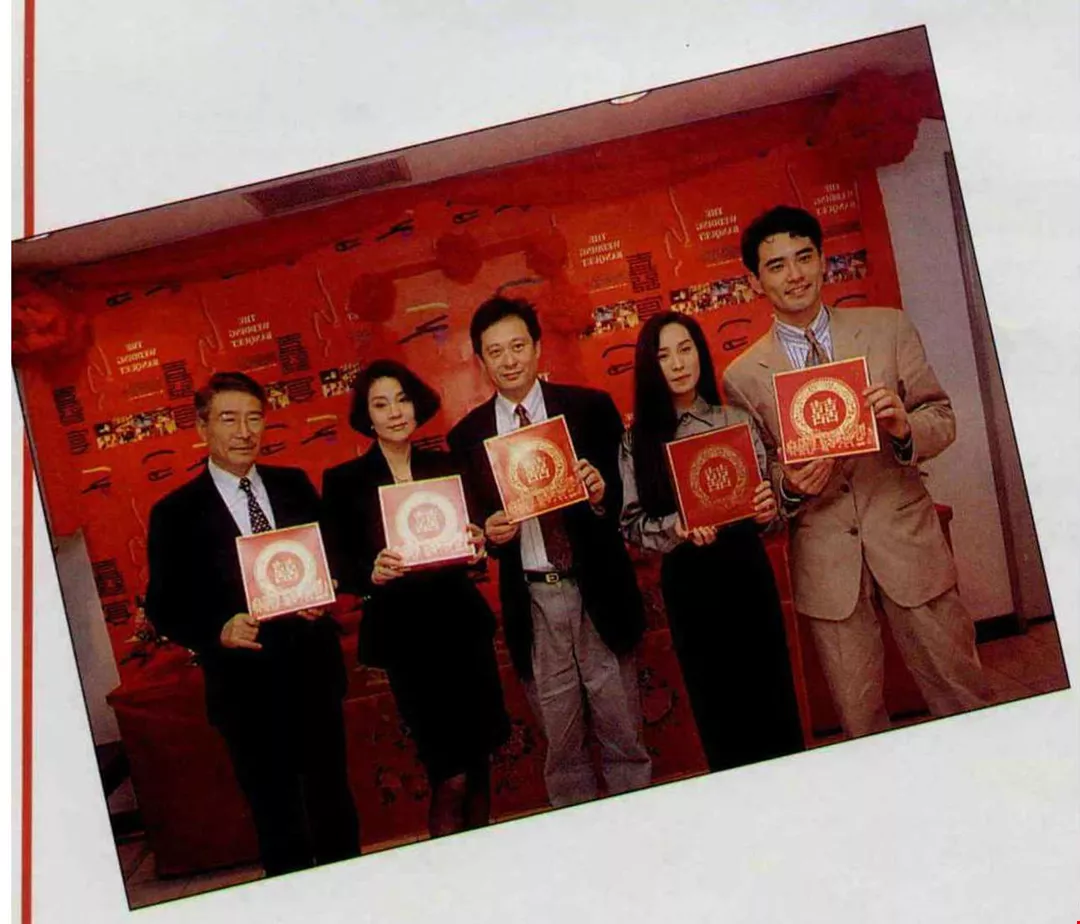
The director of The Wedding Banquet, Ang Lee (in the middle), and actors playing important roles in the film have been charmed by the The Berlin International Film Festival's Golden Bear. They have been hotly sought after by the media since they've returned to Taiwan. (photo by Diago Chiu)
Bitter growing experience:
Hsiao Yeh, who has helped record the rise of the Taiwan new wave, mentions how the critics at the time would prudently select films. When foreigners made special trips to Hong Kong to find films, these critics would invite them to Taiwan and specially introduce them to new movies.
"Some of the people would see a few movies, and go back and write pieces introducing them. They saw their trips to Taiwan as eye opening, feeling that though our technique was rough, the films were very powerful," Hsiao Yeh says.
Because the production facilities were outdated, there was no way to tape the sound on site, and the noise made by the machines was very loud. When Hou Hsiao-hsien filmed A Time to Live and a Time to Die he had to wrap the machines in quilts to muffle the noise. With these poor conditions, new movies mostly turned to the "developing experience" of Taiwan over the last 40 years and focused on the lives of the lower and middle class. In using the common to get to the aesthetic, it was a breath of fresh air.
Besides showing scenery evocative of Chinese poetry, what makes mainland movies stand apart is their concern with the complicated "image of the Orient in the West."
Critics hold that Red Sorghum, which carries the mysterious colors of silence on the vast northern plain on which it is set and describes a strong northern man taking a wife, and Judou, which describes the melancholy of a beautiful women suppressing her sexuality, are both "packaged in exoticness."
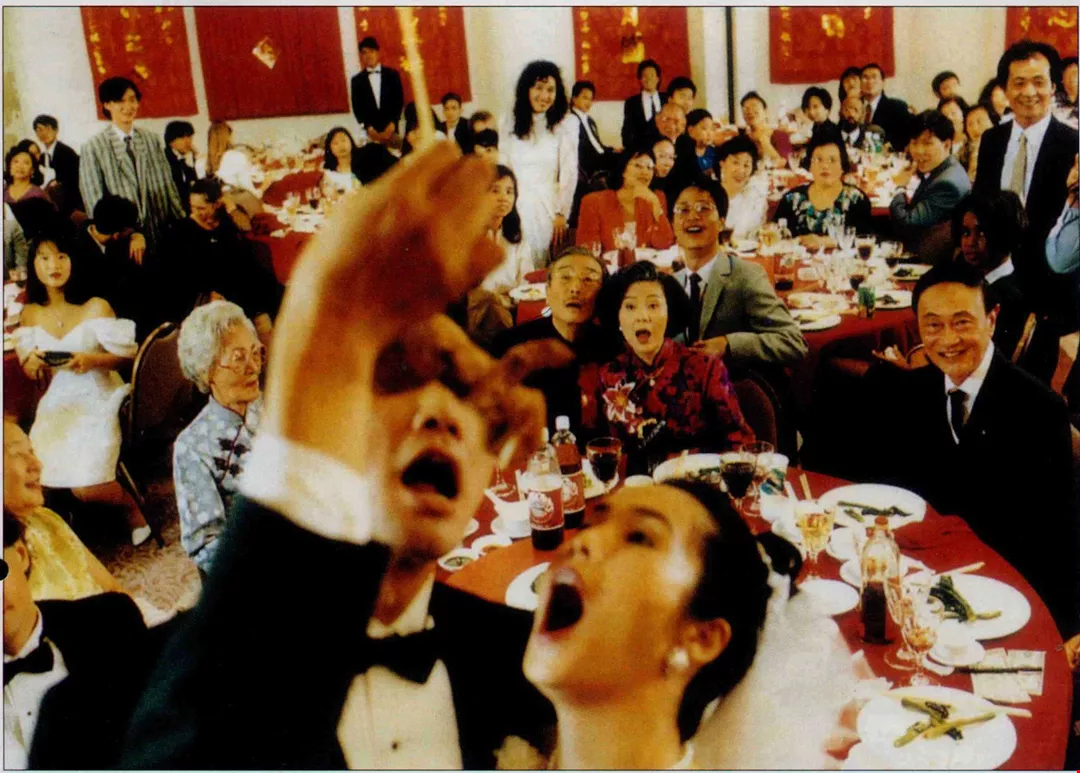
The scene of the Chinese-style wedding in The Wedding Banquet has turned Chinese and foreign audiences alike to laughter. (photo courtesy of Central Motion Picture Co.)
The image of the east in the west?
These kind of theories have not yet been set in stone. The critic Wang Chih-cheng doesn't agree that mainland movies are playing to Western stereotypes about the Chinese. "In the system on the mainland, there are a lot of things that can't be said," he says. "So using the past to make your point about the present is the safest way to go." Raise the Red Lantern, for instance, describes four concubines in a big old house, fighting for the love of their husband. It works as a political metaphor. In the whole movie, you never get a good look at the old patriarch, and everyone is clear about who he is supposed to represent.
Hsiao Yeh believes that films describing the land and the people there move people deeply. Zhang Yi-mo's most recent film, The Story of Qiuju describes an old farmer's wife, who, because her husband has been injured by a kick from the village chief and the chief refuses to apologize, angrily reports it to the Public Security Bureau. This realistic method sets the film apart from his extravagant and elaborately designed earlier films. And the struggle of a woman daring to challenge the bureaucratic system is an unusual topic. "I think he's getting better with every film," says Hsiao Yeh. "The images and the people's lives are getting ever more closely integrated."
Beginning in the early eighties, a new generation of directors on the mainland began to make their mark. Trained at the Beijing Film Institute, they went off to various studios and started to lead a revolution in Chinese films.
This group of new directors, called the fifth generation, includes such figures as Chen Kai-ge and Tian Zhuang-zhuang. They share some things in common. Because of the cultural revolution, they all lost the chance to study. Among those 20 million intellectual youths dispersed to the remote regions to live with the peasants, they know about these places' odd customs. This experience has continued to crop up in their work. Their images all tend toward the aesthetically pleasing.
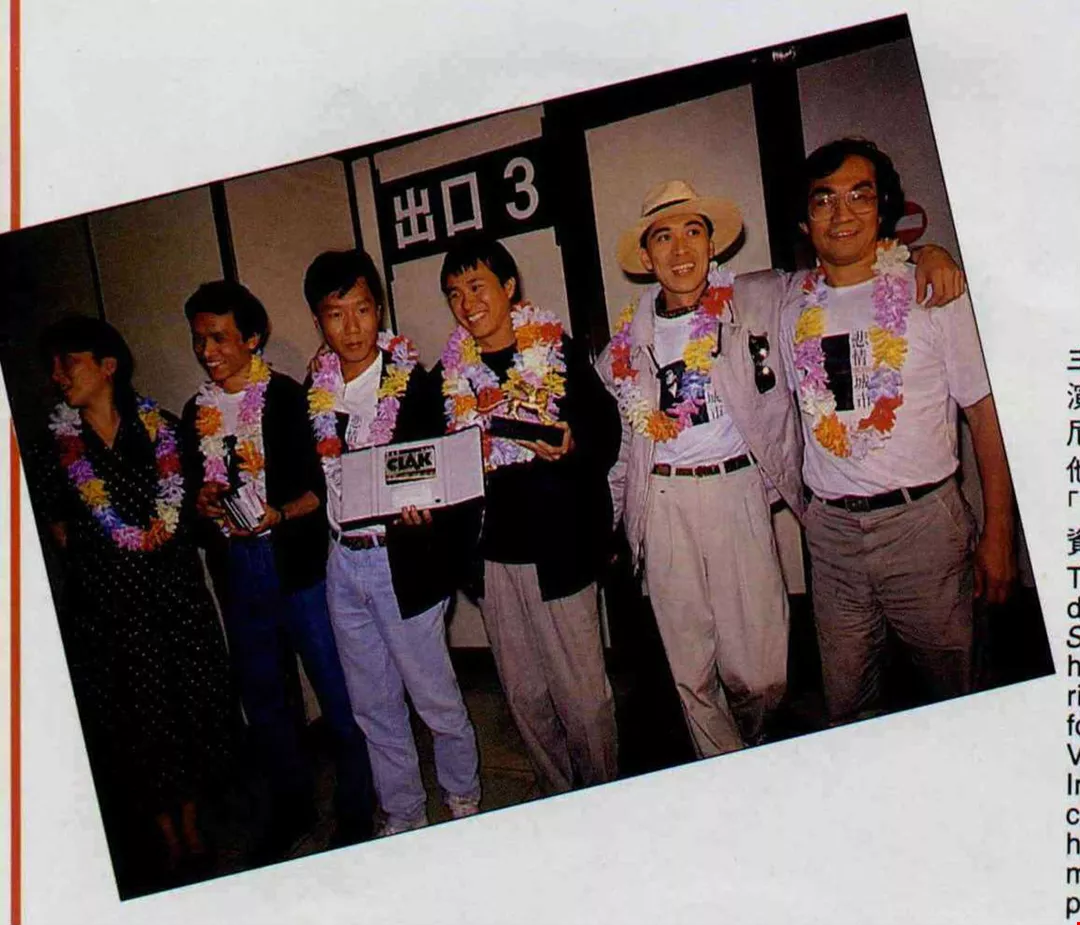
Three years ago, the director of City of Sadness, Hou Hsiao-hsien (third from the right), won the award for best picture at the Venice Film Festival. In the European film community, he already has the status of a master. (Sinorama file photo)
The new direction of new movies:
No matter what special quality is allowing Chinese movies to win prizes, with the steady stream of "victory news" coming from film festivals around the world, Chinese film has already established itself as "a force to be reckoned with."
In fact, it is also a golden age for movies on this side of the Taiwan Strait. Besides Ang Lee, there was Stan Lai's Secret Love for the Peach Blossom Spring, which experimented with form, and also Tsai Ming-liang's Rebels of the Neon God, which turned its focus on the current state of the society. Thus Taiwan film appeared in several guises at the Berlin International Film Festival this year.
Stan Lai, who has abundant experience in directing plays, skillfully combined two plays--Secret Love, a modern tragedy, and peach Blossom Spring, a classic comedy--to make his film. The movie critic Li Yu-hsin thought that the importance of this film in material, form and content exceeded that of the films of Edward Yang and Hou Hsiao-hsien: "It found and created new possibilities for Taiwanese Film."
Rebels of a Neon God describe four teenagers who hang out in the declining West Gate Area of Taipei. Two of them specialize in ripping off integrated circuit boards and video machines, one is an attendant at an ice skating rink, and the other is a student at a cram school. It is a deeply etched portrait of youths wasted by consumerism, of a "dreamless generation" that won't accept the values of their elders.
The three films shown on this occasion each have their own style. "They are completely different from pictures by Hou Hsiao-hsien or Edward Yang which carry a great historical weight and explore vital topics from the history of Taiwan," says Chiao Hsiung-ping. The image of the new films has changed, thus attracting countless foreign critics and viewers.
The fruits of the lonely battles fought by Taiwan films at international festivals in the past have added up to produce the current, most-successful ever international promotion. "You could say that The Wedding Banquet is a return on our long-term exposure abroad," notes Chiao.
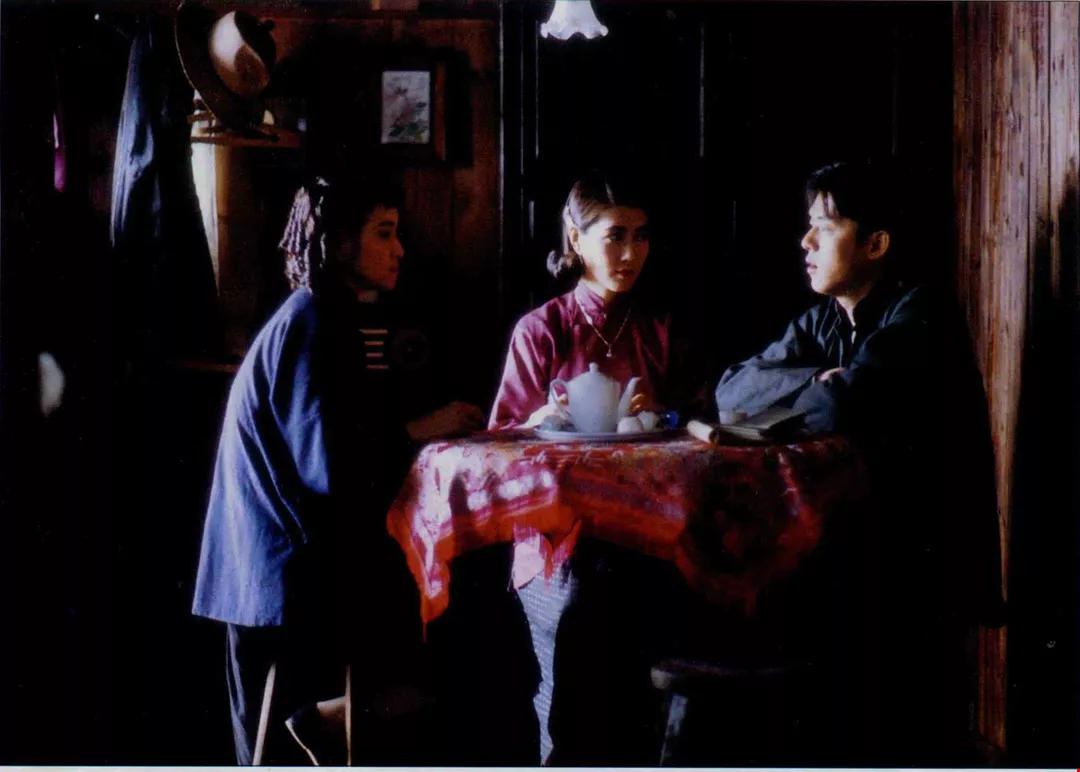
Hou Hsiao-hsien's new film, The Puppet Master, is a captivating period piece. The organizers of the Cannes Film Festival, which will be held in May, have already told Hou that they hope he can participate. (photo courtesy of ERA films)
Golden opportunities:
The success of Taiwan's new films in the international cultural field of battle has started a roll for box offices that began abroad and is making its way back home.
After City of Sadness won its prize, total take in Taiwan and abroad reached NT$120 million, a box office figure that no other film has yet approached. It was also the vanguard in the penetration of the Japanese market by Taiwan movies, and ERA International, which distributed the film, bought the Tokyo rights for 20 million yen. In Japan they didn't employ the method of showing the film in 100 large theaters at once, but played it in 260-seat mini-theaters in Tokyo. Once it was put on, it was held over for a half year, quite a successful outcome.
Edward Yang's fame is no less than that of Hou Hsiao-hsien. Because of the success of City of Sadness, Japanese distributors have great confidence in Taiwan films. When A Brighter Summer Day was still in the later stages of production, Central Motion Picture Studios sold the Japanese rights for US$600,000.
The achievements of Hou and Yang in international settings have definitely paved the way for latecomers.
.jpg?w=1080&mode=crop&format=webp&quality=80)
Look East:
The Wedding Banquet opened on March 5. Taking advantage of the whirlwind of Berlin, there was a tremendous change in the original structure of the market. Some films left the field to protect themselves, and theaters in the south received instructions to show originally scheduled films only after this one.
In Berlin, not only did the picture win the top prize, more than 40 national film distribution companies from abroad came forward to discuss international film rights. Central Motion Pictures has already signed contracts with 15 distributors, for a total amount of more than US$2 million (more than NT$50 million). If you add on the domestic box office, the profit on the NT$22 million production could be considerable.
Hsu Li-kung, assistant general manager at Central, states that the success of The Wedding Banquet gives them confidence about expanding into foreign markets. But one shouldn't have excessive expectations when just starting out. "If we can first bring in Southeast Asia, that would be something."
Chiao Hsiung-ping reminds those in the industry that Japan itself has a powerful film industry, and there is no way for Taiwan to compete with their commercial films. On the other hand, the Korean market is very large. It is said that these days if a film just has Lin Ching-hsia's name on it, you can sell it for US$1 million.
Perhaps winning a prize does help at the box office, but it must be remembered that "this is something that happens, not something one can deliberately pursue." Besides relying on the strength of the film itself, it is necessary to rely on the depth of the domestic film industry.
"Winning a prize is a good one-off advertisement, but it can't necessarily compete with the intensive promotions for Hong Kong films," warns Hsiao Yeh. Ang Lee used the most simplest form to achieve the highest honor, clearly exceeding all expectations. His success also makes many critics wipe the cold sweat off their brow on his behalf.
The golden mean:
Many people see Ang Lee's success as an affirmation of the techniques and forms of American independent films--lacking a big cast, choosing actors entirely based on the direction of the script, without time pressures that force people to cut corners. But as Hsiao Yeh sees it, Lee is returning to the traditional story-telling style, with a build-up, conflict, and conclusion. This picture boosted the morale of other film makers, letting them know that they needn't completely follow in the footsteps of Hou Hsiao-hsien or Edward Yang; Taiwan films should develop in a new direction.
"The problem of creativity in Taiwan films lies in the fact that the proletarian class is attached to Hongkong and Hollywood films that are sensory stimulation, while elite culture is still separated by too large a gap. We have lost middle-of-the-road commercial entertainment," argues Chiao. Ang Lee proves the potential of the middle road.
What's next? How to make it so that "The Wedding Banquet" is not the exception is the next challenge for local films. There is no shortage of creative film talent in the country. Hou and Yang already have achieved their status, and there is no lack of support from producers like Chiu Fu-sheng and Hsu Feng. And there are many "cutting edge" young directors just waiting for their support. Many people are hopeful that Lee's success will make local investors willing to "take a risk" and give the newcomers a chance.
Ang Lee says that he has no particularly great feeling about having won this award. "The best thing was to see all the people around me being so happy." It is precisely this joy that makes people look to the future of Chinese film.
The sequel:
Naturally we cannot expect that one production will make everything all right in Taiwan films.
As for Central Motion Pictures, which is sparing no effort to cultivate new cutting-edge talents, last year results were quite good: The Hill of No Return, Rebels of the Neon God, and The Wedding Banquet were all well-received. This year several additional films have already been completed, and many more are in the planning stage.
People are concerned about whether these works, which have been given supportive funding, can pick up where the Wedding Banquet ended.
Of the new films, the one that raises the greatest expectations is Hou Hsiao-hsien's The Puppet Master. The Cannes Film Festiival. scheduled for May, has already indicated it wants Hou's film to participate. Because Chen Kai-ge's Farewell to My Concubine is already slated to be in the competition, the Cannes Film Festival might again see the sight of two Chinese films competing against each other.
"I'm just afraid we won't be able to keep it up. If we go on like this passing the torch from one film to the next, won't Chinese films be able to stand up and be proud?" inquires Hsu Li-kung optimistically.
From going abroad seven or eight years ago to participate in any film festival large or small to having the organizers of internationally recognized film festivals compete to invite them, Taiwan films have traversed an arduous road, and many domestic film workers cannot but be moved. But Chinese movies cannot rely entirely on foreign praise: "What those who work on films wish most is still that their works will be affirmed by Taiwan audiences," concludes Hsiao Yeh.
From the box office records of Western or Hong Kong films, you can tell that Taiwan has never lacked for an audience. The problem has been in the quality of domestic films. Thus, even when foreign film festivals "add luster" to Taiwan films, those in the film industry in fact most hope for the applause of our own viewers.
[Picture Caption]
p.32
The Wedding Banquet was indeed a cause for celebration by the film industry in Taiwan: It took the Golden Bear at the Berlin International Film Festival. (photo courtesy of Central Motion Picture Co.)
p.33
R.O.C. directors are no strangers to success at the Tokyo Film Festival: Edward Yang and Stan Lai have both won awards here. (photo by Huang Li-li)
p.33
City of Sadness won the Golden Lion at the Venice Film Festival, launching work by R.O.C. directors into the front ranks of international film. (Sinorama file photo)
p.34
The director of The Wedding Banquet, Ang Lee (in the middle), and actors playing important roles in the film have been charmed by the The Berlin International Film Festival's Golden Bear. They have been hotly sought after by the media since they've returned to Taiwan. (photo by Diago Chiu)
p.35
The scene of the Chinese-style wedding in The Wedding Banquet has turned Chinese and foreign audiences alike to laughter. (photo courtesy of Central Motion Picture Co.)
p.36
Three years ago, the director of City of Sadness, Hou Hsiao-hsien (third from the right), won the award for best picture at the Venice Film Festival. In the European film community, he already has the status of a master. (Sinorama file photo)
p.37
Hou Hsiao-hsien's new film, The Puppet Master, is a captivating period piece. The organizers of the Cannes Film Festival, which will be held in May, have already told Hou that they hope he can participate. (photo courtesy of ERA Films)
p.39
Edward Yang, the director of A Brighter Summer Day, has lots of experience in participating in international film festivals. He deserves a lot of credit for helping to pave the way for domestic productions to move onto the international stage. (photo courtesy of Atom Films, Theatre & Creatives Co.)
p.40
Before being shot as a film, Stan Lai's Secret Love for a Peach Blossom Spring was a play. It is rather experimental in form. (photo courtesy of The Performance Workshop)

@List.jpg?w=522&h=410&mode=crop&format=webp&quality=80)


