Garden of Glass--A Visit to the Grand Crystal Museum
Tsai Wen-ting / photos Pu Hua-chih / tr. by Christopher MacDonald
May 2000


It is said that in Buddhist heaven the ground is made of colored glass while blossoms of precious stone sparkle on the trees. In Taiwan there is just such a place, a "glass garden" where visitors can learn the story of glass in China and the West, and admire the glittering creations of glass art masters from Taiwan and around the world.
The museum, which opened last fall, occupies a modern, white structure on the outskirts of Taipei, near the Kuandu stop on the Tanshui MRT line. Visitors are first greeted by the sight of the museum's broad front courtyard, which is crossed by a channel of crystalline water. Sunshine reflected from the ripplets twinkles against the glass expanse of the building's walls and doors, forming an appropriate welcome for newcomers to the Grand Crystal Museum, Taiwan's first museum of glass.
World of glass
It's mid-April in Taipei, and a wintry dampness lingers in the air. In the museum's demonstration workshop a group of visitors from Hong Kong have donned protective goggles and are standing around a small furnace, heated to over 1000_C. A bulb of molten glass is withdrawn from the furnace on the end of a steel rod, and the workshop fills with the hissing of steam as the rod is plunged into water to cool.
Huang Kuo-chung, who has brought the group of a dozen or so colleagues to Taiwan to learn about glassmaking, is the founder of the Glass Studio in Hong Kong. He is impressed to find Taiwan home to an institution dedicated to promoting glass art, and occupying a relatively large site.
The creative director of the Grand Crystal Museum, Heinrich Wang, comments: "For me, the primary goal of the museum is to bring the public closer to glass art."
On entering the museum, visitors first encounter a display summarizing the history of glass in both the West and in China. Other parts of the museum focus on overseas artists, Buddhist themes, and the glass works of Heinrich Wang. Together with the Chinese-style courtyard these combine to create a veritable "garden of glass" whose brilliant, translucent displays positively light up the hearts of those who visit.
"When we began planning the museum our aim was to bring together all kinds of different objects, so we collected various items with different uses," explains Wang. The museum display thus begins with a lightbulb, as a way of introducing visitors to the importance of glass in everyday life. But Wang subsequently decided to develop the project as more of an "art museum," in view of the limited space and financial resources that were available and given the fact that glass art was his own area of expertise. "Displaying things that are attractive ought to be the best way of encouraging people to feel an affinity for glass," says Wang.
Seeds of glass
In recognition of this being both a Dragon year in the Chinese calendar and the start of a new millennium in the Western calendar, the Grand Crystal Museum has been running an exhibition on the theme of dragons. The centerpiece of the exhibition is a specially crafted work entitled "Millennium Dragon-Four Blessings," in which the sinuous body of a cloud-borne dragon is circled into the form of a hollow sphere, symbolizing the creature's latent power as it girdles the universe. Other glass dragons in the exhibition can be seen curling around a tall hat-symbolic of wisdom, cavorting on the surface of a lucky ingot, and standing proud in the stately form of the dragon king. What radiates from this glittering assemblage is the Chinese fascination with yin and yang, and with the lifelong pursuit of wealth, status and success. Visitors often find it hard to tear themselves away.
The seed of the idea for this entrancing garden of glass was planted in Heinrich Wang's childhood, by a French-made Lalique crystal paperweight in the form of a calf. Wang, who has worked as a film director, cameraman, actor and furniture designer, says he has pursued creativity and fulfillment in every realm of art that he has tried. One day he casually picked up the paperweight, which had been around for over ten years, and observed for the first time how light was refracted from its different facets in a beguiling range of colors. Thus it was that in 1987, when glass art was still totally unknown in Taiwan, Wang took himself off to Detroit in the US to study glassmaking, and then traveled to see major glass museums in the US, Germany, Italy and Czechoslovakia. "That was when I began thinking about setting up a museum of glass in Taiwan," says Wang.
Wang packed ten years of learning into the space of just two years, before returning home to open Taiwan's first glass studio, and it was there that he began disseminating the skills of glass art and holding exhibitions of glasswork. As Taiwan's only member of the international Glass Art Society, Wang came to know top glass artists from around the world and became the prime mover for interaction in the field between Taiwan and elsewhere. Within 12 years, his dream of establishing a glass museum came true.
United Nations of glass
The museum was inaugurated with a major international exhibition entitled Appointment with the Masters, featuring works from Kamenicky Senov in the Czech Republic-the world's oldest school of glass art-and from Zeleny Brod, the major academy for glass artists in that country. Most of the featured artists hailed from the North Bohemia region, where they had learned glassmaking as children before going on to train or work in glass institutes, factories, museums and studios. It is a region that has been home to a rich culture of glass art and production for over a century.
Almost all of the pieces in the Grand Crystal Museum's collection are masterworks. For example, there's a little glass case, no bigger than the palm of a hand, decorated on its lid with a freehand brushwork-style rendition of a crane, and lined on the inside with meticulous little rows of fruit. The case was made by the Japanese artist Higuchi Shinichi using the pate de verre casting method, and is priced in the US$6,000-7,000 range.
Another of the works on display is by the Czech master Brestislas Novak, who is also known as the "Light Catcher." Novak works with optical glass which he cuts, grinds and burnishes, using geometric forms and curved lines to orchestrate the play of light and shade within the glass as if conducting a piece of music. There is also a work by the American Michael Rogers, comprising bottles within a bottle, the surface of which is inscribed with densely written script describing the artist's mood and thoughts.
A stroll through the Grand Crystal Museum brings the visitor into proximity with works from a number of leading contemporary glass artists. Much of the credit for the quality of the collection belongs with Heinrich Wang and other artists, who generously supplied the museum with world-class works that a private institution of its type would otherwise have been unable to afford.
Pictures in the desert
The museum aims to fulfil an educational function, and its first gallery gives a written and pictorial account of the history of glass, along with the various methods of making the material.
Glassmaking originated in the Middle East. According to the first-century Roman historian Pliny the technique was discovered around five thousand years ago by Phoenician traders on the Mediterranean coast. A crew of traders camping on the beach rested their cooking pots on bricks of natron, a sodium-carbonate-based mineral that they were transporting, and noticed that vitreous strips were formed when the heated mineral fused together with sand.
3,500 years ago people in Egypt and Mesopotamia had already mastered the core-forming method of glassmaking, in which molten glass was extracted from the crucible on the end of an iron bar that had first been wrapped in a mixture of clay and horse manure. Threads of colored glass were then wound around the surface and decorative wave patterns were added. Once the glass cooled the core was scooped out, leaving a flask for storing perfume or collecting teardrops.
Around 2,000 years ago the technique of glassblowing was developed under the Romans, and glass began to become less of a luxury item. Indeed, the material now took its place in Western culture, with almost all of the main glassmaking skills, including cameo engraving, coloring, casting, cutting and grinding, being mature by this time. It was from the 13th to 15th centuries that the art of glassmaking reached its apogee in the West, when the master craftsmen on the Venetian island of Murano commanded incomes that would make an aristocrat envious. Stained glass windows were a prominent feature of northern Europe's gothic churches, while the walls and domes of the Byzantine churches of the south of the continent were decorated with biblical tales rendered in mosaics of multicolored glass tiles. It was as if glass, this brilliant, lustrous substance, could actually bring people closer to heaven. Even to the present day, many regions of Europe maintain a thriving glass industry or have a tradition of glass handicrafts.
One of the display areas in the Grand Crystal Museum is devoted to glassware from ancient China. Though this part of the collection is not large, it is richly representative and includes pieces from all historical eras, whether they were made in China or just excavated there. There are glass beads dating back to the Warring States period (475-221 BC) and snuff bottles from the Qing dynasty (1644-1911). Perhaps the most unusual exhibit is the "glass chemise," made from thousands of glass beads loosely woven together. It is said to have kept the wearer cool and sweat-free, and was favored as an undergarment by leading Qing-dynasty Peking opera performers.
Re-creating Chinese glass
Since the museum formally opened last November it has received over 20,000 visitors. Domestic visitors tend to be interested in the work of overseas artists, along with the on-site demonstrations of glassmaking, while visitors from abroad are more drawn by the display of ancient Chinese glassware plus the Chinese-style works produced by Heinrich Wang using the lost-wax technique.
The lost-wax method of casting glass, which dates back to the pharaohs of ancient Egypt, involves 40 to 50 separate stages. Works produced using this method are prone to cracking during the cooling process due to the different rates at which various parts of the article cool. Owing to its complexity and low yield rate, the method is practiced by only a handful of glass artists around the world.
One part of the museum groups together works that have a Buddhist theme, and here the museum guide directs people's attention to a milky-white jade-like Guanyin figure with multiple arms. The goddess holds different articles in each of her hands, symbolizing the boundless scope of Buddhist dharma. Glass works with complex designs like this are particularly liable to crack as they cool. Smiles Heinrich Wang: "When I used to make films, things didn't always come out perfectly, but you could always use a good 60% of the footage. With glass however, often you open the mold to discover that you have earned zilch for your labors."
What draws Wang to the lost-wax method is that it enables him to use various kinds of mold assembly for casting a range of complex designs, with absolutely no limits to the artist's conception or to the size of the work and thickness of the glass. And one of the things that attracts international glass artists to the Grand Crystal Museum is that it shows how the limits of lost-wax casting are being tested in Taiwan.
In touch with glass
The on-site demonstrations and interactive parts of the museum's program are based around the far more accessible method of blowing glass, through which the public can really enter the colorful world of glass. The instructor demonstrates how glass is blown and invites visitors to "feel" for themselves the malleability of the material. The museum also runs an annual Glass Exploration retreat, where students at various levels of proficiency are taught how to make glass. For participants, the most rewarding part of the retreat is when they get to blow and shape the glowing, molten substance into forms of their own imagining, which finally cool into crystalline, finished works. In this way, glass art is no longer remote and unaffordable.
The museum also runs a series of one-day and five-day workshops throughout the year. In just three hours participants can color their own drinking glasses, brush pots and picture frames, while those on the five-day courses are introduced to such skills as glassblowing, mold-casting and lampwork.
Seeking the ancient spirit
The museum's Crystal Cafe is an important extension of the exhibition area. One wall of the cafe features a display of precious glass works set into niches, while the tables and chairs-themselves redolent of antiquity-are inlaid with thick glass tiles. The cafe's central table is eight meters long and divides the entire space in two. Seated in the cafe, which he designed himself, the ponytailed Heinrich Wang explains how the table enables groups of visiting foreign artists to sit together face to face. "It's kind of how I hope our museum can be: approachable, in that it brings people together, and long, in the sense of lasting into the distant future."
Outside the cafe, bamboo sways in the breeze while light glances off the rippling surface of the water. The building may be modern in design, but the museum exudes traditional Chineseness from every corner. Wang, a perfectionist when it comes to his art, acknowledges that glass art from China has never made much impression on the world, while glassmaking was once even regarded as a sunset industry in Taiwan. But the glass snuff bottles of the Qing dynasty bequeathed a legacy of superlative Chinese glassmaking. And furthermore, in Wang's view: "The most impressive thing was the patient dedication of those early craftsmen, because work of that pedigree could only be produced through the endless burnishing of every single rounded surface. This was also how they built up such a refined aesthetic of life." Patient dedication and a refined aesthetic: such could also summarize Heinrich Wang's ambitions for the Grand Crystal Museum and for glass art as a whole.
p.101
The soft translucence of glass helps these Buddhas, with their modernist, uncluttered lines,
to convey an aura of mercy and benevolence.
p.102
Glass may be blown, drawn, carved, fused, sandcast, cut and so on. Depending on the temperature being used there are a dozen or so ways of crafting glass, and this endows glass art with a rich variety of forms. (courtesy of the Grand Crystal Museum)
p.102
The Grand Crystal Museum houses a collection of pieces by international masters of glass art and also holds important international exhibitions-so you don't have to travel abroad if you want to see the work of leading overseas glass artists. Pictured are pieces by the renowned American glassblowing artist Michael Rogers (opposite page) and the Czech master of contemporary-style casting Miloslava Nievaldova (left). (courtesy of the Grand Crystal Museum)
p.104
Glassblowing demonstrations are given in the museum workshop, where local and foreign visitors can experience for themselves the wondrous world of glassmaking.
p.104
It's as fluid as treacle at high temperatures, but it cools as hard as ice. Glass belongs to a mutable world of hot and cold-no wonder that glassmaking attracts the involvement of so many artists.
p.106
Heinrich Wang has been a film director, actor and interior designer, but it was a glass paperweight first encountered when he was a child that inspired him to devote himself to the craft of glassmaking. Wang was the motivating force behind the establishment of the Grand Crystal Museum.
p.107
From images of dragons cavorting among the clouds, to lotus blossoms and lychee fruits-Heinrich Wang uses the elaborate lost-wax method of casting, in combination with a Chinese aesthetic, to bring Chinese glass art to new heights. (courtesy of the Grand Crystal Museum)
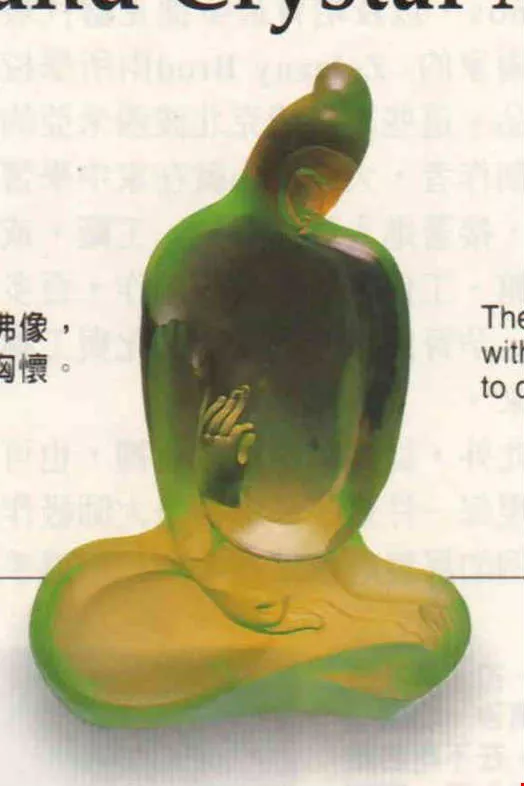
The soft translucence of glass helps these Buddhas, with their modernist, uncluttered lines, to convey an aura of mercy and benevolence.
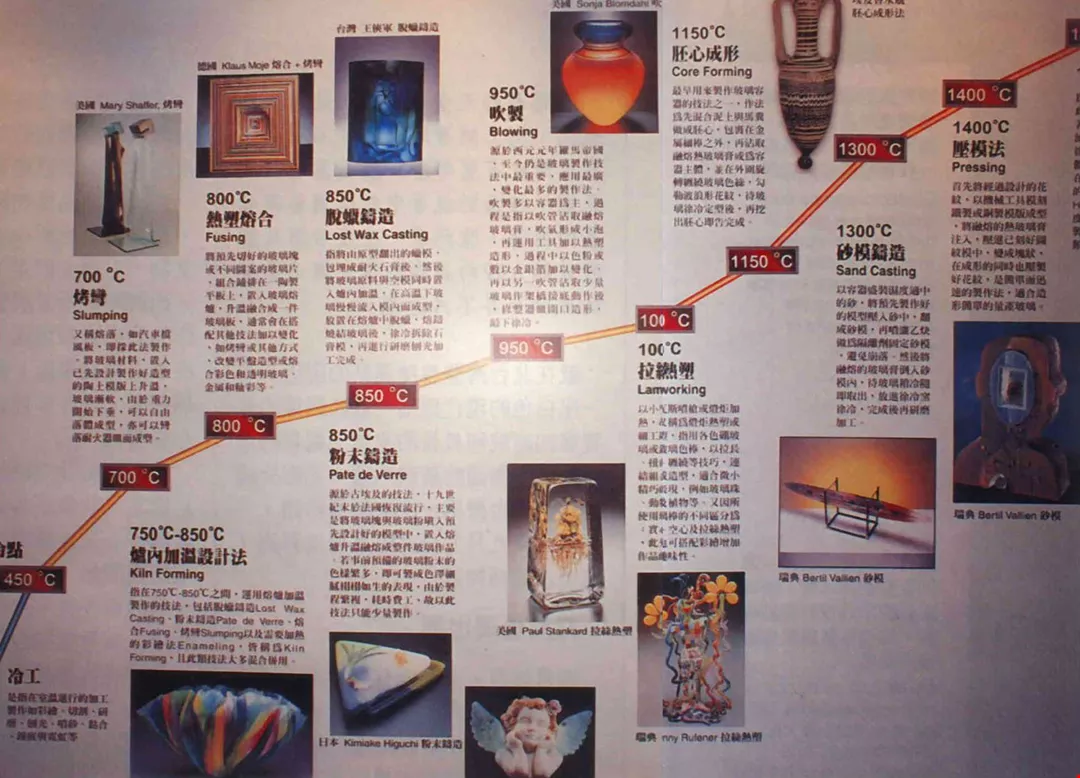
Glass may be blown, drawn, carved, fused, sand-cast, cut and so on. Depending on the temperature being used there are a dozen or so ways of crafting glass, and this endows glass art with a rich variety of forms. (courtesy of the Grand Crystal Museum)
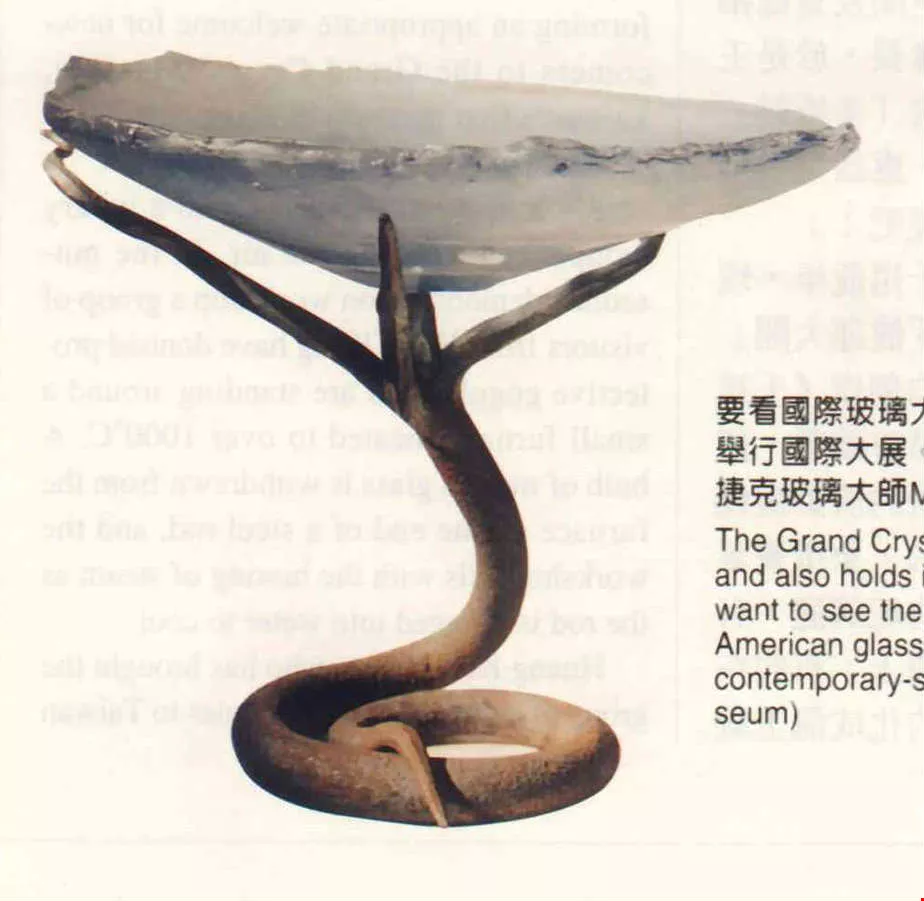
The Grand Crystal Museum houses a collection of pieces by international masters of glass art and also holds important international exhibitions-so you don't have to travel abroad if you want to see the work of leading overseas glass artists. Pictured are pieces by the renowned American glassblowing artist Michael Rogers (opposite page) and the Czech master of contemporary-style casting Miloslava Nievaldova (left). (courtesy of the Grand Crystal Museum)
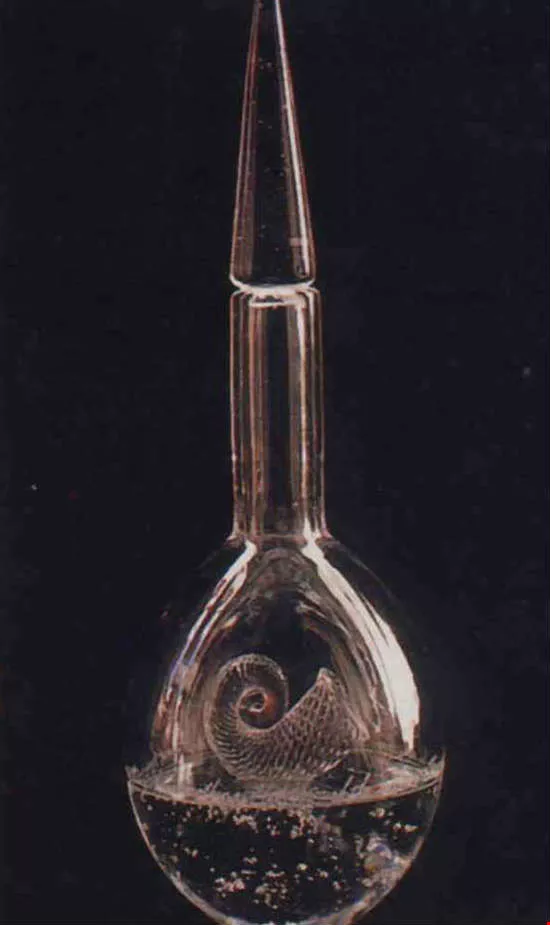
The Grand Crystal Museum houses a collection of pieces by international masters of glass art and also holds important international exhibitions-so you don't have to travel abroad if you want to see the work of leading overseas glass artists. Pictured are pieces by the renowned American glassblowing artist Michael Rogers (opposite page) and the Czech master of contemporary-style casting Miloslava Nievaldova (left). (courtesy of the Grand Crystal Museum)
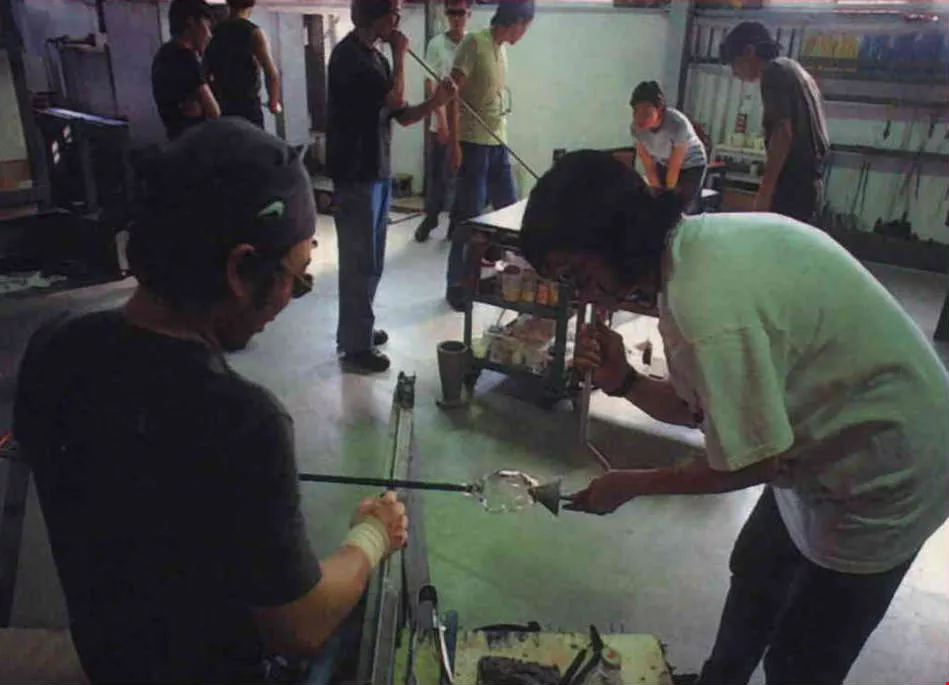
Glassblowing demonstrations are given in the museum workshop, where local and foreign visitors can experience for themselves the wondrous world of glassmaking.
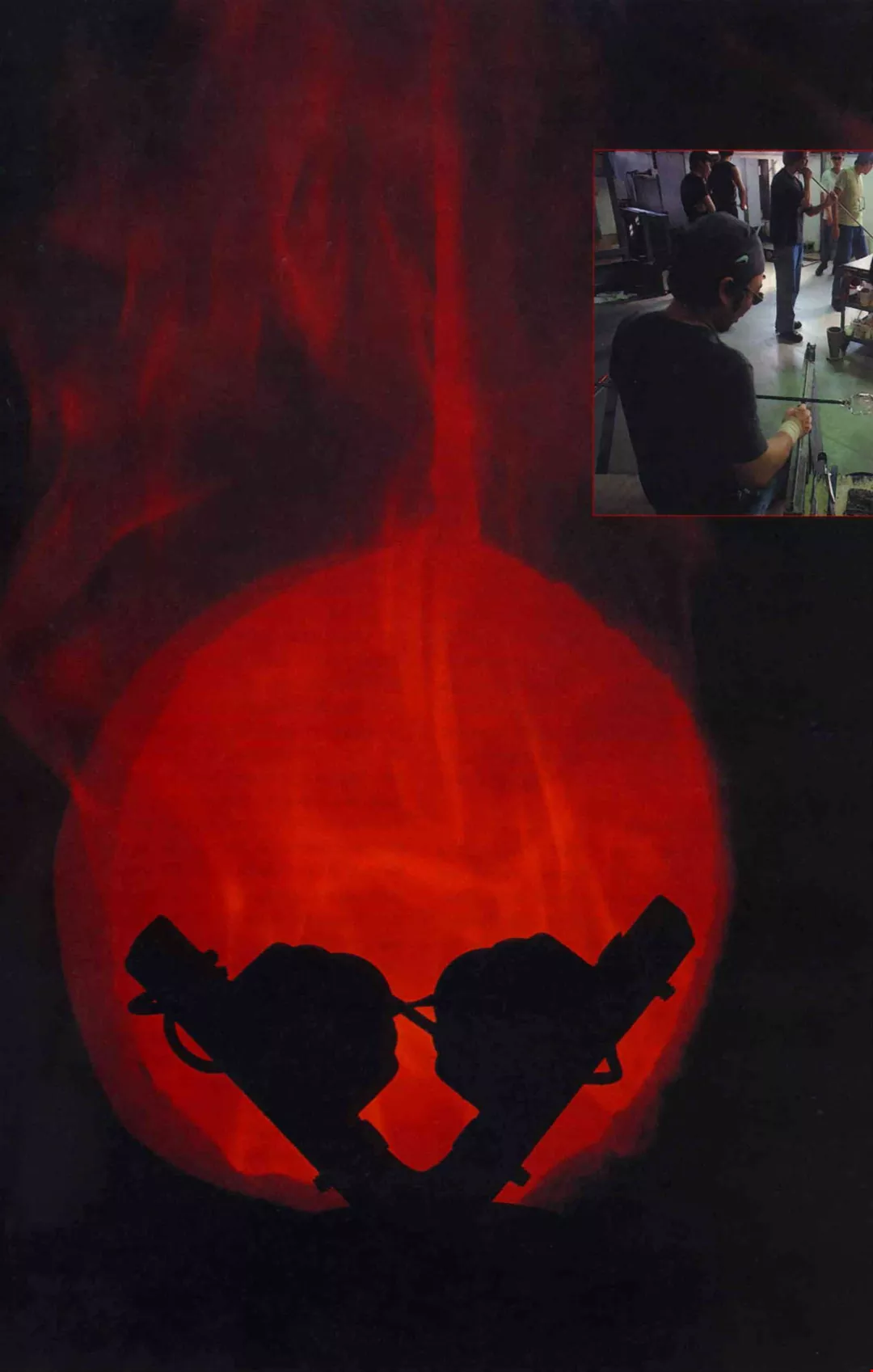
It's as fluid as treacle at high temperatures, but it cools as hard as ice. Glass belongs to a mutable world of hot and cold-no wonder that glassmaking attracts the involvement of so many artists.
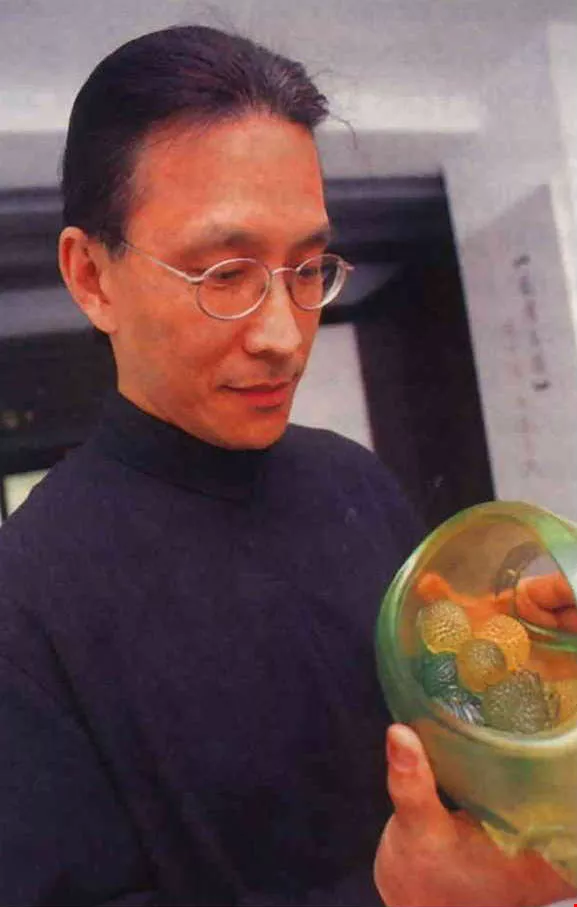
Heinrich Wang has been a film director, actor and interior designer, but it was a glass paperweight first encountered when he was a child that inspired him to devote himself to the craft of glassmaking. Wang was the motivating force behind the establishment of the Grand Crystal Museum.
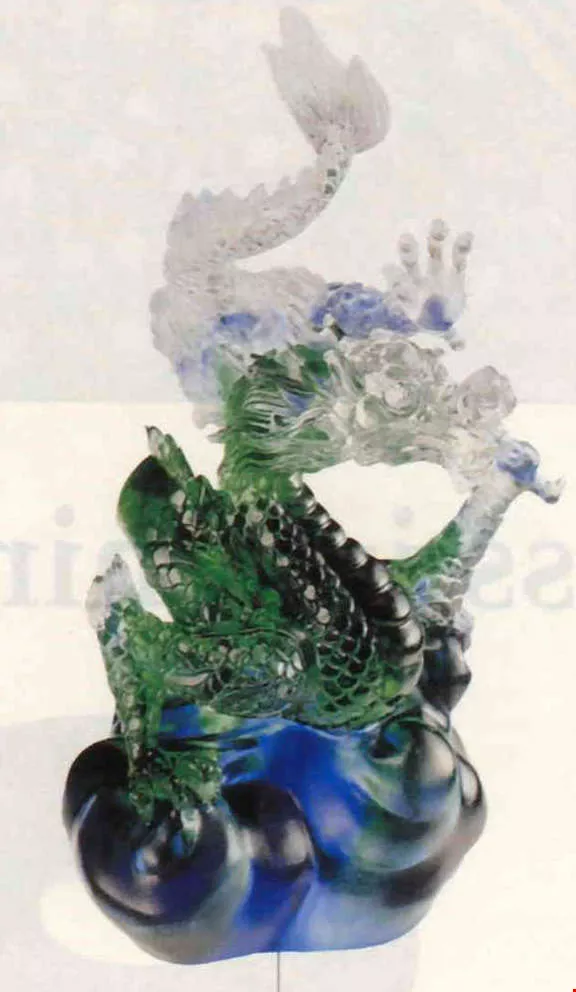
From images of dragons cavorting among the clouds, to lotus blossoms and lychee fruits-Heinrich Wang uses the elaborate lost-wax method of casting, in combination with a Chinese aesthetic, to bring Chinese glass art to new heights. (courtesy of the Grand Crystal Museum)
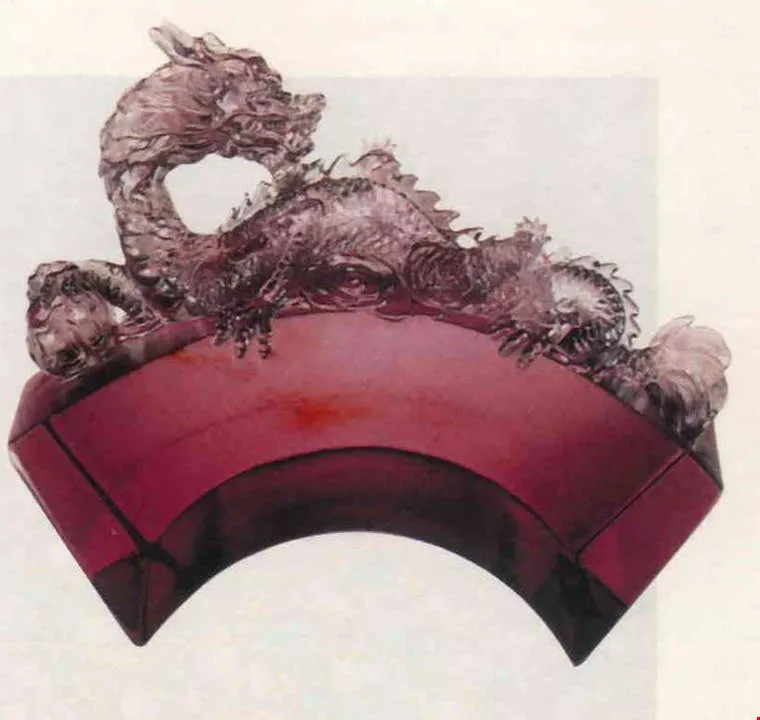
From images of dragons cavorting among the clouds, to lotus blossoms and lychee fruits-Heinrich Wang uses the elaborate lost-wax method of casting, in combination with a Chinese aesthetic, to bring Chinese glass art to new heights. (courtesy of the Grand Crystal Museum)
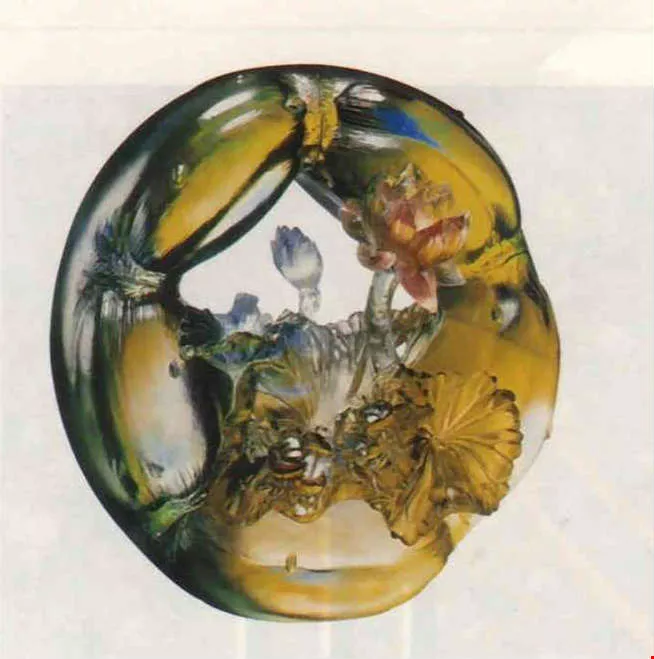
From images of dragons cavorting among the clouds, to lotus blossoms and lychee fruits-Heinrich Wang uses the elaborate lost-wax method of casting, in combination with a Chinese aesthetic, to bring Chinese glass art to new heights. (courtesy of the Grand Crystal Museum)
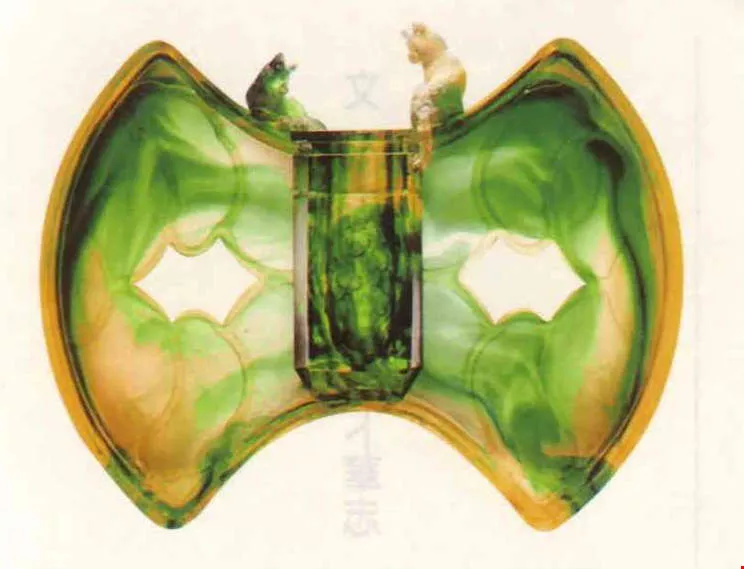
From images of dragons cavorting among the clouds, to lotus blossoms and lychee fruits-Heinrich Wang uses the elaborate lost-wax method of casting, in combination with a Chinese aesthetic, to bring Chinese glass art to new heights. (courtesy of the Grand Crystal Museum)
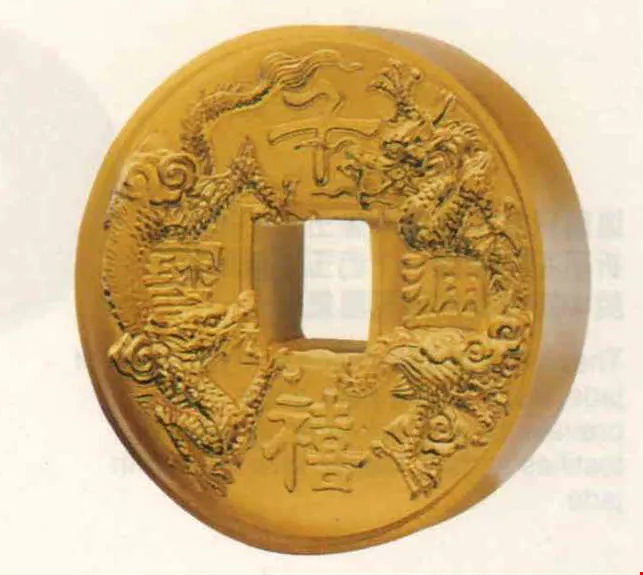
From images of dragons cavorting among the clouds, to lotus blossoms and lychee fruits-Heinrich Wang uses the elaborate lost-wax method of casting, in combination with a Chinese aesthetic, to bring Chinese glass art to new heights. (courtesy of the Grand Crystal Museum)

@List.jpg?w=522&h=410&mode=crop&format=webp&quality=80)


