Disciplined Simplicity: Former Residences of Respected Elder Statesmen
Tempest Lai / photos Lin Min-hsuan / tr. by Paul Cavey
January 2017


With Li Kwoh-ting (K.T. Li), Sun Yun-suan, and other distinguished leaders at the helm, Taiwan was able to navigate tumultuous years of crisis and step into a golden age, becoming first among the four fast-growing economies known as the Asian tigers. Discussed with great relish and nostalgia even today, this was the Taiwan economic miracle!
While strolling through south Taipei, people today can experience the past through the architecture and atmosphere of K.T. Li’s Residence and the Sun Yun-Suan Memorial Museum, both of which are tucked away in the city ’s side streets.
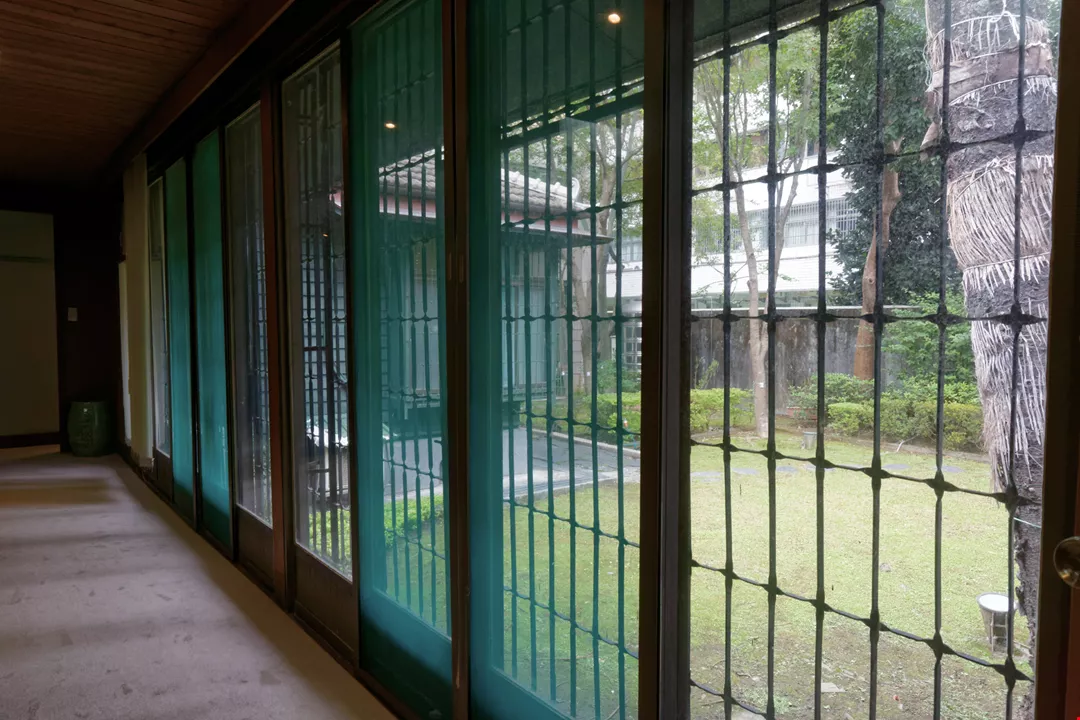
Strolling through south Taipei, we can experience the past through the architecture and atmosphere of residences from bygone days.
A national treasure of simple living
Located at No. 3, Lane 2, Tai’an Street in the Zhongzheng District of Taipei and built around 1935, the old home of Li Kwoh-ting (1910–2001) was once the official residence of a high-level civil servant from the Japanese colonial Bureau of Transportation. After World War II, it became the residence of the minister of finance. It was here that Li, known as the “father of Taiwan’s technology,” lived for nearly three decades, from 1972 until his death.
After surviving the Sino‡Japanese War and the Chinese Civil War, people hailing from various parts of mainland China decamped to Taiwan with the Nationalist government in what has been called history’s greatest exodus, and over time became part of the local population. Among them was the Nanjing-born Li Kwoh-ting, better known as K.T. Li. Funded by scholarships, he had studied mathematics and physics at Cambridge University and conducted research on nuclear physics and low-temperature superconductors. He returned to China at the age of 27 due to the outbreak of the Sino‡Japanese War. More than a decade later, he would arrive in Taiwan and plant the seeds for Taiwan’s rapid economic development.
During the war Li and his wife, Sung Ching-hsiung, moved 13 times due to wartime conditions, and in one year alone they were forced to relocate four times. Upon arriving in Taiwan in 1948, they resided in the company apartments of the Taiwan Shipbuilding Corporation in the small lanes near Linyi Street in Taipei before moving to what is today known as “Kwoh-ting Li’s Residence.”
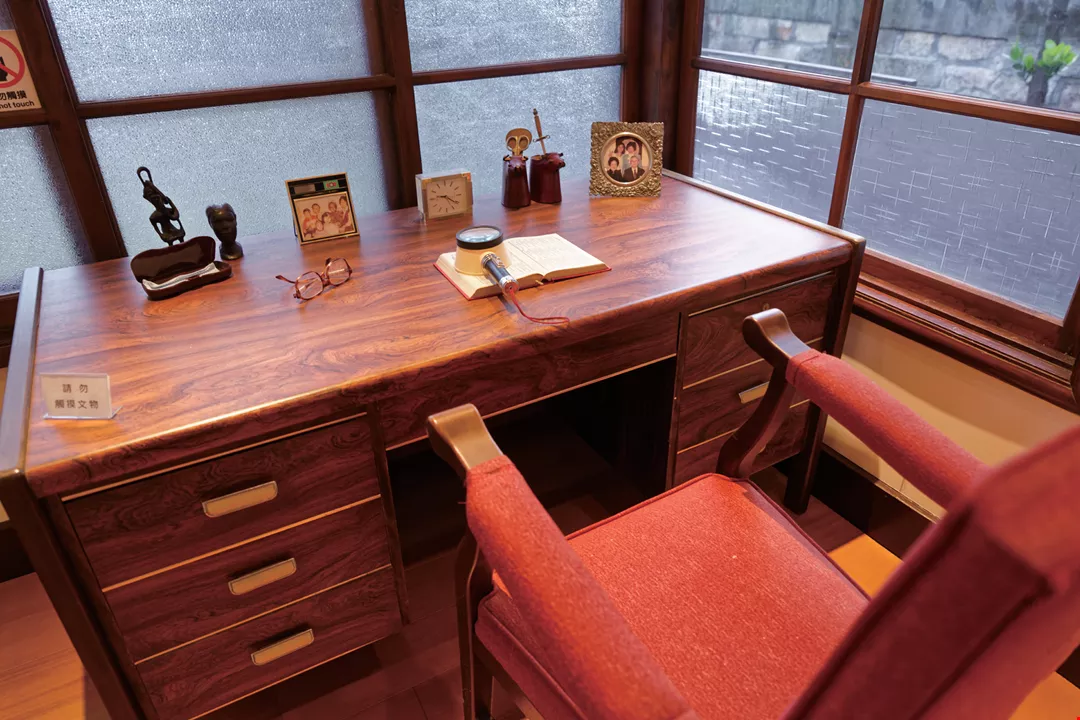
K.T. Li’s Residence is a typical example of residential architecture designed for high-ranking officials of the age, and is today protected as a historic monument. The historic site covers an area of about 1000 square meters, and the building itself something over 180 square meters. The former residence is in pristine condition, with original decorations adorning the living room and original furnishings in the study. From the bedrooms to the courtyard, flowers adorn the house much the same as during Li’s time. The walkways in front of the building are lined with starfruit, sweet osmanthus, camellias, and Chinese plum, as well as 11 cherry trees, making this a favorite spot with local people during cherry blossom season.
The main building is constructed of wood, and the interior mixes Japanese and Western elements, with rooms that flow one into another. Upon stepping into the house, the floorboards creak, and the walls and wooden doors give it the feel of a giant cupboard, leaving a deep impression on visitors. “This is one of Taiwan’s few authentic old residences!” says Wan Chi-chao, secretary general of the K.T. Li Foundation for the Development of Science and Technology.
The old residence reflects Li’s penchant for a simple, disciplined life. “When the joints of the dining-room chairs began to loosen, the Lis simply trussed them up with cord,” says Wan, as an illustration of the restraint and rectitude of the couple’s lifestyle.
Wan’s explanation of the Chinese chess pieces and walnuts set out on a low table helps visitors understand the methodical routines of Li’s life. He would walk vigorously a set distance and then place a chess piece on the table. He then marked each round of ten laps by placing a walnut next to the chess pieces, in effect creating a unique pedometer.
Wan notes that the two monthly lectures and other activities sponsored by the foundation help draw visitors to the old residence. He hopes that a plan to create a rooftop garden next year will help to reduce costs, accord with environmental trends, and reflect Li’s lifelong leadership that sought to bring Taiwan to the forefront of science and technology.
The former servants’ quarters of the old residence have also been converted into an exhibition space. Already the space features a documentary film, funded by Bruce C.H. Cheng, founder of Delta Electronics and current honorary chairman of the K.T. Li Foundation, examining the life and career of K.T. Li.
“It is thanks to K.T. Li that Taiwan has export processing zones, venture capital, an IT industry, science parks, and an optoelectronics industry,” says Sun Chen, former president of National Taiwan University, about Li, who was considered a national treasure even before his death. “While various industries took root, the economy advanced, people’s salaries rose, and life grew more prosperous, Li slowly grew old still living in the antiquated Japanese-style residence, continuing to work for the good of the country.”
Strolling through south Taipei, we can experience the past through the architecture and atmosphere of residences from bygone days.
A premier and his economic miracle
Of the “three giants of finance,” during Taiwan’s early stages of economic development, Yin Chung-jung died in 1963 and Yen Chia-kan retired due to illness in 1986. But it was K.T. Li who had the most lasting influence on and made the greatest contribution to Taiwan’s economy. In the subsequent generation, Sun Yun-suan (1913–2006), Chao Yao-dong and others built on the legacy of the three giants, and facilitated Taiwan’s transformation from an agricultural to an industrial society and the shift from traditional industries to high-tech fields.
As public figures of great stature, both K.T. Li and Sun Yun-suan worked selflessly for the good of the country. For most of their lives, neither owned property, and lived instead in government housing for two to three decades, toiling in the public interest.
The Sun Yun-Suan Memorial Museum, which opened on October 30, 2014, is located in Taipei’s Zhongzheng District at Lane 6, Chongqing South Road Section 2, near the Taipei Botanical Garden. It was Sun’s official residence while he served as premier. Constructed between 1904 and 1905, it originally served as a residence for officials from the Japanese-era Bank of Taiwan (the forerunner of today’s state-owned Bank of Taiwan). In the postwar era, it continued to house bank officials until 1978.
As premier, Sun first lived in a Japanese-era official residence on Section 2 of Jinan Road where he had been living since his days as president of the Taiwan Power Company. The widening of Jinan Road, however, reduced the size of house’s courtyard, and the tight living quarters had always made it inconvenient to host visitors. President Chiang Ching-kuo repeatedly urged a reshuffling of official residences, and in 1980 Sun moved into the new compound, which measures more than 2800 square meters. He remained there for 26 years until his death in February 2006.
When Sun moved in, however, he found that nearly half the structure had been damaged by termites. That portion was torn down and replaced with a Western-style structure, which was combined with the undamaged portion of the Japanese-style building, resulting in today’s East-meets-West appearance. Because of its historical and cultural significance, the residence, after Sun’s death, was quickly designated as one of Taipei’s historic sites and refurbished.
Cai Yijun, director of the Sun Yun-Suan Memorial Museum, enthusiastically explains that the memorial includes both the Western and the Japanese-style structures. The former focuses on Sun’s life as a public servant, the latter his private life. The reception area in the Western-style structure is the only part of the building that retains its original appearance.
In the Western-style exhibition hall, there is a small-scale replica of an obelisk with an inscription by President Chiang Kai-shek that reads “Spread light across the land.” The actual monument, which stands on the boundary between Nantou and Hualien Counties, commemorates the construction in the early 1950s of high-voltage lines to feed hydroelectric power across the mountains from Eastern Taiwan, under Sun’s leadership as chief engineer at the Taiwan Power Company. But this was far from being Sun’s only accomplishment.
Born in Penglai, Shandong Province, Sun graduated from the Harbin Institute of Technology. Just after the war, at the beginning of his time at Taipower, he gathered around him hundreds of specialists and through tireless efforts restored 80% of the nation’s electrical infrastructure, which had been destroyed during the war, in a five-month period—a powerful rebuke to Japanese taunts that Taiwan would return to the “dark ages” within three months.
The passage leading to the Japanese-style residence is adorned with family pictures, including photos of Sun dancing with his wife, Yu Hui-hsuen, laughing with his kids in the courtyard, and reading with his grandchildren while lying on the floor. Along both walls of the hallway run railings that his son had installed to help Sun learn to walk again after he suffered a stroke and was confined to a wheelchair.
The space displays Sun’s original diary and an installation that allows visitors to flip through a digitized version. It includes a passage by Chiang Ching-kuo that still moves people to tears. “To me, you are more than a brother,” it reads. “Once I found out you had had a stroke, I came to see you 28 times.”
In photos, Sun takes on the stern, determined appearance of “the eternal premier” (a nickname by which he was known), but love letters to his wife show a more delicate side. “My most beloved companion,” he begins with his typical form of address. “People say that love can be as deep as the ocean, but my love for you is deeper even than the deepest parts of the Pacific, the deepest of all oceans.”
With the melodies of Chopin floating through the exhibition hall, one can imagine the charming spectacle of Sun and his wife dancing lightly to the strains of music.
Under the skilled hands of an architect, the old chauffeur’s quarters have been remodeled to serve as a small new exhibition space containing cultural and artistic products. The exterior has been fitted with plate glass that reflects the greenery of the garden. In order not to interfere with the visual integrity of the main building, part of the new exhibition space has been moved underground. It provides a venue for, among other things, lectures, meetings, and cultural activities, such as the regular meetings of the TSMC Literary Salon, cosponsored by the TSMC Education and Culture Foundation and the United Daily News. By honoring his lofty ideals, the memorial hopes to blend the old and the new, operate as a sustainable enterprise, and introduce the public to the immortal spirit of Sun Yun-suan.

Strolling through south Taipei, we can experience the past through the architecture and atmosphere of residences from bygone days.
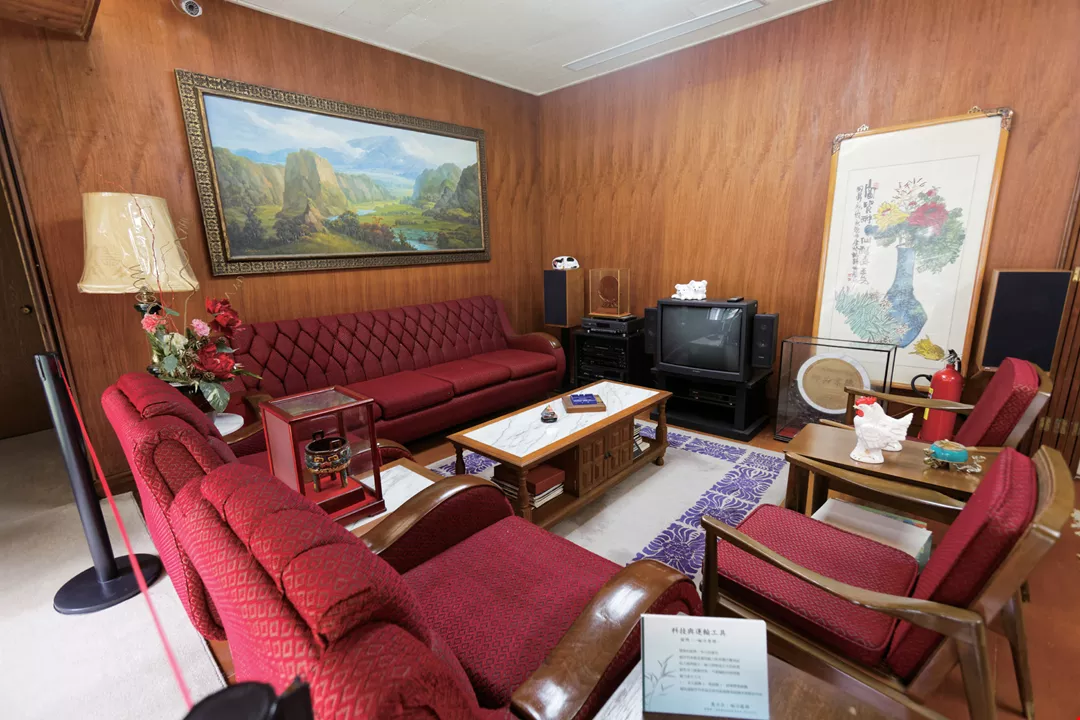
K.T. Li’s residence is well preserved. The decorations in the living room, the furnishings in the study, the bedrooms, and even the plants in the the courtyard are just as they were in Li’s lifetime.

K.T. Li’s residence is well preserved. The decorations in the living room, the furnishings in the study, the bedrooms, and even the plants in the the courtyard are just as they were in Li’s lifetime.

K.T. Li fashioned a primitive pedometer using just Chinese chess pieces and walnuts, an example of his life’s stoic simplicity

K.T. Li, thorough in all things, elaborates on his economic concepts through charts and data. His persistence allowed him to achieve great things as a public servant. (courtesy of K.T. Li’s Residence)

K.T. Li’s calendar, of the type he used for years, sits on the front of his desk. The last entry is from May 20, 2001, the day Li collapsed and was rushed to the hospital.
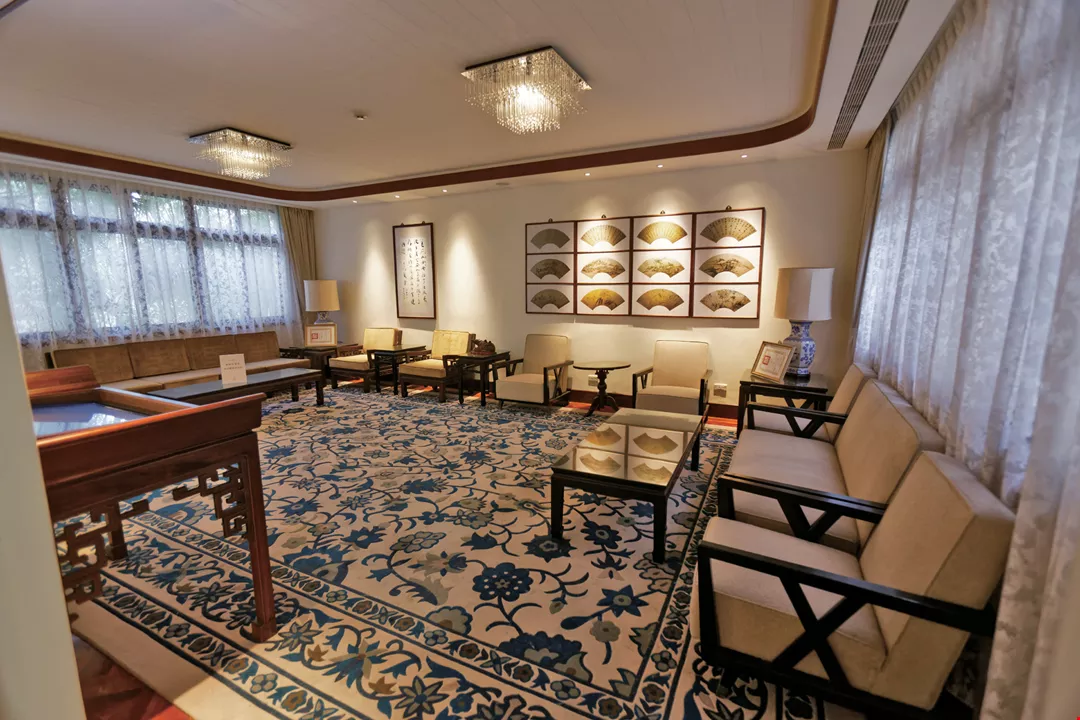
Sun Yun-Suan Memorial Museum
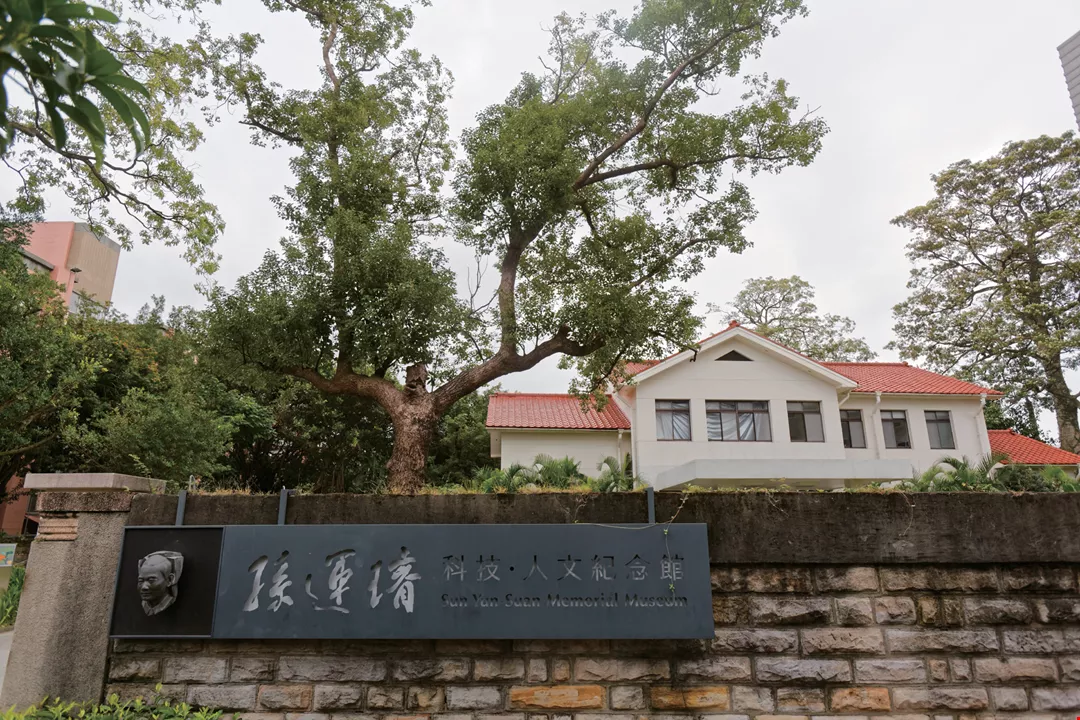
Sun Yun-Suan Memorial Museum

Sun Yun-suan inspects the progress of a construction project. (courtesy of the Sun Yun-Suan Memorial Museum)
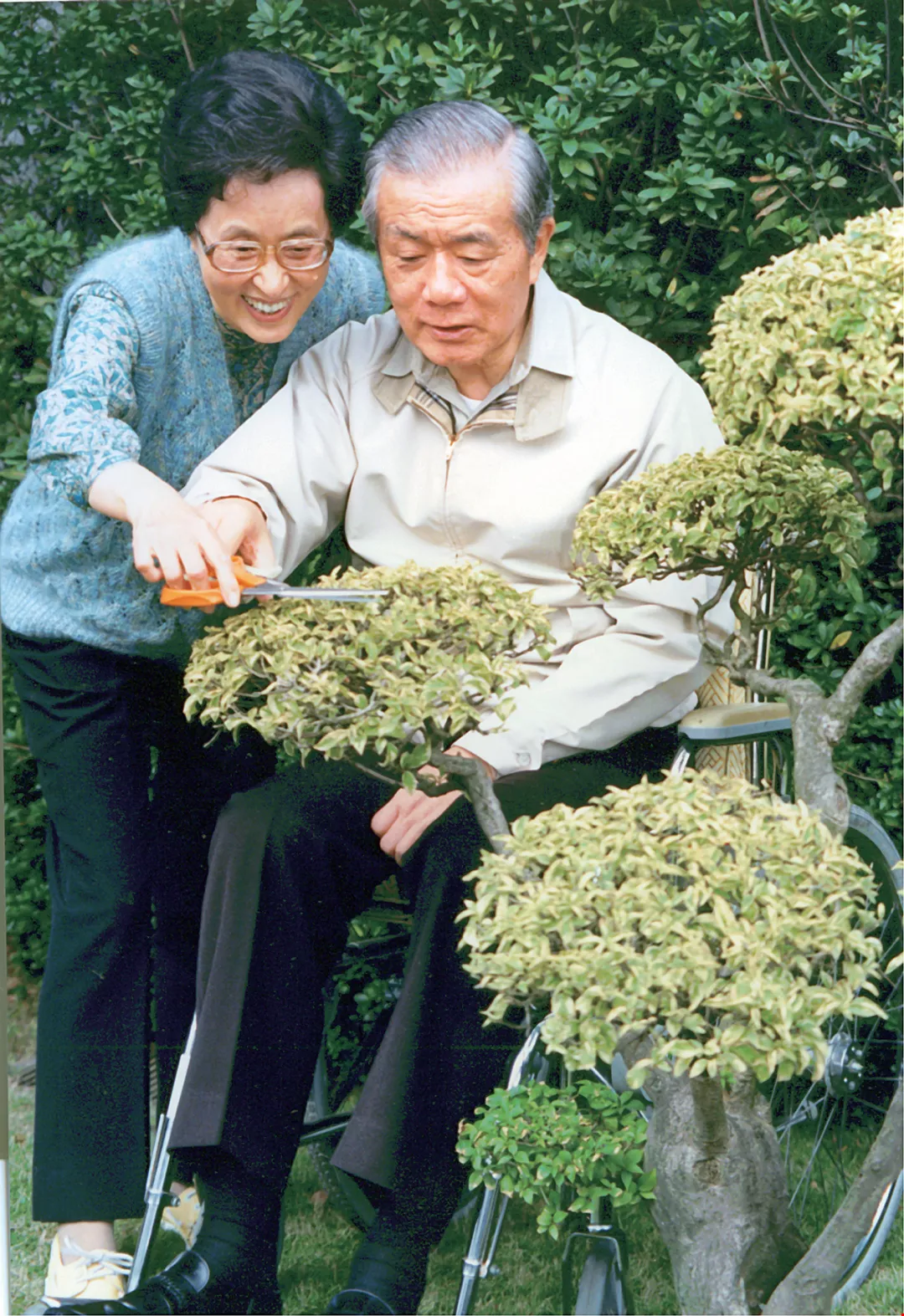
Sun and his wife, Yu Hui-hsuen, at home in their twilight years. (courtesy of the Sun Yun-Suan Memorial Museum)
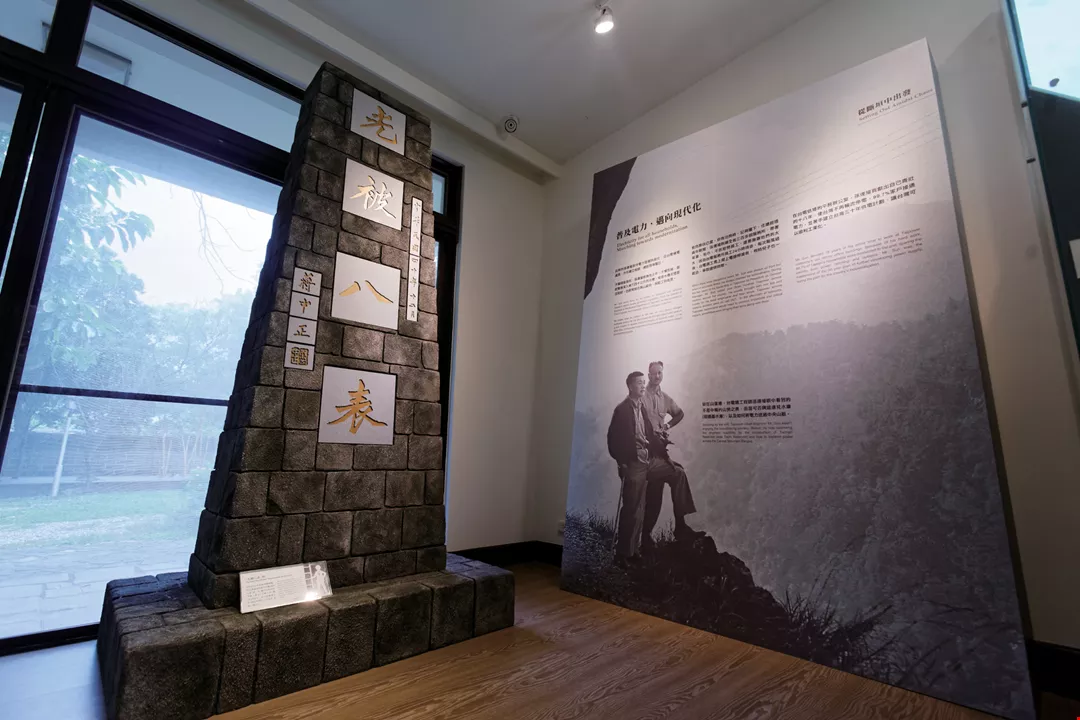
The exhibition hall features an obelisk with an inscription by Chiang Kai-shek reading “spread light across the land.” It reflects Sun Yun-suan’s success in the arduous task of building an east–west power transmission line across Taiwan’s high mountains while he was chief engineer of the Taiwan Power Company.
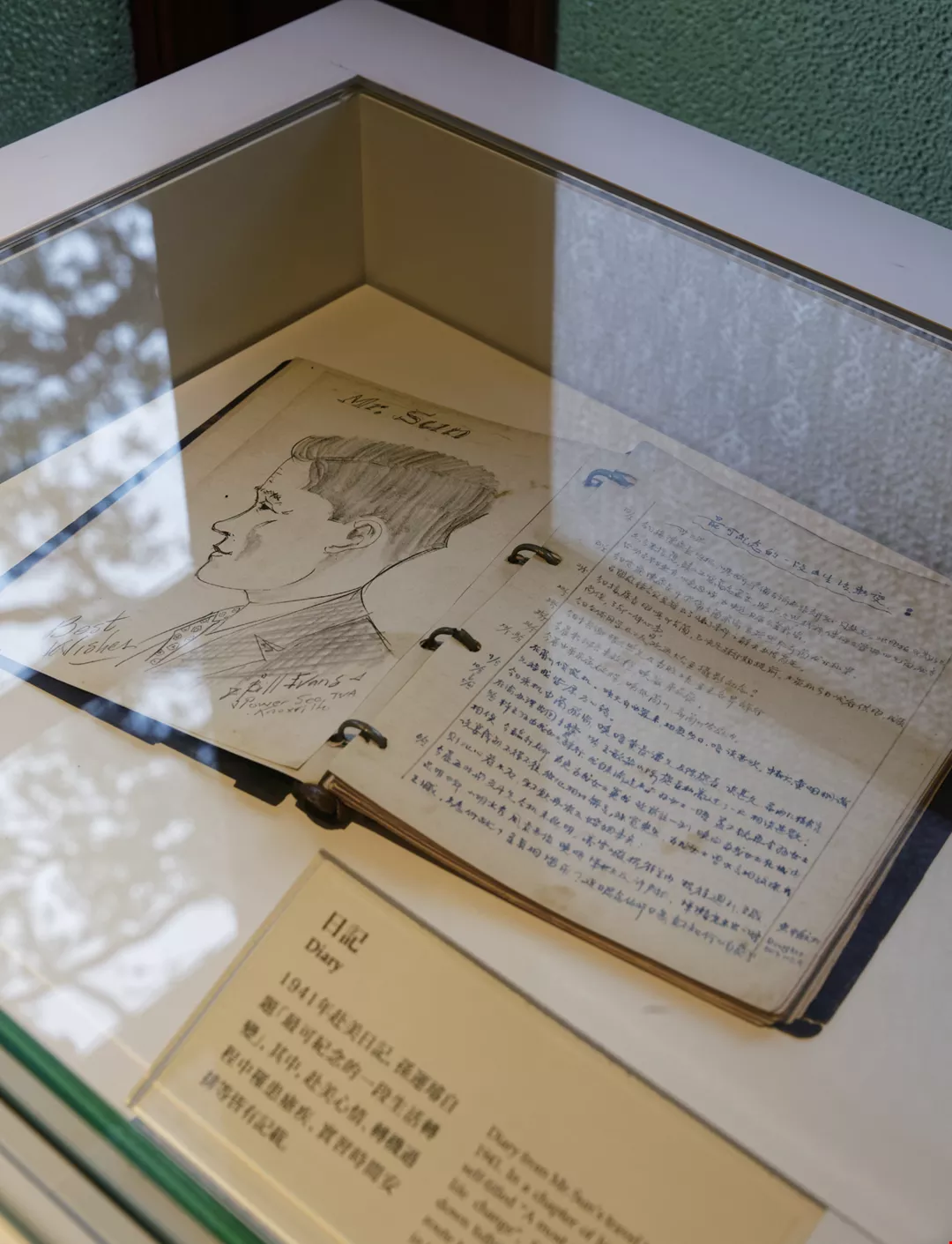
Sun Yun-suan’s original diary is on display in the museum. The passages provide a blueprint for Taiwan’s economic development.
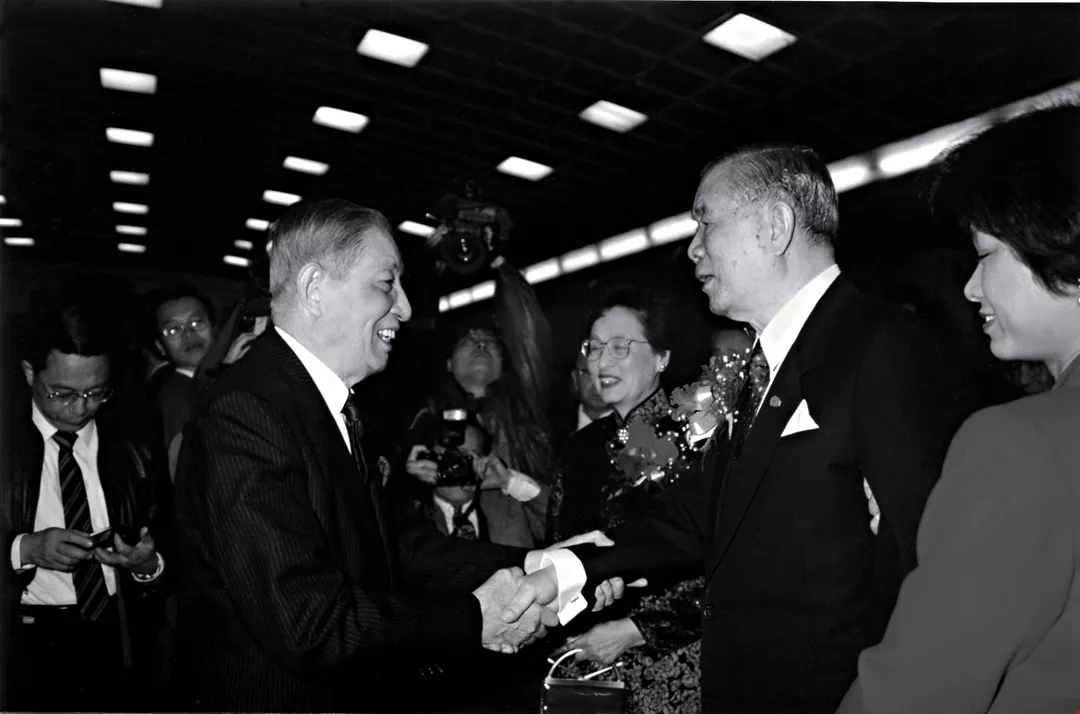
K.T. Li (left) and Sun Yun-suan (right) advocated for the founding of the Hsinchu Science-based Industrial Park—now known as the Hsinchu Science Park—and formulated early national policy for Taiwan’s technology sector. Both are figures of national stature and unquestioned integrity who worked tirelessly to promote the national interest. (courtesy of the Sun Yun-Suan Memorial Museum)
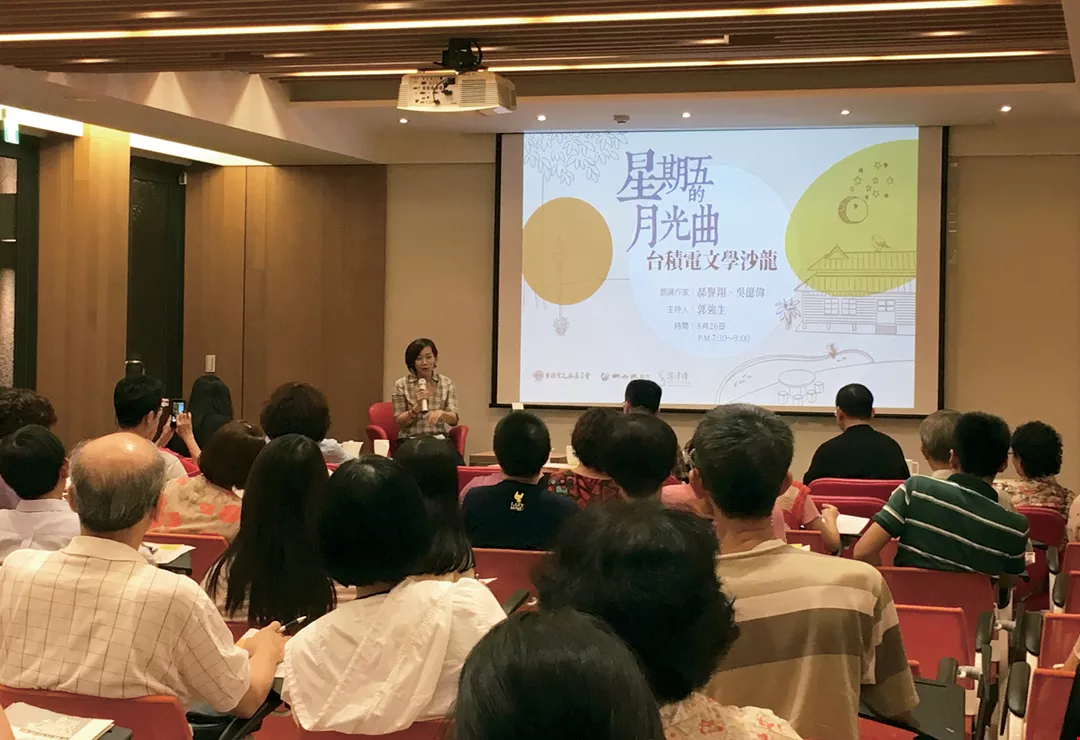
The museum’s newest exhibition space provides a venue for lectures, meetings, and cultural activities. By honoring his lofty ideals, the memorial hopes to carry on the immortal spirit of Sun Yun-suan. (courtesy of the Sun Yun-Suan Memorial Museum)

@List.jpg?w=522&h=410&mode=crop&format=webp&quality=80)


