A Focus on the Seedy Side-- The Cinematic Vision of Tsai Ming-liang
Teng Sue-feng / photos Vincent Chang / tr. by Jonathan Barnard
January 1995


Tsai Ming-liang, an overseas Chinese from Malaysia, has been living in Taipei since he first came as a student more than a decade ago. For years he has been writing scripts. Vive L'Amour, his second film as director, took last year's Golden Lion at the Venice Film Festival before winning the prizes for best dramatic film and best director at the 31st Golden Horse Awards. Tsai was called last year's biggest winner in the Taiwan film community.
When Tsai Ming-liang went up on stage on December 10 to collect his Golden Horse for best director, he said, choking with emotion, that he hoped his actors would have his good luck in the future. Back stage, he couldn't hold back, crying for longer than the film's famous lachrymose last scene. Finally, calming down and returning to his jocular self, Tsai said, "I hadn't known how powerful the Golden Horse Award was, that it would make me cry for so long." From his perspective, there was more meaning in winning a Chinese award than in winning a foreign one, "because I really want to make films for domestic audiences."
It has been interesting to see audiences' varied reactions to Tsai's two films, Rebels of the Neon God and Vive L'Amour. In particular, the scene when Yang Kuei-mei weeps at the end of Vive L'Amour makes many squirm in their seats.
After making love to a stranger, a real estate agent played by Yang Kuei-mei walks through Taipei's Ta-an Park in the early morning accompanied by only the steadfast and hollow clicking of her high heels. Then she sits on a bench in front of the band shell and cries and cries and cries, not stopping until several minutes later.
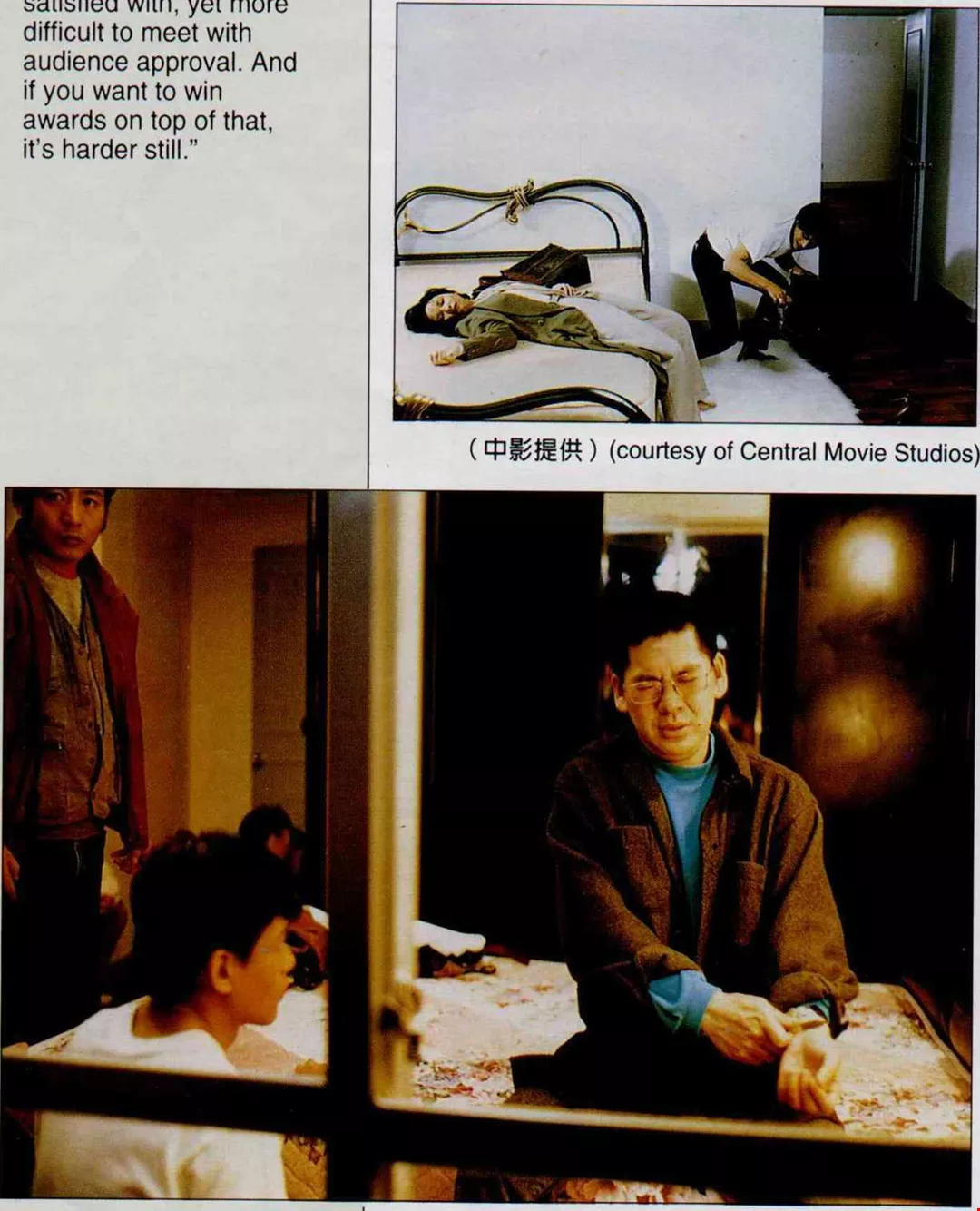
"Making a movie is a confrontation with hardship, an extended date with difficulty. It's very difficult to complete a movie, harder to shoot one that you'll be satisfied with, yet more difficult to meet with audience approval. And if you want to win awards on top of that, it's harder still."(courtesy of Central Movie Studios)
A movie without music
When they meet the director, members of the public who have seen the film ask Tsai why he made her cry so long. Others ask what he would have done if the old man sitting in front of Yang Keui-mei turned around and asked what was the matter. The people in the film are always smoking, offering each other cigarettes and drinking mineral water. Is there some sort of meaning in this, they ask.
At a screening for those in the movie business and related fields, the audience has reactions of a different stripe. One director asked again and again: "Have you put the music in yet? Is this a working print? Have you mixed the music yet?" A critic said, "Very experimental!" And another director said, "Tsai Ming-liang, you've got guts!"
Vive L'Amour depicts three inconsequential people on the margins of society: a real estate saleswoman, a seller of ossuaries, and a young man who hawks goods from the tarp he unfolds at a night market. In an empty apartment up for sale, their relationships are woven into a story with a simple plot and sparse dialogue that touches upon the loneliness of modern urban life.
In recent years, several ROC films have won awards at international festivals, and every time one does, people here try to figure out why. When they ask Tsai about the meaning of the award and his motives for shooting the film, he cordially replies, "I don't know why it won, but I was confident it would." He hates talking about the meaning of his movies: "It's what the audience sees it is."
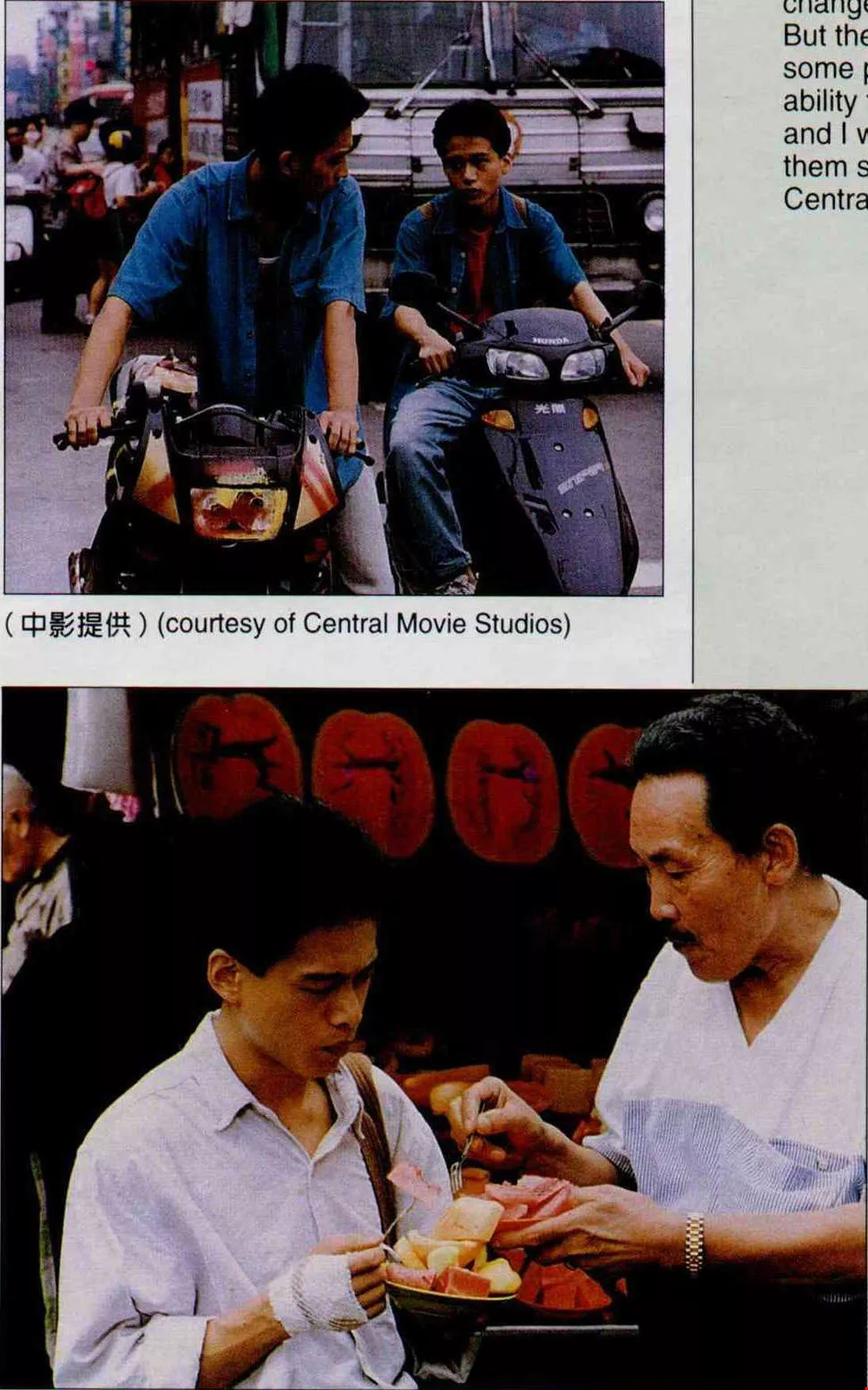
"Every time I come in contact with material about youth, I am always shocked by its reality. I am like those kids; I have no way to change the situation. But the truth is that some people have the ability to effect change, and I want to make them see." (courtesy of Central Movie Studios)
A New Paradise
Taking top honors at major festivals with only his second film, Tsai seems to be a very lucky man. But those who know him well know his career path has had its twists and turns.
A-liang, as his good friends call him, was born to a Cantonese family in Malaysia and came to Taiwan to study when he was 20, more than a decade ago.
He recalls that when he first came to Taiwan, older students in the Malaysian Students Society came to meet him at the airport. When they learned that he was coming to study drama, they all thought he was crazy. And theirs was the majority opinion, shared by his father. "At the time it really made me angry that everyone had this prejudice against studying drama," Tsai says.
After a year at Chinese Culture University, his classmates in the drama department still didn't know him very well. "I often played hookey," Tsai says in embarrassment, explaining that he'd go to the National Film Archives to watch movies.
Virtually all directors have memories of how their fates got tied to films, and Tsai is no exception. When he was three, his busy parents put him under the care of his maternal grandparents, whose house was in the vicinity of three Cantonese-language movie theaters. They screened Shaw Brothers films from Hong Kong, as well as Western and Japanese movies. His grandparents had a noodle stand, which they'd take turns tending while the other took him to the movies. Under their aegis, he was seeing an average of nearly two films a day before entering junior high school.
Half of his youth was spent gazing at the silver screen. He was an addict.
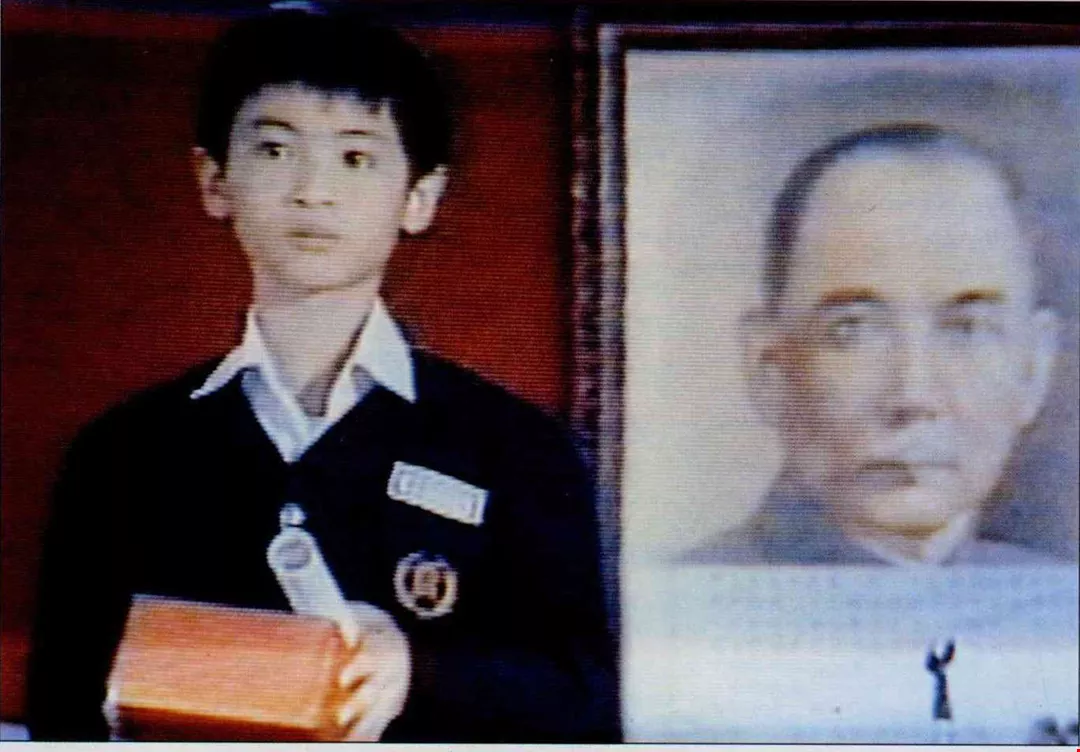
In the television drama "The Ends of the Earth," this boy won a writing contest and came up to collect his prize. The story reflects Tsai's own childhood, for he himself was a boy who loved to write. (courtesy of Tsai Ming-liang)
Film theory
When he came to Taiwan for university, his passion for film didn't abate. In his sophomore year, he took a class called "Film Theory." He had watched so many movies but he "had never thought they had their own theories."
Tsai greatly enjoyed the course, which was taught by Wang Hsiao-ti, and he worked hard for it. In class Wang returned highest scoring papers last, and if A-liang's assignments weren't last, they were next to last.
Before the course's final exam, Tsai dreamed up all kinds of reasons to get Wang to let him write a paper when he returned to Malaysia that summer in place of his taking the final exam. They agreed on a deadline. The result was that two days before grades were due, Wang received a long letter rich in feelings and elegant in expression. "Of course its content had nothing to do with the content of the course, but the sensitivity and deep feelings for life that A-liang expressed in the letter moved me deeply." The teacher was at loss for what to do, but finally gave Tsai a zero for his final exam.
After being in Taiwan for three years, it was Tsai's first visit back home. "Overcome with emotion, I didn't feel like doing my class work. And I thought I might get lucky since the teacher was fond of me." When he saw his grade, he was naturally upset, wondering how he could score so low in Wang's class. Yet when the work for the whole term was averaged together, A-liang still passed the course, "so my grade wasn't too bad," says Tsai Ming-liang, laughing loudly.
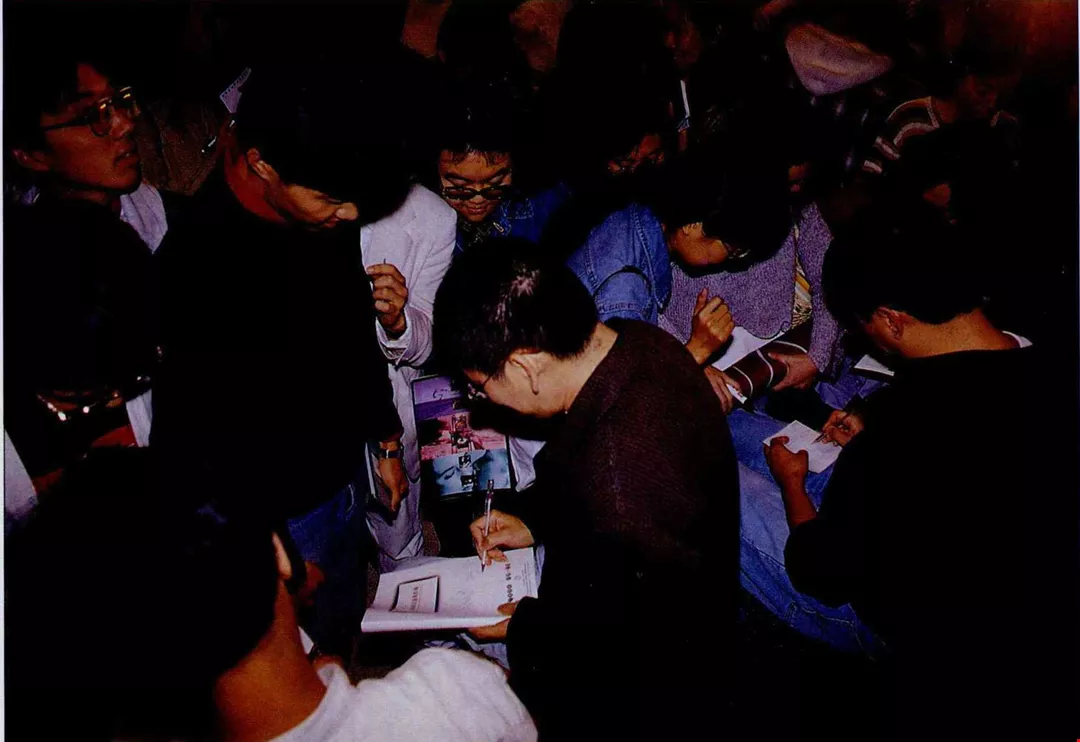
"Don't ask me why I make movies. The motivation is up on screen.".
A feel for the city
Wang describes Tsai's eyes as big, flashing and astute. "His eyes were always looking at others"-- often at their frustrations and loneliness.
"He's lived in more places in Taipei than I have," says Wang. "When he was living in Peitou, he came home one day to find his small room totally flooded out. He's lived in New Garden City in the hills of Hsintien, where he would chase the cats in heat up and down the hillside stairs. He's lived on the Section Three of Hoping East Road and seen the couple living below him fight three times in one night, fighting until a nose was broken and their front door was covered in blood...."
Two years after graduating from university, Tsai Ming-liang wrote, directed and acted in The Bureau in My Bedroom. Upon the recommendation of the Cloud Gate Theater's Lin Huai-min, the play toured the island, going from one county cultural center to another.
Wang Hsiao-ti remembers when a half-dozen hoodlums came to a performance at the Panchiao Cultural Center and sat in the front row. Tsai was up on stage alone, and they kept asking him "What the hell is going on?" Trembling, Tsai Ming-liang turned an hour-and-a-half performance into 75 minutes.
Says Wang: "A-liang crams himself into the lives of urban nobodies"--pushing his deep sensitivity into Taipei and shooting his Celluloid dream one frame at a time.
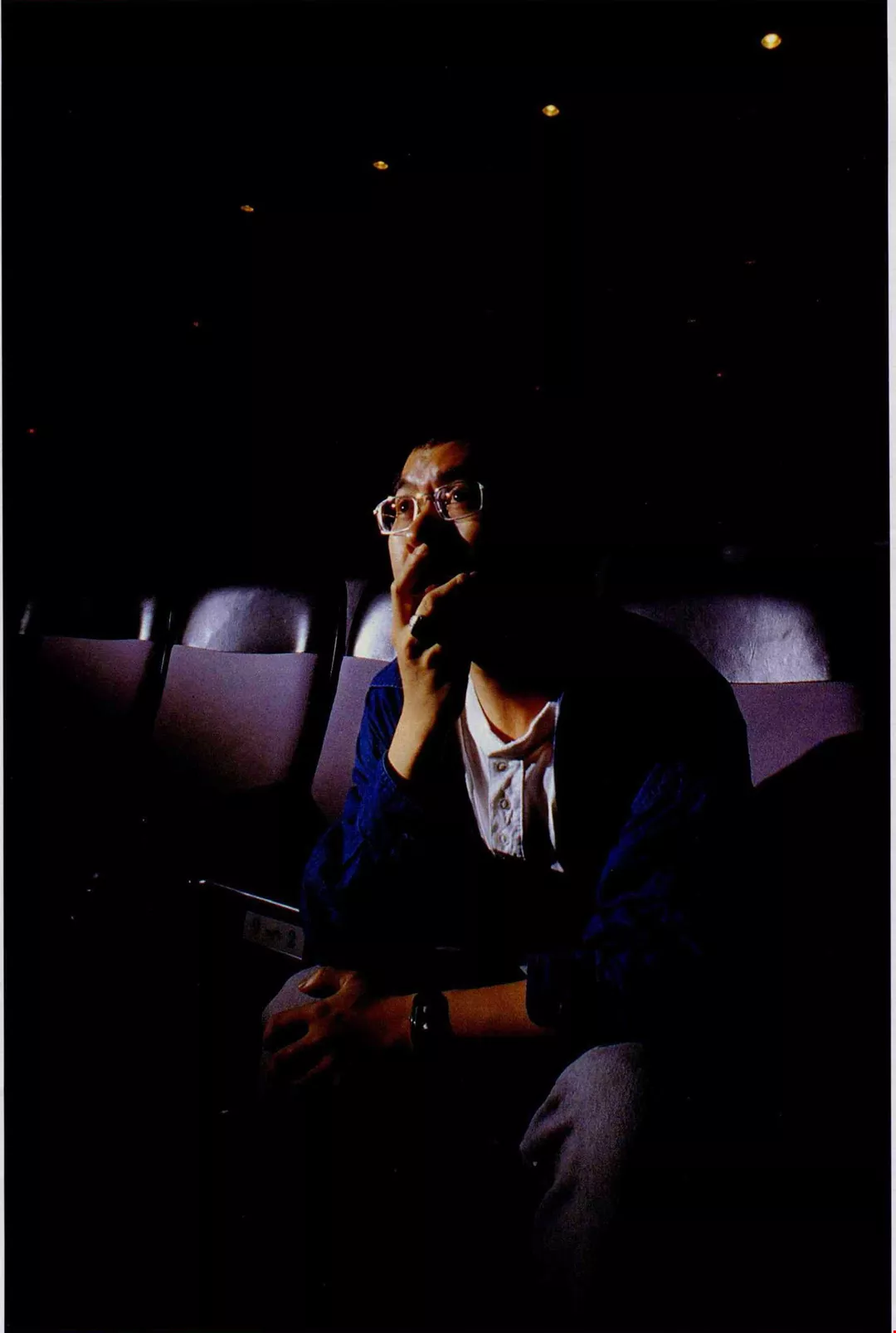
"I'm a director, but most of the time I'm a member of the audience." (photo by Lin Meng-san)
Gaining fame in television
Tsai first had success writing scripts. Although known as a new, cutting-edge director, he is not new to the film world. More than ten years ago he and Hsiao Yeh co-wrote screenplays for such films as Little Fugitive and Runaways. He also wrote scripts for television and the stage. For television in particular, he did quite a lot of work.
"The Ends of the Earth" is Tsai's television drama with which people are most familiar. It was about a family of movie ticket scalpers in the West Gate area of Taipei. The half-paralyzed grandfather had Alzheimer's disease. The parents cleaned rooms in a love hotel and scalped tickets. The sister worked in a video arcade and went to night school, and the brother was in grade school.
Once, when brother and sister were out scalping tickets together, they ran across a classmate of the sister's (the apple of her eye) and his girlfriend. Despondent from the encounter, the sister went into a hotel room with a pimp who was always making passes at her, and when she found that she was too weak to resist him, she smashed a bottle of booze against his head. He died.
In the final scene, the brother, dwarfed by his sister's motorcycle, awkwardly rides behind the police car taking his sister away. He shouts "Sister, Sister" as tears run down his sister's face. Audiences were deeply moved.
Later Tsai wrote "The Heartline of Li-hsiang," which described the emotions of a factory worker, and "Give Me a Home," about a family that would move from construction site to construction site. For these he won Golden Bell awards for best director in 1990 and 1991.
The tragedies of the little guy
Turning from writing screenplays and directing for television to directing films didn't require a great effort on Tsai's part. By the time he had an opportunity to direct his first film, he had already written scripts for 11 years, and he had long thought that one day "he would like to direct a film from his own script."
Tsai Ming-liang's scripts were well regarded, but many, including Central Movie Studios, have learned the bitter taste of waiting...and waiting for them.
Winning the Golden Bell for best director attracted the attention of Central Movie Studios, which invited him to make a proposal. Before submitting the script, he bought a coffee shop out of its lease and opened a restaurant selling Hainan chicken rice--until China Pictures called to scold him.
"Writing scripts is really difficult work, and it made me want to try something else for a while," says Tsai. "I still think about opening a restaurant, because I like to cook."
Early on, he proposed a film about yuppie life, which had the working title of Vive L'Amour. He never finished--because he was neither familiar nor particularly interested in yuppies' lives.
"Every time I came to East Taipei, I'd get a headache." Tsai felt that he had nothing in common with the handsome men and beautiful women who lived in the bright lights of that society. The shady West Gate District made him feel much more at home.
And so his first film, Rebels of the Neon God was set on familiar turf. In the West Gate District, two juvenile delinquents specialize in stealing IC boards from video games, another guy hangs out by the cram schools on Nanyang Street, and a girl works renting out skates in the White Palace Rink. Through them--a dreamless generation of youth going nowhere fast--Tsai entered the hearts of youth, a dark realm indeed.
The redemption of youth
Rebels of the Neon God continued in the style of his work for TV, exploring characters on the margins of urban society.
"As a director, Tsai Ming-liang has very sharp eyes," says the critic Huang Chien-ye. "He always catches special qualities in normal people." On the one hand, he maintains an attitude of cool observation, and on the other, his understanding of his characters gives them a turn to express themselves.
Huang particularly likes the name of the street that the main character lived on: Kenan (overcoming hardship) Street. It was truly a matter of overcoming hardship. A ghost would make the elevator stall; flip-flops would float around in the water that had flooded the apartment. "If he didn't empathize, sympathize and understand, he couldn't make a movie like this," Huang Chien-ye says.
Nevertheless, a junior high school teacher who saw the film wondered why he wanted to shoot such a gloomy film about youths.
"Every time I come in contact with material about youth of this kind," Tsai says, "I am always shocked by its reality. I am like those kids; I have no way to change the situation. But the truth is that some people have the ability to effect change, and I want to make them see."
Huang Chien-ye agrees with this line of thinking: "If you only cast light on the bright side of youths, you'll never be able to understand them."
Lonely modern people
From looking at the work of Tsai Ming-liang, you can guess that he probably is "young and lonely" himself. Think about someone who talks to his bureau--he's got to be pretty lonely.
Tsai Ming-liang recalls his own youth. He was an introverted and shy child--who knows how much shyer than he is today--and he used writing to substitute for speech. When he was in junior high school, he started writing for the supplement of his local Chinese paper. Every time he saw one of his articles published, he'd be happy for days.
"I feel that I've been quite lucky, being born in Puching and creating in Taiwan. The best thing about my youth was that I quickly found where my interest lay," Tsai Ming-liang says.
The critic Yi Chih-yan compares Tsai Ming-liang to such new directors as Hong Kong's Wang Chia-wei and America's Jim Jarmusch, stating that they all like to break the connection between cause and effect seen in Hollywood movies, making heavy use of coincidence. The characters and plot don't have a master-servant relationship but more of a parallel, democratic relationship. Their work is full of ambiguity.
As Yi Chih-yan sees it, both Taiwan and the rest of the world are in a stage of transition, when the old order is collapsing but the new has yet to be erected in its place. There's too much that can't be predicted, too many factors that can't be grasped. This leads creators to explain things with sudden occurrences and mystery. "The world is like this, and the work of more sensitive directors reflects what they have observed."
Tsai Ming-liang is certainly very sensitive, and his observations about life are often a source for his creativity. He sits in a cab and hears on the radio that a dog has been hit on the road. After a while, an update makes clear that the dog has indeed died. "This sort of thing will make it into my movies," Tsai Ming-liang says. "It's both strange and true to life."
The new generation of creators coming to the fore in the 1990s are not interested in the Taiwan tragedies and people's memories that have been Hou Hsiao-hsien's material. They are more interested in looking at the microcosm. When lonely, the leading man of Vive L'Amour pretends a watermelon is a bowling ball. Huang Chien-ye believes that this shows that this generation of directors have a black humor and sense of the absurd that was lacking in the last generation.
Laughter and tears
Although Tsai Ming-liang's work is bitter and tragic, "he does have a good sense of humor and tends even toward silliness. Every day, he can always find humorous incidents from his life--to the point of being a little narcissistic," says Wang Hsiao-ti, giving an example: Other people say that he looks like the Hong Kong star Mo Shao-tsung. This pleases and angers him, for he feels that his eyes are bigger and brighter than Mo's. Tsai Ming-liang doesn't just love to laugh; he also often cries. It's a side of his character he just can't hide.
The year before last, when Rebels of the Neon God won the Bronze Cherry Blossom award for best film from a young director at the Tokyo Film Festival and then again last year when he went up to collect the prize for best film at the Venice Film Festival, he wept for joy, imagining that his father and grandfather, both deceased, were walking with him.
Tsai Ming-liang also cherishing the old
He likes to listen to Bai Kuang, Chou Hsuan, Pan Hsiou-chiung, Yeh Feng and other singers from the thirties. He not only collects their albums but also belts out his own versions of their songs.
"Old songs are full of feeling." And this stress on feeling can be seen in his films' casts. He has given two new actors--Li Kang-sheng and Chen Chao-jung--important parts again and again. "A lot of things are difficult to cultivate, actors included," he says.
His special method for finding new talent: pounding the pavement. He found Li Kang-sheng in a Kungkuan video arcade five years ago and asked him to go for a reading the next day. The shy Li Kang-sheng thought Tsai was pulling his leg. Down to the present, Tsai Ming-liang finds that he gets the urge to invite cabbies with whom he has struck up a conversation to come and act.
Now that Tsai has become famous, he is constantly getting asked for interviews, and he will say to the reporters coming to interview him, "Sometimes when I hide from reporters, I feel bad, and they feel I'm not very cooperative."
He feels that he's just like anyone else--except now he's famous. "It's pretty terrifying to see myself continually popping up in the media. Sometimes I accept interviews because I think that talking a little about the process of shooting movies will be of use to someone."
Disasters from start to finish
Although his work has met with success, Tsai Ming-liang still feels that making movies is basically "a confrontation with hardship." "It's very difficult to complete a movie," Tsai says, "harder to shoot one that you'll be satisfied with, yet more difficult to meet with audience approval. And if you want to win awards on top of that, it's harder still."
Sure, the movie industry in Taiwan isn't booming, and the poor audio-visual equipment in theaters here depresses movie makers...but every time he sees his own work on the silver screen, Tsai feels like he is watching "a beautiful dream come to life."
[Picture Caption]
p.39
At times Tsai Ming-liang can't keep from exposing his true feelings. After he won the Golden Horse for best director last year, he wept back stage. When he was accepting the prize, he didn't neglect to wish that his actors would share his good luck in the future.
p.40
(courtesy of Central Movie Studios)
p.40
(courtesy of Central Movie Studios)
p.40
"Making a movie is a confrontation with hardship, an extended date with difficulty. It's very difficult to complete a movie, harder to shoot one that you'll be satisfied with, yet more difficult to meet with audience approval. And if you want to win awards on top of that, it's harder still."
p.41
(courtesy of Central Movie Studios)
p.41
(courtesy of Central Movie Studios)
p.41
"Every time I come in contact with material about youth, I am always shocked by its reality. I am like those kids; I have no way to change the situation. But the truth is that some people have the ability to effect change, and I want to make them see." (courtesy of Central Movie Studios)
p.42
In the television drama "The Ends of the Earth," this boy won a writing contest and came up to collect his prize. The story reflects Tsai's own childhood, for he himself was a boy who loved to write. (courtesy of Tsai Ming-liang)
p.43
"Don't ask me why I make movies. The motivation is up on screen."
p.45
"I'm a director, but most of the time I'm a member of the audience." (photo by Lin Meng-san)

@List.jpg?w=522&h=410&mode=crop&format=webp&quality=80)


