

The 2001 Christmas season saw the spectacular release in the US of the film adaptation of The Fellowship of the Ring, the first part of the fantasy novel trilogy The Lord of the Rings by the late J.R.R. Tolkien, author and professor of literature at Oxford University. The lavish production drew worldwide attention.
In January of the following year, The Fellowship of the Ring opened in Taiwan. Riding the wave of that sensational opening, Linking Publishing Company's Chinese version of the Lord of the Rings trilogy (The Fellowship of the Ring, The Two Towers, and The Return of the King) sold 600,000 copies. That success also brought fame for Lucifer Chu, the translator of this work and the moving force behind the fantasy literature movement in Taiwan.
Those who have heard of Chu invariably have the same reaction: "Oh, he's the young man who got rich translating The Lord of the Rings."
When inquiring into the astronomical sum Chu is supposed to have received, guesses range from NT$10-20 million. According to Chu himself, who just turned 30 this year, "The accurate figure is NT$27 million."
While the media keeps coming back to the issue of royalties, the young Lucifer Chu has not fallen into the vanity or discomfiture that great wealth can bring. Instead, he has taken NT$10 million out of those proceeds and founded the Fantasy Foundation, an organization dedicated to introducing quality fantasy literature and computer games to the public. Chu has even funded his own fantasy art prize to encourage public creativity and share in the delight of the world of fantasy.
But just when everyone was getting used to the idea of seeing Chu as a spokesman for fantasy literature, he once more became the object of media attention with a new venture in September of last year.
This time, however, he did not make the news because of fantasy literature, but because of his volunteer work on the Internet, a realm that knows no borders. Chu has assembled 700-some Chinese volunteers to participate in a massive project aimed at translating the contents of the Massachusetts Institute of Technology's (MIT) Opensource Opencourseware Prototype System (OOPS) into Chinese. This project, operating without paying a penny in salary, fully demonstrates the Internet's striking potential for "borderless knowledge" and "knowledge sharing."
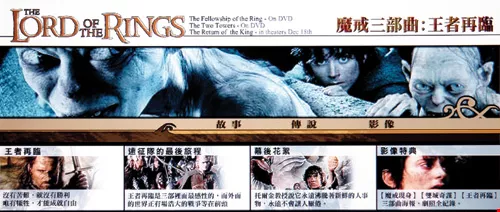
Aragorn the Ranger, the Hobbit Frodo, elves, dwarves, and the orcs... Chu's translation of The Lord of the Rings has been a bestseller not only because of its smooth style, but because it shows his deep knowledge of the world of fantasy literature.
A childhood of computer games
At 185 centimeters tall and with shoulder-length hair, Chu cuts a striking figure that seems to match the stories of his great wealth. He looks like the godfather for a new generation. That, at least, is the first impression that he gives off. Chu then sits down and produces the latest issue of a manga magazine from his backpack, eagerly devouring its contents.
As he reads, Chu also stops to smile at and offer a friendly wave to a passing cat, gestures that one seldom sees from a typical Taiwanese man. Despite his grown-up appearance and booming voice, it's perhaps this boyish nature underneath that helps explain his fascination with fantasy literature. When asked where his interest in this genre comes from, Chu responds by relating stories from his upbringing.
Chu's parents did not have him until they were in their forties. When he was in elementary school, his older brother, 12 years his senior, was already in college and his older sister, eight years his senior, was in middle school. Because his parents were relatively older, they did not have the energy to keep up with him. The family lived in military housing in Yuanshan, Taipei at a time when many were leaving such communities, making his neighborhood a quiet and lonely place, and Chu recalls that he mostly played by himself. One day, his older brother brought a computer home. From that moment on, that computer became the center of Chu's world.
Chu recalls that as soon as his brother would turn on the computer, he would be there watching. As soon as his brother left to go to class, the computer became Chu's own personal toy. He plunged himself into the world of video games, and liberated by his promise that "gaming would never affect my grades," Chu would often spend hours per gaming session. This was the beginning of his encounter with the world of fantasy.
Back then many computer games took their inspiration from fantasy literature from abroad. In order to advance and score high on these games, Chu began to go back and read the novels that those games had been based upon. Not content with reading only those works that had been translated into Chinese, Chu decided to brave it through the English originals, dictionary in hand. In the process, he not only became a master gamer but also an expert translator.
In 1992, Chu took the national college entrance exams and was accepted into the electronic engineering program at National Central University. In the summer before college, Chu decided to pass the time by starting a column in a gaming magazine to share the experience he had gained through his readings in fantasy literature with a broader public. In a flurry of activity, Chu produced a number of articles. As a result he made over NT$100,000 from articles that he submitted.
Making that amount of money made him aware of the power of his expertise. During his five years at university (he jokes that he went through college with the attitude of one going to a five-year vocational program), Chu became a well-known figure on campus, leading the debating society as well as the student society for his department in putting on a series of university-wide events. Engaging his creativity and intense work ethic, Chu would also put on a graduation ceremony that graduates of the university still talk about today.

Chu's spartan room, filled with books and posters, is a space in which his imagination takes flight.
Doing things out of order
Even though he was busy with school activities, Chu never neglected his interest in fantasy literature. He translated a number of works during this period, including the Dragonlance Chronicles trilogy so popular a decade ago.
While translating, Chu came to the realization that almost all of the authors of these works expressed reverent admiration for The Lord of the Rings. Curious, he decided to take a closer look at this epic work. It turned out that prior to 1997, no one had ever translated it into Chinese.
Chu at that time had already finished his military service and was working for the advertising agency Ogilvy and Mather. While his classmates were heading towards the Hsinchu Science-Based Industrial Park to strike it rich, he preferred to take another path. Having persuaded the ad agency to take him on even though he had graduated with an electrical engineering degree, he found that his talents were beginning to be appreciated there. Just at that moment, after less than a year, however, Chu decided to walk away from that job.
An outside observer might attribute this action to youthful rashness. But only after conversing in depth with Chu does one realize that he is a person who understands how to utilize his own talents and not be hemmed in by his circumstances. Upon confronting a professional glass ceiling, he is the kind of person who would shake his fist and say, "Let's smash it!"
From advertising, to publishing, to television, Chu took on a succession of challenging jobs. Whenever he reached the limits of a job, or even began to "direct" those who were supposed to be his superiors, he would choose to leave, without a moment's hesitation. To Chu, life is full of choices, and he did not want to just stay in one place. He wanted to explore other possibilities, and the income that he made from translating freed him from having to work for a salary.
It turned out that there were even bigger things on the horizon for him.

Chu has rewarded himself with this NT$50,000 chair.
Re-translating The Lord of the Rings
In 1997, Linking Publishing produced the first Chinese translation of The Lord of the Rings. Chu, who had over 30 translated works under his belt, was naturally curious and bought a copy. He found the translation stiff and clumsy, and could hardly get through it.
However, it is exceedingly difficult to create a fluid, graceful translation of The Lord of the Rings. J.R.R. Tolkien was a linguistic scholar who infused his creation with complex, arcane language and lofty imagination that allowed his readers to inhabit the fantasy world he had fashioned. Translators around the globe agree that this is one of the most difficult works to translate.
Having steeped himself in fantasy literature, and now coming face-to-face with the classic of that entire genre, Chu was bitterly disappointed to find such a joyless translation. At that time, he also learned of news coming out of Hollywood that the trilogy was headed for the silver screen. All of these factors began to stir his desire to retranslate the trilogy.
Chu embarked on a large-scale market survey, seeking out the most popular bookselling venues and turning that survey into a complete proposal to Linking Publishing Company. In the proposal, he offered to retranslate The Lord of the Rings, not only guaranteeing a superior translation but also offering to accept no payment other than royalties, to be paid only after the 10,000th copy had been sold. The publisher half-believingly accepted his offer, never imagining that this translation would build on the popularity of the films and go on to sell 600,000 copies, and that Chu's translation would gain accolades for its fluid elegance in rendering Tolkien.
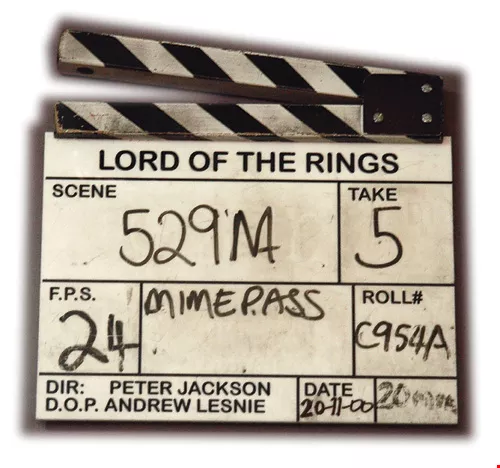
Pictured below is a clapper-board from the filming of the novel.
An extreme challenge
The amazing statistics aside, what did it take to complete this project?
Chu says, "The publisher gave me just nine months to finish translating a work that comprises 1.2 million words. I lost 20 kilograms during those nine months!"
Chu put himself through an intensive work regimen with the discipline of a soldier, hitting the gym at six every morning and shutting himself up in his room two hours later to focus fully on his translating. After lunch, he would take a short nap and get up to continue his labors, working until his 10 p.m. bedtime.
To translate the 1.2 million words in The Lord of the Rings in nine months would mean translating 30-40,000 words a month, or about 20-30 pages a day. When considering Tolkien's beautiful, abstruse vocabulary, even Chu admits, "This was a project that brought me to the edge of human limitations."
Things did not always go smoothly for Chu, since the act of translating consists of finding one's way between two languages with their differing cultural backgrounds and linguistic structures. Whenever he reached a point where he felt blocked and unable to properly express himself, Chu had no choice but to take a break, going out for some fresh air or playing some video games to try and get around the impasse. Whenever this happened, his progress would slow and he would have to try and catch up over the next few days.
While he could manage all that, what was perhaps most excruciating was the fact that he was doing the same thing over and over again over this nine-month period. For Chu, who thrives on constantly seeking out new challenges, each day sometimes seemed like a year.
Fortunately, all of the effort was to prove exceedingly worth his while. Translating The Lord of the Rings into Chinese brought Chu previously unimaginable fame and fortune. He did not, however, lose his way because of all this.
Just when people thought that Chu had identified himself for good with the fantasy movement, he surprised them again. In September 2002, MIT placed all of its course materials online with the ideal of sharing them publicly all around the world. Chu was profoundly impressed with this effort, and decided to take up the task of translating these materials into Chinese.
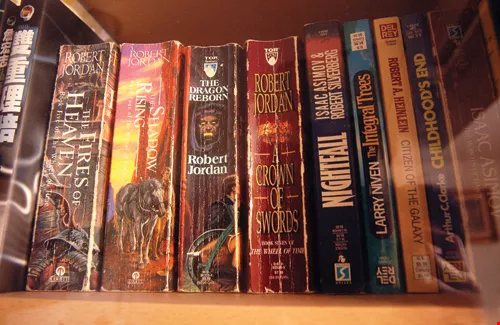
Chu's spartan room, filled with books and posters, is a space in which his imagination takes flight.
Volunteers for intellectual sharing
In the beginning, the project had only two participants, Chu and a friend of his. As their work grew in scope, however, Chu made an appeal for volunteer translators on the Web. With the power of this borderless community, he was able to attract over 700 volunteers of Chinese descent from 14 countries around the world. Under his leadership, in ten short months the group had translated and placed online the content of 19 courses and were close to completion on another 81. Currently, 778 courses are slated for translation, with new material coming online every day.
Since this open classroom made its Web debut at the end of last year, about 6,000 people a day have gone online to access this material and freely enjoy the contents of this online treasure house. Chu himself has been one of the five recipients of the second annual "Keep Walking" award in support of his ideals and his project.
Not only that, Chu's work has created the impetus for online instruction in Taiwan. At the end of last year, National Central University signed an agreement with the Fantasy Foundation to bring this project, representing the brainpower and sweat of so many volunteers, into the university. It is hoped that professors can utilize these materials in their teaching and perhaps even lend a hand in the translating. The project has even attracted the support of Dr. Ovid J.L. Tzeng, vice president of the Academia Sinica, who has taken on the role of convener of the project's approval committee.
The Chinese translation of MIT's open classroom heralds the arrival of the Internet era, of an arena that knows no national boundaries and recognizes intellectual sharing as the only creative path forward, especially in narrowing the educational gap that often exists between the rich and the poor.
Chu says that his wealth has brought him freedom to do what he really wants to do, which is "to do things that help others." This young man is not only expressing his dreams and ideals, but is striving to make them a reality!
As for the future, with the course material translation project on track, he plans later this year to acquire non-commercial rights to movies, documentaries and other audiovisual materials, in order to make them freely available on the Internet.
The recruitment ad for systems engineers on the Fantasy Foundation website reads: "However you look at it the pay isn't high; we certainly won't ever be listed on the stock exchange, and we don't pretend you'll have many training opportunities.... All we can offer you is a chance to change the world." "To change the world"-what an ambition!
"Every extra course we translate changes the Chinese intellectual world, and in future perhaps may change the fate of someone who would otherwise not have been able to afford that knowledge." This is the dream that Lucifer Chu is working so hard to make real.
Taiwanese site for MIT Opensource Opencourseware Prototype System (OOPS): http://www.twocw.net Fantasy Foundation website: http://www.fantasy.org.tw

Today's young people can truly blossom as long as they grasp their core potential. Besides his interests in fantasy literature, Lucifer Chu has drawn on his expertise in translation and regarding the Internet to initiate the mammoth project of translating MIT course materials into Chinese. Chu is shown here enjoying a Chinese New Year office party with his translating team.

Aragorn the Ranger, the Hobbit Frodo, elves, dwarves, and the orcs... Chu's translation of The Lord of the Rings has been a bestseller not only because of its smooth style, but because it shows his deep knowledge of the world of fantasy literature.
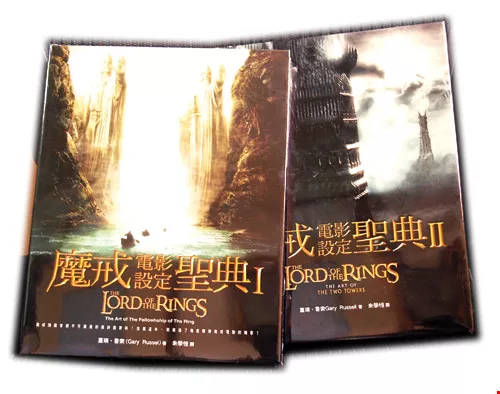
Today's young people can truly blossom as long as they grasp their core potential. Besides his interests in fantasy literature, Lucifer Chu has drawn on his expertise in translation and regarding the Internet to initiate the mammoth project of translating MIT course materials into Chinese. Chu is shown here enjoying a Chinese New Year office party with his translating team.

Aragorn the Ranger, the Hobbit Frodo, elves, dwarves, and the orcs... Chu's translation of The Lord of the Rings has been a bestseller not only because of its smooth style, but because it shows his deep knowledge of the world of fantasy literature.

Chu's spartan room, filled with books and posters, is a space in which his imagination takes flight.


@List.jpg?w=522&h=410&mode=crop&format=webp&quality=80)


